AI Generated Quiz
Secondary 3 Combined Science Life Sciences Quiz
Free Sec 3 Combined Sci Life Sciences quiz, HY3 AI version, with questions, answers, and O Level-style practice for Singapore students.
These static practice materials are generated from the site's syllabus and paper-generation workflow, with source and model context shown so students and parents can evaluate the material before use.
Questions
Free quiz and exam paper access
Enter your details to view this paper
Your access is remembered on this device.
Answers
Secondary 3 Combined Science Quiz - Life Sciences (Answer Key)
Total Marks: 40
Topic: Life Sciences (syllabus-first, Stage 4/5 generated; not claimed as past-year derived)
1. Function: Controls what enters and leaves the cell / provides boundary. (1 mark)
Teaching note: The cell membrane is selectively permeable; it regulates movement of substances.
2. Osmosis (1 mark)
Teaching note: Osmosis is diffusion of water through a partially permeable membrane.
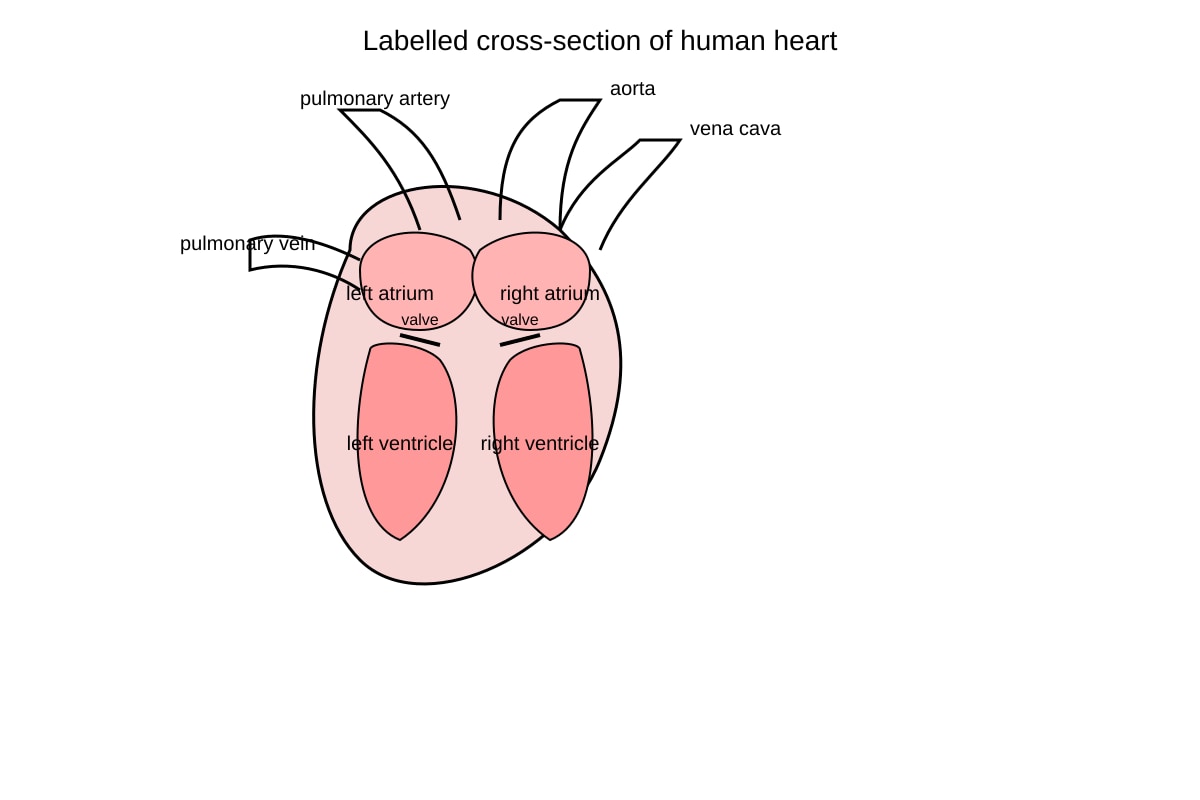
3. Pulmonary vein (1 mark)
Teaching note: Pulmonary veins are unusual as they carry oxygenated blood to left atrium.
4. Glucose + Oxygen → Carbon dioxide + Water + Energy (1 mark)
Teaching note: Aerobic respiration requires oxygen and releases more energy.
5. Ribosome (1 mark)
Teaching note: Ribosomes are sites of protein synthesis, found in cytoplasm or on RER.
6. (3 marks)
- Water potential is higher in distilled water than in potato cells. [1]
- Water enters potato cells by osmosis. [1]
- Cells become turgid, making strip rigid. [1]
Teaching note: Turgidity from vacuole expansion presses against wall.
7. (2 marks)
Function: Transports water and minerals / support. [1]
Adaptation: Lignified walls / hollow lumen. [1]
8. (5 marks)
- Absorbed by root hair cells. [1]
- Moves through cortex to xylem. [1]
- Up stem via xylem. [1]
- Enters leaf veins. [1]
- Lost via stomata (transpiration). [1]
9. Left atrium (1 mark)
Based on placeholder Q9-fig1: Oxygenated blood from lungs enters left atrium via pulmonary vein.
10. (2 marks)
- Energy cannot be created or destroyed. [1]
- Only converted from one form to another / total in closed system constant. [1]
11. (3 marks)
Aerobic: Glucose + O₂ → CO₂ + H₂O + Energy [1]
Anaerobic: Glucose → Lactic acid + Energy [1]
Difference: Aerobic uses O₂, anaerobic does not. [1]
12. (2 marks)
- More space for haemoglobin. [1]
- Allows efficient O₂ transport. [1]
13. (3 marks)
- Cells plasmolysed (shrink). [1]
- Lower water potential in sucrose than cell sap. [1]
- Water leaves by osmosis. [1]
14. (2 marks)
Temperature, pH (any two). [1+1]
15. (3 marks)
- CO₂ diffuses into blood from tissues. [1]
- Carried as bicarbonate / dissolved. [1]
- To lungs via vena cava → right heart → pulmonary artery. [1]
16. (5 marks)
- Lung → pulmonary vein → left atrium. [1]
- Left atrium contracts → left ventricle. [1]
- Left ventricle contracts, pressure rises. [1]
- Aortic valve opens. [1]
- Blood to body via aorta. [1]
17. (4 marks)
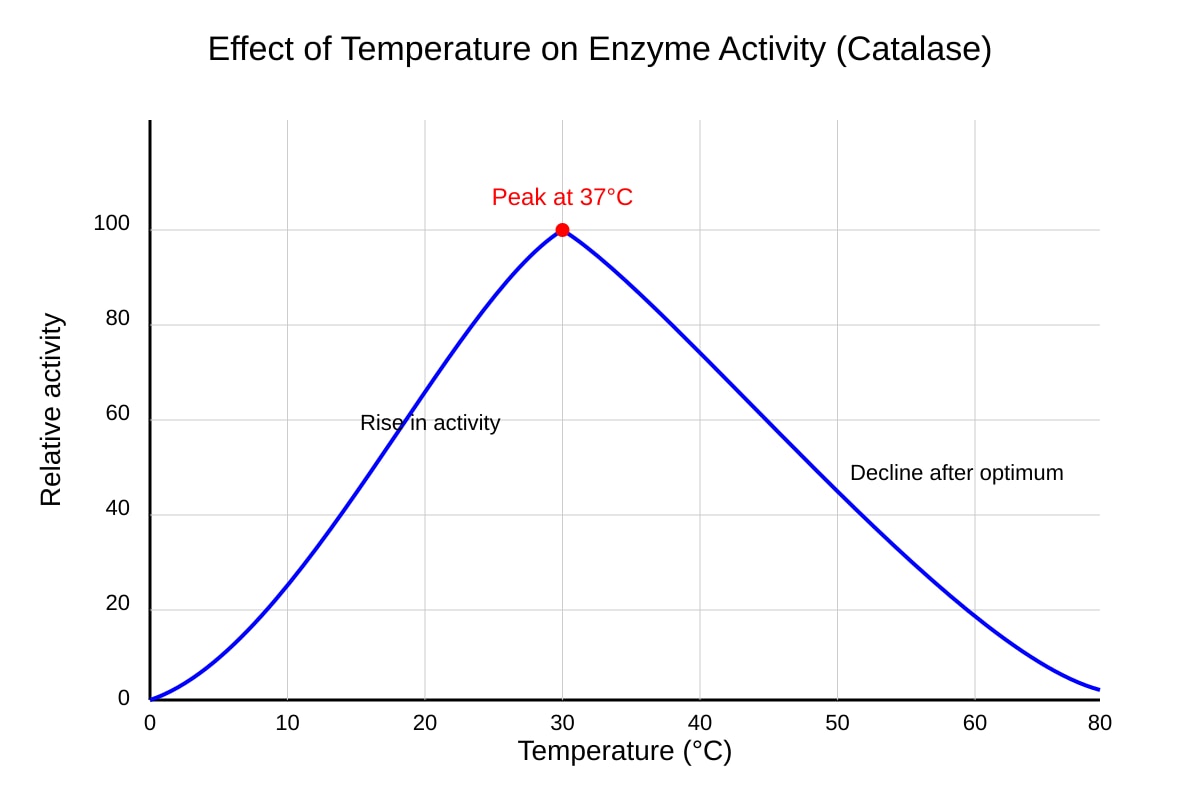
- 0–37 °C: activity increases as kinetic energy and collisions rise. [2]
- Above 37 °C: enzyme denatures, activity falls. [2]
18. (6 marks)
Aerobic: Glucose + O₂ → CO₂ + H₂O + Energy [2]
Anaerobic: Glucose → Ethanol + CO₂ + Energy [2]
Differences: (1) O₂ used? (2) Product (ethanol vs water) (3) Energy yield lower anaerobically. [2]
19. (4 marks)
- Soil water higher ψ than cell sap. [1]
- Water enters by osmosis. [1]
- Root pressure pushes into xylem. [1]
- Transpiration pull moves up. [1]
20. (5 marks)
- Breathing rate rises → more O₂ in alveoli. [1]
- Heart rate rises → faster circulation. [1]
- O₂ transported by haemoglobin. [1]
- CO₂ diffuses to lungs. [1]
- Removed by exhaling. [1]