From Real Exams Quiz
Secondary 3 Combined Science Life Sciences Quiz
Free Sec 3 Combined Sci Life Sciences quiz, Kimi2.6 Exam version, with questions, answers, and O Level-style practice for Singapore students.
These static practice materials are generated from the site's syllabus and paper-generation workflow, with source and model context shown so students and parents can evaluate the material before use.
Questions
Free quiz and exam paper access
Enter your details to view this paper
Your access is remembered on this device.
Answers
Secondary 3 Combined Science Quiz - Life Sciences: Answer Key
Total Marks: 40
Section A: Multiple Choice (Questions 1–5)
1. C) Chloroplast [1]
- Teaching note: Chloroplasts contain chlorophyll, the green pigment that captures light energy for photosynthesis. The nucleus controls cell activities, mitochondria carry out aerobic respiration, and the vacuole stores water and ions. A common mistake is confusing chloroplasts with mitochondria—remember the slogan "chloroplasts for photosynthesis, mitochondria for respiration."
2. C) Carbon dioxide, water, and energy [1]
- Teaching note: Aerobic respiration uses oxygen to break down glucose completely. The word equation is: glucose + oxygen → carbon dioxide + water (+ energy). Anaerobic respiration in humans produces lactic acid + energy; in yeast, it produces ethanol + carbon dioxide + energy. Option A describes alcoholic fermentation; Option B describes anaerobic respiration in human muscle cells.
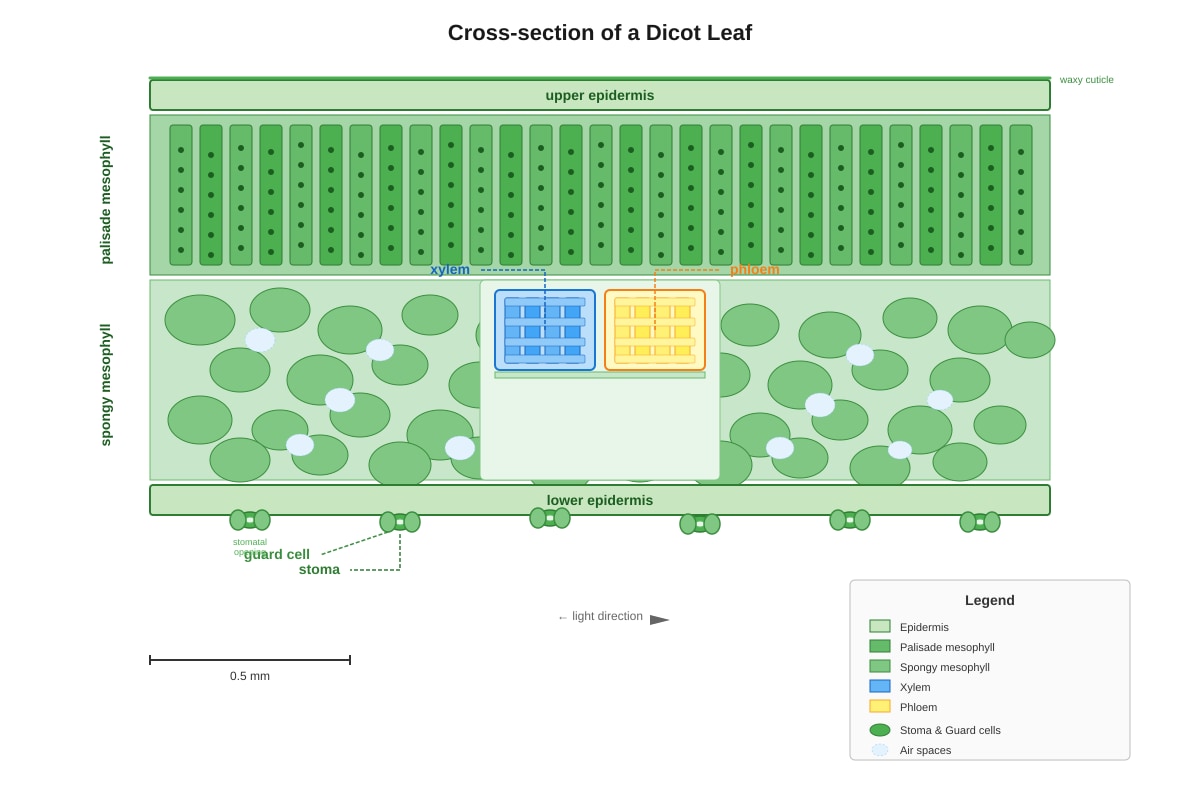
3. (Answer depends on diagram: Palisade mesophyll) [1]
- Teaching note: The palisade mesophyll cells are elongated and packed with chloroplasts to maximize light absorption near the top of the leaf. They are positioned directly beneath the upper epidermis to receive maximum light. The spongy mesophyll also photosynthesises but has fewer chloroplasts and mainly functions in gas exchange through air spaces.
4. B) Pulmonary artery [1]
- Teaching note: The pulmonary artery is the only artery that carries deoxygenated blood (from the right ventricle to the lungs for oxygenation). All other arteries carry oxygenated blood away from the heart. The pulmonary vein carries oxygenated blood from lungs to heart—it's the only vein carrying oxygenated blood. Remember: artery/vein classification is by direction (away from/toward heart), not by oxygen content.
5. C) Enzymes are specific to one type of substrate [1]
- Teaching note: Enzymes have a specific active site shape that fits only one substrate (lock and key model/induced fit). Enzymes are not used up (A), work at specific optimum temperatures and denature if too hot (B), and are proteins made of amino acids, not carbohydrates (D).
Section B: Short Answer (Questions 6–15)
6. Two differences between aerobic and anaerobic respiration in humans: [2]
-
Any two from:
- Aerobic requires oxygen; anaerobic does not [1]
- Aerobic produces more energy (ATP) per glucose molecule; anaerobic produces less [1]
- Aerobic produces carbon dioxide and water; anaerobic produces lactic acid [1]
- Aerobic occurs in mitochondria; anaerobic occurs in cytoplasm [1]
-
Teaching note: In humans, anaerobic respiration occurs during vigorous exercise when oxygen supply cannot meet demand. The lactic acid produced causes muscle fatigue and oxygen debt, which must be repaid after exercise.
7(a). Completed table: [2]
| Feature | Artery | Vein | Capillary |
|---|---|---|---|
| Valve present | No | Yes | No |
| Wall thickness | Thick | Thin | One cell thick |
-
Marking: 1 mark per correct entry
-
Teaching note: Veins have valves to prevent backflow of blood against gravity, especially in limbs. Their thin walls and large lumen allow them to flatten and accommodate changes in blood volume. Arteries have thick muscular/elastic walls to withstand high pressure from heart pumping.
7(b). Capillary walls are one cell thick to: [1]
-
Minimise diffusion distance, allowing rapid exchange of materials (oxygen, carbon dioxide, glucose, etc.) between blood and tissues
-
Teaching note: This is an example of structure-function adaptation. The thin wall, combined with the slow blood flow and large surface area of capillary networks, creates ideal conditions for efficient exchange by diffusion.
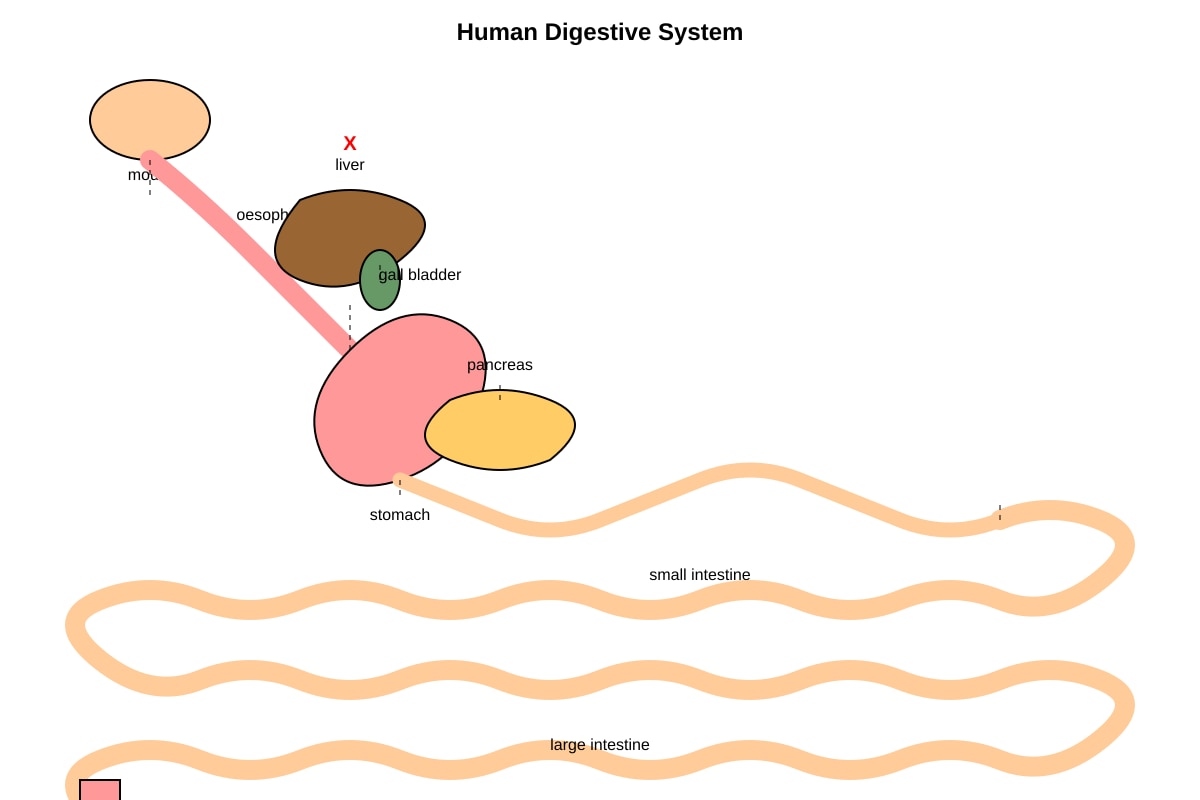
8(a). Liver [1]
8(b). Two functions of the small intestine in digestion: [2]
-
Digestion: produces/holds digestive enzymes (from pancreas and intestinal wall) to break down food to absorbable units [1]
-
Absorption: villi and microvilli provide large surface area for absorption of digested nutrients [1]
-
Teaching note: The small intestine also receives bile from the gall bladder (stored from liver) which emulsifies fats, and receives pancreatic juice containing enzymes. The inner surface has millions of villi, each with thousands of microvilli, creating a massive surface area (folds × villi × microvilli = ~200 m²).
9(a). Two adaptations of root hair cells for absorbing mineral ions: [2]
-
Large surface area (long, thin projections) increases area for absorption [1]
-
Many mitochondria provide ATP for active transport of mineral ions against concentration gradient [1]
-
Teaching note: Mineral ions are often in lower concentration in soil than in root cells, so active transport (requiring energy) is needed. The thin cell wall and cell membrane also reduce diffusion distance. Root hairs are extensions of epidermal cells, not separate cells.
9(b). Yellowing of leaves (chlorosis) between veins; older leaves affected first [1]
-
Explanation: Magnesium is needed to make chlorophyll (green pigment). Without it, chlorophyll breaks down and cannot be replaced, so leaves lose their green colour [1]
-
Teaching note: Magnesium is a mobile ion—plants move it from older to newer leaves when deficient, so older leaves show symptoms first. This is why iron deficiency shows in young leaves first (iron is immobile in plants).
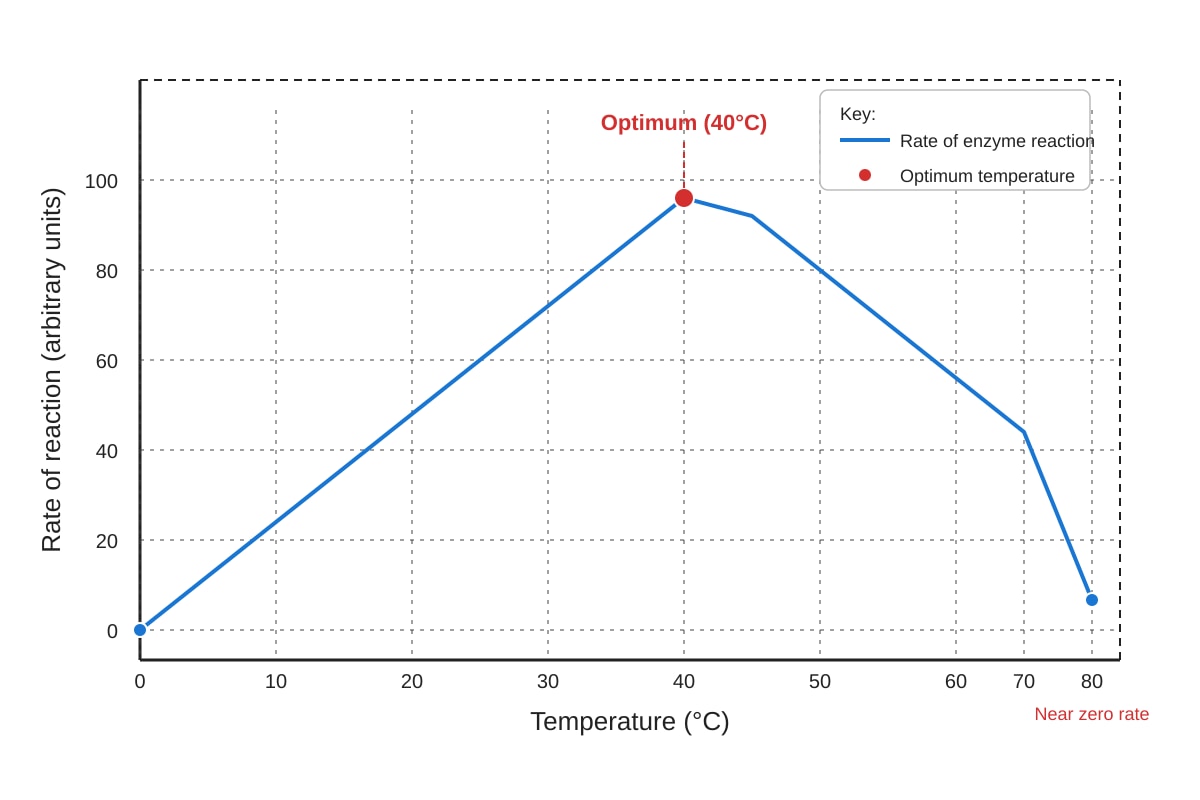
10(a). 40°C [1]
10(b). Above 40°C, the rate decreases because: [2]
-
Excessive heat breaks hydrogen bonds in the enzyme's protein structure (tertiary structure) [1]
-
The active site changes shape (enzyme denatures), so substrate can no longer fit/be catalysed [1]
-
Teaching note: Denaturation is permanent. The enzyme's specific 3D shape—held by hydrogen bonds, ionic bonds, and disulfide bridges—is disrupted by high temperatures. Different enzymes have different optimum temperatures; thermophilic organisms have enzymes with higher optima.
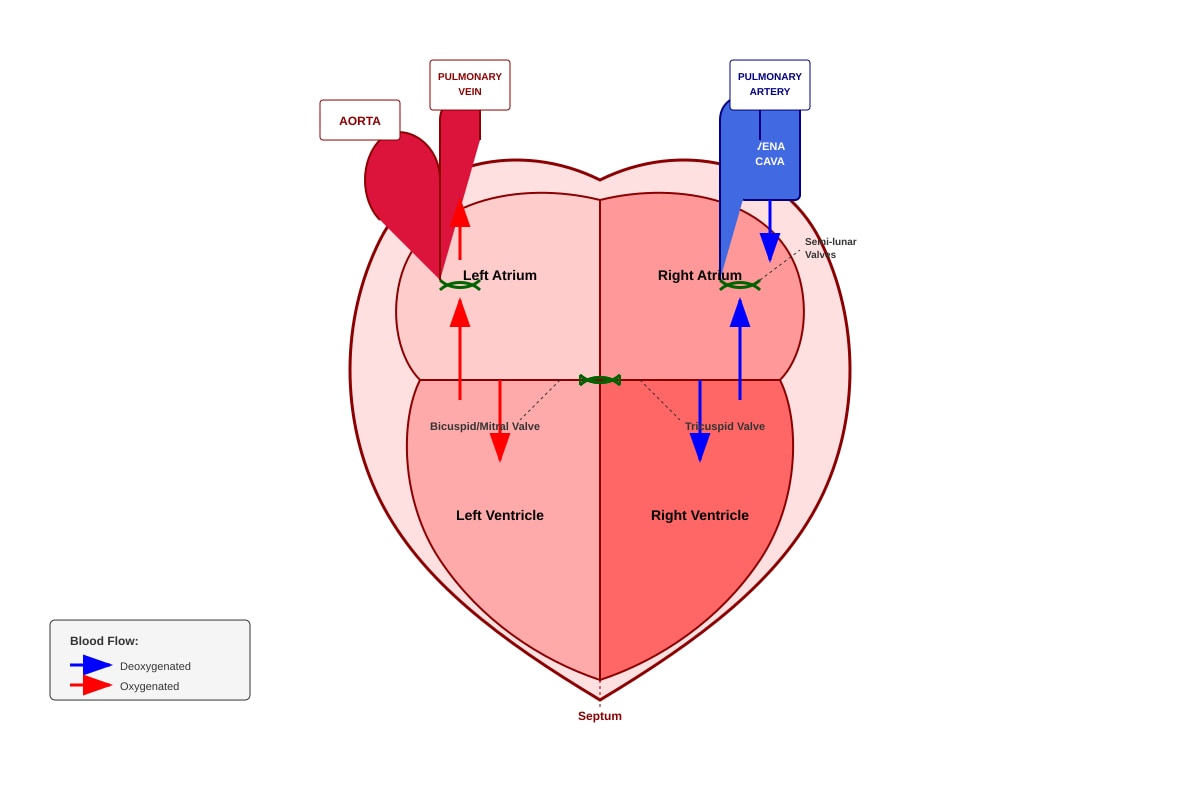
11(a). Bicuspid valve / mitral valve [1]
- Accept: left atrioventricular valve
11(b). Oxygenated blood: [2]
-
Enters left atrium via pulmonary vein [1]
-
Passes through bicuspid valve into left ventricle, then through semi-lunar (aortic) valve into aorta to body [1]
-
Teaching note: The left side of the heart handles oxygenated blood; the right side handles deoxygenated blood. This separation is maintained by the septum. Remember: pulmonary vein = only vein with oxygenated blood; pulmonary artery = only artery with deoxygenated blood.
12(a). Three conditions for photosynthesis: [3]
- Light energy [1]
- Chlorophyll [1]
- Suitable temperature (for enzyme action) [1]
- Carbon dioxide and water are reactants, not conditions—accept if specified as "sufficient carbon dioxide and water"
12(b). Glucose is converted to starch because: [2]
-
Starch is insoluble, so it does not affect water potential/osmotic balance of cells [1]
-
Starch is a compact storage molecule; glucose would cause water to enter cells by osmosis if stored as glucose [1]
-
Teaching note: Soluble glucose would increase solute concentration, lowering water potential and causing water to enter by osmosis, potentially damaging cells. Starch is osmotically inactive. When energy is needed, starch is converted back to glucose for respiration or transport as sucrose.
13(a). Word equation for anaerobic respiration in yeast: [2]
- Glucose → ethanol + carbon dioxide (+ energy) [2]
- Accept 1 mark for: glucose → alcohol + carbon dioxide
13(b). Dough rises because: [2]
-
Carbon dioxide produced by yeast respiration forms gas bubbles in the dough [1]
-
The gas expands during baking, creating a light, airy texture in the bread [1]
-
Teaching note: The ethanol mostly evaporates during baking. In beer/wine production, ethanol is the desired product, and CO₂ may be allowed to escape or is contained for carbonation.
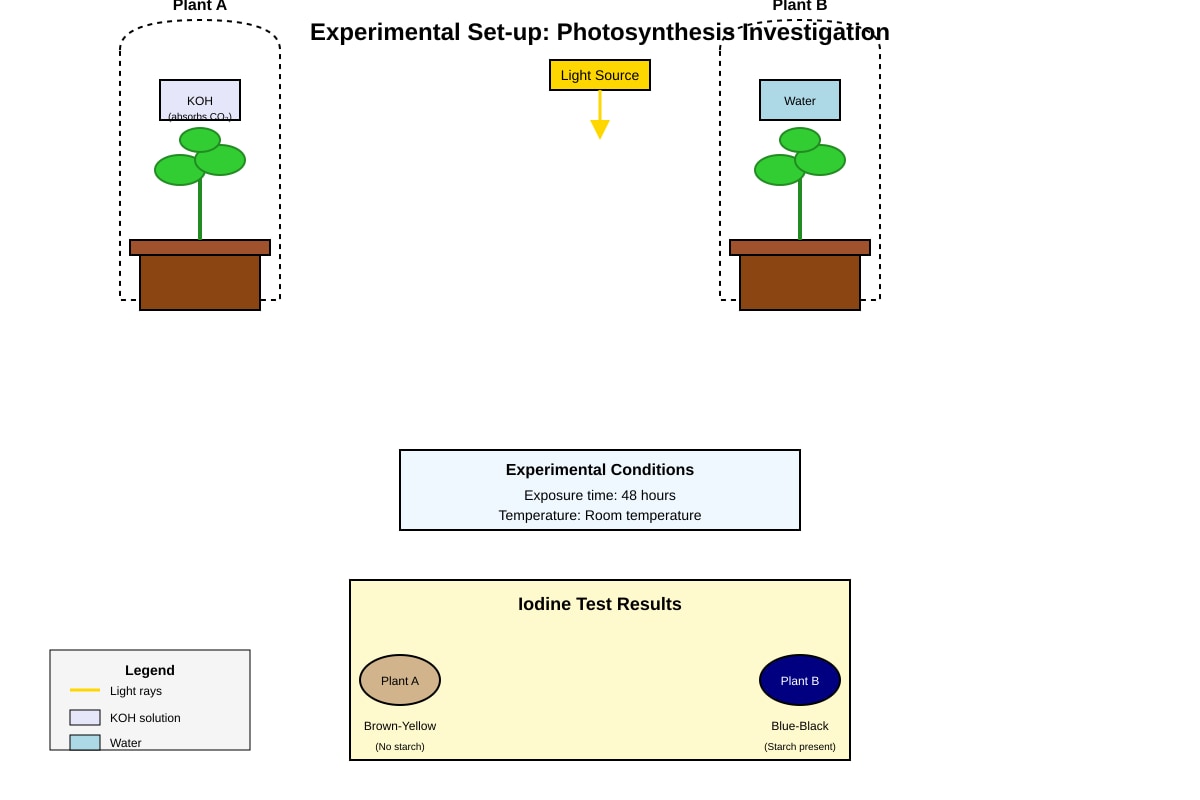
14(a). Both plants destarched to: [1]
- Remove any existing starch so that only starch produced during the experiment is detected (fair test/control of variable)
14(b). Plant A result (brown-yellow, no starch): [2]
-
Potassium hydroxide absorbs carbon dioxide from the air in the bell jar [1]
-
Without carbon dioxide, photosynthesis cannot occur, so no starch is made; iodine stays brown-yellow [1]
-
Teaching note: Potassium hydroxide is an alkali that reacts with acidic carbon dioxide. This is a classic Blackman experiment demonstrating CO₂ as a raw material for photosynthesis. Always destarch by leaving in darkness for 48 hours before such experiments.
14(c). Plant B is a control [1]
- Shows that normal photosynthesis (with CO₂ present) produces starch, proving CO₂ is the variable causing the difference
15(a). Percentage decrease in oxygen: [2]
Working:
Percentage decrease = [(21 − 16) / 21] × 100% [1 for method]
= (5 / 21) × 100%
= 23.8% or 24% or 19% if using (5/26)—accept 23.8% [1 for answer]
- Marking note: If student calculates as (5/16)×100 = 31.3%, award 1 mark for showing subtraction of 16 from 21
15(b). Expired air has more carbon dioxide because: [2]
-
Carbon dioxide is produced as a waste product of aerobic respiration in body cells [1]
-
This CO₂ diffuses from blood into alveoli and is exhaled [1]
-
Teaching note: The concentration remains low (4%) because blood is constantly moving, CO₂ is efficiently transported (as hydrogencarbonate ions, carbamino-haemoglobin, and dissolved CO₂), and ventilation keeps alveolar air relatively fresh.
Section C: Structured Response (Questions 16–20)
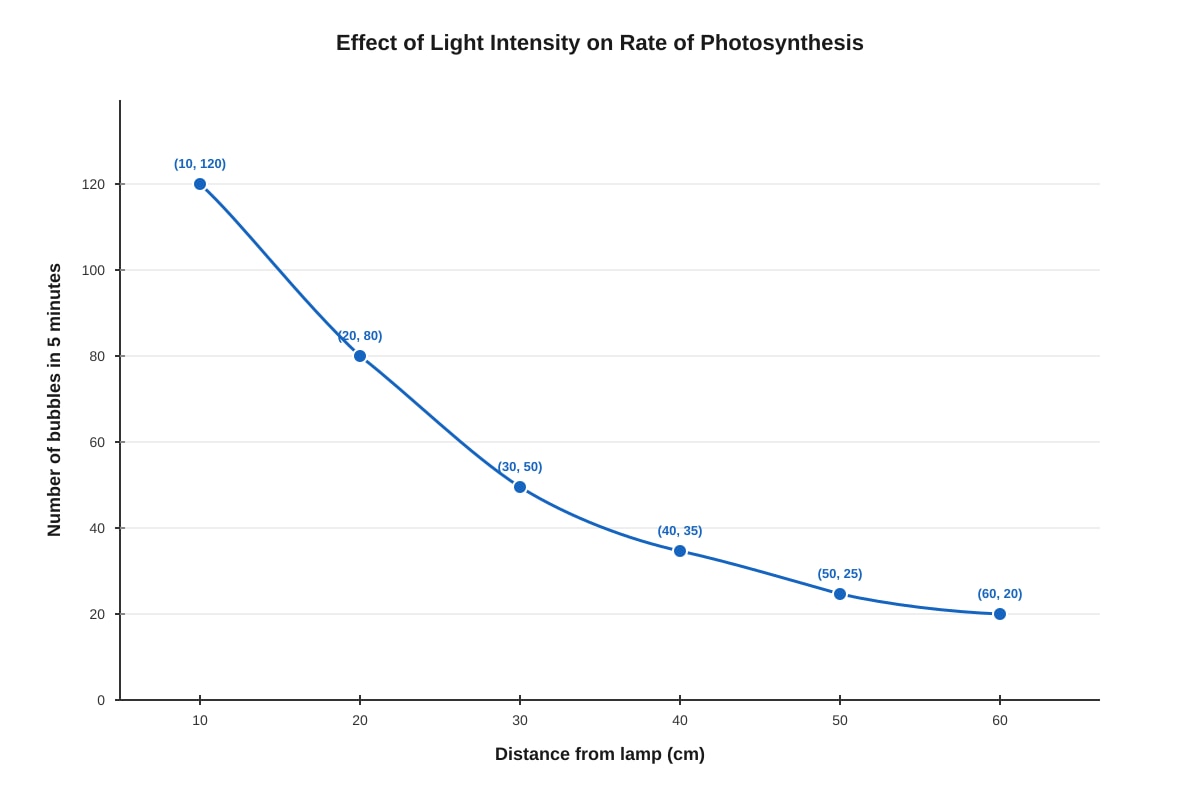
16(a). Relationship: [2]
- As distance from lamp increases (light intensity decreases), rate of photosynthesis decreases [1]
- The relationship is non-linear: rate decreases rapidly at first, then more gradually at greater distances [1]
16(b). Explanation: [2]
- Light intensity decreases with distance (inverse square law) [1]
- Less light energy available means less excitation of chlorophyll electrons, less ATP and reduced NADP produced in light-dependent stage, so less carbon fixation in Calvin cycle [1]
16(c). Two controlled variables: [2]
- Any two from: temperature (maintained at 25°C); carbon dioxide concentration (same sodium hydrogen carbonate concentration); same plant species/leaf area; same volume/mass of plant material; same time period (5 minutes); same light bulb/wattage [2]
16(d). Improvement: [1]
- Any one from: repeat the experiment and calculate mean; use more temperatures/light intensities; use a buffer to maintain constant CO₂; measure rate more precisely (e.g., volume of gas using syringe); control room temperature fluctuations
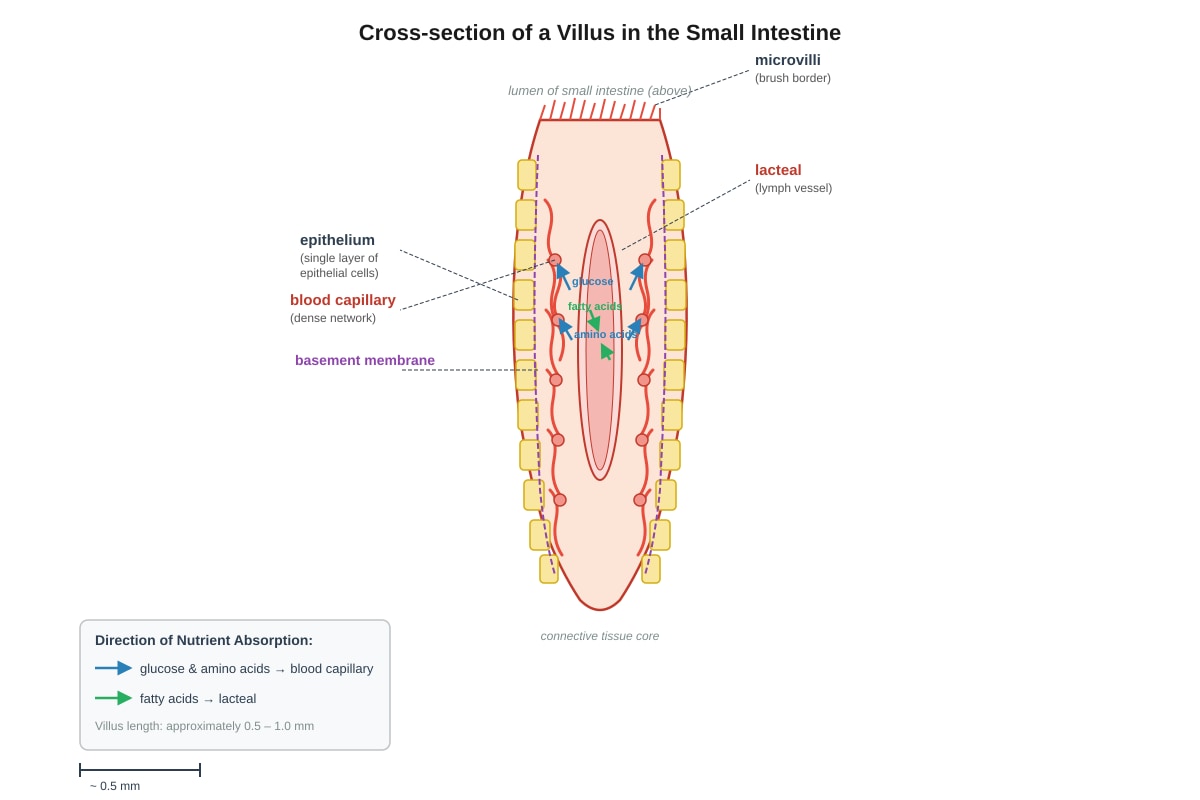
17(a). Arteriole and venule (or small artery and small vein/capillary network) [2]
-
Accept: hepatic portal vessel reference if student identifies vessel carrying absorbed nutrients to liver
-
Actually expected: arteriole and venule or blood capillaries forming network [1 each]
-
Teaching note: The villus contains a network of blood capillaries (for glucose, amino acids, water-soluble vitamins, minerals) and a central lacteal (for fatty acids and glycerol, fat-soluble vitamins).
17(b). Three structural adaptations of villus for absorption: [3]
- Large surface area: villi increase intestinal surface area ~10×; microvilli increase further ~20× more [1]
- Thin wall (single layer of epithelial cells) provides short diffusion distance for nutrients [1]
- Good blood supply maintains concentration gradient by removing absorbed nutrients quickly; dense capillary network near surface [1]
17(c). Lacteal function: [1]
- Absorbs fatty acids and glycerol (products of fat digestion); transports lipids via lymphatic system
18(a). Double circulation definition: [2]
- Blood passes through the heart twice during one complete circuit of the body [1]
- Pulmonary circulation (heart → lungs → heart) and systemic circulation (heart → body → heart) are separate [1]
18(b). Efficiency of double circulation: [3]
-
Blood returning from lungs is fully oxygenated before being pumped to body at high pressure [1]
-
Separation allows systemic blood to be pumped at higher pressure than pulmonary blood (preventing lung damage) [1]
-
Faster delivery of oxygen to tissues and removal of waste; maintains higher blood flow rate to meet metabolic demands of active organisms [1]
-
Teaching note: Single circulation (fish) means blood loses pressure in gills, so body receives lower pressure/flow. Double circulation evolved with land vertebrates to support higher metabolic rates.
18(c). Advantage of increased heart rate during exercise: [2]
- Increases rate of blood flow to muscles, delivering more oxygen and glucose for respiration [1]
- Increases removal of carbon dioxide and lactic acid, preventing fatigue/maintaining pH [1]
19(a). Biological powder more effective because: [3]
- Protease breaks down protein-based stains (blood contains haemoglobin, a protein) into amino acids/peptides [1]
- Lipase breaks down fats/oils in grease into fatty acids and glycerol [1]
- Enzymes are specific catalysts that work efficiently at moderate temperatures, breaking large insoluble molecules into smaller soluble ones that dissolve in water [1]
19(b). Not above 40°C because: [2]
- Enzymes in the powder are proteins that denature at high temperatures [1]
- Above optimum, active site shape is destroyed, so enzymes cannot catalyse stain breakdown; powder becomes ineffective [1]
19(c). Clothes feel softer because: [2]
-
Cellulase breaks down microfibrils of cellulose on cotton fabric surface that make clothes stiff/rough [1]
-
This removes raised fibres/pilling, leaving smoother fabric surface; may also release trapped dirt [1]
-
Teaching note: Cellulase is a controversial addition—while effective for softness and colour brightening (by removing dull surface fibres), excessive use can weaken fabric over time.
20(a). Order from highest to lowest water loss: B > D > A > C [1 for correct order]
Reasoning: [3]
- B (35°C, low humidity): High temperature increases kinetic energy of water molecules, increasing evaporation; low humidity maintains steep water potential gradient from leaf to air [1]
- D (air movement): Wind removes humid air near stomata, maintaining diffusion gradient; moderate temperature and humidity [1]
- A (normal room): Moderate conditions as baseline; still air allows boundary layer of humid air to develop, reducing gradient [1]
- C (cool, humid): Low temperature reduces kinetic energy; high humidity reduces water potential gradient; least favourable for transpiration [1]
20(b). Stomatal regulation of water loss: [3]
- Guard cells around stomata change shape to open/close pore [1]
- In light/low CO₂/low water stress: guard cells take up water by osmosis (K⁺ accumulated), become turgid, bow apart, opening stoma for gas exchange [1]
- In darkness/high CO₂/water stress: guard cells lose water, become flaccid, close stoma, reducing water loss while still allowing some gas exchange through cuticle [1]
20(c). Xerophytic adaptation and function: [2]
- Any one from:
- Thick waxy cuticle: Reduces water loss by evaporation through leaf surface [1+1]
- Sunken stomata in pits: Traps humid air, reducing diffusion gradient [1+1]
- Reduced leaf surface area/needle-like leaves (spines): Decreases area for water loss, often compensated by green stems for photosynthesis [1+1]
- Hairs on leaf surface: Traps moist air boundary layer, reducing transpiration gradient [1+1]
- CAM photosynthesis (stomata open at night): Reduces water loss when temperatures are lower; CO₂ stored as malic acid for daytime use [1+1]
- Extensive root systems: Maximises water absorption from soil [1+1] (but this doesn't directly reduce water loss—accept with caveat)
TOTAL: 40 MARKS