From Real Exams Quiz
Secondary 3 Combined Science Life Sciences Quiz
Free Sec 3 Combined Sci Life Sciences quiz, HY3 Exam version, with questions, answers, and O Level-style practice for Singapore students.
These static practice materials are generated from the site's syllabus and paper-generation workflow, with source and model context shown so students and parents can evaluate the material before use.
Questions
Free quiz and exam paper access
Enter your details to view this paper
Your access is remembered on this device.
Answers
Answer Key: Secondary 3 Combined Science Quiz - Life Sciences
Total Marks: 40
Topic: Life Sciences
Section A Answers (Q1–5)
Q1 [1]
Answer: Controls what enters and leaves the cell (selectively permeable).
Teaching note: The cell membrane is a phospholipid bilayer that allows some substances to pass but not others. Any one correct function accepted.
Q2 [1]
Answer: Mitochondrion (mitochondria).
Teaching note: Aerobic respiration occurs in the mitochondria, where glucose and oxygen produce ATP.
Q3 [2]
Answer: Diffusion is the net movement of particles from a region of higher concentration to a region of lower concentration.
Marking: 1 mark for movement from high to low concentration; 1 mark for "net movement" or passive process.
Common mistake: Saying "anything moves" without direction.
Q4 [1]
Answer: Pulmonary artery.
Teaching note: Unusual because it carries deoxygenated blood away from heart to lungs.
Q5 [1]
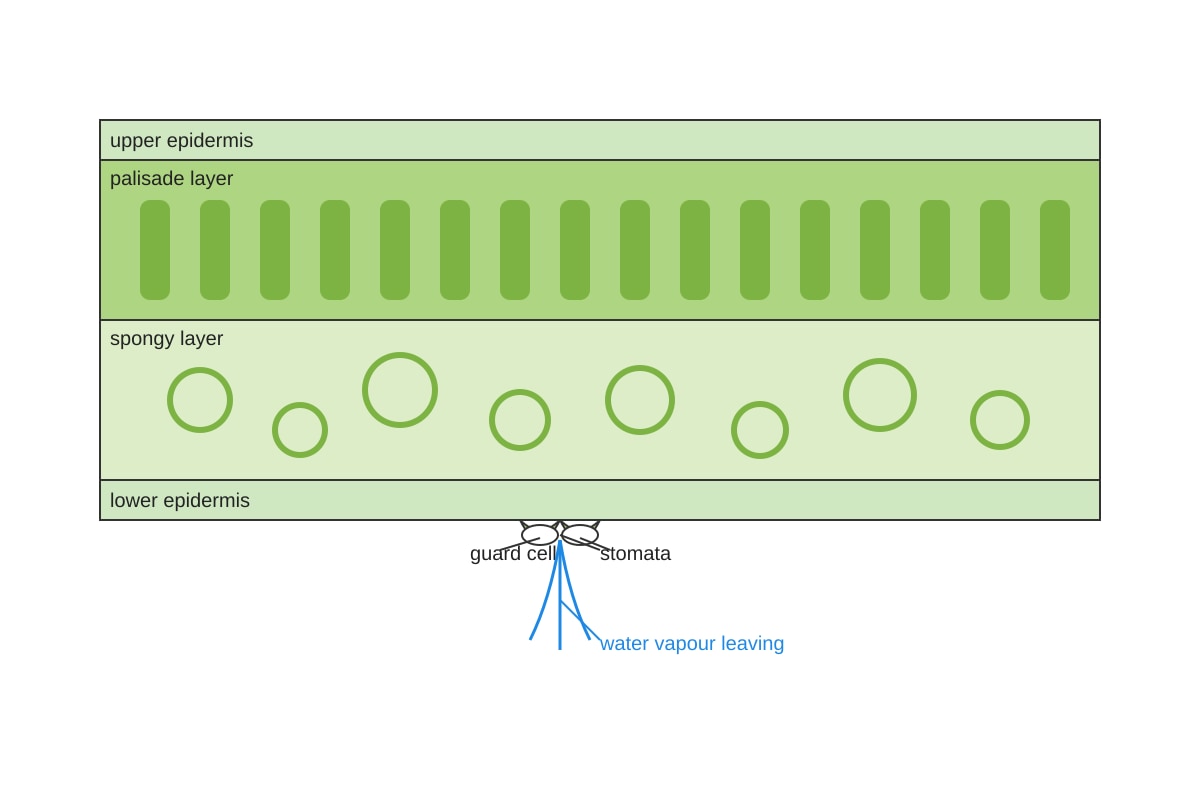
Answer: Transpiration.
Teaching note: Water loss from leaves via stomata.
Section B Answers (Q6–15)
Q6 [3]
Answer:
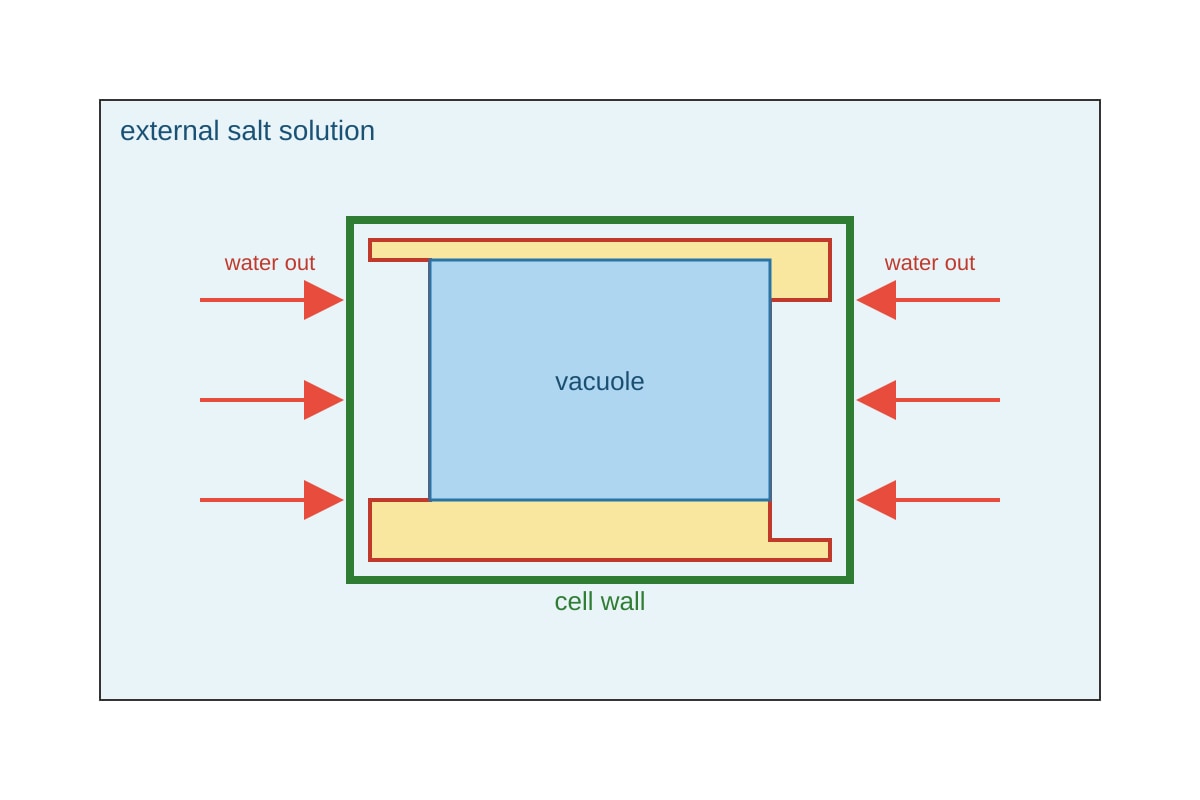
- Salt solution has lower water potential than cell sap [1]
- Water leaves cell by osmosis [1]
- Vacuole shrinks, membrane pulls from wall (plasmolysis) [1]
Teaching note: Plasmolysis occurs when external solution is hypertonic.
Q7 [2]
Answer: Function: transports water/minerals up plant [1]; Adaptation: lignified walls / hollow tube [1].
Teaching note: Do not confuse with phloem (food transport).
Q8 [1]
Answer: Transpiration pull (or capillarity).
Teaching note: Main force is transpiration pull from leaves.
Q9 [4]
Answer:
- Oxygenated blood from lungs via pulmonary veins to left atrium [1]
- Left atrium contracts, pushing blood to left ventricle [1]
- Left ventricle contracts [1] 4. Blood forced through aortic valve into aorta [1]
Q10 [1]
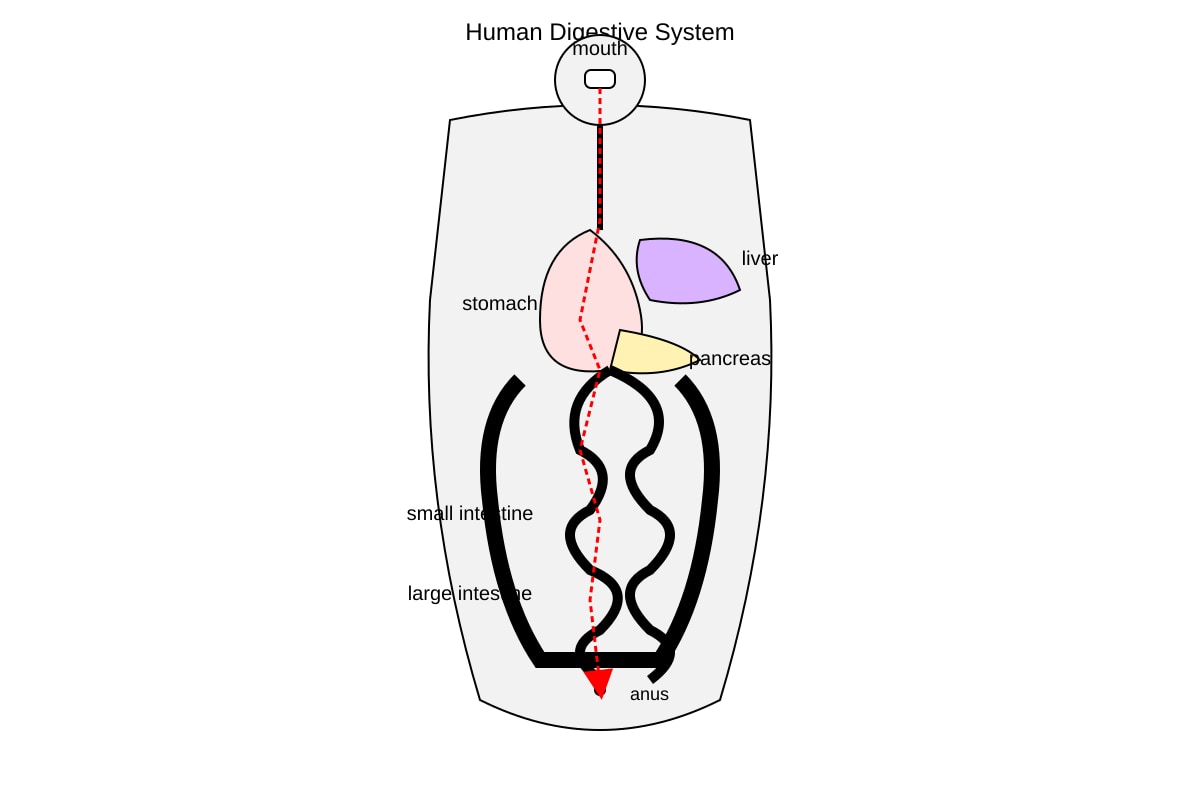
Answer: Small intestine.
Teaching note: Villi increase surface area for absorption.
Q11 [2]
Answer: Temperature [1], pH [1] (also substrate concentration accepted).
Q12 [2]
Answer: Diffusion is down concentration gradient, no energy needed [1]; active transport moves against gradient using ATP [1].
Q13 [3]
Answer:
- Water potential higher in pure water than potato [1]
- Water enters potato by osmosis [1]
- Potato turgid, pushes lever down [1]
Q14 [1]
Answer: Prevents backflow from aorta to left ventricle.
Q15 [1]
Answer: Stomata (guard cells).
Section C Answers (Q16–20)
Q16 [5]
Answer:
- Root hair absorbs water from soil [1]
- Through cortex to xylem [1]
- Xylem transports up stem [1]
- To leaves [1]
- Out via stomata (transpiration) [1]
Q17 [4]
Answer:
- Aerobic uses oxygen, more ATP [1]; product CO₂ + water [1]
- Anaerobic no oxygen, less ATP [1]; product lactic acid [1]
Q18 [3]
Answer:
- Kidney tubules reabsorb useful substances [1]
- Damage causes loss of salts/water imbalance [1]
- Homeostasis disrupted [1]
Q19 [3]
Answer:
- Valves (e.g. bicuspid/tricuspid) stop backflow [1.5]
- Tendons/chords limit flap [1.5]
Q20 [4]
Answer: Optimum pH = 7 [1]. Rate increases to pH 7 then falls [1]; enzymes denature at extreme pH [1]; shape of active site changes [1].