From Real Exams Quiz
Secondary 3 Combined Science Chemistry Materials Quiz
Free Sec 3 Combined Sci Chemistry Materials quiz, HY3 Exam version, with questions, answers, and O Level-style practice for Singapore students.
These static practice materials are generated from the site's syllabus and paper-generation workflow, with source and model context shown so students and parents can evaluate the material before use.
Questions
Free quiz and exam paper access
Enter your details to view this paper
Your access is remembered on this device.
Answers
Secondary 3 Combined Science Quiz - Chemistry Materials (Answer Key)
Total Marks: 40
Topic: Chemistry Materials
Section A (1 mark each)
1. C
Teaching note: Metallic bonding gives metals a sea of delocalised electrons, allowing layers to slide (malleable/ductile) and a lustre. A, B, D describe non-metals or incorrect properties.
2. B
Teaching note: Alloys are mixtures of a metal with another metal or carbon (e.g., steel = Fe + C). This improves properties.
3. C
Teaching note: Ceramics are non-metallic, heat-resistant solids; porcelain is a ceramic. Aluminium/steel are metals; polyethene is polymer.
4. A
Teaching note: Polymers are formed from repeating monomer units joined by polymerization.
5. C
Teaching note: Metallic bonding = positive metal ions in delocalised electron sea. Ionic = ions; covalent = shared electrons; hydrogen = weak intermolecular.
Section B (2 marks each)
6. Property: High melting point (1). Use: Cookware / furnace lining (1).
Teaching note: Ceramics resist heat due to strong covalent/ionic bonds in network.
7. Pure iron has regular layers of atoms that slide easily (1); steel has carbon atoms disrupting layers, making it harder (1).
Teaching note: Dislocations in lattice are blocked by foreign atoms.
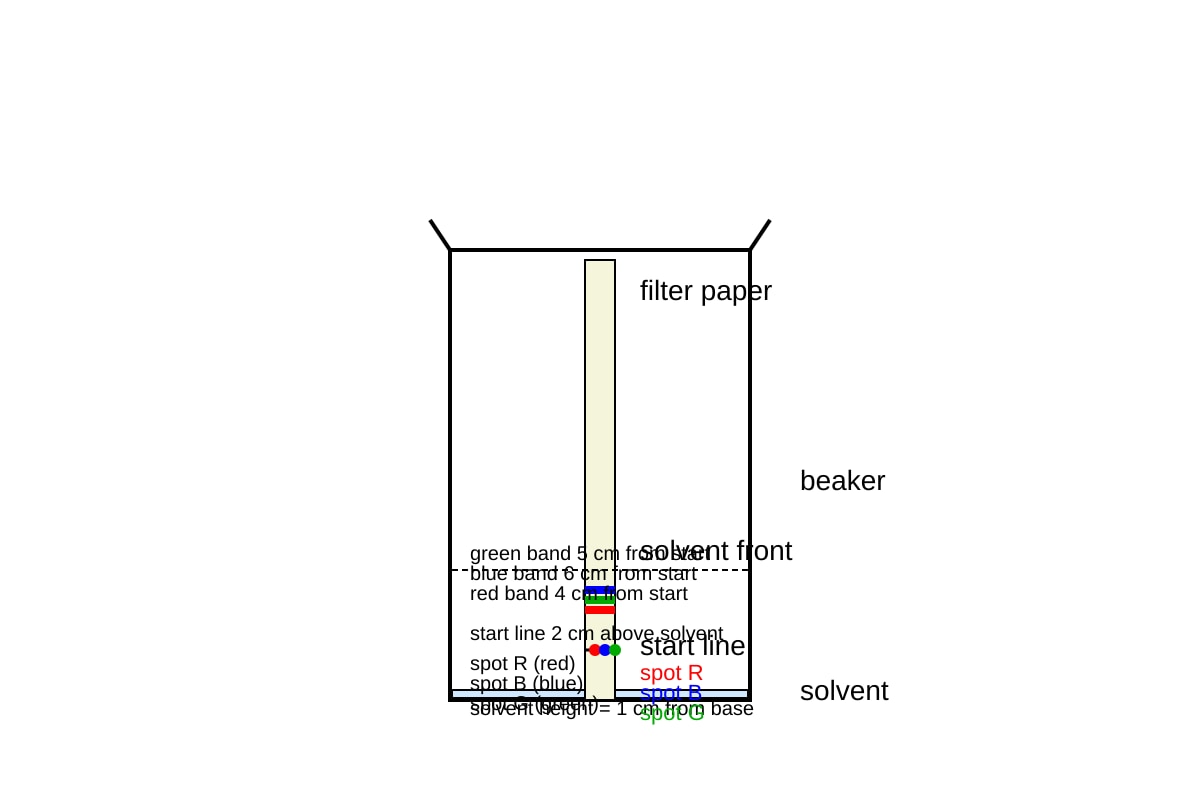
8. Process: Chromatography (1). Apparatus: Filter paper / beaker / capillary tube (1).
Teaching note: Chromatography separates by differential solubility/movement.
9. Any two: light weight, cheap, corrosion resistant, easy moulding (2).
Teaching note: Polymers have low density and versatile processing.
10. Bonding: Covalent network with delocalised electrons (1). Explanation: Delocalised electrons between layers carry charge (1).
Teaching note: Graphite has layers of hexagons with one free electron per C.
Section C (3–4 marks each)
11. Diamond has a giant covalent network of C atoms, each bonded to 4 others tetrahedrally (1). This makes it very hard (1). Hardness allows cutting of other materials (1).
Marking: 1 per point.
12. Steel (metal) feels hot quickly because delocalised electrons transfer heat fast (1.5). Plastic (polymer) feels less hot as covalent bonds/vibrations transfer heat poorly (1.5).
Teaching note: Metals conduct; polymers insulate.
13. Red spot moved furthest = travelled highest Rf (1). It is more soluble in solvent / less attracted to paper (1). Different distances show components separated (1).
Teaching note: Rf = distance spot / distance solvent front.
14. Brass = Cu + Zn (1). Different sized atoms distort layers (1). Distortion prevents sliding, increasing hardness (1).
Marking: 3 marks for alloy composition + distortion + hardness link.
15. (a) Ethene / C2H4 (1). (b) Adv: cheap, light (1). Dis: non-biodegradable (1).
Teaching note: Addition polymer from alkene.
16. (i) Ionic: ions; Covalent: atoms (2). (ii) Ionic conducts when molten (ions free); Covalent does not (2).
Marking: 1 each subsection.
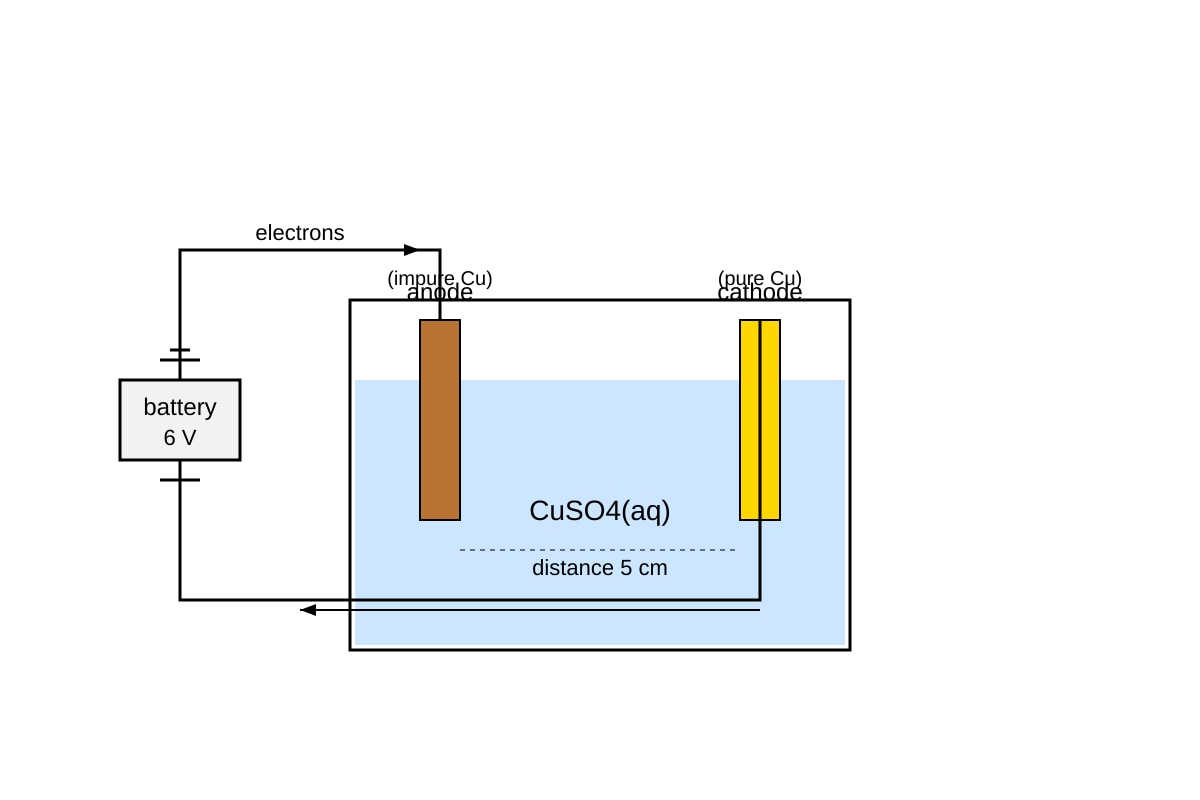
17. Anode: Impure Cu dissolves: Cu → Cu²⁺ + 2e⁻ (2). Cathode: Cu²⁺ + 2e⁻ → Cu deposited (2).
Teaching note: Purification via electrolytic displacement.
18. e.g., higher strength, better catalyst (2). Application: sunscreen / electronics (1).
Marking: 2 for properties, 1 application.
19. Reduces landfill (1), saves crude oil (1), lowers emissions (1).
Teaching note: Polymers from fossil feedstock; recycling conserves.
20. P: metal (1); Q: ionic (1); R: ceramic (1); S: polymer (1).
Teaching note: P conducts+high MP = metal; Q dissolves not conduct = ionic; R hard transparent = ceramic; S floats flexible = polymer.