AI Generated Exam Paper
Secondary 3 Combined Science Practice Paper 5
Free Sec 3 Combined Sci Practice Paper 5, HY3 AI version, with questions, answers, and O Level-style practice for Singapore students.
These static practice materials are generated from the site's syllabus and paper-generation workflow, with source and model context shown so students and parents can evaluate the material before use.
Questions
TuitionGoWhere Practice Paper - Combined Science Secondary 3
TuitionGoWhere Practice Paper (AI) — Version 5 of 5
Subject: Combined Science
Level: Secondary 3
Paper: Practice Paper (Physical Sciences Focus)
Duration: 1 hour 15 minutes
Total Marks: 65
Name: ___________________________
Class: ___________________________
Date: ___________________________
Instructions:
- This practice paper covers Physical Sciences topics suitable for Secondary 3 Combined Science.
- Answer all questions in the spaces provided.
- Show your working clearly where calculations are required.
- Use a calculator if permitted by your school.
- Marks for each question are shown in brackets [ ].
- Section marks and total marks are given at the end of each section.
Section A: Measurement, Kinematics and Dynamics (Questions 1–8) [24 marks]
1. State the SI unit for each of the following physical quantities. [2]
(a) Force
(b) Acceleration
2. A student uses a metre rule to measure the length of a wooden block and records it as 12.4 cm. State one source of uncertainty in this measurement. [1]
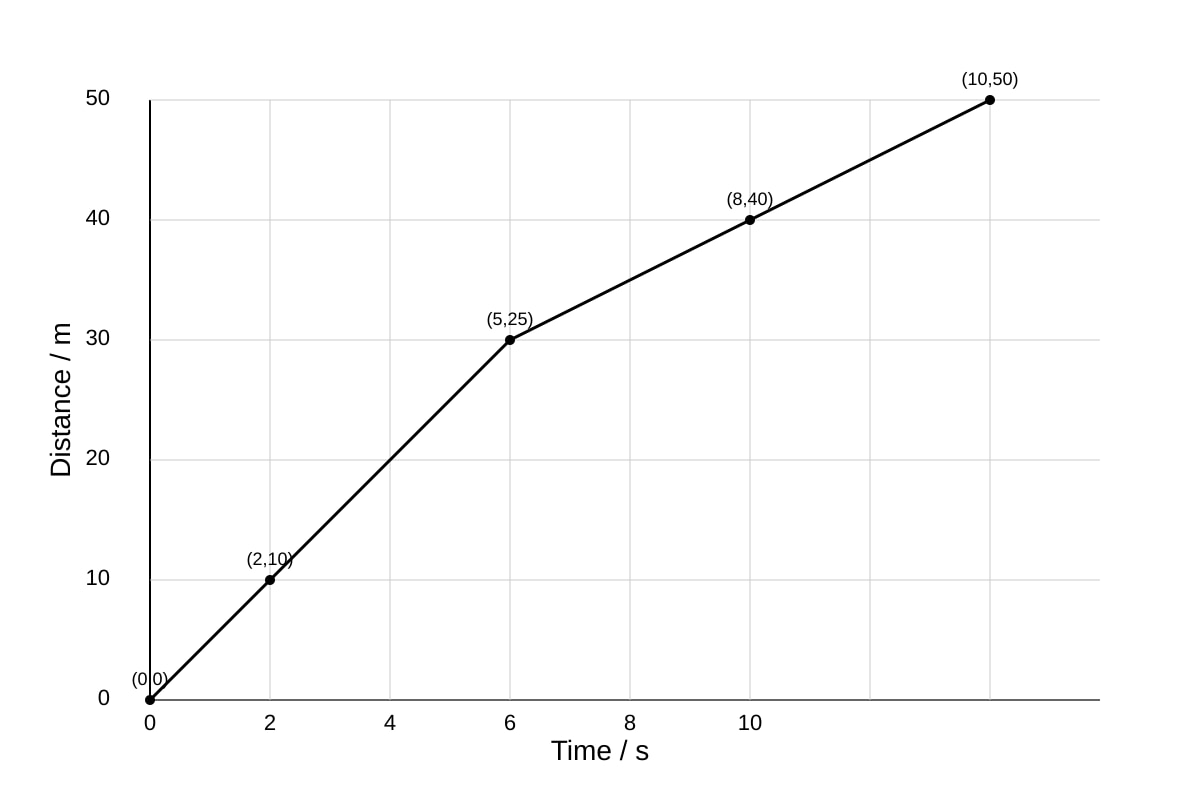
3. The diagram below shows a distance–time graph for a cyclist.
Image pending generation: graph for Q3.
Calculate the average speed of the cyclist between 0 s and 10 s. [2]
4. Define displacement. [1]
5. A car accelerates uniformly from rest to 20 m/s in 5 s. Calculate its acceleration. [2]
6. State Newton’s First Law of Motion. [1]
7. A box of mass 4 kg is pushed across a horizontal floor with a force of 10 N and experiences a frictional force of 2 N. Calculate the acceleration of the box. [3]
8. Explain why a passenger in a moving bus tends to fall forward when the bus suddenly stops. [2]
Section B: Energy, Pressure and Thermal Physics (Questions 9–14) [20 marks]
9. State the Principle of Conservation of Energy. [2]
10. A ball of mass 0.4 kg is dropped from a height of 5 m. Using g=10 m/s2, calculate its gravitational potential energy at the top. [2]
11. A hammer of mass 2 kg falls from rest through 3 m and strikes a nail. Using conservation of energy, calculate the kinetic energy of the hammer just before impact. [3]
12. Define pressure and state the formula for pressure due to a liquid column of height h. [2]
13. A rectangular metal block has dimensions 0.20 m × 0.10 m × 0.05 m and weighs 30 N. It rests on its largest face. Calculate the pressure it exerts on the table. [3]
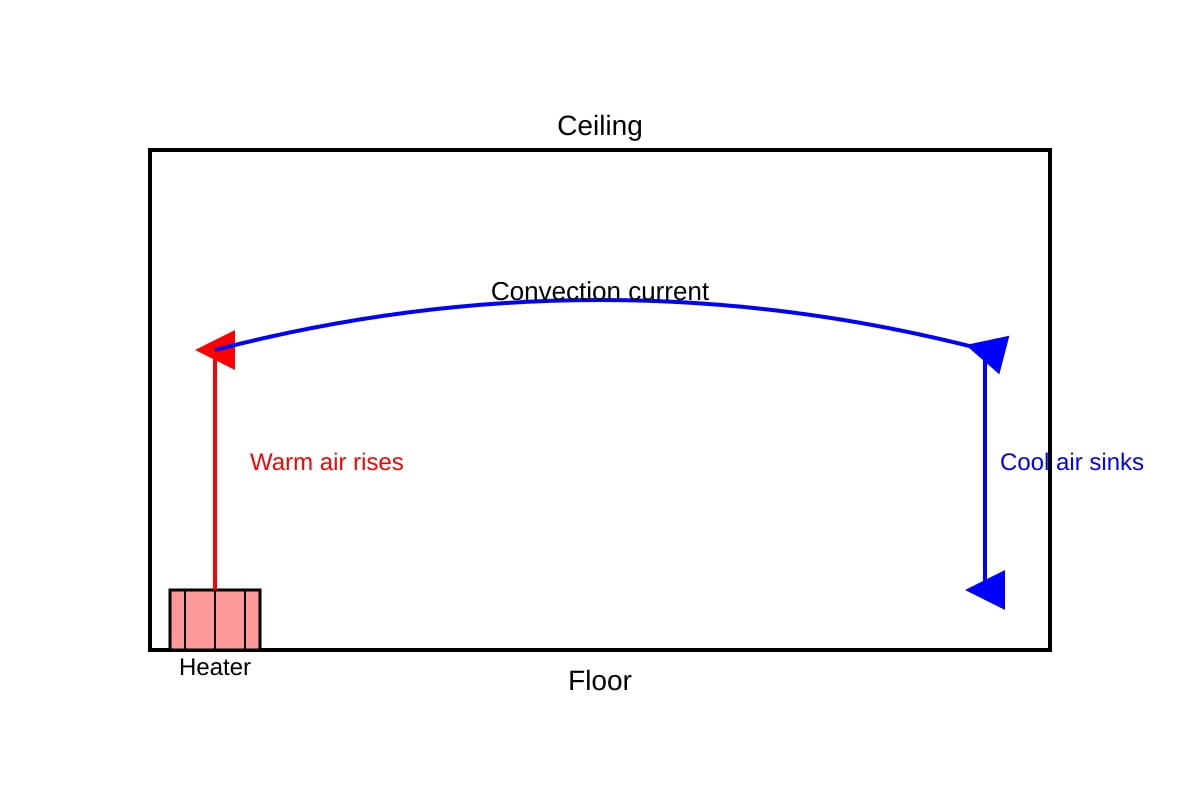
14. The figure shows a simple convection current in a room with a heater.
Image pending generation: diagram for Q14.
Explain how convection transfers heat in this room. [3]
Section C: Waves, Electricity and Magnetism (Questions 15–20) [21 marks]
15. State one difference between transverse and longitudinal waves. [1]
16. A ray of light strikes a plane mirror at an angle of incidence of 35°. State the angle of reflection. [1]
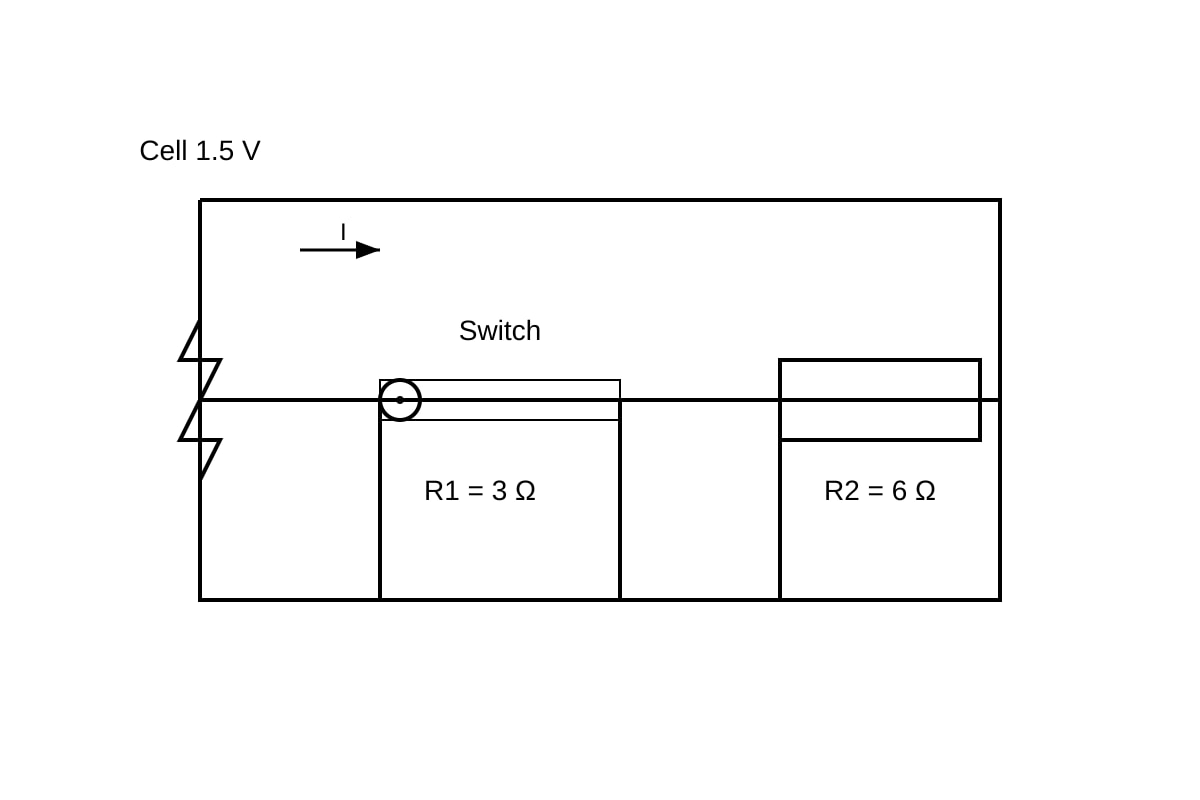
17. The diagram shows a simple series circuit.
Image pending generation: circuit for Q17.
Calculate the total resistance and the current in the circuit. [3]
18. State Ohm’s Law. [1]
19. Two resistors of 4 Ω and 6 Ω are connected in parallel to a 12 V battery. Calculate the total resistance of the combination. [3]
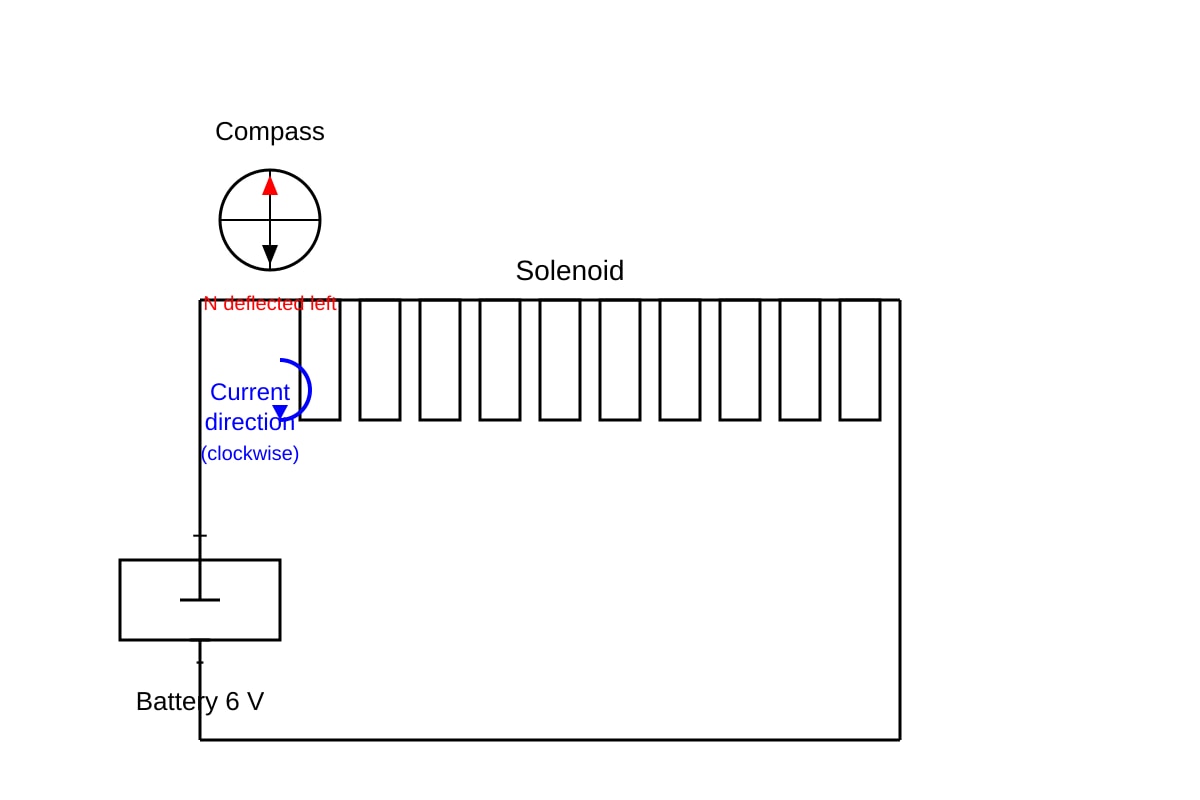
20. A solenoid is connected to a battery as shown.
Image pending generation: experimental_setup for Q20.
(a) State the polarity of the left end of the solenoid. [1]
(b) Explain how the magnetic field of the solenoid can be increased. [2]
Total Marks for Paper: 65
Answers
TuitionGoWhere Practice Paper — Answer Key (Version 5)
Subject: Combined Science
Level: Secondary 3
Paper: Practice Paper (Physical Sciences Focus)
Total Marks: 65
Section A Answers (24 marks)
1. [2]
(a) newton (N) — [1]
(b) metre per second squared (m/s²) — [1]
Teaching note: SI units are standard international units. Force is measured in newtons, acceleration in m/s².
2. [1]
Any one: parallax error, limited resolution of metre rule (e.g., 0.1 cm), observer judgment. — [1]
Marking note: Accept any reasonable source of uncertainty.
3. [2]
Average speed = total distance / total time = 50 m / 10 s = 5 m/s. — [2]
Working: From graph, at 10 s distance = 50 m. Speed = 50/10 = 5 m/s.
4. [1]
Displacement is the shortest distance from start to end point in a given direction. — [1]
Note: Must include "direction" to distinguish from distance.
5. [2]
a=(v−u)/t=(20−0)/5=4 m/s2. — [2]
Working: u=0, v=20, t=5; a = 20/5 = 4 m/s².
6. [1]
An object at rest stays at rest, and an object in motion continues in uniform motion unless acted on by a resultant external force. — [1]
7. [3]
Resultant force = 10 N - 2 N = 8 N. — [1]
a=F/m=8/4=2 m/s2. — [2]
Marking: 1 for net force, 2 for correct acceleration with unit.
8. [2]
Passenger’s body is in motion with bus. — [1]
When bus stops suddenly, lower body stops but upper body continues forward due to inertia. — [1]
Section B Answers (20 marks)
9. [2]
Energy cannot be created or destroyed, only converted from one form to another; total energy in a closed system is constant. — [2] (1 each point)
10. [2]
PE = mgh = 0.4 × 10 × 5 = 20 J. — [2]
Working: substitution and answer with unit.
11. [3]
Loss in PE = mgh = 2 × 10 × 3 = 60 J. — [1]
By conservation, KE gained = 60 J. — [2]
Note: KE just before impact = 60 J.
12. [2]
Pressure is force per unit area. — [1]
Liquid pressure: P=ρgh. — [1]
13. [3]
Largest face area = 0.20 × 0.10 = 0.020 m². — [1]
Pressure = F/A = 30 / 0.020 = 1500 Pa. — [2]
14. [3]
Heater warms air nearby; warm air expands, becomes less dense and rises. — [1]
Cooler denser air sinks to replace it. — [1]
Circulation (convection current) transfers heat around room. — [1]
Section C Answers (21 marks)
15. [1]
Transverse: oscillations perpendicular to direction of travel; longitudinal: parallel. — [1]
16. [1]
Angle of reflection = 35°. — [1] (law of reflection)
17. [3]
Total R = 3 + 6 = 9 Ω. — [1]
I = V/R = 1.5 / 9 = 0.167 A. — [2]
18. [1]
Current through a conductor is directly proportional to potential difference across it, at constant temperature. — [1]
19. [3]
1/RT=1/4+1/6=(3+2)/12=5/12. — [2]
RT=12/5=2.4 Ω. — [1]
20. [3]
(a) Left end is South pole (current clockwise → S at left). — [1]
(b) Increase current, increase number of turns, insert iron core. — [2] (any two)
End of Answer Key — Total 65 marks
Free quiz and exam paper access
Enter your details to view this paper
Your access is remembered on this device.