AI Generated Exam Paper
Secondary 3 Combined Science Practice Paper 3
Free Sec 3 Combined Sci Practice Paper 3, HY3 AI version, with questions, answers, and O Level-style practice for Singapore students.
These static practice materials are generated from the site's syllabus and paper-generation workflow, with source and model context shown so students and parents can evaluate the material before use.
Questions
TuitionGoWhere Practice Paper - Combined Science Secondary 3
TuitionGoWhere Practice Paper (AI) — Version 3 of 5
Subject: Combined Science
Level: Secondary 3
Paper: Practice Paper (Physical Sciences)
Duration: 1 hour 15 minutes
Total Marks: 65
Name: ______________________
Class: _________
Date: ___________
Instructions:
- This practice paper covers Physical Sciences topics for Secondary 3 Combined Science.
- Answer all questions in the spaces provided.
- Show your working clearly where calculations are required.
- Use SI units in your answers.
- Marks for each question are shown in brackets [ ].
- Section marks and question marks add up to 65.
Section A: Multiple Choice and Short Answer (1–8) [20 marks]
1. State the Principle of Conservation of Energy. [2]
2. A book of mass 1.2 kg is lifted vertically to a shelf 1.5 m above the ground. Calculate the gain in gravitational potential energy. Use g=10 m s−2. [2]
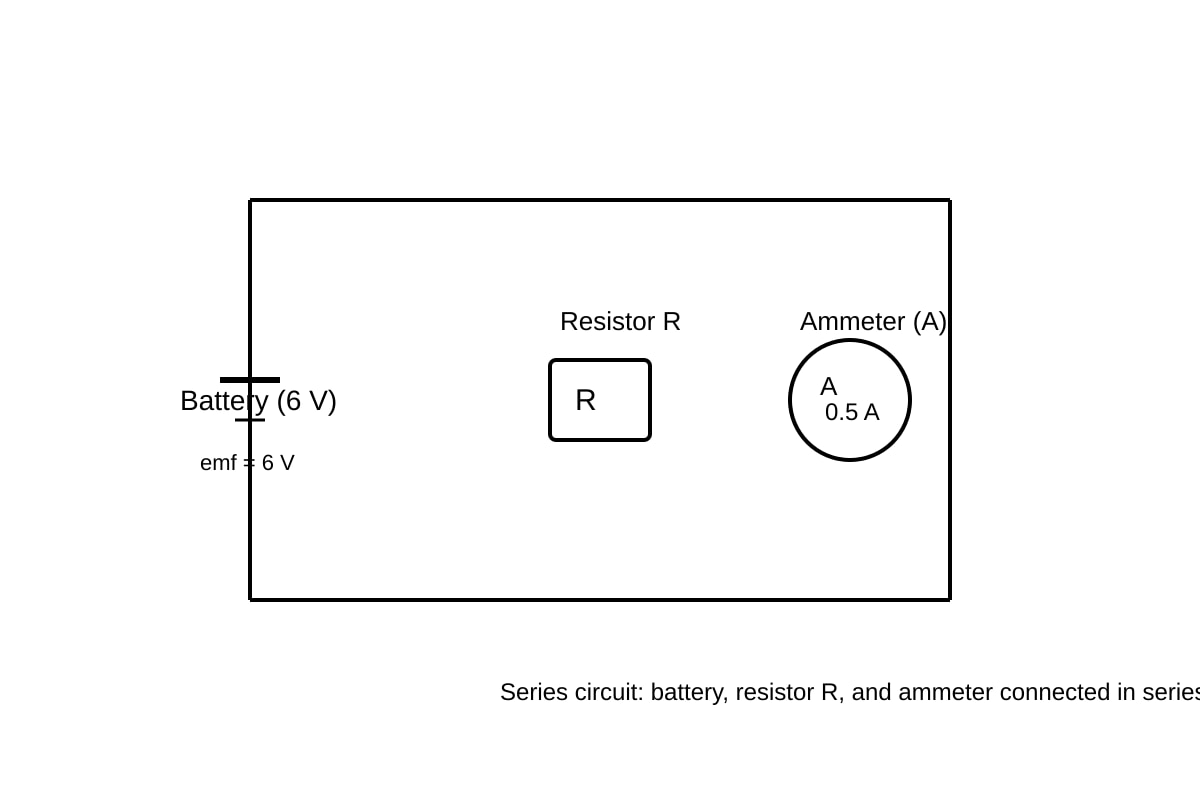
3. The diagram below shows a simple circuit with a battery, a resistor, and an ammeter.
Image pending generation: diagram for Q3.
What is the resistance of R? [2]
4. Define scalar and vector quantities. Give one example of each. [2]
5. A car accelerates from rest to 20 m s−1 in 10 s. Calculate its acceleration. [2]
6. State one function and one adaptation of xylem in plants. [2]
Function: __________________________________________________
Adaptation: ________________________________________________
7. A pendulum bob is released from a height. At the lowest point, state the energy transformation that has occurred. [1]
8. Calculate the power of a device that transfers 600 J of energy in 30 s. [2]
Section B: Structured Response (9–14) [24 marks]
9. A ball of mass 0.5 kg is dropped from a height of 10 m. Using the principle of conservation of energy, calculate the kinetic energy just before it hits the ground. Use g=10 m s−2. [3]
10. Describe the pathway of oxygenated blood from the lungs to the body tissues, including the role of the left ventricle and aortic valve. [4]
11. Potato strips are placed in distilled water for 2 hours. Explain why the strips become more rigid in terms of water potential and osmosis. [3]
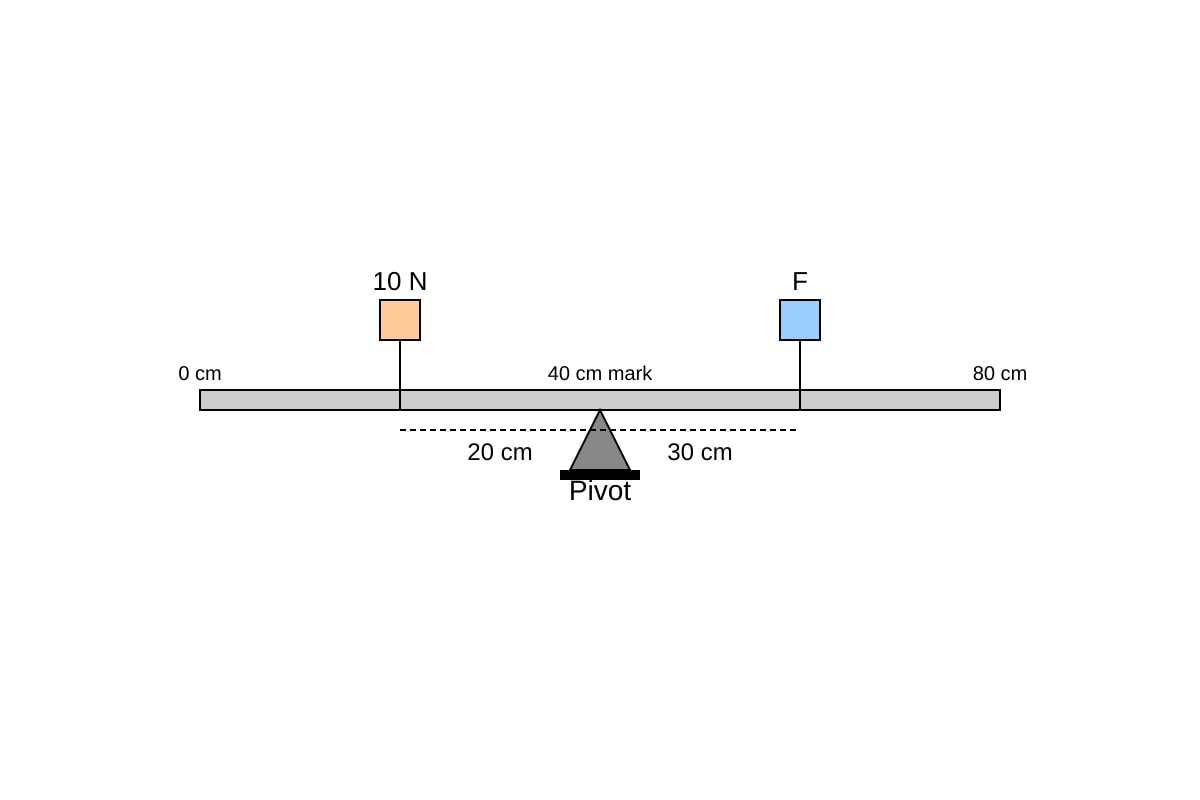
12. The figure shows a uniform rod of length 80 cm pivoted at its centre. A 10 N weight is hung 20 cm from the pivot on the left. Calculate the force F needed on the right side 30 cm from the pivot to balance the rod. [4]
Image pending generation: diagram for Q12.
13. Compare aerobic and anaerobic respiration in human muscle cells by providing word equations and explaining three differences. [6]
14. A 12 V battery is connected to two resistors in series: R1=4 Ω and R2=6 Ω. Calculate the total resistance and the current in the circuit. [4]
Section C: Data Interpretation and Extended Response (15–20) [21 marks]
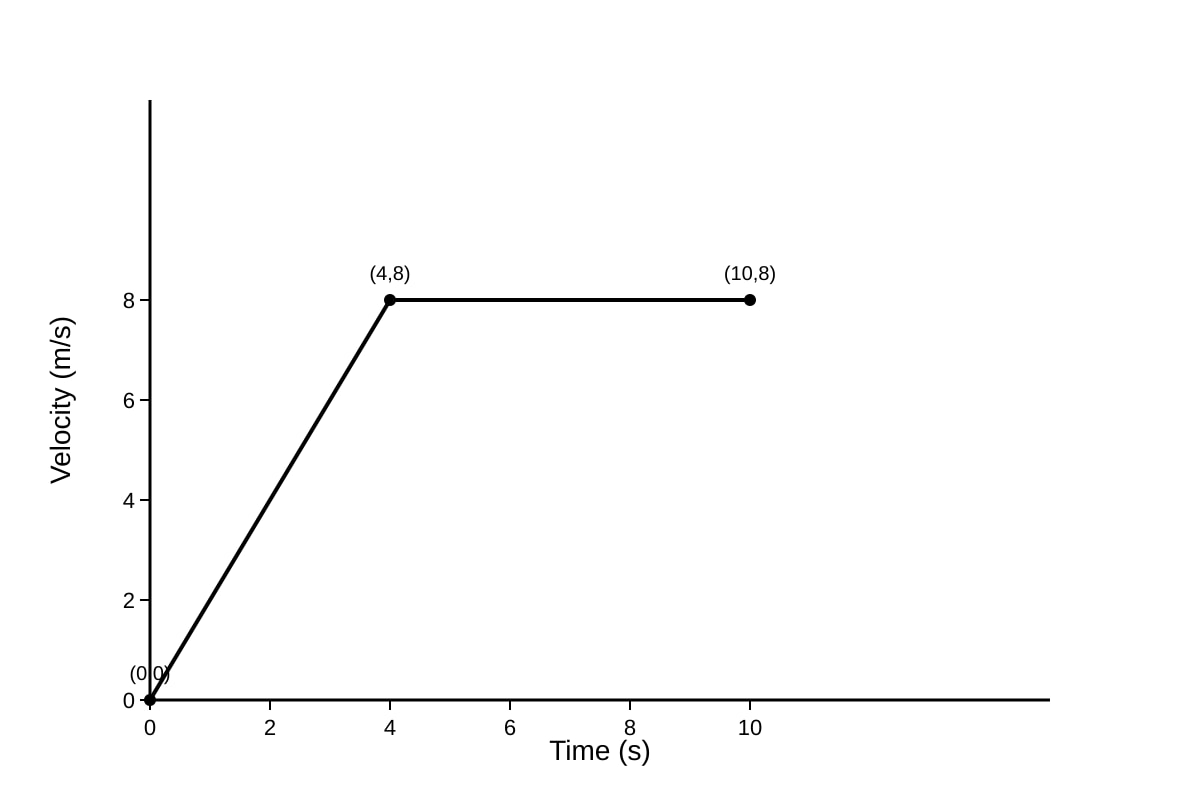
15. The graph shows the velocity of a cyclist over time.
Image pending generation: graph for Q15.
(a) Calculate the acceleration from 0 to 4 s. [2]
(b) Calculate the distance travelled in 10 s. [3]
16. Describe the pathway of water through a plant from the soil to leaving the leaves. [5]
17. A spring is stretched by 5 cm when a 2 N force is applied. Calculate the spring constant k in N/m. Then state Hooke's Law. [4]
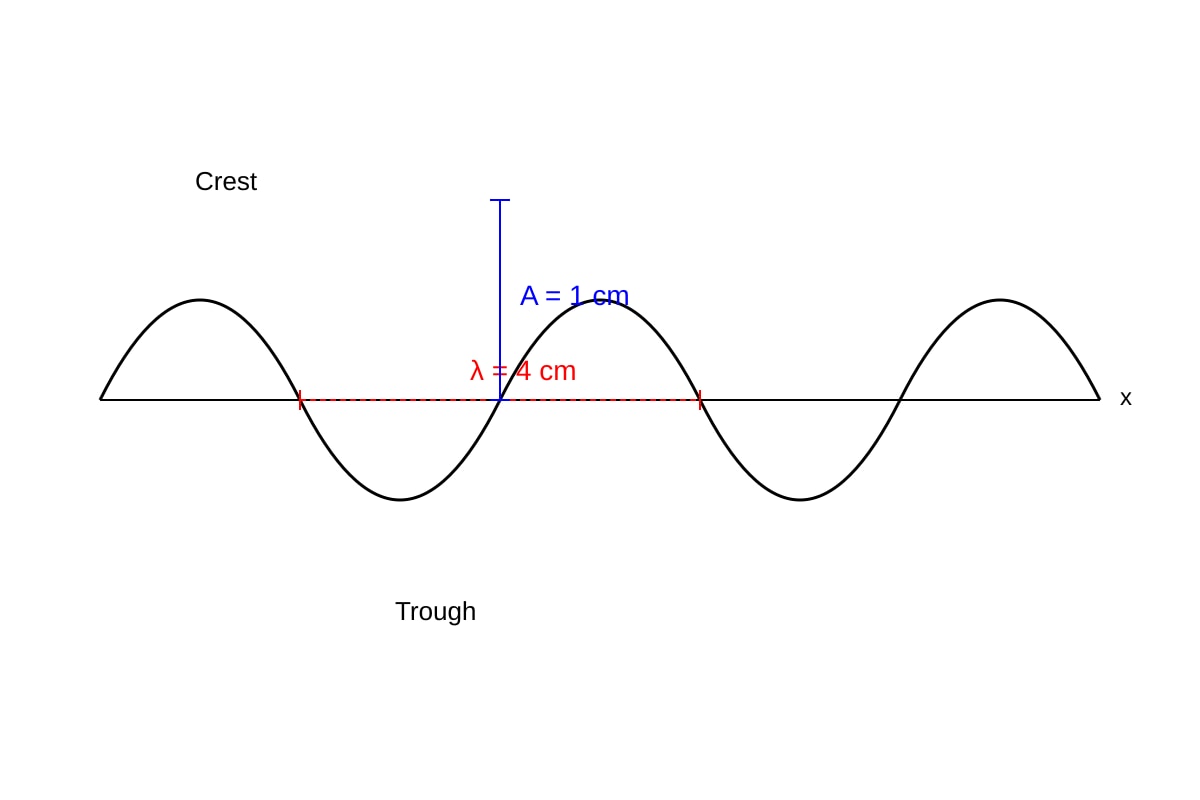
18. The diagram shows a wave with labelled points.
Image pending generation: diagram for Q18.
(a) What is the wavelength? [1]
(b) What is the amplitude? [1]
(c) Define transverse wave. [2]
19. A 100 W lamp is left on for 2 hours. Calculate the energy consumed in kJ. [3]
20. Explain how a transformer works using the principle of electromagnetic induction. Include the roles of primary coil, secondary coil, and iron core. [5]
End of Paper — Total Marks: 65
Answers
TuitionGoWhere Practice Paper Answer Key — Combined Science Secondary 3 (Version 3)
Subject: Combined Science
Level: Secondary 3
Paper: Practice Paper (Physical Sciences)
Total Marks: 65
Section A Answers (1–8) [20 marks]
1. [2] Energy cannot be created or destroyed, only converted from one form to another (or transferred); total energy in a closed system is constant.
Teaching note: Conservation of energy is foundational. Award 1 mark for "cannot be created/destroyed" and 1 mark for "converted/transferred or total constant". Common mistake: confusing with conservation of mass or momentum.
2. [2]
GPE=mgh=1.2×10×1.5=18 J
Working: Substitute m=1.2, g=10, h=1.5. Answer 18 J [2]. Mark: 1 for formula, 1 for correct value+unit.
3. [2]
V=IR⇒R=V/I=6/0.5=12 Ω
Teaching note: From placeholder, battery 6 V, ammeter 0.5 A. Use Ohm's law. Award 1 for method, 1 for 12 Ω.
4. [2] Scalar: quantity with magnitude only (e.g., mass). Vector: quantity with magnitude and direction (e.g., force).
1 mark each. Common trap: example mismatch.
5. [2]
a=(v−u)/t=(20−0)/10=2 m s−2
1 for formula, 1 for answer.
6. [2] Function: transports water and minerals from roots. Adaptation: lignified walls / hollow lumen.
1 mark each.
7. [1] Gravitational potential energy → kinetic energy.
8. [2]
P=E/t=600/30=20 W
1 for formula, 1 for answer.
Section B Answers (9–14) [24 marks]
9. [3]
PE=mgh=0.5×10×10=50 J [2]
By conservation, KE=50 J [1].
10. [4]
- Oxygenated blood from lungs via pulmonary veins to left atrium [1]
- Left atrium contracts → left ventricle [1]
- Left ventricle contracts, pressure rises [1]
- Aortic valve opens, blood to aorta → body [1]
11. [3]
- Water potential higher in water than potato [1]
- Water enters by osmosis [1]
- Cells turgid → rigid [1]
12. [4]
Clockwise moment = 10×20=200 N cm [1]
Anticlockwise = F×30 [1]
Balance: 30F=200⇒F=6.67 N [2]
13. [6]
Aerobic: Glucose + O₂ → CO₂ + H₂O + energy [2]
Anaerobic: Glucose → lactic acid + energy [2]
Differences: needs O₂ / more energy / occurs in mitochondria [2, 1 each]
14. [4]
RT=4+6=10 Ω [2]
I=V/R=12/10=1.2 A [2]
Section C Answers (15–20) [21 marks]
15. [5]
(a) a=(8−0)/4=2 m s−2 [2]
(b) Area = triangle + rectangle = 0.5×4×8+6×8=16+48=64 m [3]
16. [5]
Root hair → cortex → xylem → stem → leaf stomata (transpiration) [1 each]
17. [4]
F=kx⇒k=2/0.05=40 N/m [2]
Hooke's Law: extension proportional to force (within limit) [2]
18. [4]
(a) 4 cm [1] (b) 1 cm [1]
(c) Oscillations perpendicular to direction of travel [2]
19. [3]
E=Pt=100×(2×3600)=720000 J=720 kJ [3]
20. [5]
AC in primary → changing magnetic field in core [2] → induces EMF in secondary [2] → iron core links flux [1]
End of Answer Key
Free quiz and exam paper access
Enter your details to view this paper
Your access is remembered on this device.