AI Generated Exam Paper
Secondary 3 Combined Science Practice Paper 2
Free Sec 3 Combined Sci Practice Paper 2, HY3 AI version, with questions, answers, and O Level-style practice for Singapore students.
These static practice materials are generated from the site's syllabus and paper-generation workflow, with source and model context shown so students and parents can evaluate the material before use.
Questions
Free quiz and exam paper access
Enter your details to view this paper
Your access is remembered on this device.
Answers
TuitionGoWhere Practice Paper — Combined Science Secondary 3 (Version 2) Answer Key
Total Marks: 65
Topic: Physical Sciences (Sec 3 Combined Science)
Section A: Measurement, Forces and Pressure (15 marks)
1. [1] Newton (N)
Teaching note: The SI unit of force is the newton, symbol N. Do not confuse with kg (mass) or J (energy).
2. [1] Example: Ensure the eye is vertically above the mark to avoid parallax error.
Teaching note: Parallax error occurs when the scale is read from an angle. Reading directly above reduces this.
3. [3]
Pressure = Force / Area
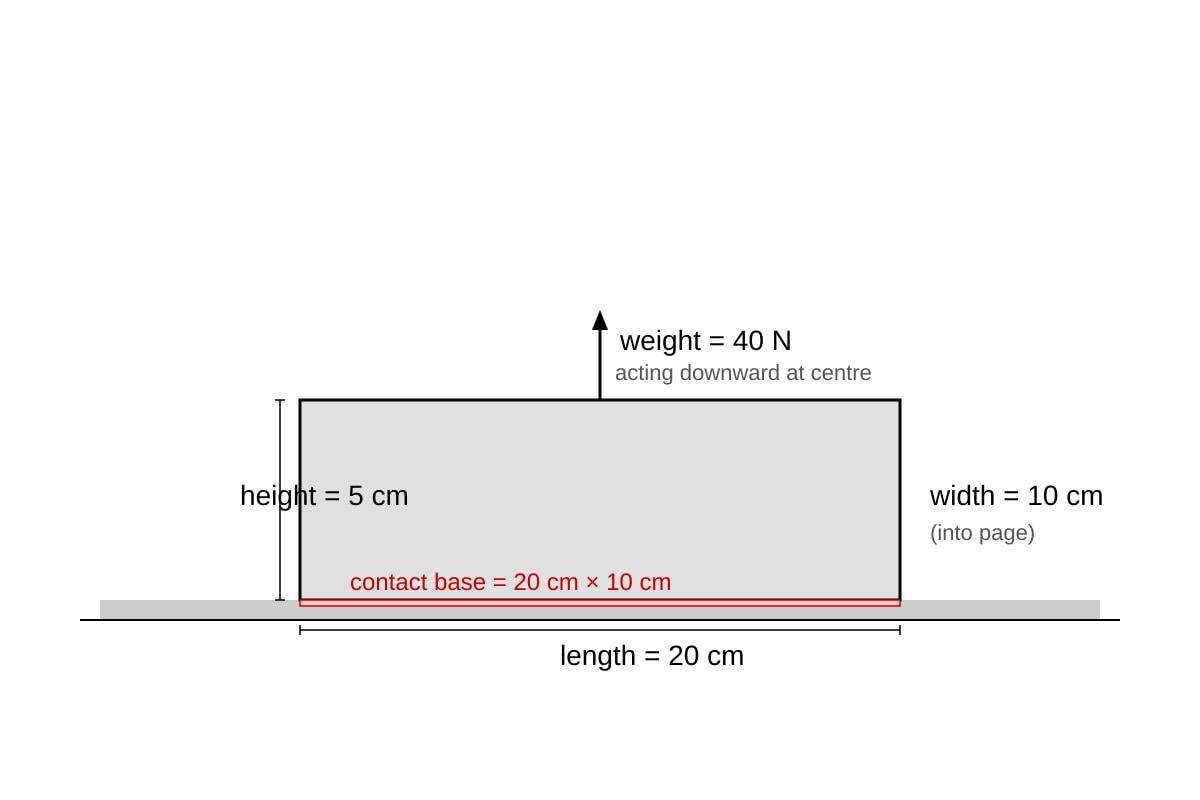
Area = 0.20 m × 0.10 m = 0.020 m² [1]
Pressure = 40 N / 0.020 m² = 2000 Pa [2]
Teaching note: Convert cm to m first (20 cm = 0.20 m, 10 cm = 0.10 m). Pressure unit is pascal (Pa) = N/m².
4. [2]
A sharp knife has a smaller contact area [1], so for the same force, pressure is greater [1].
Teaching note: Pressure = Force/Area. Smaller area → larger pressure → easier cutting.
5. [3]
Pressure small piston = 100 N / 0.01 m² = 10 000 Pa [1]
Same pressure acts on large piston: F = P × A = 10 000 × 0.5 = 5000 N [2]
Teaching note: Hydraulic press uses equal pressure in enclosed fluid. Force multiplies with area.
Section B: Energy, Work and Power (15 marks)
6. [2] Energy cannot be created or destroyed, only converted from one form to another [1]; total energy in a closed system is constant [1].
Teaching note: This is the core conservation law for all Sec 3 physics energy questions.
7. [2]
PE = mgh = 0.4 × 10 × 5 = 20 J [2]
Teaching note: Use g = 10 m s⁻² as given. PE unit is joule (J).
8. [2]
By conservation of energy, KE at bottom = PE at top = 20 J [2]
Teaching note: With no air resistance, all gravitational PE becomes kinetic KE.
9. [3]
Work done = mgh = 200 × 10 × 8 = 16 000 J [1]
Power = Work / time = 16 000 / 10 = 1600 W [2]
Teaching note: Useful power = energy transferred per second.
10. [3]
Efficiency = (Output / Input) × 100% = (350 / 500) × 100% = 70% [3]
Teaching note: Efficiency is always less than 100% for real machines due to energy loss.
Section C: Thermal Physics and Waves (15 marks)
11. [1] Radiation
Teaching note: Radiation (infrared) needs no medium; conduction and convection need matter.
12. [3]
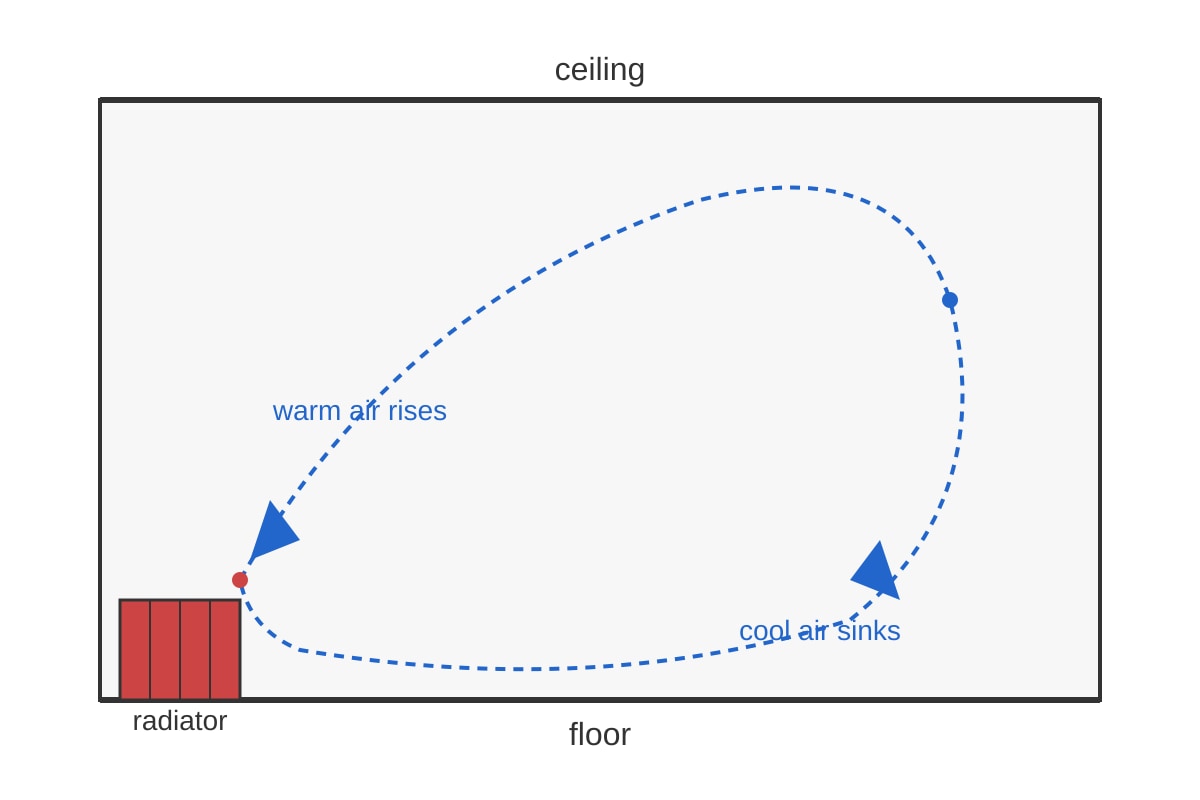
Radiator heats air nearby [1]; warm air expands, becomes less dense and rises [1]; cool air sinks and is heated, forming a convection current that circulates heat [1].
Teaching note: Convection is transfer by movement of fluid due to density differences.
13. [2]
Transverse: oscillations perpendicular to direction of travel [1]; longitudinal: oscillations parallel to direction of travel [1].
Teaching note: Light is transverse; sound is longitudinal.
14. [2]
Speed = frequency × wavelength = 20 × 0.5 = 10 m s⁻¹ [2]
Teaching note: Use v = fλ. Unit m/s.
15. [2]
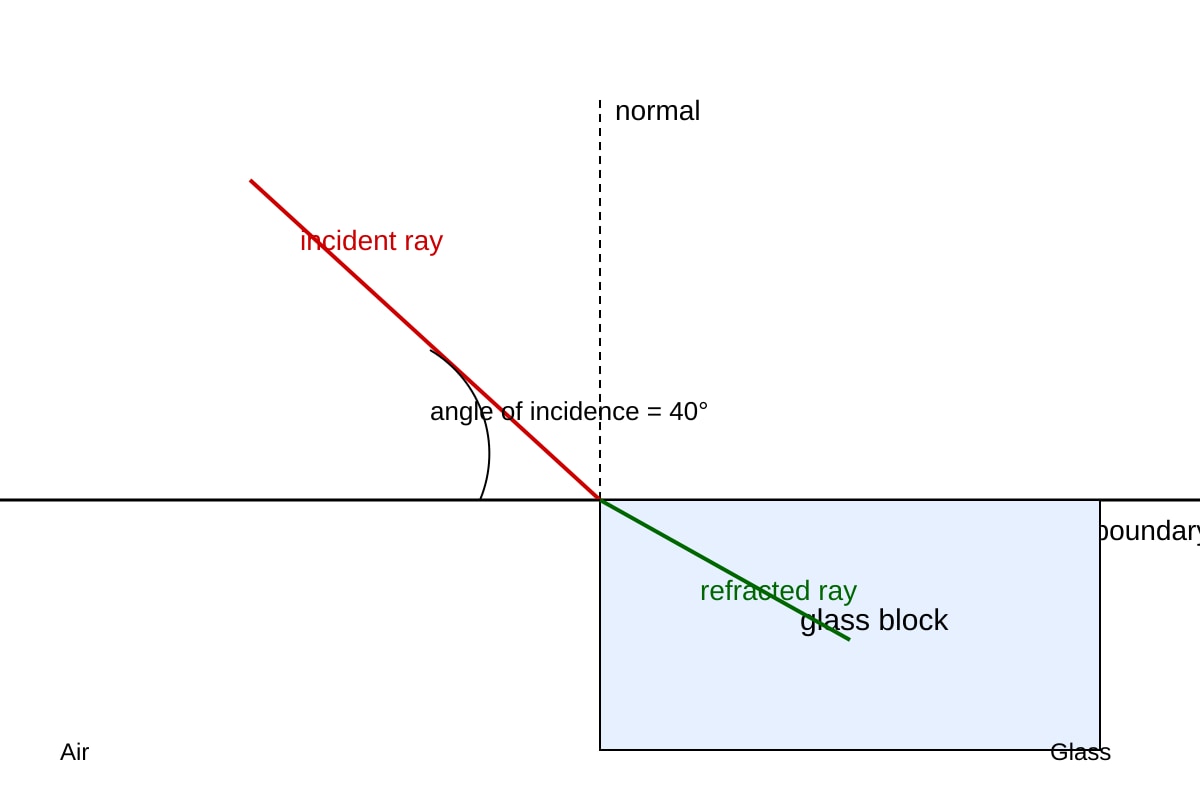
Speed decreases [1]; direction bends towards the normal [1].
Teaching note: Glass is optically denser than air; light slows and refracts toward normal.
Section D: Electricity and Magnetism (20 marks)
16. [1] Ampere (A)
Teaching note: Symbol A; not to be confused with volt (V) or ohm (Ω).
17. [3]
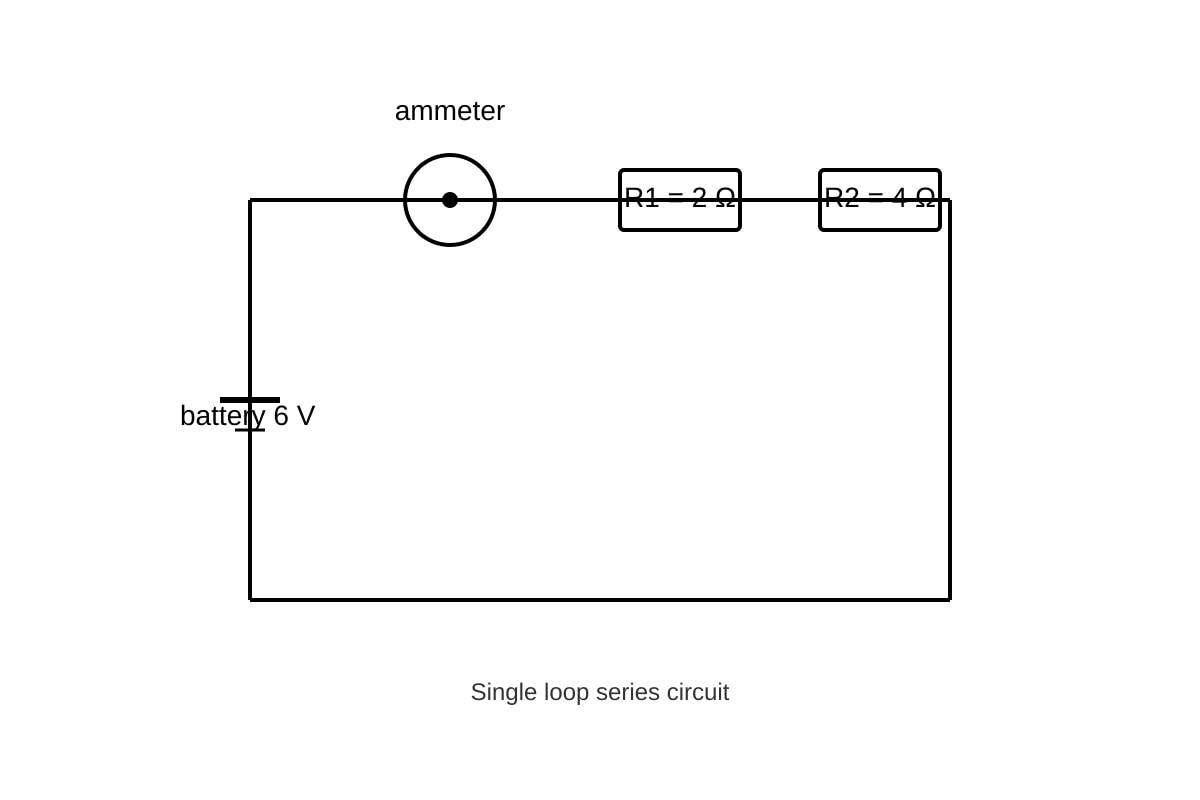
Total R = 2 + 4 = 6 Ω [1]
I = V / R = 6 / 6 = 1.0 A [2]
Teaching note: Series resistors add. Current same everywhere in series.
18. [3]
1/R_total = 1/6 + 1/3 = 1/6 + 2/6 = 3/6 = 1/2 [2]
R_total = 2 Ω [1]
Teaching note: Parallel: reciprocal sum. Total resistance less than smallest branch.
19. [3]
Wrap coil around steel bar [1]; connect coil to d.c. supply [1]; current creates magnetic field that magnetises bar [1].
Teaching note: D.C. gives steady field; steel retains magnetism (permanent magnet).
20. [3]
V_s / V_p = N_s / N_p → V_s = 240 × (200/1000) = 48 V [3]
Teaching note: Transformer ratio: secondary turns fewer → step-down voltage.
End of Answer Key