From Real Exams Exam Paper
Secondary 3 Combined Science Semestral Assessment 2 (End of Year) Paper 3
Free Sec 3 Combined Sci SA2 Paper 3, HY3 Exam version, with questions, answers, and O Level-style practice for Singapore students.
These static practice materials are generated from the site's syllabus and paper-generation workflow, with source and model context shown so students and parents can evaluate the material before use.
Questions
TuitionGoWhere Exam Practice (AI) — Combined Science Secondary 3
SA2 Practice Paper — Physical Sciences (Version 3)
School: TuitionGoWhere Secondary School (AI)
Subject: Combined Science
Level: Secondary 3
Paper: SA2 Practice — Physical Sciences (Version 3)
Duration: 60 minutes
Total Marks: 60
Name: ______________________
Class: _________
Date: ____________
Instructions:
- Answer all questions in the spaces provided.
- Show all working clearly where calculations are required.
- Use SI units in your answers.
- Section A: Short Answer (20 marks), Section B: Structured Response (24 marks), Section C: Data & Diagram Interpretation (16 marks).
Section A: Short Answer (Questions 1–10) — Total 20 marks
1. State the Principle of Conservation of Energy. [2]
2. A box of mass 5.0 kg is lifted vertically by 2.0 m. Calculate the gain in gravitational potential energy. Use g=10 N/kg. [2]
3. Name the force that opposes motion between two surfaces in contact. [1]
4. A car travels 100 m in 5.0 s at constant speed. Calculate its speed. [2]
5. State one form of energy that is stored in a stretched rubber band. [1]
6. Give the formula for pressure exerted by a solid. [1]
7. A metal block exerts a force of 20 N over an area of 0.10 m2. Calculate the pressure. [2]
8. State whether heat energy always flows from a region of lower temperature to higher temperature. [1]
9. Name the process by which thermal energy is transferred in a vacuum. [1]
10. An electrical appliance uses 1000 J of energy in 20 s. Calculate its power. [2]
Section B: Structured Response (Questions 11–16) — Total 24 marks
11. A ball of mass 0.50 kg is dropped from a height of 8.0 m.
(a) Calculate its gravitational potential energy at the top. Use g=10 N/kg. [2]
(b) State the form of energy it has just before hitting the ground, assuming no air resistance. [1]
(c) Explain why its kinetic energy just before impact equals the initial potential energy. [2]
12. Describe how blood from the lungs is forced into the aorta. [4]
13. A student places a potato cube on one end of a plastic rod and the other end is fixed. The rod is placed in a tray of pure water.
(a) State what happens to the rod after two hours. [1]
(b) Explain your answer using the term water potential and osmosis. [3]
14. A wooden plank is used to lift a load. The plank acts as a lever.
(a) Define moment of a force. [1]
(b) A force of 40 N is applied 1.5 m from the pivot. Calculate the moment. [2]
(c) State one condition for the lever to be in equilibrium. [1]
15. Explain why a woollen jumper keeps a person warm using the concept of thermal energy transfer. [3]
16. A battery, resistor, and ammeter are connected in series. The voltmeter across the resistor reads 6.0 V and the ammeter reads 0.50 A.
(a) State Ohm’s law in words. [1]
(b) Calculate the resistance of the resistor. [2]
(c) State the unit of resistance. [1]
Section C: Data & Diagram Interpretation (Questions 17–20) — Total 16 marks
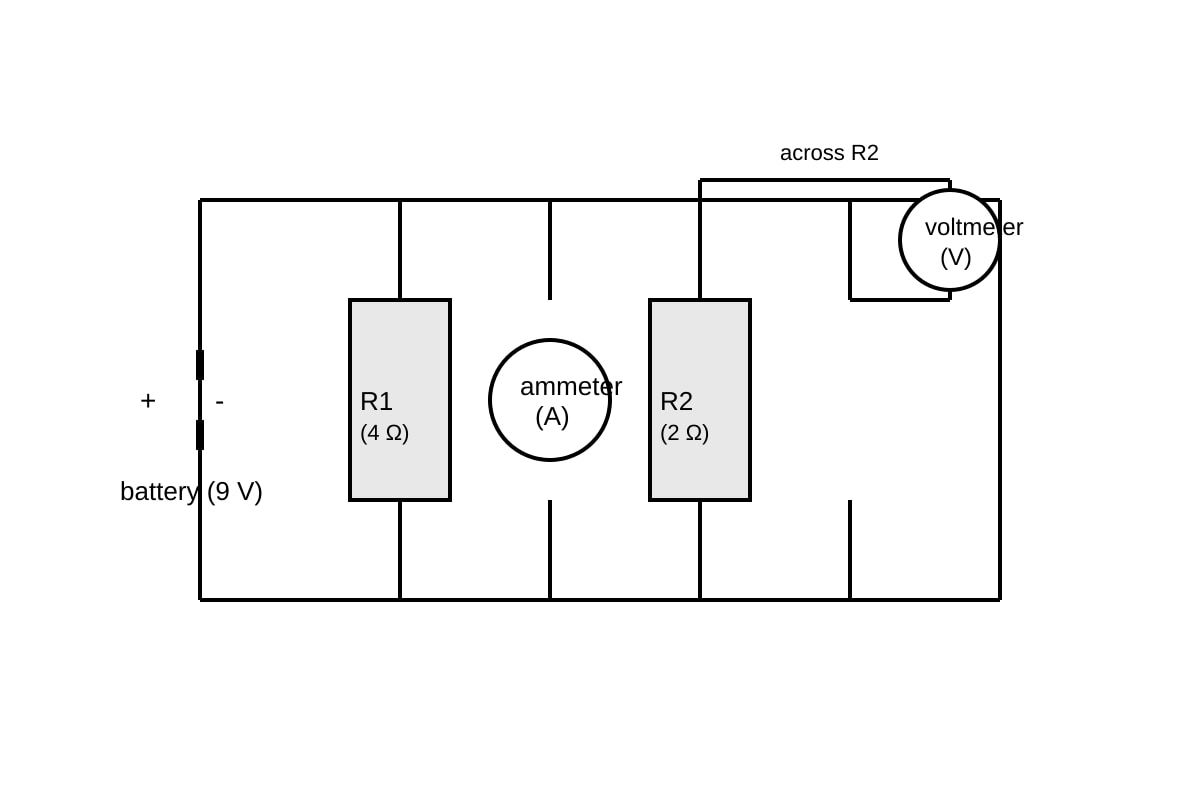
17. The diagram shows a simple circuit with two resistors in series.
Image pending generation: diagram for Q17.
(a) Calculate the total resistance. [1]
(b) Calculate the current in the circuit. [2]
(c) Calculate the potential difference across R2. [2]
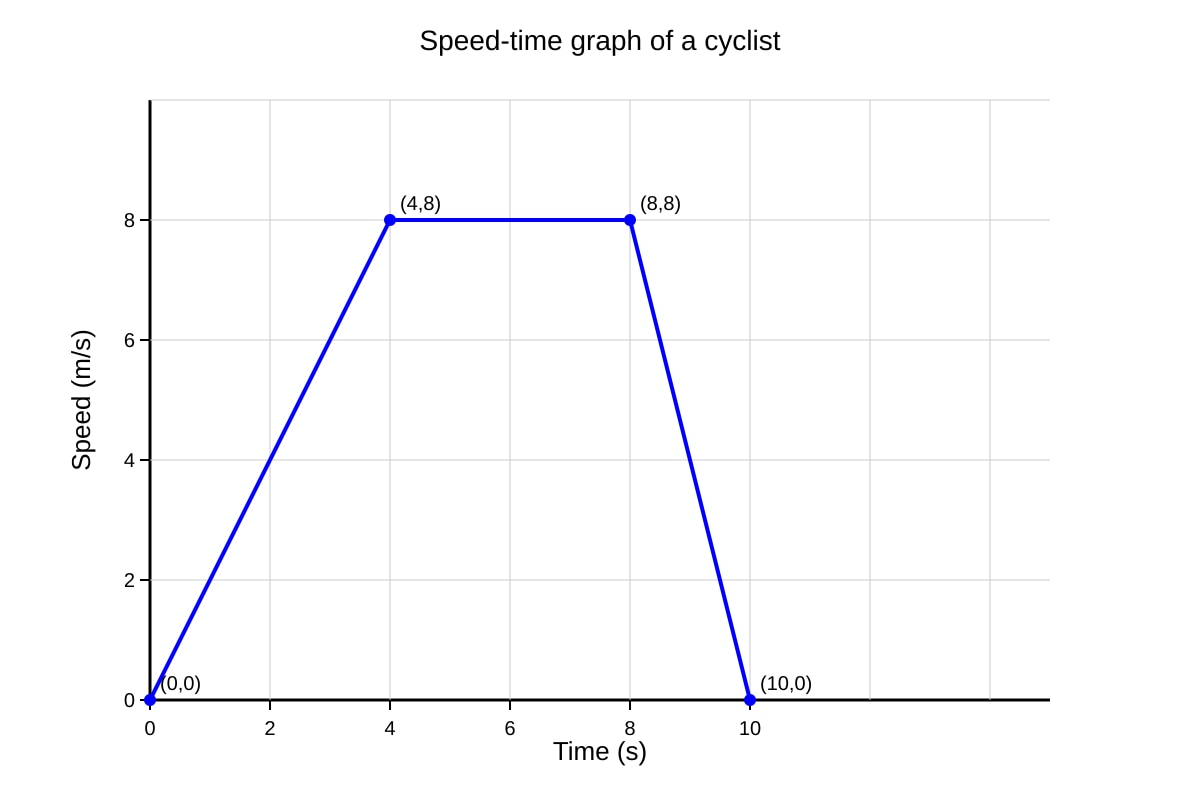
18. The graph shows the speed of a cyclist over time.
Image pending generation: graph for Q18.
(a) Calculate the acceleration from 0 to 4 s. [2]
(b) Calculate the distance travelled from 0 to 8 s. [2]
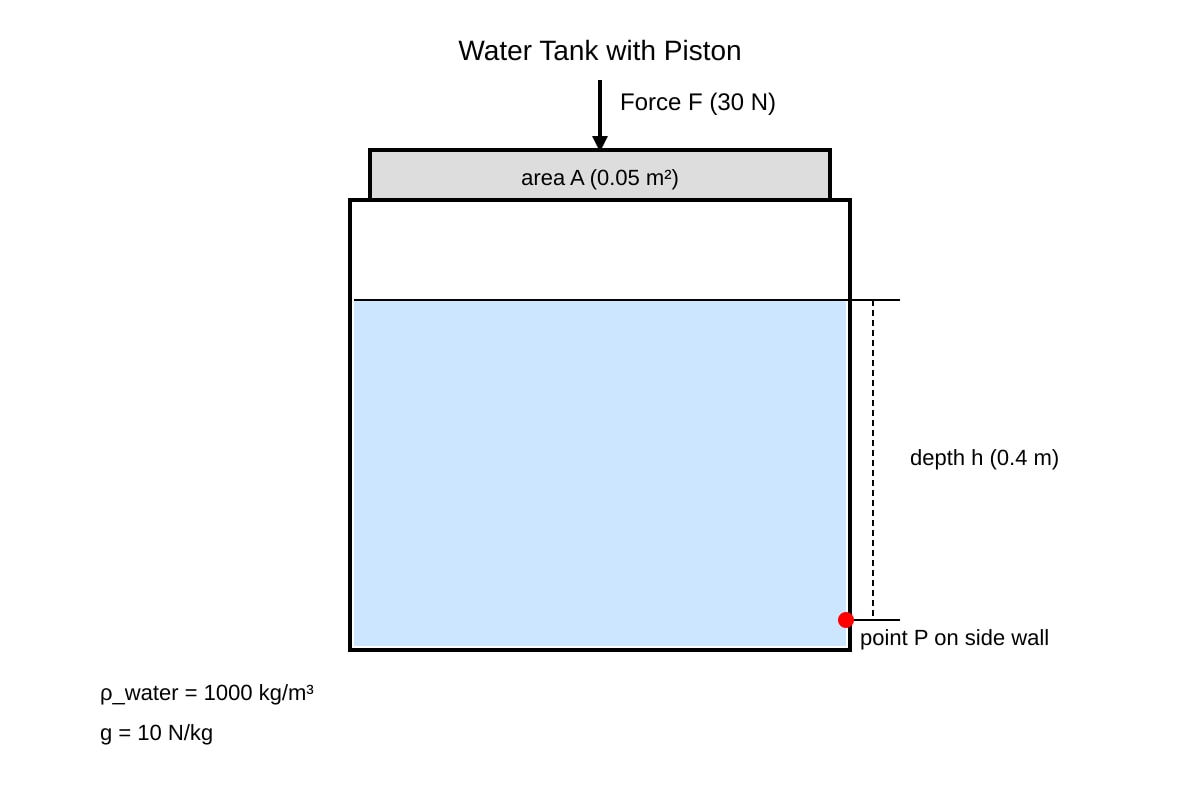
19. The diagram shows a container of water with a piston pressing down.
Image pending generation: diagram for Q19.
(a) Calculate the pressure due to the piston at the surface. [2]
(b) Calculate the total pressure at point P. [2]
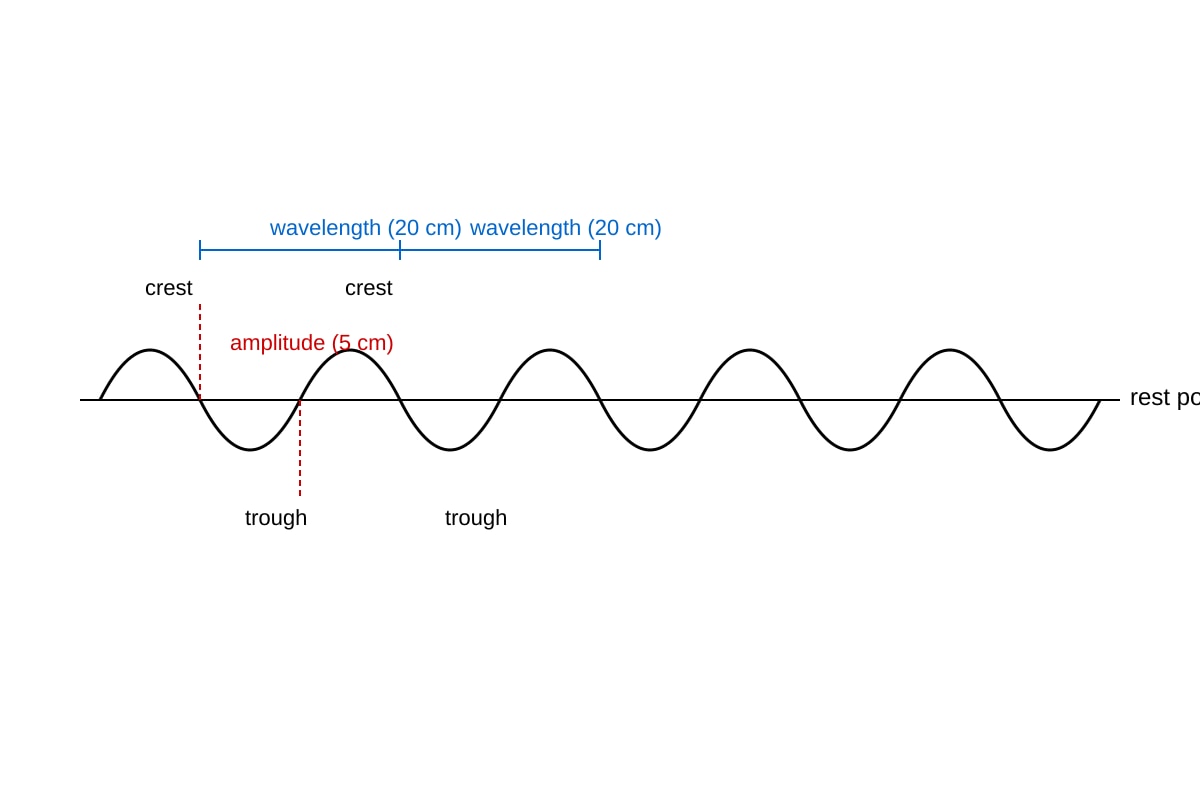
20. The diagram shows a transverse wave.
Image pending generation: diagram for Q20.
(a) Define wavelength. [1]
(b) If the wave speed is 2.0 m/s, calculate the frequency. [2]
Answers
TuitionGoWhere Exam Practice (AI) — Combined Science Secondary 3
SA2 Practice Paper — Physical Sciences (Version 3) — Answer Key
Total Marks: 60
Section A: Short Answer (Q1–10)
1. [2 marks]
Energy cannot be created or destroyed, only converted from one form to another (1 mark); total energy in a closed system remains constant (1 mark).
Teaching note: This is the Principle of Conservation of Energy. Students often miss the “total” or “converted” part.
2. [2 marks]
Ep=mgh=5.0×10×2.0=100 J (2 marks for correct substitution and answer).
Method: Gain in GPE = mass × g × height.
3. [1 mark]
Friction.
Common mistake: Writing “air resistance” when surfaces are in contact.
4. [2 marks]
v=td=5.0100=20 m/s (2 marks).
Unit required: m/s.
5. [1 mark]
Elastic potential energy.
6. [1 mark]
P=AF (Pressure = Force / Area).
7. [2 marks]
P=AF=0.1020=200 Pa (2 marks).
Note: Unit is pascal (Pa) or N/m².
8. [1 mark]
No. (Heat flows from higher to lower temperature.)
9. [1 mark]
Radiation.
10. [2 marks]
P=tE=201000=50 W (2 marks).
Section B: Structured Response (Q11–16)
11. [6 marks total]
(a) [2] Ep=mgh=0.50×10×8.0=40 J.
(b) [1] Kinetic energy.
(c) [2] No air resistance means no energy lost to surroundings (1); so GPE converts fully to KE, thus KE = initial GPE (1).
12. [4 marks]
Oxygenated blood returns from lungs via pulmonary veins to left atrium (1). Left atrium contracts, raising pressure (1). Blood flows into left ventricle (1). Left ventricle contracts, forcing blood through aortic valve into aorta (1).
13. [4 marks]
(a) [1] The rod bends downward (potato becomes turgid).
(b) [3] Water potential is higher in pure water than in potato (1); water enters potato by osmosis (1); potato swells and pushes rod down (1).
14. [4 marks]
(a) [1] Moment = force × perpendicular distance from pivot.
(b) [2] M=F×d=40×1.5=60 N⋅m.
(c) [1] Sum of clockwise moments = sum of anticlockwise moments.
15. [3 marks]
Woollen jumper traps air (1); air is a poor conductor (1); reduces heat loss by conduction/convection, keeping body warm (1).
16. [4 marks]
(a) [1] Current through a conductor is directly proportional to voltage if temp constant.
(b) [2] R=IV=0.506.0=12 Ω.
(c) [1] Ohm (Ω).
Section C: Data & Diagram Interpretation (Q17–20)
17. [5 marks]
(a) [1] RT=4+2=6 Ω.
(b) [2] I=RV=69=1.5 A.
(c) [2] V2=I×R2=1.5×2=3.0 V.
18. [4 marks]
(a) [2] a=ΔtΔv=4−08−0=2 m/s2.
(b) [2] Area 0–4 s: 21×4×8=16 m; 4–8 s: 8×4=32 m; total = 48 m.
19. [4 marks]
(a) [2] Ppiston=AF=0.0530=600 Pa.
(b) [2] Ptotal=Ppiston+ρgh=600+(1000×10×0.4)=600+4000=4600 Pa.
20. [3 marks]
(a) [1] Distance between two successive crests (or troughs).
(b) [2] f=λv=0.202.0=10 Hz (λ = 20 cm = 0.20 m).
Free quiz and exam paper access
Enter your details to view this paper
Your access is remembered on this device.