Secondary 3 Chemistry Quiz - Organic Chemistry
Name: ___________________________
Class: _________
Date: ____________
Score: _______ / 40
Duration: 50 minutes
Total Marks: 40
Instructions:
- Answer all 20 questions.
- Section A: Multiple-choice style short responses. Section B: Structured questions. Section C: Data and diagram interpretation.
- Write your answers in the spaces provided.
- Use chemical formulae and equations where requested.
- Marks for each question are shown in brackets [ ].
Section A (Questions 1–5)
1. Which of the following is the general formula of an alkane? [1]
__________ (Write the formula, e.g. CₙH₂ₙ₊₂)
2. Name the homologous series of compounds with the functional group –OH. [1]
3. What is the molecular formula of the alkene with 4 carbon atoms? [1]
4. State the type of reaction that converts ethene to ethane using hydrogen. [1]
5. Give the name of the compound with structural formula CH₃CH₂COOH. [1]
Section B (Questions 6–15)
6. (a) Draw the displayed formula of methane, CH₄. [1]
(b) State the type of bond formed between carbon and hydrogen. [1]
7. Write a balanced chemical equation for the complete combustion of propane, C₃H₈. Include state symbols. [3]
8. (a) What is meant by the term “homologous series”? [1]
(b) Give two characteristics of members of a homologous series. [2]
9. Ethene reacts with bromine water.
(a) State the observation. [1]
(b) Write the equation for the reaction. [2]
10. Name the following compounds:
(a) CH₃CH₂CH₂OH [1]
(b) CH₃COOH [1]
(c) CH₃CH=CH₂ [1]
11. Describe how ethanol can be oxidised to ethanoic acid. [2]
12. A student carries out cracking of a long-chain alkane.
(a) State one condition needed for cracking. [1]
(b) Give one reason why cracking is carried out in industry. [1]
13. (a) Define isomerism. [1]
(b) Draw two structural isomers of butane, C₄H₁₀. [2]
14. Calculate the relative molecular mass, Mᵣ, of ethanol, C₂H₅OH.
(Ar: C = 12, H = 1, O = 16) [2]
15. (a) What is a polymer? [1]
(b) Name the monomer used to make poly(ethene). [1]
Section C (Questions 16–20)
16. The table below shows boiling points of some alkanes.
| Alkane | Formula | Boiling point (°C) |
|---|
| Methane | CH₄ | -162 |
| Ethane | C₂H₆ | -89 |
| Propane | C₃H₈ | -42 |
| Butane | C₄H₁₀ | -1 |
(a) State the trend in boiling point as the number of carbon atoms increases. [1]
(b) Explain this trend using intermolecular forces. [2]
17.
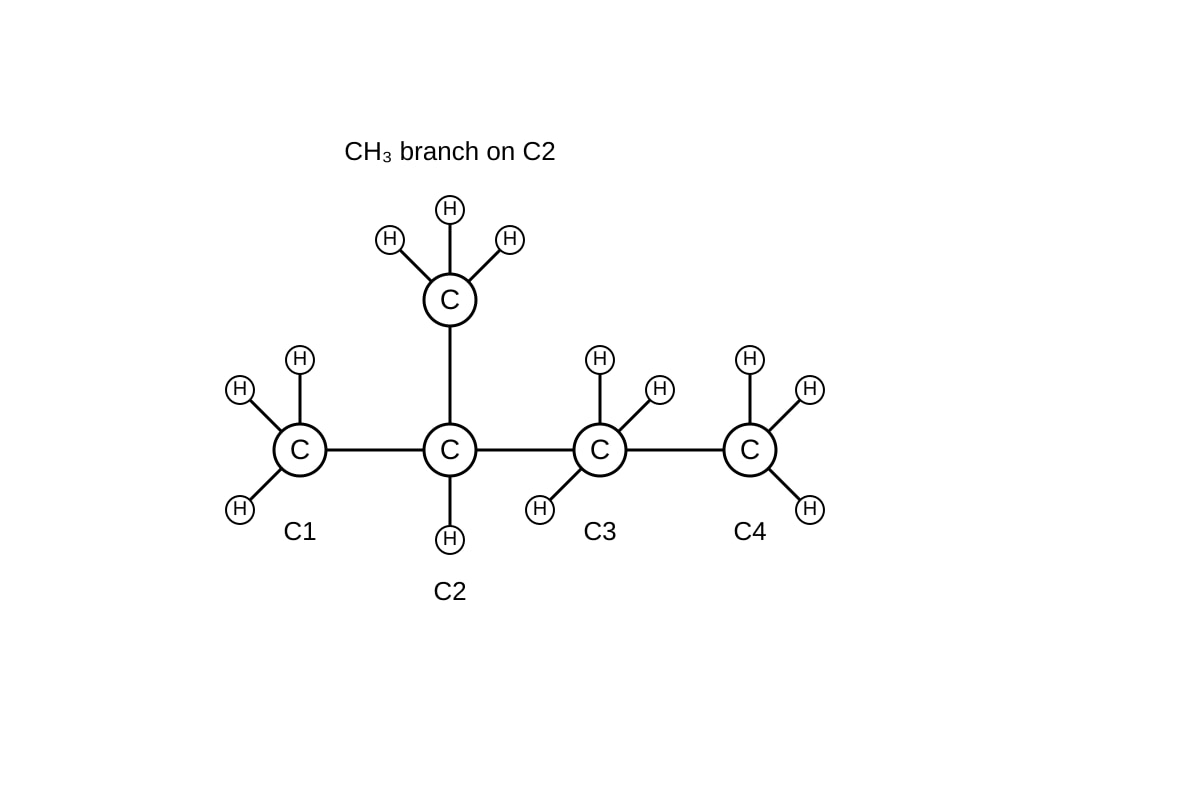
Generated diagram for 17.
(a) Name the compound shown in the diagram above. [1]
(b) Give its molecular formula. [1]
18. A hydrocarbon X has molecular formula C₂H₄.
(a) Identify the homologous series of X. [1]
(b) State one test to confirm X is an alkene. [1]
(c) Write the product formed when X reacts with hydrogen. [1]
19.
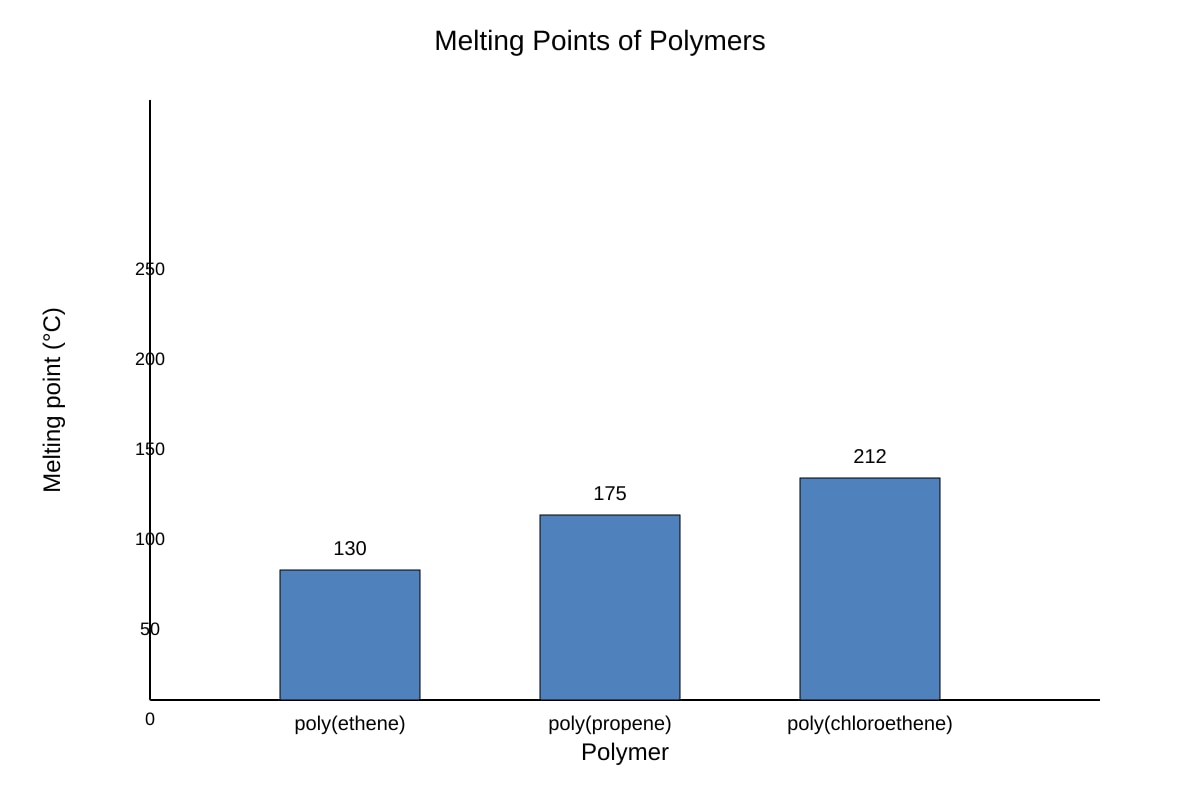
Generated graph for 19.
(a) Which polymer has the highest melting point? [1]
(b) Suggest one reason for the difference in melting points. [1]
20. (a) State one use of ethanol as a fuel. [1]
(b) Give one environmental advantage of using plant-derived ethanol over petrol. [1]
(c) Write a balanced equation for the combustion of ethanol, C₂H₅OH. [2]
</stage3_quiz_answers_md>
Secondary 3 Chemistry Quiz - Organic Chemistry: Answer Key
Total Marks: 40
Topic: Organic Chemistry
Section A
1. CₙH₂ₙ₊₂ [1]
Teaching note: Alkanes are saturated hydrocarbons with single bonds only. General formula is CₙH₂ₙ₊₂ where n = number of carbon atoms. Common mistake: writing CₙH₂ₙ (that is alkenes).
2. Alcohols [1]
Teaching note: The –OH functional group defines the alcohol homologous series. Not to be confused with hydroxide ion OH⁻ in bases.
3. C₄H₈ [1]
Teaching note: Alkene general formula is CₙH₂ₙ. For n = 4, H = 2×4 = 8. So C₄H₈.
4. Addition [1]
Teaching note: Hydrogen adds across the double bond of ethene to form ethane (C₂H₆). This is an addition reaction, typical of unsaturated hydrocarbons.
5. Propanoic acid [1]
Teaching note: CH₃CH₂COOH has 3 carbons and the –COOH group → propanoic acid. Count carbon chain from carboxyl carbon.
Section B
6. (a) Displayed formula of methane [1]
Central C with 4 single bonds to H (H–C–H with two other H, tetrahedral shown as cross).
(b) Covalent bond [1]
Teaching note: Carbon and hydrogen are non-metals; they share electrons to form covalent bonds.
7. C₃H₈(g) + 5O₂(g) → 3CO₂(g) + 4H₂O(l) [3]
Mark breakdown: 1 for reactants/products correct, 1 for balancing C and H, 1 for O balanced and state symbols.
Working:
- C₃H₈ → 3CO₂ (3 C)
- H₈ → 4H₂O (8 H)
- O: 3×2 + 4×1 = 10 O atoms → 5O₂
Common mistake: omitting state symbols or writing H₂O(g) instead of (l) for standard combustion.
8. (a) Homologous series = family of compounds with same general formula, similar chemical properties, successive members differ by CH₂. [1]
(b) Two characteristics: [2] e.g. (i) same functional group, (ii) gradual change in physical properties (e.g. boiling point), (iii) similar chemical properties.
Teaching note: Any two correct characteristics awarded 1 each.
9. (a) Bromine water decolourises (orange to colourless). [1]
(b) C₂H₄ + Br₂ → C₂H₄Br₂ [2] (1 for reactants, 1 for product/balanced)
Teaching note: Alkene double bond opens to add Br atoms (addition reaction).
10. (a) Propan-1-ol [1] (b) Ethanoic acid [1] (c) Propene [1]
Teaching note: CH₃CH₂CH₂OH = 3C straight chain alcohol → propan-1-ol. CH₃COOH = ethanoic acid. CH₃CH=CH₂ = propene.
11. Ethanol oxidised to ethanoic acid using [1] oxidising agent (e.g. acidified potassium dichromate / O₂ with microbes) [1] and process (e.g. heating / fermentation). [2 total]
Teaching note: Oxidation removes H or adds O. Microbial oxidation is used in vinegar production.
12. (a) High temperature (~400–700°C) / catalyst (e.g. alumina) / no oxygen. [1]
(b) To produce shorter-chain alkenes for plastics / petrol. [1]**
Teaching note: Cracking breaks large alkanes into smaller useful molecules.
13. (a) Isomerism = compounds with same molecular formula but different structural arrangement. [1]
(b) Two isomers of butane: straight chain (CH₃CH₂CH₂CH₃) and branched (CH₃CH(CH₃)CH₃). [2]**
Teaching note: Draw displayed or structural; both must have C₄H₁₀.
14. Mᵣ = 2×12 + 6×1 + 16 = 46 [2]
Working: C₂ = 24, H₆ = 6, O = 16 → 46. Common mistake: counting H as 5 instead of 6 (C₂H₅OH has 6 H).
15. (a) Polymer = large molecule made of repeating monomer units. [1]
(b) Ethene (or ethene monomer). [1]**
Section C
16. (a) Boiling point increases with more carbon atoms. [1]
(b) Larger molecules have greater surface area → stronger London dispersion forces → more energy to separate. [2]**
Teaching note: Intermolecular forces, not covalent bonds, determine boiling point.
17. (a) 2-methylbutane [1]
(b) C₅H₁₂ [1]**
Teaching note: From image: 4C main + 1C branch = 5C; alkane → CₙH₂ₙ₊₂ = C₅H₁₂. Name: longest chain butane, methyl on C2.
18. (a) Alkene [1] (b) Bromine water test: decolourises orange Br₂ water [1] (c) C₂H₆ (ethane) [1]
Teaching note: C₂H₄ + H₂ → C₂H₆ via addition.
19. (a) Poly(chloroethene) [1] (b) Different side groups / polarity / intermolecular forces. [1]
Teaching note: Cl atom increases polarity and stiffness → higher melting point.
20. (a) Used in spirit burners / biofuel for cars. [1]
(b) Renewable / carbon-neutral / less CO₂ net. [1]**
(c) C₂H₅OH(l) + 3O₂(g) → 2CO₂(g) + 3H₂O(l) [2]**
Working: C balance 2 CO₂; H balance 3 H₂O; O: 2+3=5 → 3O₂ +1 from ethanol = 7 O atoms products side: 4+3=7 ✓.
</stage3_quiz_answers_md>
<stage3_quiz_md>
Secondary 3 Chemistry Quiz - Organic Chemistry
Name: ___________________________
Class: _________
Date: ____________
Score: _______ / 40
Duration: 50 minutes
Total Marks: 40
Instructions:
- Answer all 20 questions.
- Section A: Multiple-choice style short responses. Section B: Structured questions. Section C: Data and diagram interpretation.
- Write your answers in the spaces provided.
- Use chemical formulae and equations where requested.
- Marks for each question are shown in brackets [ ].
Section A (Questions 1–5)
1. Which of the following is the general formula of an alkane? [1]
__________ (Write the formula, e.g. CₙH₂ₙ₊₂)
2. Name the homologous series of compounds with the functional group –OH. [1]
3. What is the molecular formula of the alkene with 4 carbon atoms? [1]
4. State the type of reaction that converts ethene to ethane using hydrogen. [1]
5. Give the name of the compound with structural formula CH₃CH₂COOH. [1]
Section B (Questions 6–15)
6. (a) Draw the displayed formula of methane, CH₄. [1]
(b) State the type of bond formed between carbon and hydrogen. [1]
7. Write a balanced chemical equation for the complete combustion of propane, C₃H₈. Include state symbols. [3]
8. (a) What is meant by the term “homologous series”? [1]
(b) Give two characteristics of members of a homologous series. [2]
9. Ethene reacts with bromine water.
(a) State the observation. [1]
(b) Write the equation for the reaction. [2]
10. Name the following compounds:
(a) CH₃CH₂CH₂OH [1]
(b) CH₃COOH [1]
(c) CH₃CH=CH₂ [1]
11. Describe how ethanol can be oxidised to ethanoic acid. [2]
12. A student carries out cracking of a long-chain alkane.
(a) State one condition needed for cracking. [1]
(b) Give one reason why cracking is carried out in industry. [1]
13. (a) Define isomerism. [1]
(b) Draw two structural isomers of butane, C₄H₁₀. [2]
14. Calculate the relative molecular mass, Mᵣ, of ethanol, C₂H₅OH.
(Ar: C = 12, H = 1, O = 16) [2]
15. (a) What is a polymer? [1]
(b) Name the monomer used to make poly(ethene). [1]
Section C (Questions 16–20)
16. The table below shows boiling points of some alkanes.
| Alkane | Formula | Boiling point (°C) |
|---|
| Methane | CH₄ | -162 |
| Ethane | C₂H₆ | -89 |
| Propane | C₃H₈ | -42 |
| Butane | C₄H₁₀ | -1 |
(a) State the trend in boiling point as the number of carbon atoms increases. [1]
(b) Explain this trend using intermolecular forces. [2]
17.
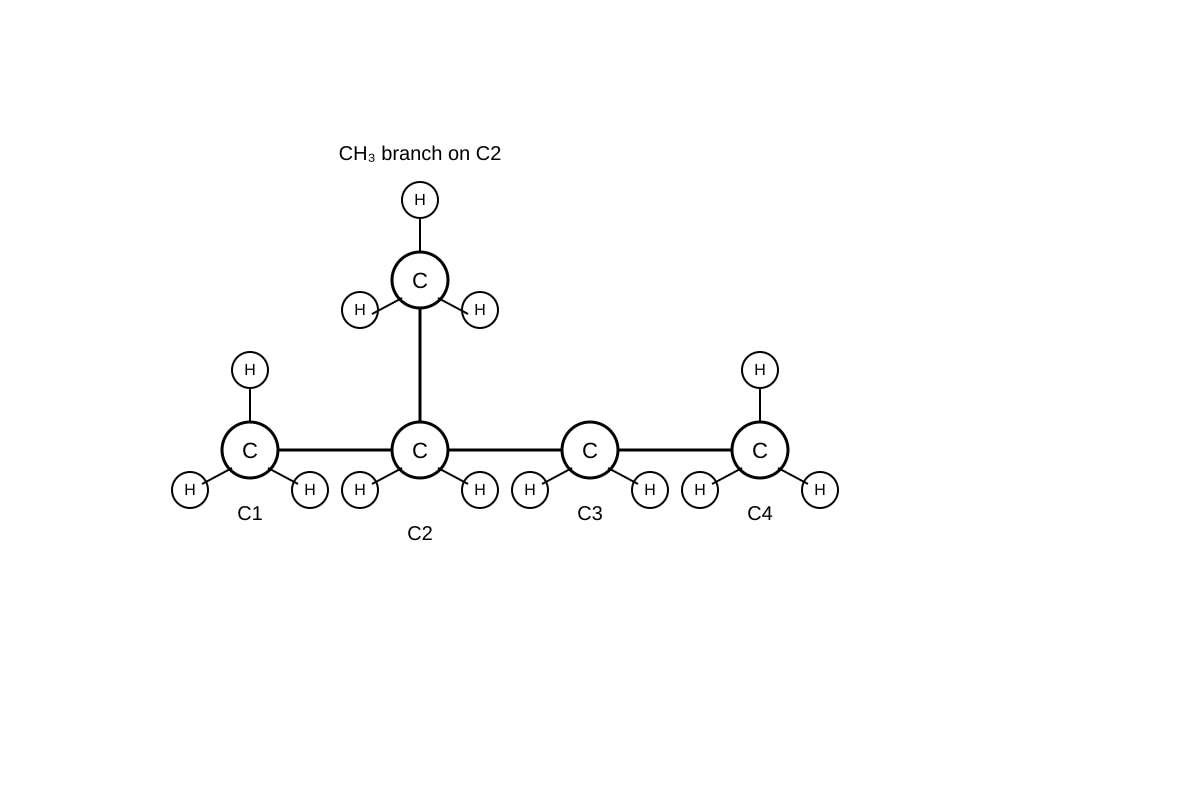
Generated diagram for 17.
(a) Name the compound shown in the diagram above. [1]
(b) Give its molecular formula. [1]
18. A hydrocarbon X has molecular formula C₂H₄.
(a) Identify the homologous series of X. [1]
(b) State one test to confirm X is an alkene. [1]
(c) Write the product formed when X reacts with hydrogen. [1]
19.
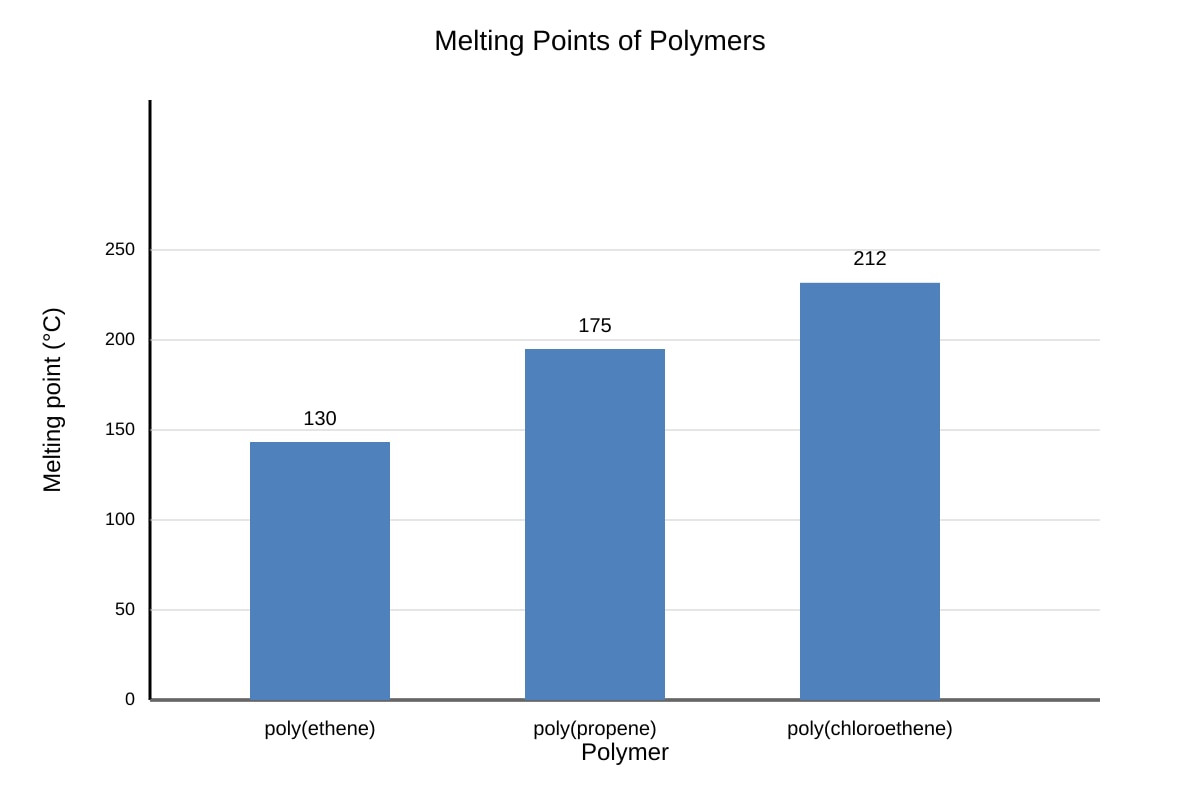
Generated graph for 19.
(a) Which polymer has the highest melting point? [1]
(b) Suggest one reason for the difference in melting points. [1]
20. (a) State one use of ethanol as a fuel. [1]
(b) Give one environmental advantage of using plant-derived ethanol over petrol. [1]
(c) Write a balanced equation for the combustion of ethanol, C₂H₅OH. [2]