AI Generated Quiz
Secondary 3 Biology Human Physiology Quiz
Free Sec 3 Biology Human Physiology quiz, HY3 AI version, with questions, answers, and O Level-style practice for Singapore students.
These static practice materials are generated from the site's syllabus and paper-generation workflow, with source and model context shown so students and parents can evaluate the material before use.
Questions
Free quiz and exam paper access
Enter your details to view this paper
Your access is remembered on this device.
Answers
Secondary 3 Biology Quiz - Human Physiology (Answer Key)
Total Marks: 40
Topic: Human Physiology (syllabus-first; complements Stage 3 patterns, not past-year derived)
Section A
-
Amylase [1]
Teaching note: Salivary amylase is secreted by salivary glands in the mouth; it hydrolyses starch into maltose. Common mistake: writing "pepsin" (that is in stomach, acts on protein). -
Carries blood from the small intestine to the liver [1]
Teaching note: The hepatic portal vein transports absorbed nutrients (e.g., glucose, amino acids) from gut to liver for processing before entering general circulation. -
Peristalsis [1]
Teaching note: Rhythmic wave-like muscle contractions move food bolus along the oesophagus and gut. -
Alveoli (plural) / alveolus (singular accepted) [1]
Teaching note: Alveoli are the sites of O₂ and CO₂ exchange with blood capillaries. -
Pulmonary artery [1]
Teaching note: Unusual because it is an artery carrying deoxygenated blood (from right ventricle to lungs). -
Urea [1]
Teaching note: Formed in liver from deamination of amino acids; filtered by kidneys. -
Haemoglobin [1]
Teaching note: Iron-containing protein; each molecule binds up to 4 O₂. -
Ultrafiltration [1]
Teaching note: High hydrostatic pressure in glomerulus forces water, ions, glucose, urea into Bowman's capsule.
Section B
-
[3] Mark breakdown: 1 mark each for three distinct adaptations.
- Villus has thin wall (one cell thick) → short diffusion distance.
- Rich network of capillaries → maintains concentration gradient.
- Large surface area / microvilli → more absorption.
Teaching note: Structure-function link is key; do not just list "absorbs food".
-
[2]
- Glucose absorbed by villi often moves against its concentration gradient (from low in gut lumen to higher in blood). [1]
- Therefore ATP energy is required → active transport. [1]
Teaching note: Diffusion alone cannot explain uptake when blood glucose is already high.
-
[4] Pathway: lungs → pulmonary vein → left atrium → left ventricle → aorta → femoral artery → leg muscle capillary.
Marking: 1 mark per correct sequence segment (lungs to heart, heart chamber, artery, capillary).
Teaching note: Oxygen enters pulmonary vein (oxygenated), not artery. Double circulation: pulmonary then systemic. -
[4] 2 marks for energy, 2 for direction.
- Energy: Diffusion = passive, no ATP; Active transport = requires ATP. [2]
- Direction: Diffusion = down concentration gradient; Active = against gradient. [2]
Teaching note: Example not required here but osmosis is diffusion of water.
- [3]
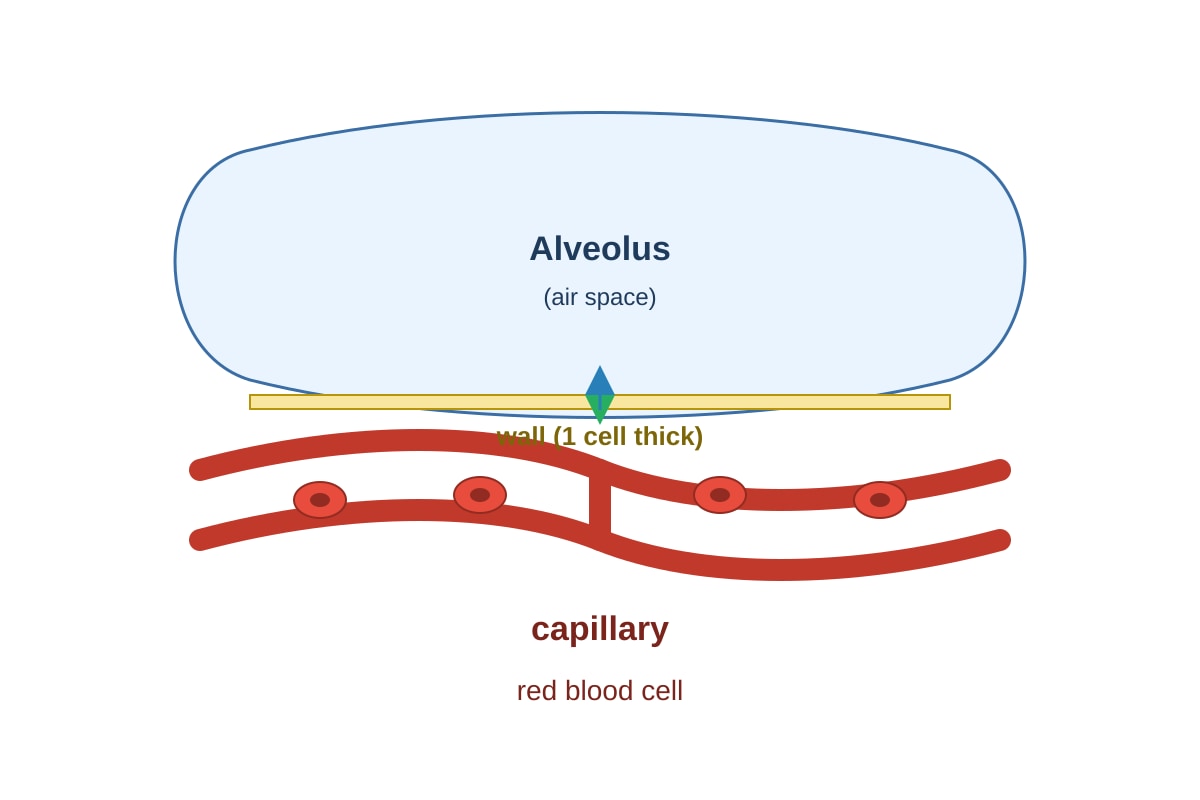
- Many alveoli → large surface area. [1]
- Thin walls (one cell) → short diffusion path. [1]
- Moist surface / dense capillaries → gas dissolves and gradient maintained. [1]
- [3]
- High water intake → blood dilute (low solute). [1]
- Hypothalamus detects, pituitary releases less ADH. [1]
- Kidney tubules less permeable → more water lost in urine (dilute urine). [1]
Teaching note: Osmoregulation keeps water balance via negative feedback.
- [3]
- Heart has double circulation: pulmonary and systemic. [1]
- Right side pumps deoxygenated blood to lungs; left side pumps oxygenated to body. [1]
- So blood also goes to organs (brain, muscles) not just lungs. [1]
Section C
- [2]
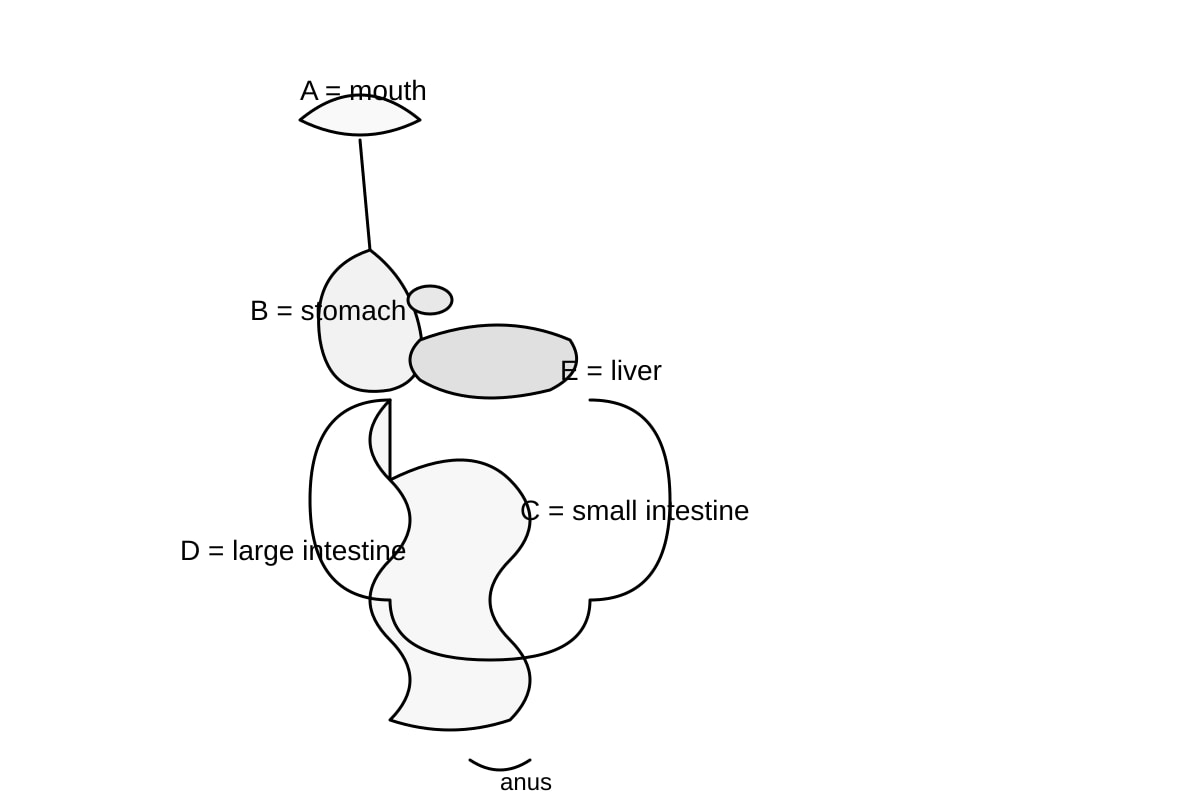
- E = liver [1]
- Gland near stomach = pancreas; function: secretes digestive enzymes (e.g., lipase) or bicarbonate. [1]
Teaching note: Diagram must show liver at E; pancreas is behind stomach.
- [3]
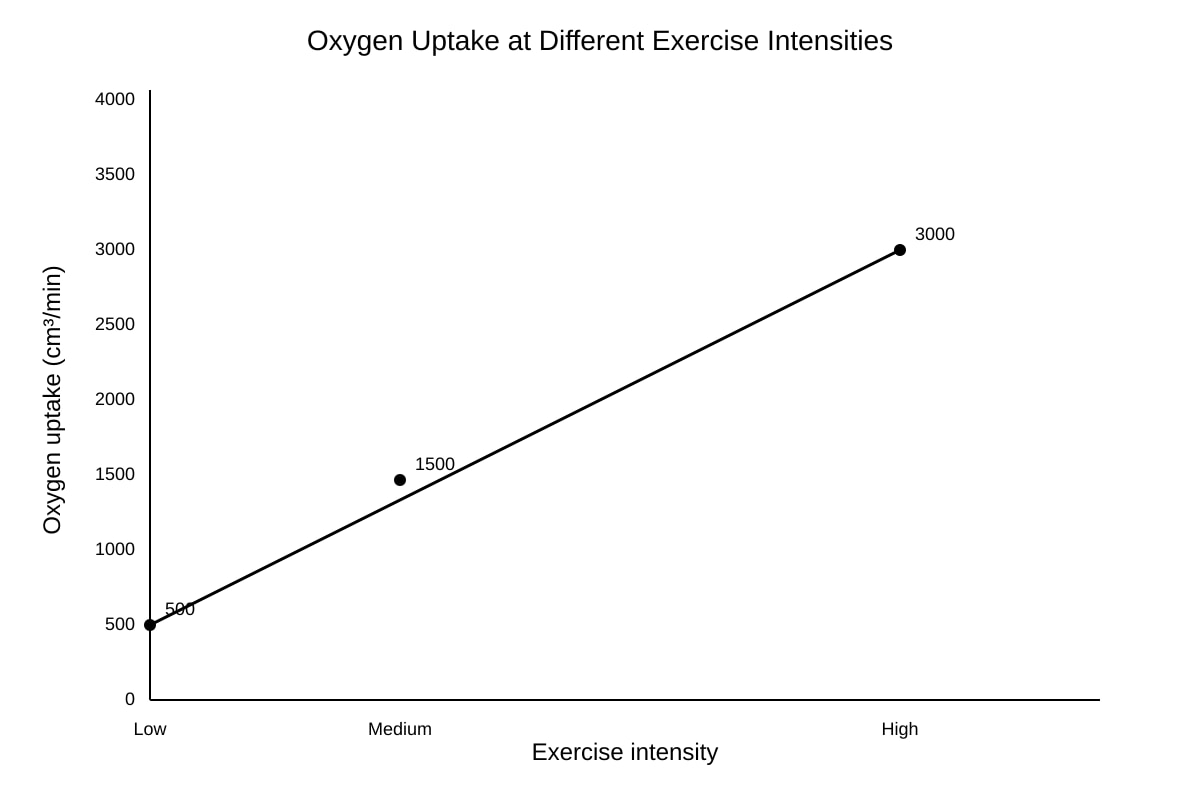
- Trend: oxygen uptake increases with exercise intensity. [1]
- Muscles respire more → need more O₂. [1]
- Heart and breathing rate rise to deliver O₂ faster. [1]
- [2]
- Conclusion: Kidney removes urea (level drops 0.03→0.01) and reabsorbs water (90→88). [2: 1 each]
Teaching note: Glucose unchanged shows selective reabsorption works.
- [2]
- Thin wall = short diffusion distance for O₂/CO₂. [1]
- Speeds up gas exchange between air and blood. [1]
- [3]
- Substance: glucose or urea (e.g., glucose). [1]
- Damaged tubules cannot reabsorb it. [1]
- So it remains in urine at high concentration. [1]
Teaching note: Healthy kidneys reabsorb all glucose; tubule damage causes glycosuria.