AI Generated Quiz
Secondary 3 Biology Cells Biomolecules Quiz
Free Sec 3 Biology Cells Biomolecules quiz, HY3 AI version, with questions, answers, and O Level-style practice for Singapore students.
These static practice materials are generated from the site's syllabus and paper-generation workflow, with source and model context shown so students and parents can evaluate the material before use.
Questions
Free quiz and exam paper access
Enter your details to view this paper
Your access is remembered on this device.
Answers
Secondary 3 Biology Quiz - Cells Biomolecules: Answer Key
Total Marks: 40
Note: Syllabus-first practice generated from inferred templates. Not past-year derived.
Section A (1 mark each)
-
B) Rough endoplasmic reticulum [1]
Teaching note: Radioactive amino acids are used to build proteins at ribosomes on the rough ER. The RER is the first site of protein synthesis, so it shows radioactivity first. Common mistake: choosing nucleus (DNA is not made of amino acids directly). -
C) Lacks a nucleus to allow more haemoglobin [1]
Teaching note: Mature red blood cells have no nucleus, creating space for haemoglobin to carry oxygen. A, B, D are not correct adaptations. -
D) Iodine test [1]
Teaching note: Iodine turns blue-black with starch. Benedict’s tests reducing sugar; biuret tests protein; ethanol tests fat. -
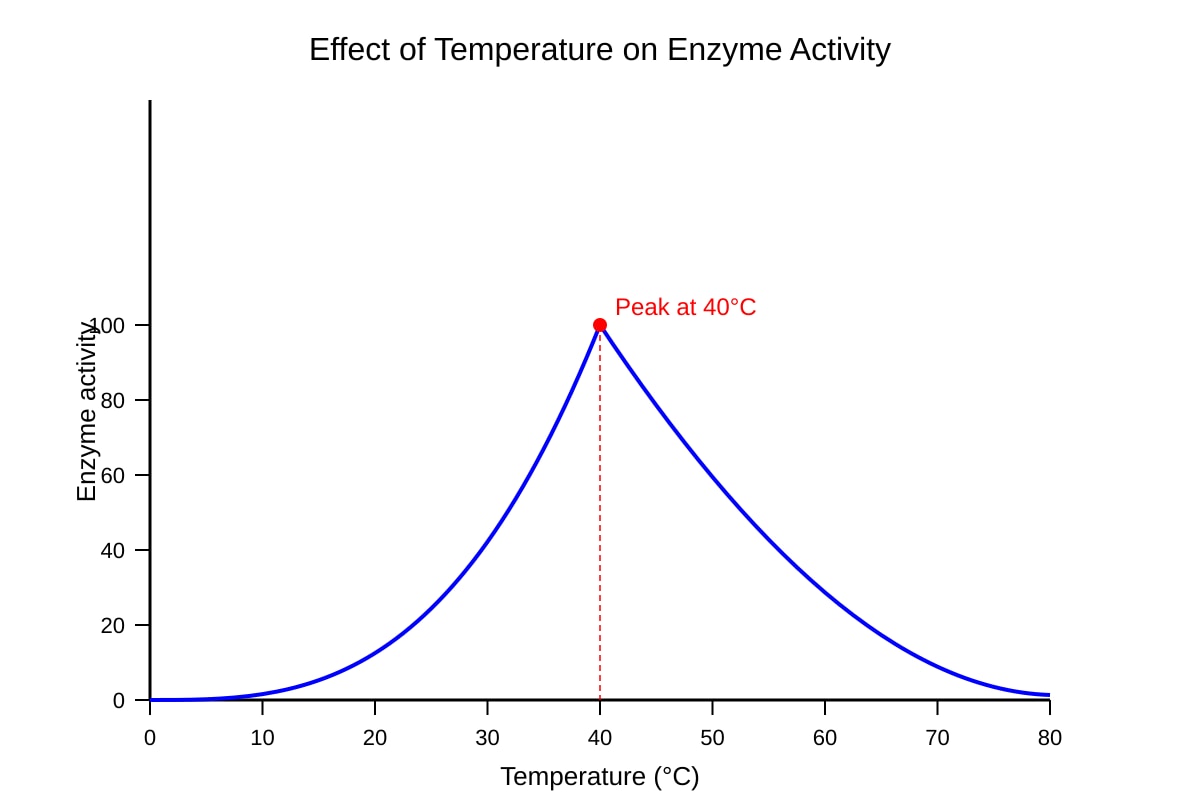
B) 40°C [1]
From graph Q4-fig1: Peak at 40°C is maximum enzyme activity. Enzyme denatures above optimum. -
C) Active transport [1]
Teaching note: Active transport uses ATP to move substances against gradient. Diffusion/osmosis are passive.
Section B (2 marks each)
-
Ribosome: protein synthesis [1]; Mitochondrion: respiration / ATP production [1]
Teaching note: Ribosomes are the site of translation; mitochondria release energy via aerobic respiration. -
Reducing sugar present [1]; Benedict’s test [1]
Teaching note: Brick-red after heating with Benedict’s indicates reducing sugar (e.g., glucose). Colour change from blue shows positive. -
Long thin extension increases surface area [1] for water/mineral absorption [1].
Teaching note: Root hair cell adaptation maximises uptake from soil by diffusion/osmosis. -
Diffusion [1]; Movement of particles from high to low concentration without energy [1].
Teaching note: Oxygen moves down concentration gradient across alveolar wall. -
Starch present (iodine blue-black) [1]; protein absent (biuret negative) [1].
Teaching note: Iodine positive = starch; biuret no change = no protein. -
Amylase active site fits starch shape only [1]; protein shape different so no binding [1].
Teaching note: Lock-and-key: enzyme specific to substrate shape; protein not complementary. -
Cell swells/bursts (lysis) [1]; water enters by osmosis down gradient [1].
Teaching note: Hypotonic environment causes net water movement into cell. -
Any two: cell wall, chloroplast, large vacuole [1+1].
Teaching note: Animal cells lack these three structures. -
Golgi body [1]; modifies/packages proteins into vesicles [1].
Teaching note: Stacked membranes = Golgi; processes products from RER. -
Diffusion: passive, down gradient [1]; Active: needs ATP, against gradient [1].
Teaching note: Two clear differences required.
Section C
- [4] Mark breakdown: 2 adaptations × (structure [1] + function link [1])
- Many chloroplasts → absorb more light for photosynthesis [1+1]
- Tall columnar shape / packed at top → max light capture [1+1]
Teaching note: Palisade cells are specialised for photosynthesis in leaf.
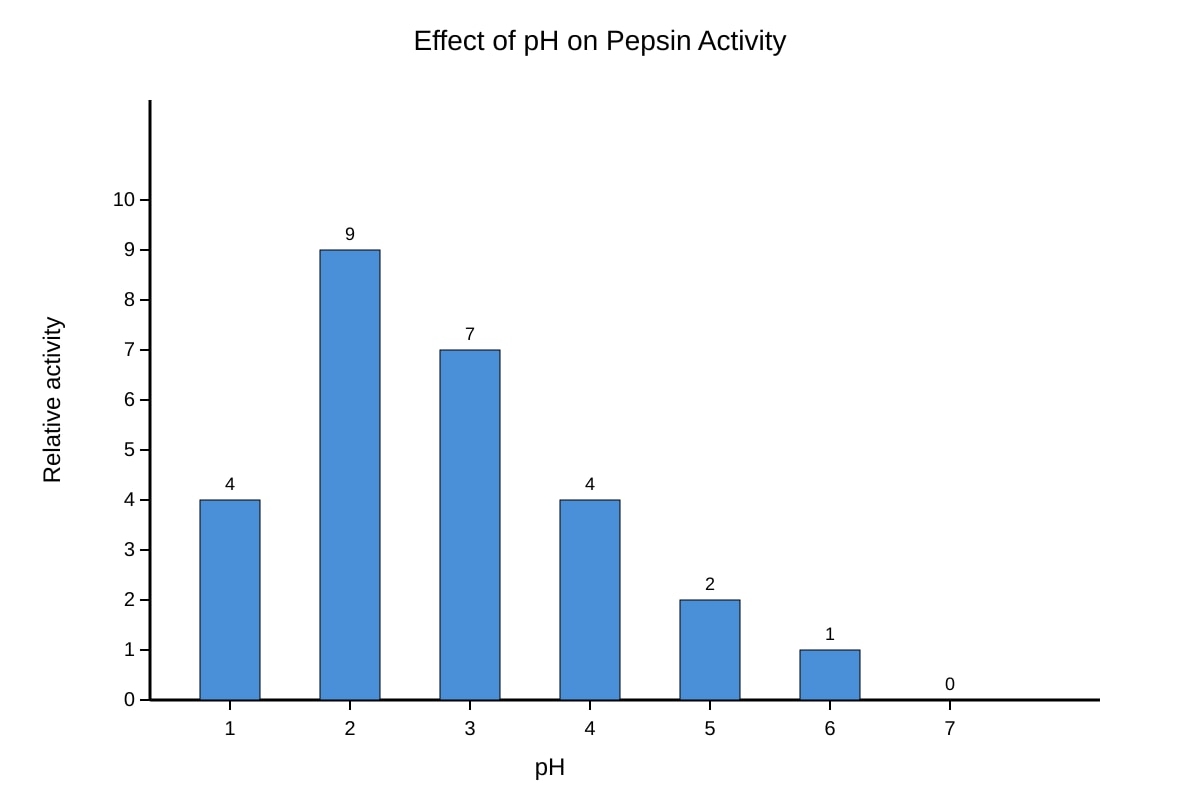
- [5] Mark breakdown: trend description 2, reason pH optimum 2, denaturation 1
- At pH 1–2 activity high, peak at pH 2 (pepsin optimum acidic) [1]
- Below/above optimum H⁺ affects active site charge [1]
- From pH 3–7 activity falls as enzyme shape changes [1]
- At pH 7 denatured, no activity [1]
- Link to protein structure [1]
From Q17-fig1: Bar max at pH 2, zero at 7.
-
[6] 2 marks each part
(i) Osmosis: water only; diffusion: any substance [2]
(ii) Osmosis: no energy; diffusion: no energy (both passive) — state both passive [2]
(iii) Osmosis: water into root hair; diffusion: O₂ from leaf air space [2]
Teaching note: Must compare clearly. -
[3] Mitochondrion first [1]; glucose used in respiration [1]; released as CO₂/energy [1].
Teaching note: Glucose traced to mitochondria for cellular respiration. -
[4] Steps: crush sample, add ethanol, pour into water [2]; milky white emulsion = fat [2].
Teaching note: Ethanol dissolves fat; water layer turns cloudy if fat present.