From Real Exams Quiz
Secondary 3 Biology Human Physiology Quiz
Free Sec 3 Biology Human Physiology quiz, HY3 Exam version, with questions, answers, and O Level-style practice for Singapore students.
These static practice materials are generated from the site's syllabus and paper-generation workflow, with source and model context shown so students and parents can evaluate the material before use.
Questions
Free quiz and exam paper access
Enter your details to view this paper
Your access is remembered on this device.
Answers
Secondary 3 Biology Quiz - Human Physiology: Answer Key
Total Marks: 40
Duration: 50 minutes
Section A: Multiple Choice
1. A — Liver [1]
Teaching note: The liver produces bile, which emulsifies fats. The gall bladder only stores bile; the pancreas makes digestive enzymes, not bile. Common mistake: choosing gall bladder because it is associated with bile storage.
2. B — contracts; increases [1]
Teaching note: During inhalation, the diaphragm contracts and flattens, increasing thoracic volume and decreasing pressure so air enters. Relaxation occurs during exhalation.
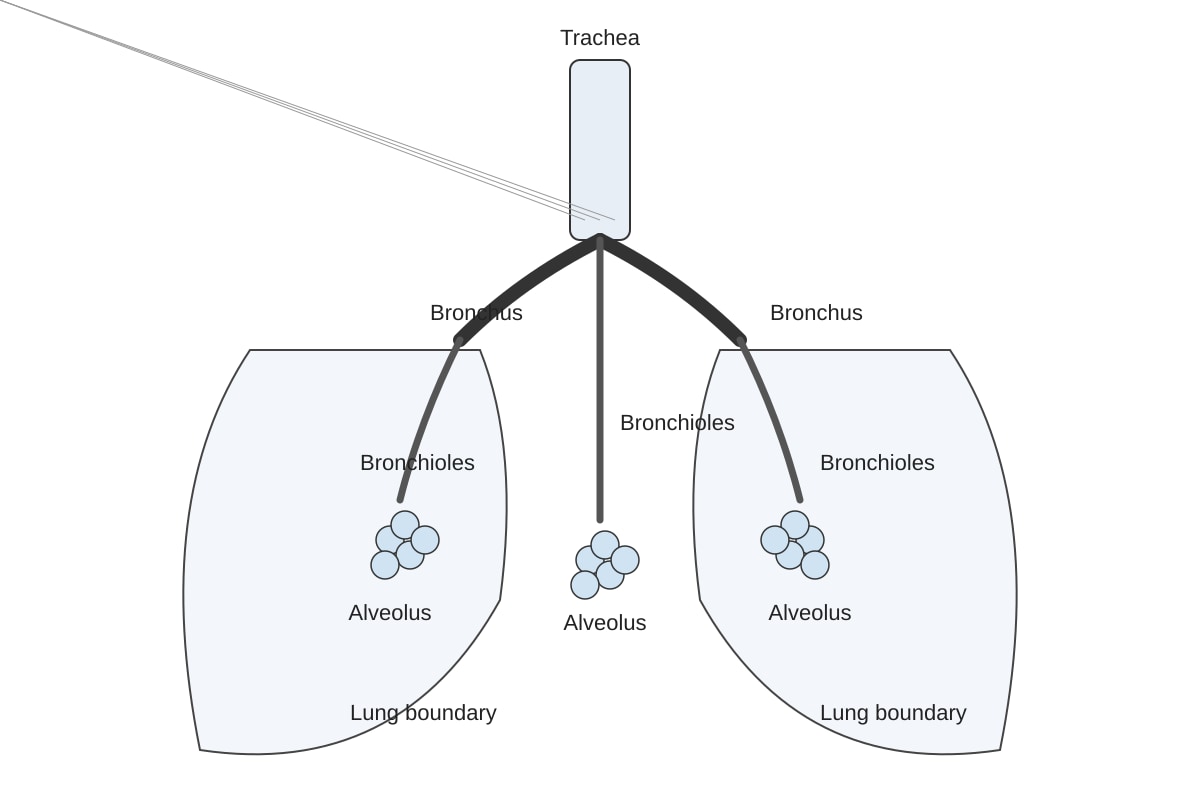
3. B — alveoli [1]
Teaching note: Alveoli are the small air sacs surrounded by capillaries where O₂ and CO₂ exchange. Bronchi and bronchioles are airways; ventricles are heart chambers.
4. C — Pulmonary vein [1]
Teaching note: The pulmonary vein is unusual—it carries oxygenated blood from lungs to left atrium. The pulmonary artery carries deoxygenated blood away from heart to lungs.
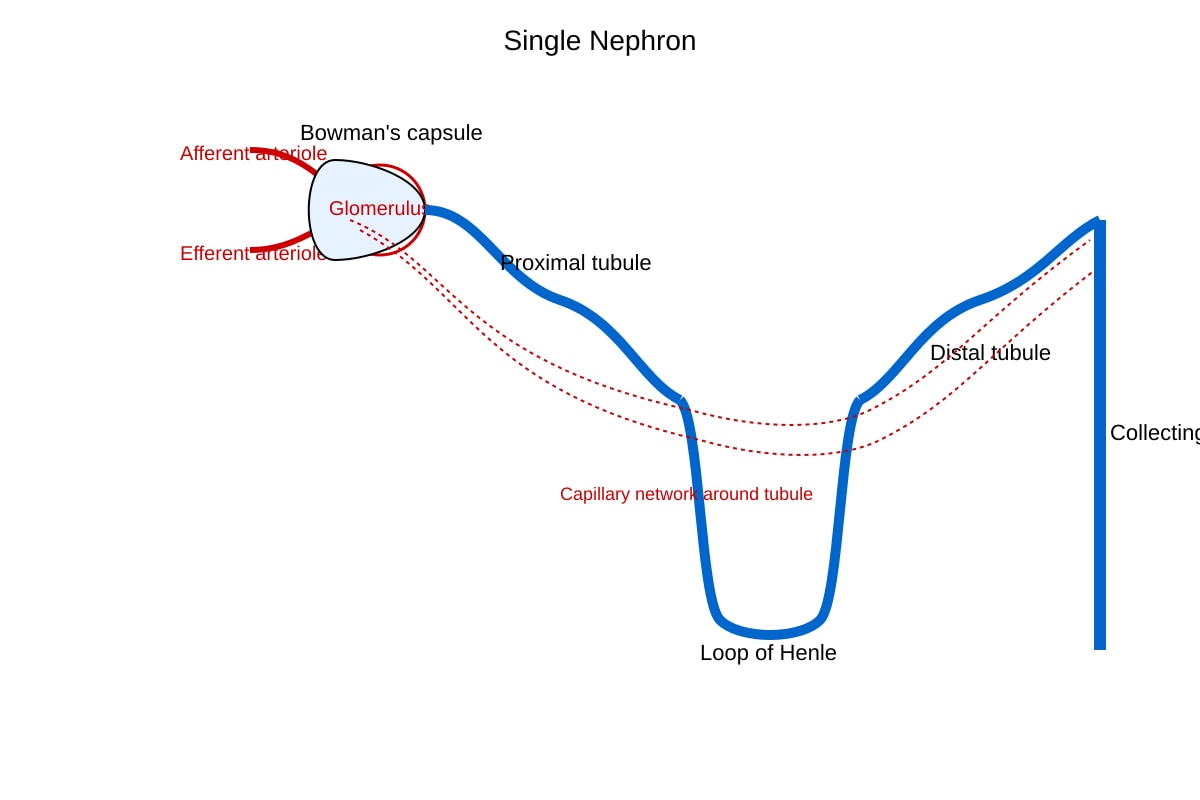
5. B — Bowman's capsule [1]
Teaching note: Filtration of blood under pressure occurs at the glomerulus inside Bowman's capsule. The loop of Henle and collecting duct are for reabsorption.
Section B: Structured Questions
6. [2]
- Enzyme: amylase (salivary amylase) [1]
- Product: maltose (or reducing sugars) [1]
Teaching note: Salivary glands secrete amylase which hydrolyses starch to maltose. Mark for named enzyme and correct product.
7. [2]
- Villi increase surface area for absorption [1]
- This allows more nutrients to be absorbed efficiently into blood [1]
Teaching note: Folded wall → larger SA → faster diffusion/absorption. Common mistake: saying "to digest food" (digestion is earlier, in lumen).
8. [1]
- Alveolus (or alveoli cluster) labelled at end of bronchioles
Teaching note: Based on Q8-fig1, the gas exchange site is the alveolus. Image must show alveoli as small sacs at bronchiole ends.
9. [2]
(i) Thin wall (one cell thick) → short diffusion distance [1]
(ii) Large surface area / many capillaries / moist surface [1]
Teaching note: Any two correct features. Mark each clearly.
10. [2]
- Carries blood from intestine to liver [1]
- Transports absorbed nutrients (e.g., glucose, amino acids) for processing [1]
Teaching note: Hepatic portal vein is a portal vein (between two capillary beds). Not the same as hepatic vein.
11. [2]
Working:
Increase = 128 − 72 = 56 beats/min
Percentage = (56 ÷ 72) × 100 = 77.8% ≈ 78% [2 for correct working and answer]
Teaching note: Show subtraction then divide by original (rest) value × 100. Common error: dividing by 128.
12. [2]
- Aorta (or artery / systemic artery) [1]
- Thick muscular wall / elastic tissue to withstand high pressure [1]
Teaching note: Aorta carries oxygenated blood to body. Adaptation links to high pressure from ventricle.
13. [2]
- Process: ultrafiltration (or filtration) [1]
- Substance retained: blood cells / proteins (e.g., red blood cells, plasma proteins) [1]
Teaching note: Based on Q13-fig1, Bowman's capsule receives filtrate; large molecules stay in blood.
14. [3]
- Biconcave shape → increased surface area for O₂ loading [1]
- No nucleus → more space for haemoglobin [1]
- Contains haemoglobin which binds O₂ [1]
Teaching note: Each adaptation linked to function = 1 mark. Common omission: not stating haemoglobin's role.
15. [2]
- Function: produces digestive enzymes (or bicarbonate) into duodenum [1]
- Enzyme: amylase / protease / lipase [1]
Teaching note: Pancreas is exocrine (enzymes) and endocrine (insulin). Here focus on digestion.
16. [2]
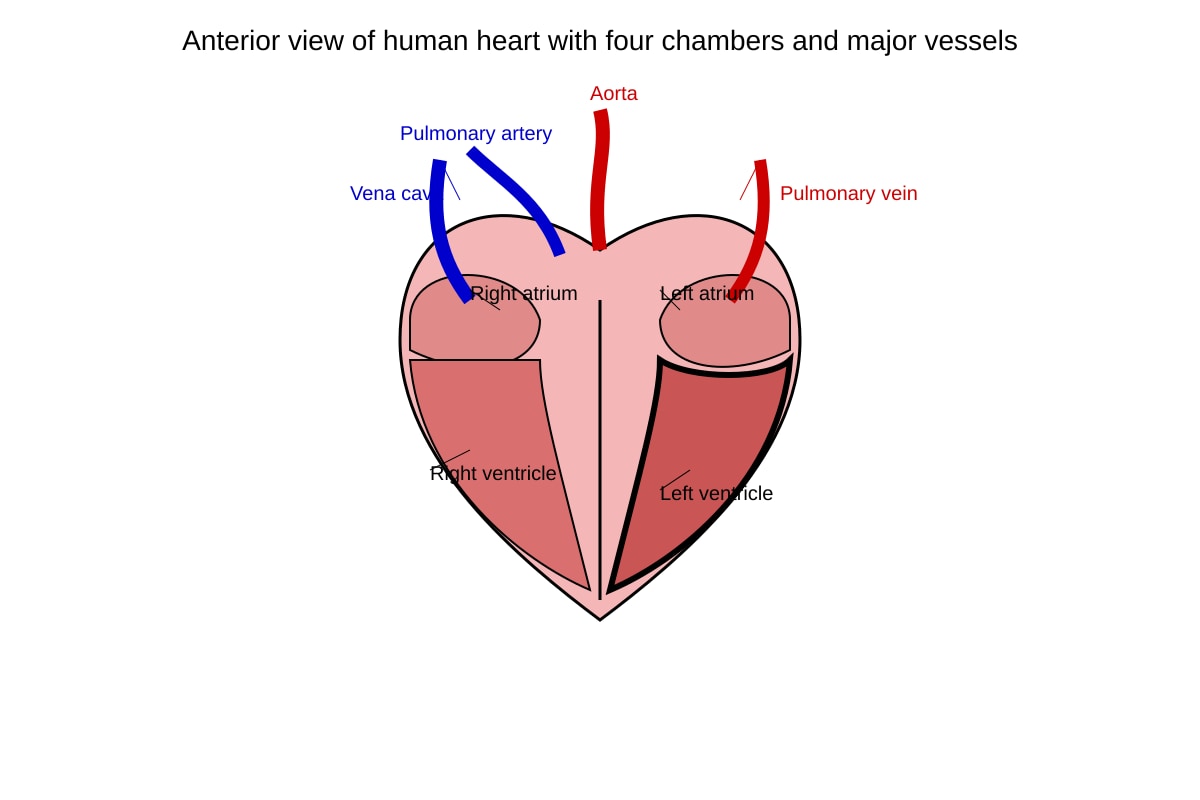
- Left ventricle [1]
- Pumps blood to whole body (systemic circulation) at high pressure, needs thick wall [1]
Teaching note: From Q16-fig1, left ventricle wall thicker. Right ventricle pumps only to lungs.
17. [2]
- Circular muscles contract behind food bolus [1]
- Wave of contraction pushes food downwards [1]
Teaching note: Peristalsis is involuntary wave-like muscle action, not gravity-dependent.
Section C: Extended Response
18. [4]
Mark descriptors:
- Mouth: salivary amylase breaks starch → maltose [1]
- Oesophagus: peristalsis moves to stomach [1]
- Stomach: protease (pepsin) begins protein digestion; no carbohydrate enzyme [1]
- Small intestine: pancreatic amylase continues starch breakdown; maltase → glucose; protease → peptides/amino acids; lipase → fats [1]
Teaching note: Must name enzymes and actions. Bread = starch + some protein; reward sequence and enzyme specificity.
19. [4]
Mark descriptors:
- Ventilation brings fresh air with high O₂ to alveoli [1]
- Blood flow removes O₂-poor blood and brings CO₂-rich blood away [1]
- Alveolar air O₂ > venous blood O₂, maintaining gradient [1]
- Thin alveolus wall + capillaries keep diffusion fast [1]
Teaching note: Steep gradient maintained by constant replacement of air and blood (double perfusion/ventilation).
20. [4]
Mark descriptors:
- Filtration at Bowman's capsule: water and small solutes forced into nephron [1]
- Reabsorption: most water reabsorbed in proximal tubule and loop of Henle [1]
- Collecting duct: final adjustment of water reabsorption controlled by ADH [1]
- Explains balance: more ADH → more water retained, less urine [1]
Teaching note: Nephron filters then selectively reabsorbs. Collecting duct crucial for osmoregulation.