From Real Exams Quiz
Secondary 3 Biology Evolution Diversity Quiz
Free Sec 3 Biology Evolution Diversity quiz, HY3 Exam version, with questions, answers, and O Level-style practice for Singapore students.
These static practice materials are generated from the site's syllabus and paper-generation workflow, with source and model context shown so students and parents can evaluate the material before use.
Questions
Free quiz and exam paper access
Enter your details to view this paper
Your access is remembered on this device.
Answers
Secondary 3 Biology Quiz - Evolution Diversity (Answer Key)
Total Marks: 40
Topic: Evolution Diversity
Section A: Multiple Choice
-
B [1]
Natural selection is the process where individuals with traits better suited to the environment survive and reproduce more. A is incorrect (mate choice is only one mechanism, not the definition). C is incorrect (environment does not directly rewrite DNA). D is incorrect (evolution acts on variation, not uniformly). -
C [1]
After fire, dark beetles are more visible, so light beetles are less predated and have higher survival. B is wrong because light beetles are favoured. A and D ignore selection pressure. -
B [1]
Convergent evolution = unrelated species develop similar traits due to similar environments. A is opposite; C is random drift; D is lineage splitting. -
B [1]
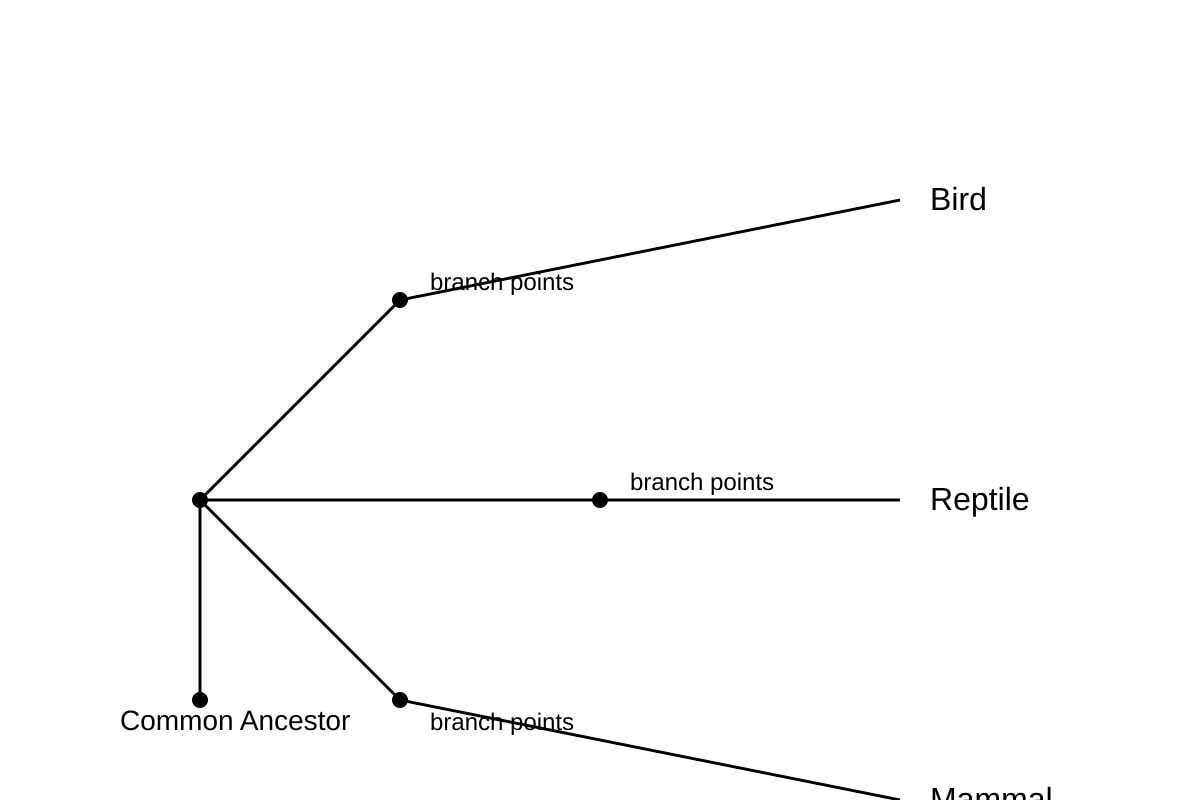
Branch points on a cladogram represent a common ancestor of the lineages above it. A, C, D are misinterpretations. -
C [1]
Homologous = same evolutionary origin, different function (human arm vs whale flipper). A, B, D are analogous (similar function, different origin).
Section B: Short Answer
-
A group of organisms that can interbreed and produce fertile offspring. [1]
Teaching note: This biological species concept is standard at Sec 3. Common mistake: saying "look alike" only. -
It allows some individuals to survive environmental changes / provides raw material for selection. [1]
Any one valid reason accepted. -
Habitat isolation (or ecological isolation). [1]
Other isolation types (geographical, temporal) also possible but habitat is specific to different habitats. -
A feature that helps an organism survive and reproduce in its environment. [1]
Must mention survival/reproduction link. -
Drought favoured birds with deeper beaks (could eat harder seeds); survivors bred and average depth increased. [2]
[1] for linking drought to food change, [1] for selection + inheritance.
Section C: Structured & Extended Response
-
Mutation creates new alleles / genetic variation; this variation is acted on by selection. [2]
[1] mutation produces variation, [1] variation needed for evolution. -
(1) DNA / protein sequence similarity; (2) Comparative anatomy (homologous structures). [2]
Any two from: molecular, anatomical, embryological, biogeographical. [1] each. -
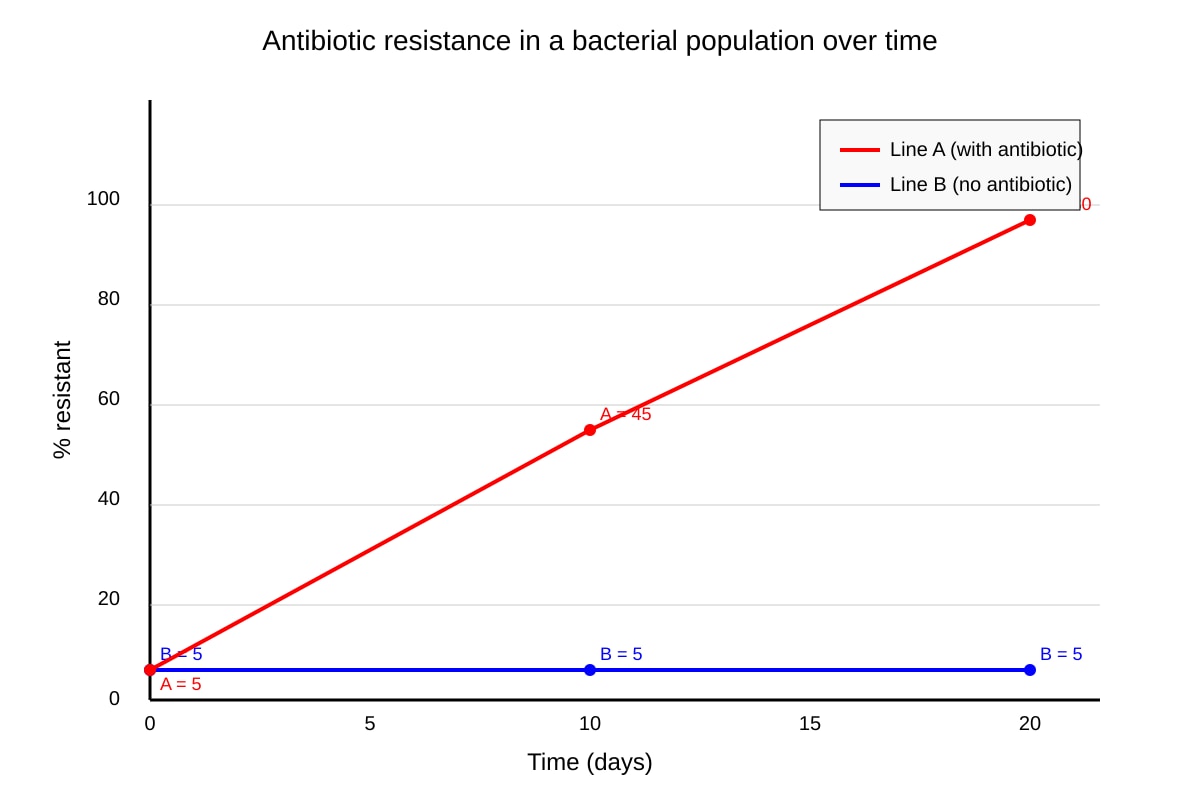
Line A (with antibiotic) rises because resistant bacteria survive and multiply; Line B stays low as no selection pressure. [3]
[1] A increases due to resistance, [1] B flat = no antibiotic, [1] explains selection. -
Convergent evolution: unrelated species evolve similar traits due to similar environment. Example: dolphin (mammal) and shark (fish) both have streamlined bodies. [2]
[1] definition, [1] example. -
Thin-shelled snails are eaten; thick-shelled survive and reproduce; over generations allele frequency for thick shell rises. [3]
[1] predation removes thin, [1] thick survive/reproduce, [1] population changes. -
Homologous: same origin, different function (e.g. human arm/whale flipper). Analogous: different origin, same function (e.g. insect wing/bird wing). [2]
[1] each. -
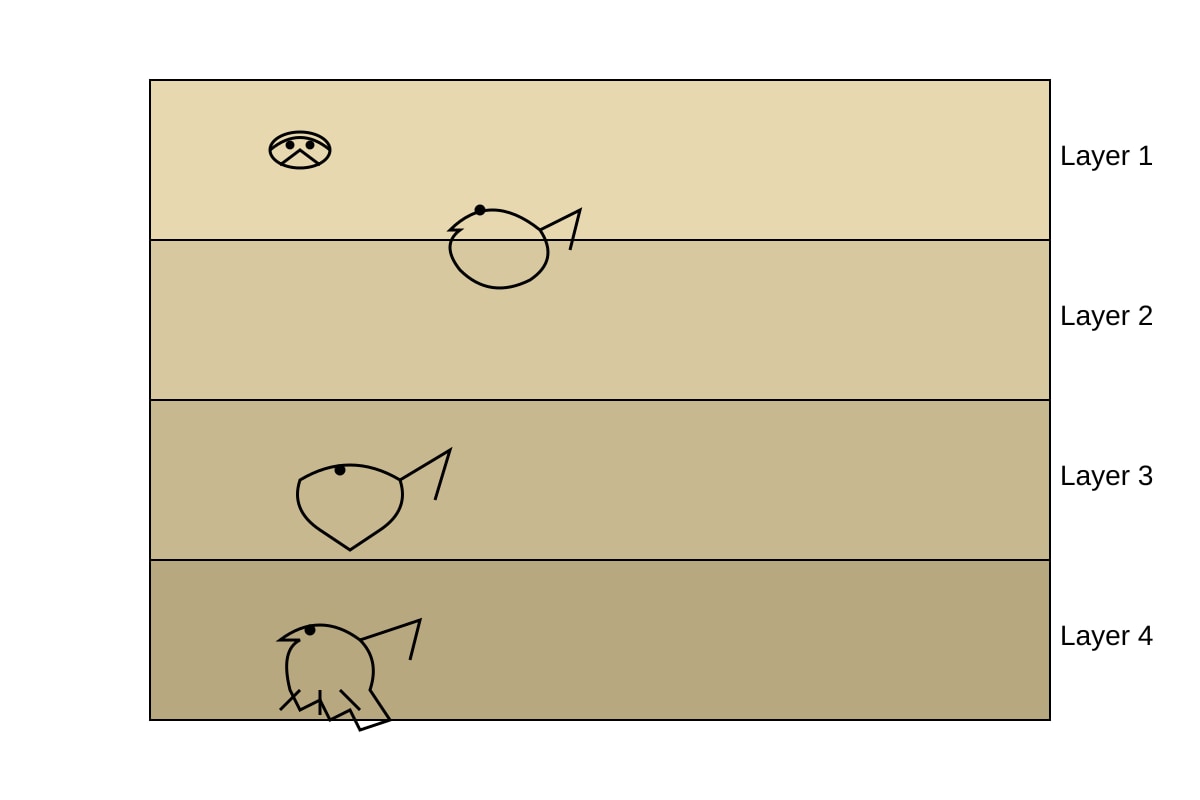
Layer 4 (bottom) is oldest. [2]
[1] bottom layer deposited first, [1] fossils there oldest (superposition). -
Population split by barrier (river/mountain); no gene flow; different mutations/selection; become reproductively isolated = new species. [3]
[1] barrier, [1] independent change, [1] speciation. -
Artificial: humans select traits; Natural: environment selects. [2]
[1] each. -
Fossils show morphological change over time; DNA shows genetic relatedness; together confirm common ancestry and gradual change. [4]
[1] fossil sequence, [1] DNA similarity, [1] common ancestor, [1] supports evolution theory.