Secondary 3 Biology Quiz - Ecology
Name: ___________________________
Class: ____________
Date: ____________
Score: ____________
Duration: 45 minutes
Total Marks: 40
Instructions:
- Answer all 20 questions.
- Section A: Multiple Choice (1 mark each)
- Section B: Short Answer (1–2 marks each)
- Section C: Structured & Data Interpretation (2–4 marks each)
- Write your answers clearly in the spaces provided.
Section A: Multiple Choice (Questions 1–5)
1. Which of the following best describes a community in an ecosystem? [1]
A) All the malay fig trees in a forest
B) All living organisms of different species in a pond
C) The temperature and rainfall of a desert
D) One otter and its offspring
2. In a food chain, the organism that always occupies the first trophic level is a: [1]
A) carnivore
B) decomposer
C) producer
D) primary consumer
3. Which process returns carbon dioxide to the atmosphere from dead organisms? [1]
A) Photosynthesis
B) Respiration by decomposers
C) Transpiration
D) Diffusion into roots
4. A population is defined as: [1]
A) all species living in a habitat
B) members of one species in a given area
C) all abiotic factors in a pond
D) the total biomass of a forest
5. Which of the following is an abiotic factor? [1]
A) Fungi
B) Soil pH
C) Earthworms
D) Algae
Section B: Short Answer (Questions 6–10)
6. State one difference between a habitat and a niche. [1]
7. Name the process by which nitrogen gas in the air is converted into nitrates by bacteria in root nodules. [1]
8. Give one example of a decomposer and state its role. [2]
9. Define "biodiversity" in one sentence. [1]
10. State two ways in which humans can reduce their ecological footprint. [2]
Section C: Structured & Data Interpretation (Questions 11–20)
11. The diagram below shows a simple terrestrial food chain.
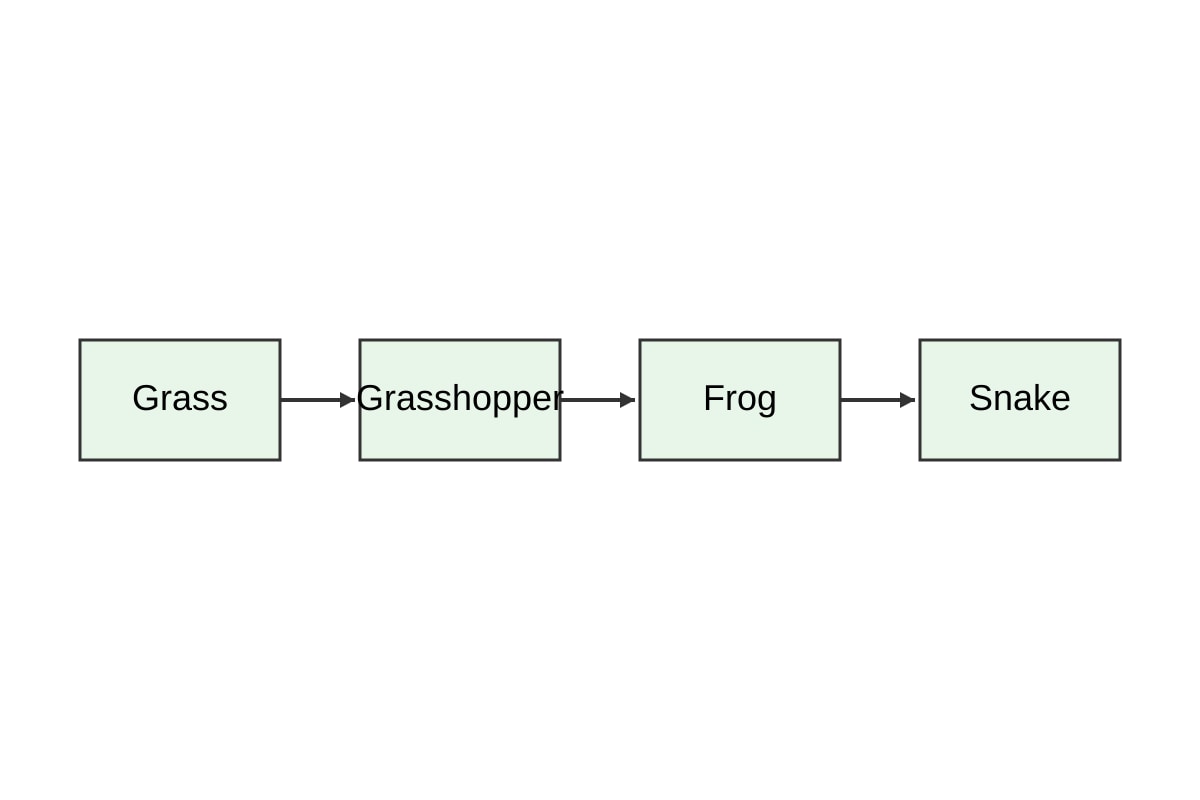
Generated diagram for Q11.
(a) State the trophic level of the frog. [1]
(b) Name one organism that could be a decomposer in this ecosystem. [1]
12. Explain how energy is lost between trophic levels in a food chain. [2]
13. A student counted the number of snail shells in a 1 m² quadrat and recorded the following over 4 weeks:
| Week | Number of snails |
|---|
| 1 | 12 |
| 2 | 18 |
| 3 | 15 |
| 4 | 21 |
(a) Calculate the mean number of snails per week. [2]
(b) Suggest one reason why the count changed from week 2 to week 3. [1]
14. The graph shows the population of rabbits and foxes in a grassland over 10 years.
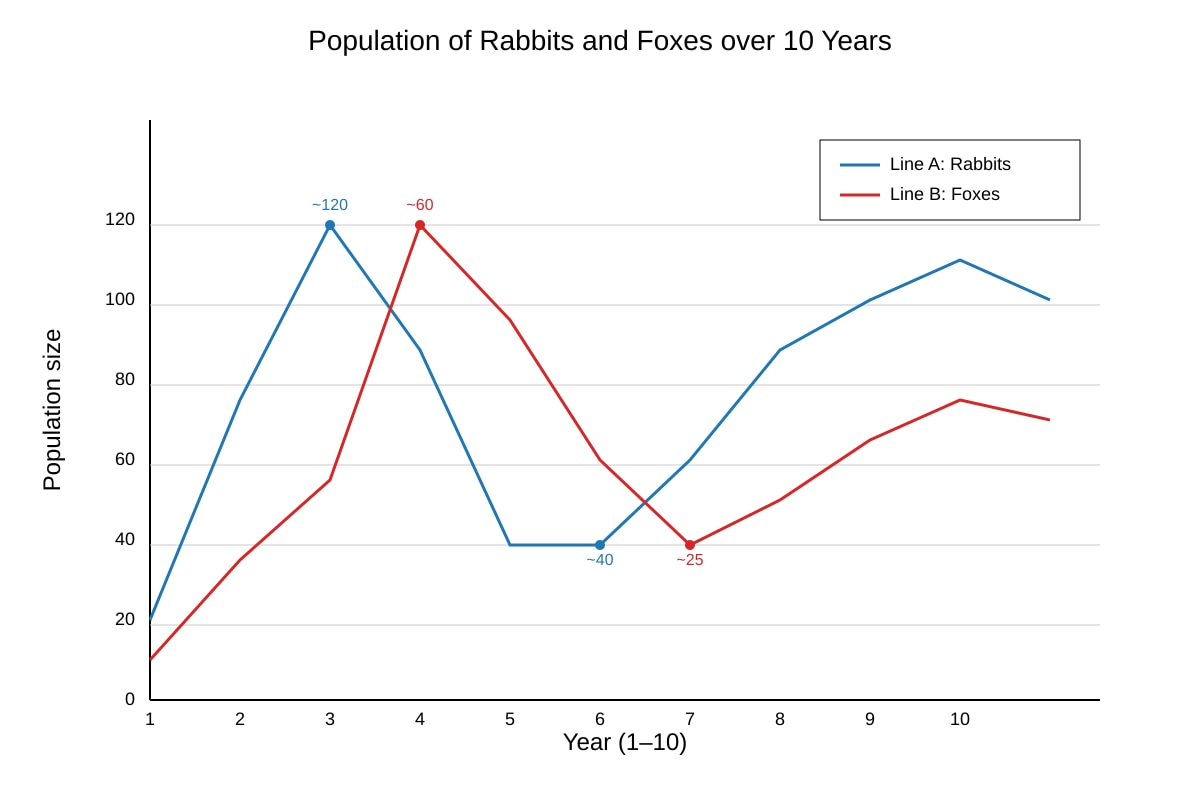
Generated graph for Q14.
(a) Describe the relationship between rabbit and fox populations. [2]
(b) Explain why the fox population does not exceed the rabbit population. [2]
15. Define the term "ecological succession" and give one example. [2]
16. The table below shows the percentage of energy transferred at each trophic level in a farm ecosystem.
| Trophic level | Energy (kJ/m²/yr) |
|---|
| Producers | 5000 |
| Primary cons. | 500 |
| Secondary cons. | 50 |
Calculate the percentage of energy transferred from producers to primary consumers. [2]
17. Explain how deforestation can lead to a decrease in biodiversity. [2]
18. A pond ecosystem is polluted with excess fertiliser, causing algal bloom.
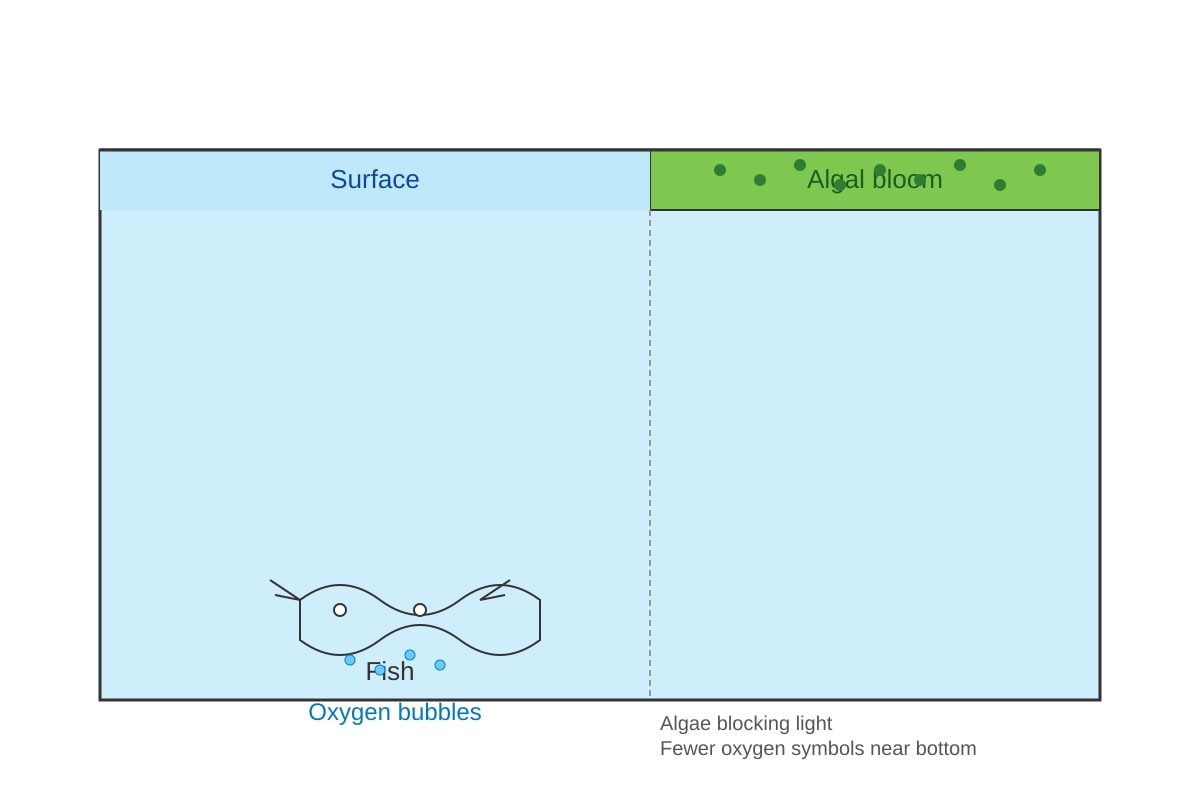
Generated diagram for Q18.
(a) State one effect of algal bloom on underwater plants. [1]
(b) Explain why fish may die after the algal bloom. [2]
19. Describe how carbon cycles between plants and animals. [3]
20. A field study used a pitfall trap to sample ground insects.
(a) State one advantage of using a pitfall trap. [1]
(b) Give one precaution to avoid bias in sampling. [1]
(c) Explain why repeating the trap over several nights improves reliability. [2]
</stage3_quiz_answers_md>
<stage3_quiz_answers_md>
Secondary 3 Biology Quiz - Ecology: Answer Key
Total Marks: 40
Duration: 45 minutes
Section A: Multiple Choice
1. B [1]
Teaching note: A community includes all living organisms of different species in a habitat. A is a population, C is abiotic environment, D is a family group not full community.
2. C [1]
Teaching note: Producers (e.g., plants) perform photosynthesis and form the base (first trophic level). Consumers eat others; decomposers break down dead matter.
3. B [1]
Teaching note: Decomposers respire, releasing CO₂ from dead organisms back to atmosphere. Photosynthesis removes CO₂; transpiration is water loss; root diffusion is not CO₂ return.
4. B [1]
Teaching note: Population = same species in an area. A is community, C is abiotic, D is biomass not population.
5. B [1]
Teaching note: Abiotic = non-living. Soil pH is chemical non-living factor. Others are biotic (living).
Section B: Short Answer
6. [1] Habitat is the place where an organism lives; niche is its role/position including food and behaviour.
(Mark for clear difference, e.g., "habitat = location, niche = job".)
7. [1] Nitrogen fixation.
8. [2] Example: fungus (1 mark); role: breaks down dead organic matter into nutrients (1 mark).
Other accept: bacteria, role: decompose dead matter.
9. [1] Biodiversity is the variety of living species in an ecosystem/habitat.
10. [2] Any two: reduce waste, use public transport, conserve energy, plant trees, less meat consumption (1 mark each).
Section C: Structured & Data Interpretation
11.
(a) [1] Secondary consumer (grass=producer, grasshopper=primary, frog=eats primary).
(b) [1] Bacterium / fungus / earthworm.
12. [2] Energy lost as heat during respiration (1); not all parts eaten / some indigestible (1).
Teaching: Only ~10% transferred; rest lost to environment.
13.
(a) [2] Mean = (12+18+15+21)/4 = 66/4 = 16.5 snails. Working shown = 2 marks.
(b) [1] Predation, weather, sampling error, migration.
14.
(a) [2] Fox population follows rabbit with delay (1); both cycle up and down (1).
(b) [2] Foxes depend on rabbits for food (1); energy loss limits fox numbers (1).
15. [2] Succession = gradual change in species over time (1); example: bare rock → lichen → moss → grass (1).
16. [2] % transfer = (500 / 5000) × 100 = 10%. Working = 2 marks.
17. [2] Removes habitats (1); reduces food sources / species loss (1).
18.
(a) [1] Less light reaches them (blocked by algae).
(b) [2] Algae die and decomposers use O₂ (1); fish suffocate from low oxygen (1).
19. [3] Plants take CO₂ for photosynthesis (1); animals eat plants / respire releasing CO₂ (1); decomposers return carbon (1).
Marking: 1 mark per correct link.
20.
(a) [1] Catches small ground insects automatically.
(b) [1] Random placement / multiple traps.
(c) [2] Reduces effect of unusual night (1); gives representative data (1).
</stage3_quiz_answers_md>
<stage3_quiz_md>
Secondary 3 Biology Quiz - Ecology
Name: ___________________________
Class: ____________
Date: ____________
Score: ____________
Duration: 45 minutes
Total Marks: 40
Instructions:
- Answer all 20 questions.
- Section A: Multiple Choice (1 mark each)
- Section B: Short Answer (1–2 marks each)
- Section C: Structured & Data Interpretation (2–4 marks each)
- Write your answers clearly in the spaces provided.
Section A: Multiple Choice (Questions 1–5)
1. Which of the following best describes a community in an ecosystem? [1]
A) All the malay fig trees in a forest
B) All living organisms of different species in a pond
C) The temperature and rainfall of a desert
D) One otter and its offspring
2. In a food chain, the organism that always occupies the first trophic level is a: [1]
A) carnivore
B) decomposer
C) producer
D) primary consumer
3. Which process returns carbon dioxide to the atmosphere from dead organisms? [1]
A) Photosynthesis
B) Respiration by decomposers
C) Transpiration
D) Diffusion into roots
4. A population is defined as: [1]
A) all species living in a habitat
B) members of one species in a given area
C) all abiotic factors in a pond
D) the total biomass of a forest
5. Which of the following is an abiotic factor? [1]
A) Fungi
B) Soil pH
C) Earthworms
D) Algae
Section B: Short Answer (Questions 6–10)
6. State one difference between a habitat and a niche. [1]
7. Name the process by which nitrogen gas in the air is converted into nitrates by bacteria in root nodules. [1]
8. Give one example of a decomposer and state its role. [2]
9. Define "biodiversity" in one sentence. [1]
10. State two ways in which humans can reduce their ecological footprint. [2]
Section C: Structured & Data Interpretation (Questions 11–20)
11. The diagram below shows a simple terrestrial food chain.
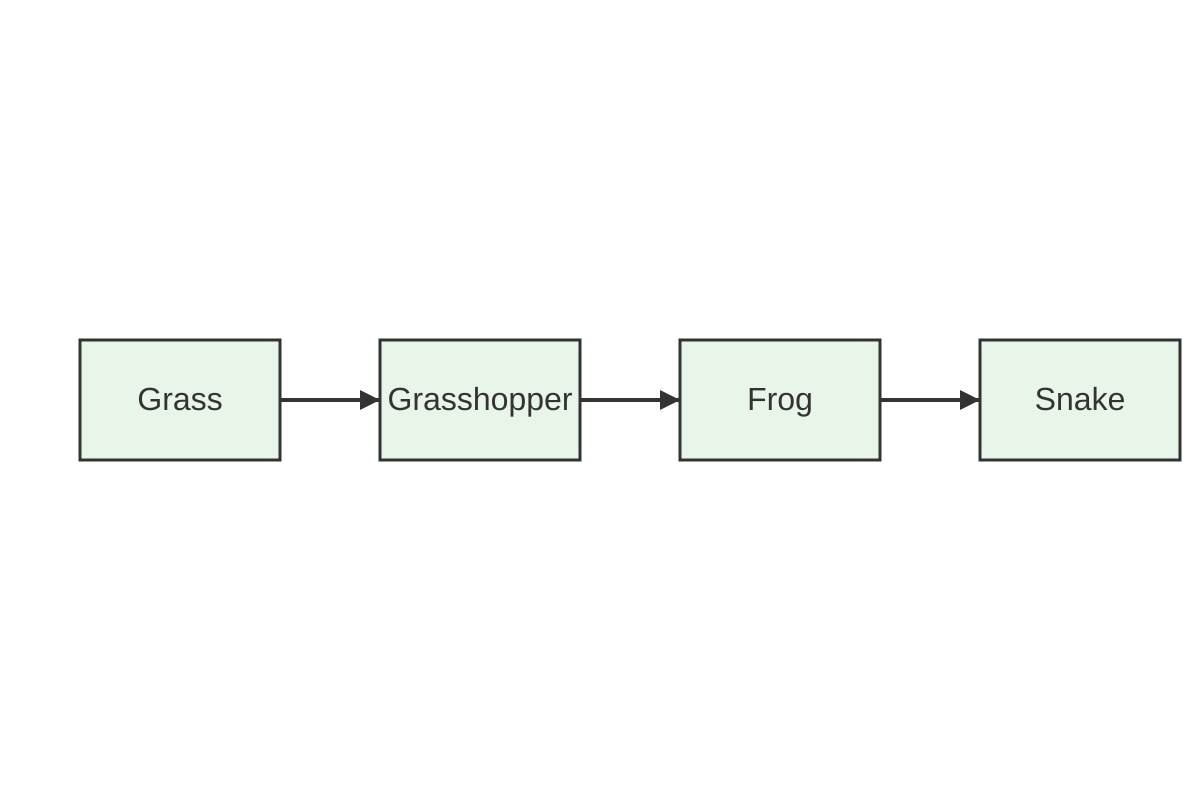
Generated diagram for Q11.
(a) State the trophic level of the frog. [1]
(b) Name one organism that could be a decomposer in this ecosystem. [1]
12. Explain how energy is lost between trophic levels in a food chain. [2]
13. A student counted the number of snail shells in a 1 m² quadrat and recorded the following over 4 weeks:
| Week | Number of snails |
|---|
| 1 | 12 |
| 2 | 18 |
| 3 | 15 |
| 4 | 21 |
(a) Calculate the mean number of snails per week. [2]
(b) Suggest one reason why the count changed from week 2 to week 3. [1]
14. The graph shows the population of rabbits and foxes in a grassland over 10 years.
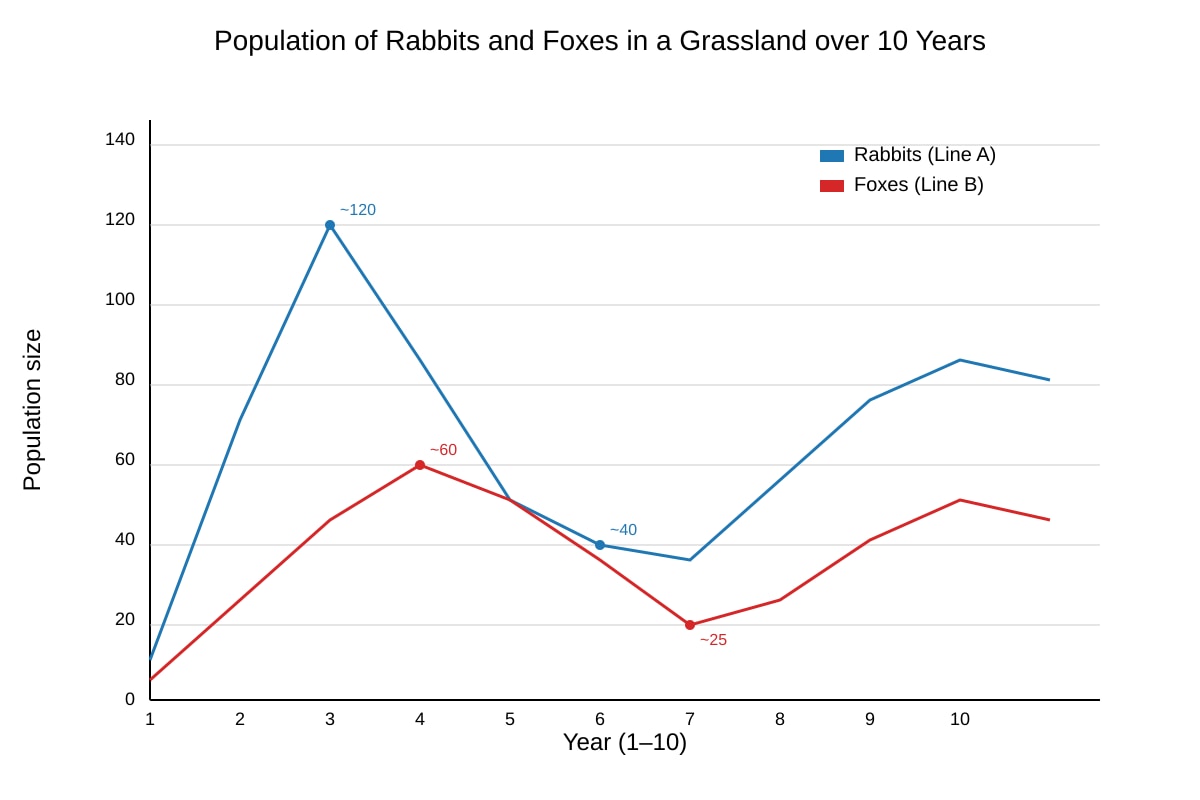
Generated graph for Q14.
(a) Describe the relationship between rabbit and fox populations. [2]
(b) Explain why the fox population does not exceed the rabbit population. [2]
15. Define the term "ecological succession" and give one example. [2]
16. The table below shows the percentage of energy transferred at each trophic level in a farm ecosystem.
| Trophic level | Energy (kJ/m²/yr) |
|---|
| Producers | 5000 |
| Primary cons. | 500 |
| Secondary cons. | 50 |
Calculate the percentage of energy transferred from producers to primary consumers. [2]
17. Explain how deforestation can lead to a decrease in biodiversity. [2]
18. A pond ecosystem is polluted with excess fertiliser, causing algal bloom.
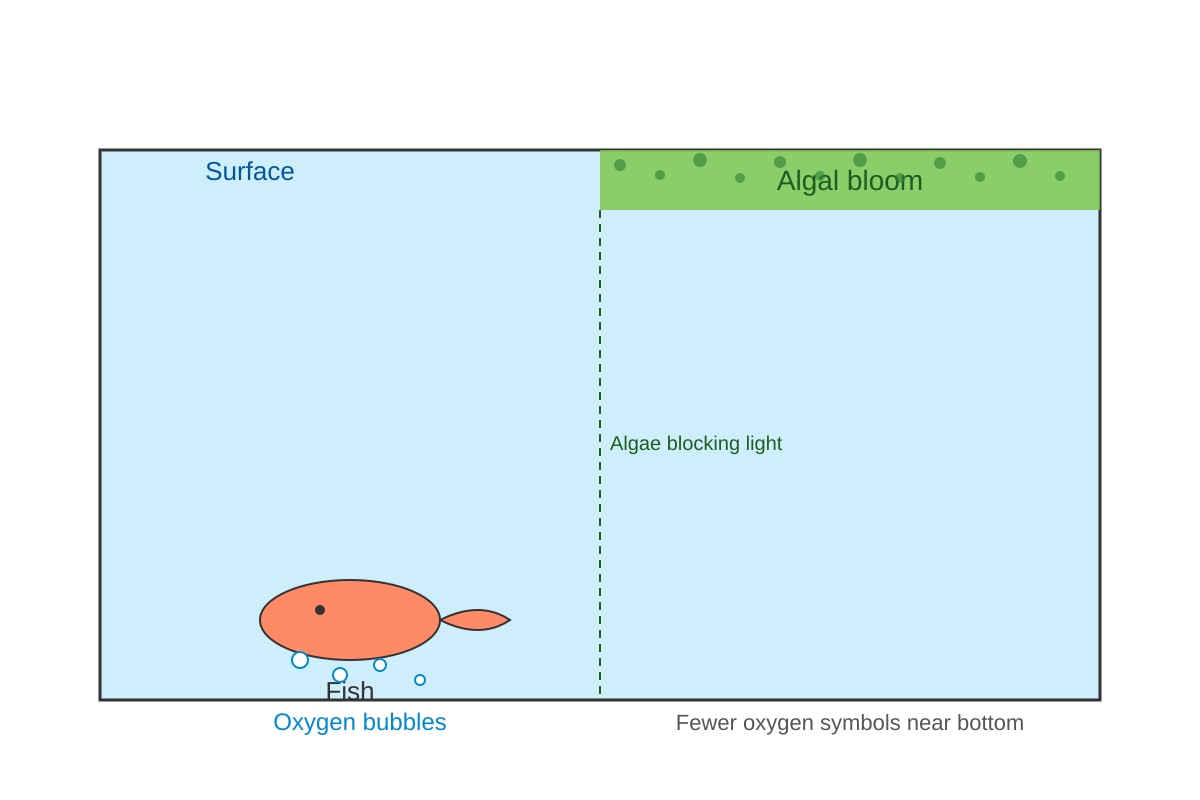
Generated diagram for Q18.
(a) State one effect of algal bloom on underwater plants. [1]
(b) Explain why fish may die after the algal bloom. [2]
19. Describe how carbon cycles between plants and animals. [3]
20. A field study used a pitfall trap to sample ground insects.
(a) State one advantage of using a pitfall trap. [1]
(b) Give one precaution to avoid bias in sampling. [1]
(c) Explain why repeating the trap over several nights improves reliability. [2]