From Real Exams Quiz
Secondary 3 Biology Cells Biomolecules Quiz
Free Sec 3 Biology Cells Biomolecules quiz, Kimi2.6 Exam version, with questions, answers, and O Level-style practice for Singapore students.
These static practice materials are generated from the site's syllabus and paper-generation workflow, with source and model context shown so students and parents can evaluate the material before use.
Questions
Free quiz and exam paper access
Enter your details to view this paper
Your access is remembered on this device.
Answers
Secondary 3 Biology Quiz - Cells Biomolecules: Answer Key
Total Marks: 40
Section A: Multiple Choice
1. C — Plant cell (2 marks)
Teaching note: Plant cells are distinguished by three key features not found in animal cells: a cellulose cell wall (provides structural support), a large central vacuole (stores cell sap and maintains turgor pressure), and chloroplasts (contain chlorophyll for photosynthesis). Fungal cells have cell walls but made of chitin, not cellulose, and lack chloroplasts. Bacterial cells are prokaryotic and lack membrane-bound organelles like chloroplasts and vacuoles.
Common mistake: Confusing fungal cell walls (chitin) with plant cell walls (cellulose).
2. C — Mitochondrion (2 marks)
Teaching note: Mitochondria are the "powerhouses" of the cell. During aerobic respiration, the inner mitochondrial membrane (cristae) contains electron transport chains and ATP synthase enzymes that produce ATP. The matrix contains enzymes for the Krebs cycle. Ribosomes synthesise proteins; the Golgi body modifies and packages proteins; the endoplasmic reticulum synthesises proteins and lipids.
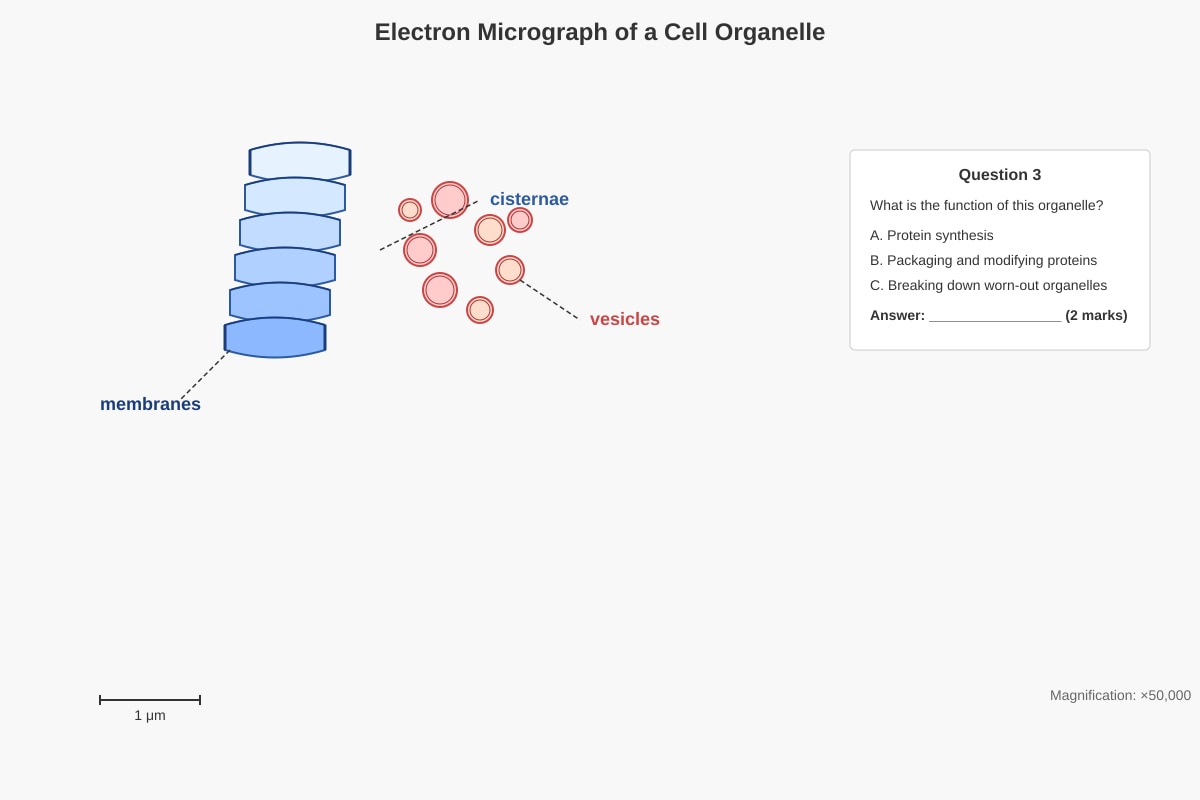
3. B — Packaging and modifying proteins (2 marks)
Teaching note: The organelle shown is the Golgi body (Golgi apparatus/Golgi complex). It receives proteins from the rough endoplasmic reticulum via transport vesicles. Within the Golgi, proteins are modified (e.g., carbohydrate groups added to form glycoproteins), sorted, and packaged into vesicles for secretion, lysosome formation, or delivery to other organelles. The stacked flattened cisternae and surrounding vesicles are distinctive structural features.
Common mistake: Confusing with the smooth ER (no ribosomes, synthesises lipids) or rough ER (has ribosomes, synthesises proteins).
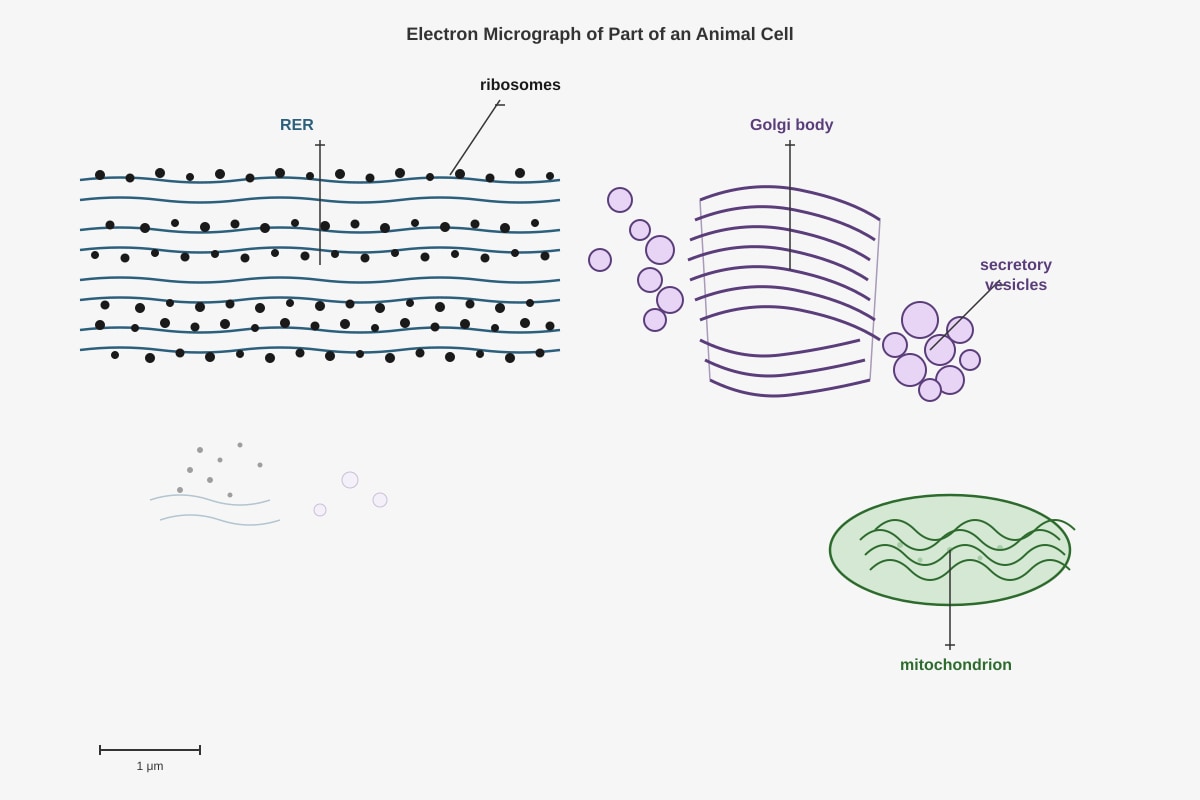
4. B — Rough endoplasmic reticulum (2 marks)
Teaching note: Radioactive amino acids are the building blocks (monomers) of proteins. Protein synthesis begins at ribosomes. Many proteins destined for secretion or membrane insertion are synthesised on ribosomes attached to the rough endoplasmic reticulum (RER). The radioactive label would first appear here as amino acids are assembled into polypeptide chains. The sequence is: RER → transport vesicles → Golgi body → secretory vesicles → cell exterior.
Common mistake: Selecting Golgi body first — proteins reach the Golgi only after synthesis and initial processing in the RER.
5. D — DNA → nucleotides (2 marks)
Teaching note:
- Starch is a polysaccharide composed of glucose monomers (not amino acids)
- Protein is composed of amino acids (not glucose)
- Lipids are not polymers; they are formed from glycerol and fatty acids (not nucleotides)
- DNA is a nucleic acid polymer composed of nucleotides — each nucleotide contains a deoxyribose sugar, phosphate group, and nitrogenous base (A, T, C, G)
6. B — Enzymes lower the activation energy of the reaction (2 marks)
Teaching note: Enzymes are biological catalysts. Key properties:
- Not used up in reactions (reusable)
- Lower activation energy — the minimum energy required for a reaction to occur, by providing an alternative reaction pathway
- Have optimum temperatures; high temperatures cause denaturation (loss of active site shape)
- Are highly specific — each enzyme catalyses only one type of reaction due to the precise shape of its active site (lock-and-key or induced fit model)
7. C — Prokaryote (2 marks)
Teaching note: This describes a prokaryotic cell (e.g., bacterium). Key distinguishing features:
- No true nucleus (DNA not enclosed in nuclear envelope)
- No membrane-bound organelles (no mitochondria, ER, Golgi, etc.)
- Cell wall present (usually peptidoglycan in bacteria)
- Circular DNA (plus possible plasmids)
- Much smaller than eukaryotic cells (typically 0.5–5 μm vs 10–100 μm)
8. B — Enzyme Q is likely to be pepsin (2 marks)
Teaching note:
- Enzyme P has optimum pH ~7, typical of intracellular enzymes or those in the small intestine (e.g., pancreatic amylase)
- Enzyme Q has optimum pH ~2, strongly acidic — this matches pepsin, the protease found in gastric juice of the stomach
- The stomach maintains highly acidic conditions (pH 1.5–2) for protein digestion; pepsin is adapted to function here and denatures at neutral/alkaline pH
Common mistake: Enzyme P in the stomach would be incorrect — stomach enzymes need acidic optima.
Section B: Short Answer
9. (4 marks total)
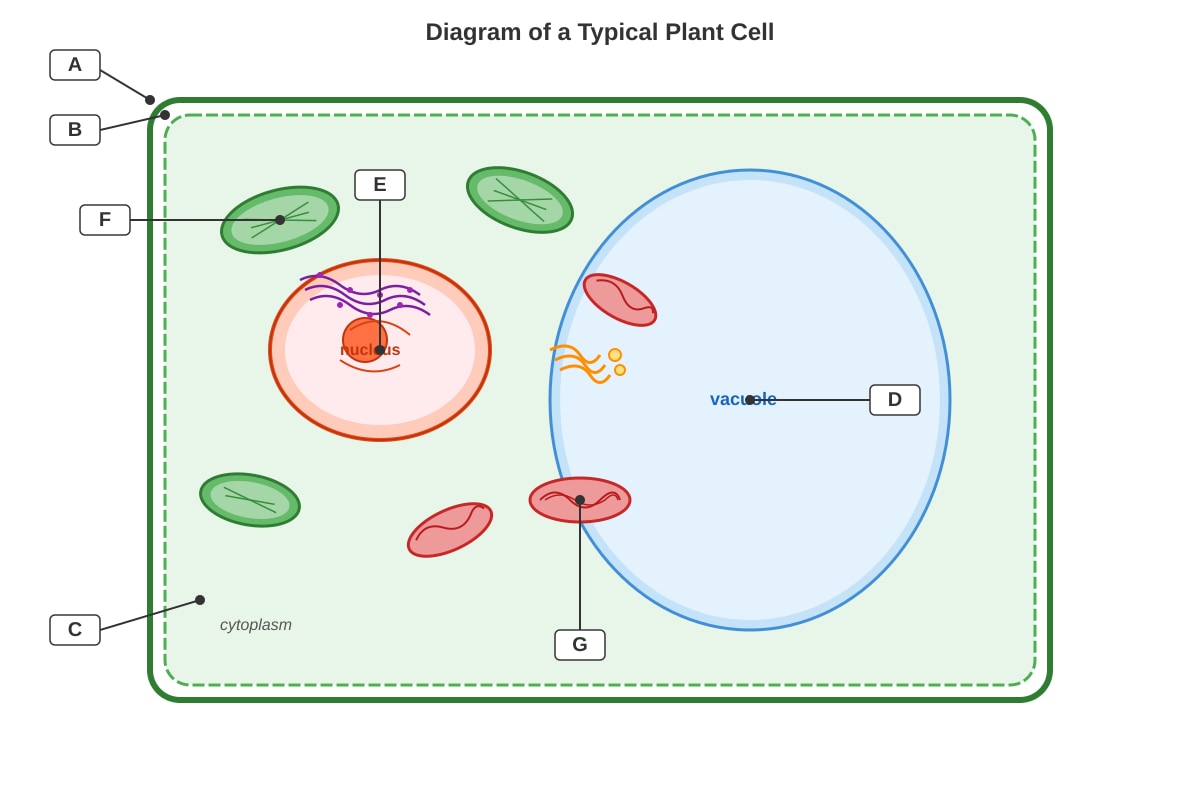
(a) A: Nucleus; B: Cell wall (2 marks: 1 each)
Teaching note for diagram: The nucleus is typically the largest, most prominent organelle — spherical/oval, containing genetic material. The cell wall is the rigid outermost layer providing structural support — in plant cells it lies outside the cell membrane.
(b) One valid explanation from: (2 marks)
- Has a cell wall (not present in animal cells) — provides rigidity and structural support; made of cellulose
- Has chloroplasts — contain chlorophyll for photosynthesis; animal cells cannot photosynthesise
- Has a large central vacuole — maintains turgor pressure and stores cell sap; animal cells may have small temporary vacuoles
Marking: 1 mark for identifying structural difference, 1 mark for elaboration of function/significance.
Common mistake: Stating "plant cells are larger" without linking to a specific structural feature and its significance.
10. (3 marks)
| Structure | Function |
|---|---|
| Ribosome | (iii) Synthesises proteins |
| Nucleus | (ii) Contains genetic material and controls cell activities |
| Cell membrane | (i) Controls entry and exit of substances into and out of the cell |
Teaching note:
- Ribosomes (free in cytoplasm or attached to RER) read mRNA and assemble amino acids into polypeptide chains during translation
- Nucleus houses chromosomal DNA; controls gene expression and thus protein synthesis; contains nucleolus where ribosomal RNA is made
- Cell membrane (plasma membrane) is selectively permeable — allows small/nonpolar molecules through while restricting large/polar/charged substances; uses transport proteins for facilitated diffusion and active transport
11. (2 marks)
Expected answer: Lysosomes contain hydrolytic/digestive enzymes (1 mark) that can break down/bacteria/engulfed material (1 mark).
Teaching note: Phagocytic white blood cells (e.g., neutrophils, macrophages) engulf bacteria by phagocytosis, forming phagosomes. Lysosomes fuse with phagosomes to form phagolysosomes, releasing enzymes (proteases, lipases, nucleases, carbohydrases) that digest the bacterial cell components. Many lysosomes are needed because:
- Each phagosome requires multiple lysosomes for efficient digestion
- The cell continually encounters new pathogens
- Enzymes are consumed in the digestive process
12. (2 marks)
Expected answer: The cell membrane allows certain substances to pass through while preventing others from entering or leaving (1 mark); selection is based on size, charge, solubility, and/or use of specific transport proteins (1 mark).
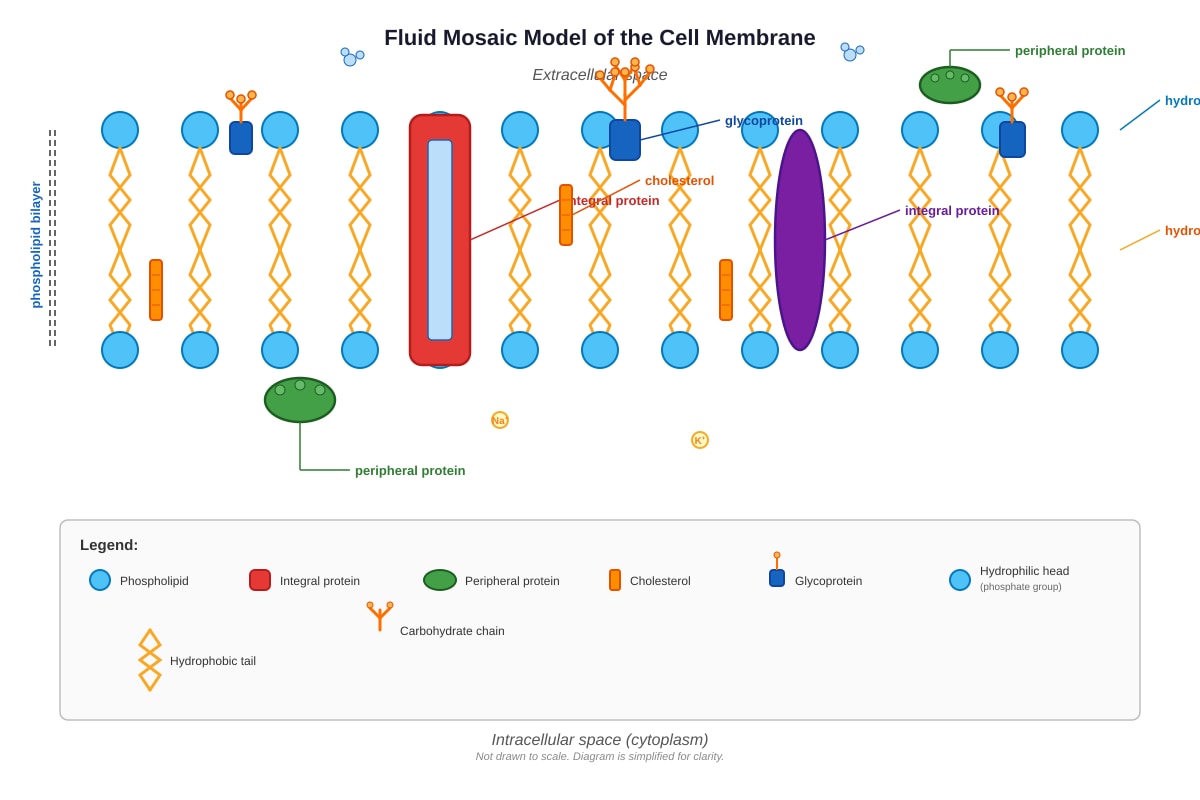
Teaching note: "Selectively permeable" or "differentially permeable" or "semi-permeable" describes the property of allowing some molecules to cross while excluding others. The phospholipid bilayer is:
- Permeable to: small nonpolar molecules (O₂, CO₂), small uncharged polar molecules (water, urea, glycerol)
- Impermeable to: large polar molecules (glucose), ions (Na⁺, K⁺, Cl⁻), charged molecules
- Selectively permeable due to: hydrophobic core of phospholipid tails, protein channels, and carriers that regulate specific substance transport
13. (3 marks)
(a) From 20°C to ~37°C (optimum): volume of oxygen increases (1 mark) because increased kinetic energy causes more frequent collisions between enzyme and substrate / molecules move faster (1 mark). Above ~40°C: volume decreases/drops to zero (1 mark) as enzyme denatures / active site changes shape / hydrogen bonds break.
Teaching note: This follows the typical enzyme temperature profile. The human body optimum for catalase is approximately 37°C. Key concepts:
- Increased temperature → increased kinetic energy → more frequent successful collisions → higher reaction rate
- Beyond optimum → vibrational energy breaks intramolecular bonds, especially hydrogen bonds maintaining tertiary structure → active site shape distorted → substrate can no longer bind → denaturation (usually irreversible)
Marking breakdown: 1 mark for correct prediction (rise then fall), 1 mark for explanation of increase, 1 mark for explanation of decrease/denaturation.
Common mistake: Stating enzyme is "killed" — enzymes are proteins, not living organisms; they are "denatured."
Section C: Structured Response
14. (3 marks total)
(a) Transport in vesicles / vesicular transport (1 mark)
Teaching note: Proteins synthesised on RER ribosomes enter the RER lumen, where they fold and undergo initial modification. They are then packaged into transport vesicles that bud off the RER membrane. These vesicles travel to and fuse with the Golgi apparatus.
(b) (2 marks)
- RER provides site for protein synthesis on membrane-bound ribosomes (1 mark)
- Golgi bodies modify, sort, and package proteins into secretory vesicles for export (1 mark)
Extended explanation: Pancreatic acinar cells secrete digestive enzymes (proteases, amylase, lipase) into the pancreatic duct → small intestine. This requires massive protein production → extensive RER for synthesis, extensive Golgi for processing and packaging into zymogen granules. The cell structure directly reflects its specialised function — a principle of cell specialisation.
15. (3 marks total)
(a) Starch (1 mark)
Teaching note: Salivary amylase (ptyalin) and pancreatic amylase both catalyse the hydrolysis of starch (amylose and amylopectin) into maltose and shorter dextrins.
(b) (2 marks)
- The stomach has acidic pH (~pH 2) due to hydrochloric acid secretion (1 mark)
- Amylase has optimum pH ~7 (neutral/slightly alkaline); at pH 2 the enzyme denatures / active site changes shape / cannot bind starch substrate (1 mark)
Teaching note: This illustrates enzyme specificity to environmental conditions. Salivary amylase begins starch digestion in the mouth (pH ~7), but this stops in the stomach. The acidic environment suits pepsin (optimum pH 2) instead. Pancreatic amylase resumes starch digestion in the small intestine where bicarbonate neutralises acidic chyme.
16. (4 marks total)
(a) Cell Type Y (1 mark); it has a higher percentage of lipid (9% vs 5%), which is needed for myelin sheath formation / extensive membrane structures in nerve cells (1 mark).
Teaching note: Neurons (nerve cells) have long axons often wrapped in myelin sheaths — multiple layers of Schwann cell membrane rich in lipids (phospholipids and sphingolipids). This provides electrical insulation for saltatory conduction of nerve impulses. Alternatively, Cell Type Y's higher protein content could relate to neurotransmitter and channel protein production.
(b) (2 marks)
- Water is a universal solvent in which most metabolic reactions occur (1 mark)
- Water is needed for transport of substances, temperature regulation, and as a reactant/product in metabolic reactions / hydrolysis (1 mark)
Teaching note: Water constitutes 70–80% of cell mass because:
- Polarity allows dissolution of ions and polar molecules
- High specific heat capacity buffers temperature changes
- Cohesion and adhesion important for transport (xylem in plants, blood plasma)
- Hydrolysis reactions require water (digestion)
- Water is product of condensation reactions (dehydration synthesis)
17. (3 marks total)
(a) (2 marks)
- The core of the bilayer consists of hydrophobic fatty acid tails (1 mark)
- Water-soluble/polar substances are repelled / cannot pass through the hydrophobic region / require channel/carrier proteins (1 mark)
Teaching note: The phospholipid bilayer structure — hydrophilic phosphate heads face aqueous environments (cytoplasm and extracellular fluid), while hydrophobic fatty acid tails orient inward, shielded from water. This creates a barrier ~5 nm thick that is impermeable to most water-soluble substances (ions, glucose, amino acids) unless specific transport proteins provide a pathway.
(b) Any one from: (1 mark)
- Cell recognition (glycoproteins/glycolipids)
- Cell signalling / receptor for hormones/neurotransmitters
- Enzymatic activity (membrane-bound enzymes)
- Cell adhesion (holding cells together)
- Structural support (anchor for cytoskeleton)
18. (4 marks total)
(a) (2 marks)
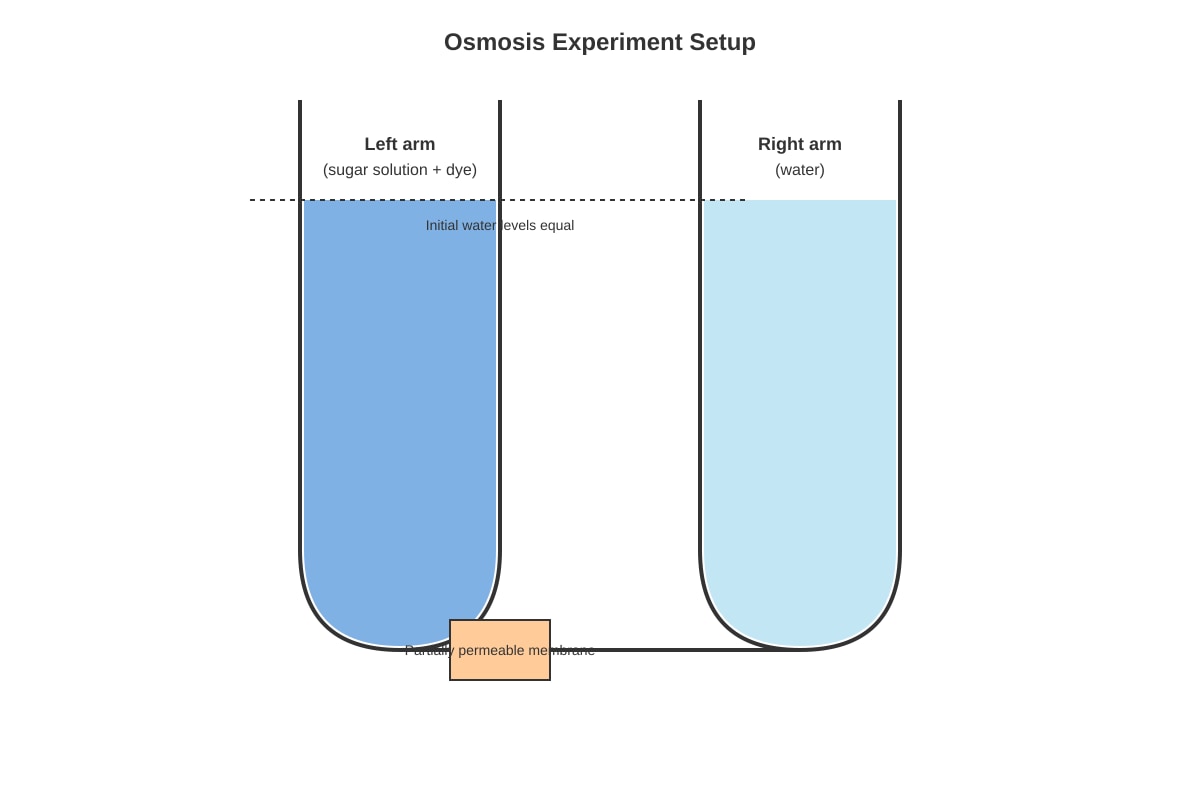
Left arm (sugar solution): water level rises (1 mark)
Right arm (pure water): water level falls (1 mark)
Explanation: Water moves by osmosis from the side of higher water potential/pure water (right) to the side of lower water potential/sugar solution (left) through the partially permeable membrane (1 mark — if explanation required in same part, or accept combined explanation).
Teaching note: Osmosis is the net movement of water molecules from a region of higher water potential (less negative, fewer solutes) to a region of lower water potential (more negative, more solutes) across a partially permeable membrane. The sugar solution has lower water potential because dissolved sugar molecules occupy space and reduce the proportion of free water molecules.
(b) (2 marks)
Any two from:
- Increase temperature — increases kinetic energy of water molecules
- Increase concentration gradient / use more concentrated sugar solution — greater water potential difference
- Increase surface area of membrane — more area for water movement
- Use thinner membrane — reduces diffusion distance
19. (2 marks)
- Mitochondrial DNA and ribosomes resemble those found in bacteria (1 mark: circular DNA, 70S ribosomes)
- This supports the theory that mitochondria were once free-living prokaryotic organisms that were engulfed by ancestral eukaryotic cells and formed a symbiotic relationship (1 mark)
Teaching note: The endosymbiotic theory (proposed by Lynn Margulis) proposes that mitochondria and chloroplasts originated as free-living bacteria (~2 billion years ago). Evidence includes:
- Double membrane (host cell membrane + original bacterial membrane)
- Circular DNA (not linear like nuclear DNA)
- 70S ribosomes (prokaryotic type, not 80S eukaryotic)
- Replicate by binary fission, independently of nuclear division
- Similar size to bacteria
20. (4 marks total)
(a) (2 marks)
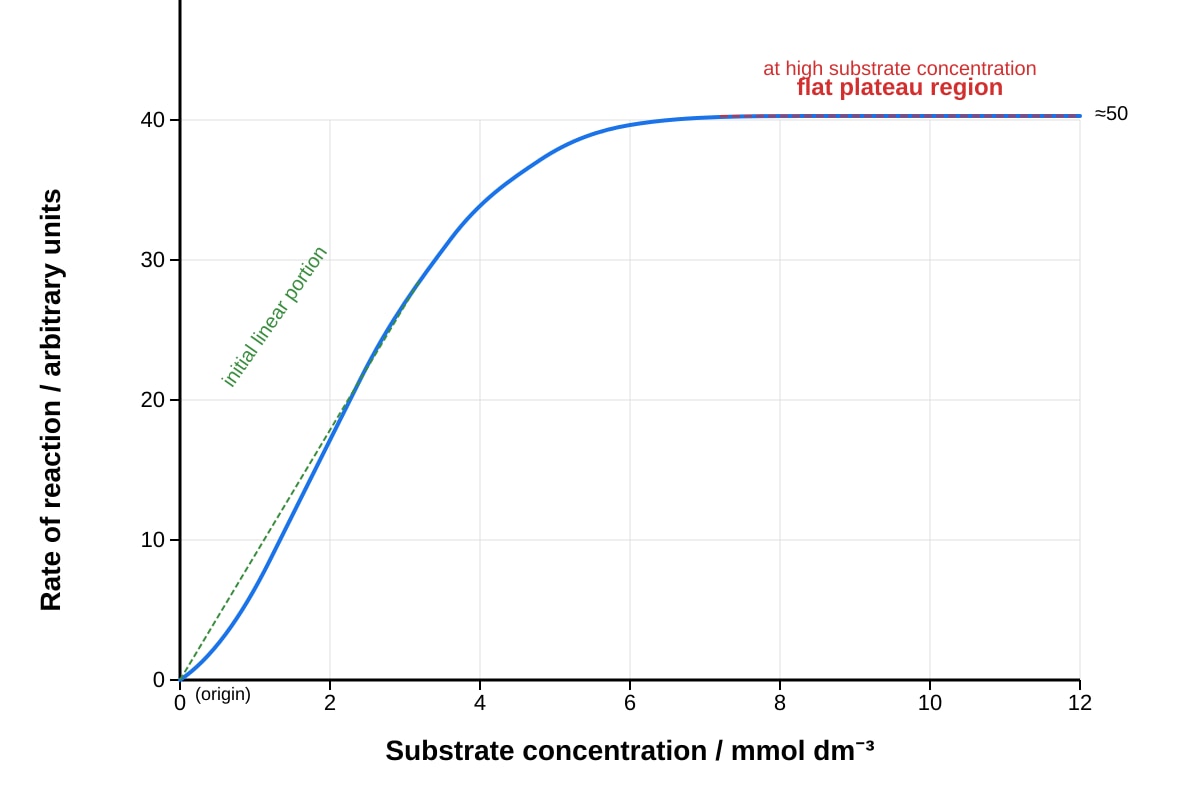
- At low substrate concentration, many enzyme active sites are unoccupied / enzyme concentration exceeds substrate concentration (1 mark)
- Increasing substrate concentration leads to more frequent collisions between enzyme and substrate / more enzyme-substrate complexes form, increasing rate (1 mark)
(b) (2 marks)
- At high substrate concentration, all active sites are occupied / enzyme is saturated (1 mark)
- The rate becomes limited by enzyme concentration / rate of enzyme-substrate complex breakdown / no more active sites available for additional substrate binding (1 mark)
Teaching note: This illustrates the concept of limiting factors in enzyme kinetics. The plateau represents Vmax — maximum velocity. At Vmax:
- Rate depends on how quickly product dissociates and active site becomes free
- Adding more substrate cannot increase rate
- To increase Vmax, more enzyme must be added
Common mistake: Confusing "rate becomes constant" with "reaction stops" — reaction continues at maximum rate, not zero.
Marking Summary
| Question | Marks | Topic Focus |
|---|---|---|
| 1 | 2 | Cell structure identification |
| 2 | 2 | Organelle function (mitochondria) |
| 3 | 2 | Golgi body identification and function |
| 4 | 2 | Radioactive tracer / protein synthesis pathway |
| 5 | 2 | Biomolecule structure |
| 6 | 2 | Enzyme properties |
| 7 | 2 | Prokaryote vs eukaryote |
| 8 | 2 | Enzyme pH optimum / data interpretation |
| 9 | 4 | Plant cell structure and comparison |
| 10 | 3 | Organelle function matching |
| 11 | 2 | Lysosome function in phagocytosis |
| 12 | 2 | Selective permeability |
| 13 | 3 | Enzyme temperature investigation |
| 14 | 3 | Protein secretion pathway (RER-Golgi) |
| 15 | 3 | Amylase specificity / pH |
| 16 | 4 | Cell composition analysis / water function |
| 17 | 3 | Membrane structure and function |
| 18 | 4 | Osmosis experimental design |
| 19 | 2 | Endosymbiotic theory evidence |
| 20 | 4 | Enzyme kinetics / limiting factors |
| Total | 40 |