AI Generated Exam Paper
Secondary 3 Biology Practice Paper 4
Free Sec 3 Biology Practice Paper 4, Kimi2.6 AI version, with questions, answers, and O Level-style practice for Singapore students.
These static practice materials are generated from the site's syllabus and paper-generation workflow, with source and model context shown so students and parents can evaluate the material before use.
Questions
Free quiz and exam paper access
Enter your details to view this paper
Your access is remembered on this device.
Answers
TuitionGoWhere Practice Paper - Biology Secondary 3: Answer Key
Version 4 of 5
Marking Scheme and Teaching Notes
Section A: Multiple Choice and Short Answer
Question 1
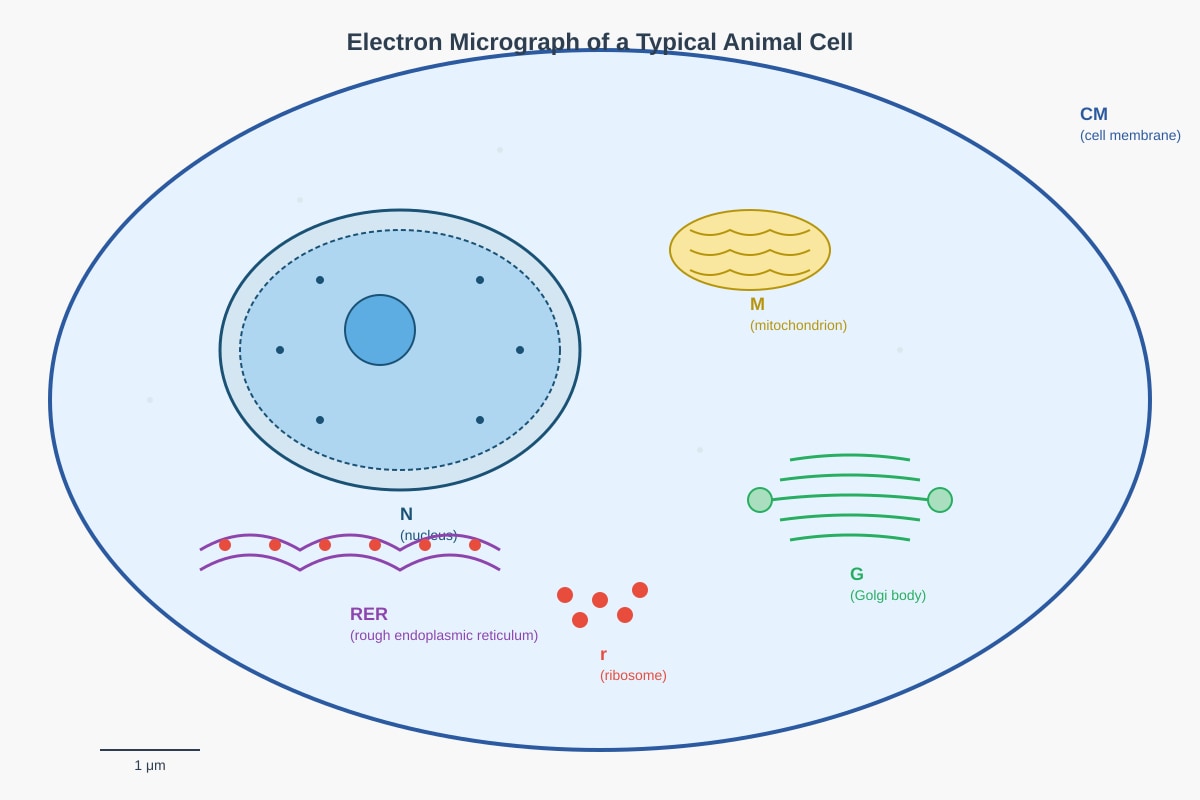
(a) A: mitochondrion; B: rough endoplasmic reticulum (RER) [1]
Marking notes: Accept "mitochondria" or "mitochondrion" for A. For B, accept "rough ER" or "RER" but not just "endoplasmic reticulum" (must specify rough).
Teaching note: The RER is studded with ribosomes on its outer surface, giving it a "rough" appearance in electron micrographs. Mitochondria have distinctive folded inner membranes called cristae.
(b) Any one of: [1]
- modification, packaging, and sorting of proteins
- formation of lysosomes
- production of secretory vesicles
Teaching note: The Golgi body receives proteins from the RER, modifies them (e.g., adding carbohydrate groups to make glycoproteins), and packages them into vesicles for transport to other destinations. It acts like a cellular "post office."
(Total: 2 marks)
Question 2
(a) Calculation: [2]
Answer: 9 times larger (accept 9 or 9.3; to nearest whole number = 9)
Working mark [1]: Correct calculation shown with values substituted correctly. Final answer mark [1]: Correct answer with appropriate rounding.
Common error: Students may divide 0.75 by 7.0 (giving 0.1), which is inverted. Emphasize that the larger value goes on top for "how many times larger."
Teaching note: The micrometre (µm) is a common unit in cell biology. 1 µm = 10⁻⁶ m. Comparing sizes helps us appreciate the scale of cellular structures.
(Total: 2 marks)
Question 3
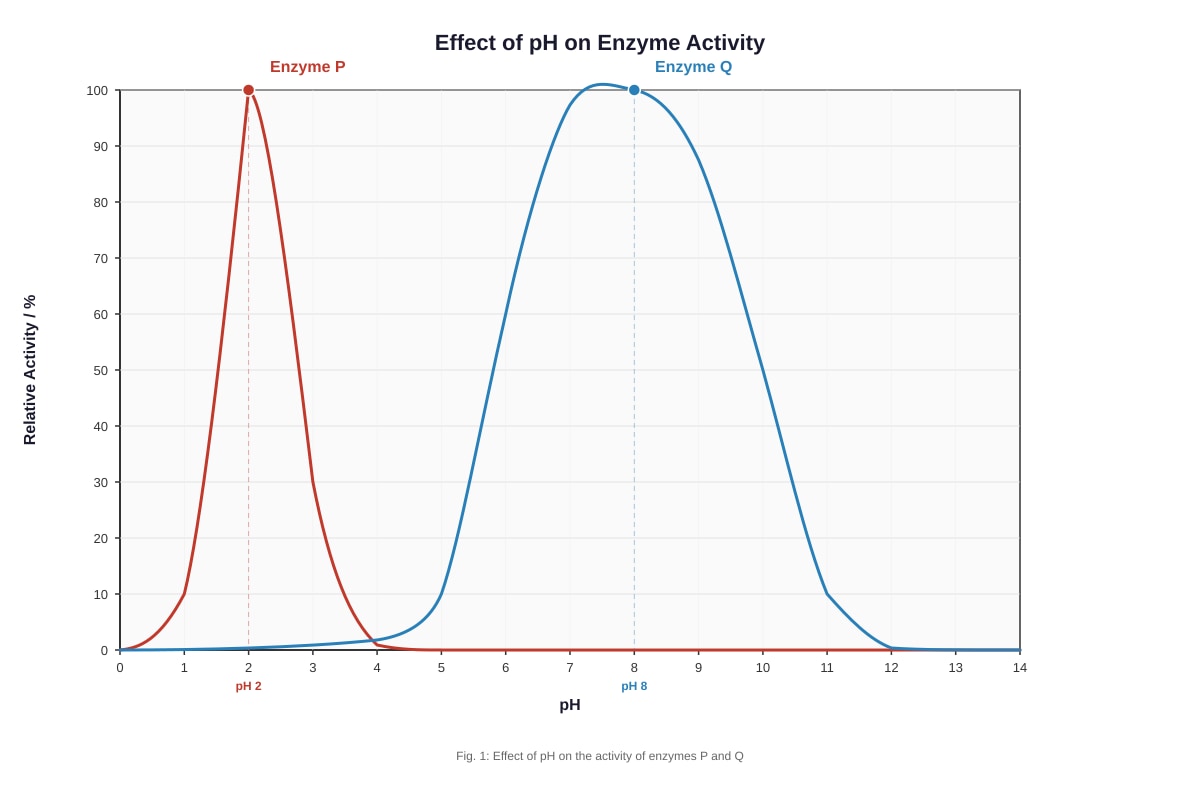
(a) Enzyme P: pepsin (or rennin/chymosin); Enzyme Q: amylase (or trypsin/other alkaline enzyme) [2]
Marking: One mark for each correct identification. The optimal pH of 2 is characteristic of pepsin, which works in the stomach. The optimal pH of 8 is characteristic of pancreatic enzymes like amylase, which work in the small intestine.
Teaching note: Enzymes have characteristic optimal pH values based on where they function in the body. Pepsin in gastric juice (pH ~1.5–2) breaks down proteins. Salivary and pancreatic amylase work at neutral to slightly alkaline pH.
(b) At pH 14, the solution is strongly alkaline. [1] This causes the enzyme to denature: the excess OH⁻ ions disrupt ionic bonds and hydrogen bonds that maintain the enzyme's tertiary structure. [1] The active site changes shape and can no longer bind to substrate.
Teaching note: Extreme pH alters the ionization of amino acid residues, especially those in the active site (e.g., acidic and basic amino acids). This changes the shape of the active site and the overall protein conformation. Denaturation is usually irreversible.
(Total: 4 marks)
Question 4
(a) Amino acids [1]
(b) Amino acids are joined by condensation reactions (also called dehydration synthesis). [1] A peptide bond forms between the carboxyl group (-COOH) of one amino acid and the amino group (-NH₂) of another, with the elimination of one molecule of water. [1]
Teaching note: The repeated dehydration condensation of many amino acids creates a polypeptide chain. The sequence of amino acids is determined by genetic information and defines the protein's primary structure, which then folds into higher-order structures.
(Total: 3 marks)
Question 5
(a) The cells would stain blue-black / dark blue (or "starch grains visible as blue-black structures"). [1]
(b) Onion epidermis cells contain starch grains (storage form of glucose/energy reserve), [1] which react with iodine to produce a blue-black color.
Teaching note: Iodine solution (iodine in potassium iodide) is a diagnostic test for starch. This is a standard microchemical test. Plant cells often store starch in amyloplasts; in onion epidermis, small starch grains may be present though less abundant than in storage organs.
(Total: 2 marks)
Section B: Structured Questions
Question 6
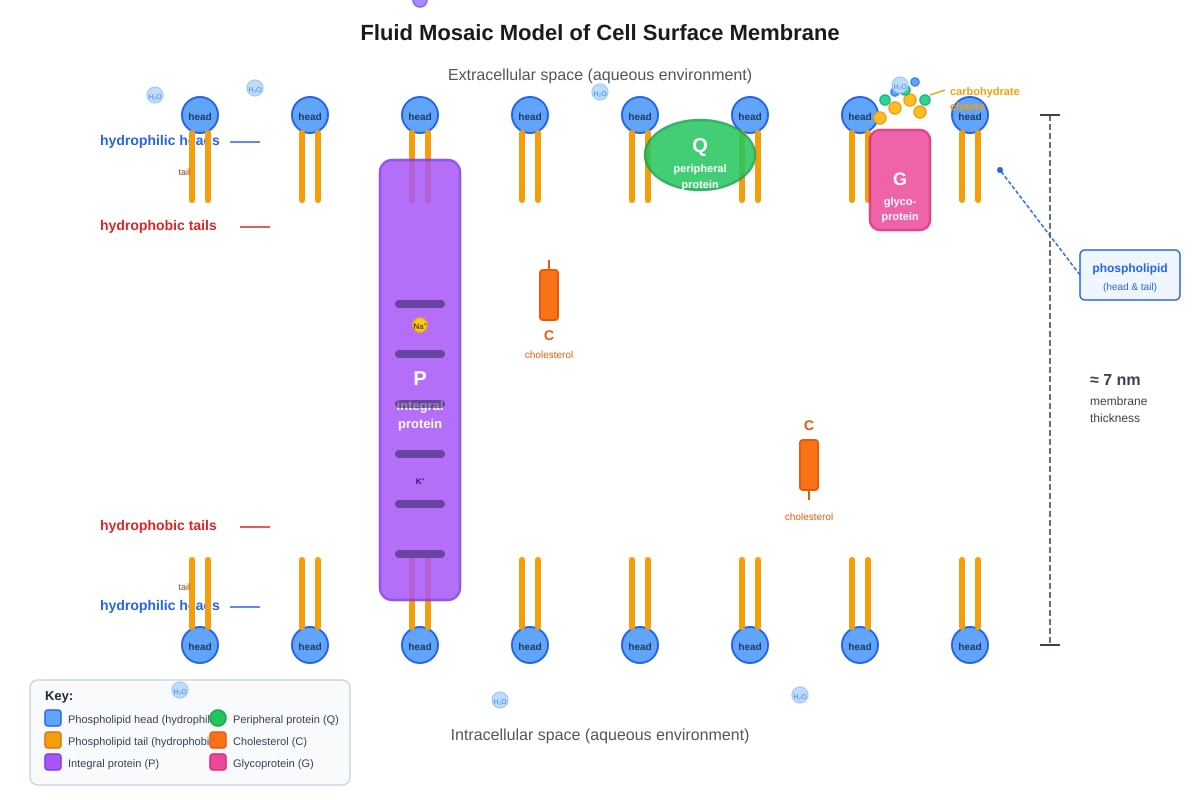
(a) "Fluid" refers to the ability of membrane components to move laterally within the plane of the membrane (phospholipids and proteins can diffuse sideways). [1] "Mosaic" refers to the pattern of proteins embedded within or attached to the phospholipid bilayer, like tiles in a mosaic. [1]
Teaching note: The fluid mosaic model, proposed by Singer and Nicolson, describes the membrane as a dynamic, flexible structure. The "fluid" property comes from weak hydrophobic interactions holding phospholipids together, allowing movement.
(b) The cell surface is an aqueous environment (water on both sides). [1] The phospholipid bilayer has hydrophilic phosphate heads facing outward toward the water, [1] and hydrophobic fatty acid tails pointing inward, shielded from water. [1] This arrangement is thermodynamically favorable and creates a stable barrier.
Teaching note: The amphipathic nature of phospholipids—having both hydrophilic and hydrophobic parts—drives spontaneous bilayer formation in aqueous environments. This is why the cell membrane is self-assembling.
(c) Steroid hormones are lipid-soluble (small, non-polar molecules). [1] They can dissolve in/diffuse through the hydrophobic interior of the phospholipid bilayer without need for protein channels. [1]
Teaching note: The "like dissolves like" principle applies. Non-polar molecules pass readily through the lipid bilayer. This is why the cell membrane can regulate entry of polar/charged substances but not small hydrophobic ones—an important consideration for drug design and hormone signaling.
(Total: 7 marks)
Question 7
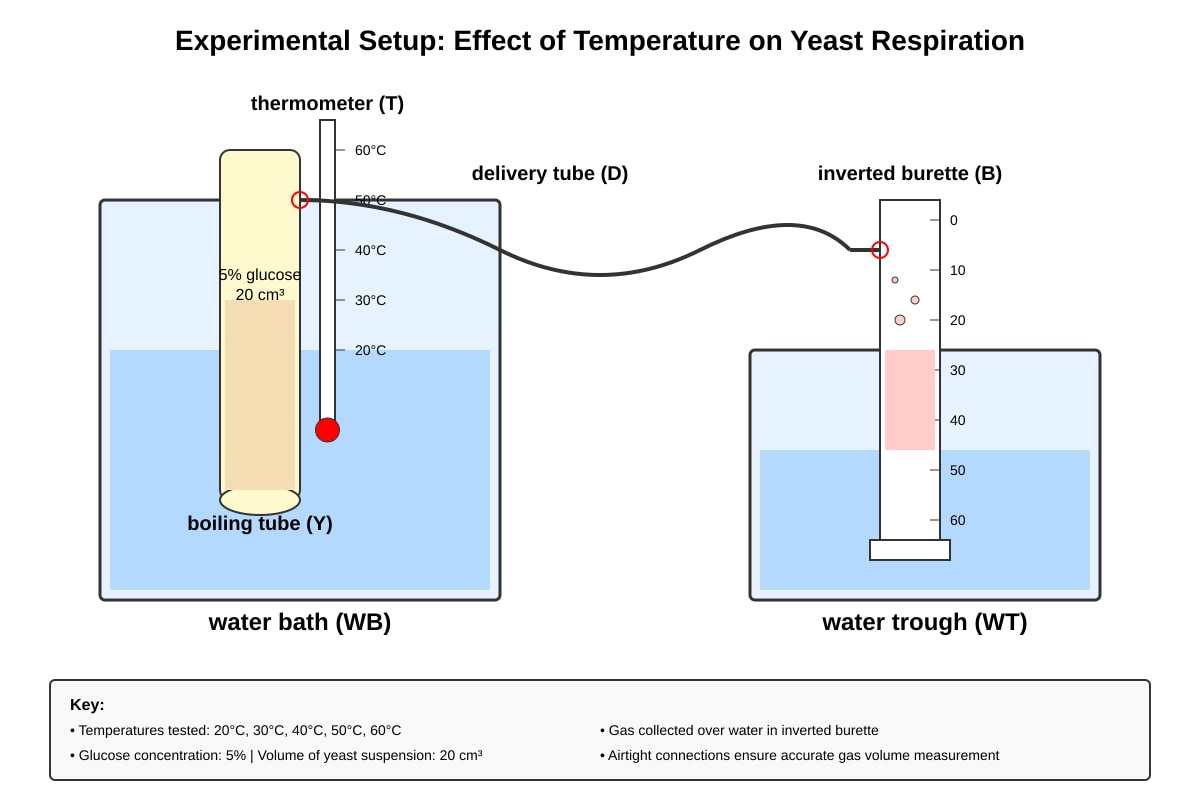
(a) Independent variable: temperature [1] Dependent variable: volume of gas produced in 10 minutes / rate of gas production [1]
(b) Any two from: [4]
| Control variable | Why it is important |
|---|---|
| Concentration/volume of glucose solution (or "amount of substrate") | If glucose concentration varies, the rate may be limited by substrate availability rather than temperature; must ensure temperature is the limiting factor [2] |
| Volume/concentration of yeast suspension (or "amount of enzyme/yeast") | Different amounts of yeast would produce different amounts of enzyme, directly affecting reaction rate; must ensure the same enzyme concentration for fair test [2] |
| Duration of experiment | Allows valid comparison of total gas produced; longer time would produce more gas regardless of temperature [2] |
| pH of solution | Yeast enzymes have optimal pH; pH changes would denature enzymes or alter activity independently of temperature [2] |
(c) At 60°C, the enzymes in yeast are denatured. [1] The high temperature exceeds the optimal temperature, causing excessive molecular vibration that breaks hydrogen bonds and other weak interactions maintaining the enzyme's tertiary structure. [1] The active site changes shape, so substrate can no longer bind, and respiration rate drops sharply. [1]
Teaching note: Enzyme denaturation is temperature-dependent but distinct from the thermal denaturation of the whole cell. Yeast can survive brief exposure to moderate heat but prolonged high temperatures kill the cells through multiple mechanisms including membrane damage and protein denaturation.
(d) Prediction: More gas would be produced / higher rate of respiration at 40°C (or "same maximum rate but may sustain longer before substrate depletion"). [1]
Explanation: At 5% glucose, substrate concentration may be a limiting factor at 40°C where enzyme activity is high. [1] With 10% glucose, there is more substrate available, so more enzyme-substrate complexes can form per unit time, increasing the rate of respiration/gas production until another factor becomes limiting. [1]
Teaching note: This introduces the concept of limiting factors. If temperature is optimal but substrate is scarce, adding more substrate increases rate. However, if 5% was already saturating for the enzyme concentration, the rate might not increase—full marks given for either prediction supported by correct reasoning.
(Total: 12 marks)
Question 8
(a) Ribosomes → rough endoplasmic reticulum → Golgi body → secretory vesicles [3]
Marking: 1 mark for each correct organelle in correct sequence. Accept: ribosome → RER → Golgi apparatus/vesicles. Must include vesicles or mention of secretory pathway for full marks.
(b) Amino acids are the building blocks (monomers) of proteins. [1] Ribosomes are the site of protein synthesis (translation), where amino acids are assembled into polypeptide chains according to mRNA instructions. [1]
Teaching note: Free ribosomes make proteins that function in the cytosol. Bound ribosomes (on RER) make proteins destined for secretion, membranes, or lysosomes—these enter the endomembrane system for processing and targeting.
(c) Pancreatic acinar cells are specialized for protein secretion (digestive enzymes like amylase, lipase, proteases). [1] They have an extensive Golgi apparatus to modify, package, and sort these large quantities of proteins into secretory vesicles, so radioactive proteins accumulated there in high amounts. [1]
Teaching note: This is an example of structure-function correlation in cell biology. Cells that secrete heavily (goblet cells secreting mucus, plasma cells secreting antibodies) have abundant RER and Golgi. The radioactivity pattern reflects this specialization.
(Total: 7 marks)
Question 9
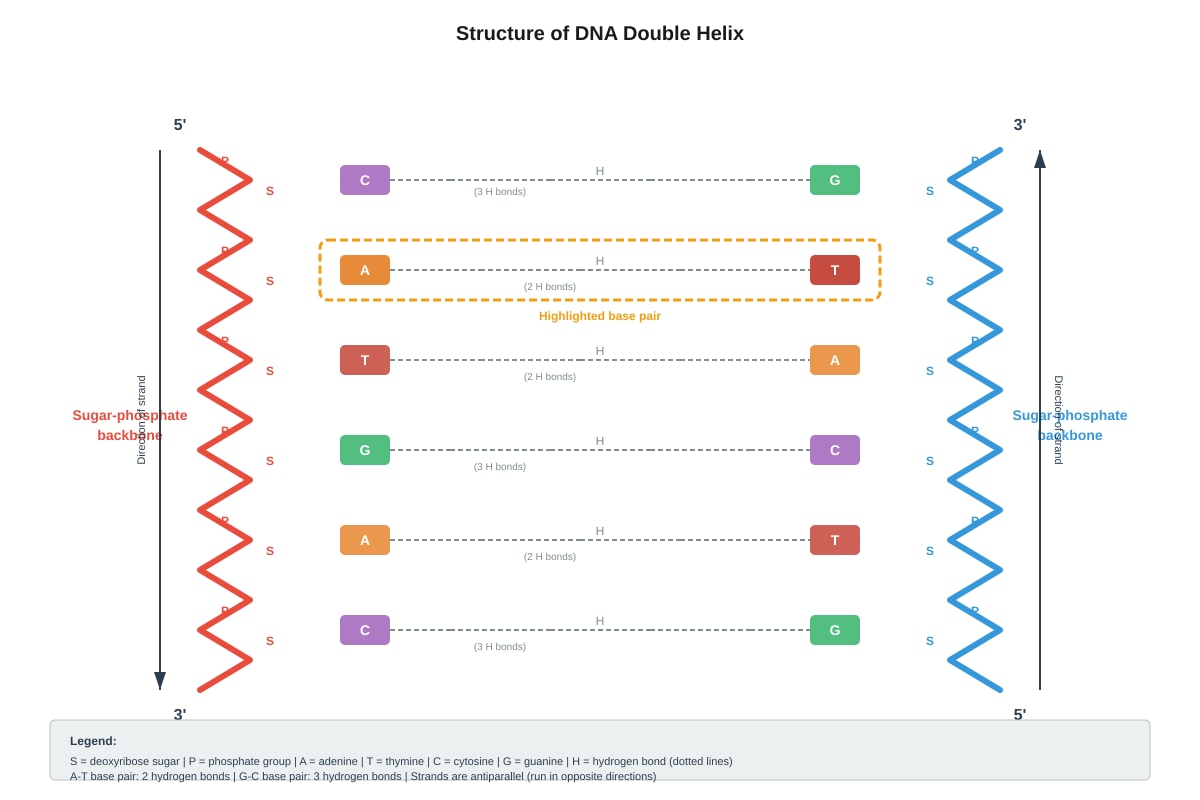
(a) DNA helicase unwinds the double helix by breaking hydrogen bonds between complementary base pairs. [1] This separates the two strands, exposing the bases so they can serve as templates for new strand synthesis. [1]
Teaching note: Helicase is an ATP-dependent enzyme. It moves along the DNA, progressively unwinding the helix ahead of the replication fork. This is essential because DNA polymerase can only add nucleotides to single-stranded templates.
(b) "Semi-conservative" means that each new DNA molecule contains one original (parent) strand and one newly synthesized (daughter) strand. [1] After replication, the two daughter DNA molecules each retain [1] one of the original strands as a template, [1] with the complementary strand built from free nucleotides.
Teaching note: This was proven by Meselson and Stahl using nitrogen isotope labeling (¹⁵N). Their experiment showed that after one generation in normal nitrogen, DNA had intermediate density—one heavy strand and one light strand—confirming semi-conservative replication predicted by Watson and Crick.
(Total: 5 marks)
Section C: Data Analysis and Extended Response
Question 10
(a) Any two from: [2]
- Relative molecular mass / size: smaller molecules pass through (glycerol 92, water 18, oxygen 32) while larger ones do not (glucose 180, urea 60, valine 117) [1]
- Solubility in lipids / polarity: non-polar/lipid-soluble substances pass through (glycerol, oxygen) while polar/hydrophilic ones do not (glucose, urea, amino acids) [1]
- (Accept: charge is not a factor here since Na⁺ fails and neutral molecules also fail/selectively pass)
Teaching note: The artificial lipid bilayer lacks proteins, so only simple diffusion through the lipid phase occurs. This reveals pure membrane permeability without protein-mediated transport.
(b) The beetroot cell membrane contains proteins embedded in the phospholipid bilayer (intrinsic/integral proteins). [1] These proteins form channels or carriers that allow specific substances to cross [1] that cannot dissolve in the lipid bilayer, such as polar molecules (glucose, urea, amino acids) and ions. [1]
Teaching note: This is the evidence that real cell membranes are not pure lipid barriers. Facilitated diffusion and active transport both require membrane proteins. The specific proteins present determine which substances can cross—a basis for selective permeability and cell specialization.
(c) Prediction: Glucose would no longer pass through (or "rate of passage would greatly decrease"). [1]
Explanation: Glucose has a relative molecular mass of 180. [1] If pore size is reduced by 50%, the pores may become too small for glucose molecules to pass through, while still allowing smaller molecules like water, glycerol, and oxygen to pass. [1]
Teaching note: Cellophane is a selectively permeable artificial membrane used in dialysis. Its pore size can be manufactured to specific cutoffs. This principle is used in kidney dialysis machines and in laboratory purification techniques.
(Total: 8 marks)
Question 11
(a) The bacterial enzymes would need to be thermostable (heat-resistant), [1] maintaining structure and function at 80°C where human enzymes would denature. [1] They would have more/stable ionic bonds and additional disulfide bridges between cysteine residues to withstand thermal vibration. [1] They would also have an optimal pH around 5 (matching the acidic vent environment), [1] unlike human enzymes that typically function at pH 7.4.
Teaching note: Extremophiles—organisms living in extreme conditions—have evolved enzymes with remarkable stability features. Thermostable enzymes are valuable in biotechnology (e.g., Taq polymerase from Thermus aquaticus for PCR). This illustrates how enzyme structure is adapted to environment through natural selection.
Marking note: 4 marks for four distinct points with explanation. Accept equivalent reasoning about structural adaptations.
(Total: 4 marks)
Grand Total: 60 marks