AI Generated Quiz
Secondary 2 Tamil Comprehension Quiz
Free Sec 2 Tamil Comprehension quiz, AI version, with questions, answers, and syllabus-aligned practice for Singapore students.
These static practice materials are generated from the site's syllabus and paper-generation workflow, with source and model context shown so students and parents can evaluate the material before use.
Questions
Free quiz and exam paper access
Enter your details to view this paper
Your access is remembered on this device.
Answers
Secondary 2 Tamil Quiz - Comprehension (Answer Key)
Total Marks: 40
Section A: Cloze Comprehension (5 Questions)
Passage Translation: The (1) heritage of the Tamil language is very rich. Our ancestors have preserved this language for many centuries. In Singapore, the (2) role of youth in preserving Tamil language and culture is important. Each (3) generation brings new ideas. Through Tamil language classes and cultural (4) festivals, students develop their language skills. These help to foster (5) unity in the community.
| Question | Answer | Marks |
|---|---|---|
| 1. | பாரம்பரியம் (heritage) | 1 |
| 2. | பங்கு (role) | 1 |
| 3. | தலைமுறை (generation) | 1 |
| 4. | விழாக்கள் (festivals) | 1 |
| 5. | ஒற்றுமை (unity) | 1 |
Explanation:
- Question 1: The sentence talks about the Tamil language's rich history and legacy. "பாரம்பரியம்" (heritage) is the most suitable word as it refers to traditions and cultural legacy passed down through generations.
- Question 2: The sentence discusses the importance of youth in preserving language and culture. "பங்கு" (role) fits here as it refers to the part or contribution youth play.
- Question 3: The sentence says each new group brings new ideas. "தலைமுறை" (generation) refers to a group of people born around the same time.
- Question 4: The sentence mentions activities through which students develop language skills. "விழாக்கள்" (festivals) are cultural events that help promote language learning.
- Question 5: The sentence concludes that these activities help develop something in the community. "ஒற்றுமை" (unity) is the logical choice as cultural activities bring people together.
Common Mistakes:
- Students may confuse "பாரம்பரியம்" (heritage) with "பண்பாடு" (culture). While related, "பாரம்பரியம்" specifically refers to inherited traditions.
- "தலைமுறை" (generation) is often confused with "சமுதாயம்" (society). Remember that "தலைமுறை" refers to a specific age group, not the whole society.
Section B: Reading Comprehension (10 Questions)
Questions 6-10: Multiple Choice (1 mark each)
6. Answer: ஆ) கலாச்சார செல்வங்கள்
Explanation: The passage states: "அவர்கள் தங்களுடன் தமிழ் மொழி, இலக்கியம், இசை, நடனம் போன்ற கலாச்சார செல்வங்களைக் கொண்டு வந்தனர்" (They brought cultural treasures like Tamil language, literature, music, dance, etc.). Option ஆ directly matches this.
7. Answer: ஆ) வணிகம் மற்றும் விவசாயம்
Explanation: The passage says: "ஆரம்ப காலத்தில், தமிழர்கள் முக்கியமாக வணிகம் மற்றும் விவசாயத்தில் ஈடுபட்டனர்" (In the early days, Tamils were mainly involved in business and agriculture). Option ஆ is correct.
8. Answer: அ) தமிழ் முரசு மற்றும் வண்ணத்துப்பூச்சி
Explanation: The passage mentions: "தமிழ் முரசு மற்றும் வண்ணத்துப்பூச்சி போன்ற ஊடகங்கள் தமிழ் மொழியைப் பரப்ப உதவுகின்றன" (Media like Tamil Murasu and Vannathuppoochi help spread the Tamil language). Option அ is correct.
9. Answer: ஆ) இளைஞர்கள் ஆங்கிலத்தை அதிகம் பயன்படுத்துகிறார்கள்
Explanation: The passage states: "இளைஞர்கள் ஆங்கிலத்தை அதிகம் பயன்படுத்துவதால், தமிழ் மொழியின் பயன்பாடு குறைந்து வருகிறது" (Because youth use English more, the use of Tamil is decreasing). Option ஆ is correct.
10. Answer: ஆ) விழாக்கள், போட்டிகள், மற்றும் முகாம்கள்
Explanation: The passage says: "தமிழ் மொழி விழாக்கள், போட்டிகள், மற்றும் முகாம்கள் மூலம் இளைஞர்கள் தமிழ் மொழியில் ஆர்வம் காட்ட ஊக்குவிக்கப்படுகிறார்கள்" (Through Tamil language festivals, competitions, and camps, youth are encouraged to show interest in Tamil). Option ஆ is correct.
Common Mistakes:
- For Q6, students might choose option அ (பொருள்கள் மட்டும் - only goods) because they think of early immigrants bringing goods. However, the passage specifically mentions "கலாச்சார செல்வங்கள்" (cultural treasures).
- For Q8, students might not recognize "தமிழ் முரசு" and "வண்ணத்துப்பூச்சி" as Tamil media names. These are well-known Tamil publications in Singapore.
Questions 11-15: Short Answer (2 marks each)
11. Model Answer: சிங்கப்பூரில் தமிழ் மொழி அதிகாரப்பூர்வ மொழிகளில் ஒன்றாகும். பள்ளிகளில் தமிழ் மொழி கற்பிக்கப்படுகிறது. (In Singapore, Tamil is one of the official languages. Tamil is taught in schools.)
Marking Scheme:
- 1 mark: Mentioning that Tamil is an official language
- 1 mark: Mentioning that it is taught in schools
Explanation: The passage clearly states: "சிங்கப்பூரில் தமிழ் மொழி அதிகாரப்பூர்வ மொழிகளில் ஒன்றாகும். தமிழ் மொழி பள்ளிகளில் கற்பிக்கப்படுகிறது." Students need to extract these two key points.
12. Model Answer: தமிழர்கள் ஆரம்பத்தில் வணிகம் மற்றும் விவசாயத்தில் ஈடுபட்டனர். பின்னர், அவர்கள் கல்வி, அரசியல், மற்றும் பிற துறைகளிலும் முன்னேறினர். (Initially, Tamils were involved in business and agriculture. Later, they progressed in education, politics, and other fields.)
Marking Scheme:
- 1 mark: Mentioning early involvement in business and agriculture
- 1 mark: Mentioning later progress in education, politics, and other fields
Explanation: The passage describes a progression. Students must show they understand the timeline: first business/agriculture, then education/politics/other fields.
13. Model Answer: தீபாவளி, பொங்கல் போன்ற பண்டிகைகள் தமிழர்களின் கலாச்சாரத்தை வெளிப்படுத்துகின்றன. இவை தமிழர்களின் மரபுகள், உணவு பழக்கங்கள், மற்றும் மதிப்புகளைக் காட்டுகின்றன. (Festivals like Deepavali and Pongal express Tamil culture. They show Tamil traditions, food habits, and values.)
Marking Scheme:
- 1 mark: Naming specific festivals (Deepavali, Pongal)
- 1 mark: Explaining how they express culture (traditions, food, values)
Explanation: The passage mentions these festivals as examples. Students should connect festivals to cultural expression - festivals are not just events but showcases of traditions, food, clothing, and values.
14. Model Answer: இளைஞர்கள் தமிழ் மொழியில் ஆர்வம் காட்ட ஊக்குவிக்கப்படுவதற்கான காரணம், தமிழ் மொழியின் பயன்பாடு குறைந்து வருவதால் அதைப் பாதுகாக்க வேண்டும் என்பதே. (The reason youth are encouraged to show interest in Tamil is to preserve the language as its usage is declining.)
Marking Scheme:
- 1 mark: Identifying the challenge (declining usage of Tamil)
- 1 mark: Explaining the purpose (preservation of the language)
Explanation: The passage connects the challenge (youth using more English) with the solution (festivals, competitions, camps to encourage interest). Students need to make this connection.
15. Model Answer: பத்தியின் அடிப்படையில், தமிழ் மொழியின் எதிர்காலம் குறித்து நம்பிக்கை உள்ளது. ஏனென்றால், தமிழ் மொழியைப் பாதுகாக்க பல முயற்சிகள் மேற்கொள்ளப்படுகின்றன. ஆனால், இளைஞர்கள் ஆங்கிலத்தை அதிகம் பயன்படுத்துவது ஒரு சவாலாக உள்ளது. (Based on the passage, there is hope for the future of Tamil. Because many efforts are being made to preserve Tamil. However, youth using more English is a challenge.)
Marking Scheme:
- 1 mark: Stating a clear opinion (hopeful/challenging)
- 1 mark: Supporting with evidence from the passage (efforts being made OR challenge of English usage)
Explanation: This is an opinion question, but students must base their answer on the passage. Accept either a positive or balanced view as long as it is supported by evidence from the text. A good answer acknowledges both the efforts and the challenges.
Common Mistakes:
- For Q11, students may forget to mention that Tamil is an official language in Singapore. This is a key fact from the passage.
- For Q13, students may list festivals without explaining how they express culture. The "how" part is crucial for full marks.
- For Q15, students may give a personal opinion without referring to the passage. The question specifically asks for an answer "based on the passage."
Section C: Extended Comprehension (5 Questions)
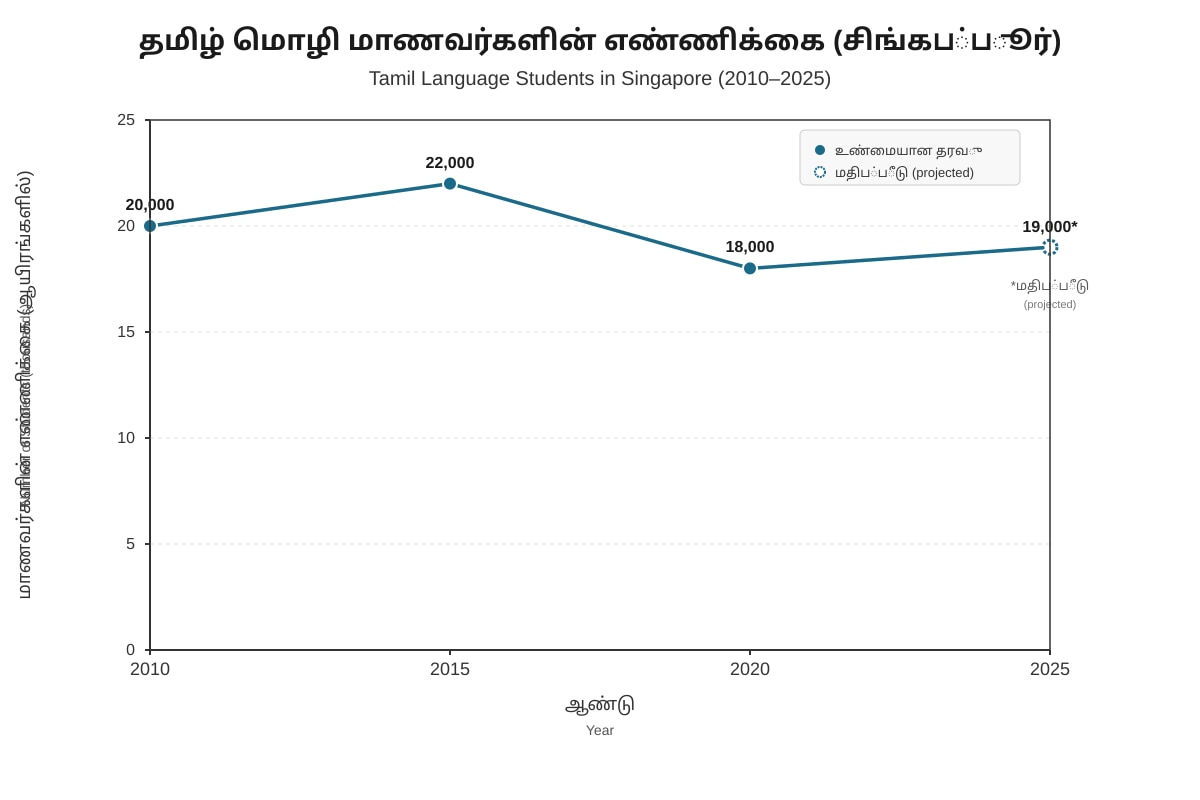
16. Model Answer: 2010-ல் 20,000 மாணவர்கள் இருந்தனர். 2015-ல் இந்த எண்ணிக்கை 22,000 ஆக அதிகரித்தது. ஆனால் 2020-ல் 18,000 ஆக குறைந்தது. (In 2010, there were 20,000 students. In 2015, this number increased to 22,000. But in 2020, it decreased to 18,000.)
Marking Scheme:
- 1 mark: Describing the increase from 2010 to 2015
- 1 mark: Describing the decrease from 2015 to 2020
Explanation: The graph shows a clear pattern: increase then decrease. Students should describe both trends with specific numbers. The key is to show they can read the graph accurately.
Visual Dependency: The answer relies on the <image_placeholder> tag showing a line graph with four data points. The expected visual features are: x-axis labelled "Year" with values 2010, 2015, 2020, 2025; y-axis labelled "Number of Students (thousands)" with values 0-25; a line connecting points at (2010, 20), (2015, 22), (2020, 18), (2025, 19); title "Tamil Language Students in Singapore (2010-2025)".
17. Model Answer: 2020-ல் மாணவர்களின் எண்ணிக்கை குறைந்ததற்கு இரண்டு காரணங்கள்: (1) இளைஞர்கள் ஆங்கிலத்தில் அதிக ஆர்வம் காட்டியிருக்கலாம். (2) கோவிட்-19 தொற்றுநோய் காரணமாக பள்ளி நடவடிக்கைகள் பாதிக்கப்பட்டிருக்கலாம். (Two reasons for the decrease in 2020: (1) Youth may have shown more interest in English. (2) School activities may have been affected due to the COVID-19 pandemic.)
Marking Scheme:
- 1 mark: Each reasonable and well-explained reason (2 marks total)
Explanation: This is an inference question. The passage mentions that youth using more English is a challenge. The year 2020 also coincides with the COVID-19 pandemic, which affected education globally. Accept any reasonable inference that connects to the context.
18. Model Answer: 2025-ல் மாணவர்களின் எண்ணிக்கை மீண்டும் அதிகரிக்கும் என்று கணிக்கப்பட்டுள்ளதற்கு ஒரு காரணம், தமிழ் மொழியைப் பாதுகாக்க மேற்கொள்ளப்படும் முயற்சிகள் பலன் அளிக்கும் என்ற நம்பிக்கை. விழாக்கள், போட்டிகள், மற்றும் முகாம்கள் மூலம் இளைஞர்கள் தமிழ் மொழியில் ஆர்வம் காட்ட ஊக்குவிக்கப்படுகிறார்கள். (One reason for the projected increase in 2025 is the hope that efforts to preserve Tamil will bear fruit. Through festivals, competitions, and camps, youth are encouraged to show interest in Tamil.)
Marking Scheme:
- 1 mark: Identifying a reasonable cause (e.g., preservation efforts)
- 1 mark: Explaining how this cause leads to increased interest
Explanation: The passage mentions various efforts to promote Tamil. Students should connect these efforts to the projected increase. The graph shows a projected increase, so students should explain why this projection is optimistic.
19. Model Answer: என் பள்ளியில் தமிழ் மொழி மாணவர்களின் எண்ணிக்கையை அதிகரிக்க இரண்டு நடவடிக்கைகள்: (1) தமிழ் மொழி விழாக்களை நடத்தலாம் - இதில் பேச்சுப் போட்டி, கட்டுரைப் போட்டி போன்றவை அடங்கும். (2) தமிழ் மொழி முகாம்களை ஏற்பாடு செய்யலாம் - இதில் மாணவர்கள் விளையாட்டுகள் மூலம் தமிழ் கற்கலாம். (Two measures in my school to increase Tamil students: (1) Conduct Tamil language festivals - including speech competitions, essay competitions, etc. (2) Organize Tamil language camps - where students can learn Tamil through games.)
Marking Scheme:
- 1 mark: Each practical and well-explained suggestion (2 marks total)
Explanation: This is an application question. Students should suggest practical activities that can be implemented in a school setting. The passage mentions festivals, competitions, and camps as examples. Students can build on these ideas or suggest their own.
20. Model Answer: நான் "தமிழ் மொழியின் எதிர்காலம் பிரகாசமானது" என்ற கூற்றை ஓரளவு ஏற்றுக்கொள்கிறேன். பத்தியின் படி, தமிழ் மொழியைப் பாதுகாக்க பல முயற்சிகள் மேற்கொள்ளப்படுகின்றன. விழாக்கள், போட்டிகள், மற்றும் முகாம்கள் மூலம் இளைஞர்கள் ஊக்குவிக்கப்படுகிறார்கள். மேலும், வரைபடத்தின் படி, 2025-ல் மாணவர்களின் எண்ணிக்கை மீண்டும் அதிகரிக்கும் என்று கணிக்கப்பட்டுள்ளது. ஆனால், இளைஞர்கள் ஆங்கிலத்தை அதிகம் பயன்படுத்துவது ஒரு சவாலாக உள்ளது. எனவே, தொடர்ந்து முயற்சிகள் மேற்கொள்ளப்பட்டால் எதிர்காலம் பிரகாசமாக இருக்கும். (I partially agree with the statement "The future of Tamil is bright." According to the passage, many efforts are being made to preserve Tamil. Youth are encouraged through festivals, competitions, and camps. Also, according to the graph, the number of students is projected to increase again in 2025. However, youth using more English is a challenge. Therefore, if efforts continue, the future will be bright.)
Marking Scheme:
- 1 mark: Stating a clear position (agree/disagree/partially agree)
- 1 mark: Providing evidence from the passage (efforts being made)
- 1 mark: Providing evidence from the graph (projected increase in 2025)
- 1 mark: Acknowledging challenges or providing a balanced view
Explanation: This is a synthesis question requiring students to combine information from both the passage and the graph. A strong answer will:
- Take a clear position
- Support with evidence from the passage (festivals, competitions, camps)
- Support with evidence from the graph (projected increase in 2025)
- Show balanced thinking by acknowledging challenges (youth using more English)
Common Mistakes:
- For Q16, students may describe the overall trend without mentioning specific numbers. The question asks for "மாற்றத்தை விளக்குக" (explain the change), which requires specific data points.
- For Q17, students may give vague reasons like "students lost interest." Better answers connect to specific factors mentioned in the passage or real-world events.
- For Q19, students may suggest unrealistic activities. Suggestions should be practical for a school setting.
- For Q20, students may only give an opinion without evidence. The question explicitly asks for "சான்றுகளைக் கொடுக்கவும்" (provide evidence) from both the passage and the graph.
Marking Notes for Q20:
- 4 marks: Clear position with strong evidence from both sources, balanced view
- 3 marks: Clear position with evidence from one source, some mention of the other
- 2 marks: Position stated with limited evidence
- 1 mark: Position stated without evidence
- 0 marks: No answer or irrelevant answer
- End of Answer Key -