AI Generated Quiz
Secondary 2 Tamil Composition Quiz
Free Sec 2 Tamil Composition quiz, Nemo3 AI version, with questions, answers, and syllabus-aligned practice for Singapore students.
These static practice materials are generated from the site's syllabus and paper-generation workflow, with source and model context shown so students and parents can evaluate the material before use.
Questions
Free quiz and exam paper access
Enter your details to view this paper
Your access is remembered on this device.
Answers
Secondary 2 Tamil Quiz - Composition (Answer Key)
Total Marks: 40
Section A: Composition Planning and Structure (10 marks)
1. [1 mark]
Answer: B
Explanation: Option B ("That morning, within moments of the sun rising, my life changed completely") is the most engaging narrative opening. It creates immediate tension and curiosity, establishing a clear "before and after" moment. Options A, C, and D are mundane statements that do not hook the reader or signal a significant event.
2. [1 mark]
Answer: B
Explanation: Descriptive writing relies on sensory imagery (உணர்வு விவரங்கள்) to immerse the reader. GPS coordinates (B) are factual data, not sensory experience. Options A (smell), C (sound), and D (touch) all appeal to the five senses and create vivid mental pictures.
3. [1 mark]
Answer: B
Explanation: A concluding paragraph in argumentative writing must restate the thesis in fresh words and summarise the main arguments without introducing new evidence. It provides closure and reinforces the writer's position. Introducing new arguments (A) confuses the reader; describing settings (C) or listing characters (D) belongs to narrative, not argumentative, writing.
4. [1 mark]
Answer: A
Explanation: The standard five-paragraph essay structure follows a logical progression:
- Introduction (முன்னுரை) – presents thesis
- Body Paragraph 1 (உடல் பத்தி 1) – first supporting point
- Body Paragraph 2 (உடல் பத்தி 2) – second supporting point
- Body Paragraph 3 (உடல் பத்தி 3) – third supporting point / counter-argument
- Conclusion (முடிவுரை) – restates thesis and closes
This structure ensures coherence and logical flow.
5. [1 mark]
Answer: B
Explanation: The conjunction "மேலும்" (furthermore/moreover) adds a second positive quality to the first. The context shows two complementary strengths (academics AND sports).
- "எனினும்" (however) and "ஆனால்" (but) indicate contrast – incorrect here.
- "ஆகவே" (therefore) indicates cause-effect – not the relationship between two separate talents.
Section B: Language Application in Composition (10 marks)
6. [1 mark]
Answer: ஆர்வமுடனே / ஆர்வமுள்ளவராய்
Explanation: The phrase "மிகவும் ஆர்வமாக" (very enthusiastically) is replaced by the compound word "ஆர்வமுடனே" (with enthusiasm) or "ஆர்வமுள்ளவராய்" (as an enthusiastic person).
Compound word breakdown: ஆர்வு (enthusiasm) + உடனே (with/along with) = ஆர்வமுடனே.
Marking note: Accept any valid compound word conveying "enthusiastically" (e.g., உத்வேகமுடனே).
7. [1 mark]
Answer: கைக்கூலி விட்டு விட்டு சிரமித்தாள் / தூக்கம் விடாமல் உழைத்தாள்
Explanation: Two common idioms for "work very hard":
- கைக்கூலி விட்டு சிரமித்தாள் – literally "laboured leaving aside wages" → worked tirelessly without expecting immediate reward.
- தூக்கம் விடாமல் உழைத்தாள் – "toiled without giving up sleep" → burned the midnight oil.
Marking note: Accept any syllabus-prescribed idiom meaning "worked very hard."
8. [1 mark]
Answer: அவன் தவறு செய்து எனினும், அவன் மன்னிப்பு கேட்டார்.
Explanation: A complex sentence (சிக்கல்வாக்கியம்) contains one main clause and at least one subordinate clause joined by a conjunction.
- Main clause: "அவன் மன்னிப்பு கேட்டார்" (He asked for forgiveness)
- Subordinate clause: "அவன் தவறு செய்து எனினும்" (Although he made a mistake)
- Conjunction: "எனினும்" (however/although) shows contrast.
Common mistake: Writing two simple sentences joined by a comma without proper conjunction.
9. [1 mark]
Answer: வந்து கொண்டோம்
Explanation: The verb form "வந்து கொண்டோம்" (we came / we have come) is the perfective aspect (முடிவேற்ற வினைமுற்று) indicating a completed action with present relevance.
- "வந்தோம்" (simple past) – grammatically correct but less formal.
- "வந்து விட்டோம்" (completive) – implies "finished coming," unnatural for this context.
In formal written Tamil (செந்தமிழ்), "வந்து கொண்டோம்" is the standard polite form for "we arrived/came."
10. [1 mark]
Answer: உணவு செய்தான் / பழம் செய்தான்
Explanation: The colloquial "சாப்பிட்டான்" (ate) is replaced by formal written Tamil equivalents:
- உணவு செய்தான் – "partook of food" (most common formal)
- பழம் செய்தான் – "took a meal" (classical/formal)
Teaching note: In composition writing, always use செந்தமிழ் verb forms: சாப்பிடு → உணவு செய் / பழம் செய்; பேசு → உரையாடு / சொல்; போ → செல் / பயணம் செய்.
Section C: Guided Composition Writing (20 marks)
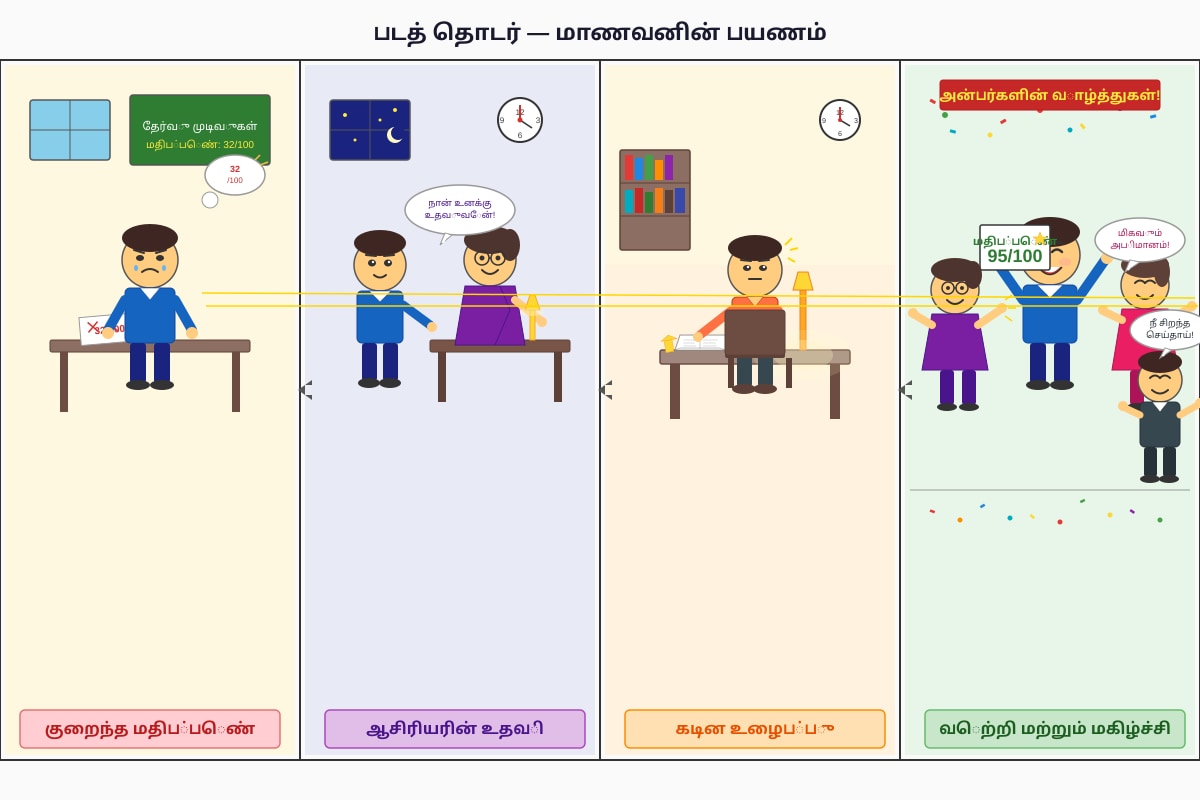
11. Picture-Based Composition [5 marks]
Marking Scheme (Total 5 marks):
| Criterion | Marks |
|---|---|
| Narrative structure (beginning, middle, end) | 1 |
| Emotional progression shown | 1 |
| Use of ≥2 compound words (இணைமொழிகள்) | 1 |
| Use of ≥1 idiom (மரபுத்தொடர்) | 1 |
| Correct past tense verb forms | 1 |
Sample Answer (96 words):
ஒரு மாலை, ரவி தேர்வு தாள் பெற்று வீட்டுக்குப் போகும் வழியில் மனதில் துடிக்குது அனுபவித்தான். மதிப்பெண் மிகவும் குறைவாக இருந்தது. அடுத்த நாள், அவன் ஆசிரியரை நெருங்கி கேட்டான். ஆசிரியர் பொறுமையாக விளக்கி, "கைக்கூலி விட்டு உழை" எனத் தூண்டினார். ரவி வீட்டில் தூக்கம் விடாமல் படித்தான். மாதங்கள் பின், தேர்வில் உயர் மதிப்பெண் பெற்று, அம்மா-அப்பா, ஆசிரியர் அனைவரும் முகம் பூக்கி வாழ்த்தினார்கள். கடின உழைப்பு வெற்றி தரும் என்பதை அவன் உணர்ந்தான்.
Key Features in Sample:
- Compound words: மனதில் துடிக்குது (heart pounding), முகம் பூக்கி (beamed with joy)
- Idiom: கைக்கூலி விட்டு உழை (work hard without expecting reward)
- Past tense: அனுபவித்தான், இருந்தது, கேட்டான், விளக்கி, தூண்டினார், படித்தான், பெற்று, வாழ்த்தினார்கள், உணர்ந்தான்
- Structure: Beginning (disappointment) → Middle (effort with support) → End (success)
12. Descriptive Composition [5 marks]
Marking Scheme (Total 5 marks):
| Criterion | Marks |
|---|---|
| ≥3 sensory details (sight, sound, smell, touch, taste) | 1.5 |
| ≥2 adjectives (பெயரடை) + ≥2 adverbs (வினையடை) | 1 |
| ≥1 complex sentence with "என்றால்" | 1 |
| Clear paragraph structure | 1 |
| Vocabulary range & accuracy | 0.5 |
Sample Answer (98 words):
தீபாவளி நாள் என் வீட்டில் மிகவும் சிறப்பான ஒரு விழா. காலை முன்னே எழுந்து எண்ணெய் குளித்து, புதிய வஸ்திரங்களை அணிந்தோம். முகமூடி மணமுள்ள சமையலறையில், அம்மா வெண்ணெய் முருக்கு, அதிரசம் போன்ற இனிப்பான பழங்களை தயாரித்திருந்தார். தீபங்கள் ஒளிர்ந்து வீட்டை ஒளிமயமாக்கியிருக்கின்றன. பட்டாசங்கள் அதிர்ஷ்டமாக வெடித்து, குழந்தைகள் சந்தோஷமாக ஓடுகின்றனர். என்றால் வைராக்கியம் இல்லாமல், அனைவரும் ஒன்றிணைந்து பண்டிகை கொண்டாடுவர். இந்த நாள் என் மனதில் நினைவேற்றமாக இருக்கும்.
Key Features in Sample:
- Sensory details: Smell (மணமுள்ள சமையலறை), Taste (இனிப்பான பழங்கள்), Sight (தீபங்கள் ஒளிர்ந்து), Sound (பட்டாசங்கள் வெடித்து)
- Adjectives: சிறப்பான, மணமுள்ள, இனிப்பான
- Adverbs: முன்னே, ஒளிர்ந்து, அதிர்ஷ்டமாக, நினைவேற்றமாக
- Complex sentence with "என்றால்": "என்றால் வைராக்கியம் இல்லாமல், அனைவரும் ஒன்றிணைந்து பண்டிகை கொண்டாடுவர்" (If/When [there is] no indifference, everyone celebrates unitedly)
13. Argumentative Composition [10 marks]
Marking Scheme (Total 10 marks):
| Section | Requirement | Marks |
|---|---|---|
| Introduction | Clear thesis statement (position) | 2 |
| Body Paragraph 1 | Argument 1 + supporting example | 2 |
| Body Paragraph 2 | Argument 2 + supporting example | 2 |
| Counter-argument & Rebuttal | Acknowledge opposing view + refute | 2 |
| Conclusion | Restate thesis + final thought | 2 |
| Language Requirements | ≥3 cohesive devices, ≥2 compound words, formal Tamil | Integrated into section marks |
Sample Answer (138 words):
முன்னுரை:
என் கருத்தில், மொபைல் தொலைபேசிகள் பள்ளிகளில் அனுமதிக்கப்படக் கூடாது. கல்வி மையங்களில் மாணவர்கள் கவனம் கேட்காமல் படிக்க வேண்டிய சூழல் அவசியம்.உடல் பத்தி 1:
முதலில், மொபைல் தொலைபேசிகள் கவனவிதிர்வை (distraction) உருவாக்குகின்றன. வகுப்பு நேரத்தில் சமூக வலைத்தளங்கள், விளையாட்டுகள், செய்திகள் ஆகியவை மாணவர்களின் கவனத்தை பிளக்குகின்றன. உதாரணமாக, ஒரு மாணவர் பாடம் கேட்காமல் WhatsApp செய்திகள் பதில் அளித்து, முக்கிய கருத்துக்களை தவறுகிறார்.உடல் பத்தி 2:
மேலும், மொபைல் தொலைபேசிகள் தேர்வில் மோசடி (cheating) வழிவகுக்கின்றன. இணையத்திலൂടെ பதில்கள் தேடுவதோ, நண்பர்களுடன் பகிர்வதோ எளிதாகிறது. இது கல்வி நெறிமுறையை அழிக்கிறது.எதிர்ப்பு மற்றும் மறுப்பு:
எனினும், சிலர் "அவசர நேரங்களில் பெற்றோர்களை தொடர்பு கொள்ள வேண்டும்" என்று வாதிக்கிறார்கள். ஆனால், பள்ளி அலுவலகம் மற்றும் ஆசிரியர்கள் அவசர தொடர்பு வசதியை வழங்கலாம். மாணவர்கள் தனிப்பட்ட மொபைல் தேவையில்லை.முடிவுரை:
ஆகவே, மொபைல் தொலைபேசிகள் பள்ளிகளில் அனுமதிக்கப்படக் கூடாது. கல்வி மையம் கற்றலுக்காக மட்டுமே இருக்க வேண்டும்.
Key Features in Sample:
- Cohesive devices: முதலில், மேலும், எனினும், ஆனால், ஆகவே (5 used)
- Compound words: கவனவிதிர்வு, மோசடி வழிவகுக்கின்றன
- Formal Tamil: அனுமதிக்கப்படக் கூடாது, அவசியம், நெறிமுறை, வழங்கலாம்
Section D: Composition Skills Extension (10 marks)
14. [2 marks]
Answer:
- Sensory imagery (உணர்வு விவரங்கள்): "தீபம் ஒன்று மிதமிதப்பாக எரிகிறது" (sight – visual), "காற்று வீசி, இலைங்கள் சிசிரிசிசி என்று ஒலிக்கின்றன" (sound – auditory), "மணச்சோறு மற்றும் சமையல் மணம்" (smell – olfactory), "வயிறு பசியை தூண்டுகின்றன" (internal sensation).
- Onomatopoeia (ஒலி விதைச்சொற்கள்): "சிசிரிசிசி" mimics the rustling sound of leaves, enhancing auditory imagery.
Marking note: Award 1 mark for each correctly identified feature with a quoted example. Accept other valid features like personification ("தீபம்...எரிகிறது" implying life) or emotive language.
15. [2 marks]
Answer:
- Counter-argument (எதிர்ப்பு): Acknowledges the opposing viewpoint. Example: "Some argue homework reinforces classroom learning and builds discipline." (சிலர் வீட்டு வேலை வகுப்பு கற்றலை வலிமையாக்குகிறது மற்றும் ஒழுக்கத்தை உருவாக்குகிறது என்று வாதிக்கிறார்கள்.)
- Rebuttal (மறுப்பு): Refutes the counter-argument with evidence/reasoning. Example: "However, excessive homework causes burnout and reduces family time, outweighing any benefits." (ஆனால், அதிக வீட்டு வேலை மாணவர்களை களைப்பதோடு குடும்ப நேரத்தை குறைக்கிறது, இது நன்மைகளை விட முக்கியம்.)
Marking note: 1 mark for clear distinction, 1 mark for correct examples.
16. [2 marks]
Answer: "நான் இன்று முழுவதும் படித்து முடித்தேன் அந்த மிகவும் ஆர்வமுள்ள புத்தகம், என் வாங்கினது."
Explanation:
- Relative clause: "என் வாங்கினது" (which I bought) modifies "புத்தகம்".
- Adjective clause: "மிகவும் ஆர்வமுள்ள" describes the book.
- Main verb: "படித்து முடித்தேன்" (read and completed).
- Conjunctions/pronouns used: "அந்த" (demonstrative), relative participle "வாங்கினது".
Alternative: "நான் வாங்கின அந்த மிகவும் ஆர்வமுள்ள புத்தகத்தை, இன்று முழுவதும் படித்து முடித்தேன்." (Using accusative case).
Marking note: 1 mark for correct complex sentence structure (one main + subordinate clauses), 1 mark for accurate meaning and grammar.
17. [2 marks]
Answer: "திட்டம் அவர்களால் நிறைவேற்றப்பட்டது."
Explanation:
- Passive voice: Object "திட்டம்" becomes subject; subject "அவர்கள்" becomes agent with instrumental case "அவர்களால்".
- Formal verb: "நிறைவேற்றினார்கள்" (active, honorific) → "நிறைவேற்றப்பட்டது" (passive, neuter singular, formal written).
Common error: Using "நிறைவேற்றப்பட்டது" without instrumental agent or using colloquial "முடித்தார்கள்".
Marking note: 1 mark for correct passive construction, 1 mark for formal verb form.
18. [2 marks]
Answer:
கính gửi திரு/திருமதி பிரின்சிபல்,
நமது பள்ளியில் தமிழ் இலக்கிய வாரத்தை அடுத்த மாதம் 15-ஆம் தேதி முதல் 19-ஆம் தேதி வரை நடத்த அனுமதி அருள்வார்கள். இலக்கிய போட்டிகள், கவிதை வாசிப்பு, நாடகங்கள் போன்ற நிகழ்வுகள் திட்டமிடப்பட்டுள்ளன. மாணவர்களின் தமிழ் திறமை வளர இது உதவும்.
நன்றி,
[உங்கள் பெயர்]
[வகுப்பு/தொகுப்பு]
Marking Scheme (2 marks):
- Format (salutation, closing, sender details): 0.5
- Purpose, dates, one activity included: 0.5
- Formal Tamil (செந்தமிழ்) & cohesive devices: 0.5
- Word count (50–60) & accuracy: 0.5
19. [2 marks]
Answer:
ரவி: "தமிழ் வாய்மொழி தேர்வு நாளை தான். நீ எப்படி தயாராக இருக்கிறாயா?"
குமார்: "நான் கவிதைகள் மற்றும் உரையாடல்களை மீண்டும் மீண்டும் பயிற்சி செய்தேன். மேலும், ஆசிரியர் தந்த குறிப்புகளையும் படித்தேன்."
ரவி: "சரி, நாங்கள் இரண்டு பேரும் சேர்ந்து மோக் தேர்வு நடத்தலாம்."
குமார்: "நல்ல யோசனை! நாளை காலை 7 மணிக்கு பள்ளி நூலகத்தில் சந்திப்போம்."
Marking Scheme (2 marks):
- Dialogue format with speakers: 0.5
- ≥2 cohesive devices (மீண்டும் மீண்டும், மேலும், சரி): 0.5
- ≥1 compound word (இரண்டு பேரும்): 0.5
- Natural flow, formal Tamil, word count: 0.5
20. [2 marks]
Answer:
- Error: "அவன் பேனா" → Correction: "அவன் பேனாவை"
Reason: Direct object "பேனா" (pen) requires accusative case marker "-ஐ" in formal Tamil. - Error: "சோதித்தார்" → Correction: "கேட்டார்" / "வினவினார்"
Reason: "சோதித்தார்" is colloquial/dialectal; formal written Tamil uses "கேட்டார்" (asked) or "வினவினார்" (enquired). - Error: "நீ ஏன் பேனா இல்லாமல் வந்தாய்?" → Correction: "நீ ஏன் பேனாவை இல்லாமல் வந்தாய்?"
Reason: Same as Error 1 – missing accusative marker on "பேனா". - Error: "நான் அடுத்த முறை கவனமாக இருப்பேன்" → Correction: "நான் அடுத்த முறை கவனமாக இരுப்பேன்" (acceptable) OR better: "நான் அடுத்த முறை கவனமாக நடப்பேன்"
Reason: "இருப்பேன்" (will sit/be) is semantically weak; "நடப்பேன்" (will act/behave) or "கவனம் செலுத்துவேன்" (will pay attention) conveys intended meaning precisely. Punctuation: Missing full stop after "ஆசிரியரே" in direct speech.
Marking note: 0.5 marks per error correctly identified, corrected, and explained. Maximum 2 marks.