AI Generated Exam Paper
Secondary 2 Tamil Practice Paper 5
Free Sec 2 Tamil Practice Paper 5, LongCat AI version, with questions, answers, and syllabus-aligned practice for Singapore students.
These static practice materials are generated from the site's syllabus and paper-generation workflow, with source and model context shown so students and parents can evaluate the material before use.
Questions
Free quiz and exam paper access
Enter your details to view this paper
Your access is remembered on this device.
Answers
TuitionGoWhere Practice Paper — Tamil Secondary 2
Answer Key — Comprehension (Version 5 of 5)
Section A: Comprehension Passage 1 (15 marks)
Question 1. (1 mark)
Answer: பல நூற்றாண்டுகளாக (for many centuries)
Explanation: The first sentence of the passage states: "சிங்கப்பூரில் தமிழர் பண்பாடு பல நூற்றாண்டுகளாக தொடர்ந்து வந்துள்ளது." This is a direct factual recall question. Students need to locate the time period mentioned in the opening sentence.
Question 2. (3 marks — 1 mark each)
Answer:
(i) தைப்பூசம்
(ii) நவராத்திரி
(iii) தீபாவளி
Explanation: The passage lists these three festivals in the first paragraph: "தைப்பூசம், நவராத்திரி, தீபாவளி போன்ற விழாக்கள்." Students must identify the three specific festivals named. Any order is acceptable.
Question 3. (1 mark)
Answer: இரண்டு மாதங்களுக்கு (two months)
Explanation: The passage states: "மக்கள் இரண்டு மாதங்களுக்கு முன்பே தயாரிப்புகளைத் தொடங்குவார்கள்." This is a direct retrieval question — students need to find the specific number mentioned in the context of Thaipusam preparations.
Question 4. (1 mark)
Answer: சைவ உணவு மட்டுமே உண்ணும் விரதம் (vegetarian fasting — eating only vegetarian/Saiva food)
Explanation: The passage explicitly says: "சைவ உணவு மட்டுமே உண்ணும் விரதம் இருப்பது இந்த விழாவின் சிறப்பு." Students should understand that during Thaipusam, devotees observe a strict vegetarian diet as part of their spiritual preparation.
Question 5. (1 mark)
Answer: "ஒளியின் விழா" (Festival of Lights)
Explanation: The passage directly states: "இந்த விழா 'ஒளியின் விழா' என்று பொருள்." This question tests vocabulary comprehension — understanding the meaning of the word "தீபாவளி" (Deepavali).
Question 6. (2 marks)
Answer: "இருளை வெல்ல ஒளி வருகிறது என்ற நம்பிக்கை இதன் பின்னணியில் உள்ளது."
Explanation: (1 mark for correctly identifying the belief, 1 mark for quoting the exact sentence from the passage.) The question asks students to find the sentence that explains the belief behind Deepavali. The key concept is that light triumphs over darkness. Students must copy the exact sentence from the passage using quotation marks.
Question 7. (3 marks — 1 mark each)
Answer:
(i) → (b) சைவ உணவு மட்டுமே உண்ணும் விரதம்
(ii) → (a) வீடுகளை எண்ணெய் விளக்குகளால் அலங்கரிப்பது
(iii) → (c) நடன நிகழ்ச்சிகள் முக்கியம்
Explanation: This matching question tests students' ability to associate each festival with its distinctive feature. Thaipusam is characterised by vegetarian fasting (mentioned in paragraph 2). Deepavali is characterised by lighting oil lamps (mentioned in paragraph 3). Navaratri is known for dance performances (implied by the cultural context and the matching option). Students need to read carefully and match based on passage content and general cultural knowledge.
Question 8. (3 marks)
Answer:
சிங்கப்பூரில் தமிழ் ஒரு அதிகாரப்பூர்வ மொழியாகும். பள்ளிகளில் தமிழ் கற்றல் முக்கியமாக போதப்படுத்தப்படுகிறது. தமிழ் இலக்கியம், தமிழ் இசை, தமிழ் திரைப்படம் போன்றவை தமிழர் பண்பாட்டின் முக்கிய அங்கங்களாகும்.
Marking scheme:
- 1 mark for stating Tamil is an official language in Singapore
- 1 mark for stating Tamil is taught as an important subject in schools
- 1 mark for mentioning any one cultural element (literature, music, cinema, etc.)
Explanation: This question requires students to explain the importance of the Tamil language in Singapore using evidence from the passage. The last paragraph provides all the necessary information. Students should identify at least two points from the passage and write them in their own words or quote directly.
Section B: Comprehension Passage 2 (15 marks)
Question 9. (1 mark)
Answer: விவசாயம் (Agriculture)
Explanation: The passage states: "விவசாயம் மக்களின் முக்கிய தொழிலாக இருந்தது." This is a direct factual recall from the first paragraph.
Question 10. (3 marks — 1 mark each)
Answer:
(i) நெல் (paddy/rice)
(ii) கரும்பு (sugarcane)
(iii) மஞ்சள் (turmeric)
Explanation: The passage lists these three crops: "நெல், கரும்பு, மஞ்சள் போன்ற பயிர்கள் பயிரிடப்பட்டன." Students need to identify the three specific crops mentioned. Any order is acceptable.
Question 11. (1 mark)
Answer: ஏரிகள் (tanks/lakes)
Explanation: The passage states: "மழைநீர் சேகரிப்புக்காக ஏரிகள் அமைக்கப்பட்டன." This is a direct retrieval question about water conservation methods in ancient Tamil villages.
Question 12. (2 marks — 1 mark each)
Answer:
(i) விழா நாட்களில் அனைவரும் கோவிலுக்கு சென்று பூஜை செய்வார்கள் — கோவில் ஆன்மிக மையமாக இருந்தது.
(ii) கிராமத்தின் கல்வி மையமாகவும் கோவில் இருந்தது — குருகுல முறையில் குழந்தைகளுக்கு கல்வி கற்பிக்கப்பட்டது.
Explanation: The passage mentions two roles of the temple: (1) as a spiritual centre where people gathered for festivals and prayers, and (2) as an education centre where children were taught in the gurukulam system. Students need to identify both roles from the passage.
Question 13. (3 marks — 1 mark each)
Answer:
(i) வேதங்கள் (Vedas)
(ii) கணிதம் (Mathematics)
(iii) விவசாய அறிவு (Agricultural knowledge)
Explanation: The passage states: "வேதங்கள், கணிதம், விவசாய அறிவு போன்றவை கற்பிக்கப்பட்டன." Students must list the three subjects mentioned in the gurukulam education system. Any order is acceptable.
Question 14. (2 marks — 1 mark each)
Answer (any two):
(i) நெசவு (weaving)
(ii) மண்பாண்டம் செய்தல் (pottery)
(iii) கைத்தறி (handloom/hand stitching)
(iv) கைவினைப் பொருட்கள் செய்து விற்பனை (making handicrafts and selling them)
(v) விவசாயம் (agriculture)
Explanation: The passage mentions several occupations of women in village life. Students need to identify any two from the text. The key paragraph is the third paragraph which discusses women's roles.
Question 15. (3 marks — 1 mark each)
Answer:
(i) இயற்கையோடு இணைந்த வாழ்க்கை (living in harmony with nature)
(ii) உழைப்பின் மதிப்பு (the value of hard work)
(iii) சமூக ஒற்றுமை (social unity/community togetherness)
Explanation: The final paragraph states: "இயற்கையோடு இணைந்த வாழ்க்கை, உழைப்பின் மதிப்பு, சமூக ஒற்றுமை போன்ற விழுமியங்கள் இன்றும் பொருத்தமானவையாகும்." Students must identify the three values explicitly listed in the concluding paragraph.
Question 16. (2 marks)
Answer:
இந்த பத்தியின் முக்கிய கருத்து என்னவென்றால், முன்னோர் காலத்தில் தமிழகத்தில் இருந்த கிராமப்புற வாழ்க்கை மிகவும் எளிமையாகவும் ஒற்றுமையாகவும் இருந்தது. விவசாயம் முக்கிய தொழிலாக இருந்தது. கோவில் ஆன்மிக மற்றும் கல்வி மையமாக செயல்பட்டது. பெண்கள் பல்வேறு தொழில்களில் ஈடுபட்டார்கள். இந்த வாழ்க்கையிலிருந்து கிடைத்த விழுமியங்கள் இன்றைய குழந்தைகளுக்கும் கற்றுக் கொடுக்கத்தக்கவை.
Marking scheme:
- 1 mark for identifying the main idea (simple, united village life with valuable lessons)
- 1 mark for supporting the main idea with at least two details from the passage
Explanation: This is a summary/evaluation question. Students need to identify the central theme of the passage — that traditional Tamil village life, though simple, was rich in values and community spirit, and that these values remain relevant today. Students should support their answer with specific details from the passage.
Section C: Comprehension Passage 3 — Visual Text (10 marks)
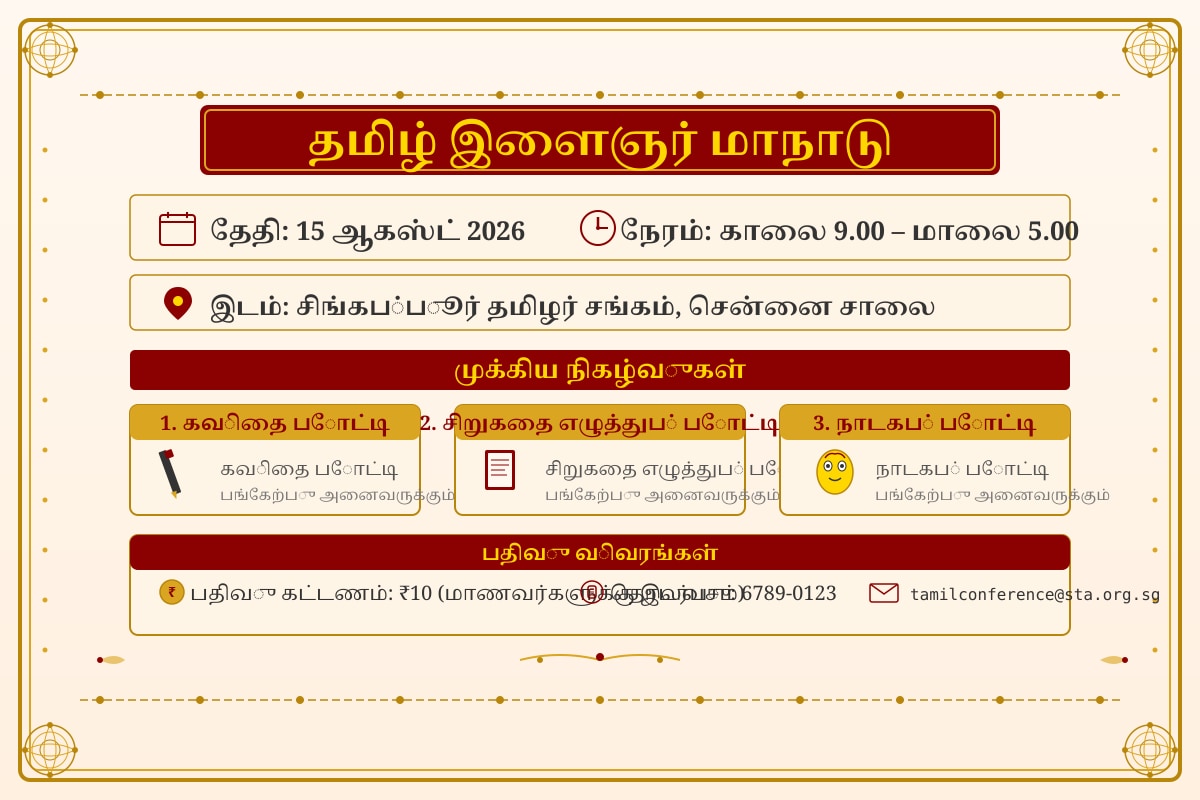
Note for Questions 17–20: These questions are based on the poster image described by the <image_placeholder> tag (Q17-fig1). The poster is a Tamil community event poster for "தமிழ் இளைஞர் மாட்டு" (Tamil Youth Conference). Key visual features include: decorative kolam border, title in bold Tamil text, date/time/venue details, three competition names, registration fee, contact number, and email address. Students should refer to the rendered poster to answer these questions.
Question 17. (2 marks — 1 mark each)
Answer:
தேதி: 15 ஆகஸ்ட் 2026 (15 August 2026)
நேரம்: காலை 9.00 மணி முதல் மாலை 5.00 மணி வரை (9.00 a.m. to 5.00 p.m.)
Explanation: The poster clearly displays the date and time. Students need to read the visual text and extract the specific date (15 August 2026) and time range (9:00 a.m. to 5:00 p.m.). Both must be stated correctly for full marks.
Question 18. (3 marks — 1 mark each)
Answer:
(i) கவிதை போட்டி (Poetry Competition)
(ii) சிறுகதை எழுத்துப் போட்டி (Short Story Writing Competition)
(iii) நாடகப் போட்டி (Drama Competition)
Explanation: The poster lists three competitions. Students must identify all three from the visual text. The illustrations of a pen, a book, and a drama mask on the poster correspond to these three events respectively, providing visual clues.
Question 19. (2 marks)
Answer:
பதிவு கட்டணம் ₹10 (10 Singapore dollars). மாணவர்களுக்கு இந்த போட்டி இலவசம் (free for students).
Marking scheme:
- 1 mark for stating the registration fee is ₹10
- 1 mark for stating that it is free for students
Explanation: The poster states: "Registration fee: ₹10 (free for students)." Students need to extract both pieces of information — the general fee and the student exemption.
Question 20. (3 marks)
Answer:
(i) தொலைபேசி எண் மூலம்: 6789-0123 என்ற எண்ணில் அழைக்கலாம் (by calling the phone number 6789-0123)
(ii) மின்னஞ்சல் மூலம்: [email protected] என்ற முகவரியில் மின்னஞ்சல் அனுப்பலாம் (by emailing [email protected])
Marking scheme:
- 1.5 marks for each correct contact method with detail
- Accept any reasonable paraphrase of the contact methods
Explanation: The poster provides two contact methods: a phone number (6789-0123) and an email address ([email protected]). Students must identify both methods and explain how they would use them to register. This question tests visual text comprehension and practical application.
Total: 40 marks
| Section | Marks |
|---|---|
| A: Comprehension Passage 1 (Q1–Q8) | 15 |
| B: Comprehension Passage 2 (Q9–Q16) | 15 |
| C: Visual Text Comprehension (Q17–Q20) | 10 |
| Total | 40 |