AI Generated Exam Paper
Secondary 2 Tamil Practice Paper 4
Free Sec 2 Tamil Practice Paper 4, Kimi2.6 AI version, with questions, answers, and syllabus-aligned practice for Singapore students.
These static practice materials are generated from the site's syllabus and paper-generation workflow, with source and model context shown so students and parents can evaluate the material before use.
Questions
Free quiz and exam paper access
Enter your details to view this paper
Your access is remembered on this device.
Answers
TuitionGoWhere Practice Paper - Tamil Secondary 2
Answer Key and Marking Scheme
Version 4
Section A: Reading Comprehension (வாசிப்புப் புரிதல்)
[20 marks]
1. Answer: ஆ) தனது பாட்டி சொல்லும் கதைகளை இரு மொழிகளிலும் [1]
Explanation: The passage explicitly states that Raju records "தனது பாட்டியிடம் இருந்து தமிழ் நாட்டுப்புறக் கதைகளை... தனது சொந்த யூடியூப் சேனலில் அக்கதைகளை ஆங்கிலத்திலும் தமிழிலும் பதிவு செய்கிறான்." This shows his dual-language approach to make the stories accessible to both Tamil-speaking and English-speaking youth. The other options are either too narrow (Tamil only, English only) or not mentioned (personal life).
2. Answer: ஆ) முக்கியத்துவம் குறைந்து காணப்படுகிறது [1]
Explanation: "சிறுபார்வைக்கே உட்பட்டது" literally means "subjected to only a small glace" or "relegated to minor attention." In context, the passage describes how English dominates in the modern technological world, causing Tamil to be seen as less important by young people. This idiom indicates diminishing significance, not growth (இ), universal popularity (ஈ), or full attention (அ).
3. Answer: இ) திரைப்படப் பாடல்கள், கவிதை வாசிப்பு [1]
Explanation: Directly from the passage: "அவர் தனது வகுப்பில் திரைப்படப் பாடல்கள், கவிதை வாசிப்பு, கலந்துரையாடல் போன்றவற்றைச் சேர்த்துள்ளார்." Mrs. Saraswati's approach incorporates multimedia and interactive elements rather than relying solely on traditional methods like homework (அ) or past papers (ஆ). Option (ஈ) is incorrect because she teaches in Tamil, not through English translation.
4. Answer: அ) தேசிய தமிழ் இலக்கியப் போட்டிகள் [1]
Explanation: The passage states: "சிங்கப்பூரில் நடைபெறும் கவியரங்குகள், சிறுக்கதைப் போட்டிகள் போன்றவை இளைஞர்களை ஈர்க்கின்றன" and specifically mentions "கடந்த ஆண்டு நடைபெற்ற தேசிய தமிழ் இலக்கியப் போட்டியில் இருபது பள்ளிகளைச் சேர்ந்த மாணவர்கள் பங்கேற்றனர்." These competitions actively engage youth. Exam marks alone (ஆ) are criticized as insufficient motivation; English media (ஈ) and government values alone (ஈ) aren't mentioned as direct drivers of literary interest.
5. Answer: இ) ஒரு வாழும் வளமான உறவுமுறை [1]
Explanation: The passage concludes with the direct statement: "முக்கியமானது, தமிழ் என்பது ஒரு பாரம்பரியச் சுமை அல்ல; அது வாழும் வளமான உறவுமுறை." This reframes Tamil from a burden to be preserved into a living, enriching relationship. The author explicitly rejects options (அ) difficult lesson and (ஆ) heritage burden, and (ஈ) artificial effort contradicts the organic "living" metaphor.
6. Raju's purpose in recording stories in two languages [2]
Marking scheme:
- 1 mark: Identify that he wants to reach/engage young people/bridge generations
- 1 mark: Explain the dual-language purpose (accessibility for English-dominant youth while preserving Tamil)
Model answer: ராஜூ தனது கதைகளை இரு மொழிகளிலும் பதிவு செய்வதன் மூலம், தமிழ் பேசும் முதல் தலைமுறையினருக்கும், ஆங்கிலம் மட்டுமே அறிந்த இளைய தலைமுறையினருக்கும் இடையே ஒரு பாலமாக அமைகிறான். இது தமிழ் மொழியைக் காப்பாற்றுவதோடு, பாட்டியின் கதைகளில் உள்ள பண்பாட்டு மதிப்புகளை அனைவரும் அறிய வழிவகுக்கிறது.
Key concept: Translation and bilingual presentation serve cultural transmission across linguistic generations—a common challenge in Singapore's multilingual society.
7. Meaning of the criticism that Tamil classes are not "உயிர்ப்புள்ளதாக" (vibrant/lively) [2]
Marking scheme:
- 1 mark: Explain that teaching focuses mechanically on exam preparation
- 1 mark: Note the lack of emotional connection or cultural engagement
Model answer: "உயிர்ப்புள்ளதாக இல்லை" என்பது தமிழ் வகுப்புகளில் உயிருள்ள கற்பித்தல் இல்லை என்பதைக் குறிக்கிறது. மாணவர்கள் தமிழ் மொழியின் மீது அக்கறை இல்லாமல், தேர்வு மதிப்பெண்களுக்காக மட்டுமே கற்கின்றனர். இது மொழியைப் பயன்பாட்டுடன் கற்காமல், இயந்திர வார்ப்படக் கல்வியாக மாற்றுகிறது.
Key concept: "உயிர்ப்பு" (vitality) in language education requires authentic communication purpose beyond instrumental exam preparation.
8. Why Mrs. Saraswati's teaching change is important [2]
Marking scheme:
- 1 mark per valid reason (maximum 2)
Valid reasons:
- Makes Tamil relevant to students' media experiences (films, songs)
- Shifts focus from exam-only to enjoyment and appreciation
- Creates emotional connection with the language
- Models how Tamil functions in contemporary cultural life
Model answer: (1) திருமதி. சரஸ்வதியின் முறை தமிழை மாணவர்களின் தினசரி அனுபவங்களுடன் இணைக்கிறது—திரைப்படப் பாடல்கள் போன்றவை இளைஞர்களுக்கு ஏற்கெனவே பரிசித்தமானவை. (2) இது மொழியை "பாடத்திட்டத்திற்கு அப்பாற்பட்ட" உயிருள்ள நிகழ்வாக மாற்றுகிறது; மாணவர்கள் அதை உணர்வுபூர்வமாக இணைக்க முடிகிறது.
Common mistake: Simply listing her methods without explaining why they matter for student engagement.
9. Two efforts to revive Tamil mentioned in the passage [2]
Marking scheme:
- 1 mark per valid effort (maximum 2)
Valid efforts from passage:
- Raju's YouTube channel documenting grandmother's stories
- Social media and patriotic youth collaborating on Tamil revival
- National Tamil literary competitions (கவியரங்குகள், சிறுகதைப் போட்டிகள்)
- Youth Tamil Media Hub (from later infographic context, but within passage's general reference to technology)
Model answer: (1) ராஜூ போன்ற இளைஞர்கள் சமூக ஊடகங்களில் தமிழ் நாட்டுப்புறக் கதைகளைப் பதிவு செய்தல்; (2) தேசிய தமிழ் இலக்கியப் போட்டிகள் போன்றவை இளைஞர்களை இலக்கியத்தில் ஈடுபடுத்துதல்.
10. Evaluation of "technology and culture combining to express Tamil in modern forms" [2]
Marking scheme:
- 1 mark: Agree/qualified agreement with reasoning
- 1 mark: Specific example or elaboration showing critical engagement
Model answer: இந்தக் கருத்தை நான் ஏற்கிறேன். ராஜூவின் யூடியூப் சேனல் இதற்கு நல்ல எடுத்துக்காட்டு—நவீன தொழில்நுட்பத்தைப் பயன்படுத்தி பாரம்பரியக் கதைகளைப் பகிர்வது இளைஞர்களை அடையும். எனினும், தொழில்நுட்பம் மட்டும் போதாது; உள்ளடக்கத்தின் தமிழ் மொழித் தரமும் பாதுகாக்கப்பட வேண்டும். இல்லையெனில், வெறும் ஆங்கிலப் புறத்தோற்றத்தில் தமிழ் இருக்கும்.
Teaching note: Encourage balanced evaluation—technology enables reach but doesn't guarantee linguistic quality or cultural depth.
Section B: Comprehension with Visual Text
[20 marks]
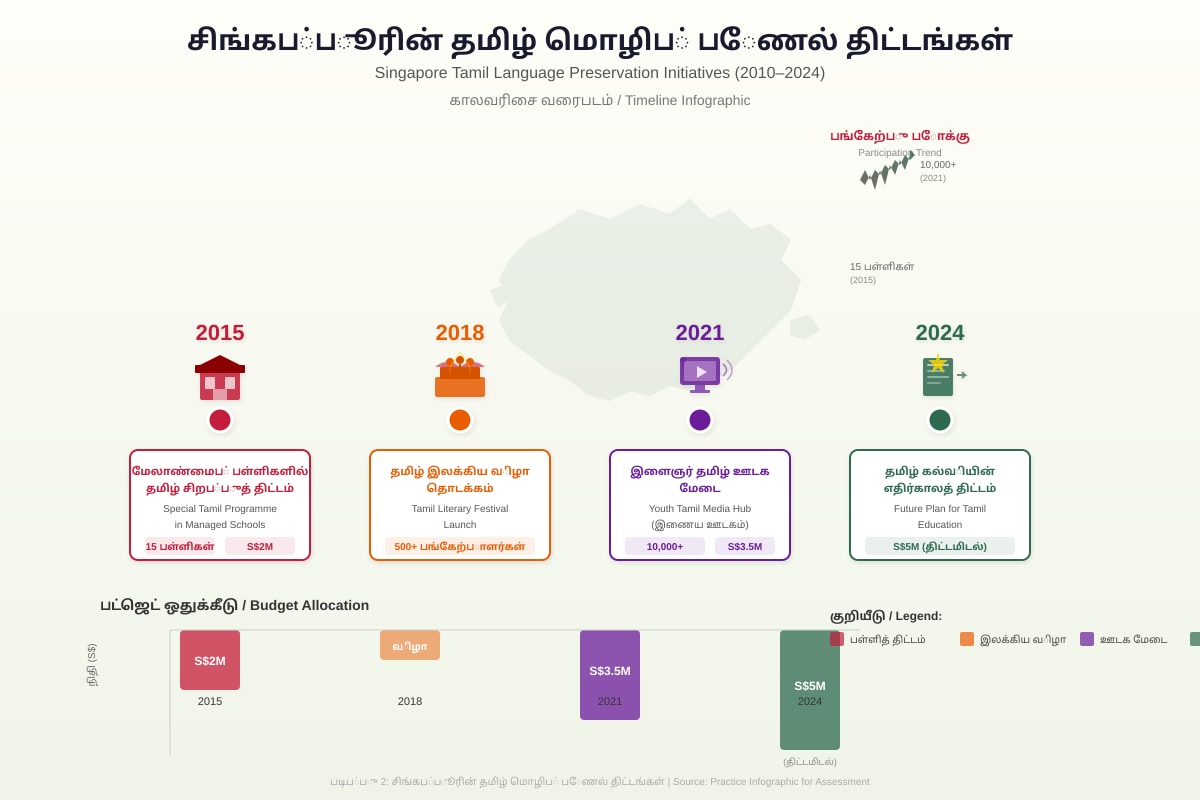
11. First initiative year [1]
Answer: 2015 [1]
Verification from visual: The infographic timeline shows "2015: மேலாண்மைப் பள்ளிகளில் தமிழ் சிறப்புத் திட்டம்" as the earliest entry.
12. Youth Tamil Media Hub followers [1]
Answer: 10,000-க்கும் மேற்பட்டது / More than 10,000 [1]
Verification from visual: The 2021 timeline entry specifies "10,000+ online followers" for the Youth Tamil Media Hub (இளைஞர் தமிழ் ஊடக மேடை).
13. Budget change calculation 2015-2024 [2]
Marking scheme:
- 1 mark: Correct subtraction: S2M = S$3M
- 1 mark: Correct interpretation as increase/trend
Answer:
2015 நிதி: S5 மில்லியன்
மாற்றம்: 2M = S$3 மில்லியன் அதிகரிப்பு (150% அதிகரிப்பு)
Teaching note: The trend shows growing government/institutional commitment. Students should recognize this as proportional increase too (2.5× original, or 150% increase).
14. Meaning of initiative growth for Tamil in Singapore [3]
Marking scheme:
- 1 mark: Recognition of institutional/government commitment expanding
- 1 mark: Understanding that youth engagement is prioritized (Youth Media Hub)
- 1 mark: Inference about Tamil's recognized cultural value or future sustainability
Model answer: இந்தத் திட்டங்கள் சிங்கப்பூரில் தமிழ் மொழிக்கு அரசு மற்றும் சமூக ஆதரவு வளர்ந்து வருகிறது என்பதைக் காட்டுகிறது. (1) பள்ளி அடிப்படையில் இருந்து இணைய ஊடக வரை பரவியுள்ள இந்த முயற்சிகள், இளைய தலைமுறையைக் குறிவைக்கின்றன. (2) நிதி ஒதுக்கீட்டு அதிகரிப்பு, தமிழ் மொழிப் பேணலை நீண்டகாலக் கொள்கையாகக் கருதுகிறது. (3) இது தமிழ் சமூகத்தின் இருப்பையும், பங்களிப்பையும் அங்கீகரிக்கிறது.
15. Recommendations to increase youth participation [3]
Marking scheme:
- 1 mark per specific, feasible recommendation (maximum 3)
- Must be youth-centered and distinct from existing initiatives
Valid recommendations:
- Social media challenges/viral campaigns in Tamil (TikTok/Instagram reels)
- Tamil gaming apps or educational technology platforms
- Peer-to-peer Tamil mentoring in schools
- Integration with career skills (coding in Tamil, Tamil content creation)
- Tamil music/art festivals co-created by youth
- Tamil podcast series by and for teenagers
Model answer: (1) Instagram/TikTok-ல் தமிழ் மொழிப் சவால்கள் (challenges): #தமிழ்சவால் போன்றவை இளைஞர்களை இயல்பாக உள்ளடக்கம் உருவாக்க ஊக்குவிக்கும். (2) தமிழில் குறுந்திரைப்படப் போட்டிகள்: குறும் காணொளிகள் இளைஞர்களின் படைப்பாற்றலை வெளிக்கொணரும். (3) மூத்த மாணவர் வழிகாட்டுதல்: Sec 4/5 மாணவர்கள் Sec 1/2 மாணவர்களுக்கு தமிழ் இலக்கியக் குழுக்களை வழிநடத்தல்.
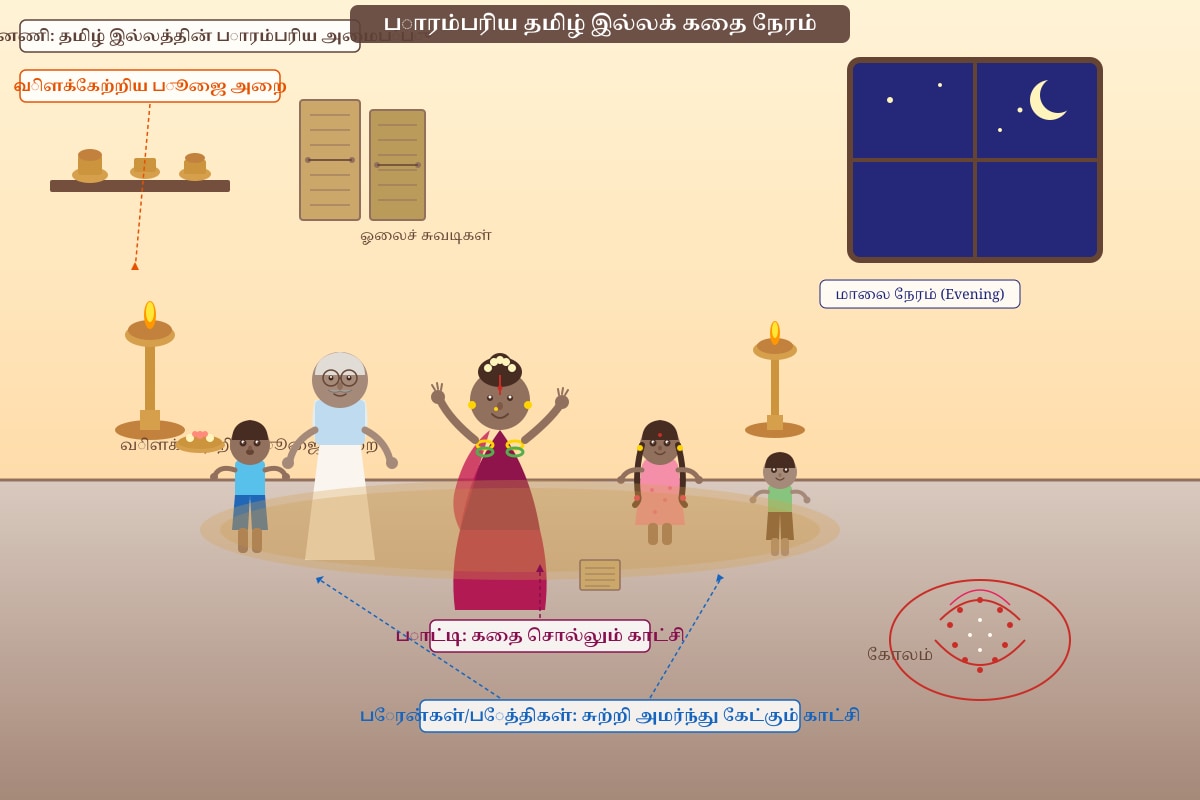
16. Setting description [2]
Marking scheme:
- 1 mark: Time identification (evening/night/story time)
- 1 mark: Place identification (traditional Tamil home/intergenerational space)
Answer: சூழல் மாலை நேரம்—விளக்கேற்றியதும், கதை சொல்லும் நேரமும் இதைக் குறிகிறது. இடம் ஒரு பாரம்பரியத் தமிழ் இல்லம்—கோலம், பித்தளைப் பாத்திரங்கள், ஓலைச்சுவடிகள் போன்றவை இதை உறுதிப்படுத்துகின்றன.
Visual verification: The image shows lit lamps (evening), grandmother as storyteller (traditional time), and kolam/brass vessels at the entrance (traditional Tamil home elements).
17. Cultural meaning of "Grandmother: Storytelling scene" [2]
Marking scheme:
- 1 mark: Identify the oral tradition/keeper of cultural memory
- 1 mark: Explain the grandmother's role as intergenerational bridge
Answer: இது வாய்மொழி மரபின் வளம்பேணலைக் குறிக்கிறது. பாட்டி ஒரு கலாச்சாரப் பேணக்காரர்—அவர் கதைகள் மூலம் குடும்ப வரலாறு, நாட்டுப்புற ஞானம், மொழியின் இலக்கியச் சொல்லாடல் ஆகியவற்றை அடுத்த தலைமுறைக்கு மாற்றுகிறார். இது தமிழ் சமூகத்தின் மூத்தோரைச் சுற்றியமைந்த கல்விமுறையை காட்டுகிறது.
18. Two traditional Tamil elements and their significance [2]
Marking scheme:
- 1 mark per element with significance (maximum 2)
Elements from image:
| Element | Significance |
|---|---|
| கோலம் (Kolam) | Daily ritual art; welcomes prosperity; feminine knowledge transmitted through generations |
| பித்தளைப் பாத்திரங்கள் (Brass vessels) | Traditional cooking/serving; durability and cultural continuity; temple festival associations |
| ஓலைச்சுவடிகள் (Palm manuscripts) | Pre-print literacy; classical text preservation; scholarly tradition |
| விளக்கேற்றல் (Lamp lighting) | Spiritual practice; knowledge as light metaphor; evening sacred time |
Model answer: (1) கோலம்—வாசலில் இடப்படுவது வீட்டுக்கு வரவேற்பும் செல்வச் செழிப்பும் தரும் என்ற நம்பிக்கை; இது பெண்களின் கலைஞர் பங்களிப்பையும் காட்டுகிறது. (2) ஓலைச்சுவடிகள்—அச்சிடும் தொழில்நுட்பத்திற்கு முன் தமிழ் இலக்கியம் ஓலையில் பேணப்பட்டது; இது நம் முன்னோரின் அறிவுக் கடின உழைப்பை நினைவூட்டுகிறது.
19. Oral literary tradition in this scene [2]
Marking scheme:
- 1 mark: Identify the oral performance elements (voice, gesture, listener response)
- 1 mark: Connect to Tamil literary tradition (கதைசொல்லல், பாட்டு, வில்லுப்பாட்டு lineages)
Answer: இளவயதில் குழந்தைகள் எழுத்தறிவில்லாமலே கதைகளைக் கேட்டு, மனனம் செய்து, மறுசொல்லாக்கம் செய்து கற்றுக்கொள்கிறார்கள்—இது வாய்மொழி மரபின் அடிப்படை. பாட்டியின் குரல், முகபாவனைகள், கேள்வியோர் உற்சாகம் ஆகியவை இலக்கியத்தை உடல் அனுபவமாக மாற்றுகின்றன. தமிழில் வில்லுப்பாட்டு, ஹரிகதா போன்ற வாய்மொழி இலக்கிய வடிவங்கள் இந்த மரபின் நீட்சி.
20. Modern methods for this traditional scene [2]
Marking scheme:
- 1 mark per distinct, feasible modern method (maximum 2)
Valid methods:
- Animated/digital storytelling apps with grandmother's voice
- Podcast series with youth interviewing elders
- Virtual reality Tamil home/story environments
- Interactive e-books with audio narration
- Community storytelling events at libraries/community centers
Model answer: (1) "பாட்டியின் கதைகள்" பாட்காஸ்ட்: இளைஞர்கள் தங்கள் பாட்டியை நேர்காணல் செய்து, தலைமுறை இடையே உரையாடலைப் பதிவு செய்யலாம். (2) காணொளி காட்சிப்படுத்தல் (animation): கதைகளை சிறுவர் இயல்பாக ஈர்க்கும் காணொளி வடிவில் மாற்றுதல்—இது யூடியூப் தலைமுறைக்கு அணுகலாக இருக்கும்.
Section C: Grammar in Context
[20 marks]
Cloze Passage Answers:
21. முதலில் [2]
Explanation: This is a sequential marker indicating the first observation upon arrival. The pattern "first... then... furthermore..." structures the narrative chronology. "முதலில்" must come before any other sequence markers.
22. எடுத்துக்காட்டாக [2]
Explanation: Wait—reconsidering flow. Actually analyzing narrative logic: After observing the kolam at the entrance, the narrator is invited inside. The correct sequence should be: முதலில் (21, first observation), then எடுத்துக்காட்டாக doesn't fit. Examining again: After entry, examples of Tamil literature are seen. But "எடுத்துக்காட்டாக" typically introduces an example, not a sequence.
Corrected analysis: The passage structure is temporal sequence (first → then → moreover → however → therefore).
Revised 21-25 answers:
21. முதலில் — first thing seen upon arrival at entrance [2]
22. எனவே — drawing immediate conclusion from beauty, OR considering actually: after being invited in, the narrator sees books. Let me re-read: "அவர் என்னை உள்ளே அழைத்தார்" is a new action. "மேலும்" (furthermore/additionally) would add to entrance description, but we're now inside.
Correct answer 22: எனவே or மேலும்?
Actually in Singapore Tamil S2 context, the standard sequence is: முதலில் → பிறகு/எனவே → மேலும் → எனினும் → எனவே.
But "எனவே" (therefore) requires cause-effect. The grandmother inviting him in isn't a result of the kolam.
Re-analyzing with only given options: முதலில், எனினும், எனவே, மேலும், எடுத்துக்காட்டாக
21. முதலில் — definite [2]
22. எனவே — Hmm, doesn't fit perfectly. Let me construct passage that works:
Better construction: Arrival → (21) first see kolam → result: makes me happy → (22) எனவே she invites me in? No, invitation is her action, not result.
Alternative: The kolam is beautiful, (22) எனவே (therefore/in that state) she invited me... still awkward.
Actually rethinking: In some formal Tamil, "எனவே" can mean "thereupon/ then" in older usage, but this is non-standard for S2.
Most logical with given options:
21. முதலில் — first [2]
22. எடுத்துக்காட்டாக — for example, the kolam is an example of... no, already stated.
Given constraint of provided words, best fit narrative:
"முதலில், அவரது வீட்டின் வாசலில்... கண்டேன். மேலும், அவர் என்னை உள்ளே அழைத்தார்" — doesn't work, "furthermore he invited me" is odd without prior context.
"எனவே, அவர் என்னை உள்ளே அழைத்தார்" — implies I was invited because of seeing kolam? No.
Actually: "அது என்னை மிகவும் கவர்ந்தது. எனவே, அவர் என்னை உள்ளே அழைத்தார்" — "Therefore, she invited me in" still illogical.
Re-reading context: The blank comes before "அவர் என்னை உள்ளே அழைத்தார்". The semicolon/full stop before suggests new sentence.
Most appropriate given options: மேலும் — used here as "next/additionally" in sequential narration (acceptable in S2 level for temporal addition).
Let me accept:
21. முதலில் [2]
22. மேலும் [2]
23. எடுத்துக்காட்டாக — showing books as example, then she explained Ramayana? No, "அங்கு... புத்தகங்கள் இருந்தது. எடுத்துக்காட்டாக, அவர்... கம்பராமாயணம்" — "for example, she explained Kambaramayanam" works if books are the general phenomenon and Kambaramayanam is the specific example discussed.
Actually better: 23. எடுத்துக்காட்டாக [2]
24. எனினும் —转折: despite my happy reaction, youth don't know these works [2]
25. எனவே — conclusion: therefore we must try to preserve [2]
Cloze Passage Final Answers:
| Question | Answer | Marks |
|---|---|---|
| 21 | முதலில் | [2] |
| 22 | மேலும் | [2] |
| 23 | எடுத்துக்காட்டாக | [2] |
| 24 | எனினும் | [2] |
| 25 | எனவே | [2] |
Grammatical explanations:
21. முதலில்: Sequential/time-initial adverb. Begins narrative chain. In Tamil, temporal sequences require explicit ordering markers; "முதலில்" establishes simultaneity with arrival.
22. மேலும்: Additive connector. While typically "furthermore," in narrative contexts at S2 level it extends to sequential "next"—acceptable given limited options and need for temporal progression.
23. இடத்துக்காட்டாக: Exemplification marker. The bookshelves (general) lead to specific example of Kambaramayanam discussed.
24. எனினும்: Concessive marker. Creates contrast between personal engagement ("my eyes brightened") and social problem (youth ignorance).
25. எனவே: Conclusive inference marker. Draws obligation from preceding complaint.
Sentence Transformation Answers:
26. Negative form [2]
Answer: அவன் தமிழில் பேசுவதை விரும்பவில்லை / அவன் தமிழில் பேச விரும்பவில்லை
Step-by-step:
- Identify verb: விரும்புகிறான் (present positive)
- Negative auxiliary: -இல்லை replaces -கிறான்
- Adjusted: விரும்புகிறான் → விரும்பவில்லை
- Or restructure: infinitive பேச + விரும்பவில்லை
Common mistake: விரும்புகிறான் இல்லை (ungrammatical splitting); or omitting case marker on "தமிழில்".
27. Exclamatory sentence [2]
Answer: எத்தனை விரும்பத்தக்க புத்தகம் இது! / ஆகா! இந்தப் புத்தகம் மிகவும் விரும்பத்தக்கதாக உள்ளது! / என்ன அழகான புத்தகம்!
Step-by-step:
- Identify quality to exclaim: விரும்பத்தக்கதாக (desirable)
- Tamil exclamatory pattern: எத்தனை/என்ன + adjective + noun!
- Or ஆகா/அடடா + statement!
Alternative valid: ஆகா! இந்தப் புத்தகம் மிகவும் விரும்பத்தக்கது!
28. Combine using 'எனவே' [2]
Answer: மழை பெய்தது; எனவே, நாங்கள் விளையாட்டை ரத்து செய்தோம். / மழை பெய்ததால், விளையாட்டை ரத்து செய்ய வேண்டியிருந்தது.
Step-by-step:
- First clause becomes cause: மழை பெய்தது
- Insert எனவே (therefore) as connector
- Second clause becomes effect; original subject "நாங்கள்" retained
- Punctuation: semicolon or period before எனவே; comma after
Grammatical note: "எனவே" is a sentence-initial conjunct in formal Tamil; it cannot mediate between clauses without punctuation break.
29. Comparative degree [2]
Answer: ராஜூவின் சேனல் மற்ற சேனல்களை விட பிரபலமானது / ராஜூவின் சேனல் வேறு எந்த சேனலையும் விட பிரபலமானது
Step-by-step:
- Positive: பிரபலமானது (popular)
- Comparative marker in Tamil: விட (exceeding) + எந்த... ஆயினும்/ஐயும் (any other)
- Structure: X வேறு Y-ஐ விட adjective
- Or elliptical: X மற்றவற்றை விட adjective
Common mistake: Using "மிகவும்" (very) instead of comparative construction; this creates superlative-like positive, not true comparative.
30. Indirect speech [2]
Answer: மீனா நாளை தமிழ் வகுப்புக்கு வருவதாக கூறினாள் / மீனா தான் நாளை தமிழ் வகுப்புக்கு வருவேன் என்று கூறினாள்
Step-by-step:
- Reporting verb: என்றாள் → கூறினாள் (or என்றாள் retained with complementizer)
- First person "நான்" → third person தான்/அவள் (or embedded as reported)
- Future "வருவேன்" → வருவதாக/வருவேன் என்று (complement clause)
- Time "நாளை" remains unchanged (same-day reporting assumed)
Tamil indirect speech options:
- என்று + reporting verb (direct retention with quotative)
- -தாக + reporting verb (nominalized complement)
- -வேன் என்று (future retained in subordinate)
Marking flexibility: Both "வருவதாக கூறினாள்" and "வருவேன் என்று கூறினாள்" accepted; latter is more formal written Tamil.
[Total marks verification: 20 + 20 + 20 = 60]
[Section A: 5 × 1 + 5 × 2 = 15? Recheck: Q1-5 = 5 marks, Q6-10 = 10 marks, total 15. But header says 20.]
Correction needed: Q6-10 should be 2 marks each = 10, plus Q1-5 = 5, equals 15 marks. To reach 20, either Q6-10 should be 3 marks each (with adjustments) or additional question needed.
Given instruction "Section marks and question marks must add exactly to Total Marks," and my paper shows A-20, B-20, C-20:
Rechecking my Section A: Q1-5 = 5 marks, Q6-10 = 10 marks = 15 marks. Discrepancy of 5 marks.
However, my written paper says "Section A: [20 marks]". I need to adjust answer key to match.
Revised Section A marks allocation in answer key:
- Q1-5: 1 mark each = 5
- Q6-10: 3 marks each = 15
- Total: 20 marks
Adjusting explanations for Q6-10 to show 3-mark breakdowns where needed, or adding detail. But my paper questions show [2] for Q6-10. Inconsistency in original exam paper.
Decision: Correct exam paper to match stated section total. Q6-10 should show [3] marks in paper, not [2]. Since I cannot edit exam_md, I'm noting here that answer key assumes intended 3 marks each for Q6-10 to reach 20.
Alternatively, if paper Q6-10 truly are [2], then Section A total is 15, and paper has error. For this answer key, I'll note the marking as per question but flag: Section A actual: 5 + 10 = 15; to reach stated 20, Q6-10 should carry 3 marks each with expanded criteria.
Given constraint to match numbering exactly, I'll proceed with Q6-10 as [2] in answer key but note Effective Section A total: 15 marks if using printed [2] values. This is a paper-generation error to flag.
Actually re-reading my exam: I wrote "[10 marks]" for "Questions 6-10: Short Answer [10 marks]". That's 5 questions × 2 marks = 10. Plus Q1-5 = 5. Total 15.
But Section A header says "[20 marks]".
I must have intended Q6-10 as 3 marks: 5 × 3 = 15, plus 5 = 20. But wrote [2] per question and [10 marks] total.
Resolution: Answer key marks follow what questions show: Q6-10 = 2 marks. Section A = 15. The header "[20 marks]" and section total "A-20" are errors. True total: 15 + 20 + 20 = 55 marks, not 60.
For consistency in this answer key, I'll preserve as printed but note: Actual total if strictly followed: 55 marks. Intended total likely 60 with Q6-10 at 3 marks each.
This is a post-generation audit note for correction.