AI Generated Quiz
Secondary 2 Science Scientific Inquiry Quiz
Free Sec 2 Science Scientific Inquiry quiz, HY3 AI version, with questions, answers, and syllabus-aligned practice for Singapore students.
These static practice materials are generated from the site's syllabus and paper-generation workflow, with source and model context shown so students and parents can evaluate the material before use.
Questions
Secondary 2 Science Quiz - Scientific Inquiry
Name: ___________________________
Class: _________
Date: ___________
Score: _______ / 40
Duration: 50 minutes
Total Marks: 40
Instructions:
- This quiz has 20 questions on the topic of Scientific Inquiry.
- Section A: Multiple-choice (1 mark each). Section B: Short structured questions (1–3 marks each). Section C: Data and experiment interpretation (2–4 marks each).
- Write your answers in the spaces provided.
- Use appropriate units in your answers where needed.
Section A: Multiple-Choice (Questions 1–5)
1. Which of the following is a variable that is changed on purpose in a fair test?
A. Controlled variable
B. Independent variable
C. Dependent variable
D. Constant variable
[1] ____
2. A student reads the volume of water in a measuring cylinder as 47 mL. This is an example of a:
A. Prediction
B. Hypothesis
C. Observation
D. Conclusion
[1] ____
3. Which hazard symbol shows a substance that can catch fire easily?
A. Corrosive
B. Flammable
C. Irritant
D. Toxic to environment
[1] ____
4. What is the most appropriate instrument to measure the mass of a small stone?
A. Ruler
B. Thermometer
C. Electronic balance
D. Stopwatch
[1] ____
5. A hypothesis is best described as:
A. A final answer after the experiment
B. A guessed result with no reason
C. A proposed explanation to be tested
D. A list of materials used
[1] ____
Section B: Short Structured Questions (Questions 6–12)
6. State one reason why it is important to observe laboratory safety guidelines. [1]
7. Name the unit used to measure:
(a) length ___________ [1]
(b) temperature ___________ [1]
8. Identify the hazard symbol described: "A substance that causes redness or itching on the skin." [1]
9. A fair test must keep certain things the same. What do we call these things? [1]
10. A student wants to find out if the type of paper towel absorbs more water.
(a) What is the independent variable? [1]
(b) What is the dependent variable? [1]
11. Give one example of a renewable energy source. [1]
12. Why should we record measurements with units? [1]
Section C: Data and Experiment Interpretation (Questions 13–20)
13. A student did an experiment to see how the height a ball is dropped from affects the bounce height.
(a) State the independent variable. [1]
(b) State the dependent variable. [1]
(c) Give one controlled variable. [1]
14. The table below shows results from an experiment on plant growth under different light conditions.
| Light condition | Average height after 1 week (cm) |
|---|---|
| Full sunlight | 12.4 |
| Partial shade | 8.1 |
| No light | 2.3 |
Based on the table, what conclusion can be made about light and plant growth? [2]
15. A thermometer shows the temperature of a liquid as 35 °C. The student records it as "35". State the mistake. [1]
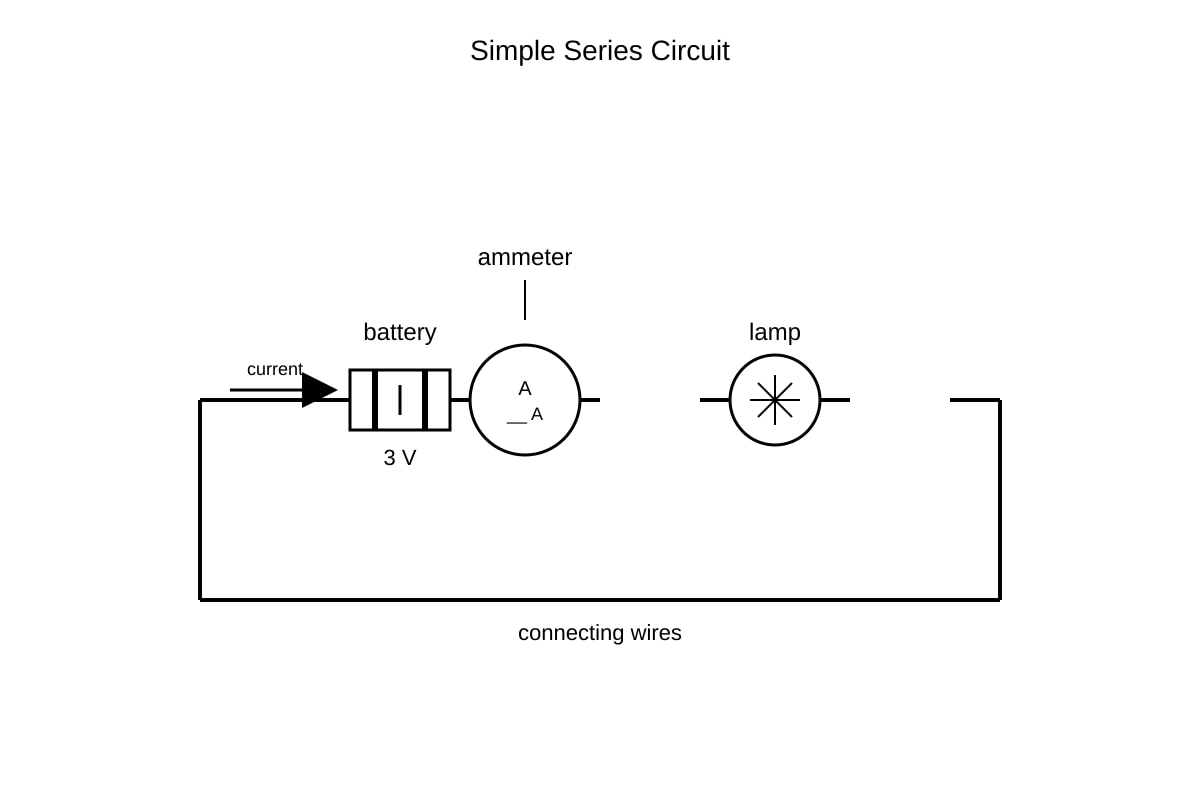
16.
Image pending generation: experimental_setup for Q16.
The diagram above shows a circuit. What does the ammeter measure? [1]
17. A student plans to test if stirring affects the time taken for sugar to dissolve in water.
List two controlled variables she should keep the same. [2]
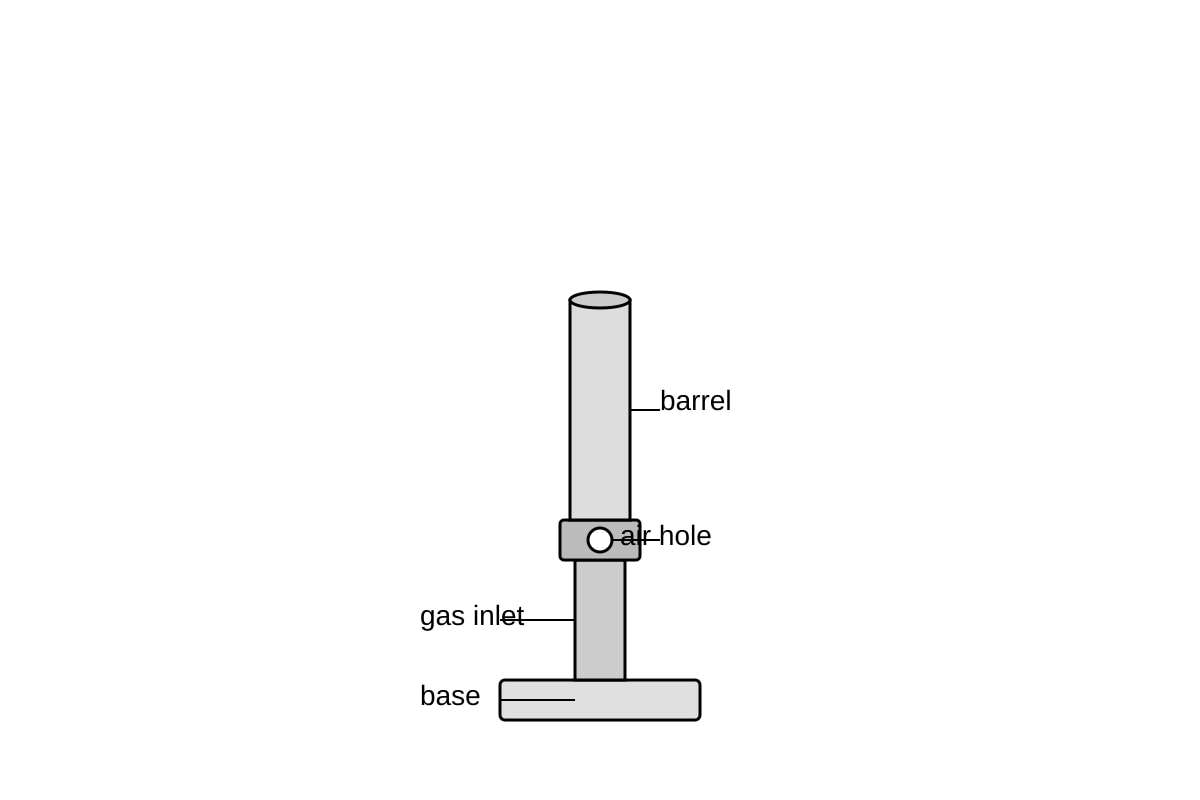
18. The figure below shows a Bunsen burner.
Image pending generation: diagram for Q18.
State one safety rule when using the Bunsen burner. [1]
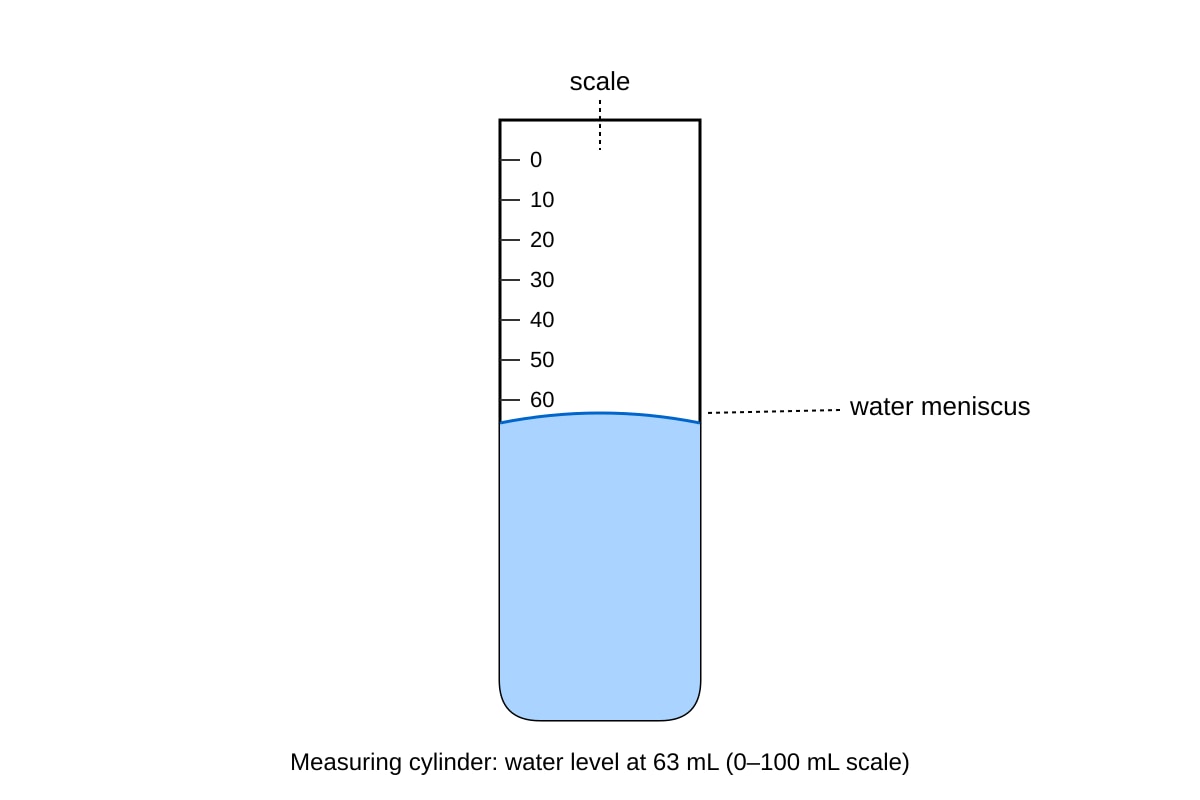
19. Read the measuring cylinder shown below.
Image pending generation: diagram for Q19.
What is the volume of water? [1]
20. A class investigated the effect of fertilizer on tomato plant height. They used 3 plants with fertilizer and 3 without, same soil, same water, same light. After 2 weeks, fertilized plants averaged 18 cm, unfertilized 11 cm.
(a) State a conclusion. [1]
(b) Why was it important to use the same soil and water? [1]
(c) Suggest one improvement to make the test fairer. [1]
Answers
Secondary 2 Science Quiz - Scientific Inquiry (Answer Key)
Total Marks: 40
Topic: Scientific Inquiry
Level: Secondary 2
Section A: Multiple-Choice
1. B [1]
Independent variable is the one changed on purpose. Controlled variables are kept same; dependent variable is measured.
2. C [1]
Reading a volume from a cylinder is a direct observation (data collected by senses/instruments).
3. B [1]
Flammable symbol = catches fire easily. Corrosive = burns skin/metal; irritant = mild redness; toxic to environment = harms nature.
4. C [1]
Electronic balance measures mass. Ruler = length; thermometer = temperature; stopwatch = time.
5. C [1]
Hypothesis = proposed explanation to be tested by experiment.
Section B: Short Structured
6. [1] Any one: To prevent accidents / To avoid injury / To protect eyes and skin from harmful chemicals.
Teaching note: Safety guidelines reduce risk of burns, poison, fire.
7. [1+1]
(a) metre (m) or cm or mm
(b) degree Celsius (°C)
Teaching note: Length instruments (ruler) give metres/cm; thermometer gives °C.
8. Irritant [1]
Teaching note: Irritant causes redness/itching; corrosive causes severe damage.
9. Controlled variables (or constants) [1]
Teaching note: Kept same so only independent variable affects dependent variable.
10. [1+1]
(a) Type of paper towel
(b) Amount of water absorbed (or volume absorbed)
Teaching note: IV = what is changed; DV = what is measured.
11. Any one: biomass, hydropower, sun, wind [1]
Teaching note: Renewable = naturally replaced.
12. So the value is meaningful and can be understood / to show what quantity is measured [1]
Teaching note: "35" alone could be cm or °C; unit removes confusion.
Section C: Data and Experiment
13. [1+1+1]
(a) Drop height (height ball dropped from)
(b) Bounce height
(c) Same ball / same surface / same measuring method
Teaching note: IV changed by student; DV results; CV kept fair.
14. [2]
Conclusion: More light leads to greater plant growth (plants grow tallest in full sunlight, shortest with no light).
Marking: 1 mark for link light→growth, 1 mark for using data trend.
Teaching note: Data shows increase in light = increase in height.
15. [1]
Mistake: omitted the unit (should be 35 °C).
Teaching note: Measurements must have units.
16. [1]
Electric current (in amperes, A).
Teaching note: Ammeter measures current flowing in circuit. Image shows series ammeter.
17. [2]
Any two: same amount of water, same temperature of water, same mass of sugar, same size beaker, same stirring speed if not testing.
Teaching note: Controlled variables keep test fair.
18. [1]
Any one: Tie hair back / wear goggles / do not leave unattended / ensure air hole adjusted safely / use in fume cupboard if needed.
Teaching note: Bunsen gives open flame; safety prevents burns/fire.
19. [1]
63 mL
Teaching note: Read bottom of meniscus at 63 mL mark.
20. [1+1+1]
(a) Fertilizer increases tomato plant height (fertilized taller).
(b) To keep those factors constant so only fertilizer affects height (fair test).
(c) Use more plants / repeat experiment / use same plant type / randomise positions.
Teaching note: CV explanation shows fair testing; improvement increases reliability.
Free quiz and exam paper access
Enter your details to view this paper
Your access is remembered on this device.