AI Generated Quiz
Secondary 2 Science Life Sciences Quiz
Free Sec 2 Science Life Sciences quiz, HY3 AI version, with questions, answers, and syllabus-aligned practice for Singapore students.
These static practice materials are generated from the site's syllabus and paper-generation workflow, with source and model context shown so students and parents can evaluate the material before use.
Questions
Secondary 2 Science Quiz - Life Sciences
Name: ___________________________
Class: ______________
Date: ______________
Score: _______ / 40
Duration: 50 minutes
Total Marks: 40
Instructions:
- This quiz has 20 questions on Life Sciences (Secondary 2 syllabus: Our Body and Health, Transport Systems, Reproduction, Ecosystems).
- Section A: 10 short-answer questions (1 mark each). Section B: 6 structured questions (2–3 marks each). Section C: 4 application questions (3 marks each).
- Write your answers clearly in the spaces provided. Show working where calculations are needed.
- This is syllabus-first practice content generated from LLM-inferred templates. It is NOT derived from past-year exam papers.
Section A: Short Answer (1 mark each)
1. What is the name of the blood vessel that carries oxygenated blood from the lungs to the heart?
2. State one function of the red blood cells.
3. Name the process by which green plants make food using sunlight.
4. What gas do humans exhale that is produced by respiration?
5. Name the male reproductive organ that produces sperm.
6. What is the term for the fertilised egg cell after fusion of sperm and egg?
7. State one way that pathogens can enter the human body.
8. Name the tiny air sacs in the lungs where gas exchange occurs.
9. What type of organism breaks down dead plants and animals in an ecosystem?
10. State the term for all the living and non-living things in a particular area interacting together.
Section B: Structured Questions (2–3 marks each)
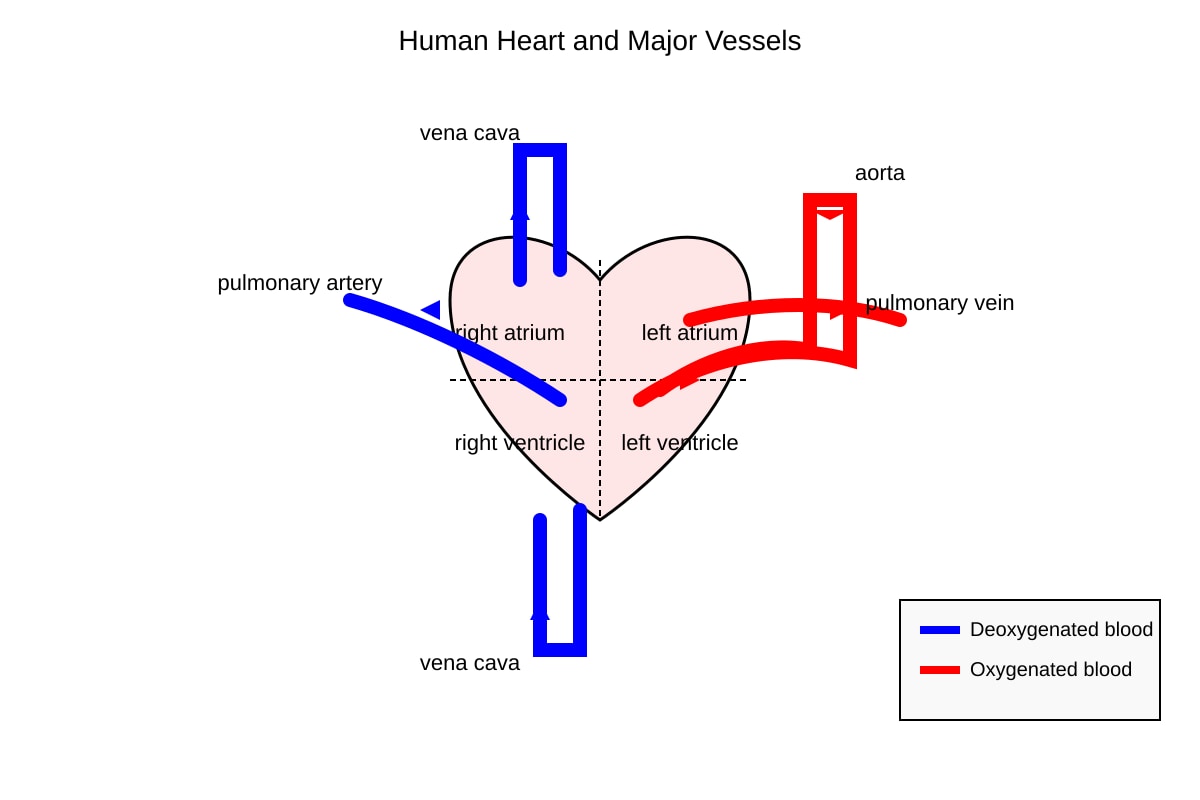
11. The diagram below shows the human circulatory system.
Image pending generation: diagram for Q11.
(a) Name the chamber of the heart that pumps blood to the lungs. [1]
(b) State one difference between the pulmonary artery and the pulmonary vein. [1]
12. A student investigated the effect of exercise on pulse rate. She counted her pulse at rest and after jogging for 2 minutes.
| Condition | Pulse rate (beats per min) |
|---|---|
| Rest | 72 |
| After jog | 120 |
(a) Calculate the increase in pulse rate after jogging. [1]
(b) Explain why pulse rate increases after exercise. [2]
13. (a) State what is meant by "asexual reproduction". [1]
(b) Give one example of an organism that reproduces asexually. [1]
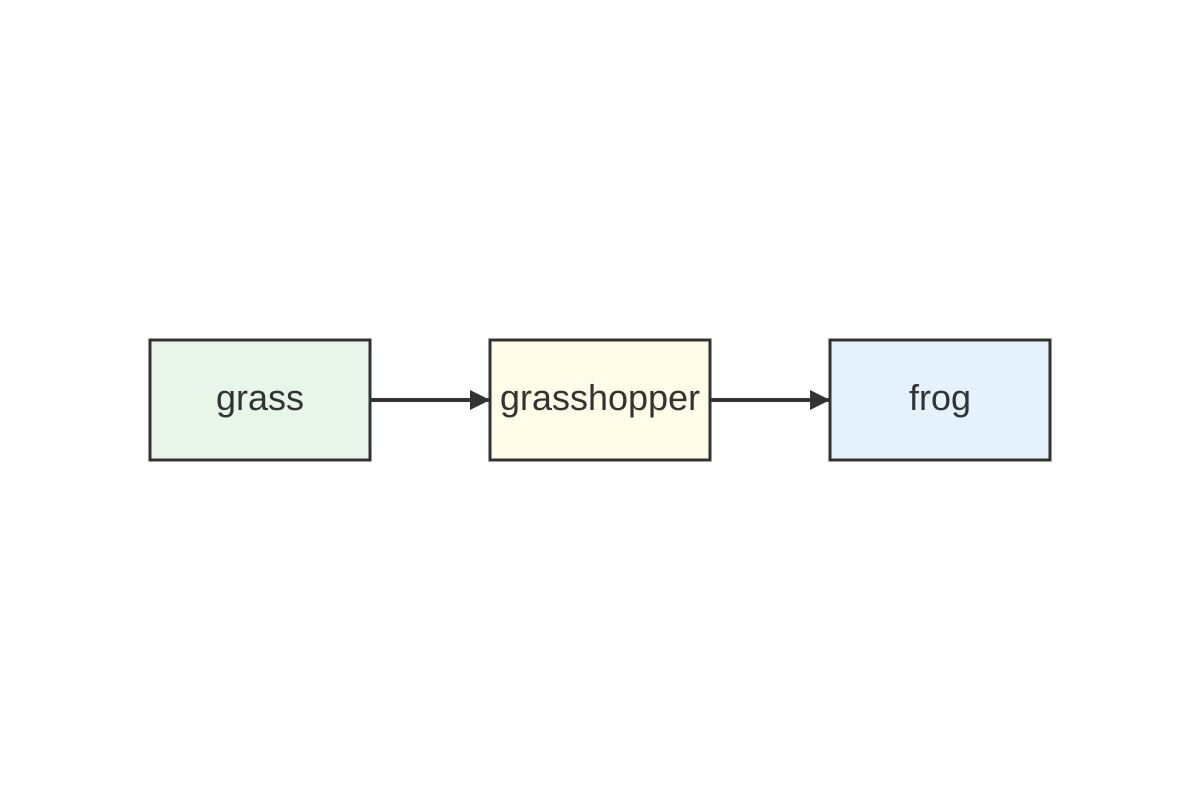
14. The figure shows a simple food chain.
Image pending generation: diagram for Q14.
(a) Name the producer in this food chain. [1]
(b) State the trophic level of the frog. [1]
15. (a) What is the function of the stomata in a leaf? [1]
(b) State one condition that causes stomata to close. [1]
16. A person has a wound infected by bacteria.
(a) Name one type of white blood cell that engulfs bacteria. [1]
(b) State how antibodies help defend the body. [1]
(c) Give one way to prevent bacterial infection of wounds. [1]
Section C: Application Questions (3 marks each)
17. A family went for a hike. The son complained of breathlessness at the top of a hill.
(a) Explain why the body needs more oxygen during hiking. [2]
(b) State one short-term change in the respiratory system to supply more oxygen. [1]
18. Farmer Tan uses chemical fertilisers that flow into a pond.
(a) Describe how this may cause algal bloom. [2]
(b) State one negative effect of algal bloom on fish. [1]
19. HIV is a virus that attacks the immune system.
(a) State one way HIV can be transmitted between people. [1]
(b) Explain why a person with HIV is more likely to get other infections. [2]
20. Compare sexual and asexual reproduction in plants by completing the table below.
| Feature | Sexual reproduction | Asexual reproduction |
|---|---|---|
| Number of parents | ______ | ______ |
| Genetic similarity to parent | ______ | ______ |
(a) Fill in the two empty cells for "Number of parents". [1]
(b) Fill in the two empty cells for "Genetic similarity". [1]
(c) State one advantage of asexual reproduction for farmers. [1]
Answers
Secondary 2 Science Quiz - Life Sciences (Answer Key)
Total Marks: 40
Topic: Life Sciences (Syllabus-first, LLM-inferred; not past-year derived)
Section A: Short Answer
1. Pulmonary vein [1]
Teaching note: The pulmonary vein is the only vein that carries oxygenated blood (from lungs to left atrium). Common mistake: confusing with aorta.
2. Carry oxygen / transport oxygen [1]
Teaching note: Red blood cells contain haemoglobin which binds oxygen.
3. Photosynthesis [1]
Teaching note: Plants use chlorophyll and sunlight to convert CO₂ + water into glucose and oxygen.
4. Carbon dioxide (CO₂) [1]
Teaching note: Respiration produces CO₂ as a waste gas exhaled by lungs.
5. Testis (or testes) [1]
Teaching note: Male gonad produces sperm and testosterone.
6. Zygote [1]
Teaching note: Fusion of sperm and ovum → zygote (diploid).
7. Through mouth / nose / cuts in skin / contaminated food [1]
Teaching note: Any one correct portal of entry.
8. Alveoli [1]
Teaching note: Singular alveolus; gas exchange surface in lungs.
9. Decomposer [1]
Teaching note: Bacteria/fungi that break down dead matter, returning nutrients.
10. Ecosystem [1]
Teaching note: Community + physical environment interacting.
Section B
11.
(a) Right ventricle [1]
Teaching: Right side pumps deoxygenated blood to lungs via pulmonary artery.
(b) Pulmonary artery carries deoxygenated blood; pulmonary vein carries oxygenated blood (or artery from heart to lungs, vein lungs to heart) [1]
12.
(a) Increase = 120 − 72 = 48 beats per min [1]
(b) During exercise, muscles need more energy → faster respiration → more oxygen needed and more CO₂ removed → heart beats faster to circulate blood quickly. [2] marking: 1 for link to energy/oxygen need, 1 for circulation link.
13.
(a) Reproduction involving one parent / offspring genetically identical to parent [1]
(b) Yeast / amoeba / banana plant / spider plant [1]
14.
(a) Grass [1]
(b) Secondary consumer (or 3rd trophic level) [1]
15.
(a) Allow gas exchange (CO₂ out, O₂ in) [1]
(b) Darkness / drought / low water [1]
16.
(a) Phagocyte / macrophage / neutrophil [1]
(b) Bind to pathogens / mark them for destruction / neutralise toxins [1]
(c) Clean wound / use antiseptic / cover with plaster [1]
Section C
17. [3]
(a) Hiking uses muscle contraction → cells respire more → need more O₂ for aerobic respiration to release energy; breathlessness as demand exceeds supply. [2: 1 for energy need, 1 for O₂ role]
(b) Faster breathing rate / deeper breaths / increased heart rate [1]
18. [3]
(a) Fertilisers contain nitrates/phosphates → nutrients enter pond → algae grow rapidly (algal bloom). [2: 1 nutrient, 1 rapid growth]
(b) Fish die from lack of oxygen / light blocked [1]
19. [3]
(a) Unprotected sex / sharing needles / mother to baby [1]
(b) HIV destroys white blood cells / immune cells → body cannot fight other pathogens → more infections. [2: 1 destruction, 1 consequence]
20. [3]
(a) Sexual: two; Asexual: one [1]
(b) Sexual: different / not identical; Asexual: identical / clone [1]
(c) Fast / many identical plants / no need for pollinator [1]
Free quiz and exam paper access
Enter your details to view this paper
Your access is remembered on this device.