Secondary 2 Science Quiz - Physical Sciences
Name: ___________________________
Class: ___________________________
Date: ___________________________
Score: ______ / 50
Duration: 45 minutes
Total Marks: 50
Instructions:
- Answer all questions in the spaces provided.
- Show all working for calculation questions.
- Use appropriate units in your final answers.
- The number of marks is given in brackets [ ] at the end of each question or part question.
Section A: Multiple Choice Questions (10 marks)
Questions 1 to 10 carry 1 mark each. Choose the correct answer and write its letter (A, B, C, or D) in the box provided.
-
Which of the following statements correctly describes the Principle of Conservation of Energy?
A. Energy can be created but not destroyed.
B. Energy can be destroyed but not created.
C. Energy cannot be created or destroyed; it can only be converted from one form to another.
D. The total amount of usable energy in a system always increases.
Answer: ☐
-
A ball of mass 0.5 kg is dropped from a height of 20 m. Assuming no air resistance, what is its kinetic energy just before it hits the ground? (Take g = 10 N/kg)
A. 10 J
B. 50 J
C. 100 J
D. 200 J
Answer: ☐
-
A 60 W light bulb is switched on for 30 minutes. How much electrical energy is consumed?
A. 1800 J
B. 108 000 J
C. 1800 kJ
D. 108 kJ
Answer: ☐
-
In a simple pendulum swinging from position A (highest point) to position B (lowest point) to position C (highest point on the other side), which energy conversion takes place from A to B?
A. Kinetic energy → Gravitational potential energy
B. Gravitational potential energy → Kinetic energy
C. Chemical energy → Kinetic energy
D. Heat energy → Kinetic energy
Answer: ☐
-
A force of 20 N is used to push a box horizontally across a floor for a distance of 5 m. The work done on the box is:
A. 4 J
B. 25 J
C. 100 J
D. 400 J
Answer: ☐
-
Which of the following is NOT a form of energy?
A. Kinetic energy
B. Power
C. Gravitational potential energy
D. Chemical energy
Answer: ☐
-
A car of mass 1000 kg accelerates from rest to 20 m/s in 10 s. The average power developed by the car's engine is:
A. 2000 W
B. 20 000 W
C. 40 000 W
D. 200 000 W
Answer: ☐
-
When a spring is compressed, what form of energy is stored in it?
A. Kinetic energy
B. Gravitational potential energy
C. Elastic potential energy
D. Chemical energy
Answer: ☐
-
A student runs up a flight of stairs of vertical height 3 m in 4 s. If the student's mass is 50 kg, what is the average power exerted against gravity? (Take g = 10 N/kg)
A. 37.5 W
B. 375 W
C. 1500 W
D. 6000 W
Answer: ☐
-
Which energy conversion occurs in a battery-powered torch when it is switched on?
A. Electrical energy → Light energy + Heat energy
B. Chemical energy → Electrical energy → Light energy + Heat energy
C. Chemical energy → Light energy + Heat energy
D. Light energy → Chemical energy
Answer: ☐
Section B: Structured Questions (24 marks)
Answer all questions in the spaces provided.
-
(a) Define work done in physics.
...................................................................................................................................................
................................................................................................................................................... [1]
(b) A crate of mass 40 kg is pulled horizontally across a rough floor by a constant force of 150 N. The frictional force acting on the crate is 50 N. The crate moves a distance of 8 m.
(i) Calculate the work done by the applied force.
...................................................................................................................................................
................................................................................................................................................... [1]
(ii) Calculate the work done against friction.
...................................................................................................................................................
................................................................................................................................................... [1]
(iii) Calculate the net work done on the crate.
...................................................................................................................................................
................................................................................................................................................... [1]
(iv) State the gain in kinetic energy of the crate.
................................................................................................................................................... [1]
-
A roller coaster car of mass 500 kg is at rest at the top of a hill 40 m high. It then rolls down the track to the bottom of the hill (point B) and up to a second hill 25 m high (point C). Assume no energy losses due to friction or air resistance. (Take g = 10 N/kg)
(a) Calculate the gravitational potential energy of the car at the top of the first hill.
...................................................................................................................................................
................................................................................................................................................... [1]
(b) State the total mechanical energy of the car at point B.
................................................................................................................................................... [1]
(c) Calculate the kinetic energy of the car at point B.
...................................................................................................................................................
................................................................................................................................................... [1]
(d) Calculate the speed of the car at point B.
...................................................................................................................................................
................................................................................................................................................... [2]
(e) Calculate the gravitational potential energy of the car at point C.
................................................................................................................................................... [1]
(f) Calculate the kinetic energy of the car at point C.
................................................................................................................................................... [1]
-
(a) Define power and state its SI unit.
...................................................................................................................................................
................................................................................................................................................... [2]
(b) An electric motor lifts a load of mass 200 kg vertically through a height of 15 m in 20 s. (Take g = 10 N/kg)
(i) Calculate the work done by the motor.
...................................................................................................................................................
................................................................................................................................................... [1]
(ii) Calculate the output power of the motor.
...................................................................................................................................................
................................................................................................................................................... [1]
(iii) If the electrical power input to the motor is 2000 W, calculate the efficiency of the motor.
...................................................................................................................................................
................................................................................................................................................... [2]
-
The diagram below shows a simple pendulum released from rest at position A, which is 0.3 m vertically above the lowest position B. The mass of the pendulum bob is 0.2 kg. (Take g = 10 N/kg)
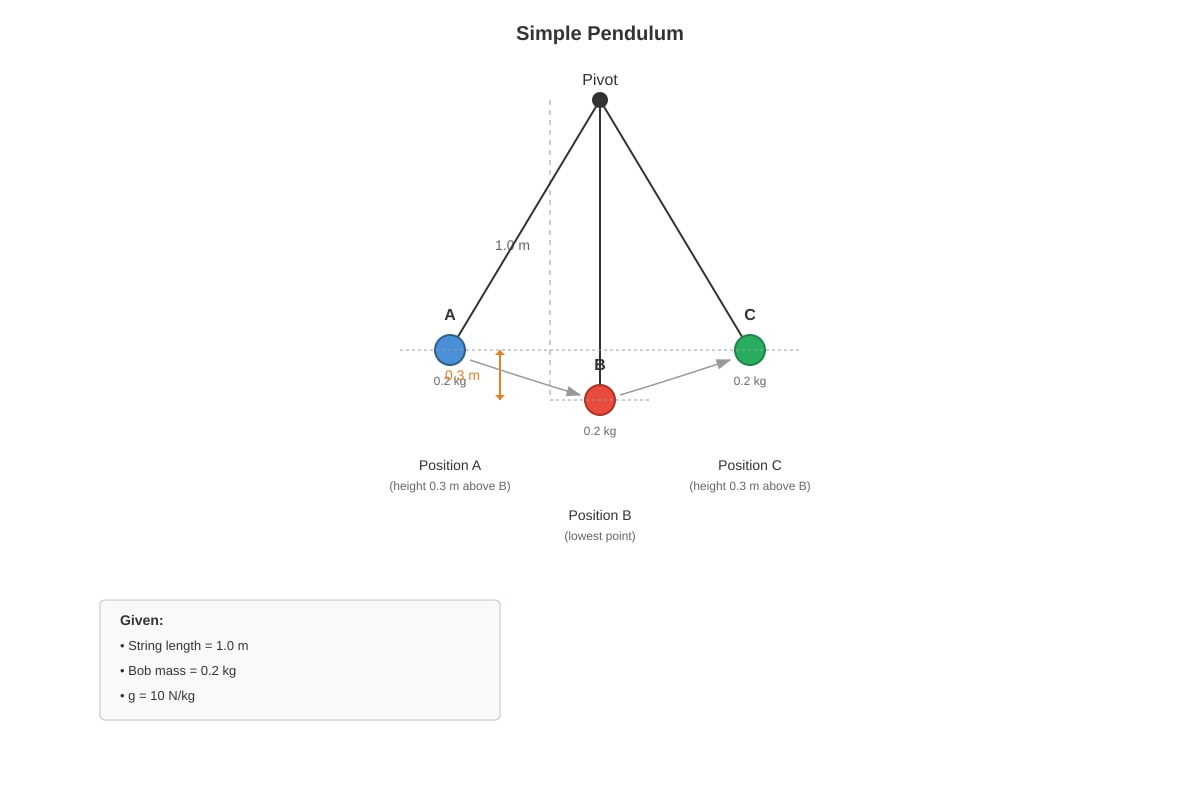
Generated diagram for Q14.
(a) Calculate the gravitational potential energy of the bob at position A relative to position B.
...................................................................................................................................................
................................................................................................................................................... [1]

(b) State the kinetic energy of the bob at position B.
................................................................................................................................................... [1]

(c) Calculate the speed of the bob at position B.
...................................................................................................................................................
................................................................................................................................................... [2]

(d) In reality, the bob does not rise to the same height at position C. Explain why, in terms of energy conversion.
...................................................................................................................................................
...................................................................................................................................................
................................................................................................................................................... [2]
Section C: Longer Structured and Data-Based Questions (16 marks)
Answer all questions in the spaces provided.
- A student investigates the relationship between the height of a ramp and the speed of a toy car at the bottom of the ramp. The car is released from rest at the top of the ramp each time. The following data is collected:
| Height of ramp / m | Speed of car at bottom / m/s |
|---|
| 0.10 | 1.2 |
| 0.20 | 1.8 |
| 0.30 | 2.2 |
| 0.40 | 2.6 |
| 0.50 | 2.9 |
(a) Plot a graph of speed (y-axis) against height (x-axis) on the grid below.
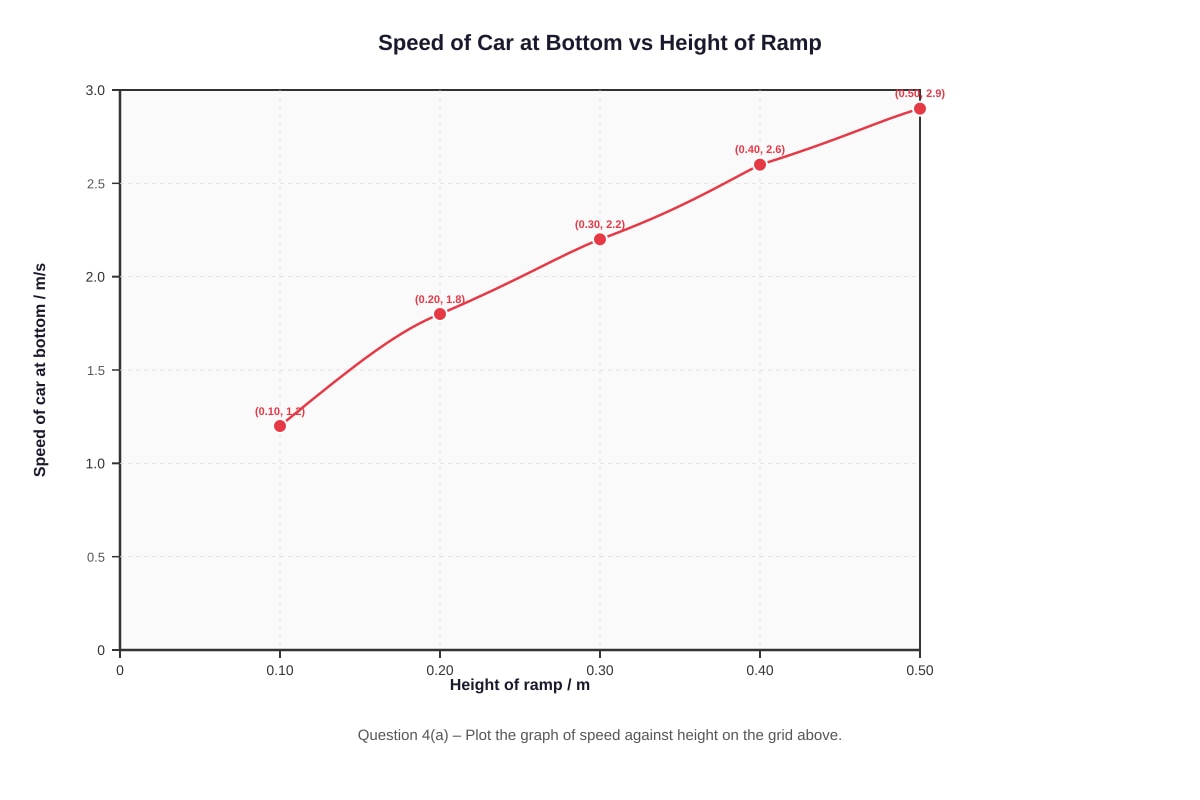
Generated graph for Q15.
[2]

(b) Using the Principle of Conservation of Energy, explain why the speed increases with height.
...................................................................................................................................................
...................................................................................................................................................
................................................................................................................................................... [2]

(c) The student calculates the theoretical speed at the bottom for a height of 0.30 m using $v = \sqrt{2gh}$ (where g = 10 N/kg). The theoretical value is 2.45 m/s, but the experimental value is 2.2 m/s. Suggest one reason for this difference.
...................................................................................................................................................
................................................................................................................................................... [1]

(d) If the mass of the car is 0.05 kg, calculate the kinetic energy of the car at the bottom of the ramp when the height is 0.40 m.
...................................................................................................................................................
................................................................................................................................................... [2]
16. A hydroelectric power station uses falling water to generate electricity. Water falls through a vertical height of 80 m at a rate of 500 kg/s. The electrical power output of the station is 300 kW. (Take g = 10 N/kg)
(a) Calculate the gravitational potential energy lost by the water per second.
...................................................................................................................................................
................................................................................................................................................... [2]

(b) Calculate the efficiency of the power station.
...................................................................................................................................................
................................................................................................................................................... [2]

(c) State two forms of energy that the "lost" energy is converted into.
...................................................................................................................................................
................................................................................................................................................... [2]
17. The diagram below shows a roller coaster loop-the-loop. The car starts from rest at point P, which is at a height of 50 m above the ground. The loop has a radius of 10 m. Assume no friction. (Take g = 10 N/kg)

Generated diagram for Q17.
(a) Calculate the speed of the car at point Q (bottom of the loop).
...................................................................................................................................................
................................................................................................................................................... [2]

(b) Calculate the speed of the car at point R (top of the loop).
...................................................................................................................................................
................................................................................................................................................... [2]

(c) Calculate the centripetal acceleration of the car at point R.
...................................................................................................................................................
................................................................................................................................................... [2]

(d) Explain whether the car will maintain contact with the track at point R.
...................................................................................................................................................
...................................................................................................................................................
................................................................................................................................................... [2]
18. A 1.5 kW electric kettle is used to heat 1.0 kg of water from 25°C to 100°C. The specific heat capacity of water is 4200 J/(kg·°C). The kettle takes 210 seconds to heat the water to boiling point.
(a) Calculate the thermal energy gained by the water.
...................................................................................................................................................
................................................................................................................................................... [2]

(b) Calculate the electrical energy supplied by the kettle.
...................................................................................................................................................
................................................................................................................................................... [2]

(c) Calculate the efficiency of the kettle.
...................................................................................................................................................
................................................................................................................................................... [2]

(d) Suggest one reason why the efficiency is less than 100%.
................................................................................................................................................... [1]
19. A spring-loaded toy gun fires a small ball of mass 0.02 kg vertically upwards. The spring is compressed by 0.05 m and has a spring constant of 400 N/m. Assume no air resistance and that all elastic potential energy is converted to gravitational potential energy at the maximum height. (Take g = 10 N/kg)
(a) Calculate the elastic potential energy stored in the compressed spring.
...................................................................................................................................................
................................................................................................................................................... [2]

(b) Calculate the maximum height reached by the ball above the point of release.
...................................................................................................................................................
................................................................................................................................................... [2]

(c) Calculate the speed of the ball as it leaves the gun.
...................................................................................................................................................
................................................................................................................................................... [2]
20. The table below shows the power ratings and typical daily usage of four electrical appliances in a household.
| Appliance | Power Rating / W | Daily Usage / hours |
|---|
| Refrigerator | 150 | 24 |
| Air Conditioner | 1200 | 6 |
| Washing Machine | 500 | 1 |
| LED TV | 80 | 4 |
(a) Calculate the total energy consumed by all four appliances in one day, in kWh.
...................................................................................................................................................
................................................................................................................................................... [2]

(b) If electricity costs $0.28 per kWh, calculate the cost of running these appliances for 30 days.
...................................................................................................................................................
................................................................................................................................................... [2]

(c) The household decides to replace the air conditioner with a more efficient model rated at 900 W but used for the same duration. Calculate the percentage reduction in the daily energy consumption of the air conditioner.
...................................................................................................................................................
................................................................................................................................................... [2]

(d) State one way, other than replacing appliances, to reduce household electricity consumption.
................................................................................................................................................... [1]
End of Quiz