From Real Exams Quiz
Secondary 2 Science Life Sciences Quiz
Free Sec 2 Science Life Sciences quiz, HY3 Exam version, with questions, answers, and syllabus-aligned practice for Singapore students.
These static practice materials are generated from the site's syllabus and paper-generation workflow, with source and model context shown so students and parents can evaluate the material before use.
Questions
Free quiz and exam paper access
Enter your details to view this paper
Your access is remembered on this device.
Answers
Secondary 2 Science Quiz - Life Sciences (Answer Key)
Total Marks: 40
Topic: Life Sciences
Section A: Multiple Choice
1. B [1]
Teaching note: The circulatory system (heart, blood, vessels) transports oxygen from lungs and nutrients from digestive system to all body cells, and carries waste like carbon dioxide away. A is digestion, C is partly liver but not main, D is nervous system.
2. B [1]
Teaching note: Xylem are tube-like tissues in plants that carry water and minerals upward from roots to leaves. Phloem carries food (sugar) made in leaves to other parts.
3. C [1]
Teaching note: Humans take in air with oxygen and breathe out air with more carbon dioxide because cells release CO₂ as a waste product of respiration.
4. D [1]
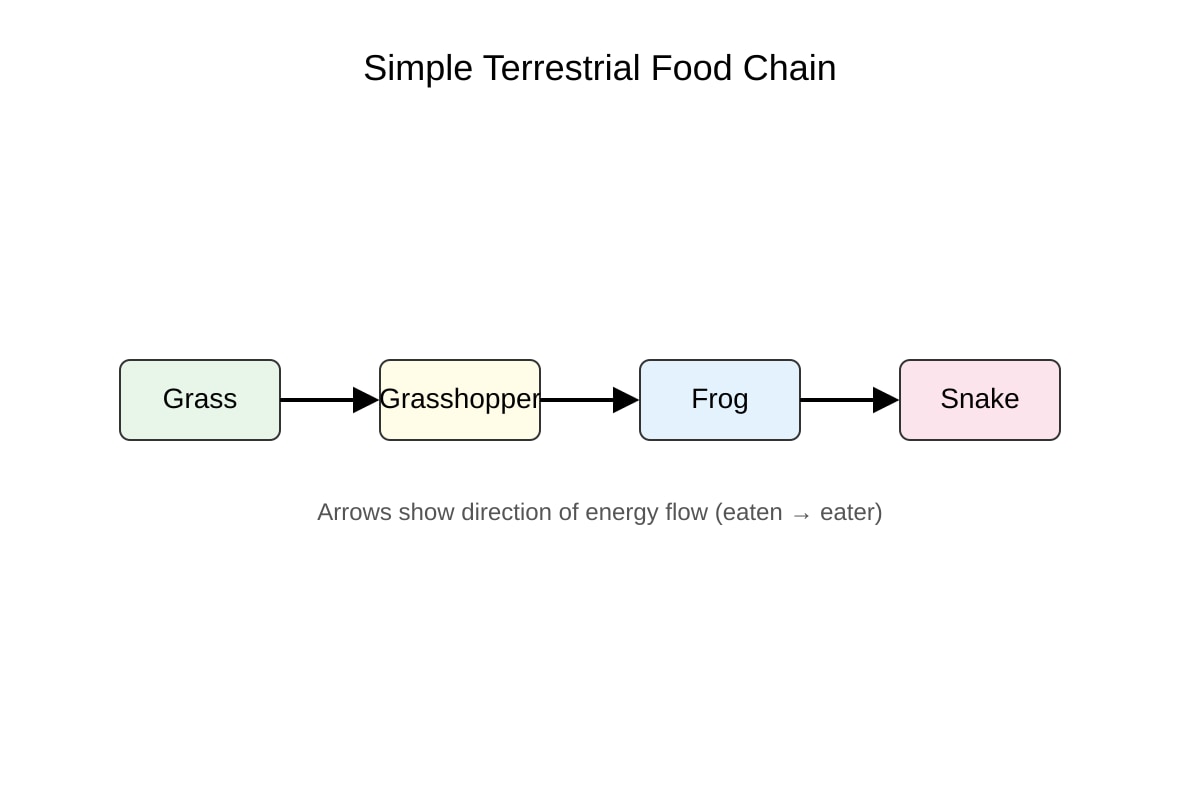
Teaching note: Producer is the organism that makes its own food (photosynthesis). In the diagram, Grass is first and has arrows coming from it, so it is the producer.
5. B [1]
Teaching note: Yeast is a fungus used in baking to help dough rise (fermentation). The others are harmful pathogens.
Section B: Short Answer
6. [1] Example acceptable answer: Arteries carry blood away from the heart; veins carry blood towards the heart.
Marking: 1 mark for any correct single difference (wall thickness, direction, presence of valves).
7. [1] Photosynthesis.
Teaching note: Plants use sunlight, carbon dioxide, and water to make glucose (food) and oxygen.
8. [2] Plant cell. Reason: presence of cell wall and chloroplasts (animal cells lack both).
Marking: 1 mark for "plant", 1 mark for correct reason citing both features.
9. [1] Example: Through coughing/sneezing droplets, direct contact, contaminated food/water.
Marking: 1 mark for any valid transmission route.
10. [2] After exercise, muscles need more energy and respire faster, producing more CO₂. Breathing rate increases to take in more oxygen and remove CO₂.
Marking: 1 mark for link to energy/respiration need, 1 mark for oxygen in / CO₂ out explanation.
Section C: Structured Response
11. (a) [1] An ecosystem is a community of living organisms interacting with their non-living environment.
(b) [2] Any two: sunlight, water, soil, air, rocks, temperature. (1 mark each)
12. [1] Small intestine.
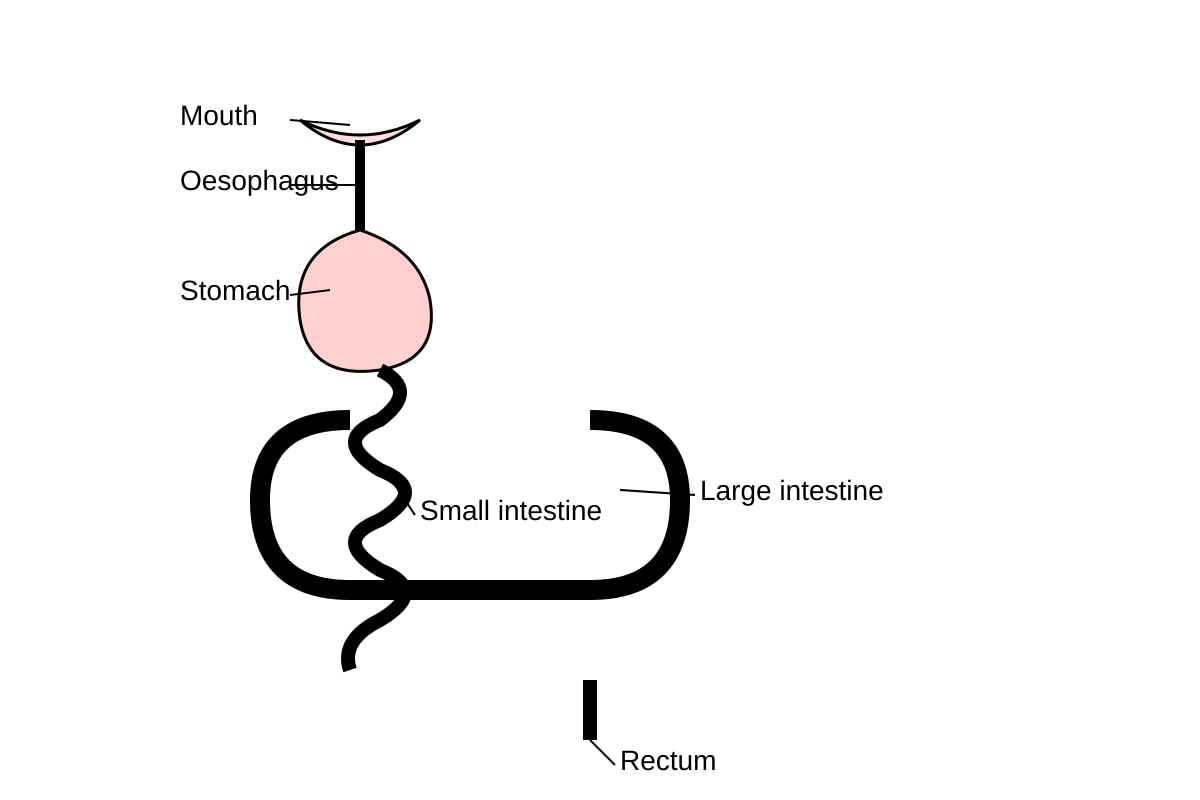
Teaching note: The small intestine has villi that absorb digested nutrients into the blood.
13. [2] More space for haemoglobin to carry oxygen.
Marking: 1 mark for "more room for haemoglobin/oxygen", 1 mark for linking to oxygen transport.
14. (a) [1] Reproduction is the process by which organisms produce new individuals of the same kind.
(b) [2] Sexual reproduction involves two parents and fusion of gametes; asexual involves one parent and no gametes. (Or: sexual gives variation, asexual does not.) 1 mark each point.
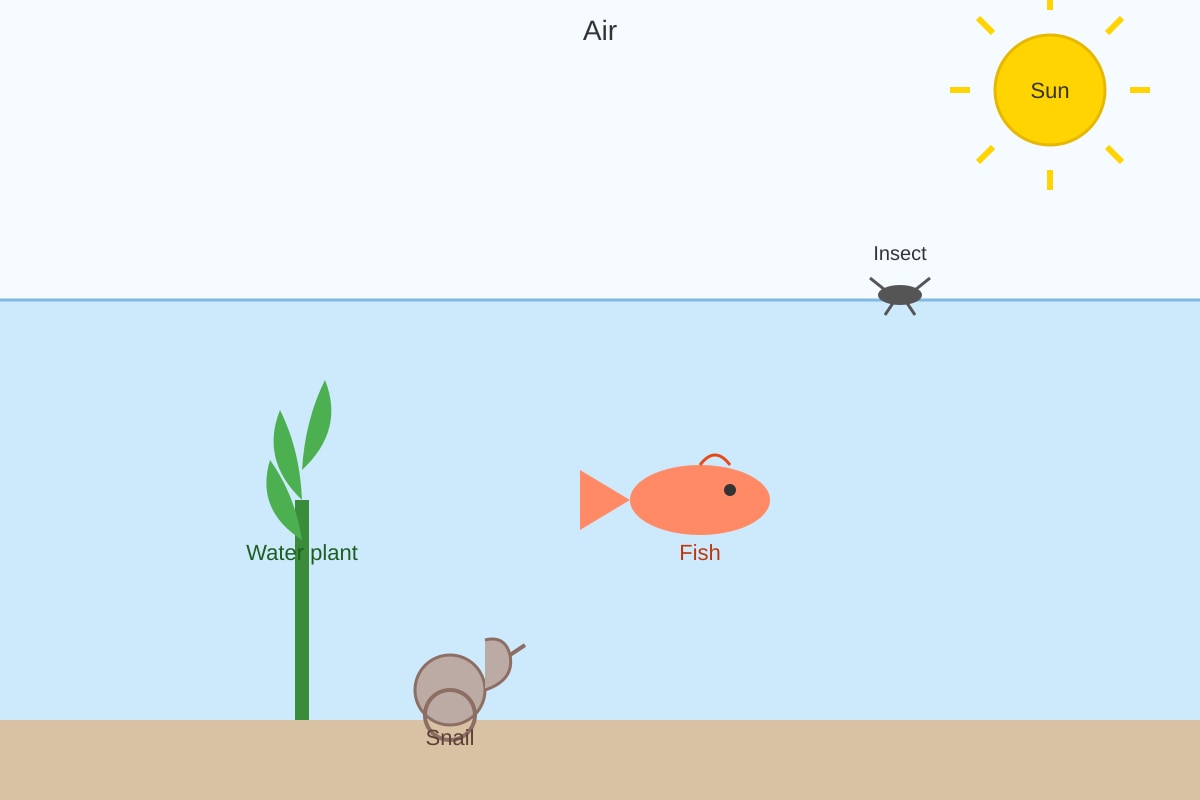
15. [3] Living: water plant, fish (or snail). Non-living: sun (or air, water). 1 mark each.
16. [2] Xylem transports water and minerals upward from roots; phloem transports food (sugar) from leaves to other parts. 1 mark each.
17. [3] Rabbit population may decrease. Reason: fox is a new predator that eats rabbits, increasing deaths. 1 mark prediction, 2 marks explanation (predator-prey, population effect).
18. (a) [1] Transpiration is the loss of water vapour from plant leaves (through stomata).
(b) [2] It pulls water up from roots (xylem), helps cool the plant, and transports minerals. 1 mark for pull water up, 1 mark for cooling or mineral transport.
19. [3] Photosynthesis occurs only in parts exposed to light (blue-black = starch made). Covered part did not make starch. Conclusion: light is needed for photosynthesis. 1 mark light needed, 1 mark exposed made starch, 1 mark covered did not.
20. [3] Skin acts as a physical barrier blocking pathogens. White blood cells engulf pathogens and produce antibodies. 1 mark skin barrier, 2 marks white blood cells functions (engulf, antibodies).