Secondary 2 Science Quiz - Chemistry Materials
Name: ___________________________
Class: ________
Date: ____________
Score: _______ / 40
Duration: 45 minutes
Total Marks: 40
Instructions:
- Answer all 20 questions.
- Section A: Multiple Choice (1 mark each)
- Section B: Short Answer (1–2 marks each)
- Section C: Structured Response (2–3 marks each)
- Write your answers clearly in the spaces provided.
- Use appropriate units where calculations are involved.
Section A: Multiple Choice (Questions 1–5)
1. Which of the following is a mixture?
A. Sodium chloride
B. Distilled water
C. Sea water
D. Oxygen gas
2. A solution turns red litmus paper blue. The solution is most likely:
A. Acidic
B. Neutral
C. Alkaline
D. A salt
3. Which method is best to separate sand from water?
A. Evaporation
B. Filtration
C. Distillation
D. Chromatography
4. Which of the following is a property of an alkali?
A. pH less than 7
B. Turns blue litmus red
C. pH greater than 7
D. Has no effect on indicators
5. The hazard symbol shown below represents a substance that is:
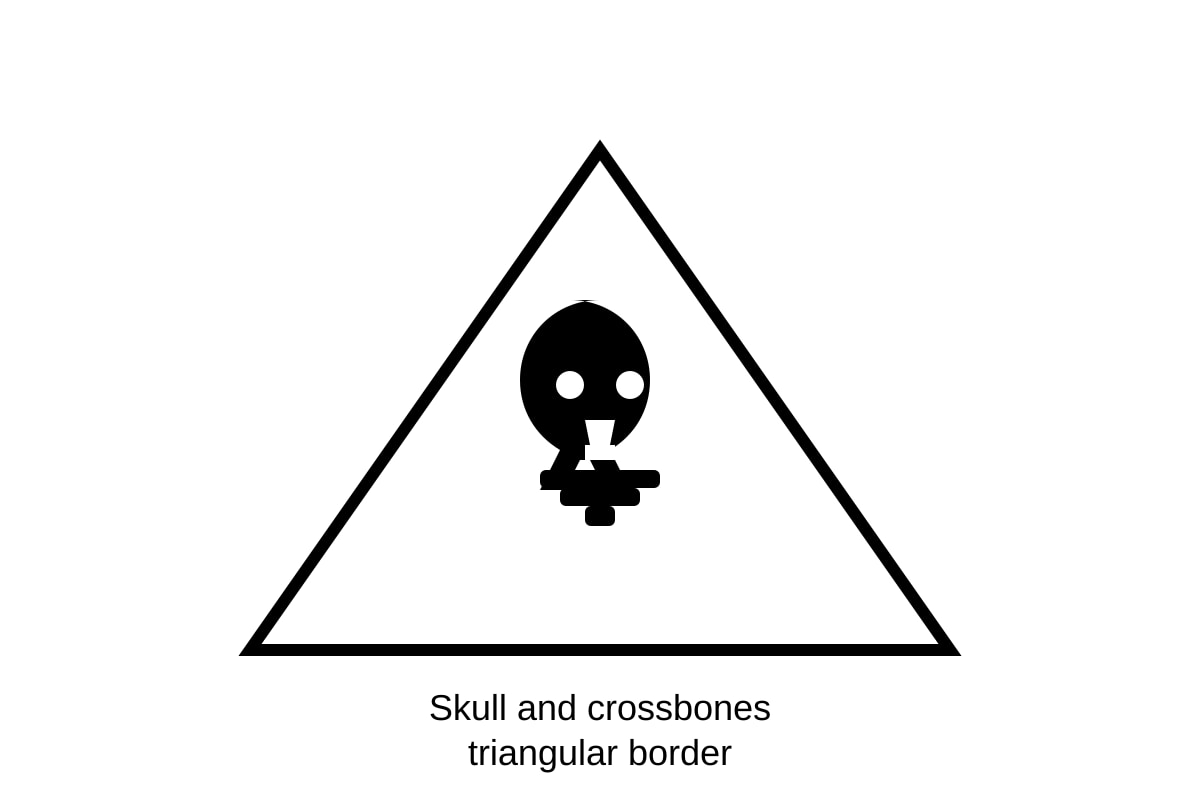
Generated diagram for Q5.
A. Corrosive
B. Flammable
C. Toxic
D. Irritant
Section B: Short Answer (Questions 6–10)
6. State one difference between an element and a compound. [1]
7. A student adds universal indicator to a solution and it turns green. What is the pH of the solution? [1]
8. Name a renewable source of energy used in Singapore. [1]
9. Write the chemical formula for water. [1]
10. Give one example of a flammable material commonly found at home. [1]
Section C: Structured Response (Questions 11–20)
11. (a) Define a mixture. [1]
(b) Give two examples of mixtures. [2]
12. A solution has a pH of 3.
(a) Is it acidic, neutral, or alkaline? [1]
(b) What colour would it turn blue litmus paper? [1]
13. Describe how you would separate a mixture of salt and water using evaporation. [2]
14. The diagram shows a filtration setup.
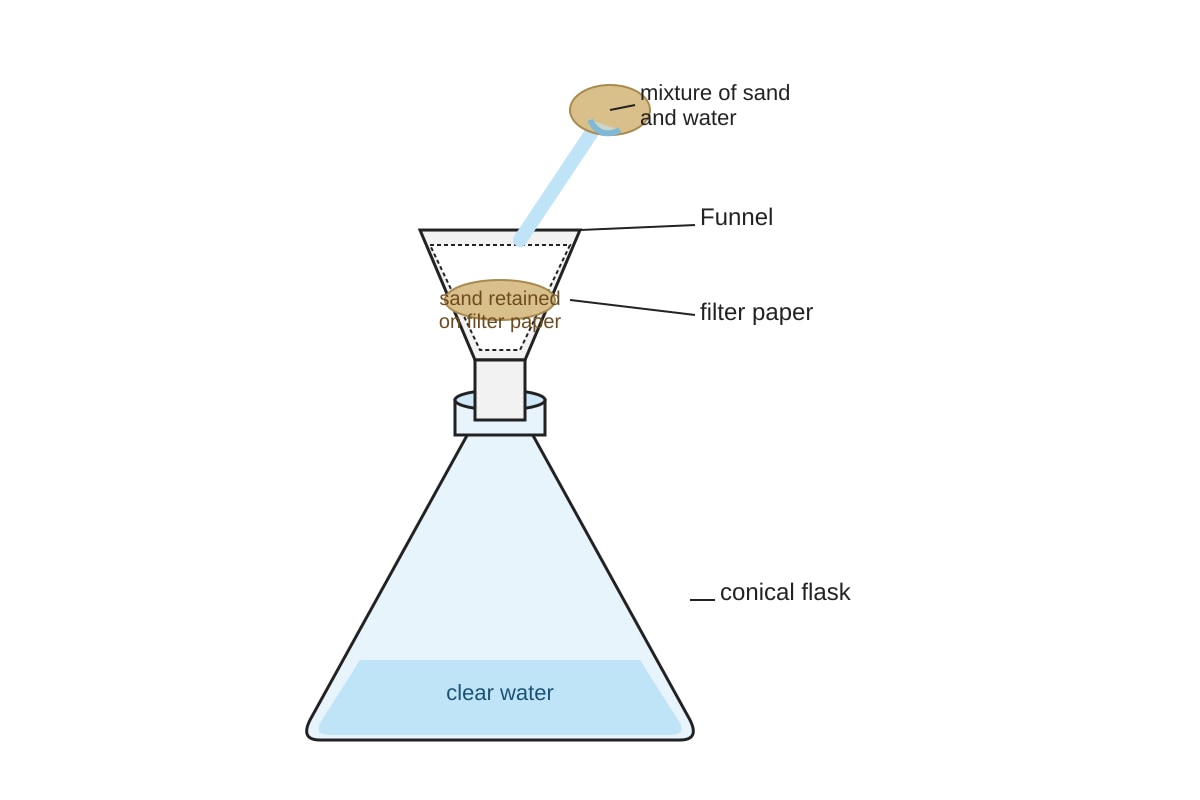
Generated experimental_setup for Q14.
Explain why sand is separated from water in this setup. [2]
15. (a) What is the function of a thermostat? [1]
(b) Name one everyday device that uses a thermostat. [1]
16. A block of wood has a mass of 20 g and a volume of 25 cm³. Calculate its density. [2]
17. (a) State the principle of conservation of energy. [2]
(b) Give one example of energy conversion in a household appliance. [1]
18. A girl climbs 3 flights of stairs, each 4 m high. Her mass is 40 kg. Calculate the gain in gravitational potential energy. (Use g = 10 N/kg) [2]
19. Identify the hazard symbol described: "A triangle with a flame over a line". What does it mean? [2]
20. A food sample is tested with universal indicator and shows pH 8.
(a) Is it safe to say it contains no acid? Explain. [2]
(b) Suggest a further test to confirm its nature. [1]
</stage3_quiz_answers_md>
Secondary 2 Science Quiz - Chemistry Materials (Answer Key)
Total Marks: 40
Topic: Chemistry Materials
Section A: Multiple Choice
1. C [1]
Sea water is a mixture of water, salts, and other dissolved substances. Sodium chloride, distilled water, and oxygen are pure substances (compound, compound, element respectively).
Teaching note: A mixture contains two or more substances not chemically joined.
2. C [1]
Alkaline solutions turn red litmus blue. Acidic turns blue litmus red; neutral has no effect.
Common mistake: Confusing litmus colour changes.
3. B [1]
Filtration separates insoluble solid (sand) from liquid (water).
Teaching note: Sand does not dissolve in water, so filter paper traps it.
4. C [1]
Alkalis have pH > 7. They turn red litmus blue and do not turn blue litmus red.
Marking: 1 mark for pH > 7.
5. C [1]
The skull-and-crossbones symbol indicates toxic.
Visual check: Image shows skull in triangle = toxic hazard.
Section B: Short Answer
6. [1]
An element is made of only one type of atom; a compound is made of two or more types of atoms chemically bonded.
Accept: "Element cannot be broken down by chemical means; compound can."
7. [1]
pH 7 (green on universal indicator = neutral).
Teaching note: Universal indicator colours: red pH1–3, green pH7, purple pH12–14.
8. [1]
Solar energy (or wind, biomass, hydropower).
Context: Singapore uses solar panels.
9. [1]
H2O
Notation: Subscript 2 for two hydrogen atoms.
10. [1]
Cooking oil, petrol, or paper (any flammable home item).
Marking: Must be flammable, not just combustible.
Section C: Structured Response
11. (a) [1] A mixture is two or more substances mixed together but not chemically combined.
(b) [2] Examples: air, seawater, soil, alloy (any two, 1 mark each).
Teaching note: Substances keep their own properties in a mixture.
12. (a) [1] Acidic (pH 3 < 7).
(b) [1] Red (blue litmus turns red in acid).
Marking: Both correct = 2 marks.
13. [2]
- Pour salt solution into an evaporating dish.
- Heat gently until water evaporates, leaving salt crystals.
Marking: 1 mark for method, 1 mark for outcome.
14. [2]
Sand particles are too large to pass through filter paper pores; water passes as filtrate.
Visual: Image shows sand on paper, water below.
Marking: 1 mark size exclusion, 1 mark dissolved/liquid passes.
15. (a) [1] Maintains a constant temperature.
(b) [1] Iron, oven, fridge (any one).
Teaching note: Bimetallic strip expands/contracts to switch off/on.
16. [2]
Density = mass ÷ volume = 20 g÷25 cm3=0.8 g/cm3.
Working: Show formula, substitution, unit.
Common mistake: Inverting ratio (25/20).
17. (a) [2] Energy cannot be created or destroyed; it can be converted from one form to another (or total energy constant).
(b) [1] Example: Fan – electrical to kinetic; heater – electrical to heat.
Marking: 2 points for (a), 1 for example.
18. [2]
Height = 3×4=12 m.
ΔPE=mgh=40×10×12=4800 J.
Working line by line:
- Total height = flights × height/flight
- PE gain = mgh
- Substitute: 40 kg × 10 N/kg × 12 m = 4800 J
Unit: Joules required.
19. [2]
Flammable symbol (flame over line). Means substance catches fire easily.
Marking: 1 mark identify, 1 mark meaning.
20. (a) [2] No; pH 8 is alkaline but may still contain small amount of acid neutralised or be buffer. pH >7 means overall alkaline.
(b) [1] Test with red litmus (stays blue) or add acid to see reaction.
Teaching note: pH scale alone does not prove zero acid.
</stage3_quiz_answers_md>
<stage3_quiz_md>
Secondary 2 Science Quiz - Chemistry Materials
Name: ___________________________
Class: ________
Date: ____________
Score: _______ / 40
Duration: 45 minutes
Total Marks: 40
Instructions:
- Answer all 20 questions.
- Section A: Multiple Choice (1 mark each)
- Section B: Short Answer (1–2 marks each)
- Section C: Structured Response (2–3 marks each)
- Write your answers clearly in the spaces provided.
- Use appropriate units where calculations are involved.
Section A: Multiple Choice (Questions 1–5)
1. Which of the following is a mixture?
A. Sodium chloride
B. Distilled water
C. Sea water
D. Oxygen gas
2. A solution turns red litmus paper blue. The solution is most likely:
A. Acidic
B. Neutral
C. Alkaline
D. A salt
3. Which method is best to separate sand from water?
A. Evaporation
B. Filtration
C. Distillation
D. Chromatography
4. Which of the following is a property of an alkali?
A. pH less than 7
B. Turns blue litmus red
C. pH greater than 7
D. Has no effect on indicators
5. The hazard symbol shown below represents a substance that is:
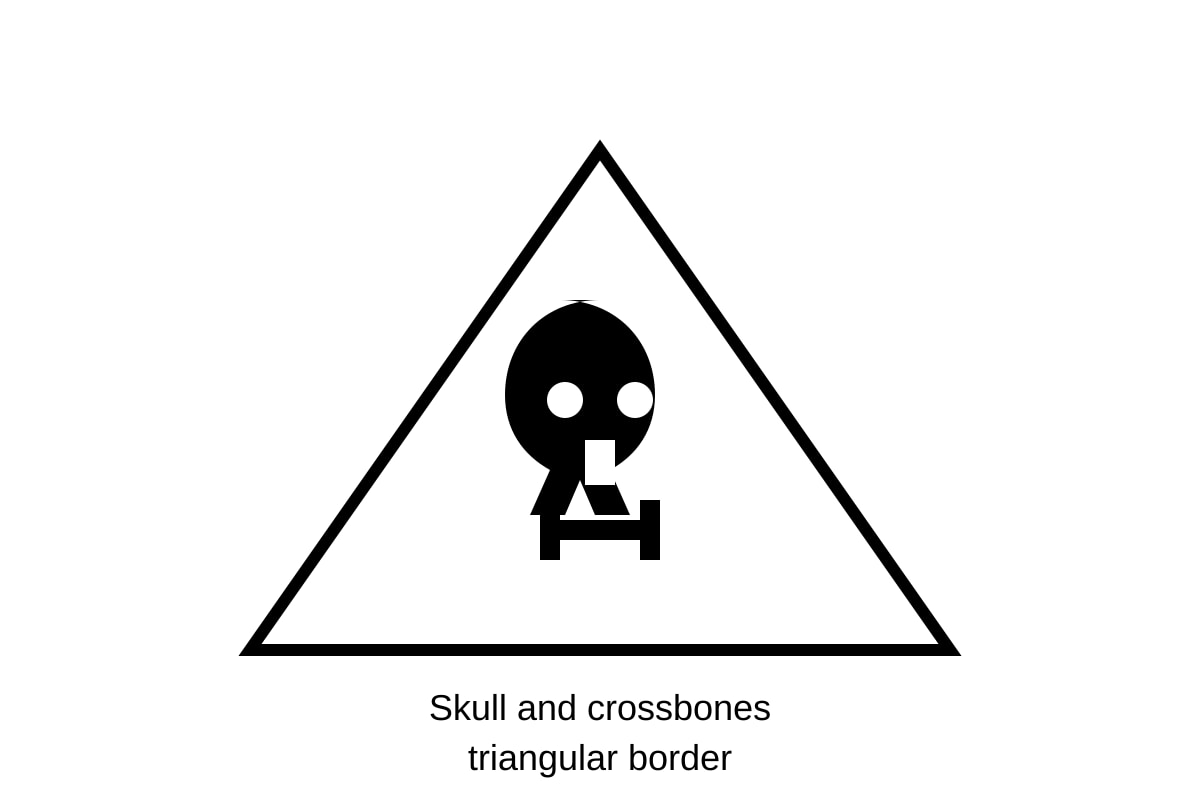
Generated diagram for Q5.
A. Corrosive
B. Flammable
C. Toxic
D. Irritant
Section B: Short Answer (Questions 6–10)
6. State one difference between an element and a compound. [1]
7. A student adds universal indicator to a solution and it turns green. What is the pH of the solution? [1]
8. Name a renewable source of energy used in Singapore. [1]
9. Write the chemical formula for water. [1]
10. Give one example of a flammable material commonly found at home. [1]
Section C: Structured Response (Questions 11–20)
11. (a) Define a mixture. [1]
(b) Give two examples of mixtures. [2]
12. A solution has a pH of 3.
(a) Is it acidic, neutral, or alkaline? [1]
(b) What colour would it turn blue litmus paper? [1]
13. Describe how you would separate a mixture of salt and water using evaporation. [2]
14. The diagram shows a filtration setup.
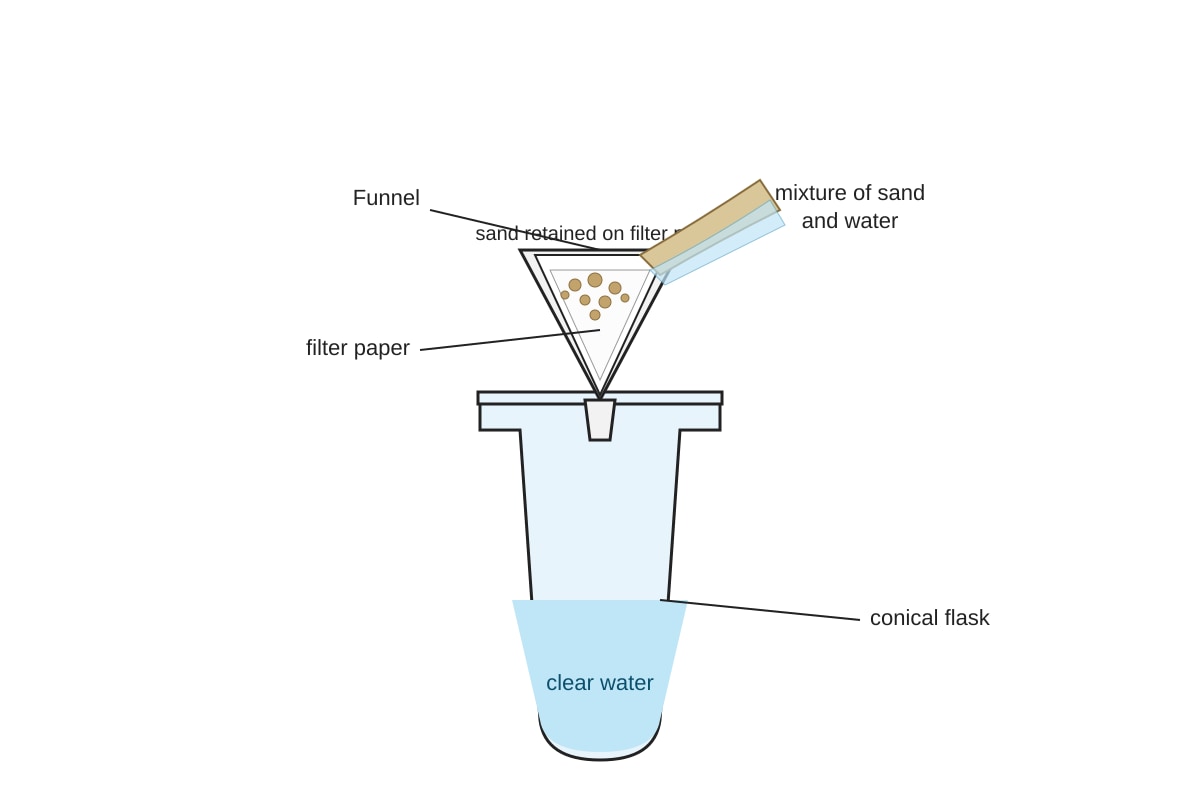
Generated experimental_setup for Q14.
Explain why sand is separated from water in this setup. [2]
15. (a) What is the function of a thermostat? [1]
(b) Name one everyday device that uses a thermostat. [1]
16. A block of wood has a mass of 20 g and a volume of 25 cm³. Calculate its density. [2]
17. (a) State the principle of conservation of energy. [2]
(b) Give one example of energy conversion in a household appliance. [1]
18. A girl climbs 3 flights of stairs, each 4 m high. Her mass is 40 kg. Calculate the gain in gravitational potential energy. (Use g = 10 N/kg) [2]
19. Identify the hazard symbol described: "A triangle with a flame over a line". What does it mean? [2]
20. A food sample is tested with universal indicator and shows pH 8.
(a) Is it safe to say it contains no acid? Explain. [2]
(b) Suggest a further test to confirm its nature. [1]