AI Generated Exam Paper
Secondary 2 Science Practice Paper 3
Free Sec 2 Science Practice Paper 3, HY3 AI version, with questions, answers, and syllabus-aligned practice for Singapore students.
These static practice materials are generated from the site's syllabus and paper-generation workflow, with source and model context shown so students and parents can evaluate the material before use.
Questions
Free quiz and exam paper access
Enter your details to view this paper
Your access is remembered on this device.
Answers
TuitionGoWhere Practice Paper Answer Key — Science Secondary 2 (Version 3)
Total Marks: 40
Section A: Forces and Motion (Q1–5) — 10 marks
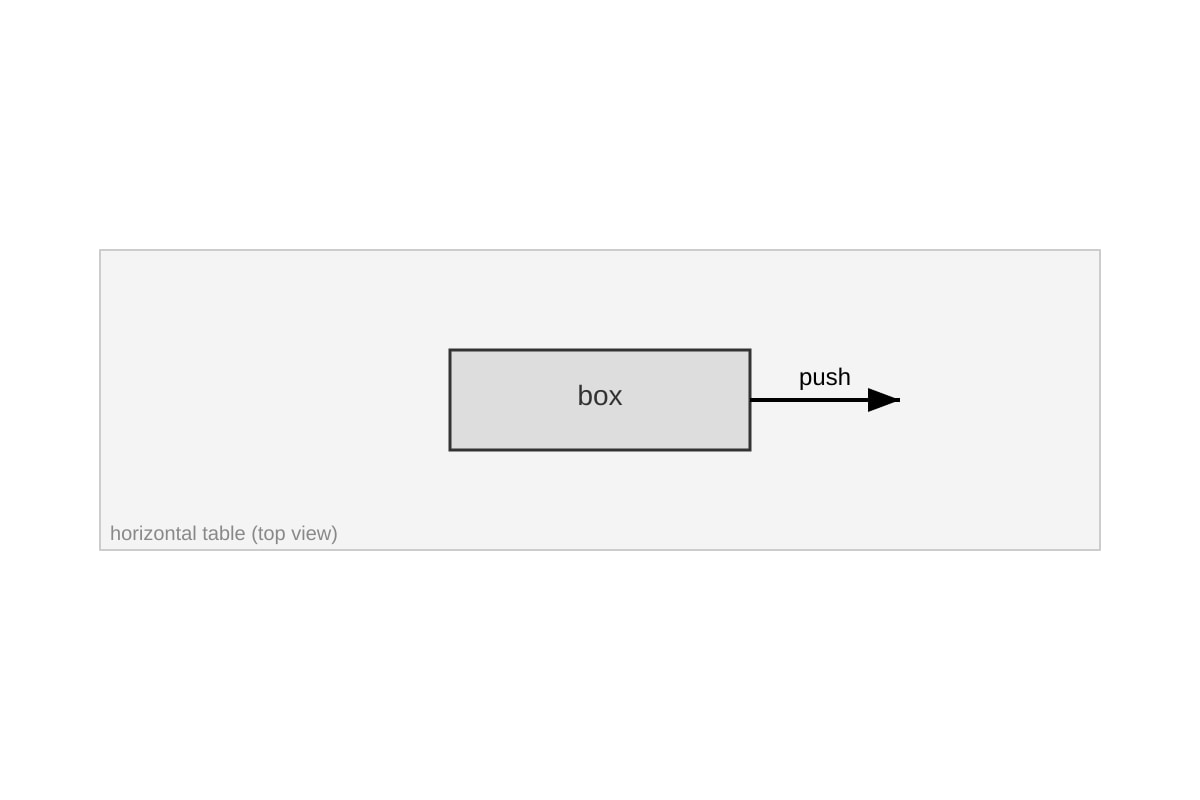
Q1 [1]
Answer: Arrow drawn on the box pointing left (opposite to push direction), labelled "friction".
Teaching note: Friction opposes motion. Since push is right, friction acts left on the box.
Common mistake: Drawing friction in same direction as push.
Q2 [1]
Answer: Newton (N).
Teaching note: The SI unit of force is the newton, symbol N.
Q3 [2]
Answer: Gravitational force / weight [1]; spring balance [1].
Teaching note: Weight is the gravitational force on an object; a spring balance measures it in newtons.
Q4 [2]
Answer: Frictional force depends on the size of the normal force (which equals weight on flat surface) [1]; heavier object has greater weight so larger normal force, thus larger friction [1].
Teaching note: On same surface, friction increases with how hard the object presses down.
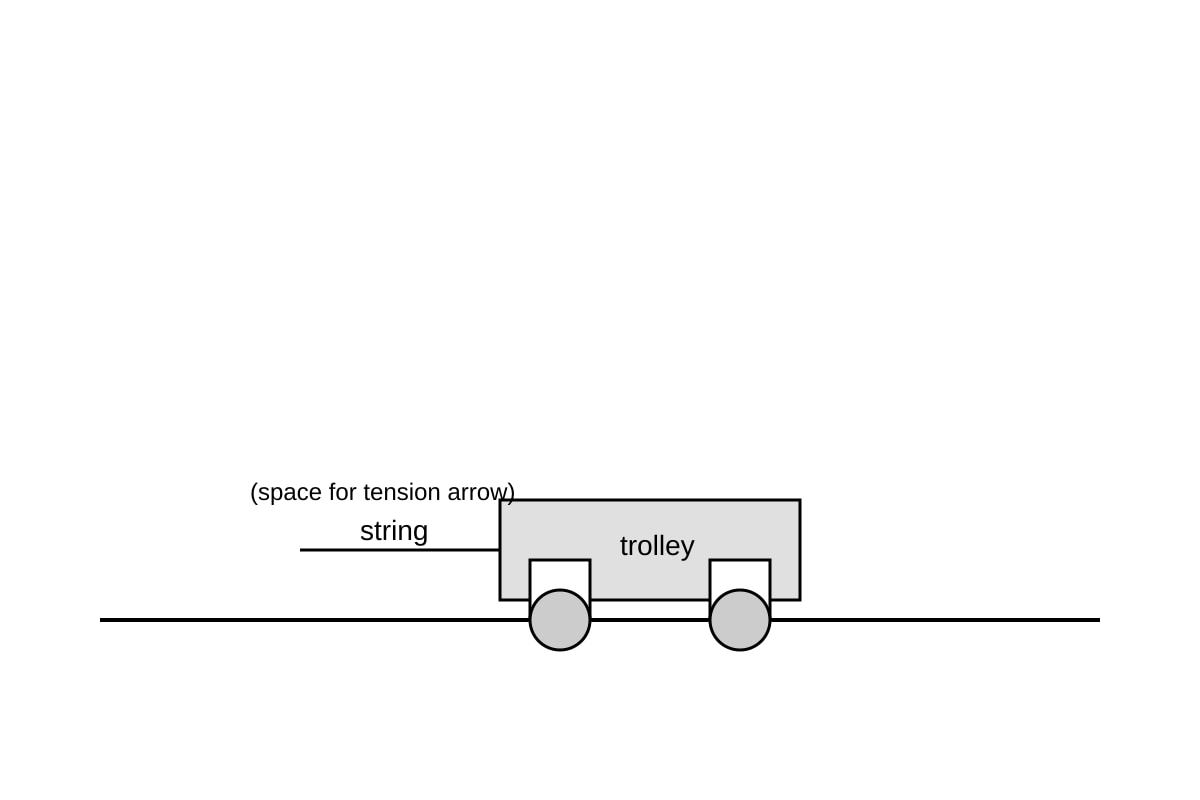
Q5 [1]
Answer: Arrow from string to trolley (leftward) labelled "tension".
Teaching note: Tension is the pull exerted by the string on the trolley.
Section B: Energy (Q6–11) — 12 marks
Q6 [2]
Answer: Energy cannot be created or destroyed [1]; it can be converted from one form to another (total energy constant) [1].
Teaching note: Two marking points required.
Q7 [2]
Working: Height = 3 floors × 3 m = 9 m.
ΔPE = mgh = 40 × 10 × 9 = 3600 J [2].
Teaching note: Count floors climbed (ground to 3rd = 3 floors). Unit J required.
Q8 [2]
Answer: Any two of: biomass, hydropower, sun, wind [1 each].
Teaching note: Renewable = naturally replenished.
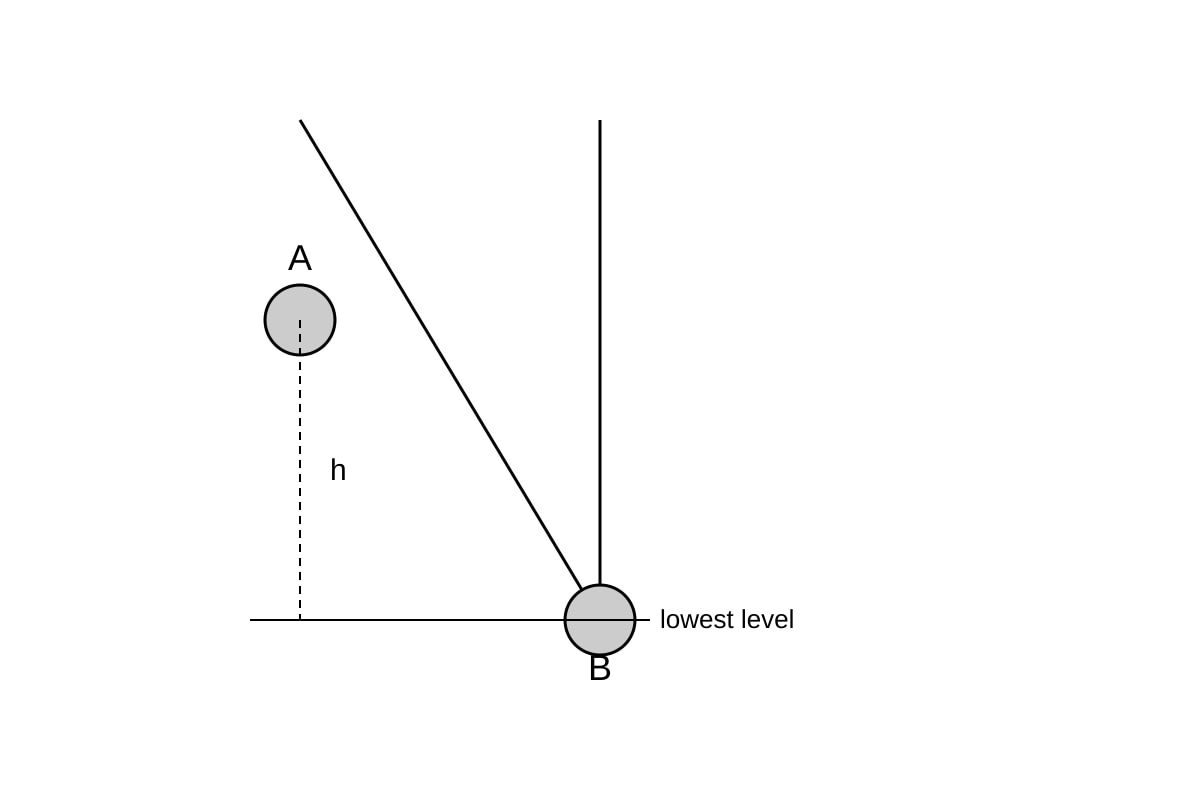
Q9 [1]
Answer: Gravitational potential energy → kinetic energy.
Teaching note: At A (high) PE max; at B (low) KE max.
Q10 [1]
Answer: e.g., releases carbon dioxide (greenhouse gas) / non-renewable / pollution [1].
Teaching note: Any valid disadvantage.
Q11 [2]
Answer: Total energy in = 100 J [1]; total out = 20 + 80 = 100 J, so conserved [1].
Teaching note: Energy changed form, not lost.
Section C: Electricity and Heat (Q12–16) — 10 marks
Q12 [1]
Answer: 230 V.
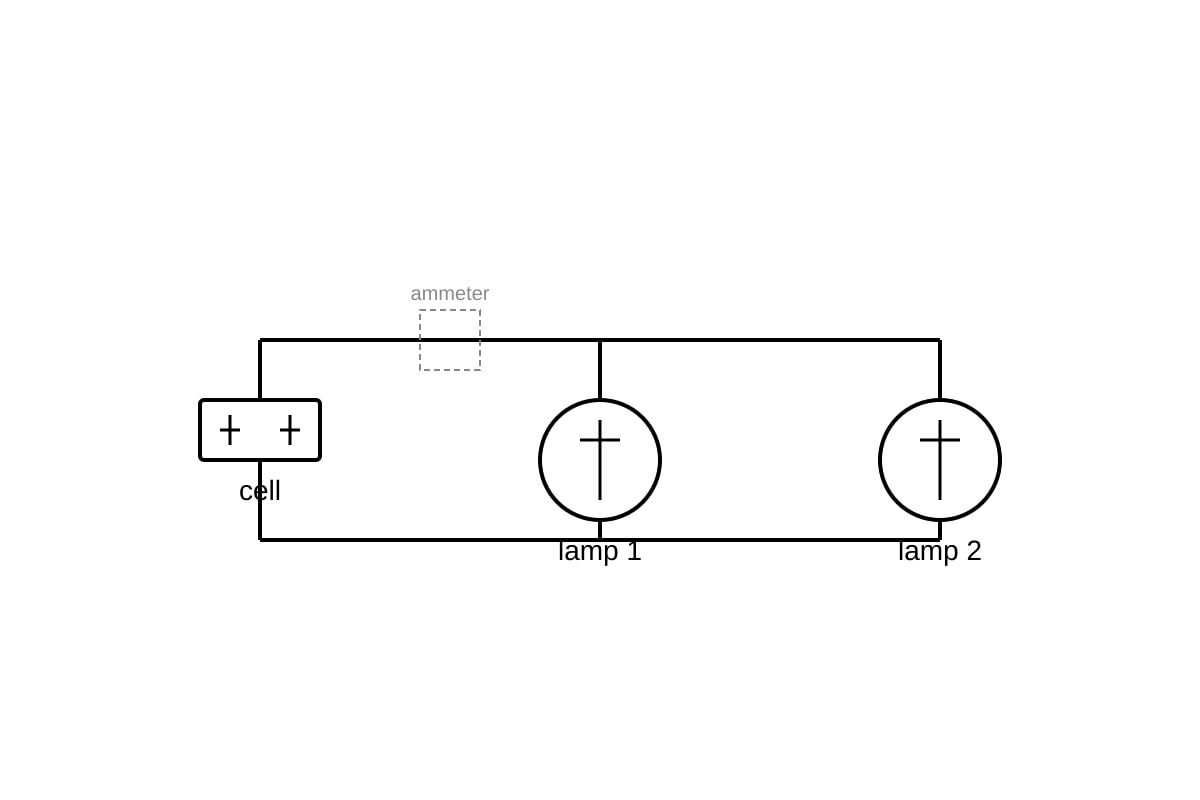
Q13 [1]
Answer: Ammeter symbol (circle with A) placed in series in loop.
Teaching note: Ammeter must be in series.
Q14 [2]
Answer: Melts / breaks circuit when current too high [1]; protects wires from overheating [1].
Q15 [2]
Answer: Heat flows from higher temperature to lower temperature [1]; continues until both same temperature [1].
Q16 [1]
Answer: e.g., buckling of railway tracks / bimetallic strip bends.
Teaching note: Expansion when heated, contraction when cooled.
Section D: Matter and Mixed (Q17–20) — 8 marks
Q17 [2]
Answer: Float [1]; density less than water (1 g/cm³) [1].
Teaching note: Object floats if less dense than fluid.
Q18 [1]
Answer: Neutral.
Teaching note: Green on UI = pH 7.
Q19 [2]
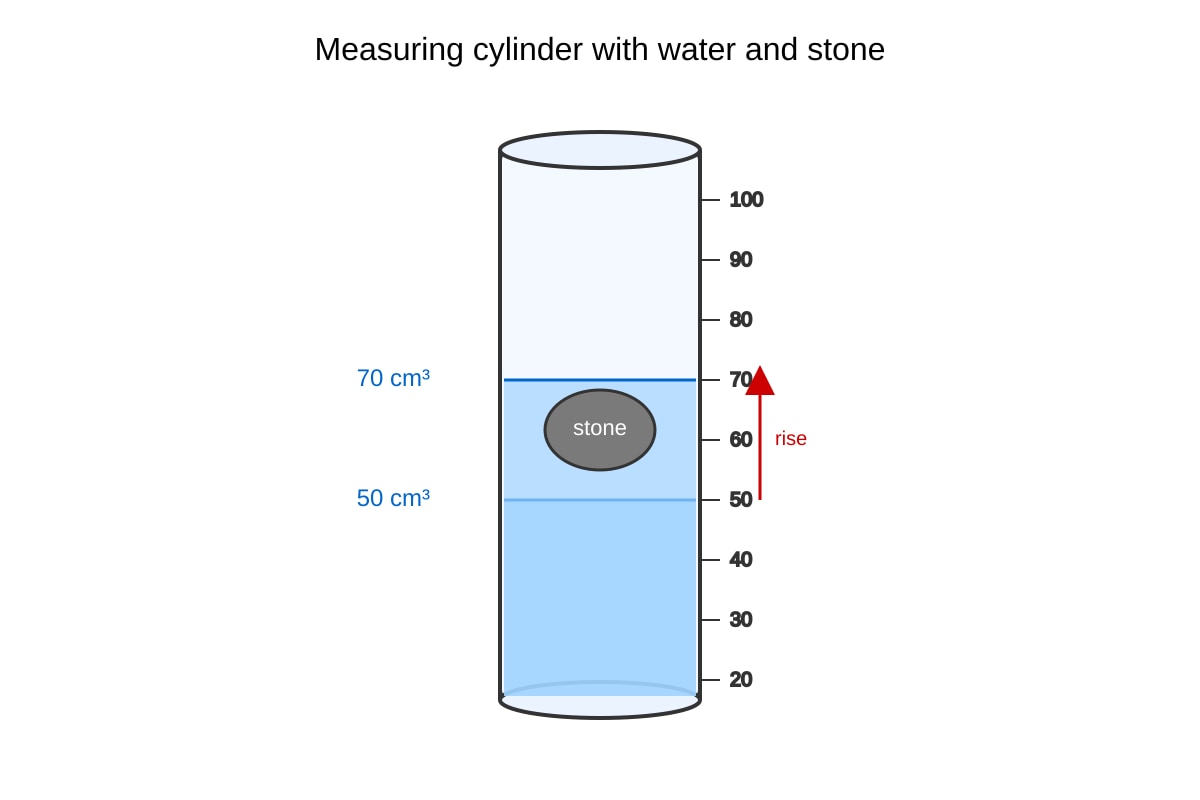
Working: Volume = 70 – 50 = 20 cm³ [2].
Teaching note: Displacement method; subtract levels.
Q20 [2]
Answer: Chemical: e.g., burning paper / rusting [1]; Physical: e.g., melting ice / dissolving sugar [1].