AI Generated Exam Paper
Secondary 2 Science Practice Paper 1
Free Sec 2 Science Practice Paper 1, HY3 AI version, with questions, answers, and syllabus-aligned practice for Singapore students.
These static practice materials are generated from the site's syllabus and paper-generation workflow, with source and model context shown so students and parents can evaluate the material before use.
Questions
Free quiz and exam paper access
Enter your details to view this paper
Your access is remembered on this device.
Answers
TuitionGoWhere Practice Paper - Science Secondary 2 (Answer Key)
Version: 1 of 5
Level: Secondary 2
Topic: Physical Sciences
Note: Syllabus-first generated content; not official past-year paper.
Section A: Forces and Motion
Q1. [1] Newton (N)
Teaching note: Force is measured in newtons, named after Isaac Newton. Spring balances show force in N.
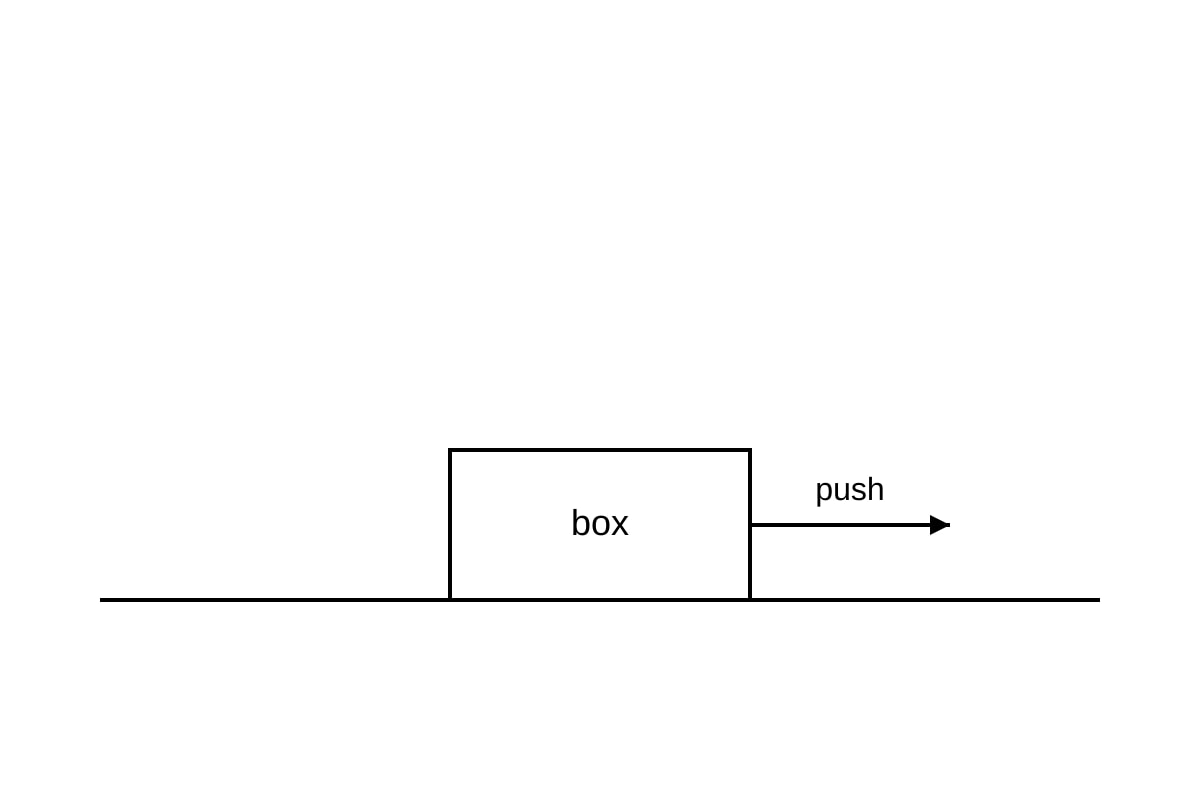
Q2. [1] Arrow drawn from box pointing left, labelled F.
Expected visual: Box rectangle, rightward push arrow; student adds leftward friction opposite motion.
Marking: 1 mark for correct direction (left) and label F.
Q3. [1] Any two from: elastic, magnetic, gravitational.
Note: Nuclear is not in lower-sec list. Common mistake: naming "nuclear" from older knowledge.
Q4. [1] Weight is the gravitational force acting on the object (pull of Earth).
Teaching: Weight = gravitational force; measured by spring balance in N.
Q5. [2] Bicycle slows because friction (and air resistance) acts opposite to motion; no forward force from pedalling, so resultant force opposes motion.
Marks: 1 for friction/air resistance mentioned, 1 for unbalanced force slows it.
Section B: Energy
Q6. [2] Energy cannot be created or destroyed; it can be converted from one form to another (or total energy constant).
Marks: 1 each point.
Q7. [2]
ΔPE = mgh = 2 × 10 × 1.5 = 30 J
Marks: 1 for substitution, 1 for answer with unit.
Q8. [2] Renewable: biomass/wind/sun/hydropower; Non-renewable: coal/crude oil/natural gas.
Marks: 1 each.
Q9. [2] Chemical energy in battery → electrical energy → light (and heat) energy.
Marks: 1 for battery chemical to electrical, 1 for to light.
Q10. [1] e.g., switch off appliances when not in use / use LED lights.
Section C: Electricity and Heat
Q11. [1] 230 V.
Q12. [2] Cell symbol, switch symbol, lamp symbol in loop with connecting wires.
Marks: 1 for correct symbols, 1 for series loop.
Q13. [1] Melts / breaks circuit when current too high, protecting wiring.
Q14. [1] From 80 °C end to 20 °C end.
Q15. [2] Two metals expand differently; bending opens/contacts switch to control temperature.
Marks: 1 for different expansion, 1 for controlling circuit.
Section D: Matter and Applications
Q16. [1] Physical change.
Q17. [1] Floats (density less than water).
Q18. [1] Blue.
Q19. [2] Volume = 68 – 50 = 18 mL.
Marks: 1 for subtraction, 1 for unit.
Q20. [2] Risk of electric shock; short circuit / corrosion.
Marks: 1 each.