AI Generated Exam Paper
Secondary 2 Science Practice Paper 1
Free AI-Generated Secondary 2 Science Practice Paper 1 practice paper with questions and answers for Singapore students. This page is rendered as a direct URL so the questions and answers can be discovered without pressing in-page buttons.
These static practice materials are generated from the site's syllabus and paper-generation workflow, with source and model context shown so students and parents can evaluate the material before use.
Questions
TuitionGoWhere Practice Paper - Science Secondary 2
TuitionGoWhere Practice Paper (AI)
Subject: Science
Level: Secondary 2
Paper: Physical Sciences Focus
Duration: 1 hour 30 minutes
Total Marks: 80
Name: _________________ Class: _________ Date: _________
Instructions to Candidates
- This paper consists of Section A and Section B.
- Answer ALL questions.
- Write your answers in the spaces provided.
- Show all working clearly for calculation questions.
- The use of calculators is allowed.
- Include appropriate units in your final answers.
Section A: Multiple Choice Questions [20 marks]
For each question, choose the best answer and write the letter in the box provided.
1. Which of the following correctly states the principle of conservation of energy?
A. Energy can be created from matter B. Energy cannot be created or destroyed, only converted from one form to another C. Energy always increases in any system D. Energy can be destroyed but not created
Answer: [ ]
2. A 3 kg object is lifted 4 m vertically upward. The gain in gravitational potential energy is:
A. 12 J B. 120 J C. 1200 J D. 7 J
Answer: [ ]
3. In a series circuit containing two identical resistors and a 12V battery, the voltage across each resistor is:
A. 12V B. 6V C. 24V D. 3V
Answer: [ ]
4. When light passes from air into water, it:
A. Speeds up and bends away from the normal B. Speeds up and bends toward the normal C. Slows down and bends away from the normal D. Slows down and bends toward the normal
Answer: [ ]
5. The power consumed by a 240V appliance drawing 5A current is:
A. 48W B. 245W C. 1200W D. 235W
Answer: [ ]
6. Which of the following is NOT a sign of a chemical change?
A. Formation of a precipitate B. Change in temperature C. Change in state from solid to liquid D. Production of gas bubbles
Answer: [ ]
7. Universal Indicator turns red in a solution with pH:
A. 7 B. 9 C. 2 D. 14
Answer: [ ]
8. The separation technique most suitable for separating salt from sand is:
A. Filtration only B. Evaporation only C. Dissolving in water, then filtration, then evaporation D. Magnetic separation
Answer: [ ]
9. In a food chain: Grass → Rabbit → Fox, the fox is:
A. A producer B. A primary consumer C. A secondary consumer D. A decomposer
Answer: [ ]
10. Which organelle is found in plant cells but not in animal cells?
A. Nucleus B. Cell membrane C. Chloroplast D. Mitochondrion
Answer: [ ]
Section B: Structured Questions [60 marks]
Question 1: Energy and Forces [15 marks]
A student of mass 50 kg climbs from the ground floor to the 3rd floor of a school building. Each floor is 4 m high.
(a) State the principle of conservation of energy. [2]
(b) Calculate the total height climbed by the student. [1]
Working:
Height = _________________
(c) Calculate the gain in gravitational potential energy. [2]
Working:
Gain in GPE = _________________
(d) The student then slides down a fireman's pole from the 3rd floor to the ground. Describe the energy changes that occur during this process. [3]
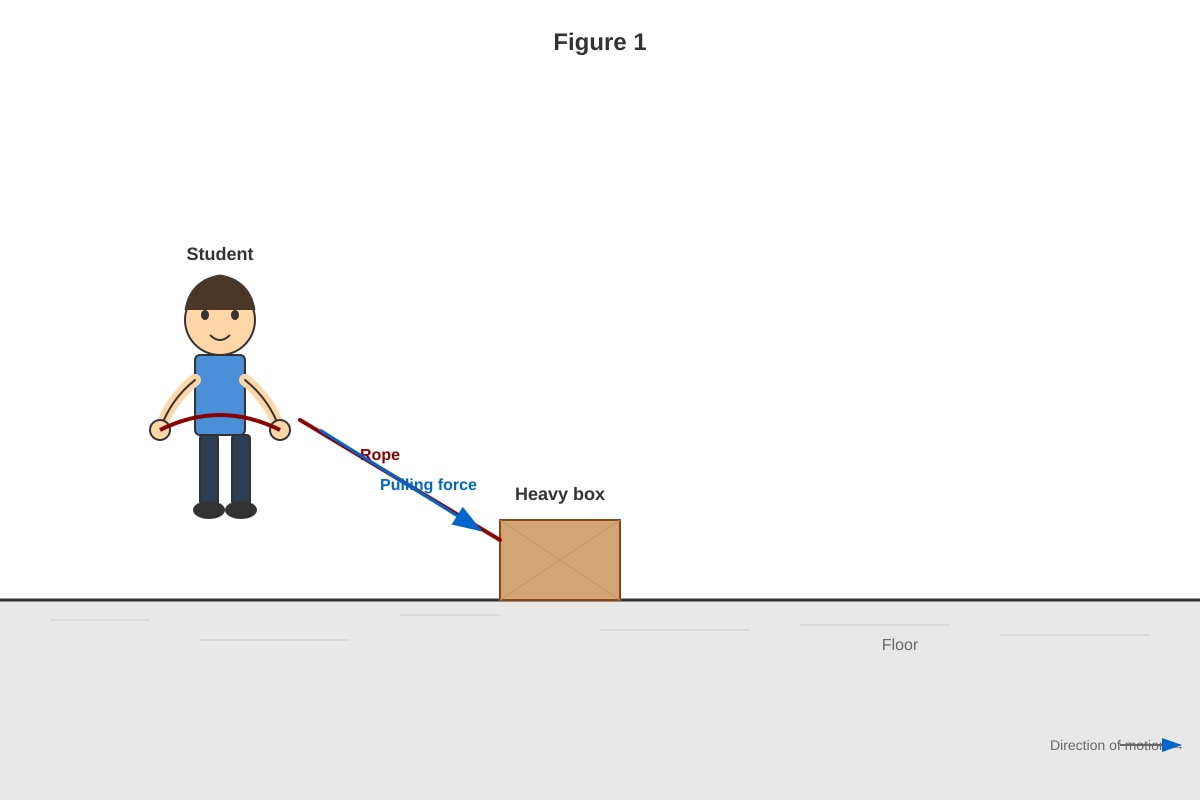
(e) Figure 1 shows the student pulling a heavy box across the floor at constant speed.
[Diagram would show: Student pulling box with rope at angle, box on floor]
(i) Draw and label the friction force acting on the box. [1]
(ii) If the pulling force is 80 N, state the magnitude of the friction force. Explain your answer. [3]
Magnitude of friction force: _________________
Explanation: _______________________________________________
(f) The student increases the pulling force to 120 N. Describe and explain what happens to the motion of the box. [3]
Question 2: Electrical Circuits [12 marks]
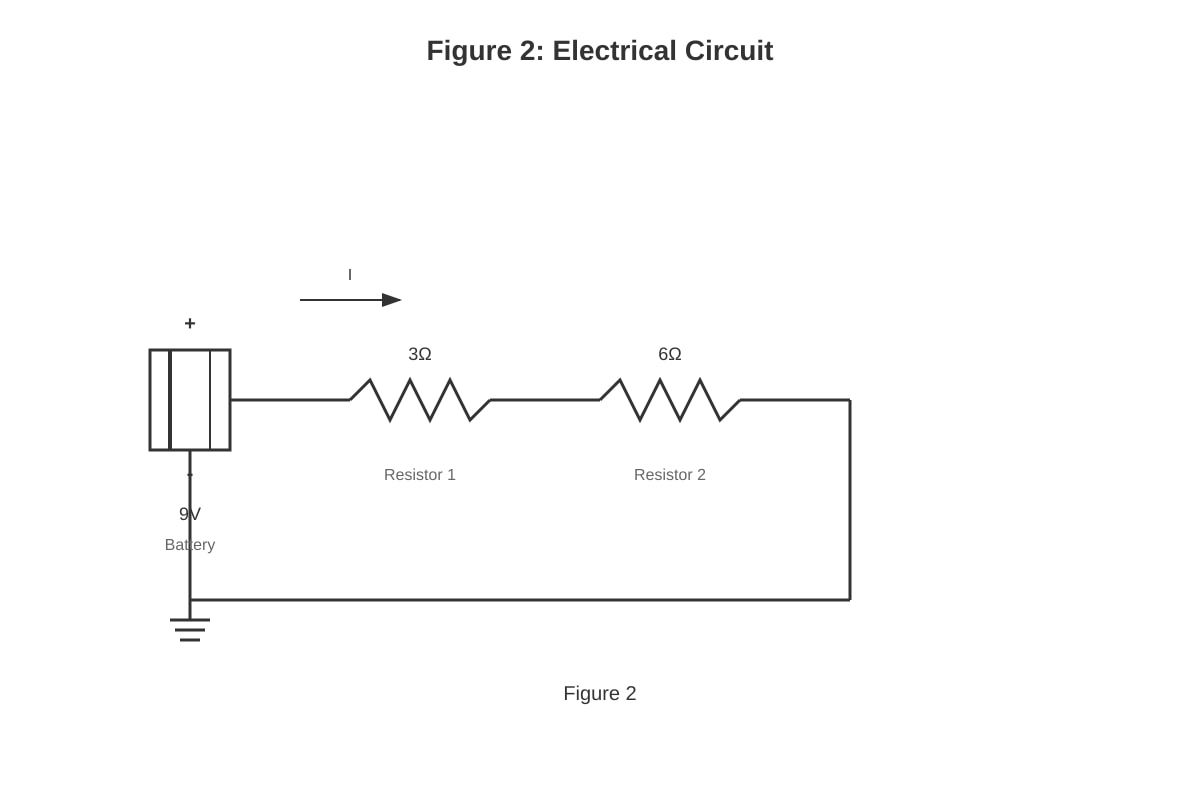
Figure 2 shows an electrical circuit with a 9V battery and two resistors.
[Diagram would show: 9V battery connected to 3Ω and 6Ω resistors in series]
(a) Calculate the total resistance in the circuit. [1]
Working:
Total resistance = _________________
(b) Calculate the current flowing through the circuit. [2]
Working:
Current = _________________
(c) Calculate the voltage across the 6Ω resistor. [2]
Working:
Voltage = _________________
(d) Calculate the power dissipated by the 3Ω resistor. [2]
Working:
Power = _________________
(e) If this circuit operates for 5 hours, calculate the total energy consumed. [2]
Working:
Energy = _________________
(f) State two safety features commonly found in household electrical systems and explain the purpose of each. [3]
-
Purpose: _______________________________________________
-
Purpose: _______________________________________________
Question 3: Light and Optics [10 marks]
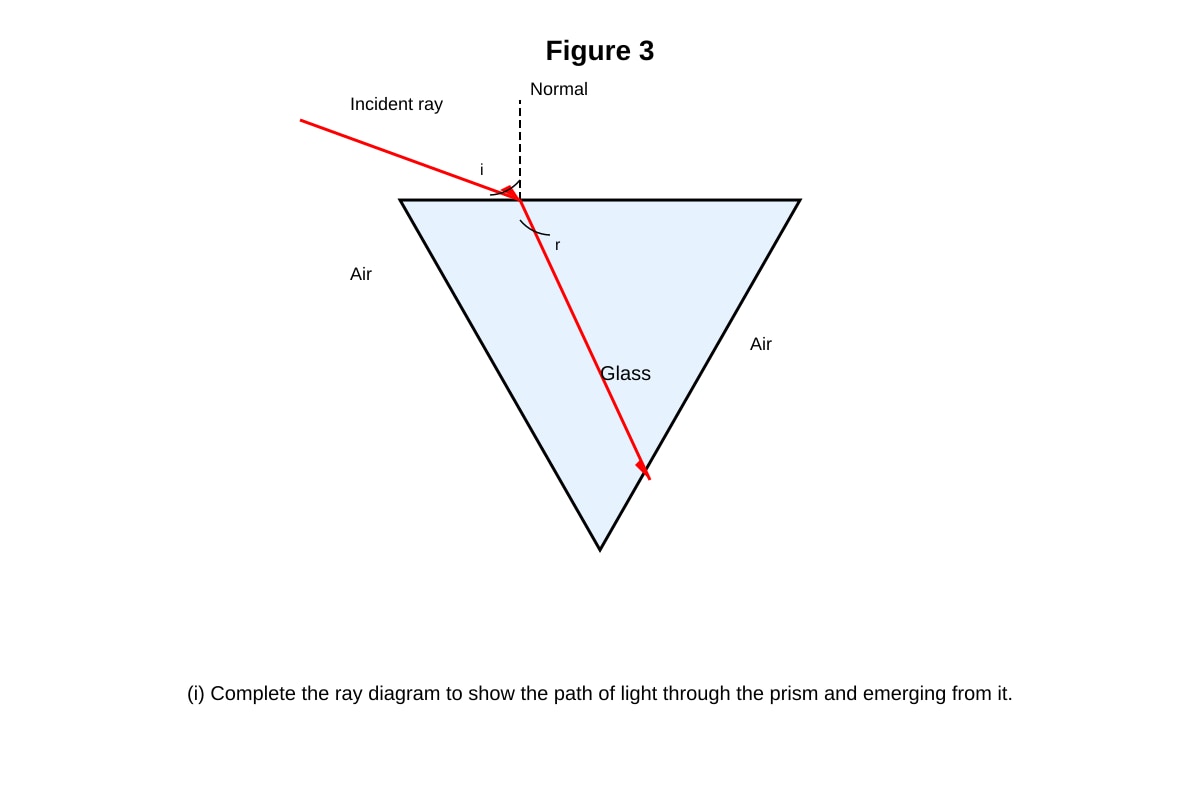
(a) Figure 3 shows a light ray entering a triangular glass prism.
[Diagram would show: Light ray hitting prism surface with normal line drawn]
(i) Complete the ray diagram to show the path of light through the prism and emerging from it. [3]
(ii) Name the phenomenon that occurs when white light passes through a prism and separates into different colors. [1]
(iii) Explain why this phenomenon occurs. [2]
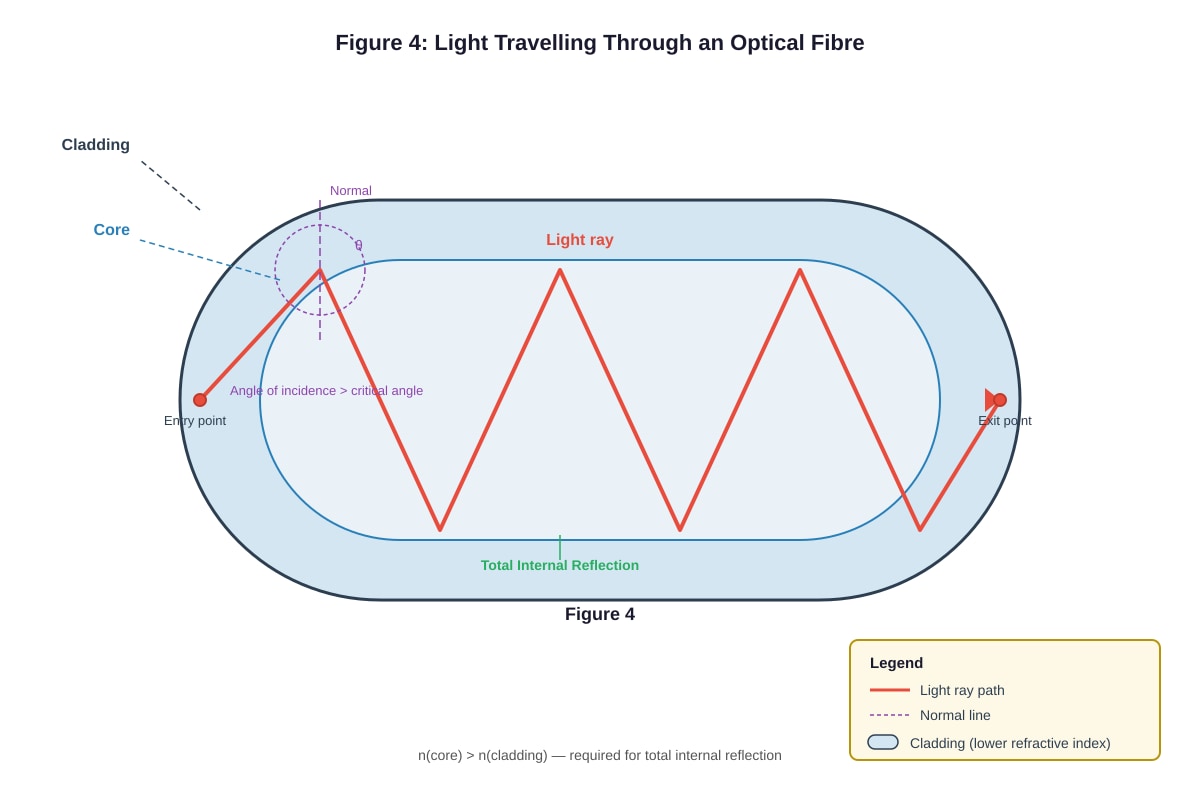
(b) Figure 4 shows light traveling through an optical fiber.
[Diagram would show: Cross-section of optical fiber with light ray path]
(i) Name the phenomenon that allows light to travel through the optical fiber without escaping. [1]
(ii) State one condition necessary for this phenomenon to occur. [1]
(iii) Give two practical applications of optical fibers. [2]
Question 4: Chemical Reactions and Acids [12 marks]
A student has three unlabeled bottles containing hydrochloric acid, sulfuric acid, and ethanoic acid. She performs tests to identify each acid.
(a) When magnesium ribbon is added to each acid, the following salts are produced:
- Bottle A: Magnesium chloride
- Bottle B: Magnesium sulfate
- Bottle C: Magnesium ethanoate
Identify which acid is in each bottle. Justify your answers. [3]
Bottle A: ________________________________________________
Justification: ____________________________________________
Bottle B: ________________________________________________
Justification: ____________________________________________
Bottle C: ________________________________________________
Justification: ____________________________________________
(b) Write a balanced chemical equation for the reaction between magnesium and hydrochloric acid. [2]
(c) The student adds Universal Indicator to samples of each acid. Complete the table below to show the expected colors. [3]
| Acid | pH | Universal Indicator Color |
|---|---|---|
| Hydrochloric acid (concentrated) | 1 | |
| Sulfuric acid (dilute) | 2 | |
| Ethanoic acid | 4 |
(d) When copper carbonate is added to hydrochloric acid, a gas is produced.
(i) Name the gas produced. [1]
(ii) Describe a test to identify this gas. [2]
(iii) State whether this is a physical or chemical change. Explain your answer. [1]
Type of change: ___________________________________________
Explanation: _____________________________________________
Question 5: Separation Techniques and Experimental Design [11 marks]
A mixture contains the following substances:
- Iron filings (magnetic, insoluble in water)
- Salt (non-magnetic, soluble in water)
- Sand (non-magnetic, insoluble in water)
(a) Describe a complete method to separate and obtain pure samples of all three substances. Your answer should include the sequence of steps and the scientific principle behind each step. [6]
Step 1: ___________________________________________________
Scientific principle: ____________________________________
Step 2: ___________________________________________________
Scientific principle: ____________________________________
Step 3: ___________________________________________________
Scientific principle: ____________________________________
Step 4: ___________________________________________________
Scientific principle: ____________________________________
(b) A student wants to investigate how temperature affects the rate at which salt dissolves in water.
(i) Identify the independent variable. [1]
(ii) Identify the dependent variable. [1]
(iii) State three variables that should be controlled to make this a fair test. [3]
End of Paper
Answers
TuitionGoWhere Practice Paper - Science Secondary 2 (Answer Key)
Section A: Multiple Choice Questions [20 marks]
-
B - Energy cannot be created or destroyed, only converted from one form to another This is the correct statement of the principle of conservation of energy.
-
B - 120 J GPE = mgh = 3 × 10 × 4 = 120 J
-
B - 6V In series, voltage is shared: 12V ÷ 2 = 6V each
-
D - Slows down and bends toward the normal Light slows in denser media and bends toward normal
-
C - 1200W P = VI = 240 × 5 = 1200W
-
C - Change in state from solid to liquid This is a physical change (melting), not chemical
-
C - 2 Universal Indicator is red in strongly acidic solutions (pH 1-3)
-
C - Dissolving in water, then filtration, then evaporation Multi-step process needed: dissolve salt, filter sand, evaporate water
-
C - A secondary consumer Fox eats rabbit (primary consumer), making it secondary
-
C - Chloroplast Chloroplasts are unique to plant cells for photosynthesis
Section B: Structured Questions [60 marks]
Question 1: Energy and Forces [15 marks]
(a) Energy cannot be created or destroyed [1], only converted from one form to another [1]. [2]
(b) Height = 3 × 4 = 12 m [1]
(c) GPE = mgh = 50 × 10 × 12 = 6000 J [2] Award 1 mark for correct substitution, 1 mark for correct answer with units
(d) Gravitational potential energy is converted to kinetic energy [1] as the student slides down [1]. Some energy is also converted to heat due to friction [1]. [3]
(e)(i) Arrow pointing opposite to direction of motion, labeled "friction" [1]
(e)(ii) 80 N [1]. At constant speed, forces are balanced/no resultant force [1], so friction equals pulling force [1]. [3]
(f) The box will accelerate/speed up [1] because there is now an unbalanced/resultant force [1] of 40 N in the forward direction (120 - 80 = 40 N) [1]. [3]
Question 2: Electrical Circuits [12 marks]
(a) Total resistance = 3 + 6 = 9 Ω [1]
(b) I = V/R = 9/9 = 1 A [2] Award 1 mark for correct formula, 1 mark for answer
(c) V = IR = 1 × 6 = 6 V [2] Award 1 mark for correct formula, 1 mark for answer
(d) P = I²R = 1² × 3 = 3 W [2] Accept P = VI = 3 × 1 = 3 W
(e) Total power = 9 W, Energy = Pt = 9 × 5 × 3600 = 162,000 J [2] Accept 162 kJ or 0.045 kWh
(f)
- Fuses/Circuit breakers [1] - Break circuit if current too high [1]
- Earth wire/RCD [1] - Provides safe path for current/prevents electrocution [1] Accept other valid safety features with correct explanations [3]
Question 3: Light and Optics [10 marks]
(a)(i) Ray bends toward normal on entering prism [1], travels through prism [1], bends away from normal on exiting [1]. [3]
(a)(ii) Dispersion [1]
(a)(iii) Different colors of light travel at different speeds in glass [1], causing them to bend by different amounts [1]. [2]
(b)(i) Total internal reflection [1]
(b)(ii) Angle of incidence must be greater than the critical angle [1]
(b)(iii)
- Telecommunications/internet [1]
- Medical endoscopes/lighting systems [1] [2]
Question 4: Chemical Reactions and Acids [12 marks]
(a)
Bottle A: Hydrochloric acid [0.5] - Contains chloride ions which form magnesium chloride [0.5]
Bottle B: Sulfuric acid [0.5] - Contains sulfate ions which form magnesium sulfate [0.5]
Bottle C: Ethanoic acid [0.5] - Contains ethanoate ions which form magnesium ethanoate [0.5] [3]
(b) Mg + 2HCl → MgCl₂ + H₂ [2] Award 1 mark for correct reactants and products, 1 mark for balancing
(c)
| Acid | pH | Universal Indicator Color |
|---|---|---|
| Hydrochloric acid (concentrated) | 1 | Red [1] |
| Sulfuric acid (dilute) | 2 | Red [1] |
| Ethanoic acid | 4 | Orange [1] |
(d)(i) Carbon dioxide [1]
(d)(ii) Bubble gas through limewater [1] - limewater turns milky/cloudy [1]. [2]
(d)(iii) Chemical change [0.5] - New substances are formed [0.5]. [1]
Question 5: Separation Techniques and Experimental Design [11 marks]
(a) Step 1: Use a magnet to remove iron filings [1] Scientific principle: Magnetic attraction [0.5]
Step 2: Add water and stir to dissolve salt [1]
Scientific principle: Solubility difference [0.5]
Step 3: Filter to separate sand from salt solution [1] Scientific principle: Particle size difference [0.5]
Step 4: Evaporate water to obtain pure salt [1] Scientific principle: Different boiling points [0.5] [6]
(b)(i) Temperature [1]
(b)(ii) Time taken for salt to dissolve/Rate of dissolving [1]
(b)(iii)
- Amount/mass of salt [1]
- Volume of water [1]
- Stirring rate/method [1] [3] Accept other valid controlled variables
Total: 80 marks
Grade Boundaries (Suggested):
- A1: 72-80 marks (90-100%)
- A2: 64-71 marks (80-89%)
- B3: 56-63 marks (70-79%)
- B4: 48-55 marks (60-69%)
- C5: 40-47 marks (50-59%)
- C6: 32-39 marks (40-49%)
Marking Notes:
- Award marks for correct scientific terminology and units
- Accept equivalent correct answers not specifically listed
- Partial credit available for calculations showing correct method
- Deduct marks for missing units where required in final answers