From Real Exams Exam Paper
Secondary 2 Science Semestral Assessment 2 (End of Year) Paper 4
Free Sec 2 Science SA2 Paper 4, HY3 Exam version, with questions, answers, and syllabus-aligned practice for Singapore students.
These static practice materials are generated from the site's syllabus and paper-generation workflow, with source and model context shown so students and parents can evaluate the material before use.
Questions
Free quiz and exam paper access
Enter your details to view this paper
Your access is remembered on this device.
Answers
TuitionGoWhere Exam Practice (AI) — Science Secondary 2
Answer Key (Version 4)
Section A: Forces and Motion
1. [1 mark] Frictional force (or friction).
Teaching note: Friction acts opposite to the direction of motion between two surfaces in contact. Common mistake: writing "gravity" — gravity acts downward, not against horizontal motion.
2. [2 marks] Example: a crowbar (lever). It makes work easier by increasing the distance over which the effort is applied, reducing the effort needed to lift a load (or by pivoting to multiply force).
Marking: 1 mark for example, 1 mark for correct explanation.
Teaching note: A lever is a simple machine; it does not reduce total work but changes force/distance trade-off.
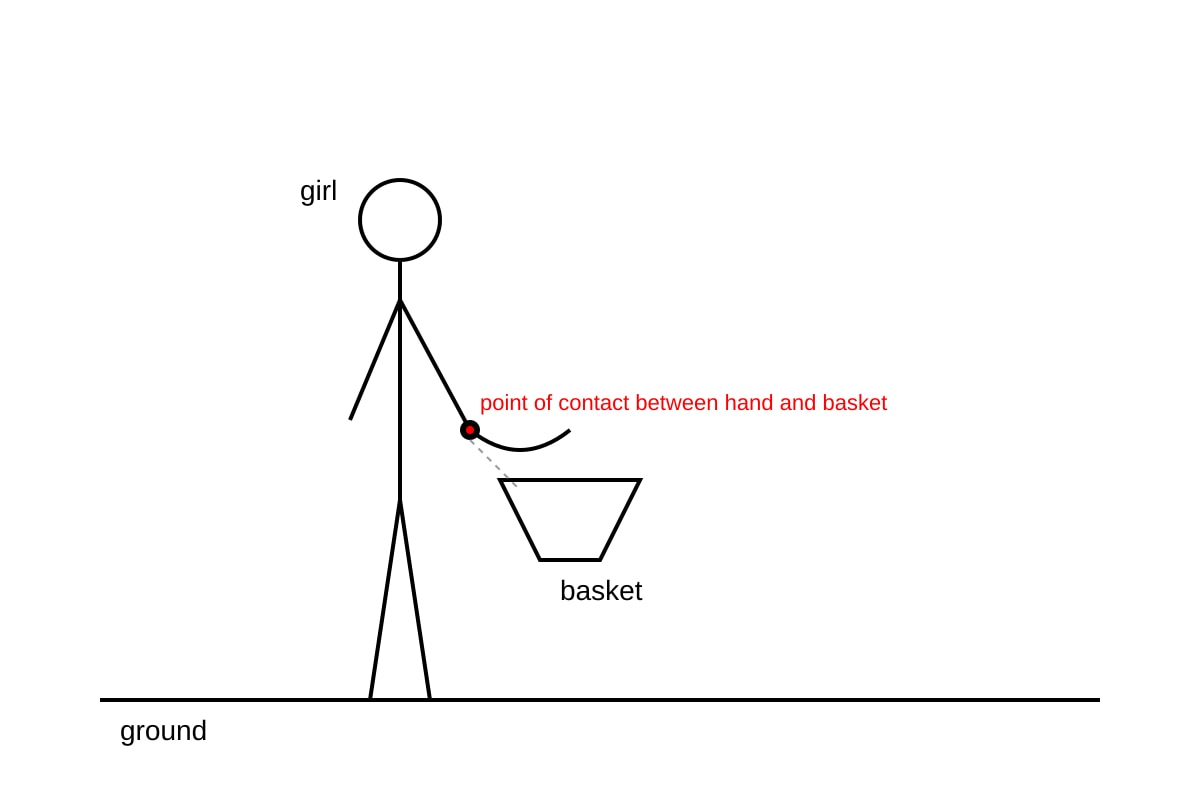
3. [1 mark] Arrow drawn from girl's hand downward to basket, labelled F.
Teaching note: The girl exerts a downward force on the basket via the handle. Action-reaction pair would be basket pulling up on hand.
4. [2 marks] (a) newton (N) [1]; (b) gravitational force (weight) [1].
Teaching note: Spring balance measures weight = gravitational force; unit of force is newton.
5. [2 marks]
Marking: 1 mark formula/substitution, 1 mark answer with unit.
Teaching note: Kinetic energy depends on mass and speed squared.
Section B: Energy
6. [3 marks] Energy cannot be created or destroyed [1]; it can be converted from one form to another [1]; total energy in a closed system remains constant [1].
Teaching note: Do not say "energy is saved" — use "conserved" or "constant total".
7. [2 marks]
Height = 3 flights × 3.5 m = 10.5 m
Marking: 1 mark working, 1 mark answer.
8. [2 marks]
Before release GPE = mgh = 2 × 10 × 5 = 100 J [1]
Loss when hits ground = 100 J [1]
Teaching note: GPE lost equals GPE at start (converted to KE).
9. [3 marks] Renewable: biomass, hydropower (or sun, wind) [2]; Non-renewable: coal (or crude oil, natural gas) [1].
10. [2 marks] Wasted = [1]; form: heat lost to surroundings/sound [1].
Section C: Electricity and Heat
11. [1 mark] To break the circuit when current is too high, preventing fire/overload.
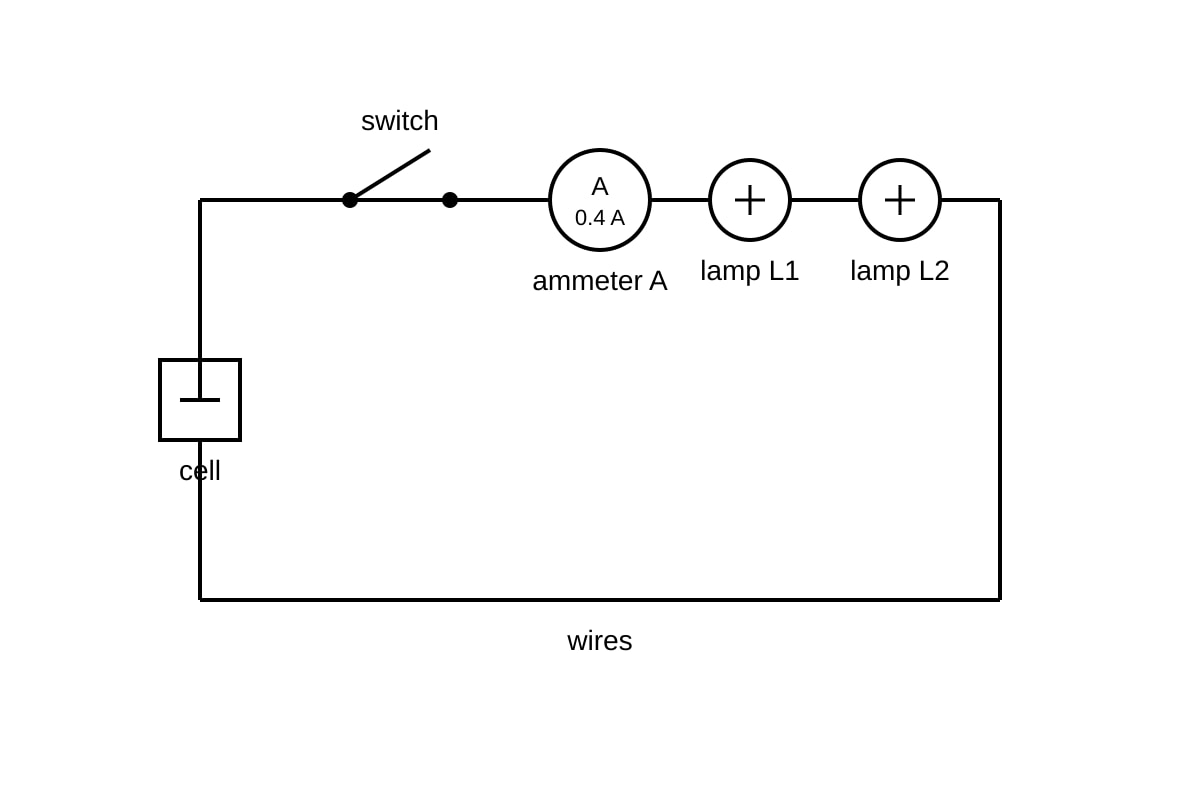
12. [1 mark] 0.4 A (same as ammeter in series).
Teaching note: In series, current is same everywhere.
13. [2 marks]
Marking: 1 mark working, 1 mark unit/answer.
14. [3 marks] Bimetallic strip has two metals with different expansion rates [1]; when heated, one expands more, causing bending [1]; this opens/contacts switch to control temperature [1].
15. [2 marks] Heat flows from hotter end to cooler end [1]; from higher temperature to lower temperature [1].
Section D: Data and Application
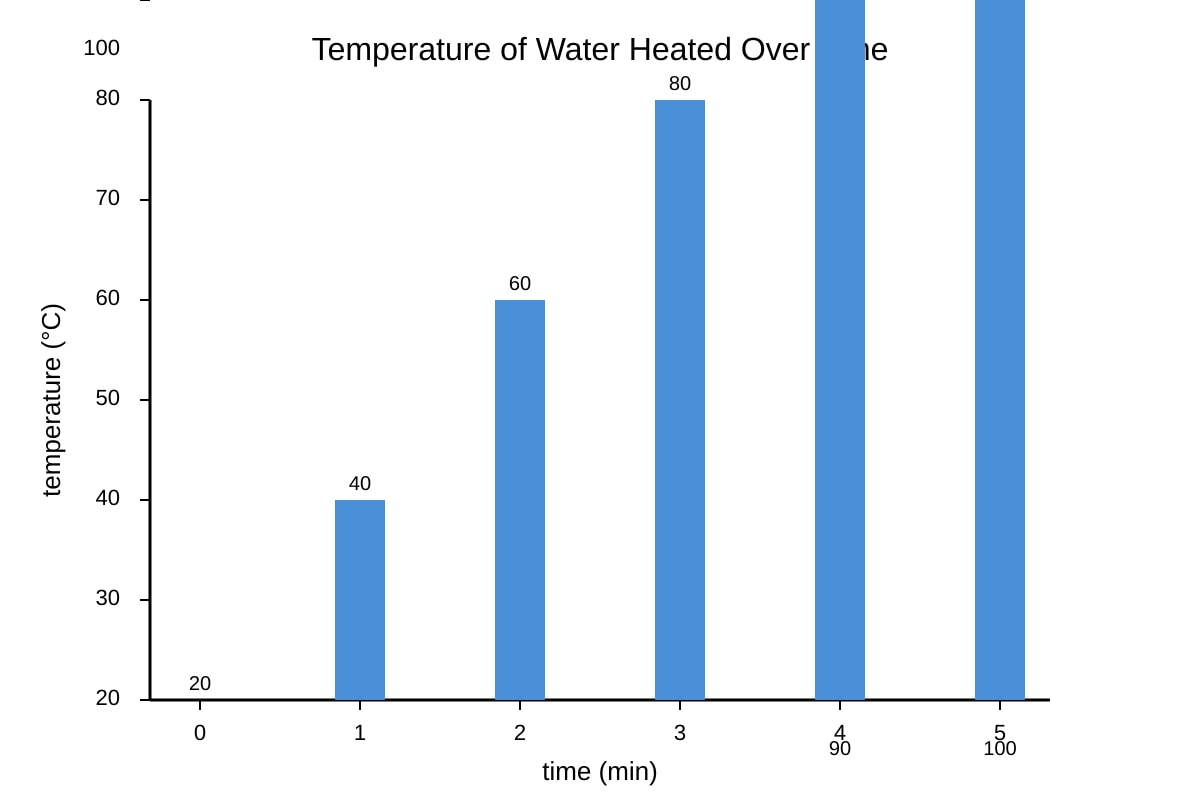
16. [2 marks] 80 °C [1]; temperature increases with time then plateaus at 100 °C [1].
17. [1 mark] 12 V (each branch gets full voltage in parallel).
18. [3 marks]
Density = mass/volume = 30/10 = 3 g/cm³ [1];
Compare: 3 > 1 [1]; sinks [1].
Teaching note: Denser than water → sinks.
19. [2 marks] Any two: switch off appliances, use LED lights, insulate home, etc. (1 mark each).
20. [2 marks]
Marking: 1 mark working, 1 mark answer.
Total: 60 marks