From Real Exams Exam Paper
Secondary 2 Science Semestral Assessment 2 (End of Year) Paper 2
Free Sec 2 Science SA2 Paper 2, HY3 Exam version, with questions, answers, and syllabus-aligned practice for Singapore students.
These static practice materials are generated from the site's syllabus and paper-generation workflow, with source and model context shown so students and parents can evaluate the material before use.
Questions
TuitionGoWhere Exam Practice (AI) — SA2 Practice Paper
Science Secondary 2 — Physical Sciences (Version 2 of 5)
School: TuitionGoWhere Secondary School (AI)
Subject: Science
Level: Secondary 2
Paper: SA2 Practice Paper — Physical Sciences (Version 2)
Duration: 60 minutes
Total Marks: 60
Name: ________________________
Class: ________
Date: ____________
Instructions:
- Answer all questions in the spaces provided.
- Use a blue or black pen.
- Show your working clearly for calculation questions.
- Use appropriate units in your final answers.
- The total marks for this paper are 60.
Section A: Forces and Motion (Questions 1–5) [15 marks]
1. A boy pushes a box across a rough floor. Name the force that opposes the motion of the box. [1]
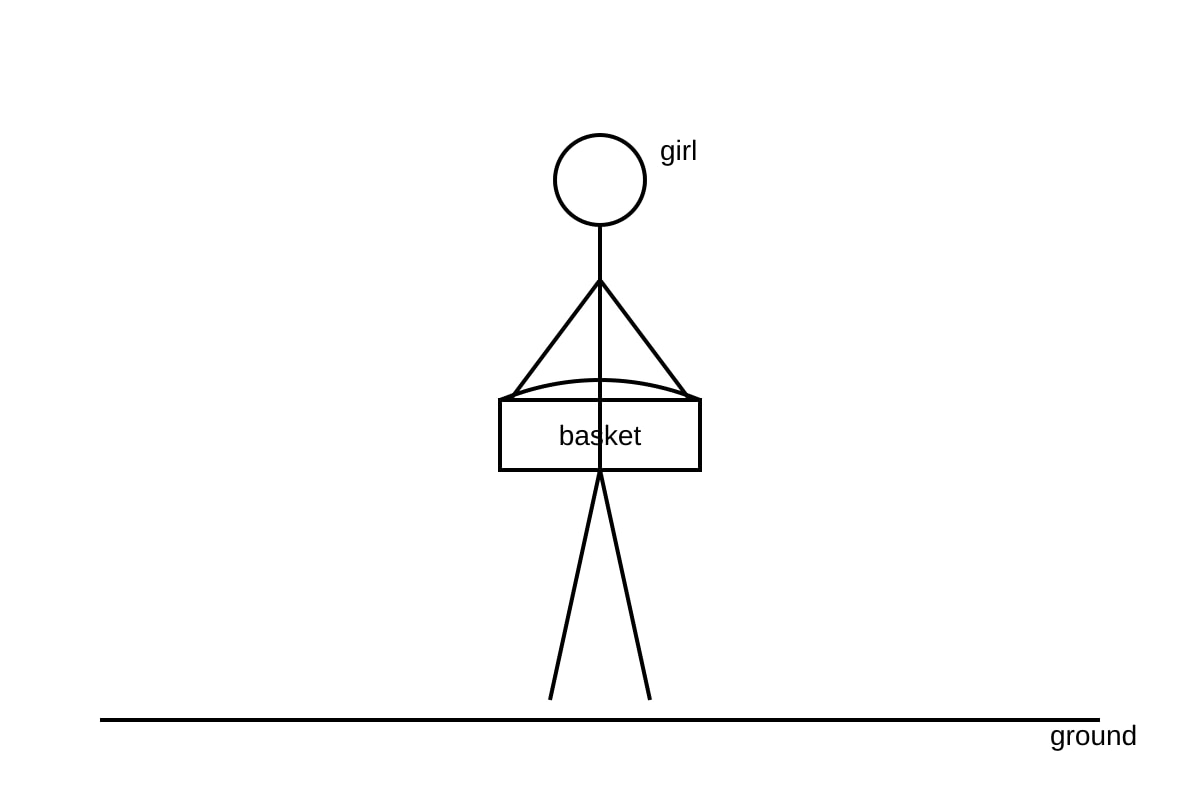
2. The diagram below shows a girl holding a basket. Draw and label the downward force that the Earth exerts on the basket. Label this force W. [1]
Image pending generation: diagram for Q2.
3. State two effects that a force can have on an object. [2]
(i) __________________________________________________
(ii) __________________________________________________
4. A spring balance measures the weight of a book to be 4.0 N. What is the mass of the book? (Take g=10 N/kg) [2]
5. A trolley is pulled to the right with a force of 5 N and to the left with a force of 2 N.
(a) What is the resultant force on the trolley? [1]
(b) In which direction does the trolley move? [1]
(a) ____________________
(b) ____________________
Section B: Energy (Questions 6–10) [15 marks]
6. State the principle of conservation of energy. [3]
7. A ball of mass 0.5 kg is dropped from a height of 8 m. Calculate its gravitational potential energy before it is dropped. (Take g=10 N/kg) [2]
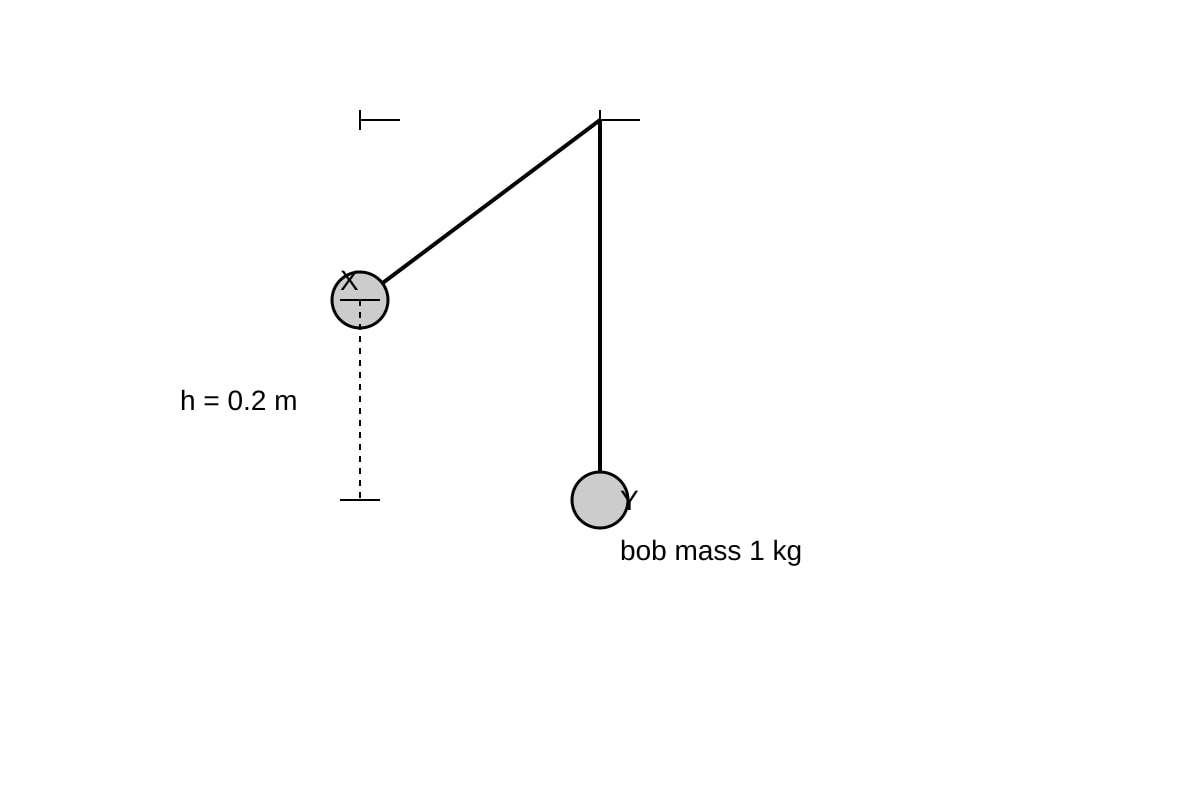
8. The diagram shows a pendulum swinging from position X to Y.
Image pending generation: diagram for Q8.
State the energy conversion that takes place as the bob moves from X to Y. [2]
9. List two renewable sources of energy. [2]
(i) ____________________ (ii) ____________________
10. A kettle uses 1000 J of electrical energy. If 800 J is converted to heat energy, how much energy is wasted? [2]
Section C: Electricity and Heat (Questions 11–15) [15 marks]
11. State the unit of:
(a) current [1]
(b) voltage [1]
(c) resistance [1]
(a) ____________ (b) ____________ (c) ____________
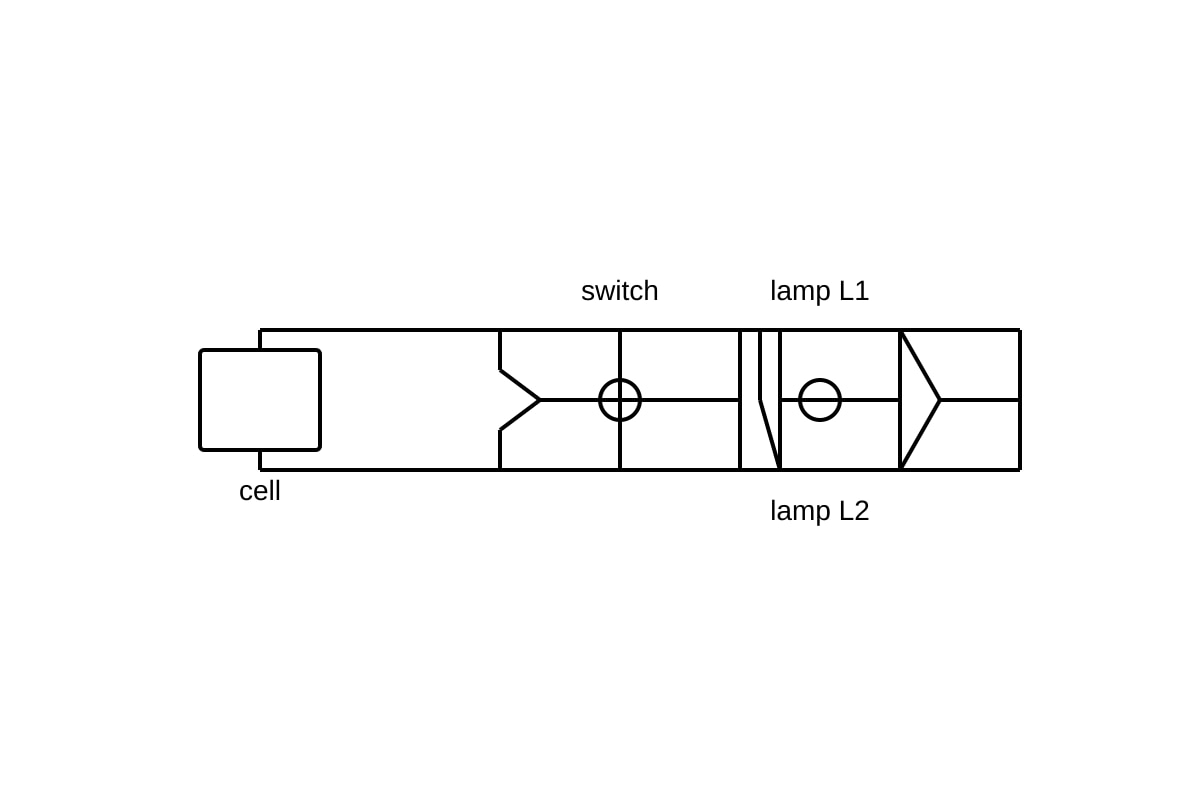
12. The circuit diagram shows two lamps connected to a battery.
Image pending generation: circuit_diagram for Q12.
State whether the lamps are connected in series or parallel. [1]
13. A resistor has a voltage of 6 V across it and a current of 2 A flowing through it. Calculate its resistance. [2]
14. Heat flows from a hot object to a cold object. Until what condition does this continue? [2]
15. Give one everyday example of expansion due to heat and state its effect. [2]
Example: ____________________
Effect: ____________________
Section D: Data Interpretation and Structured Response (Questions 16–20) [15 marks]
16. A student records the temperature of water cooling in a room.
| Time (min) | Temperature (°C) |
|---|---|
| 0 | 80 |
| 2 | 60 |
| 4 | 45 |
| 6 | 35 |
| 8 | 30 |
(a) From the table, what is the temperature after 4 minutes? [1]
(b) Suggest why the temperature decrease becomes slower over time. [2]
(a) ____________
(b) ________________________________________________________
17. A boy of mass 40 kg climbs 3 flights of stairs, each 2.5 m high, to reach the 4th floor. Calculate the work done against gravity. (Take g=10 N/kg) [3]
18. State two hazards of using electricity in the home and one safety feature that prevents danger. [3]
Hazards: (i) ____________________ (ii) ____________________
Safety feature: ____________________
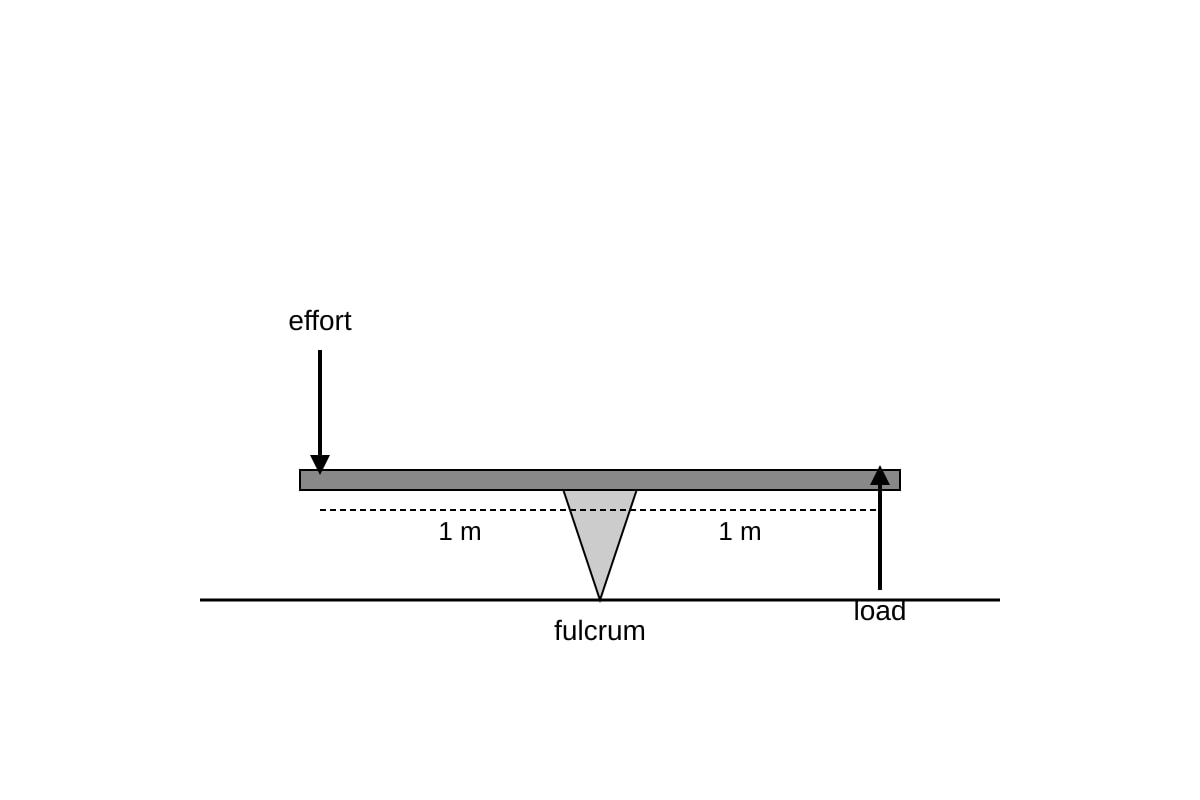
19. The diagram shows a simple lever lifting a load.
Image pending generation: diagram for Q19.
Explain how the lever makes lifting the load easier. [2]
20. A car headlight is rated 12 V and draws 3 A.
(a) Calculate the power of the headlight. [2]
(b) If it is left on for 10 s, calculate the electrical energy used. [1]
(a) ____________________
(b) ____________________
End of Paper
Answers
TuitionGoWhere Exam Practice (AI) — SA2 Practice Paper
Science Secondary 2 — Physical Sciences (Version 2) — Answer Key
Total Marks: 60
Section A: Forces and Motion (15 marks)
1. [1]
Answer: Frictional force (or friction).
Teaching note: Friction acts opposite to the direction of motion between two surfaces in contact. Common mistake: writing "push" or "air resistance" when context is rough floor — accept "friction" only.
2. [1]
Answer: Downward arrow from basket labelled W.
Teaching note: Weight is the gravitational force from Earth on the object. Arrow must start at basket and point down. Marking: arrow direction correct (0.5), label W (0.5).
3. [2]
Answer: Any two of: change in shape/size; change in state of rest or motion (speed/direction).
Teaching note: Forces can deform objects or start/stop/steer them. Mark 1 each.
4. [2]
Working:
W=mg⇒m=W/g=4.0/10=0.4 kg
Answer: 0.4 kg
Teaching note: Weight = mass × g. Convert N to kg by dividing by 10. Mark: formula/substitution (1), answer with unit (1).
5. [2]
(a) Resultant = 5−2=3 N [1]
(b) To the right [1]
Teaching note: Resultant is net force; motion follows larger force.
Section B: Energy (15 marks)
6. [3]
Answer:
- Energy cannot be created or destroyed. [1]
- Energy can be converted from one form to another. [1]
- Total energy of a closed system remains constant. [1]
Teaching note: Must include both non-creation and conversion. Common trap: only stating one part.
7. [2]
Working:
GPE=mgh=0.5×10×8=40 J
Answer: 40 J
Marking: substitution (1), answer with unit (1).
8. [2]
Answer: Gravitational potential energy → kinetic energy.
Teaching note: As bob falls, height drops so PE becomes KE. Mark: PE stated (1), KE stated (1).
9. [2]
Answer: Any two from biomass, hydropower, sun, wind. [1 each]
10. [2]
Working: Wasted = 1000−800=200 J
Answer: 200 J
Marking: subtraction (1), unit (1).
Section C: Electricity and Heat (15 marks)
11. [3]
(a) ampere (A) [1]
(b) volt (V) [1]
(c) ohm (Ω) [1]
12. [1]
Answer: Series.
Teaching note: Single loop, one after another = series.
13. [2]
Working: R=V/I=6/2=3 Ω
Answer: 3 Ω
Marking: formula (1), answer (1).
14. [2]
Answer: Until both objects reach the same temperature (thermal equilibrium). [2]
Teaching note: Heat transfer stops at equal temperature.
15. [2]
Example: Railway tracks buckling [1]; Effect: Expansion pushes rails out of shape [1].
Other acceptable: bimetallic strip in thermostat.
Section D: Data Interpretation and Structured Response (15 marks)
16. [3]
(a) 45∘C [1]
(b) Temperature difference between water and room decreases, so rate of heat loss slows. [2]
Teaching note: Cooling rate depends on temperature gradient.
17. [3]
Working:
Total height = 3×2.5=7.5 m
W=mgh=40×10×7.5=3000 J
Answer: 3000 J
Marking: height (1), formula/sub (1), answer (1).
18. [3]
Hazards: damaged insulation, damp conditions, overloaded circuits, incorrect voltage (any 2) [1 each]
Safety: circuit breaker / fuse / earth wire [1]
19. [2]
Answer: Lever increases distance from fulcrum for effort, allowing smaller effort to lift load (or changes direction of force). [2]
Teaching note: With equal arms, it changes direction; still a simple machine.
20. [3]
(a) P=IV=12×3=36 W [2]
(b) E=Pt=36×10=360 J [1]
Marking: (a) formula+ans 2; (b) ans 1.
End of Answer Key
Free quiz and exam paper access
Enter your details to view this paper
Your access is remembered on this device.