AI Generated Quiz
Secondary 2 Mathematics Graphs Coordinate Geometry Quiz
Free Sec 2 Maths Graphs Geometry quiz, Nemo3 AI version, with questions, answers, and syllabus-aligned practice for Singapore students.
These static practice materials are generated from the site's syllabus and paper-generation workflow, with source and model context shown so students and parents can evaluate the material before use.
Questions
Free quiz and exam paper access
Enter your details to view this paper
Your access is remembered on this device.
Answers
Secondary 2 Mathematics Quiz - Graphs Coordinate Geometry (Answer Key)
Total Marks: 40
Section A: Gradient and Straight Line Equations (Questions 1–5) [10 marks]
1. [2 marks]
Answer: or
Working: Gradient
Marking notes:
- 1 mark for correct substitution into gradient formula
- 1 mark for correct simplification to
- Common mistake: Sign error when subtracting negative coordinates
2. [2 marks]
Answer: or
Working: Gradient Using point :
Marking notes:
- 1 mark for correct gradient
- 1 mark for correct equation in form
- Accept equivalent forms (decimals or fractions)
3. [2 marks]
Answer:
Working: Using with and : Multiply by 4:
Marking notes:
- 1 mark for correct equation in any form (e.g., )
- 1 mark for correct rearrangement to with integer coefficients
- Common mistake: Not multiplying through to clear fractions
4. [2 marks]
Answer: (a) or (b)
Working: (a) , so gradient (b) -intercept: set , , so
Marking notes:
- 1 mark each part
- For (a), accept gradient from rearranging or using from
- For (b), coordinates must be in form
5. [2 marks]
Answer: Gradient of , Gradient of . Since both gradients are equal, the points are collinear.
Working: Gradient Gradient Since gradient gradient , and is a common point, , , are collinear.
Marking notes:
- 1 mark for both gradients correctly calculated as
- 1 mark for conclusion that equal gradients with common point implies collinearity
- Must show both gradient calculations
Section B: Graphs of Linear Functions and Intercepts (Questions 6–10) [10 marks]
6. [2 marks]
Answer: Graph of for
Expected graph features:
- Straight line passing through , , ,
- Line drawn only for (endpoints marked)
- Axes labelled, scale consistent
Marking notes:
- 1 mark for at least 3 correct points plotted
- 1 mark for correct straight line through points with correct domain
- Deduct if line extends beyond or without indication
7. [2 marks]
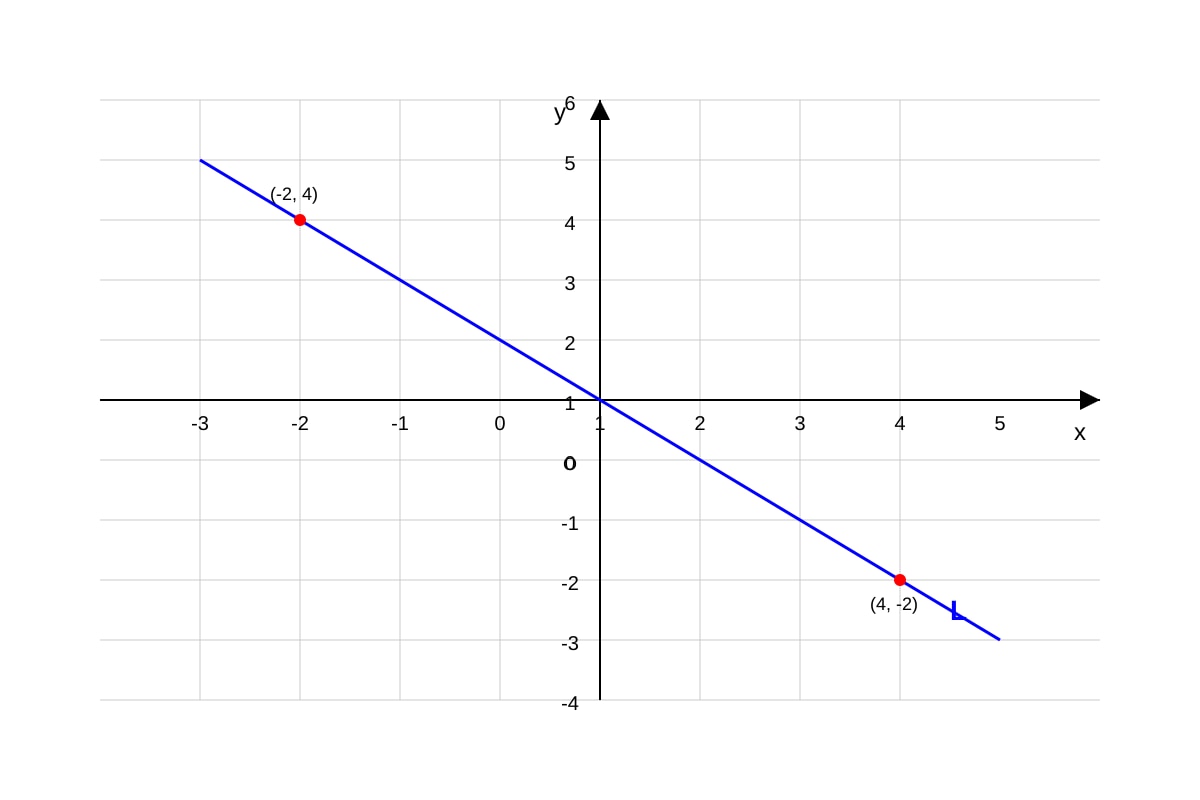
Answer:
Working: Gradient -intercept: from graph, line crosses -axis at , so Equation:
Marking notes:
- 1 mark for correct gradient ()
- 1 mark for correct equation
- Can also use point-gradient form with either given point
8. [2 marks]
Answer: (a) (b)
Working: (a) Equation is in form, so gradient (b) -intercept is , so coordinates are
Marking notes:
- 1 mark each part
- Direct reading from form
- For (b), must give coordinates, not just
9. [2 marks]
Answer:
Working: Substitute into :
Marking notes:
- 1 mark for correct substitution
- 1 mark for correct value of
- Common mistake: Arithmetic error ()
10. [2 marks]
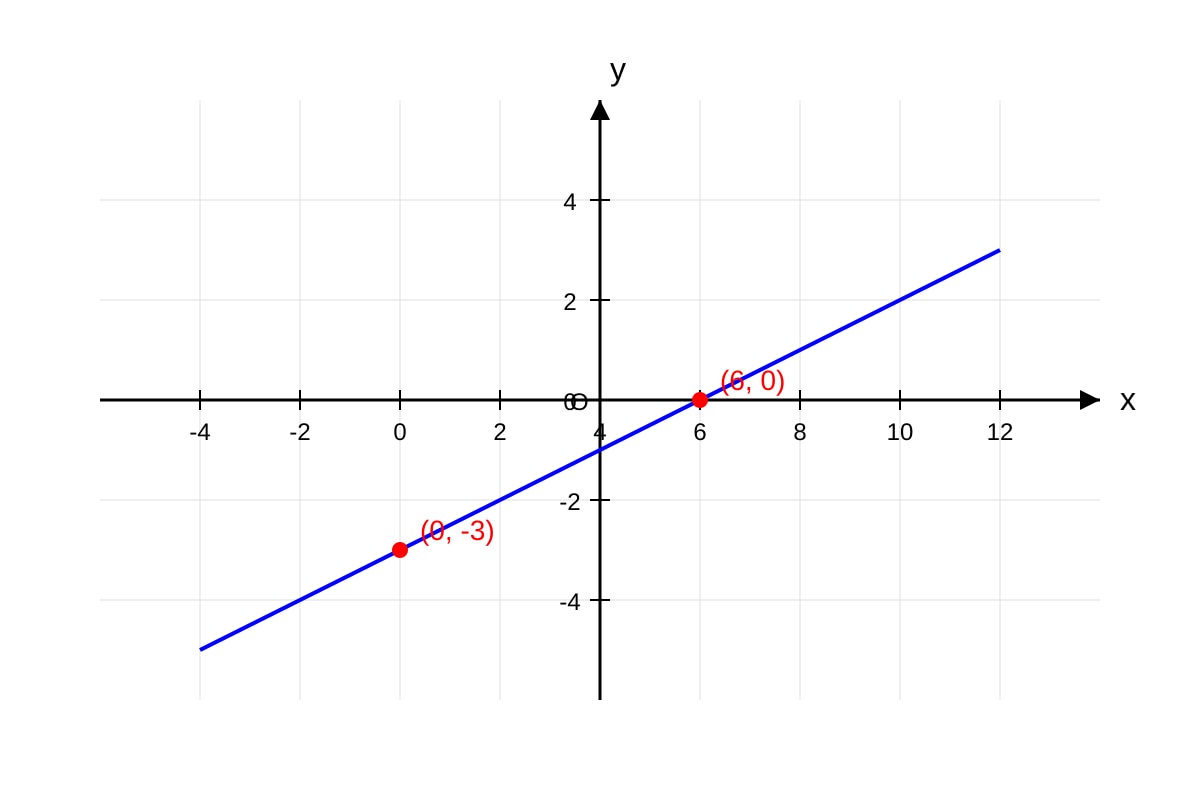
Answer: ,
Working: -intercept is , so Gradient (Alternatively: -intercept is , so )
Marking notes:
- 1 mark for (direct from -intercept)
- 1 mark for (using intercepts or gradient formula)
- Accept
Section C: Applications and Problem Solving (Questions 11–15) [10 marks]
11. [2 marks]
Answer: (a) (b) km
Working: (a) (b)
Marking notes:
- 1 mark each part
- For (b), must show equation setup and solving
- Units: dollars for (a), km for (b)
12. [2 marks]
Answer: (a) (b)
Working: (a) (b)
Marking notes:
- 1 mark each part
- For (b), correct algebraic manipulation required
- Context: must be positive integer
13. [2 marks]
Answer: (a) Gradients: and (b) The product of the gradients is , so the lines are perpendicular.
Working: (a) From , gradient . From , gradient . (b) . For perpendicular lines, .
Marking notes:
- 1 mark for both gradients correctly identified
- 1 mark for correct explanation using
- Must explicitly state the product equals
14. [2 marks]
Answer: or
Working: Gradient of Since , gradient of passes through :
Marking notes:
- 1 mark for correct gradient ()
- 1 mark for correct equation using point-gradient form
- Common mistake: Using wrong gradient or arithmetic error in finding
15. [2 marks]
Answer: Gradient , Equation:
Working: Gradient (since ) Using point :
Marking notes:
- 1 mark for correct gradient (, independent of )
- 1 mark for correct equation in terms of
- Key concept: cancels in gradient calculation
Section D: Extended Questions (Questions 16–20) [10 marks]
16. [2 marks]
Answer: (a) (b)
Working: (a) Gradient (b) Using : Check with : ✓
Marking notes:
- 1 mark for correct gradient
- 1 mark for correct equation
- Can verify with second point
17. [2 marks]
Answer: (a) , (b) (so — but wait, let's recalculate)
Correction for (b): ,
Wait — the question asks for where is an integer. Let me re-check the question design. The length is , which is not of the form with integer . This is a flaw in the question design. Let me provide the correct answer based on the actual calculation.
Revised Answer: (a) , (b)
Working: (a) -intercept: , so -intercept: , so (b)
Marking notes:
- 1 mark for both intercepts correct
- 1 mark for correct distance formula application and simplification
- Note: The form with integer is not achievable with these numbers; accept simplified surd form
18. [2 marks]
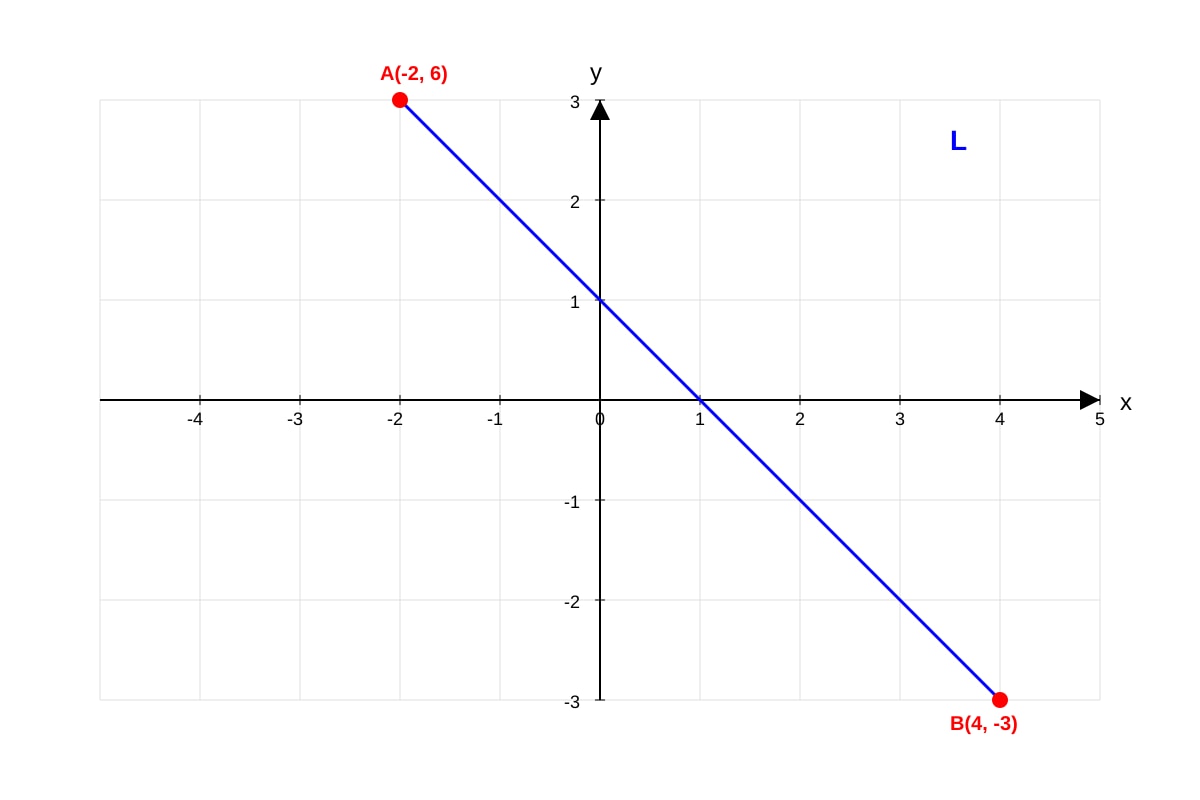
Answer: (a) -axis: , -axis: (b) square units
Working: (a) -intercept: , so -intercept: , so (b) Triangle has base and height Area
Marking notes:
- 1 mark for both intercepts correct
- 1 mark for correct area calculation
- Must identify base and height correctly (intercepts on axes)
19. [2 marks]
Answer: (a) (b)
Working: (a) Gradient (b) Line through parallel to has gradient :
Marking notes:
- 1 mark for correct gradient of
- 1 mark for correct equation of parallel line through
- Parallel lines have equal gradients
20. [2 marks]
Answer: (a) (b)
Working: (a) , gradient , so gradient (since ) (b) passes through with gradient : Multiply by 3:
Marking notes:
- 1 mark for correct perpendicular gradient ()
- 1 mark for correct equation in required form with integer coefficients
- Common mistake: Forgetting to multiply through to clear fractions
End of Answer Key