AI Generated Quiz
Secondary 2 History Singapore Southeast Asia Quiz
Free Sec 2 History Singapore SEA quiz, HY3 AI version, with questions, answers, and syllabus-aligned practice for Singapore students.
These static practice materials are generated from the site's syllabus and paper-generation workflow, with source and model context shown so students and parents can evaluate the material before use.
Questions
Free quiz and exam paper access
Enter your details to view this paper
Your access is remembered on this device.
Answers
Secondary 2 History Quiz - Answer Key
Topic: Singapore Southeast Asia
Level: Secondary 2
Total Marks: 40
Section A: Source-Based Questions
Q1. [3 marks]
Teaching note: Inference means reading what the source implies beyond the literal words.
- Source A says "We are afraid" and neighbour hid sons → fear for safety (1 mark)
- "No rice left in the market" → shortage/hardship (1 mark)
- "British have left" → loss of protection/uncertainty (1 mark)
Answer: Ordinary people felt afraid, unsafe, and faced shortages after the British left and Japanese arrived.
Q2. [2 marks]
- To promote Japanese propaganda / show harmony (1 mark)
- To gain support for Japanese rule / "Asia for Asians" idea (1 mark)
Answer: To persuade people that Japanese rule brought peace and unity.
Q3. [4 marks]
Marking: Identify difference (1), explain with Source A (1), explain with Source B (1), provenance reason (1).
- Source A shows fear, hunger, real suffering.
- Source B shows happy family, propaganda.
- Difference because A is personal diary (truthful emotion), B is official poster (biased propaganda).
Answer: Very different: A shows terror, B shows fake happiness; due to source type and purpose.
Q4. [2 marks]
- He supported merger strongly (1)
- He believed separation would ruin economy (1)
Answer: Lee Kuan Yew saw merger as necessary and separation as harmful.
Q5. [3 marks]
- Both mention Singapore–Malaysia link ended (1)
- C expects merger; D states independence happened (1)
- Similar in showing relation changed; differ in hope vs result (1)
Answer: They are similar in showing breakdown of merger but differ in timing/view.
Q6. [2 marks]
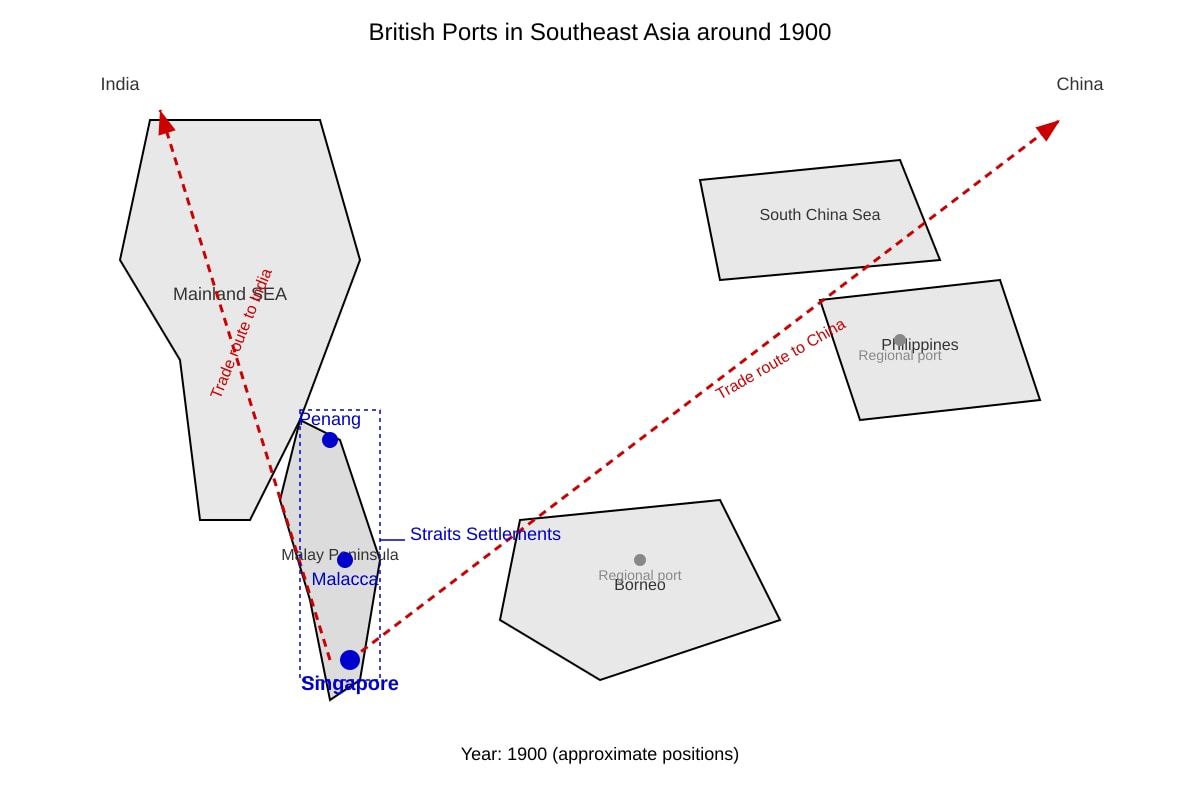
- Singapore on route between India and China (1)
- Easy stopover for British trade (1)
Answer: Strategic location made it a key port for British trade routes.
Q7. [2 marks]
- Diary is one person's view (1)
- May not show Malay/European experience (1)
Answer: It is a single account and may miss other groups' experiences.
Section B: Structured Response
Q8. [10 marks]
Descriptors: L1 1–3 (list reasons), L2 4–6 (some explain), L3 7–10 (detailed evidence).
Reason 1: Political disagreement – PAP's "Malaysian Malaysia" vs UMNO Malay dominance; 1964 riots. (5 marks: state 1, explain 4)
Reason 2: Economic & racial tensions – fear of spread of Singapore policies; breakdown of trust. (5 marks)
Answer: Two explained reasons with specific links to 1965 separation.
Q9. [4 marks]
- Military control via kempeitai (1) + explanation (1)
- Propaganda / Co-Prosperity Sphere (1) + explanation (1)
Answer: Japanese used force and propaganda to control locals.
Section C: Knowledge
Q10. [1] Temasek
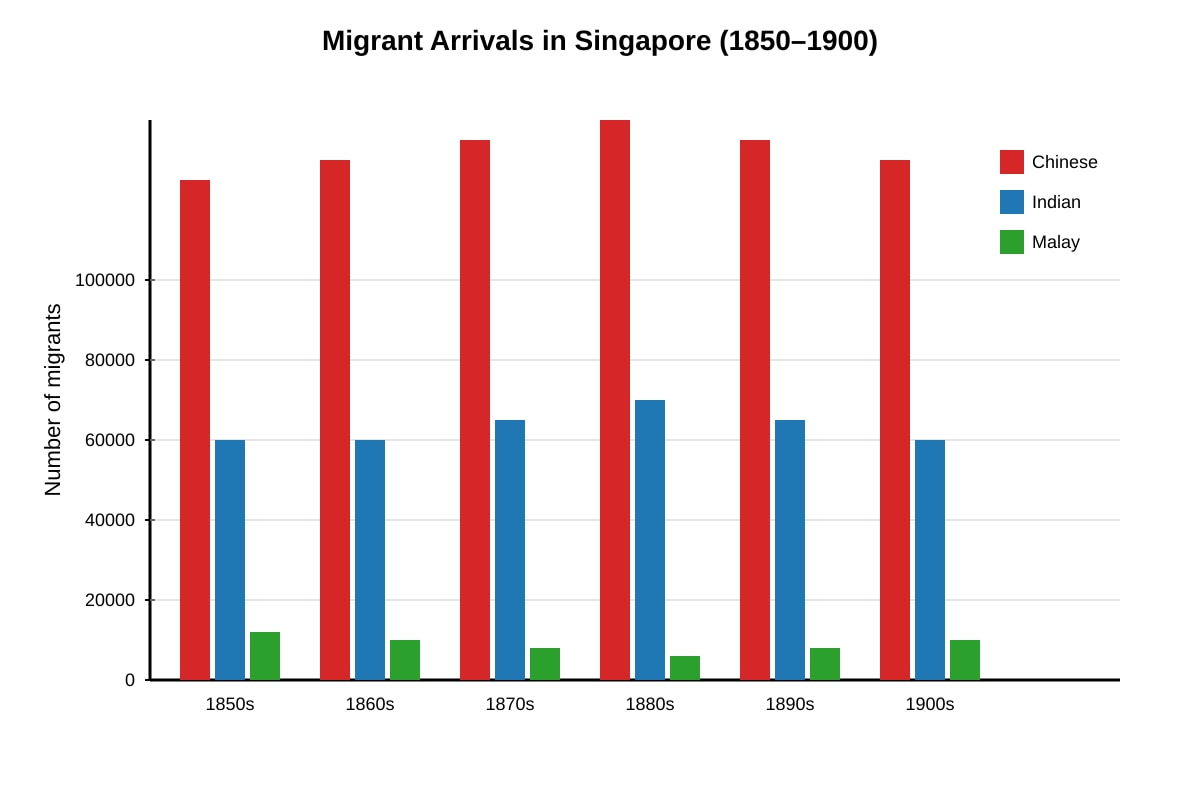
Q11. [1] Poverty / war in China (any push factor)
Q12. [1] Japanese propaganda for Asian unity under Japan
Q13. [3] Suez Canal shortened Europe–Asia route (1); more ships passed Singapore (1); trade increased (1).
Q14. [1] British surrendered in 7 days / could not defend.
Q15. [1] Chinese (from chart bars highest).
Q16. [2] Occupation showed British weak (1); grew desire for self-rule (1).
Q17. [1] Straits Settlements / East India Company post.
Q18. [1] Education / public health / law.
Q19. [2] Temasek declined (1); Johor took over regional trade (1).
Q20. [1] To block Dutch / secure British trade.