AI Generated Quiz
Secondary 2 History Conflict International Relations Quiz
Free Sec 2 History Conflict IR quiz, HY3 AI version, with questions, answers, and syllabus-aligned practice for Singapore students.
These static practice materials are generated from the site's syllabus and paper-generation workflow, with source and model context shown so students and parents can evaluate the material before use.
Questions
Free quiz and exam paper access
Enter your details to view this paper
Your access is remembered on this device.
Answers
Secondary 2 History Quiz - Answer Key (Conflict International Relations)
Total Marks: 40
Note: Syllabus-first practice content from LLM-inferred templates; not past-year exam derived.
Section A: Short Recall (1 mark each)
Q1. Anglo-Dutch rivalry
Teaching note: Britain and the Netherlands competed for spice trade and ports in Southeast Asia. "Anglo" means British.
Q2. 1819
Teaching note: Raffles landed in Singapore on 28 Jan 1819 and signed a treaty with local rulers.
Q3. Suez Canal
Teaching note: Opened 1869, shortened route from Europe to Asia, boosting Singapore's port trade.
Q4. Japan
Teaching note: Japan attacked and occupied Singapore in Feb 1942 during WWII.
Q5. World War II (or Second World War)
Teaching note: Britain was fighting Germany; this weakened its defence in Asia.
Q6. Cold War
Teaching note: USA vs USSR, 1947–1991, influenced decolonisation and communist fears in SEA.
Q7. PAP (People's Action Party)
Teaching note: Formed 1954, led by Lee Kuan Yew, governed during merger.
Q8. 1965
Teaching note: Singapore separated from Malaysia on 9 Aug 1965.
Q9. Malayan Communist Party (MCP) / communist terrorists
Teaching note: Used strikes and armed struggle; Brunei revolt and Konfrontasi linked.
Q10. British military withdrawal (from Singapore/East of Suez)
Teaching note: Announced 1967, completed 1971, left defence gap.
Section B: Source-Based (marks as per question)
Q11. [2 marks]
Answer: The British saw the Dutch as rivals who claimed too much land, and Britain wanted to limit them.
Marking: 1 mark for inference (rivalry/competition) + 1 mark for using source detail "checking the Dutch".
Teaching: Source A is a British report, so it shows pro-British bias. "Checking" means stopping Dutch power.
Q12. [2 marks]
Answer: To win local support by showing Japan as liberator from Western colonial rule.
Marking: 1 mark purpose + 1 mark reference to "Asia for Asians" text.
Teaching: Propaganda poster = one-sided message to influence people.
Q13. [3 marks]
Answer: Source C shows fear and personal suffering; Source D shows official force and control by order.
Marking: 1 mark C personal + 1 mark D official + 1 mark contrast explained.
Teaching: Diary = personal experience; military order = systematic control method.
Q14. [2 marks]
Answer: Malaysia was dominant; Singapore was small/weak partner. Detail: horse (big) pulls cart (small).
Marking: 1 mark inference + 1 mark detail.
Teaching: Cartoon uses size to show power imbalance.
Q15. [2 marks]
Answer: He saw separation as unfortunate but needed for peace. Detail: "painful but necessary".
Marking: 1 mark view + 1 mark quote.
Teaching: Speech shows leader's public reasoning.
Q16. [2 marks]
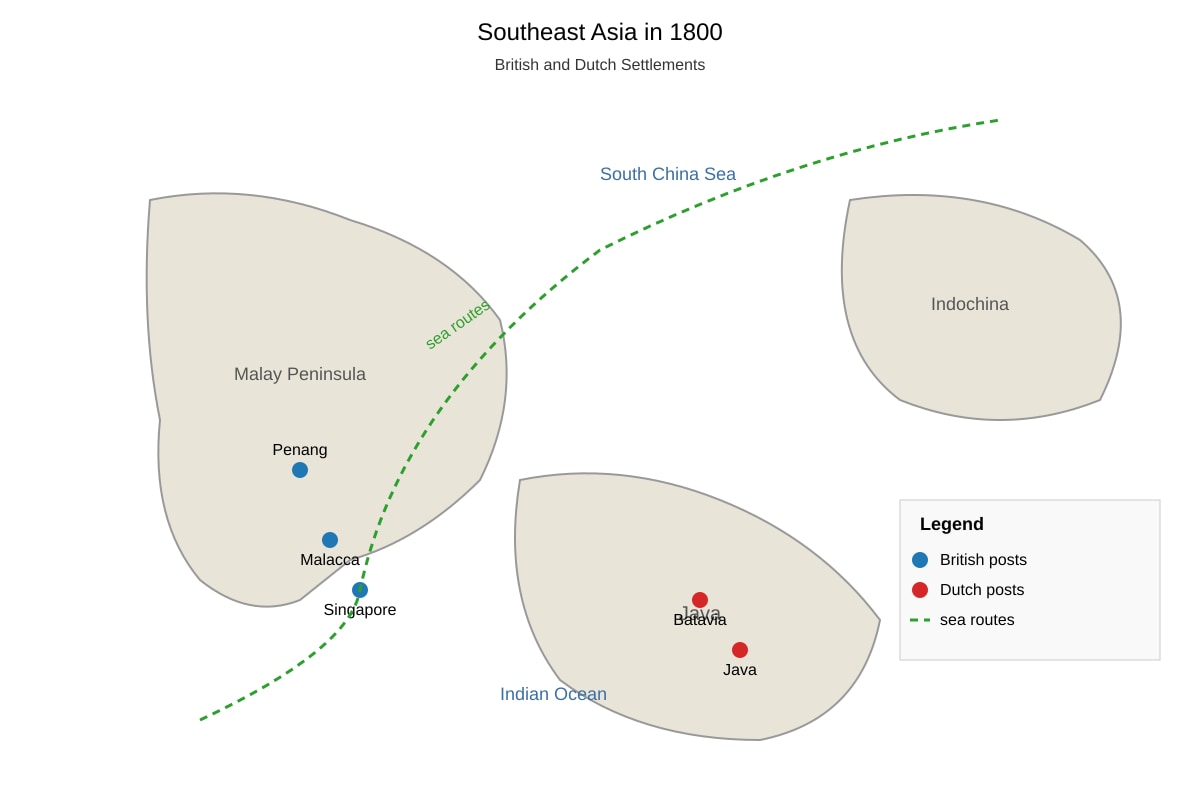
Answer: Singapore sat on the trade route between India and China, so both powers wanted it.
Marking: 1 mark location + 1 mark link to conflict.
Teaching: Map shows British and Dutch dots close; control of route = rivalry.
Section C: Structured (marks as per question)
Q17. [3 marks]
Answer: Cold War made Britain and locals fear communism; this shaped merger to counter communist threat.
Marking: L1 1 mark identify Cold War; L2 2–3 marks explain link to SG independence/security.
Teaching: Cold War = global US-USSR contest; local communists seen as danger.
Q18. [4 marks]
Answer: (1) Dutch controlled Malacca, so Raffles needed a rival free port — 2 marks with detail. (2) Singapore's location on route let Britain break Dutch monopoly — 2 marks.
Marking: 2+2 for two reasoned reasons.
Teaching: Anglo-Dutch rivalry = context; Singapore offered strategic alternative.
Q19. [3 marks]
Answer: Fall of Singapore showed Britain could not protect colony; locals lost trust in British defence.
Marking: 1 mark event + 2 marks effect on attitudes.
Teaching: 1942 defeat shattered myth of European superiority.
Q20. [5 marks]
Answer: (1) Anglo-Dutch rivalry (1819) — 2 marks; (2) WWII / Japanese occupation (1942) — 2 marks; (3) Cold War / Konfrontasi — 1 mark if added.
Marking: 2+2+1 or two full reasons at 2.5 each.
Teaching: International rivalry repeatedly shaped SG's fate before self-rule.