AI Generated Quiz
Secondary 2 History Ancient Civilisations Quiz
Free Sec 2 History Ancient Civilisations quiz, HY3 AI version, with questions, answers, and syllabus-aligned practice for Singapore students.
These static practice materials are generated from the site's syllabus and paper-generation workflow, with source and model context shown so students and parents can evaluate the material before use.
Questions
Free quiz and exam paper access
Enter your details to view this paper
Your access is remembered on this device.
Answers
Secondary 2 History Quiz - Ancient Civilisations (Answer Key)
Total Marks: 40
Note: Syllabus-first practice content from LLM-inferred templates. Not exam-derived; past-paper evidence for this topic is weak.
Section A: Short Recall (1 mark each)
-
Temasek [1]
Teaching: Early Singapore was called Temasek in the 1300s, before the name Singapore was used. -
Srivijaya [1]
Teaching: Srivijaya was a maritime empire; its fall let new ports like Temasek grow. -
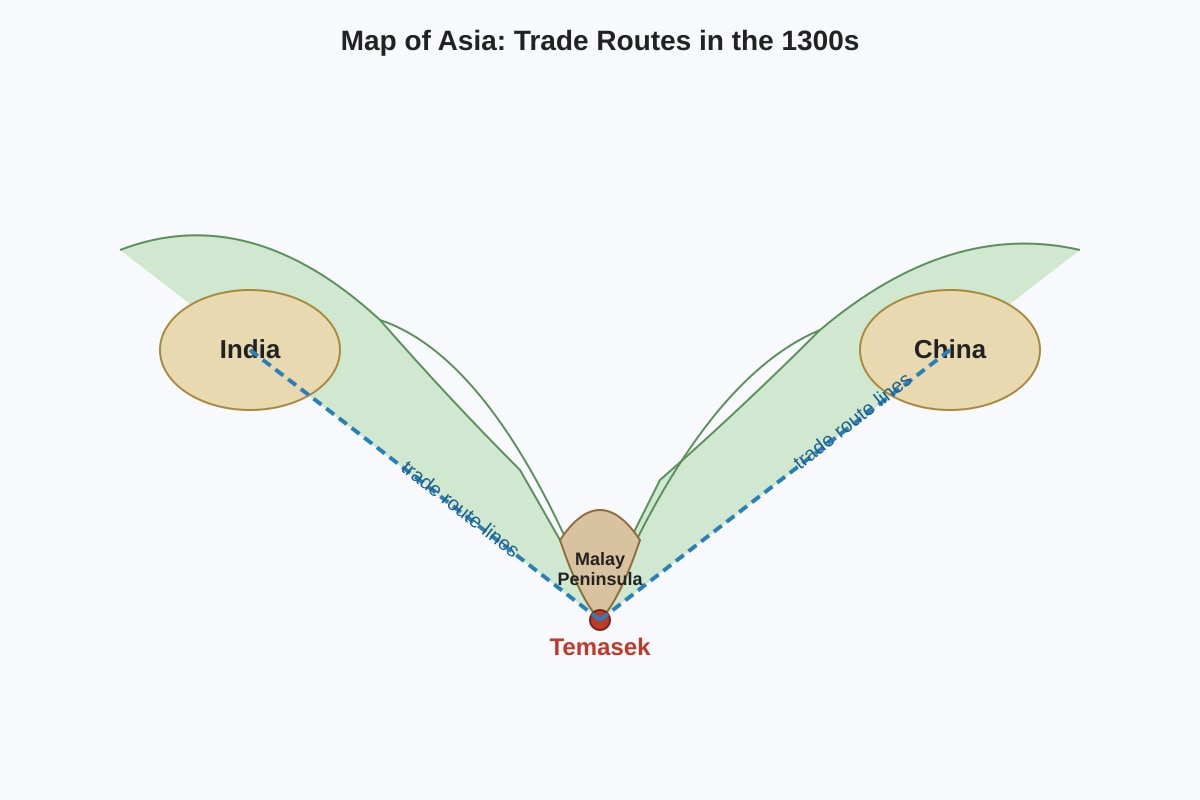
Strategic location on trade routes (or similar: between India and China) [1]
Teaching: Geography gave Temasek access to passing ships. -
Melaka [1]
Teaching: Melaka became the main port in the region in the 1400s. -
Portuguese [1]
Teaching: Portugal captured Melaka in 1511, changing regional control. -
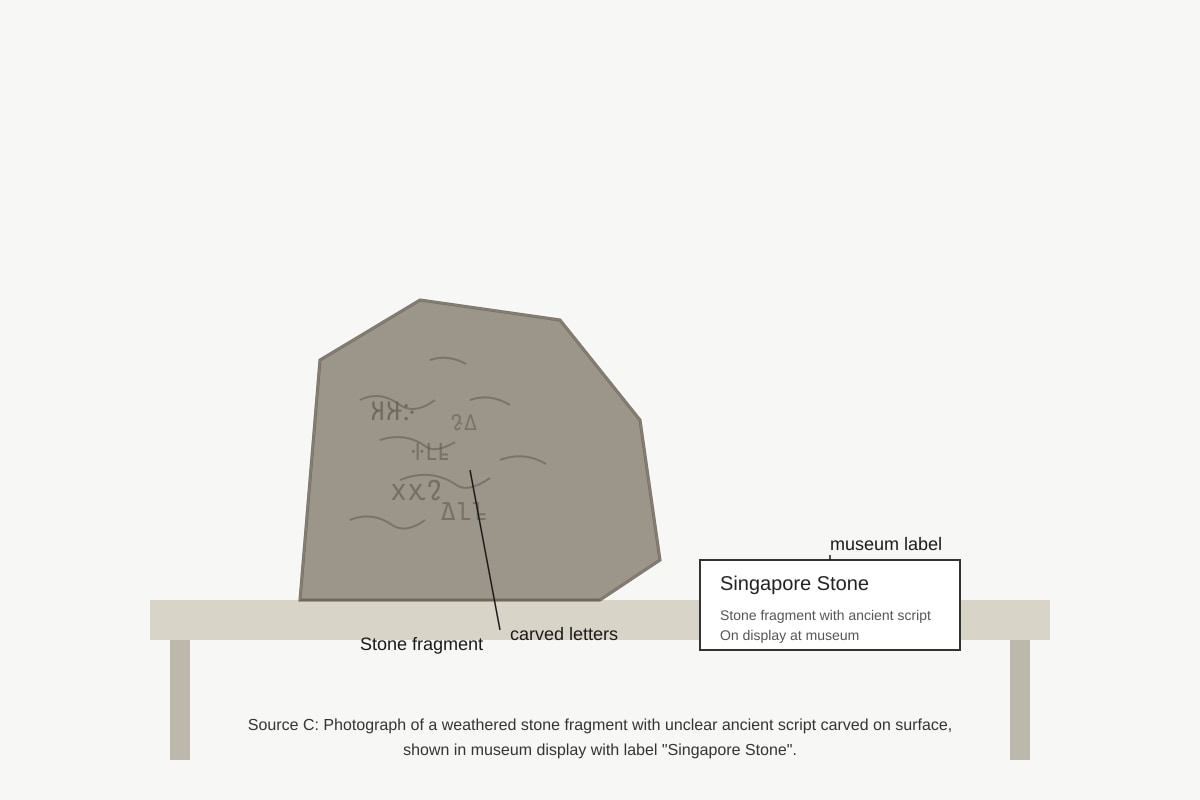
Singapore Stone [1]
Teaching: The Singapore Stone had ancient writing, showing early habitation. -
Khmer (or Angkor civilisation) [1]
Teaching: The Khmer built Angkor Wat in Cambodia. -
Spices / silk / pottery (any one trade good) [1]
Teaching: Temasek traded goods between India and China. -
Malay rulers / descendants of Melaka court [1]
Teaching: After Melaka fell, Johor Sultanate was formed by Malay elites. -
Archaeology / studying artefacts / oral history [1]
Teaching: With few records, physical finds help historians.
Section B: Source-Based (marks as per question)
- [2]
- Inference: Temasek was an active trading port that welcomed foreign ships and taxed trade.
- Explanation: Source A says "many ships from India and China" and "collected tax", so it was a trade hub.
Marking: 1 mark for inference, 1 mark for using source detail.
- [2]
- Answer: Source B says after Srivijaya fell Temasek rose, but by 1400s Melaka took most trade.
- Marking: 1 mark for rise after Srivijaya, 1 mark for Melaka attracting trade.
- [3]
- Similarity: Both say Temasek was a trading port. Source A (trader's letter) shows real visits; Source B (textbook) states it was "busy port".
- Difference reason: A is personal view, B is general history.
- Marking: 1 mark similarity, 1 mark source A ref, 1 mark source B ref / explanation.
- [2]
- Answer: It is physical evidence of writing from early times, showing people lived and communicated there.
- Marking: 1 mark physical evidence, 1 mark link to civilisation. Image must show carved stone in museum.
- [2]
- Answer: Temasek was between India and China on sea routes, so it could meet both.
- Marking: 1 mark location stated, 1 mark explanation of trade benefit. Map must show Temasek between the two.
- [2]
- Answer: Not fully reliable because it is a modern artist's drawing, not from the period.
- Marking: 1 mark "not reliable / limited", 1 mark reason (modern, interpretation).
Section C: Structured (marks as per question)
- [3]
- Reason: Melaka's rise drew traders away; Temasek lost tax and visitors.
- Marking: 1 mark statement, 2 marks explanation of effect on Temasek.
- [4]
- Feature 1: Angkor (Khmer) built large temples showing organised labour/religion.
- Feature 2: Srivijaya controlled sea trade with ports and ships.
- Marking: 2 marks each feature with brief description.
- [3]
- Answer: Archaeology finds objects (pots, stones) that show how people lived when no books exist.
- Marking: 1 mark definition, 2 marks application to Temasek.
- [5]
- Answer: Temasek sat on route between India and China (1). Ships stopped to trade (1). Local ruler gained tax (1). Different cultures met (1). This made it a global link early on (1).
- Marking descriptors: L1 1–2 list location; L2 3–4 explain trade; L3 5 full chain.