AI Generated Quiz
Secondary 2 Higher Tamil Comprehension Quiz
Free Sec 2 Higher Tamil Comprehension quiz, Nemo3 AI version, with questions, answers, and syllabus-aligned practice for Singapore students.
These static practice materials are generated from the site's syllabus and paper-generation workflow, with source and model context shown so students and parents can evaluate the material before use.
Questions
Free quiz and exam paper access
Enter your details to view this paper
Your access is remembered on this device.
Answers
Secondary 2 Higher Tamil Quiz - Comprehension (Answer Key)
Total Marks: 40
Section A: Narrative Passage (Questions 1–10) [20 marks]
1. முருகன் எங்கே தாமதித்திருந்தார்? [1]
Answer: சென்னையில் ஒரு சிறிய வீட்டில்.
Explanation: The passage opens with "சென்னையில் ஒரு சிறிய வீட்டில் முருகன் தந்தையுடன் தாமதித்தார்" (Murugan lived with his father in a small house in Chennai). Direct retrieval question.
Marking: 1 mark for correct location.
2. முருகனின் தந்தை என்ன வேலை செய்து வந்தார்? [1]
Answer: ஒரு தொழிற்சாலையில் வேலை செய்து வருமானம் சம்பாதித்தார்.
Explanation: Text states "அவருடைய தந்தை ஒரு தொழிற்சாலையில் வேலை செய்து வருமானம் சம்பாதித்தார்" (His father worked in a factory and earned income).
Marking: 1 mark for "தொழிற்சாலை" or "வேலை செய்து வருமானம் சம்பாதித்தார்".
3. முருகன் பள்ளியில் இருந்து வந்த பிறகு என்ன செய்தார்? [1]
Answer: வீட்டில் உதவி செய்து தந்தையை எளிதாக்க முயற்சித்தார்.
Explanation: "முருகன் பள்ளியில் படித்து வந்த பிறகு, வீட்டில் உதவி செய்து தந்தையை எளிதாக்க முயற்சித்தார்" (After returning from school, Murugan helped at home and tried to make things easier for his father).
Marking: 1 mark for helping at home / easing father's burden.
4. ஒரு நாள் முருகன் வீட்டிற்கு வந்து விட்டு என்ன கண்டார்? [1]
Answer: தந்தை வீட்டில் இல்லை.
Explanation: "ஒரு நாள், முருகன் பள்ளியில் இருந்து வீட்டிற்கு வந்து விட்டு, தந்தை வீட்டில் இல்லை எனக் கண்டார்" (One day, Murugan returned home from school and found his father not at home).
Marking: 1 mark for father not being at home.
5. முருகன் தந்தையை எப்படி தொடர்பு கொண்டார்? [1]
Answer: தந்தையின் தொலைபேசியில் அழைத்தார்.
Explanation: "அப்போது முருகன் தந்தையின் தொலைபேசியில் அழைத்து..." (Then Murugan called his father's mobile phone).
Marking: 1 mark for calling on mobile/phone.
6. தந்தை முருகனுக்கு எங்கே இருக்கிறார் என்று கூறினார்? [1]
Answer: கடையில் இருக்கிறேன்.
Explanation: Father replies: "நான் கடையில் இருக்கிறேன், வீட்டிற்கு வருகிறேன்" (I am at the shop, coming home).
Marking: 1 mark for "கடை" (shop).
7. முருகன் தந்தைக்கு என்ன செய்து வைக்கிறேன் என்று கூறினார்? [1]
Answer: சமையல் செய்து வைக்கிறேன்.
Explanation: Murugan says: "நான் சமையல் செய்து வைக்கிறேன், நீங்கள் வந்து சாப்பிடலாம்" (I will cook and keep it ready, you can come and eat).
Marking: 1 mark for cooking/preparing food.
8. தந்தை வீட்டிற்கு வந்து என்ன செய்தார்? [1]
Answer: முருகன் செய்த சமையலை சாப்பிட்டார்.
Explanation: "தந்தை வீட்டிற்கு வந்து, முருகன் செய்த சமையலை சாப்பிட்டு..." (Father came home and ate the food Murugan cooked).
Marking: 1 mark for eating the food Murugan cooked.
9. தந்தை முருகனின் சமையலை பற்றி என்ன கூறினார்? [2]
Answer: "நீங்கள் மிகவும் நன்றாக சமைத்துள்ளீர்கள், எனக்கு பெருமை" (You have cooked very well, I am proud).
Explanation: Direct quote from the passage. Father praises the cooking and expresses pride.
Marking: 1 mark for "நன்றாக சமைத்துள்ளீர்கள்" (cooked well), 1 mark for "எனக்கு பெருமை" (proud of me).
10. இந்தக் கடிதத்தில் முருகனற்று எந்த நல்ல பண்புகள் காணப்படுகின்றன? இரண்டு கூறுக. [2]
Answer:
(i) பொறுப்பு உணர்வு / தந்தையை உதவும் இயல்பு (Responsibility / helping father)
(ii) தன்னம்பிக்கை / தன்னிறைவாக சமையல் செய்வதற்கும் திறன் (Self-confidence / ability to cook independently)
Explanation: Inference question. Murugan takes initiative to help at home (responsibility) and cooks a meal on his own when father is away (independence, care). Accept any two valid traits with evidence from text.
Marking: 1 mark per valid trait with brief justification. Common traits: பொறுப்பு, அன்பு, தன்னிறைவு, பரிவாத்தல்.
Section B: Expository Passage (Questions 11–15) [10 marks]
11. மரங்கள் கார்பன் டைஆக்சைடு உட்கொண்டு என்ன வெளியேற்றுகின்றன? [1]
Answer: ஆக்சிஜன்.
Explanation: "அவை கார்பன் டைஆக்சைடு உட்கொண்டு ஆக்சிஜனை வெளியேற்றுகின்றன" (They absorb carbon dioxide and release oxygen). Direct fact retrieval.
Marking: 1 mark for "ஆக்சிஜன்" (oxygen).
12. மரங்கள் மண்ணை பேறுவதைத் தடுக்கின்றன என்பதை விளக்குக. [2]
Answer: மரங்களின் வேர் மண்ணை பிடித்து நிற்கும், மழை நீர் மண்ணை தள்ளிச் செல்லுவதைத் தடுக்கிறது.
Explanation: Tree roots bind the soil together, preventing rainwater or wind from washing/blowing away the topsoil. This is the mechanism of erosion prevention.
Marking: 1 mark for roots holding soil, 1 mark for preventing rain/wind erosion.
13. இன்று மரங்கள் என்ன ஆவதால் பிரச்சினை ஏற்படுகிறது? [1]
Answer: வெட்டப்படுகின்றன / வெட்டப்படுவதால்.
Explanation: "ஆனால் இன்று மரங்கள் வெட்டப்படுகின்றன. இதனால் மழை குறைகிறது..." (But today trees are being cut down. Because of this, rainfall decreases...).
Marking: 1 mark for "வெட்டப்படுகின்றன" (being cut down).
14. மரங்கள் வெட்டப்படுவதால் ஏற்படும் سهம் விளைவுகளை இரண்டு கூறுக. [2]
Answer:
(i) மழை குறைகிறது (Rainfall decreases)
(ii) மண் பேறுகிறது (Soil erosion occurs)
(iii) வானிலை மாற்றம் ஏற்படுகிறது (Climate change occurs) — any two.
Explanation: Passage lists three consequences: "இதனால் மழை குறைகிறது. மண் பேறுகிறது. வானிலை மாற்றம் ஏற்படுகிறது."
Marking: 1 mark per correct consequence (max 2).
15. "உலகம் பசுமையாக மாறும்" என்ற வாக்கியத்தின் பொருள் என்ன? உங்கள் சொற்களில் விளக்குக. [2]
Answer: ஒவ்வொருவரும் ஒரு மரம் நடும் போது, மரங்கள் அதிகமாக வளர்ந்து, சூழல் பசுமையாகவும் ஆரோக்கியமாகவும் மாறும்.
Explanation: Metaphorical meaning. "பசுமையாக மாறும்" means the world becomes greener, healthier, more environmentally sustainable through collective tree-planting efforts.
Marking: 1 mark for idea of more trees/greenery, 1 mark for environmental benefit/sustainability. Must be in own words (not direct copy).
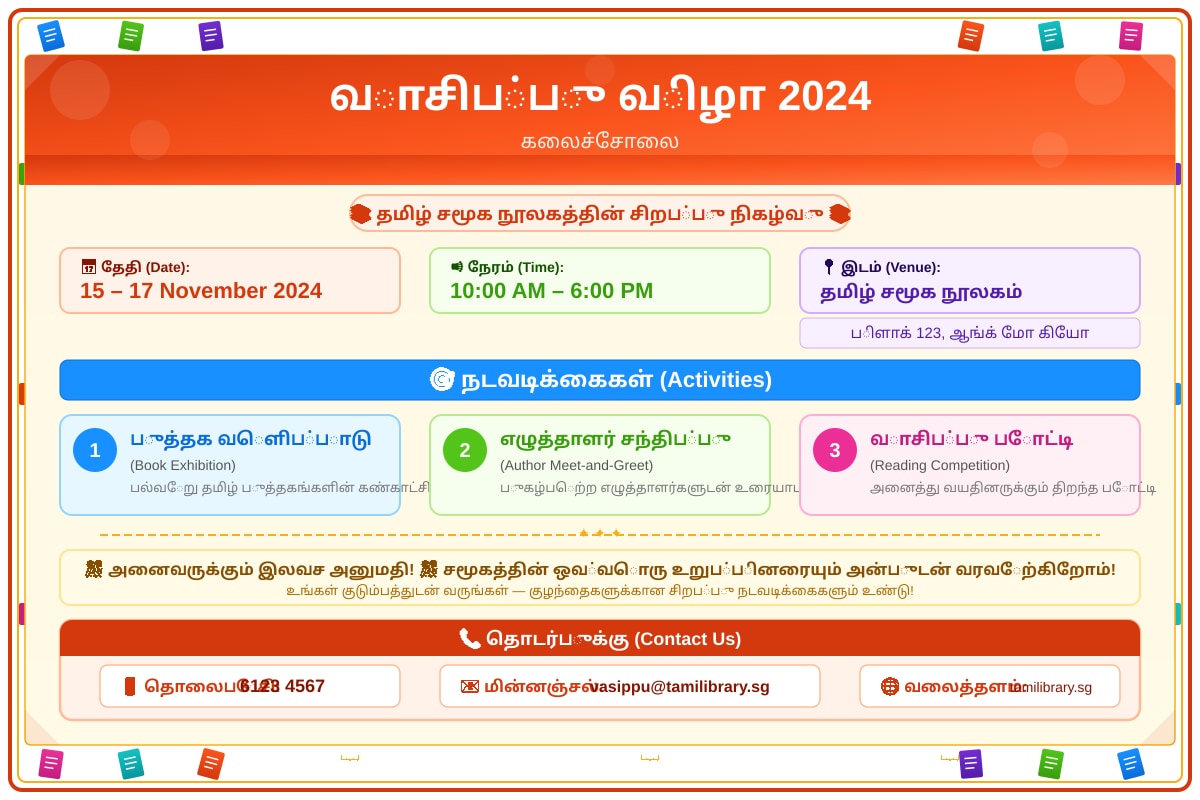
Section C: Visual Text Comprehension (Questions 16–20) [10 marks]
16. இந்த விளம்பரத்தில் அறிவிக்கப்பட்ட நிகழ்வு என்ன? [1]
Answer: வாசிப்பு விழா 2024 (Reading Festival 2024).
Explanation: Poster title clearly states "வாசிப்பு விழா 2024".
Marking: 1 mark for correct event name.
17. வாசிப்பு விழா எந்த தேதிகளில் நடக்கிறது? [1]
Answer: 15–17 நவம்பர் 2024 (15–17 November 2024).
Explanation: Date listed on poster: "15–17 November 2024".
Marking: 1 mark for correct date range.
18. நிகழ்வு எங்கே நடக்கிறது? முழு முகவரியை எழுதுக. [1]
Answer: தமிழ் சமூக நூலகம், பிளாக் 123, ஆங்க் மோ கியோ.
Explanation: Venue details from poster: "தமிழ் சமூக நூலகம், பிளாக் 123, ஆங்க் மோ கியோ".
Marking: 1 mark for complete address.
19. விளம்பரத்தில் குறிப்பிடப்பட்ட سهம் செயல்பாடுகளை எழுதுக. [3]
Answer:
(i) புத்தக வெளிப்பாடு (Book Exhibition)
(ii) எழுத்தாளர் சந்திப்பு (Author Meet-and-Greet)
(iii) வாசிப்பு போட்டி (Reading Competition)
Explanation: Three bullet-point activities listed on poster.
Marking: 1 mark per activity (total 3 marks). Must list all three for full marks.
20. நீங்கள் வாசிப்பு போட்டியில் பங்கேற்க விரும்பினால், எந்த எண்ணில் தொடர்பு கொள்ள வேண்டும்? [1]
Answer: 6123 4567
Explanation: Contact number listed at bottom of poster: "6123 4567".
Marking: 1 mark for correct phone number.
Marking Summary:
- Section A: 20 marks
- Section B: 10 marks
- Section C: 10 marks
- Total: 40 marks
Common Mistakes to Avoid:
- Q9: Copy only part of the quote; ensure both "cooked well" and "proud" are included for 2 marks.
- Q12: Vague answer like "roots hold soil" without mentioning rain/wind erosion prevention.
- Q15: Copying the phrase verbatim instead of explaining in own words.
- Q19: Missing one of the three activities.
- Q20: Giving email instead of phone number (question asks for "எண்ணில்" = number).