AI Generated Exam Paper
Secondary 2 Higher Tamil Practice Paper 5
Free Sec 2 Higher Tamil Practice Paper 5, Nemo3 AI version, with questions, answers, and syllabus-aligned practice for Singapore students.
These static practice materials are generated from the site's syllabus and paper-generation workflow, with source and model context shown so students and parents can evaluate the material before use.
Questions
Free quiz and exam paper access
Enter your details to view this paper
Your access is remembered on this device.
Answers
TuitionGoWhere Practice Paper - Higher Tamil Secondary 2 (Answer Key)
Subject: Higher Tamil
Level: Secondary 2
Paper: Practice Paper 5 (Comprehension Focus)
Total Marks: 50
Section A: Visual Text Comprehension [10 marks]
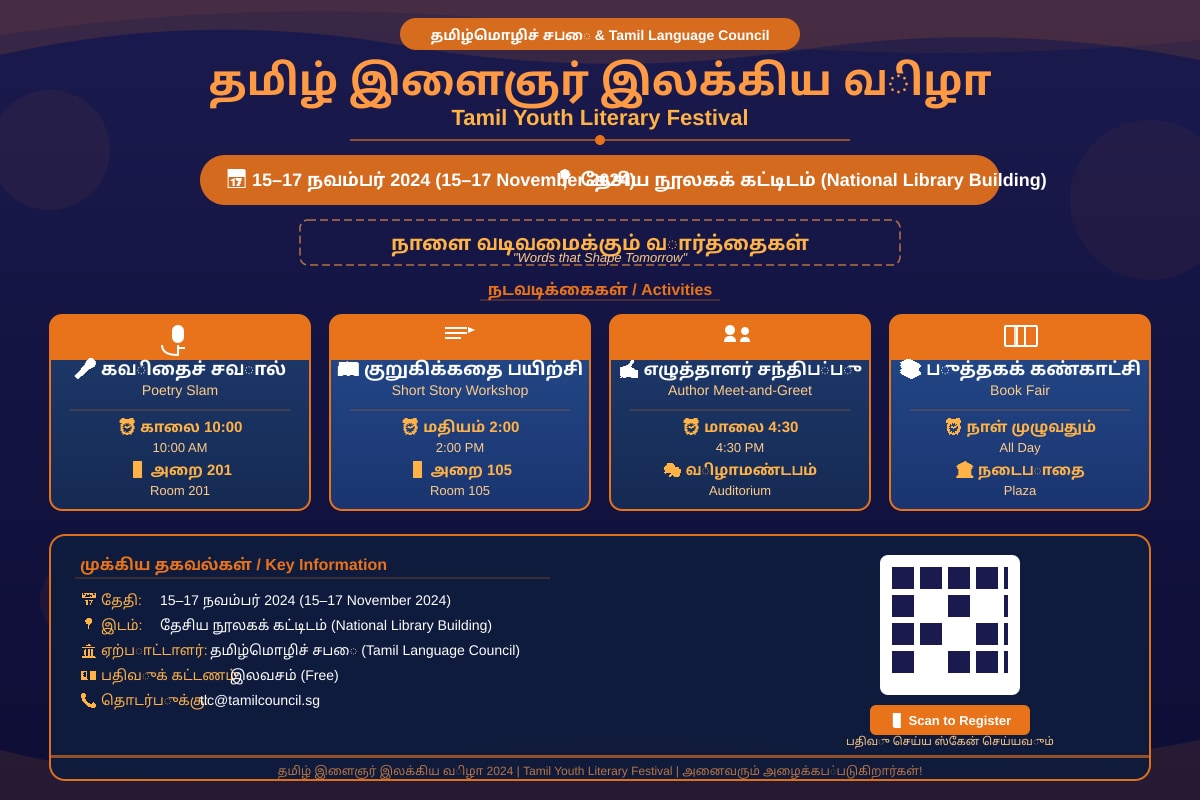
1. What is the main purpose of this poster? [1]
Answer: To promote the Tamil Youth Literary Festival and encourage registration. / தமிழ் இளைஞர் இலக்கிய விழாவை விளம்பரிக்கவும், பதிவு செய்ய ஊக்குவிக்கவும்.
Marking Note: Accept any answer that conveys promotion/invitation to attend the event.
2. Which activity would a student interested in improving their creative writing skills most likely attend? Give the name of the activity and its time. [2]
Answer: Short Story Workshop at 2:00 PM. / சிறுகதை பயிற்சி மாலை 2:00 மணிக்கு.
Marking Note: 1 mark for correct activity name, 1 mark for correct time.
3. The tagline "Words that Shape Tomorrow" suggests that the organisers believe language has the power to __________. [1]
Answer: influence the future / shape the future / create change for tomorrow. / எதிர்காலத்தை வடிவமைக்கும் சக்தி உள்ளது.
Marking Note: Accept any reasonable interpretation linking words to future impact.
4. If a participant wants to meet a published Tamil author in person, which activity should they attend and where is it held? [2]
Answer: Author Meet-and-Greet at the Auditorium. / ஆதர் சந்திப்பு, ஆடிடோரியத்தில்.
Marking Note: 1 mark for activity, 1 mark for venue.
5. How does the poster encourage immediate action from the reader? [1]
Answer: By including a QR code with the text "Scan to Register". / "ஸ்கேன் செய்யுங்கள், பதிவு செய்யுங்கள்" என்ற QR குறியீட்டை வழங்குவதன் மூலம்.
Marking Note: Must mention QR code and call to action.
Section B: Narrative Text Comprehension [20 marks]
6. Where was Anbu when he found the notebook? [1]
Answer: At his grandfather's old desk. / தாத்தாவின் பழைய மேஜையில்.
Marking Note: Accept "grandfather's study table" or equivalent.
7. Quote the phrase from the text that describes the condition of the study table. [1]
Answer: "தூசி மூடிய புத்தகங்கள், விசிரித்து கிடக்கும் காகிதங்கள்" (Dust-covered books, scattered papers).
Marking Note: Must be an exact quote from the text.
8. What does the title "என் நினைவுகள்" (My Memories) suggest about the notebook's content? [1]
Answer: It contains the grandfather's personal memories and life experiences. / அது தாத்தாவின் தனிப்பட்ட நினைவுகள் மற்றும் வாழ்வ அனுபவங்களை உள்ளடக்கியுள்ளது.
Marking Note: Accept answers indicating personal recount/memoir.
9. In paragraph 2, the writer says "ஒவ்வொரு பக்கமும் ஒரு பாடம். ஒவ்வொரு வரியும் ஒரு வாழ்வு." Explain in your own words what this means. [2]
Answer: Every page of the notebook teaches a lesson, and every line represents a life lived/experience. It means the notebook is full of wisdom and life stories. / ஒவ்வொரு பக்கமும் ஒரு மோசடி/கற்பனை அல்ல, ஒரு வாழ்வுப் பாடம். ஒவ்வொரு வரியும் ஒரு மனிதரின் அனுபவம்.
Marking Note: 1 mark for "each page = a lesson", 1 mark for "each line = a life/experience". Must be in own words, not direct translation.
10. What specific historical experience of the grandfather is mentioned in the passage? [1]
Answer: His experience of migrating/settling in Singapore. / சிங்கப்பூருக்கு வந்து குடியேறும் அனுபவம்.
Marking Note: Accept "coming to Singapore" or "migration experience".
11. How did Anbu feel when he read the line "நான் இன்று நீங்கள் வயதில், இந்த நகர் விதிவிலக்காக இருந்தது"? Support your answer with evidence from the text. [2]
Answer: Anbu felt sad/emotional/moved. Evidence: "அன்பு கண்கள் நிரம்பின" (Anbu's eyes filled with tears/welled up). / அன்பு துக்கம்/உருக்கம் அடைந்தார். ஆதாரம்: "அன்பு கண்கள் நிரம்பின".
Marking Note: 1 mark for correct emotion, 1 mark for textual evidence.
12. The word "விதிவிலக்காக" (forbidden/out of bounds) suggests that the city was __________ for the grandfather when he was young. [1]
**Answer:**inaccessible / restricted / not allowed to enter / forbidden. / தடை செய்யப்பட்டு / செல்ல முடியாது.
Marking Note: Accept any word conveying restriction/prohibition.
13. Why did Anbu decide to start writing at the end of the passage? [2]
Answer: To preserve/remember his grandfather's story and legacy. He was inspired by his grandfather's written memories. / தாத்தாவின் கதையையும் மரபையும் நினைவேற்றுவதற்காக. தாத்தாவின் எழுதிய நினைவுகள் அவனை অনুபவித்தன.
Marking Note: 1 mark for preserving grandfather's story, 1 mark for inspiration from the notebook.
14. Identify two literary devices used in the passage and give an example of each. [2]
Answer:
- Metaphor / உவமை: "ஒவ்வொரு வரியும் ஒரு வாழ்வு" (Every line is a life).
- Imagery / உருவச்சத்தம்: "தூசி மூடிய புத்தகங்கள், விசிரித்து கிடக்கும் காகிதங்கள்" (Dust-covered books, scattered papers) – visual imagery.
Other acceptable answers: Personification (memories 'live on'), Symbolism (notebook = legacy).
Marking Note: 1 mark per device + example. Device name in Tamil or English accepted.
15. What is the central theme of this passage? Choose the best answer. [1]
Answer: B. The power of written memories to connect generations. / எழுதப்பட்ட நினைவுகள் தலைமுறைகளை இணைப்பதற்கான சக்தி.
Marking Note: No partial marks.
Section C: Expository Text Comprehension [20 marks]
16. According to the passage, what are three digital platforms that help popularise Tamil among youth? [3]
Answer:
- Social media / சமூக வலைத்தளங்கள்
- Mobile applications / மொபைல் பயன்பாடுகள்
- Online education platforms / ஆன்லைன் கல்வி தளங்கள்
Marking Note: 1 mark each. Must be from the first paragraph.
17. Explain the challenge posed by "algorithms optimised for English" in your own words. [2]
Answer: Search engines and platform algorithms are designed primarily for English, so Tamil content ranks lower and is harder to find/discover. / தேடுதல் என்ஜின்கள் மற்றும் அல்காரிதங்கள் ஆங்கிலத்திற்காக வடிவமைக்கப்பட்டுள்ளன, எனவே தமிழ் உள்ளடக்கம் குறைந்த 順位 பெறுகிறது மற்றும் கண்டுபிடிக்க கடினம்.
Marking Note: 1 mark for "algorithms favour English", 1 mark for "Tamil content less visible/harder to find".
18. The passage states that youth "follow English typing methods". What is the consequence of this? [1]
Answer: They are unable to type proficiently in their mother tongue (Tamil). / தங்கள் தாய்மொழியில் (தமிழில்) தட்டச்சு செய்ய திறமையில்லாமல் போகின்றனர்.
Marking Note: Accept "lack of Tamil typing skills" or "dependence on English input methods".
19. List two initiatives mentioned in the passage that aim to promote digital Tamil usage. [2]
Answer:
- Tamil keyboard layouts / தமிழ் விசைப்பலகை அமைப்புகள்
- Tamil pronunciation software / தமிழ் உச்சரிப்பு மென்பொருள்
- Tamil language games / தமிழ் மொழி விளையாட்டுகள்
- Digital Tamil education programme in schools / பள்ளிகளில் டிஜிட்டல் தமிழ் கல்வி திட்டம்
(Any two)
Marking Note: 1 mark each.
20. "தமிழ் மொழியின் எதிர்காலம் இளைஞர்களின் கைகளில் உள்ளது." Do you agree with this statement? Give two reasons based on the passage and your own knowledge. [4]
Answer:
Yes, I agree.
Reason 1 (from passage): Youth are the primary users of digital platforms (social media, apps) which are key to expanding Tamil's presence online. The passage states digital tools are making Tamil popular among youth.
Reason 2 (from passage/own knowledge): Youth can create Tamil digital content (videos, blogs, games) that algorithms can index, improving visibility. Government/school initiatives (digital Tamil curriculum) equip them with skills to use technology for the language.
Reason 3 (own knowledge): Language survival depends on intergenerational transmission; if youth use Tamil in digital spaces, it normalises the language for future generations.
(Any two well-explained reasons)
Marking Note:
- 1 mark per reason (max 2 reasons).
- 1 mark per reason for explanation/development (max 2 marks for development).
- Total 4 marks.
- Must show logical reasoning. "Yes/No" alone gets 0 marks.
- Accept "No" if justified (e.g., "Policy and structural support matter more than individual youth action"), but must be well-argued.
End of Answer Key