AI Generated Quiz
Secondary 2 Higher Chinese Composition Quiz
Free Sec 2 HCL Composition quiz, AI version, with questions, answers, and syllabus-aligned practice for Singapore students.
These static practice materials are generated from the site's syllabus and paper-generation workflow, with source and model context shown so students and parents can evaluate the material before use.
Questions
Free quiz and exam paper access
Enter your details to view this paper
Your access is remembered on this device.
Answers
Secondary 2 Higher Chinese Quiz - Composition (Answer Key)
Name: _________________________ Class: _________________________ Date: _________________________ Score: ________ / 50
Section A: 词语选择 (Vocabulary in Context) [10 marks]
Choose the most appropriate word or phrase to fill in each blank. (1 mark each)
-
B. 认真
- Explanation: The sentence says he never does things carelessly ("从不马虎了事"). "认真" (serious, conscientious) is the opposite of "马虎" (careless). "马虎" and "随便" (casual) would contradict the sentence. "懒惰" (lazy) is not directly related to being careless.
- Marking: 1 mark for correct answer.
-
A. 激烈
- Explanation: The sentence describes a basketball game where the scores are very close ("比分一直很接近"). This implies a very competitive and intense game. "激烈" (intense, fierce) is the best fit. "平静" (calm), "无聊" (boring), and "简单" (simple) do not describe a close game.
- Marking: 1 mark for correct answer.
-
A. 鼓励
- Explanation: The teacher is telling students to cherish time and study hard. This is a positive and supportive action. "鼓励" (encourage) fits this context. "批评" (criticize), "嘲笑" (mock), and "忽略" (ignore) are negative actions.
- Marking: 1 mark for correct answer.
-
C. 连接
- Explanation: A bridge's main function is to connect two places, making transportation easier. "连接" (connect) is the correct word. "阻碍" (obstruct), "破坏" (destroy), and "切断" (cut off) are opposite to the function of a bridge.
- Marking: 1 mark for correct answer.
-
B. 兴奋
- Explanation: Hearing good news would make a person happy and excited, causing them to jump up. "兴奋" (excited) is the most logical emotion. "伤心" (sad), "平静" (calm), and "害怕" (afraid) are not typical reactions to good news.
- Marking: 1 mark for correct answer.
-
A. 结构
- Explanation: The sentence says the article is very clear and easy to understand at a glance. This refers to its organization. "结构" (structure) is the correct term. "颜色" (color), "声音" (sound), and "味道" (taste) are not relevant to an article's clarity.
- Marking: 1 mark for correct answer.
-
B. 尊重
- Explanation: The sentence advises against being stubborn ("一意孤行") and implies we should consider others' viewpoints. "尊重" (respect) is the appropriate word. "拒绝" (reject), "忽视" (ignore), and "反对" (oppose) are the opposite of what the sentence advises.
- Marking: 1 mark for correct answer.
-
B. 精心
- Explanation: For a patient to recover, the doctor's treatment must be careful and thorough. "精心" (meticulous, careful) is the correct word. "粗心" (careless), "随意" (casual), and "马虎" (sloppy) would not lead to a successful recovery.
- Marking: 1 mark for correct answer.
-
A. 种植
- Explanation: A garden has various flowers and plants. The action of putting them in the ground is "种植" (plant). "破坏" (destroy), "清除" (clear), and "移动" (move) do not describe how flowers come to be in a garden.
- Marking: 1 mark for correct answer.
-
C. 精彩
- Explanation: A speech that wins applause from the audience must be good. "精彩" (wonderful, brilliant) is the best fit. "软弱" (weak), "含糊" (vague), and "无聊" (boring) would not win applause.
- Marking: 1 mark for correct answer.
Section B: 句子改写 (Sentence Rewriting) [20 marks]
Rewrite the following sentences according to the instructions given. (2 marks each)
-
因为他学习很努力,所以取得了优异的成绩。
- Explanation: "因为……所以……" (because... therefore...) is used to show cause and effect. The cause is "他学习很努力" (He studies hard), and the effect is "取得了优异的成绩" (achieved excellent results). The subject "他" can be placed before "因为" or after.
- Marking: 1 mark for correct use of "因为...所以...", 1 mark for correct sentence structure and meaning.
-
妈妈对我说,我明天要去图书馆还书。
- Explanation: When changing a direct quote to indirect speech (转述句), the colon and quotation marks are removed. The second-person pronoun "你" (you) changes to the first-person "我" (I) to match the speaker's perspective. The verb "说" is kept.
- Marking: 1 mark for removing quotation marks and colon, 1 mark for correctly changing "你" to "我".
-
虽然这道题很难,但是我们花了很多时间才解出来。
- Explanation: "虽然……但是……" (although... but...) is used to show contrast. The difficulty of the problem ("这道题很难") contrasts with the effort and time spent ("花了很多时间才解出来").
- Marking: 1 mark for correct use of "虽然...但是...", 1 mark for correct sentence structure and meaning.
-
老师的精彩表演把同学们吸引住了。
- Explanation: To change a "被" (passive voice) sentence to a "把" (active voice) sentence, the subject and object are swapped. The original subject ("同学们") becomes the object, and the agent ("老师的精彩表演") becomes the subject. The "把" is placed before the new object.
- Marking: 1 mark for correct swapping of subject and object, 1 mark for correct use of "把".
-
由于雨下得很大,运动会不得不延期举行。
- Explanation: "由于" (due to, because of) is a conjunction that introduces a reason. It can replace "因为" in this context. The sentence structure remains the same: reason + result.
- Marking: 1 mark for correct use of "由于", 1 mark for maintaining the original meaning.
-
房间被他打扫得干干净净。
- Explanation: To change a "把" sentence to a "被" sentence, the subject and object are swapped. The original subject ("他") becomes the object after "被", and the original object ("房间") becomes the new subject.
- Marking: 1 mark for correct swapping of subject and object, 1 mark for correct use of "被".
-
这本书的内容多么有趣啊! (or 这本书的内容真有趣啊!)
- Explanation: A 感叹句 (exclamatory sentence) expresses strong emotion. Common structures include "多么……啊!" or "真……啊!". The word "非常" (very) is replaced with "多么" or "真".
- Marking: 1 mark for correct exclamatory structure (e.g., 多么/真...啊), 1 mark for maintaining the original meaning.
-
我们应该帮助有困难的人。
- Explanation: A rhetorical question with "难道……吗?" (Isn't it...?) implies a strong affirmative statement. To change it to a declarative sentence (陈述句), remove "难道" and "吗", and change the negative "不应该" to the affirmative "应该".
- Marking: 1 mark for removing "难道" and "吗", 1 mark for correctly changing the verb to affirmative form.
-
老师不是不要求我们按时完成作业。
- Explanation: A double negative (双重否定) uses two negative words to express an affirmative. "不是不" (is not not) is a common double negative structure that means "must" or "have to". Other options include "不得不" (have no choice but to).
- Marking: 1 mark for using a correct double negative structure (e.g., 不是不, 不得不), 1 mark for maintaining the original meaning.
-
他跑得很快,像一阵风一样。
- Explanation: The structure "跑得很快" (runs very fast) uses the complement particle "得" to describe the action. The second part "他像一阵风一样" (he is like a gust of wind) is an independent clause that further describes his speed. They can be combined with a comma.
- Marking: 1 mark for correct use of "得" in the first clause, 1 mark for correct combination and punctuation.
Section C: 作文 (Composition) [20 marks]
Write a composition of about 300–400 characters based on one of the following topics.
题目一:以《一次难忘的经历》为题
Marking Scheme (Descriptors):
| Criteria | Excellent (17-20) | Good (13-16) | Adequate (9-12) | Weak (5-8) | Poor (1-4) |
|---|---|---|---|---|---|
| Content & Relevance (内容) | Vivid, specific experience; clear explanation of why it's unforgettable; highly engaging. | Clear experience; good explanation of its significance; engaging. | Relevant experience; basic explanation of why it's memorable. | Vague experience; weak or no explanation of its significance. | Off-topic or no clear experience described. |
| Structure & Organisation (结构) | Excellent flow; clear introduction, body, and conclusion; effective use of paragraphs. | Good flow; clear structure; mostly logical paragraphing. | Adequate structure; some logical progression; may have minor paragraphing issues. | Poor structure; ideas are disjointed; lacks clear paragraphs. | No discernible structure; very difficult to follow. |
| Language & Vocabulary (语言) | Rich, accurate vocabulary; varied sentence structures; minimal errors. | Good vocabulary; mostly correct sentences; few errors. | Adequate vocabulary; simple sentences; some errors that do not impede understanding. | Limited vocabulary; frequent grammatical errors; meaning is sometimes unclear. | Very limited vocabulary; numerous errors; meaning is often unclear. |
| Creativity & Expression (创意) | Highly original perspective; expressive and engaging writing style. | Some original ideas; clear and expressive writing. | Simple but clear expression; lacks originality. | Little creativity; expression is flat or repetitive. | No creativity; expression is very poor. |
Content Points for a Good Answer:
- Describe a specific event: E.g., first time volunteering at an old folks' home, winning a competition after many failures, a family trip, helping a friend in need.
- Use sensory details: Describe what you saw, heard, felt, and smelled to make the experience come alive.
- Explain the impact: Why was it unforgettable? Did it teach you a lesson? Change your perspective? Make you grow as a person? (e.g., learned the value of perseverance, the importance of family, the joy of giving).
- Reflection: End with a reflection on how this experience has shaped you.
题目二:你如何看待“科技让生活更美好”这个说法?
Marking Scheme (Descriptors):
| Criteria | Excellent (17-20) | Good (13-16) | Adequate (9-12) | Weak (5-8) | Poor (1-4) |
|---|---|---|---|---|---|
| Content & Relevance (内容) | Clear, well-developed argument with strong, specific examples (e.g., communication, healthcare, education). Acknowledges counter-arguments. | Clear argument with good examples. May briefly mention a counter-argument. | Basic argument with some examples. Lacks depth or specific details. | Weak or unclear argument; few or irrelevant examples. | No clear argument or off-topic. |
| Structure & Organisation (结构) | Excellent flow; clear introduction (thesis), body paragraphs (points), and conclusion (summary). | Good flow; clear structure; mostly logical paragraphing. | Adequate structure; some logical progression; may have minor paragraphing issues. | Poor structure; ideas are disjointed; lacks clear paragraphs. | No discernible structure; very difficult to follow. |
| Language & Vocabulary (语言) | Rich, accurate vocabulary; varied sentence structures; minimal errors. | Good vocabulary; mostly correct sentences; few errors. | Adequate vocabulary; simple sentences; some errors that do not impede understanding. | Limited vocabulary; frequent grammatical errors; meaning is sometimes unclear. | Very limited vocabulary; numerous errors; meaning is often unclear. |
| Persuasion & Reasoning (说服力) | Highly persuasive; logical reasoning; effectively addresses the topic. | Persuasive; clear reasoning. | Some attempt at persuasion; reasoning is basic. | Weak persuasion; reasoning is flawed or absent. | No attempt at persuasion. |
Content Points for a Good Answer:
- Introduction: State your position clearly (e.g., "I agree that technology has greatly improved our lives, but it also has its downsides.").
- Body Paragraph 1 (Agree): Give examples like smartphones for instant communication, the internet for easy access to information, medical technology for better healthcare, or online learning platforms.
- Body Paragraph 2 (Acknowledge Counter-Argument): Mention potential negatives like addiction to devices, reduced face-to-face interaction, or privacy concerns. This shows a balanced view.
- Body Paragraph 3 (Your Rebuttal/Conclusion): Argue that the benefits outweigh the drawbacks if technology is used wisely and responsibly.
- Conclusion: Summarize your main points and restate your position.
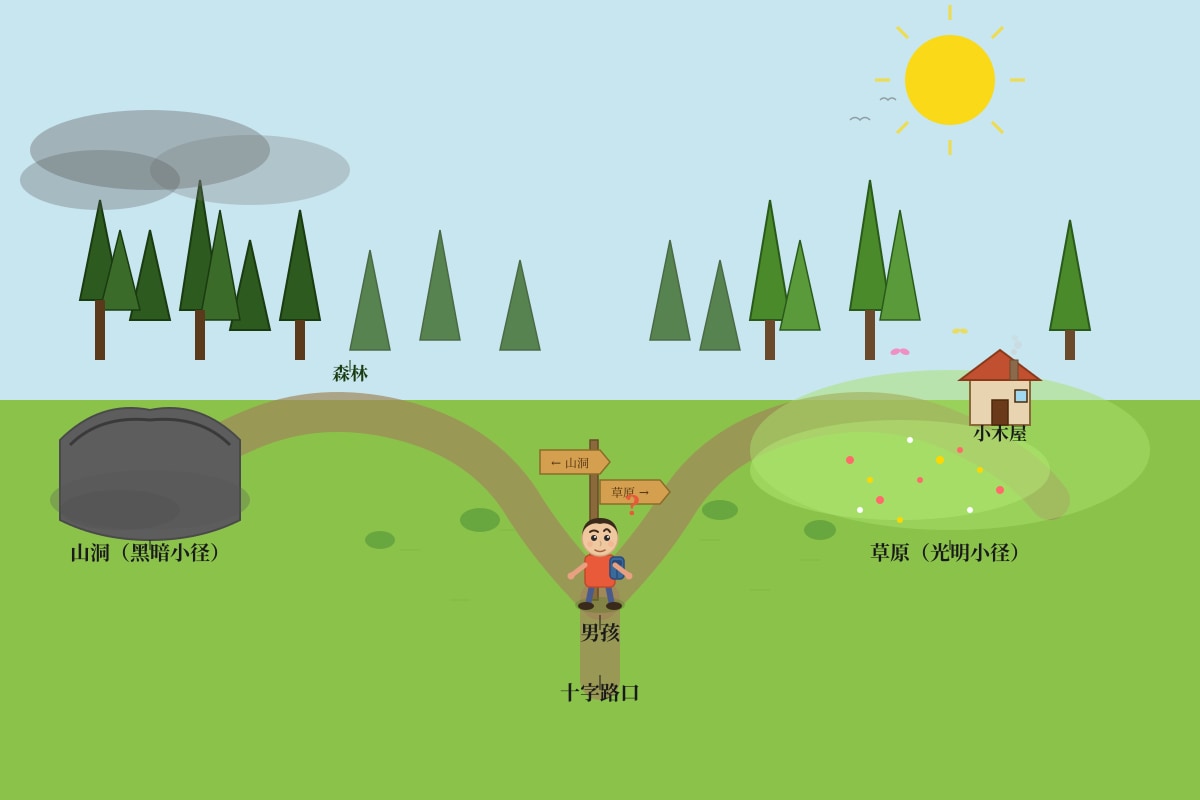
题目三:看图作文
Marking Scheme (Descriptors):
| Criteria | Excellent (17-20) | Good (13-16) | Adequate (9-12) | Weak (5-8) | Poor (1-4) |
|---|---|---|---|---|---|
| Content & Relevance (内容) | Creative, engaging story that is clearly based on the picture. All elements of the picture are used effectively. | Good story based on the picture. Most elements are used. | Basic story that references the picture. Some elements may be ignored. | Story is only loosely connected to the picture. | Story is not based on the picture. |
| Structure & Organisation (结构) | Excellent narrative flow; clear beginning, rising action, climax, falling action, and conclusion. | Good narrative flow; clear story structure. | Adequate structure; story has a beginning, middle, and end. | Poor structure; story is confusing or lacks a clear sequence of events. | No discernible story structure. |
| Language & Vocabulary (语言) | Rich, descriptive vocabulary; varied sentence structures; minimal errors. | Good descriptive vocabulary; mostly correct sentences; few errors. | Adequate vocabulary; simple sentences; some errors. | Limited vocabulary; frequent errors; meaning is sometimes unclear. | Very limited vocabulary; numerous errors. |
| Creativity & Imagination (创意) | Highly original and imaginative story; unexpected twists or unique characters. | Some original ideas; imaginative elements. | Simple but clear story; lacks imagination. | Little creativity; story is predictable or dull. | No creativity. |
Content Points for a Good Answer:
- Describe the setting: The forest, the crossroads, the contrast between the dark cave and the bright meadow.
- Introduce the character: The boy with the backpack. Why is he there? Is he lost? On a quest?
- Create a conflict: The boy must choose a path. This is the central conflict of the story.
- Develop the plot: Describe his thoughts and feelings as he makes his decision. What happens when he chooses a path? Does he find treasure in the cave? Does he meet a friendly person in the cottage?
- Resolution: How does the story end? What did the boy learn from his choice?
- Use dialogue: Include conversations with imaginary characters or his own internal monologue to make the story more lively.