AI Generated Quiz
Secondary 2 Geography Human Geography Quiz
Free Sec 2 Geography Human Geography quiz, HY3 AI version, with questions, answers, and syllabus-aligned practice for Singapore students.
These static practice materials are generated from the site's syllabus and paper-generation workflow, with source and model context shown so students and parents can evaluate the material before use.
Questions
Free quiz and exam paper access
Enter your details to view this paper
Your access is remembered on this device.
Answers
Secondary 2 Geography Quiz - Human Geography (Answer Key)
Total Marks: 40
Topic: Human Geography (syllabus-first, Stage 4/5 generated; not claimed as past-year derived)
Section A
1. [1] Informal housing / squatter settlement.
Teaching note: Informal housing is built without official approval. Squatter settlements use makeshift materials. Common mistake: writing “HDB” (that is formal).
2. [1] NEWater.
Teaching note: NEWater is recycled treated used water, one of Singapore’s Four National Taps (local catchment, imported, NEWater, desalination).
3. [1] Space.
Teaching note: Geographical concepts: Space (location), Place (meaning), Environment (interaction), Scale (level).
4. [1] Urbanisation (or rural-urban migration).
Teaching note: Movement from villages to cities is rural-urban migration, a driver of urbanisation.
5. [1] HDB flat / bungalow / terrace house.
Teaching note: Formal housing is planned. Any one Singapore example accepted.
Section B
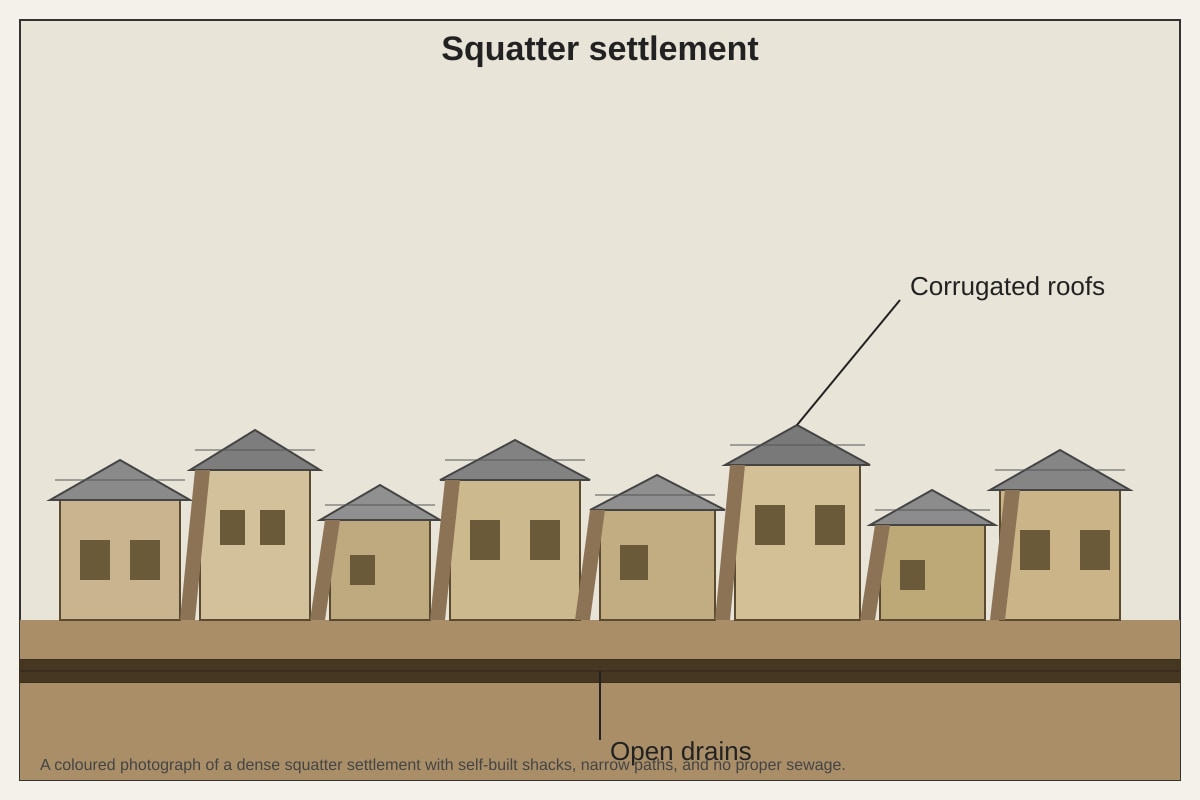
6. [2] Characteristic: dense cluster of self-built shacks with corrugated roofs. Problem: open drains cause poor sanitation / flooding.
Marking: 1 mark description, 1 mark problem linked.
Teaching note: Photo shows informal settlement; lack of planning creates health risks.
7. [2] Population increased steadily from 120,000 in 2000 to 250,000 in 2020; rise of 130,000 over 20 years.
Marking: 1 mark overall trend, 1 mark with statistics.
Teaching note: Use data points; “increased” alone insufficient.
8. [2] % increase = (250−120)/120 × 100 = 130/120 × 100 ≈ 108.3%.
Marking: 1 mark working, 1 mark answer.
Teaching note: Formula: (new−old)/old ×100. Show steps.
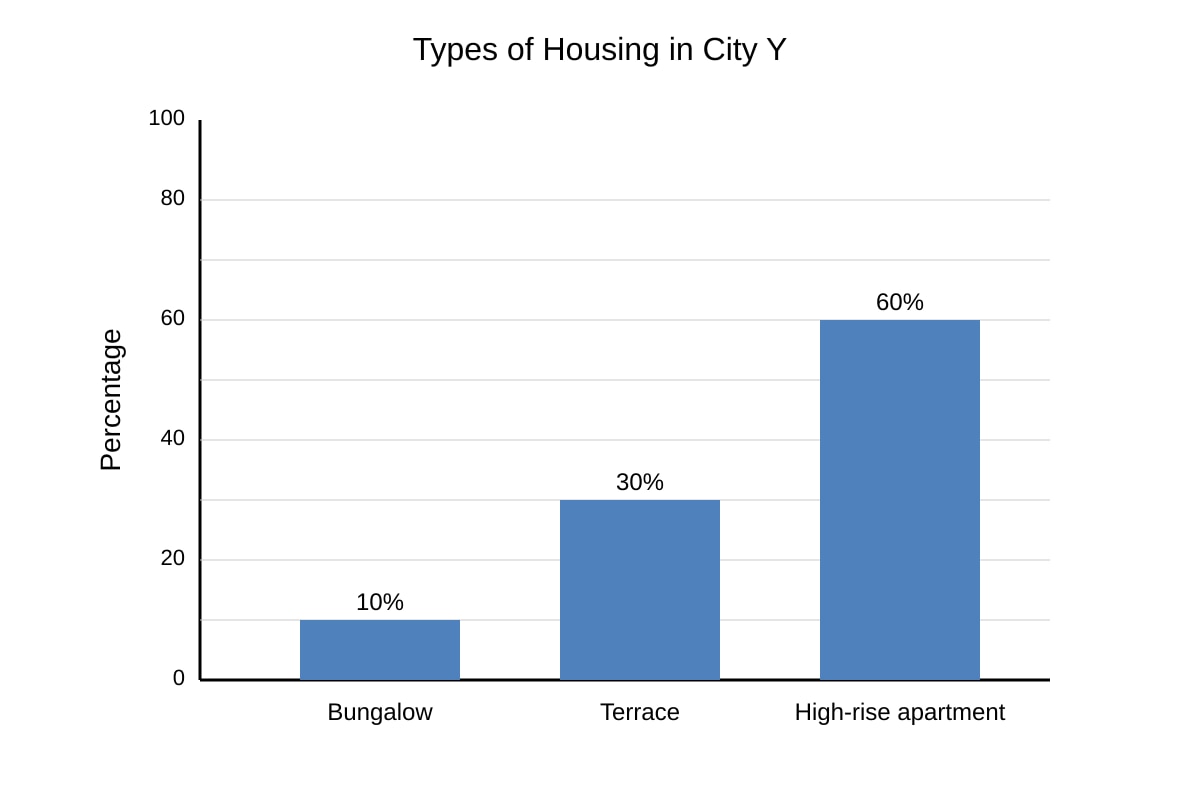
9. [1] High-rise apartments (60%).
Teaching note: Largest bar is high-rise.
10. [3] High-rise apartments use less land per person (1), allow more people in small area (1), reducing sprawl and preserving green space (1).
Teaching note: Land scarcity in SG makes vertical housing sustainable.
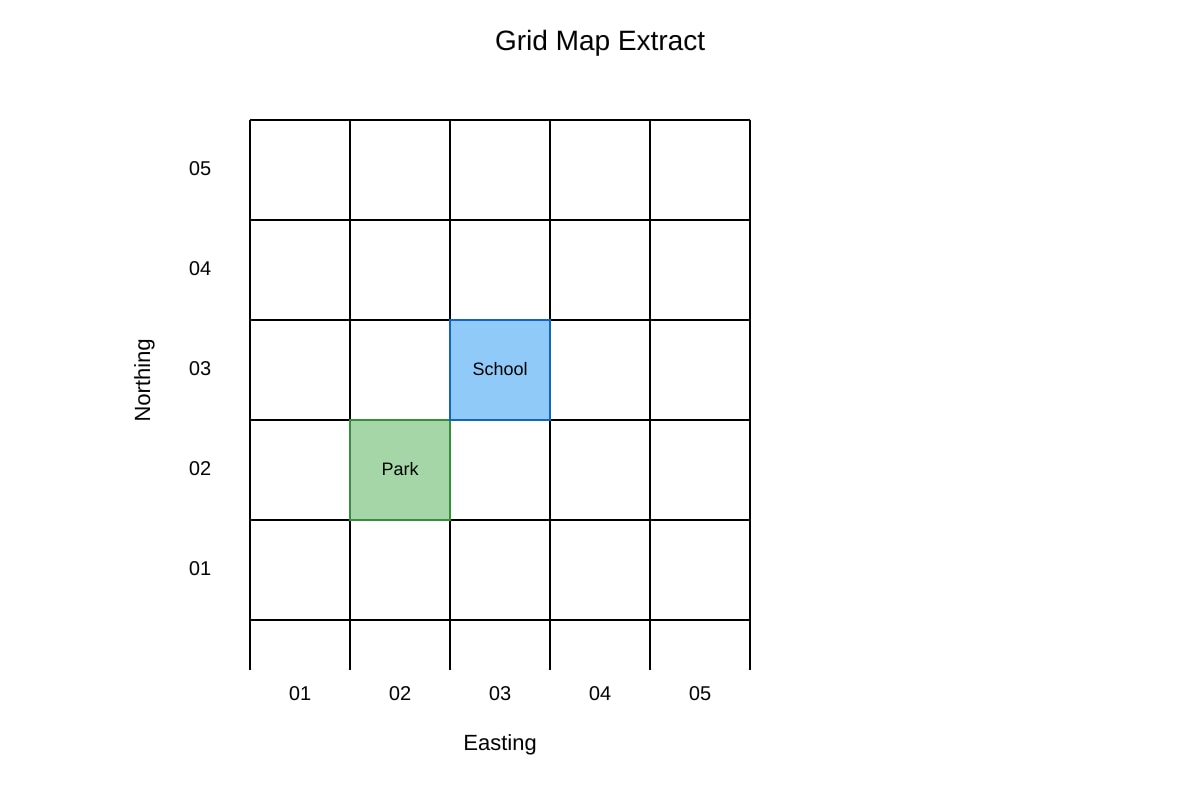
11. [1] 0304.
Teaching note: Easting first (03), northing second (04). Common trap: reversing.
12. [3] Charges drivers entering congested zone (1) → fewer cars (1) → less traffic and emissions (1).
Teaching note: Policy mechanism must link to outcome.
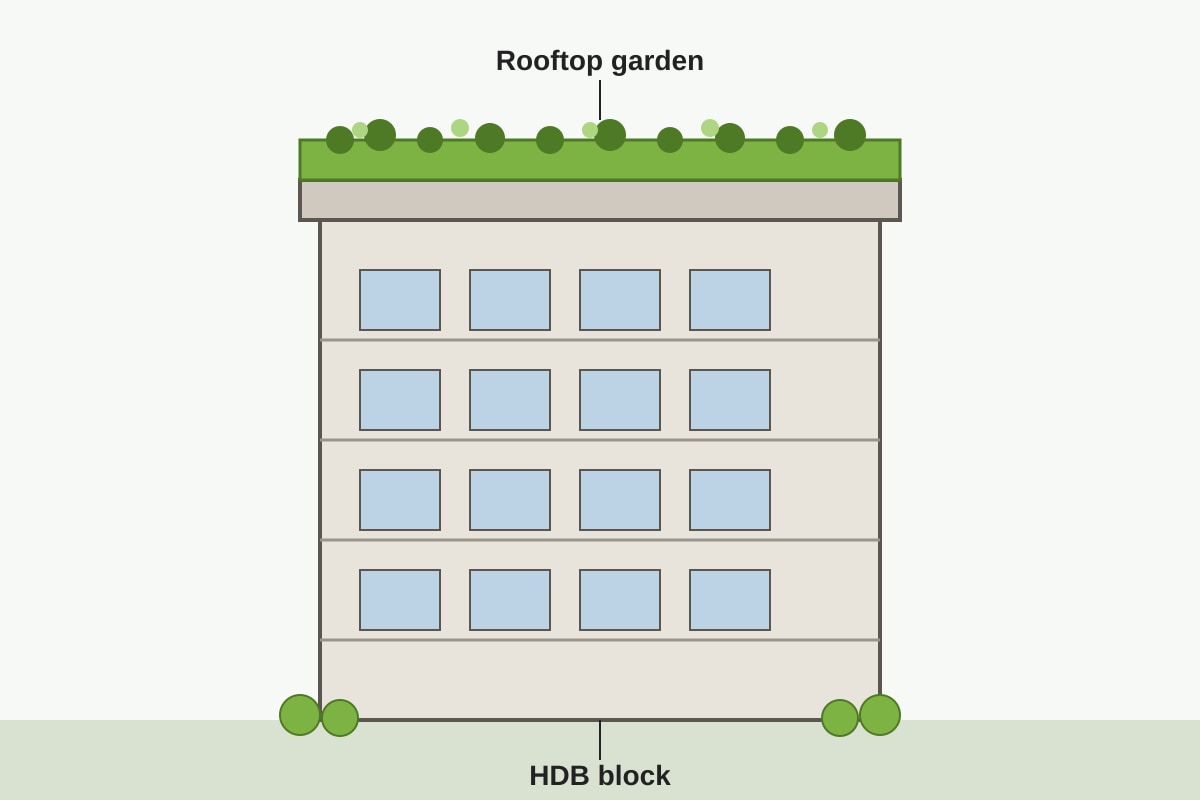
13. [2] Benefit: reduces heat (1) as plants absorb sunlight; improves air (1).
Marking: 1 mark feature, 1 mark benefit.
14. [2] Lack of affordable formal housing (1); rural poverty pushing migration (1).
Teaching note: Push-pull factors.
15. [1] Deficit = 40 − 100 = −60 mm (or 60 mm deficit).
Teaching note: Precipitation − ET; negative means deficit.
Section C
16. [4] More people → more water demand (1); higher impervious surface reduces groundwater recharge (1); pollution from sewage (1); strain on supply needing imports/tech (1).
Marking descriptors: 4 clear links.
17. [4] (a) Formal: concrete/brick; Informal: wood/scrap (2). (b) Formal: piped water, electricity; Informal: none or illegal (2).
Teaching note: Contrast shows planning difference.
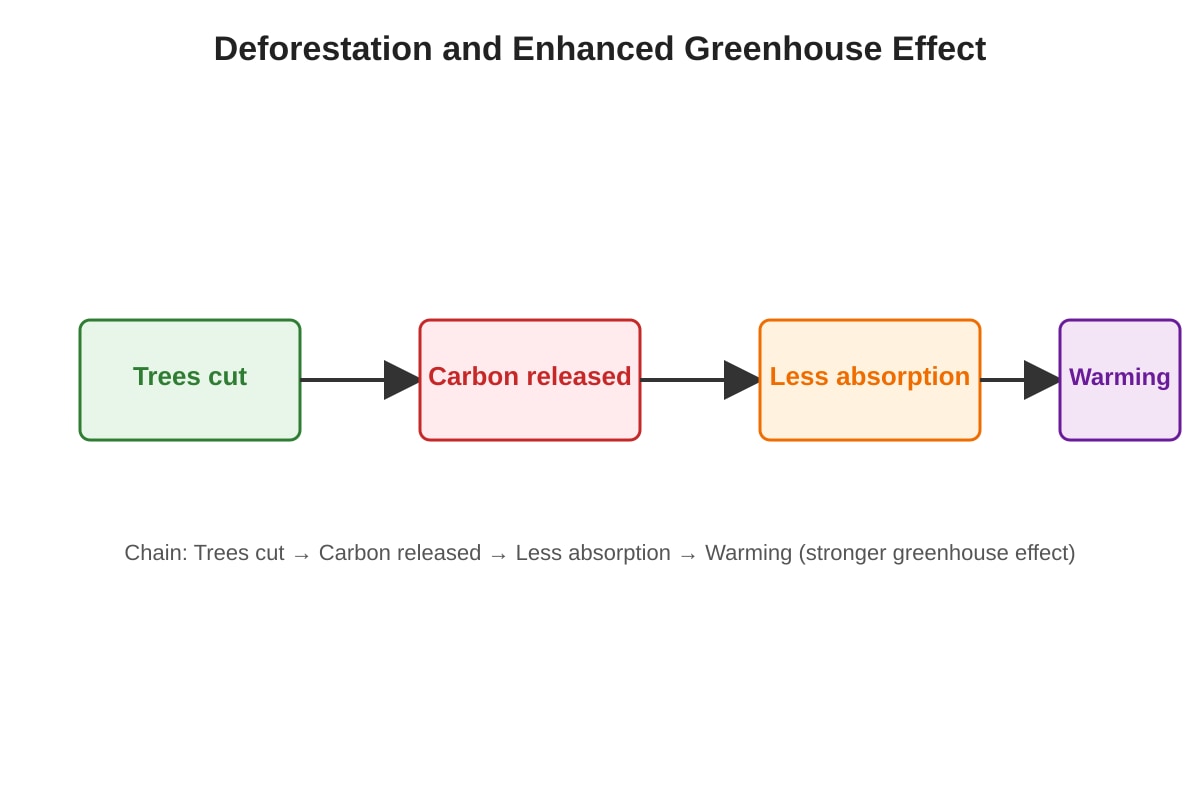
18. [4] Trees cut → stored carbon released as CO2 (1); fewer trees absorb CO2 (1); atmospheric CO2 rises (1); greenhouse effect strengthened (1).
Marking: Chain steps each 1.
19. [4] Desalination: removes salt from seawater (1) → independent of rain (1) → reliable supply (1) but energy-costly (1, evaluation).
Teaching note: Evaluate = state + limitation.
20. [3] Location B (1): quiet, residents relaxed to answer (1); representative of housing satisfaction (1).
Teaching note: Fieldwork suitability: accessibility, safety, representativeness.