From Real Exams Quiz
Secondary 2 Geography Resources Sustainability Quiz
Free Sec 2 Geography Resources Sustainability quiz, HY3 Exam version, with questions, answers, and syllabus-aligned practice for Singapore students.
These static practice materials are generated from the site's syllabus and paper-generation workflow, with source and model context shown so students and parents can evaluate the material before use.
Questions
Free quiz and exam paper access
Enter your details to view this paper
Your access is remembered on this device.
Answers
Secondary 2 Geography Quiz - Resources Sustainability (Answer Key)
Total Marks: 40
Topic: Resources Sustainability
Section A: Data and Diagram Interpretation
1. (1 mark)
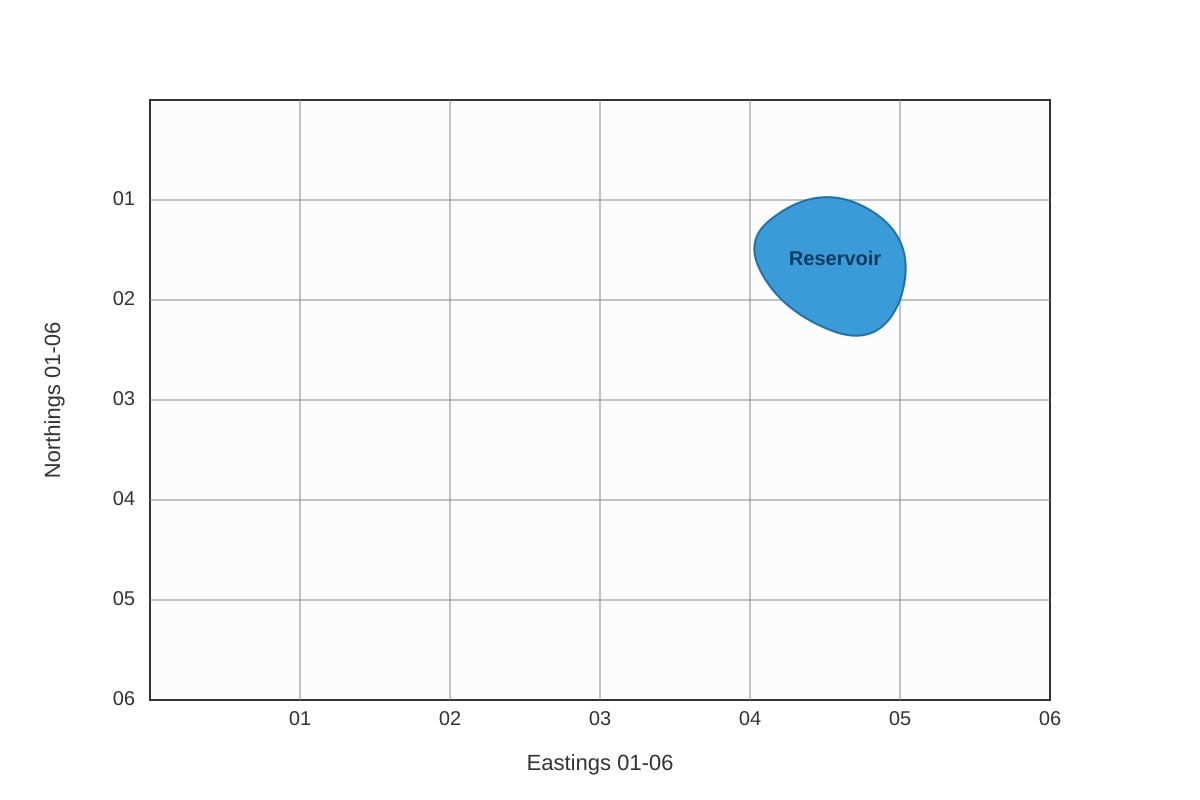
Answer: 0506
Teaching note: Read easting (horizontal, 04–05) first, then northing (vertical, 05–06). Common mistake: reversing order to 0605. Four-figure grid reference uses the bottom-left corner of the feature's square.
2. (2 marks)
Answer:
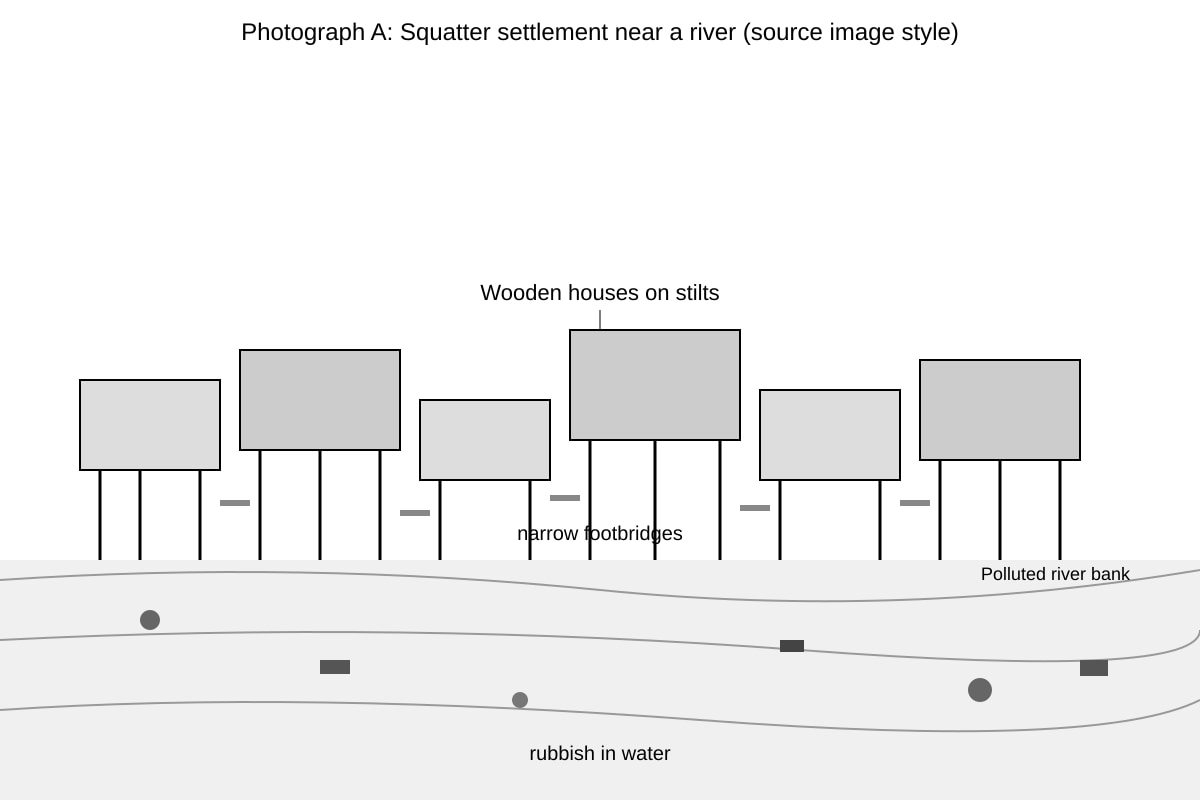
- Characteristic: Houses are built on stilts using wood (1 mark)
- Environmental problem: Waste from settlement pollutes river, harming aquatic life (1 mark)
Teaching note: Observation must be visible; link to consequence. Squatter settlements often lack sanitation, causing river pollution.
3. (3 marks)
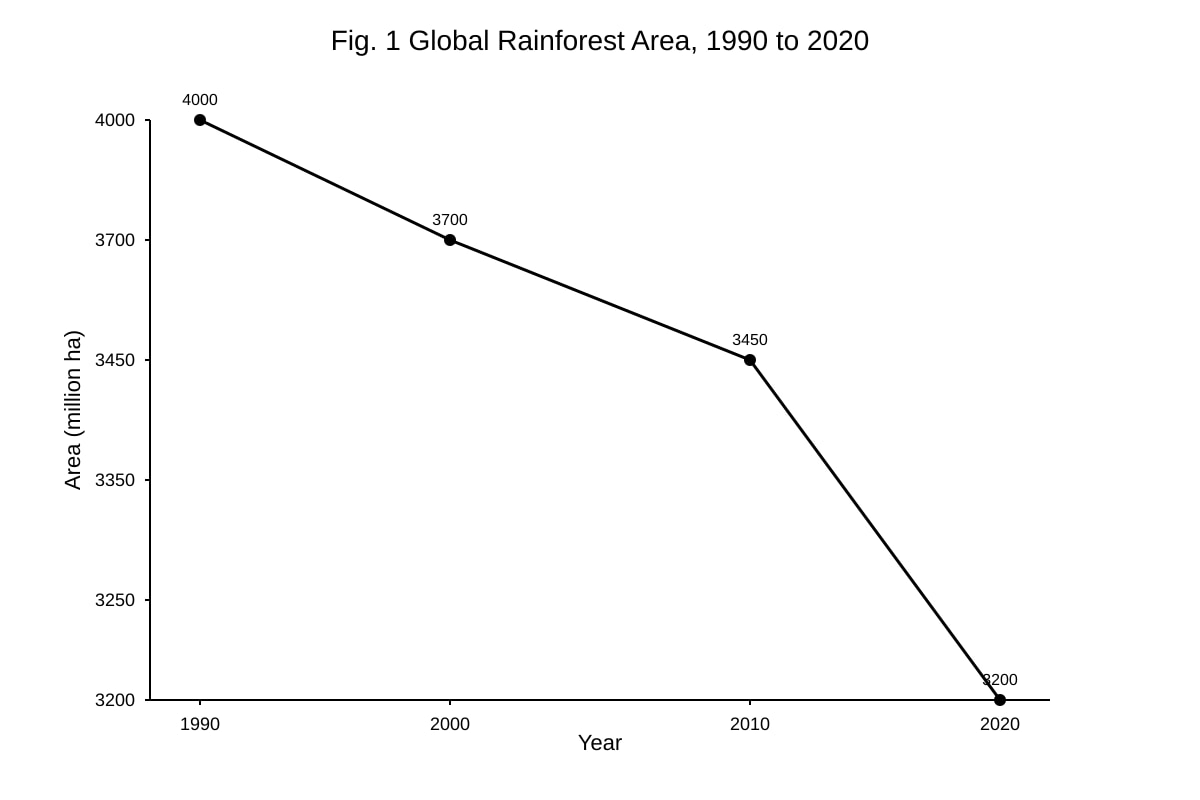
Answer: Global rainforest area decreased steadily from 4000 million ha in 1990 to 3200 million ha in 2020 (1 mark). It fell by 800 million ha over 30 years (1 mark). The decline was gradual but continuous (1 mark).
Marking: Trend 1, stats 1, rate 1.
4. (1 mark)
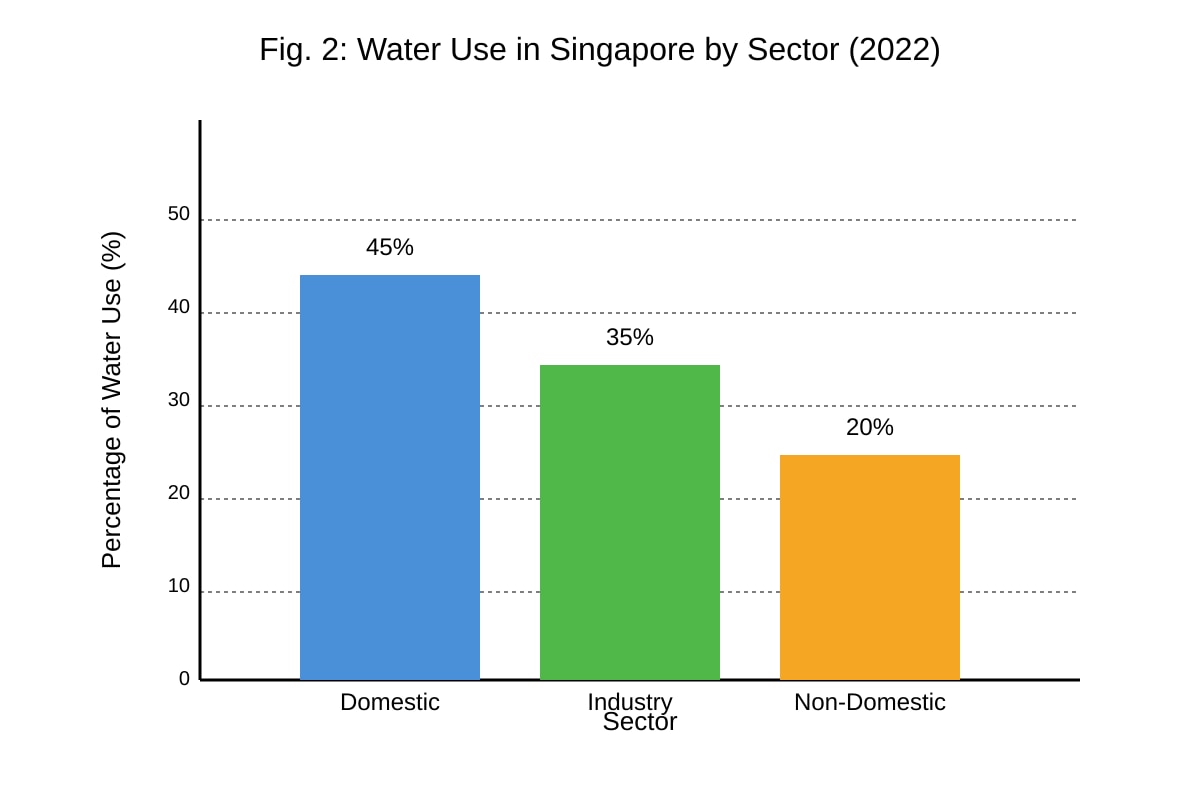
Answer: Domestic (45%)
Teaching note: Read tallest bar. Non-Domestic is not a single sector.
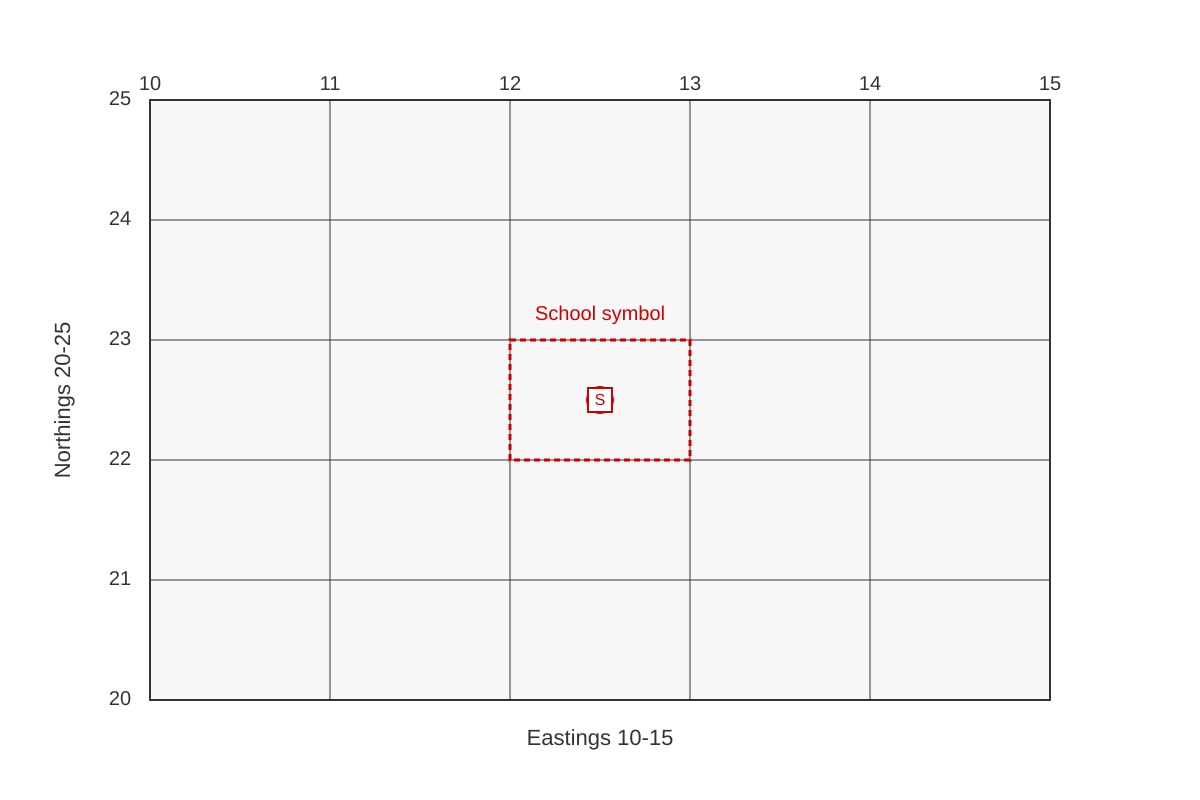
5. (1 mark)
Answer: 1222
Teaching note: Easting 12–13, northing 22–23. Write as 1222.
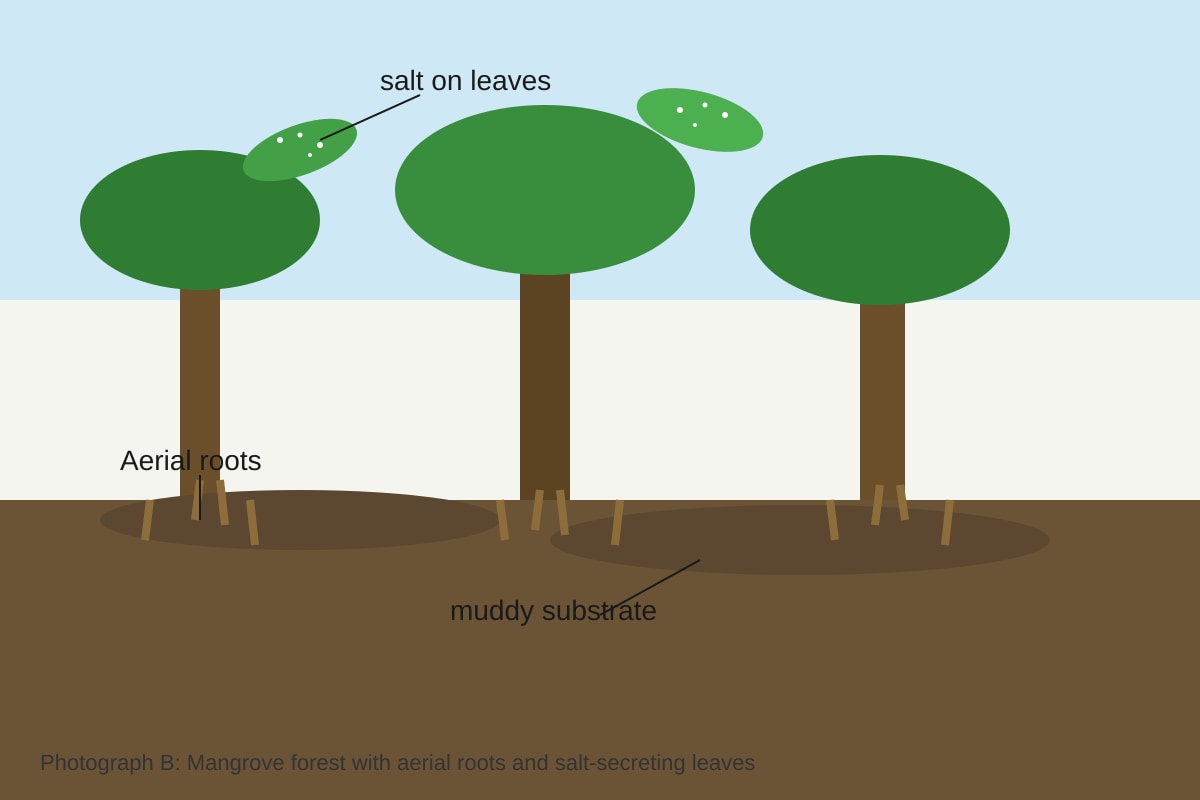
6. (2 marks)
Answer: Aerial roots (1 mark) help trees breathe in waterlogged mud (1 mark). Or salt-secreting leaves remove excess salt.
Teaching note: Adaptation must match photo.
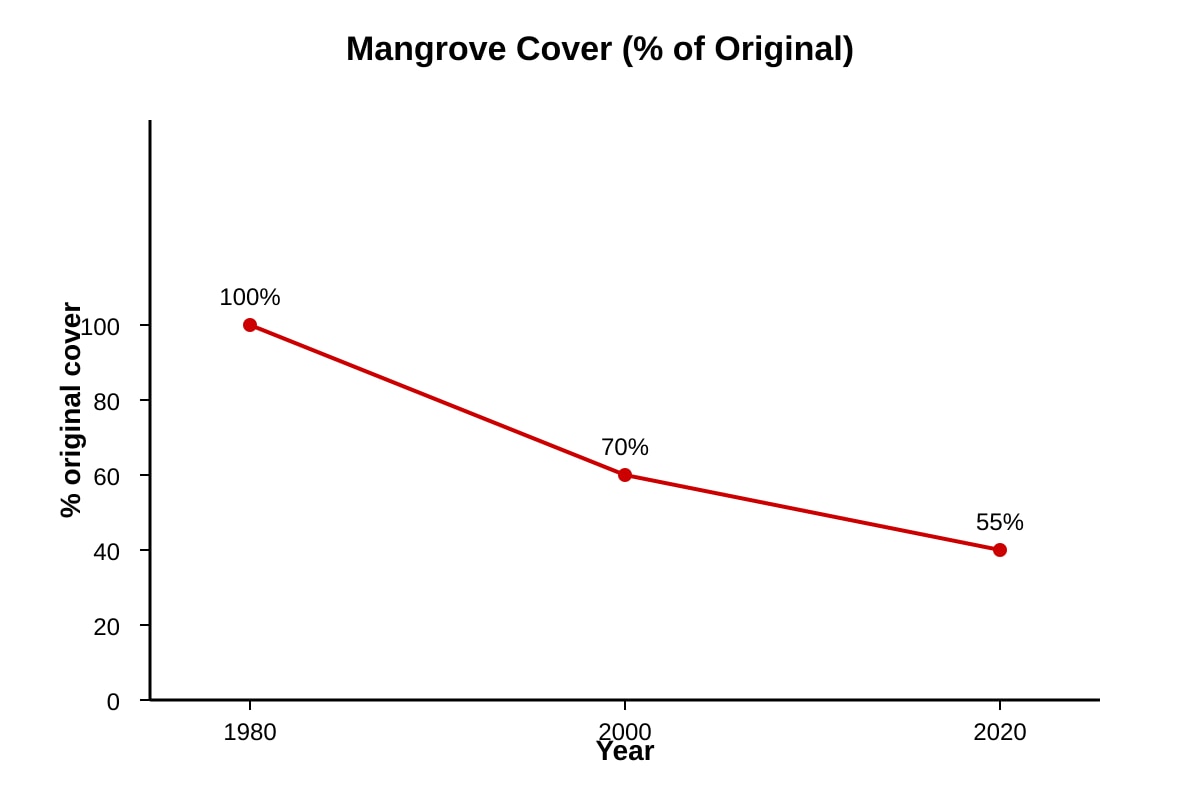
7. (4 marks)
Working:
1980 = 100%, 2020 = 55%
Decrease = 100 – 55 = 45 percentage points
Percentage decrease = (45 / 100) × 100 = 45% (1 mark method, 1 mark answer)
Marking: Identifies values 1, subtraction 1, percentage calc 1, final 1.
Teaching note: % decrease = (loss / original) × 100.
Section B: Structured Response
8. (2 marks)
- Stores carbon (1) reduces climate change.
- Provides habitat for biodiversity (1).
Teaching note: Global environment focus, not local.
9. (2 marks)
Strategy: Desalination (1). Works by removing salt from seawater using membranes/energy (1).
Teaching note: Singapore's four taps include this.
10. (3 marks)
- Trees store carbon (1).
- Cutting releases stored CO₂ (1).
- Extra CO₂ enhances greenhouse effect (1).
Teaching note: Link chain clearly.
11. (2 marks)
Alternative: Recycling (1). Benefit: Reduces landfill and conserves raw materials (1).
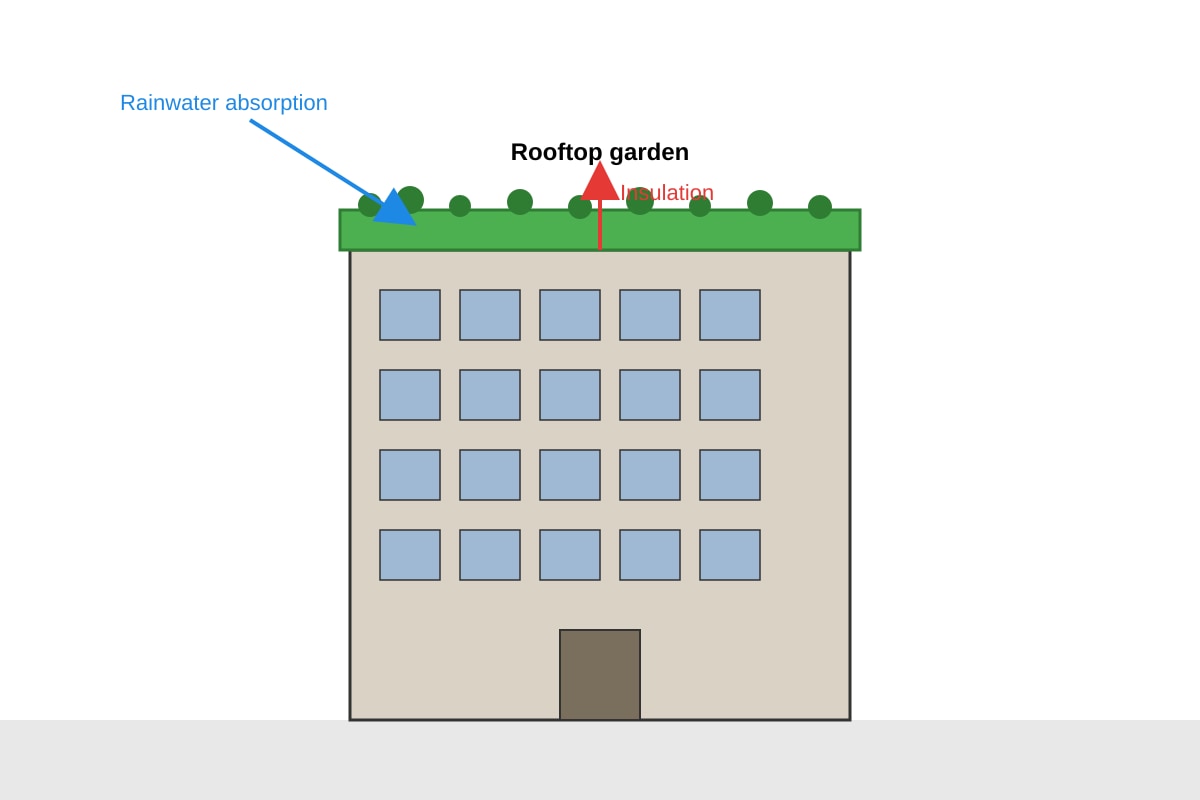
12. (2 marks)
- Insulates building, less energy for cooling (1).
- Absorbs rainwater, reduces runoff (1).
13. (2 marks)
- Factory discharge (1)
- Household sewage (1)
Teaching note: Urban rivers, not agriculture only.
14. (3 marks)
- Charges drivers in congested areas (1)
- Fewer cars use fuel (1)
- Less oil consumption, less emissions (1).
Section C: Source-Based and Evaluation
15. (2 marks)
Unsustainable: Cleared forests for agriculture (1). Sustainable: Pay farmers to replant (1).
16. (3 marks)
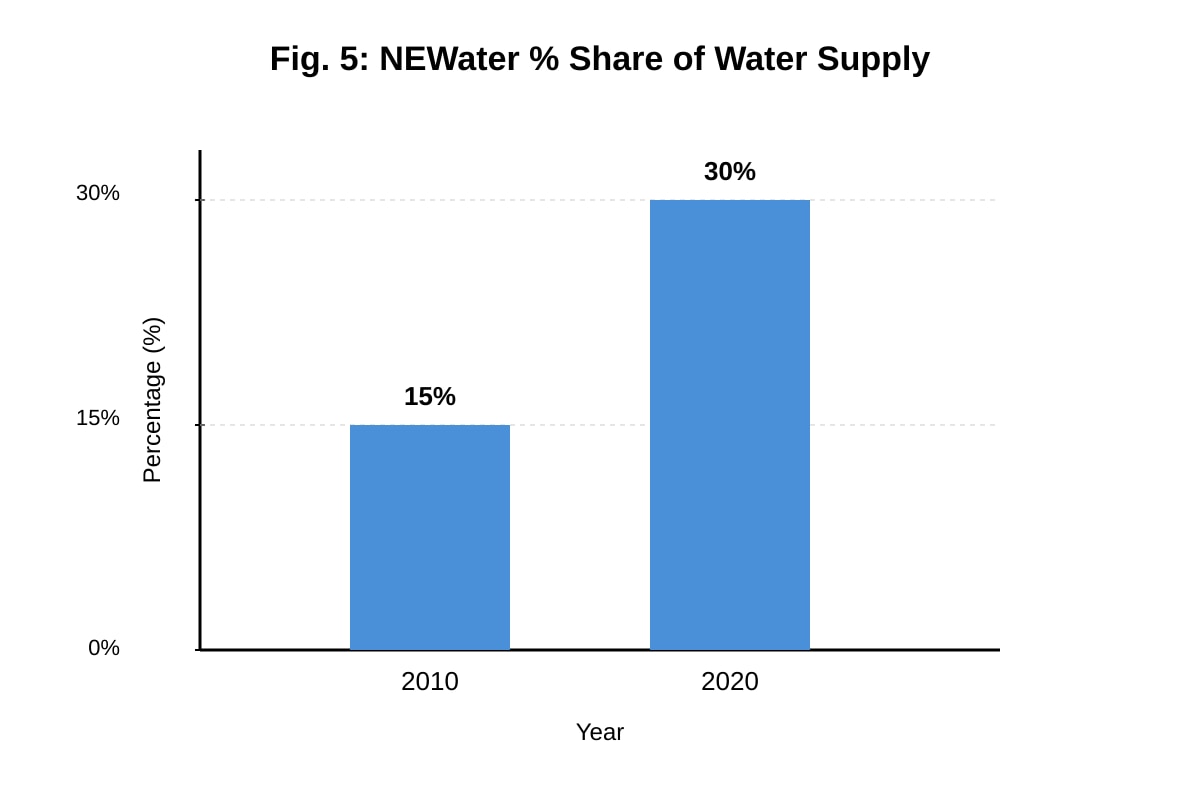
NEWater share rose from 15% (2010) to 30% (2020) (1). Doubled (1). Increased reliance on recycled water (1).
17. (2 marks)
- Buffer storms (1)
- Prevent erosion (1).
18. (1 mark)
Desalination uses high energy; not endless; costly.
19. (2 marks)
Effective: raises awareness, changes habits (1). Limited: needs enforcement (1).
20. (2 marks)
Ways: recycling, turn off taps (1). Explain one: saves water (1).