From Real Exams Quiz
Secondary 2 Geography Physical Geography Quiz
Free Sec 2 Geography Physical Geography quiz, Exam version, with questions, answers, and syllabus-aligned practice for Singapore students.
These static practice materials are generated from the site's syllabus and paper-generation workflow, with source and model context shown so students and parents can evaluate the material before use.
Questions
Free quiz and exam paper access
Enter your details to view this paper
Your access is remembered on this device.
Answers
Secondary 2 Geography Quiz - Physical Geography: Answer Key
Total Marks: 50
Section A: Multiple Choice and Short Answer Questions (20 marks)
1. Answer: C) Energy from the Sun [2 marks]
Explanation: The hydrological cycle is the continuous movement of water on, above, and below the Earth's surface. The Sun provides the energy that drives evaporation, which is the primary process that moves water from the Earth's surface into the atmosphere. Without the Sun's energy, the cycle would stop. The Earth's rotation influences wind patterns but does not drive the cycle itself. The Moon's gravity affects tides, not the water cycle. Tectonic plate movement is unrelated to the water cycle.
Common mistake: Students may choose the Earth's rotation because they associate it with weather patterns, but the fundamental driver is solar energy.
2. Answer: C) Glaciers and ice caps [2 marks]
Explanation: About 68.7% of all freshwater on Earth is stored in glaciers and ice caps, primarily in Antarctica and Greenland. While groundwater is the next largest store (about 30.1%), it is still less than half the amount stored in ice. Rivers and lakes hold only about 0.3% of freshwater. Atmospheric water vapour is less than 0.1%.
Common mistake: Students may choose groundwater because they know it is a major source of drinking water, but the sheer volume of ice makes it the largest store.
3. Answer: Any two of the following: [2 marks - 1 mark each]
- Evaporation (water changes from liquid to vapour)
- Condensation (water vapour changes to liquid water droplets)
- Precipitation (water falls from clouds as rain, snow, hail, etc.)
- Transpiration (water released from plants into the atmosphere)
- Runoff (water flows over the land surface)
- Infiltration (water soaks into the ground)
Explanation: The hydrological cycle involves several key processes. Evaporation (from oceans, lakes, and rivers) and transpiration (from plants) move water into the atmosphere. Condensation forms clouds. Precipitation returns water to the surface. Runoff and infiltration move water across and into the ground.
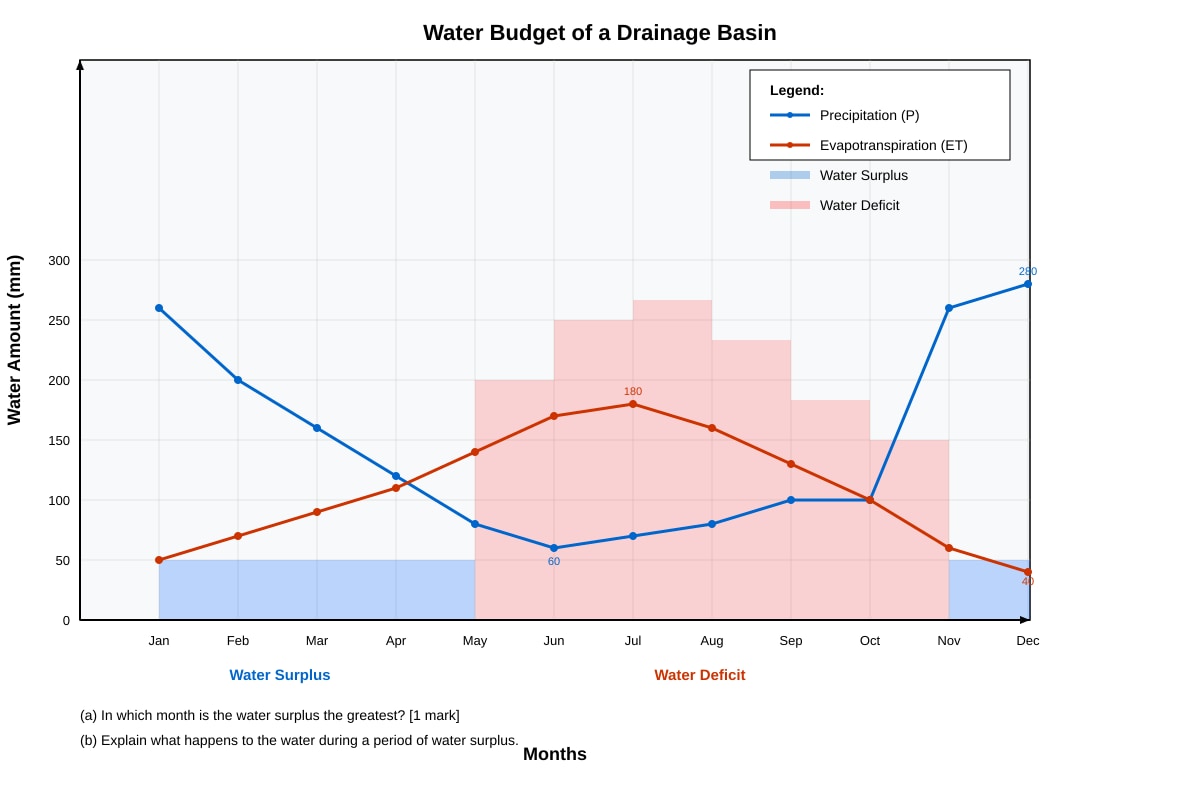
4. (a) Answer: December [1 mark]
Explanation: The water surplus is the period when precipitation (P) exceeds evapotranspiration (ET). In the diagram, the gap between the P line and ET line is largest in December, indicating the greatest surplus.
(b) Answer: During a period of water surplus, the excess water that cannot be stored in the soil or used by plants will flow over the land surface as surface runoff or through the ground as groundwater flow. This water eventually reaches rivers, lakes, and oceans, replenishing these water stores. Some of the surplus water may also infiltrate deeper into the ground to recharge groundwater aquifers. [2 marks - 1 mark for identifying runoff/groundwater flow, 1 mark for explaining where the water goes]
Explanation: When precipitation exceeds evapotranspiration, the soil becomes saturated. Any additional water cannot be absorbed and must move elsewhere. This is crucial for maintaining river flow and groundwater supplies.
5. Answer: B) They experience a distinct dry season [2 marks]
Explanation: Tropical rainforests are characterized by high rainfall throughout the year, typically over 2000 mm annually. They do not have a distinct dry season. This consistent rainfall, combined with high temperatures near the Equator, supports the lush, dense vegetation and high biodiversity for which rainforests are known. Options A, C, and D are all correct characteristics of tropical rainforests.
Common mistake: Students may confuse tropical rainforests with tropical monsoon forests, which do have a distinct dry season.
6. Answer: Any one of the following: [2 marks - 1 mark for adaptation, 1 mark for explanation]
Option 1:
- Adaptation: Prop roots (stilt roots) that grow from the trunk into the water and sediment.
- Explanation: These roots provide stability and support for the tree in the soft, unstable muddy soil of the coastal environment, preventing the tree from being toppled by waves or tides.
Option 2:
- Adaptation: Pneumatophores (aerial roots that stick up out of the mud).
- Explanation: These roots have small openings called lenticels that allow the tree to take in oxygen from the air, as the soil is waterlogged and lacks oxygen.
Option 3:
- Adaptation: Salt-secreting leaves.
- Explanation: Mangroves absorb seawater but excrete excess salt through special glands on their leaves, allowing them to survive in salty coastal waters.
Explanation: Mangroves face unique challenges: unstable mud, waterlogged soil with no oxygen, and high salt levels. Their adaptations directly address these challenges. The question asks for one adaptation and its explanation, so students should clearly link the feature to its survival function.
7. Answer: C) Slash-and-burn agriculture [2 marks]
Explanation: Slash-and-burn agriculture involves cutting down and burning areas of forest to clear land for farming. This is a direct and immediate cause of deforestation. Ecotourism and reforestation are conservation activities. Selective logging, while it does remove trees, is less destructive than clear-cutting and is sometimes considered a more sustainable practice, but it is still a cause of deforestation. However, slash-and-burn is the most direct and destructive option listed.
8. Answer: Any two of the following: [2 marks - 1 mark each]
- They act as a carbon sink, absorbing carbon dioxide from the atmosphere and storing carbon in their biomass.
- They produce oxygen through photosynthesis.
- They provide habitat for a vast number of plant and animal species (biodiversity).
- They help regulate the global climate and rainfall patterns.
- They prevent soil erosion by holding soil in place with their roots.
Explanation: Environmental functions are the natural roles an ecosystem plays that benefit the environment and, indirectly, humans. For rainforests, these are primarily related to climate regulation, gas exchange, and biodiversity support.
9. Answer: Deforestation contributes to the enhanced greenhouse effect in two main ways: [2 marks - 1 mark for each point]
- When trees are cut down and burned or left to decompose, the carbon stored in their biomass is released into the atmosphere as carbon dioxide (), a greenhouse gas.
- With fewer trees, there is less photosynthesis taking place, which means less carbon dioxide is being removed from the atmosphere. This leads to a net increase in atmospheric levels, trapping more heat and enhancing the greenhouse effect.
Explanation: The enhanced greenhouse effect is the additional warming caused by human activities that increase the concentration of greenhouse gases in the atmosphere. Deforestation is a major contributor because forests are massive carbon stores. When they are destroyed, that carbon is released, and the planet's ability to absorb future is reduced.
10. Answer: C) Establishing protected areas and national parks [2 marks]
Explanation: Establishing protected areas and national parks is a sustainable management strategy because it sets aside forest areas where human activities like logging, mining, and agriculture are restricted or prohibited. This allows the ecosystem to remain intact and continue providing its environmental functions. Clear-cutting, converting to plantations, and unrestricted mining are all destructive, unsustainable practices.
Section B: Structured Response Questions (18 marks)
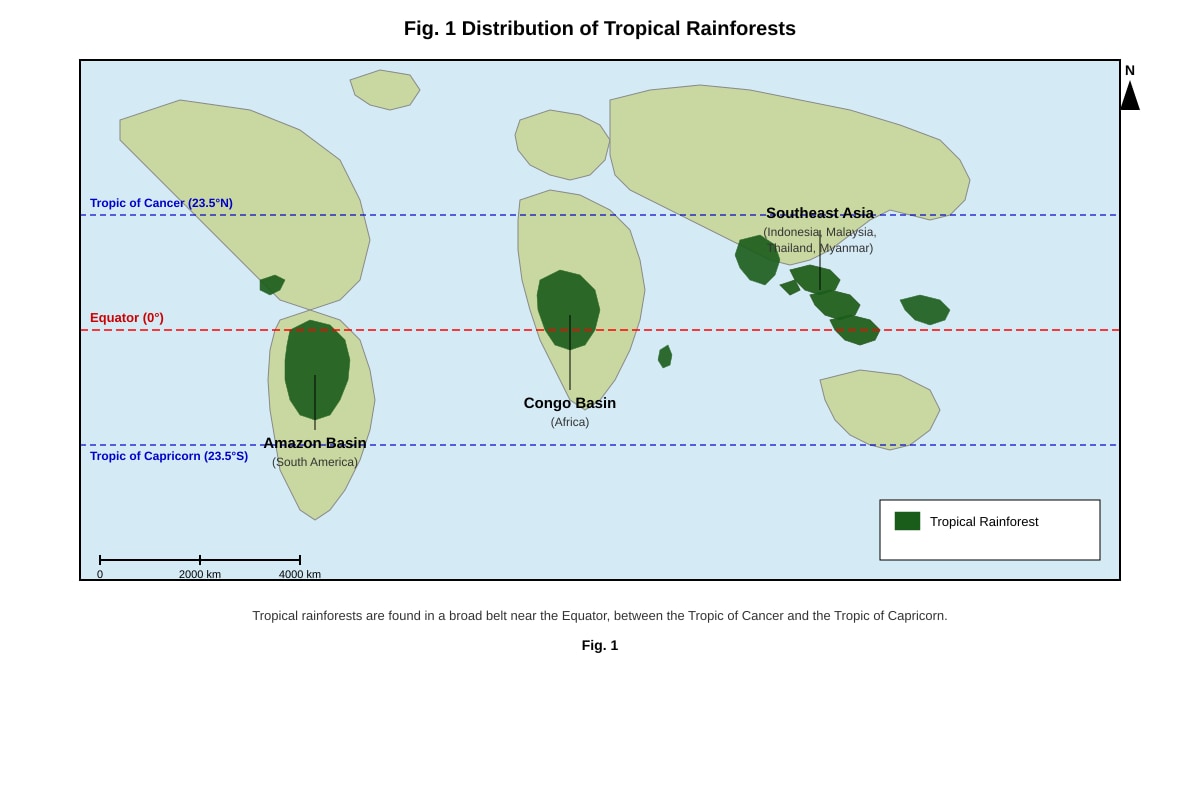
11. (a) Answer: Tropical rainforests are distributed in a band around the Equator, between the Tropic of Cancer (23.5°N) and the Tropic of Capricorn (23.5°S). The three main regions are the Amazon Basin in South America, the Congo Basin in Africa, and Southeast Asia (including Indonesia, Malaysia, and parts of Thailand and Myanmar). [2 marks - 1 mark for the equatorial band, 1 mark for naming at least two of the three main regions]
Explanation: The map clearly shows the rainforests concentrated in a narrow band around the Equator. Students should describe both the latitudinal distribution and identify the major geographical regions.
(b) Answer: Tropical rainforests are found in these regions because they experience high temperatures (averaging 25-27°C) and high rainfall (over 2000 mm per year) throughout the year. This is because these areas receive direct, intense sunlight from the Sun, which is overhead or nearly overhead throughout the year. The intense heating causes air to rise, cool, and condense, leading to frequent and heavy convectional rainfall. The combination of high temperatures and high rainfall creates the ideal conditions for the lush, dense vegetation characteristic of tropical rainforests. [3 marks - 1 mark for high temperatures, 1 mark for high rainfall, 1 mark for explaining the link to the Equator/sun's position]
Explanation: The key is to link the location (near the Equator) to the climate (hot and wet) and then to the vegetation. Students should mention the direct overhead sun and the resulting convectional rainfall.
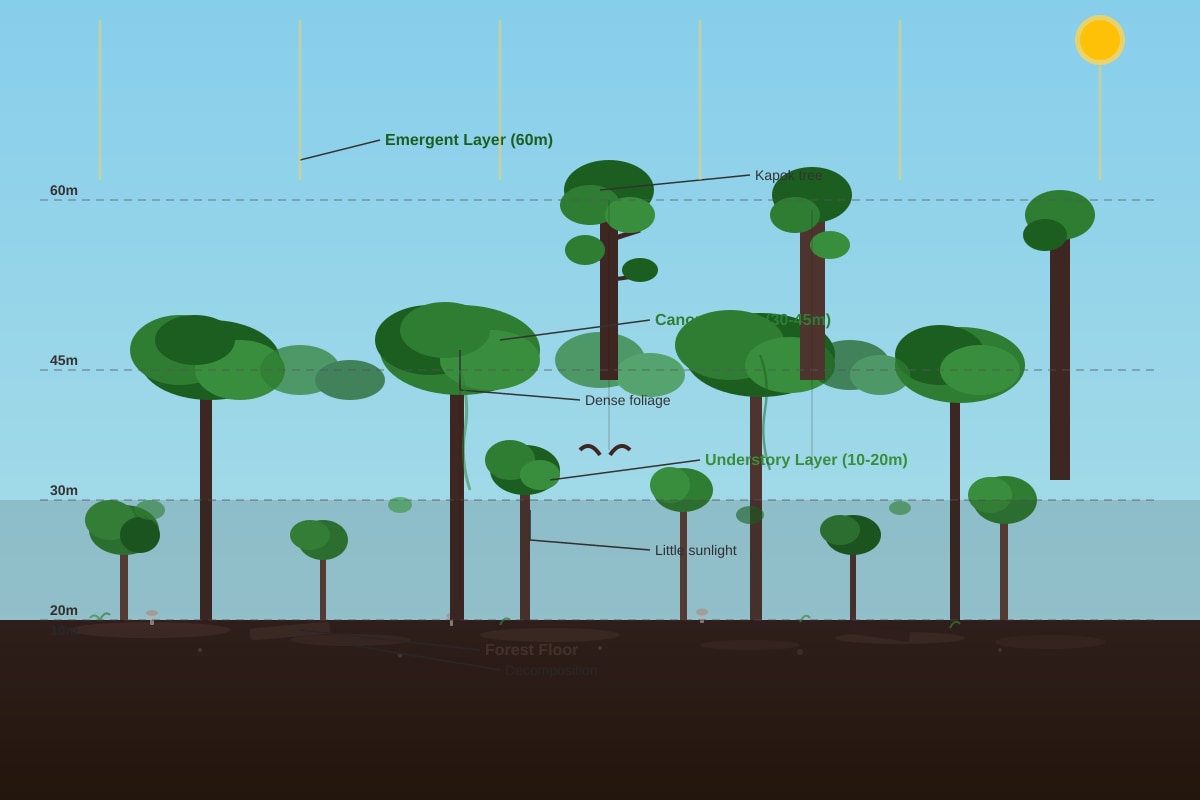
12. (a) Answer: The Emergent Layer [1 mark]
Explanation: The emergent layer consists of the tallest trees that rise above the main canopy. These trees are fully exposed to the sun's rays and receive the most sunlight.
(b) Answer: Any two of the following: [2 marks - 1 mark each]
- It is very dark because very little sunlight penetrates through the dense layers above.
- It is covered with a thin layer of leaf litter and decomposing organic matter.
- It has very little undergrowth because of the lack of sunlight.
- It is humid and warm.
Explanation: The forest floor is the darkest and most humid part of the rainforest. The lack of sunlight limits plant growth at this level, and the decomposition of fallen leaves and branches is rapid due to the warm, moist conditions.
(c) Answer: The structure of the rainforest supports high biodiversity because the different layers (emergent, canopy, understory, and forest floor) create a wide variety of microhabitats. Each layer has different conditions of light, temperature, humidity, and food availability, which allows different species of plants and animals to specialise and coexist. For example, some animals live only in the canopy, while others are adapted to the dark forest floor. This vertical stratification increases the number of ecological niches available, supporting a greater number of species. [3 marks - 1 mark for identifying different layers/microhabitats, 1 mark for explaining different conditions, 1 mark for explaining how this leads to more niches/species]
Explanation: The key concept is "vertical stratification" and "niche specialisation." The different layers provide different conditions, allowing many different species to coexist without competing directly for the same resources.
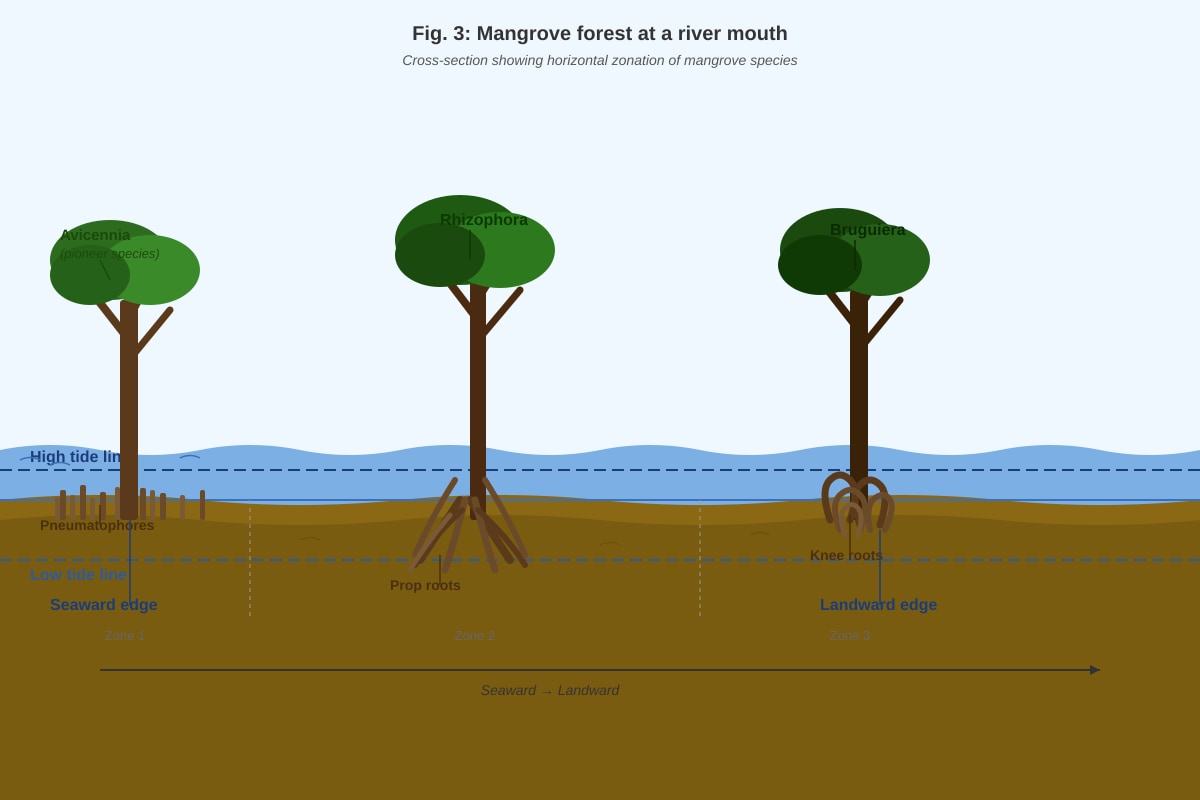
13. (a) Answer: Zonation (or horizontal zonation) [1 mark]
Explanation: Zonation refers to the distinct horizontal bands of different mangrove species from the seaward edge to the landward edge, each adapted to different levels of tidal inundation and salinity.
(b) Answer: The prop roots of Rhizophora are stilt-like roots that arch out from the trunk and anchor the tree firmly in the soft, unstable mud. This provides stability and support, preventing the tree from being toppled by waves, currents, or tides. The roots also trap sediment and organic matter, helping to stabilise the coastline and provide a habitat for juvenile marine organisms. [2 marks - 1 mark for stability/support, 1 mark for additional function like trapping sediment or providing habitat]
Explanation: The main function is physical support in soft mud. The secondary function of trapping sediment is also important and shows a deeper understanding.
(c) Answer: Any one of the following: [2 marks - 1 mark for the description, 1 mark for the explanation]
- Option 1: Mangroves act as a natural barrier against storm surges and tsunamis. The dense network of roots and trunks absorbs and dissipates the energy of waves, reducing their height and speed before they reach the coast, thereby protecting inland areas from flooding and erosion.
- Option 2: Mangroves trap and stabilise sediment with their roots, reducing coastal erosion. The roots bind the soil together and slow down water flow, causing sediment to settle out and build up the land.
- Option 3: Mangroves provide a nursery habitat for many fish and crustacean species. The complex root system offers shelter and food for juvenile marine life, which supports local fisheries and biodiversity.
Explanation: The question asks for one way mangroves protect coastal areas. The most common answer is wave energy absorption, but sediment trapping is also a valid form of coastal protection.
14. (a) Answer: The rate of deforestation in Indonesia decreased steadily from 680,000 hectares in 2015 to 270,000 hectares in 2020. This represents a significant decline of over 60% over the six-year period. [2 marks - 1 mark for stating the overall trend (decrease), 1 mark for using data to support it]
Explanation: Students should identify the clear downward trend and support it with specific figures from the table.
(b) Answer: Any one of the following: [2 marks - 1 mark for the reason, 1 mark for explanation]
- Option 1: The Indonesian government implemented stricter regulations and enforcement against illegal logging and deforestation, leading to a reduction in forest clearing.
- Option 2: There was a shift towards more sustainable land-use practices, such as the promotion of eco-friendly palm oil production and the establishment of protected areas.
- Option 3: International pressure and consumer awareness led to companies adopting "zero-deforestation" policies, reducing the demand for timber and agricultural products from cleared land.
Explanation: The reason should be plausible and linked to the observed trend. Government policies, economic changes, or international pressure are all acceptable.
(c) Answer: The trend in Brazil is the opposite of the trend in the Democratic Republic of Congo (DRC). In Brazil, deforestation generally increased from 620,000 hectares in 2015 to 1,100,000 hectares in 2020, with a peak in 2020. In contrast, deforestation in the DRC increased more gradually from 200,000 hectares in 2015 to 310,000 hectares in 2020, but at a much lower rate and scale. While both countries saw an overall increase, Brazil's deforestation rate is much higher and more volatile, while the DRC's is lower and more steady. [3 marks - 1 mark for identifying the opposite trends, 1 mark for using data to support, 1 mark for a clear comparison of scale/rate]
Explanation: Students should note that both are increasing, but Brazil's increase is much larger and more dramatic, while the DRC's is smaller and more gradual. The comparison should include both direction and magnitude.
15. Answer: [5 marks - 1 mark for a clear stance, 1 mark for environmental impacts, 1 mark for economic benefits, 1 mark for a balanced discussion, 1 mark for a reasoned conclusion]
Model Answer: I agree to a large extent that deforestation should be significantly reduced, but I do not think a complete ban is the most practical or effective solution.
Environmental impacts: Deforestation has severe environmental consequences. It leads to a loss of biodiversity as habitats are destroyed, contributes to climate change by releasing stored carbon dioxide, disrupts the water cycle, and causes soil erosion and flooding. These impacts have global implications, affecting climate patterns and ecosystem services that all humans depend on.
Economic benefits: However, deforestation also provides significant economic benefits. It creates jobs in the logging and agricultural industries, provides land for farming (especially for cash crops like palm oil and soybeans), and generates revenue for local communities and national governments. For developing countries, this income is often crucial for economic development and poverty reduction.
Balanced discussion: A complete ban would eliminate these economic benefits and could lead to illegal logging and a lack of compliance. It would also ignore the legitimate needs of local communities who depend on the forest for their livelihoods. A more effective approach would be to promote sustainable forest management, such as selective logging, reforestation, and the development of eco-tourism, which can provide economic benefits while preserving the forest.
Conclusion: Therefore, while the environmental costs of deforestation are severe and urgent, a complete ban is not the most practical solution. A more balanced approach that combines strict regulation, sustainable practices, and economic incentives for conservation is likely to be more effective in protecting the rainforest while also supporting human needs.
Marking Notes:
- Award 1 mark for a clear stance (agree/disagree/partially agree).
- Award 1 mark for at least two environmental impacts.
- Award 1 mark for at least two economic benefits.
- Award 1 mark for discussing the limitations of a complete ban or the need for a balanced approach.
- Award 1 mark for a reasoned conclusion that is consistent with the argument.
Section C: Data-Based and Extended Response Questions (12 marks)
16. (a) Answer: Any two of the following: [2 marks - 1 mark each]
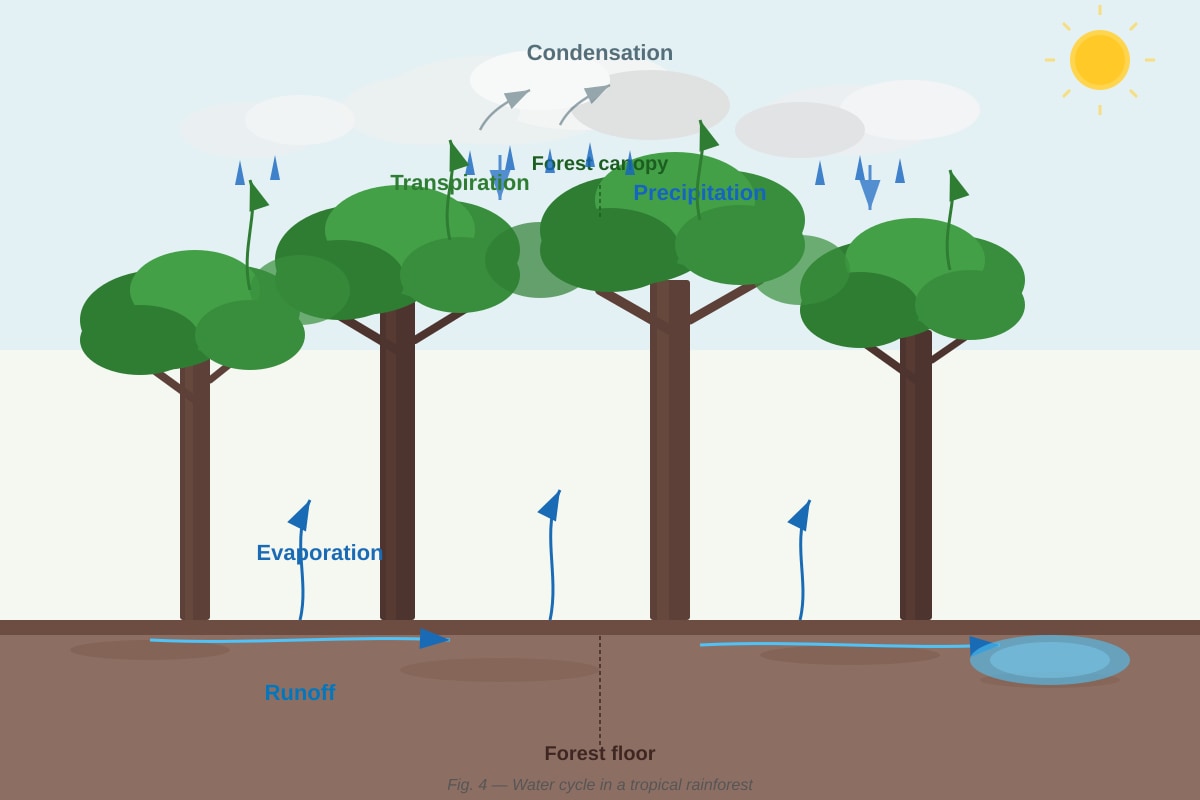
- Evaporation
- Transpiration
Explanation: The diagram shows arrows from the forest floor (evaporation) and from the leaves (transpiration) going up to the atmosphere.
(b) Answer: Deforestation would significantly disrupt the water cycle in the rainforest. [3 marks - 1 mark for each valid point, up to 3 marks]
- Reduced transpiration: With fewer trees, there would be less transpiration, meaning less water vapour is released into the atmosphere. This would lead to reduced cloud formation and potentially lower rainfall in the region.
- Increased surface runoff: Without tree roots to absorb water and hold the soil together, more water would flow over the surface as runoff, leading to increased flooding and soil erosion.
- Reduced infiltration: With less vegetation and compacted soil, less water would infiltrate into the ground, reducing groundwater recharge and leading to lower river flows during dry periods.
- Drier local climate: The overall reduction in atmospheric moisture could lead to a drier local climate, potentially turning the rainforest into a more savanna-like environment.
Explanation: The key is to link the removal of trees to the specific processes in the water cycle: transpiration, runoff, infiltration, and precipitation. Students should explain the chain of effects.
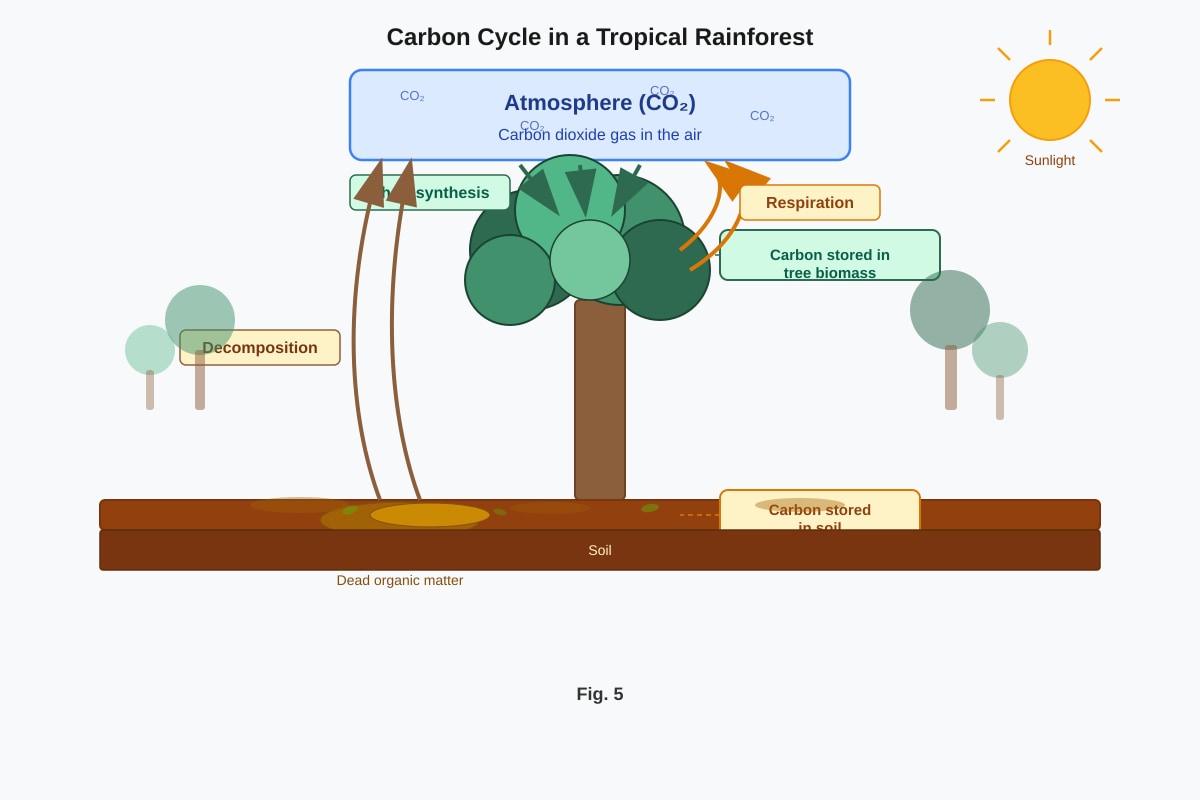
17. (a) Answer: Photosynthesis [1 mark]
Explanation: The diagram shows an arrow from the atmosphere (CO2) to the trees, labelled "Photosynthesis." This is the process by which trees absorb carbon dioxide.
(b) Answer: Deforestation significantly disrupts the carbon cycle. [3 marks - 1 mark for each valid point, up to 3 marks]
- Release of stored carbon: When trees are cut down and burned or left to decompose, the carbon stored in their biomass is released into the atmosphere as carbon dioxide (), a greenhouse gas. This increases atmospheric levels.
- Reduced carbon uptake: With fewer trees, there is less photosynthesis occurring, which means less is being removed from the atmosphere. This reduces the forest's ability to act as a carbon sink.
- Soil carbon release: Deforestation can also disturb the soil, releasing carbon stored in the soil as organic matter decomposes more rapidly. This further contributes to increased atmospheric .
- Net increase in atmospheric CO2: The combination of increased release and reduced uptake leads to a net increase in atmospheric , which enhances the greenhouse effect and contributes to global warming.
Explanation: The key is to explain both sides: the release of carbon (source) and the reduced absorption (sink). This dual effect makes deforestation a major contributor to climate change.
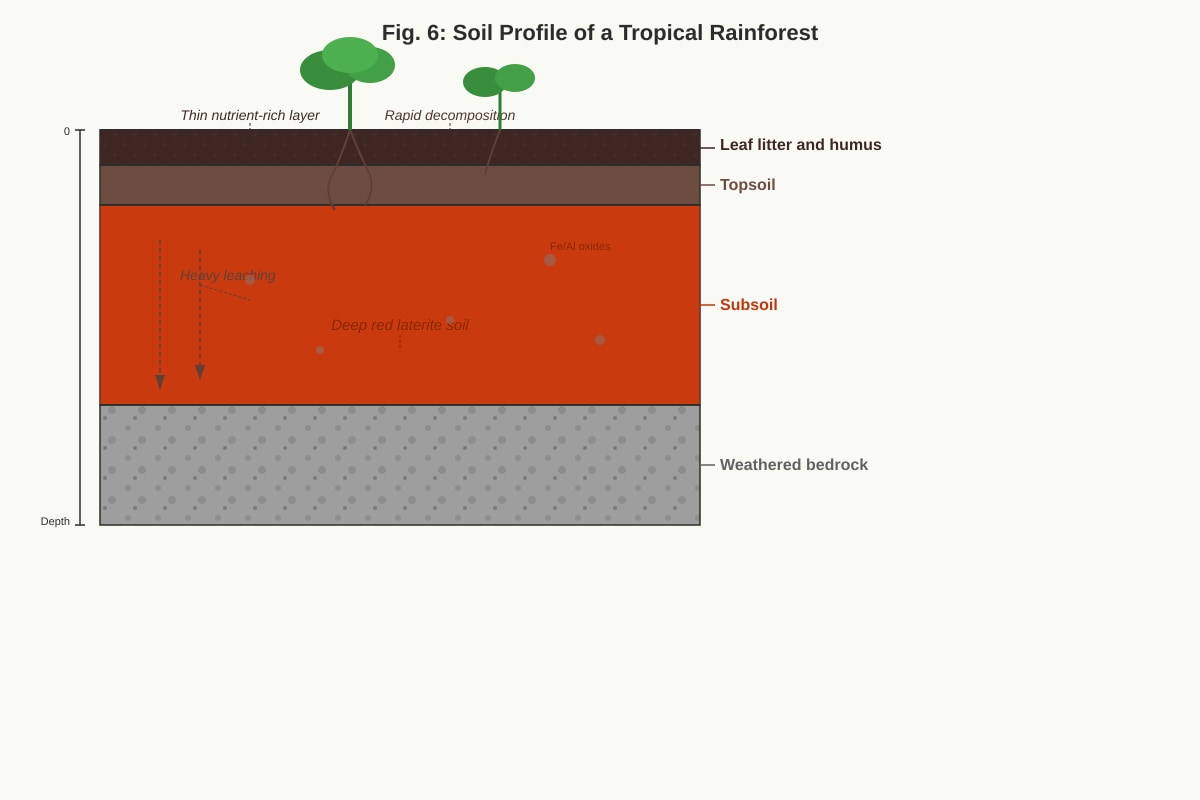
18. (a) Answer: Leaf litter and humus (or the top layer) [1 mark]
Explanation: The top layer of the soil profile, consisting of leaf litter and humus, is the richest in nutrients because it is formed from decomposing organic matter.
(b) Answer: The soil in a tropical rainforest is generally poor in nutrients despite the lush vegetation because of the following reasons: [3 marks - 1 mark for each valid point, up to 3 marks]
- Rapid decomposition: The warm, humid conditions cause dead leaves and organic matter to decompose very quickly. The nutrients are released rapidly but are also quickly taken up by the dense network of plant roots.
- Heavy leaching: The high rainfall causes heavy leaching, where water percolates through the soil and dissolves and carries away soluble nutrients (like nitrates and phosphates) deep into the ground, beyond the reach of most plant roots. This leaves the upper soil layers nutrient-poor.
- Thin nutrient layer: The nutrient-rich layer (humus) is very thin because decomposition is so fast. The deeper soil layers, such as the reddish laterite soil, are rich in iron and aluminium oxides but poor in nutrients.
- Nutrient cycling: Most of the nutrients in a rainforest are stored in the living biomass (trees and plants), not in the soil. When trees are cut down, the nutrient cycle is broken, and the soil quickly becomes infertile.
Explanation: The key is to explain the paradox: lush vegetation but poor soil. The answer lies in the rapid nutrient cycling and the effects of heavy rainfall (leaching).
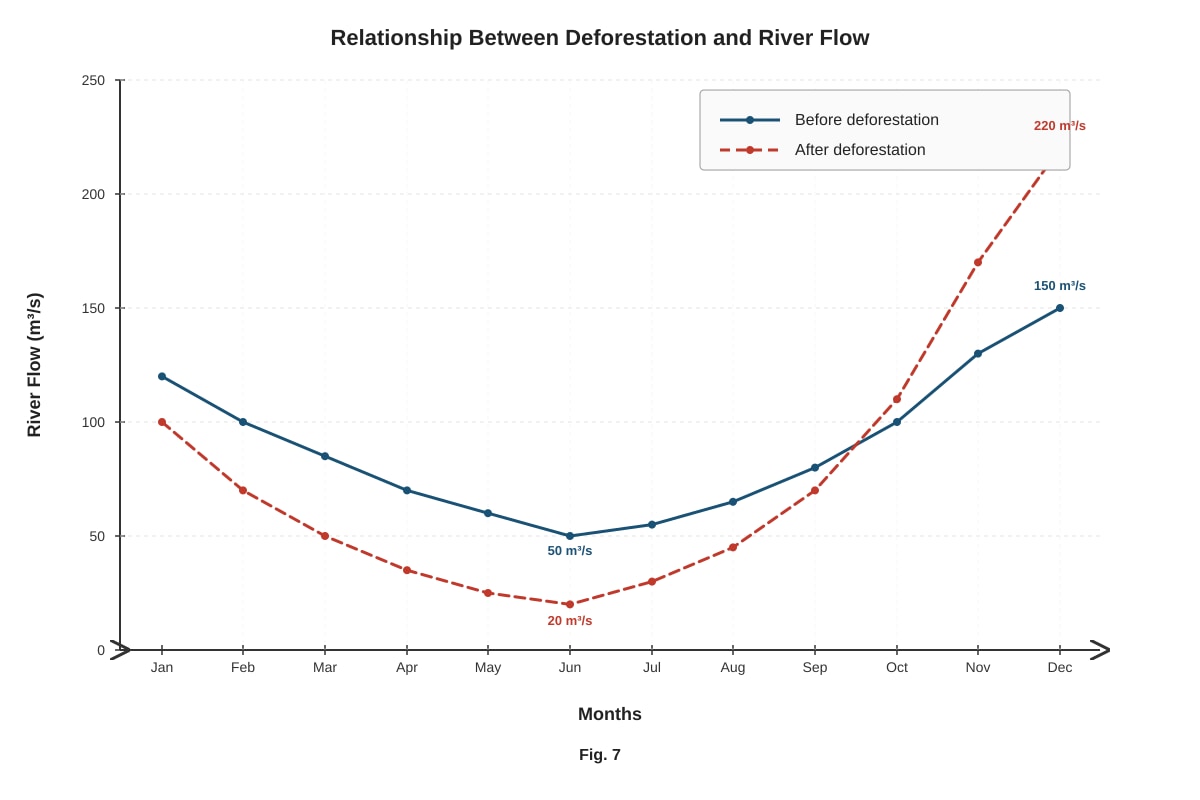
19. (a) Answer: After deforestation, the river flow becomes more extreme. The peak flow (highest flow) is higher (220 m³/s compared to 150 m³/s), and the low flow (lowest flow) is lower (20 m³/s compared to 50 m³/s). The river flow is also more variable and flashy after deforestation. [2 marks - 1 mark for identifying higher peaks, 1 mark for identifying lower troughs or increased variability]
Explanation: The graph clearly shows that the dashed line (after deforestation) has higher peaks and lower troughs than the solid line (before deforestation).
(b) Answer: Deforestation causes these changes in river flow because: [3 marks - 1 mark for each valid point, up to 3 marks]
- Reduced interception and infiltration: Trees intercept rainfall and their roots help water infiltrate into the ground. Without trees, more water flows over the surface as runoff, reaching the river more quickly. This causes the river to rise rapidly and reach a higher peak flow.
- Reduced water storage: Without tree roots and leaf litter to absorb and store water, less water is held in the soil. This means less water is slowly released into the river during dry periods, causing the river flow to drop to lower levels.
- Increased soil erosion: The removal of trees exposes the soil to erosion. Sediment is washed into the river, which can reduce the river's capacity and exacerbate flooding.
Explanation: The key is to link the loss of trees to the two main effects: faster runoff (higher peaks) and reduced groundwater storage (lower low flows).
20. Answer: [5 marks - 1 mark for a clear stance, 1 mark for economic benefits, 1 mark for environmental costs, 1 mark for a balanced discussion, 1 mark for a reasoned conclusion]
Model Answer: I disagree with the statement that the economic benefits of deforestation outweigh the environmental costs. While deforestation brings short-term economic gains, the long-term environmental costs are far more severe and ultimately undermine the economic benefits.
Economic benefits: Deforestation provides economic benefits such as timber for construction and paper, land for agriculture (e.g., palm oil, soybeans, cattle ranching), and jobs in these industries. It generates revenue for local communities and national governments, and can support economic development in developing countries.
Environmental costs: However, the environmental costs are immense and long-lasting. Deforestation leads to loss of biodiversity, which disrupts ecosystems and reduces the availability of natural resources like medicines and clean water. It contributes to climate change by releasing stored carbon, leading to more extreme weather events, sea-level rise, and threats to agriculture. It also causes soil erosion, flooding, and the degradation of water resources. These costs are borne by the entire planet and future generations.
Balanced discussion: The economic benefits are often short-term and benefit a small number of people, while the environmental costs are long-term and affect everyone. Furthermore, the economic benefits are often unsustainable, as the land becomes infertile after a few years of farming, leading to further deforestation. Sustainable alternatives, such as eco-tourism, sustainable logging, and agroforestry, can provide economic benefits without destroying the forest.
Conclusion: Therefore, I strongly disagree with the statement. The environmental costs of deforestation are catastrophic and far outweigh the short-term economic gains. A sustainable approach that balances economic development with environmental protection is essential for the well-being of both people and the planet.
Marking Notes:
- Award 1 mark for a clear stance (agree/disagree/partially agree).
- Award 1 mark for at least two economic benefits.
- Award 1 mark for at least two environmental costs.
- Award 1 mark for discussing the short-term vs. long-term nature of the benefits and costs, or the unsustainability of the economic gains.
- Award 1 mark for a reasoned conclusion that is consistent with the argument.