AI Generated Exam Paper

Secondary 2 Geography Practice Paper 1

Free Sec 2 Geography Practice Paper 1, Nemo3 AI version, with questions, answers, and syllabus-aligned practice for Singapore students.

These static practice materials are generated from the site's syllabus and paper-generation workflow, with source and model context shown so students and parents can evaluate the material before use.

Secondary 2 Geography AI Generated Generated by NVIDIA Nemotron 3 Ultra 550B A55B Free Updated 2026-06-18

Questions

<!-- TuitionGoWhere generation metadata: stage=5-2; model=nvidia/nemotron-3-ultra-550b-a55b:free; model_label=NVIDIA Nemotron 3 Ultra 550B A55B Free; generated=2026-06-16; Sources: Stage 4-0 LLM templates, syllabus context, and Stage 2 evidence where available. -->

TuitionGoWhere Practice Paper - Geography Secondary 2

TuitionGoWhere Practice Paper (AI)
Subject: Geography
Level: Secondary 2
Paper: Practice Paper 1 (Version 1)
Duration: 1 hour 30 minutes
Total Marks: 50

Name: ________________________
Class: ________________________
Date: ________________________


Instructions to Candidates

  1. Write your name, class, and date in the spaces provided above.
  2. Answer all questions.
  3. Write your answers in the spaces provided in this question paper.
  4. The number of marks is given in brackets [ ] at the end of each question or part question.
  5. The total number of marks for this paper is 50.
  6. You may use a calculator where necessary.
  7. For map-based questions, refer to the map extract provided in the image placeholders.

Section A: Map Skills and Grid References [10 marks]

Answer all questions in this section.

Question 1

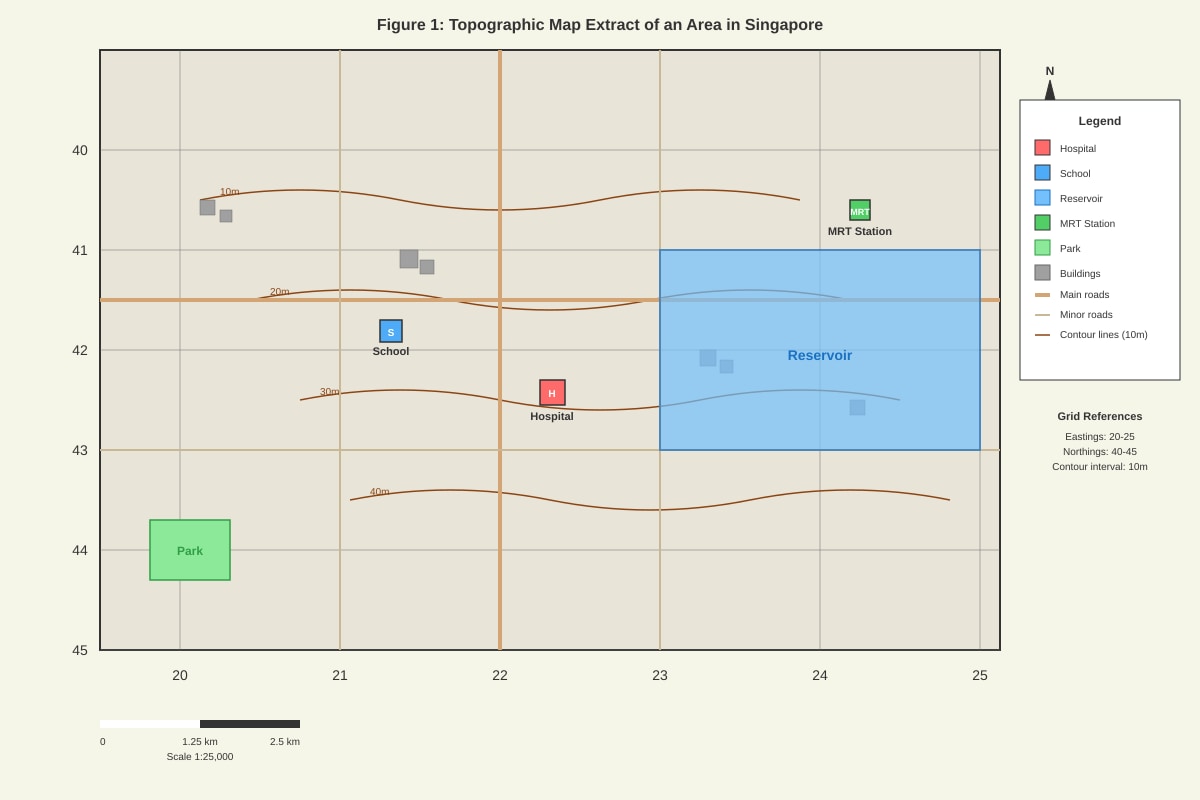
Study the topographic map extract of an area in Singapore shown in Figure 1.

<image_placeholder> id: Q1-fig1 type: map linked_question: Q1 description: Topographic map extract of a Singapore neighbourhood showing grid lines, a hospital, a school, a reservoir, MRT station, and various land use features. Grid lines are labelled with eastings (20–25) and northings (40–45). Key features: Hospital at approximately 22.3, 43.7; School at 21.8, 42.2; Reservoir spanning grid squares 2342, 2442, 2343, 2443; MRT station at 24.1, 41.5; Park at 20.5, 44.2. labels: Eastings (20, 21, 22, 23, 24, 25), Northings (40, 41, 42, 43, 44, 45), Hospital, School, Reservoir, MRT Station, Park, Contour lines at 10m intervals, Main roads, Minor roads, Buildings values: Grid squares 2040 to 2545; Contour interval 10m; Scale 1:25,000 must_show: Clear grid lines with labels, all named features at correct grid positions, contour lines, legend, scale bar, north arrow </image_placeholder>

(a) State the four-figure grid reference of the hospital.
[1]

(b) State the six-figure grid reference of the MRT station.
[1]

(c) The school is located in grid square 2142. Describe the direction of the school from the hospital.
[1]

(d) Measure the straight-line distance between the hospital and the MRT station in kilometres.
[2]


Question 2

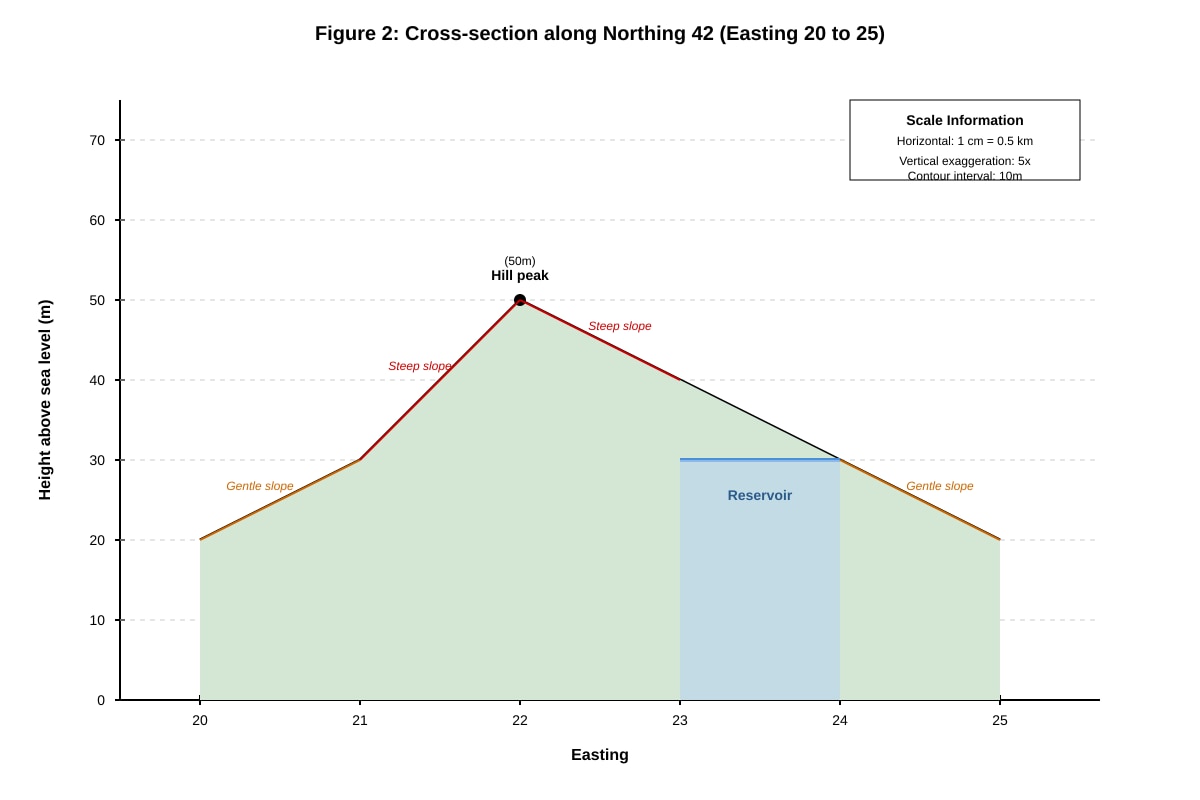
Figure 2 shows a cross-section along northing 42 from easting 20 to easting 25.

<image_placeholder> id: Q2-fig1 type: graph linked_question: Q2 description: Cross-section profile along northing 42 showing elevation changes from easting 20 to 25. X-axis: Easting (20 to 25). Y-axis: Height above sea level in metres (0 to 100). Key points: Easting 20 = 20m, Easting 21 = 30m, Easting 22 = 50m (hill peak), Easting 23 = 40m, Easting 24 = 30m, Easting 25 = 20m. Reservoir surface at 30m between easting 23 and 24. labels: Easting (20, 21, 22, 23, 24, 25), Height above sea level (m), Reservoir, Hill peak, Gentle slope, Steep slope values: Contour interval 10m; Horizontal scale 1cm = 0.5km; Vertical exaggeration 5x must_show: Accurate cross-section profile with labelled axes, reservoir feature, hill peak, slope annotations, vertical exaggeration noted </image_placeholder>

(a) Identify the highest point along this cross-section and state its approximate height.
[1]

(b) Calculate the average gradient between easting 21 and easting 22. Express your answer as a ratio (1:x).
[2]

(c) Describe the shape of the slope between easting 22 and easting 24.
[1]


Question 3

Figure 3 shows a photograph of a land use pattern in a Singapore housing estate.

<image_placeholder> id: Q3-fig1 type: source_image linked_question: Q3 description: Oblique aerial photograph of a Singapore HDB estate showing high-rise residential blocks (20-30 storeys), a neighbourhood centre with shops on ground floor, a multi-storey car park, a park connector with cycling path, a primary school, and MRT viaduct in background. Taken from approximately 100m height looking northeast. labels: HDB blocks, Neighbourhood centre, Multi-storey car park, Park connector, Primary school, MRT viaduct, Trees/greenery, Covered walkways values: Building heights (20-30 storeys), Approximate scale 1:5000 must_show: Clear land use zones, building heights, transport infrastructure, green spaces, mixed-use development </image_placeholder>

(a) Identify two types of land use visible in the photograph.
[2]

(b) Explain one advantage of the mixed-use development shown in the photograph for residents.
[2]


Section B: Data Interpretation and Graph Skills [15 marks]

Answer all questions in this section.

Question 4

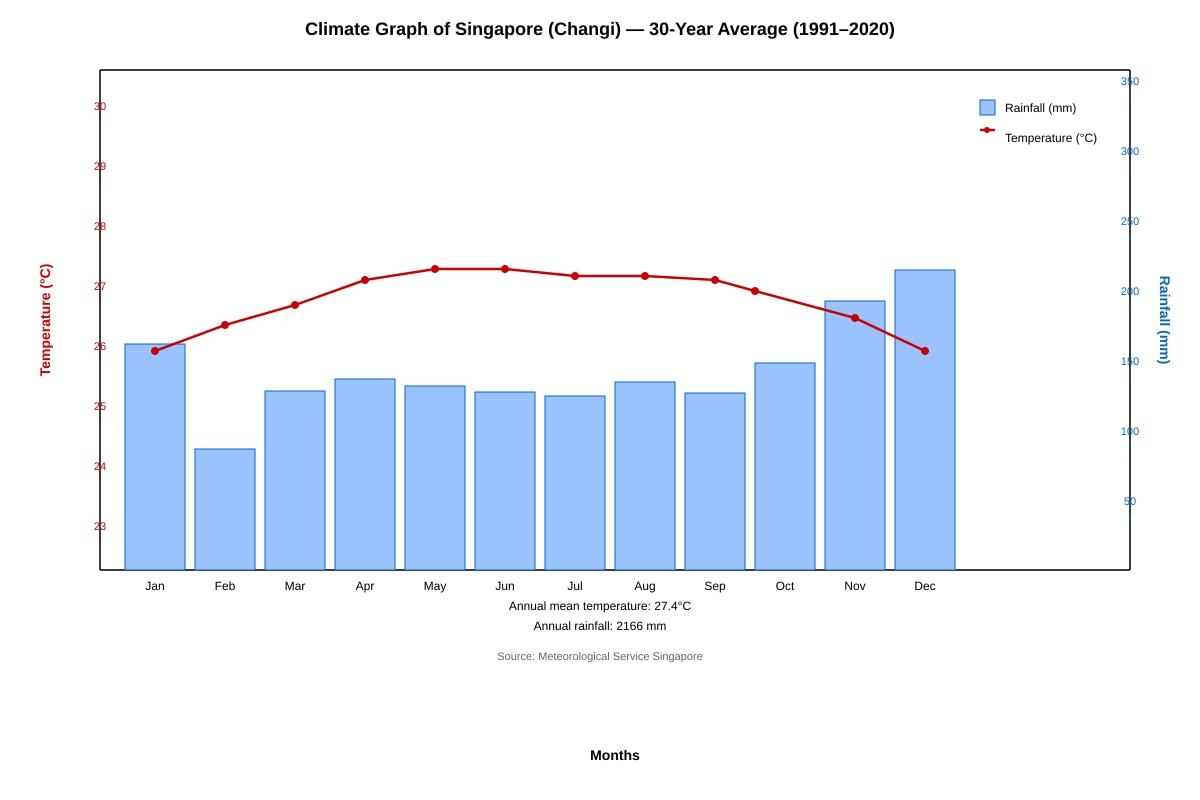
Figure 4 shows a climate graph for Singapore (Changi) based on 30-year averages (1991–2020).

<image_placeholder> id: Q4-fig1 type: graph linked_question: Q4 description: Climate graph for Singapore (Changi). X-axis: Months (Jan to Dec). Left Y-axis: Temperature (°C) - line graph. Right Y-axis: Rainfall (mm) - bar chart. Temperature line: Relatively constant 26-28°C year-round, peak 28°C in May/June, low 26°C in Dec/Jan. Rainfall bars: High Nov-Jan (250-300mm), lower Feb-Sep (150-200mm), secondary peak Oct-Nov. labels: Months (Jan-Dec), Temperature (°C), Rainfall (mm), Annual mean temperature 27.4°C, Annual rainfall 2166mm values: Jan: Temp 26.5°C, Rain 238mm; Feb: 27.0°C, 112mm; Mar: 27.5°C, 166mm; Apr: 28.0°C, 179mm; May: 28.3°C, 171mm; Jun: 28.3°C, 163mm; Jul: 28.1°C, 159mm; Aug: 28.1°C, 174mm; Sep: 28.0°C, 164mm; Oct: 27.8°C, 194mm; Nov: 27.2°C, 256mm; Dec: 26.5°C, 287mm must_show: Dual-axis climate graph with temperature line and rainfall bars, clear month labels, data values accurate to table above, title and source </image_placeholder>

(a) State the month with the highest rainfall and its approximate value.
[1]

(b) Calculate the annual temperature range for Singapore.
[1]

(c) Describe the relationship between temperature and rainfall patterns shown in the graph.
[2]

(d) Explain why Singapore experiences this type of climate pattern.
[3]


Question 5

Table 1 shows the water consumption by sector in Singapore for 2020 and 2030 (projected).

Sector2020 (million gallons/day)2030 Projected (million gallons/day)
Domestic210240
Non-Domestic230280
Total440520

(a) Calculate the percentage increase in total water demand from 2020 to 2030.
[2]

(b) In 2020, what percentage of total water consumption was for domestic use?
[1]

(c) The non-domestic sector is projected to grow faster than the domestic sector. Suggest one reason for this trend.
[2]

(d) Singapore's "Four National Taps" supply water to meet this demand. Name all four sources.
[2]


Question 6

Figure 5 shows a population pyramid for Singapore in 2023.

<image_placeholder> id: Q6-fig1 type: graph linked_question: Q6 description: Population pyramid for Singapore 2023. X-axis: Percentage of total population (-5% to +5% each side). Y-axis: Age groups (0-4, 5-9, ..., 80-84, 85+). Left side: Males (blue). Right side: Females (red). Shape: Narrow base (0-4: ~1.8% each), bulge at 30-49 (working age), narrowing at top (85+: ~0.8% each). Female bars slightly longer than male bars at older ages. labels: Age groups, Male (%), Female (%), Total population 5.92 million, Median age 42.4 years values: 0-4: M 1.8% F 1.7%; 5-9: M 1.9% F 1.8%; 10-14: M 2.0% F 1.9%; 15-19: M 2.1% F 2.0%; 20-24: M 2.3% F 2.2%; 25-29: M 2.8% F 2.7%; 30-34: M 3.2% F 3.1%; 35-39: M 3.5% F 3.4%; 40-44: M 3.4% F 3.3%; 45-49: M 3.1% F 3.0%; 50-54: M 2.7% F 2.6%; 55-59: M 2.3% F 2.2%; 60-64: M 1.9% F 1.8%; 65-69: M 1.5% F 1.5%; 70-74: M 1.1% F 1.2%; 75-79: M 0.7% F 0.8%; 80-84: M 0.4% F 0.5%; 85+: M 0.3% F 0.5% must_show: Accurate population pyramid with labelled axes, age groups, gender sides, percentage scale, title, source, and key demographic annotations </image_placeholder>

(a) Describe the overall shape of the population pyramid.
[1]

(b) Calculate the approximate percentage of the population aged 65 and above.
[2]

(c) Explain one economic challenge that Singapore faces due to this population structure.
[2]

(d) Suggest one policy the government could implement to address this challenge.
[2]


Question 7

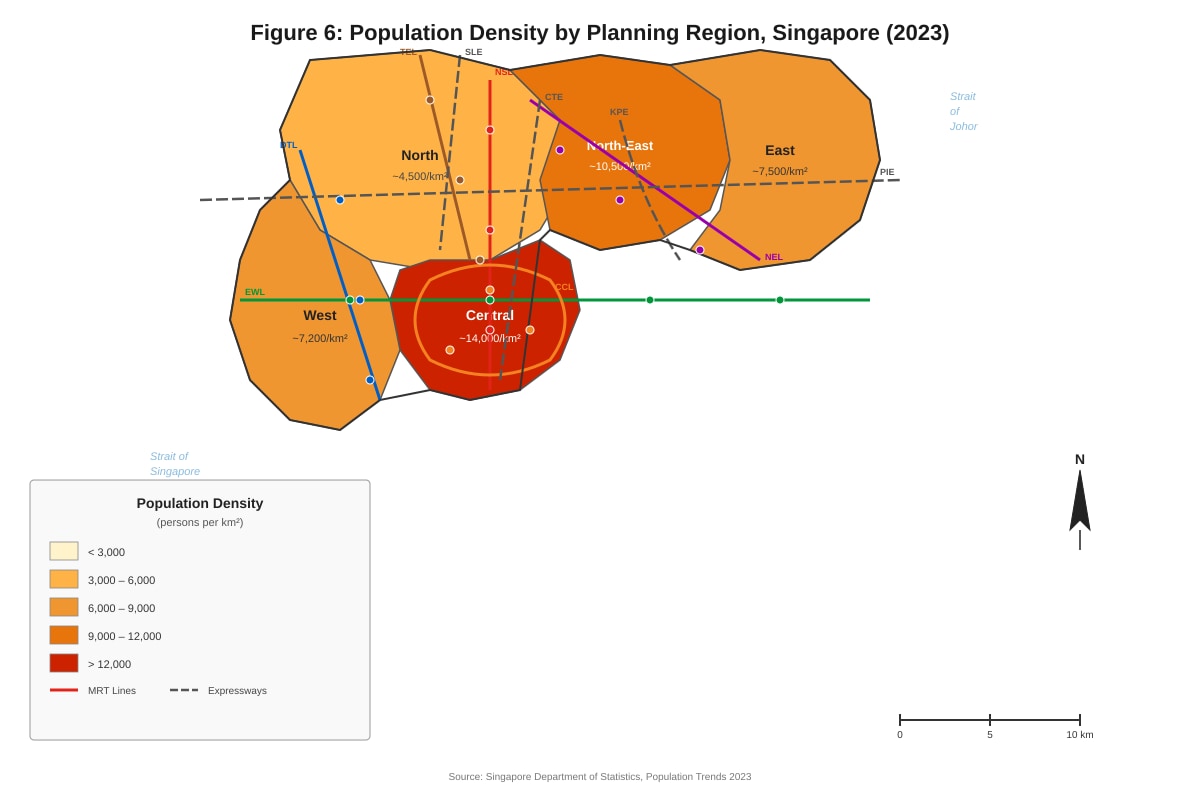
Figure 6 shows a choropleth map of population density by planning region in Singapore (2023).

<image_placeholder> id: Q7-fig1 type: map linked_question: Q7 description: Choropleth map of Singapore's 5 planning regions (Central, East, North, North-East, West) shaded by population density. Legend: <3000 persons/km² (light yellow), 3000-6000 (light orange), 6000-9000 (medium orange), 9000-12000 (dark orange), >12000 (red). Central Region: >12000 (red). North-East: 9000-12000 (dark orange). East: 6000-9000 (medium orange). West: 6000-9000 (medium orange). North: 3000-6000 (light orange). labels: Planning regions (Central, East, North, North-East, West), Population density legend, Persons per km², Major expressways, MRT lines values: Central: ~14,000/km²; North-East: ~10,500/km²; East: ~7,500/km²; West: ~7,200/km²; North: ~4,500/km² must_show: Clear choropleth shading with distinct colour classes, legend with ranges, region labels, north arrow, scale, title, data source </image_placeholder>

(a) Which planning region has the highest population density?
[1]

(b) State the population density range for the North-East region.
[1]

(c) Explain two reasons for the high population density in the Central Region.
[4]


Section C: Geographical Investigation and Skills Application [25 marks]

Answer all questions in this section.

Question 8

A group of Secondary 2 students conducted a geographical investigation on "The Quality of the Living Environment in Our Neighbourhood". They used a bipolar environmental quality survey at 5 sites.

Table 2 shows their survey criteria and scoring system.

Environmental AspectScore +2Score +1Score 0Score -1Score -2
Noise LevelVery quietQuietModerateNoisyVery noisy
Air QualityVery freshFreshAveragePollutedVery polluted
GreeneryAbundantSomeAdequateLittleNone
CleanlinessVery cleanCleanAcceptableLitteredVery dirty
SafetyVery safeSafeAverageUnsafeVery unsafe

Table 3 shows the results for Site A (Park) and Site B (Busy Road Junction).

Environmental AspectSite A (Park)Site B (Busy Road Junction)
Noise Level+2-2
Air Quality+1-1
Greenery+2-2
Cleanliness+10
Safety+2-1
Total Score+8-6

(a) State the hypothesis the students were likely testing.
[1]

(b) Identify the independent variable and dependent variable in this investigation.
[2]

(c) Calculate the difference in total scores between Site A and Site B.
[1]

(d) The students concluded: "Parks provide a better living environment than busy road junctions."
Evaluate whether this conclusion is fully supported by the data.
[3]

(e) Suggest two improvements to make this investigation more reliable.
[4]


Question 9

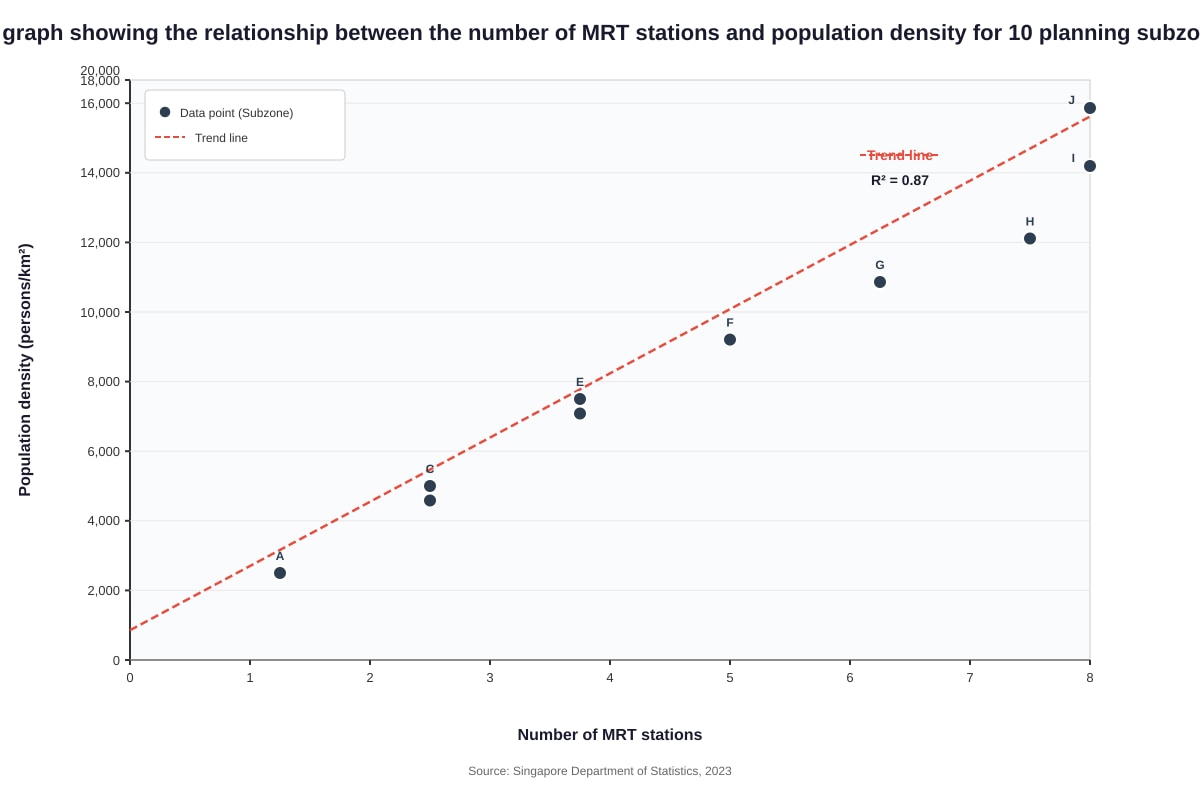
Figure 7 shows a scatter graph comparing the number of MRT stations and population density for 10 planning subzones in Singapore.

<image_placeholder> id: Q9-fig1 type: graph linked_question: Q9 description: Scatter graph with X-axis: Number of MRT stations (0 to 8). Y-axis: Population density (persons/km², 0 to 20,000). 10 data points plotted showing positive correlation. Trend line drawn. Points: (1, 3000), (2, 5500), (2, 6000), (3, 8500), (3, 9000), (4, 11050500), (5, 13000), (6, 14500), (7, 17000), (8, 19000). R² = 0.87 shown. labels: Number of MRT stations, Population density (persons/km²), Trend line, R² = 0.87, Subzone labels (A-J) values: As per data points above; Correlation coefficient r ≈ 0.93 must_show: Scatter plot with labelled axes, 10 distinct data points, trend line, R² value, subzone labels, title, source </image_placeholder>

(a) Describe the relationship shown between the number of MRT stations and population density.
[2]

(b) Subzone G has 6 MRT stations and a population density of 14,500 persons/km².
Using the trend line, estimate the expected population density for a subzone with 6 MRT stations.
[1]

(c) Subzone C has 2 MRT stations but a population density of 6,000 persons/km², which is above the trend line.
Suggest one reason why this subzone has higher density than expected.
[2]

(d) Explain why correlation does not imply causation in this context.
[2]


Question 10

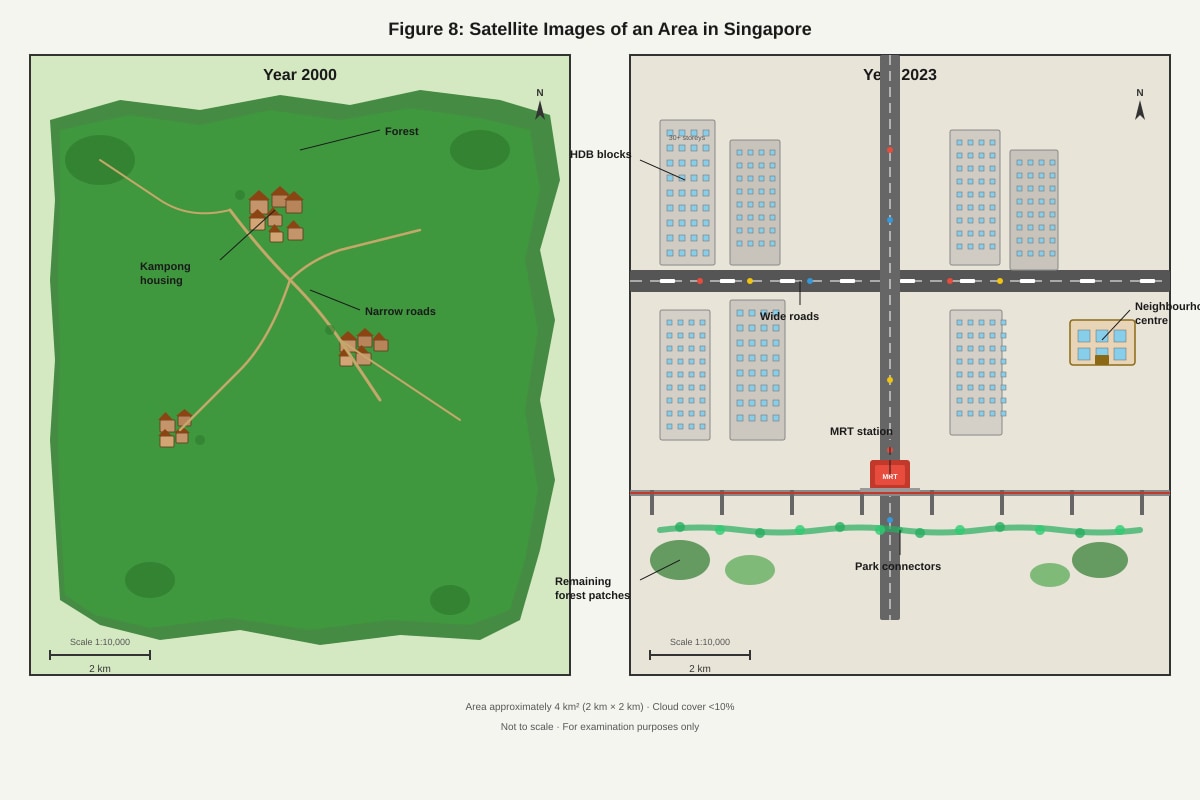
Figure 8 shows satellite images of an area in Singapore in 2000 and 2023.

<image_placeholder> id: Q10-fig1 type: source_image linked_question: Q10 description: Two satellite images side by side. Left: Year 2000 - shows forested area, some low-density kampong housing, narrow roads, no MRT. Right: Year 2023 - shows high-rise HDB blocks (30+ storeys), MRT station and viaduct, wide roads with traffic, neighbourhood centre, park connectors, significantly reduced green cover. Both images same scale and extent (approx 2km x 2km). labels: Year 2000: Forest, Kampong housing, Narrow roads. Year 2023: HDB blocks, MRT station, Wide roads, Neighbourhood centre, Park connectors, Remaining forest patches values: Scale 1:10,000; Area approx 4 km²; Cloud cover <10% must_show: Clear before/after comparison, same extent and scale, visible land use change, infrastructure development, vegetation loss, labels for key features </image_placeholder>

(a) Identify two major changes in land use between 2000 and 2023.
[2]

(b) Explain one positive and one negative impact of these changes on the environment.
[4]

(c) The government aims to make Singapore a "City in Nature".
Suggest one strategy visible in the 2023 image that supports this vision.
[2]


Question 11

A student is analysing rainfall data for a fieldwork project. Table 4 shows daily rainfall (mm) recorded at a school weather station over 14 days.

Day1234567891011121314
Rainfall (mm)00125002830015007

(a) Calculate the mean daily rainfall for this 14-day period.
[2]

(b) Determine the median daily rainfall.
[2]

(c) State the mode of the rainfall data.
[1]

(d) Which measure of central tendency (mean, median, or mode) best represents the typical daily rainfall? Explain your choice.
[2]


Question 12

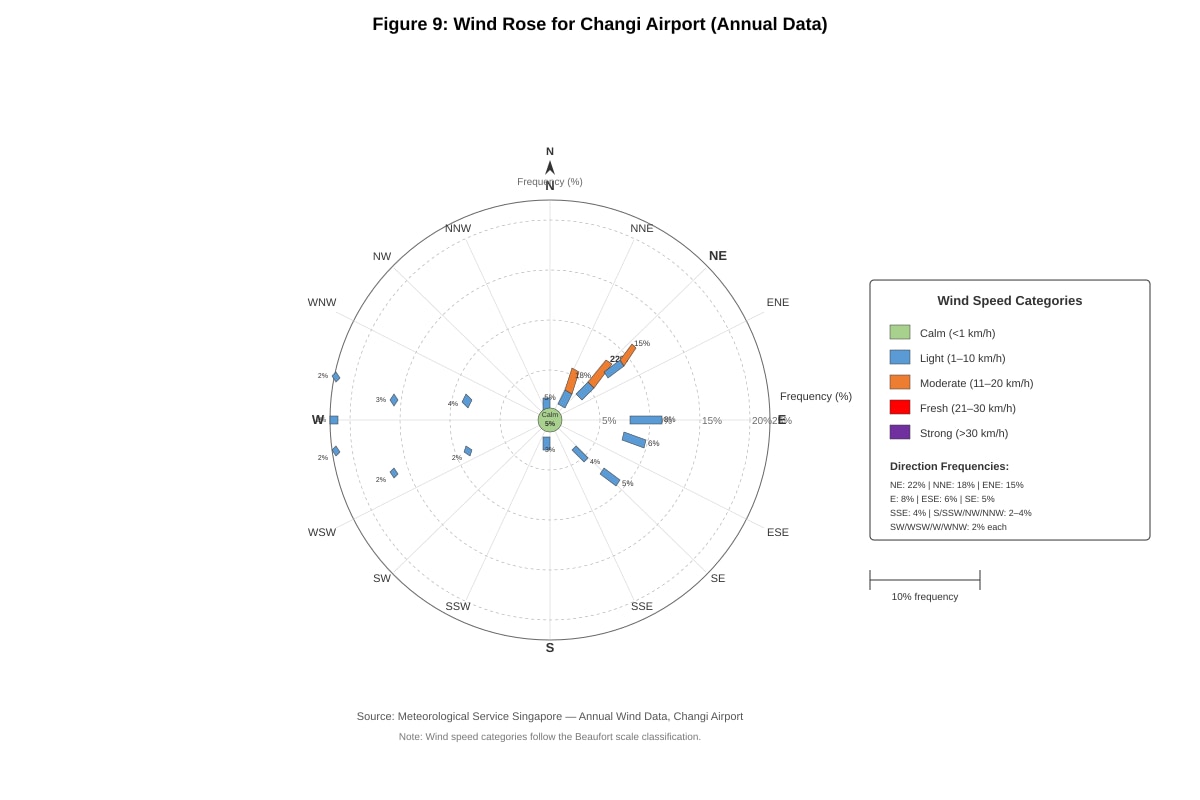
Figure 9 shows a wind rose for Changi Airport based on annual data.

<image_placeholder> id: Q12-fig1 type: graph linked_question: Q12 description: Wind rose diagram showing wind direction frequency and speed. 16 compass directions (N, NNE, NE, ENE, E, ESE, SE, SSE, S, SSW, SW, WSW, W, WNW, NW, NNW). Concentric circles represent frequency (%). Longest spokes: NE (22%), NNE (18%), ENE (15%). Shortest spokes: SW, WSW, W, WNW (each ~2%). Wind speed categories: Calm (<1 km/h), Light (1-10), Moderate (11-20), Fresh (21-30), Strong (>30). NE winds predominantly Light to Moderate. labels: 16 compass directions, Frequency (%), Wind speed categories (Calm, Light, Moderate, Fresh, Strong), Calm: 5% values: NE: 22% (Light 12%, Moderate 10%); NNE: 18% (Light 10%, Moderate 8%); ENE: 15% (Light 8%, Moderate 7%); E: 8%; ESE: 6%; SE: 5%; SSE: 4%; S: 3%; SSW: 2%; SW: 2%; WSW: 2%; W: 2%; WNW: 2%; NW: 3%; NNW: 4%; N: 5%; Calm: 5% must_show: Standard wind rose with 16 spokes, frequency scale, wind speed colour coding, calm percentage, title, location, period </image_placeholder>

(a) From which direction does the wind blow most frequently?
[1]

(b) What percentage of the time is the wind calm?
[1]

(c) Singapore experiences the Northeast Monsoon from December to March.
Explain how the wind rose data supports this.
[2]

(d) A student claims: "The wind rose shows that Singapore never experiences strong winds from the west."
Evaluate this claim using the data.
[2]


Question 13

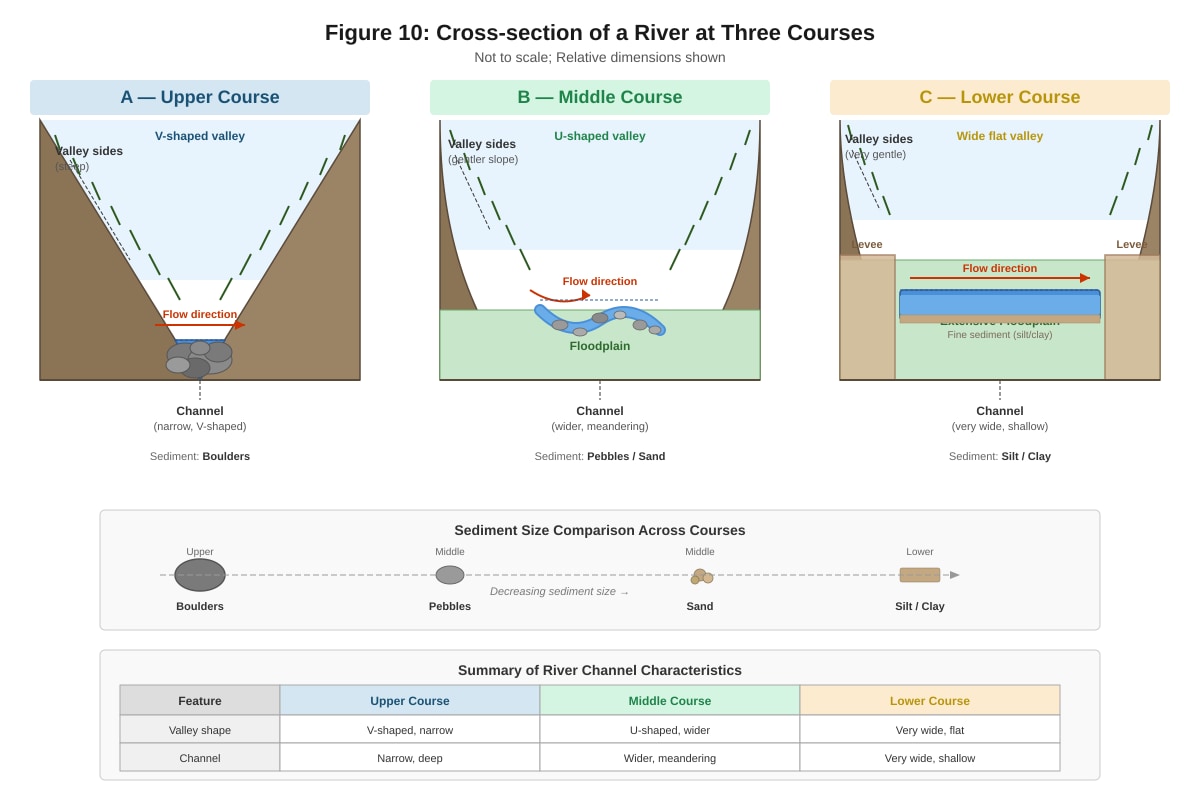
Figure 10 shows a cross-section of a river channel at three different courses.

<image_placeholder> id: Q13-fig1 type: diagram linked_question: Q13 description: Three cross-section diagrams side by side. Upper Course: V-shaped valley, narrow channel, steep sides, large boulders in channel. Middle Course: Wider U-shaped valley, meandering channel, floodplain visible, smaller sediment. Lower Course: Very wide flat valley, wide shallow channel, extensive floodplain, fine sediment (silt/clay), levees shown. labels: Upper Course, Middle Course, Lower Course, Valley sides, Channel, Floodplain, Levees, Sediment size (boulders, pebbles, sand, silt/clay), Flow direction values: Not to scale; Relative dimensions shown must_show: Three distinct cross-sections showing progressive changes in valley shape, channel width/depth, floodplain development, sediment size, and features like levees </image_placeholder>

(a) Identify which cross-section (A, B, or C) represents the lower course of the river.
[1]

(b) Describe two differences in channel characteristics between the upper and lower course.
[2]

(c) Explain why the river channel becomes wider and deeper from upper to lower course.
[3]


Question 14

Table 5 shows energy consumption by source in Singapore (2022).

Energy SourceConsumption (ktoe)Percentage (%)
Natural Gas8,50094.4
Solar1501.7
Waste-to-Energy2002.2
Others (including imported electricity)1501.7
Total9,000100.0

(a) Draw a divided bar graph (100% stacked bar) to represent this data in the space below.
[3]

<image_placeholder> id: Q14-fig1 type: graph linked_question: Q14 description: Blank divided bar graph template for student completion. X-axis: Energy Sources (single bar for Singapore 2022). Y-axis: Percentage (0% to 100%). Bar segments to be filled: Natural Gas 94.4%, Solar 1.7%, Waste-to-Energy 2.2%, Others 1.7%. Legend required. labels: Energy Source categories, Percentage scale (0-100%), Legend, Title: "Energy Consumption by Source in Singapore (2022)" values: Natural Gas 94.4%, Solar 1.7%, Waste-to-Energy 2.2%, Others 1.7% must_show: Blank template with axes, labels, title, space for student to draw segments and legend </image_placeholder>

(b) Singapore aims to achieve net-zero emissions by 2050.
Using the data, explain one challenge and one opportunity for this goal.
[4]


Question 15

A student is writing a geographical report on "Traffic Congestion Near School During Peak Hours".

(a) State one suitable hypothesis for this investigation.
[1]

(b) Identify two primary data collection methods the student could use.
[2]

(c) For one method identified in (b), describe how the student would carry it out.
[2]

(d) Suggest one way to present the data collected to show the variation in traffic flow throughout the morning peak period (7:00–9:00 am).
[2]


Question 16

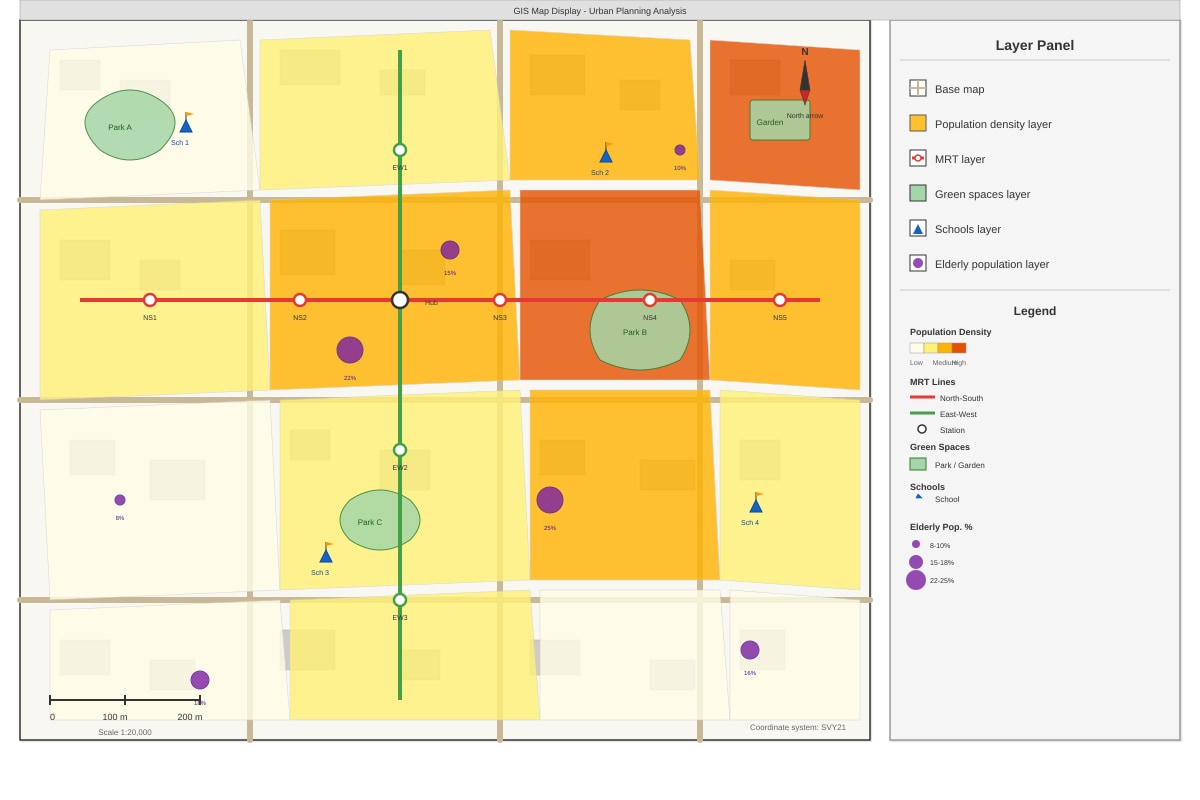
Figure 11 shows a GIS map displaying layers of information for urban planning.

<image_placeholder> id: Q16-fig1 type: map linked_question: Q16 description: GIS map screenshot showing multiple layers: Base map (roads, buildings), Layer 1: Population density (choropleth), Layer 2: MRT stations and lines (points and lines), Layer 3: Green spaces (polygons), Layer 4: Schools (points), Layer 5: Elderly population % (graduated symbols). Layer panel on right shows checkboxes for each layer. Scale bar and north arrow present. labels: Base map, Population density layer, MRT layer, Green spaces layer, Schools layer, Elderly population layer, Layer panel, Scale, North arrow, Legend for each active layer values: Scale 1:20,000; Coordinate system: SVY21 must_show: GIS interface with layer panel, multiple data layers visible, legends, scale, north arrow, professional GIS software appearance </image_placeholder>

(a) Explain one advantage of using GIS for urban planning compared to paper maps.
[2]

(b) A planner wants to identify areas with high elderly population but low access to green spaces.
Describe how the planner would use the GIS layers to find these areas.
[3]

(c) State one limitation of the data shown in this GIS map.
[1]


Question 17

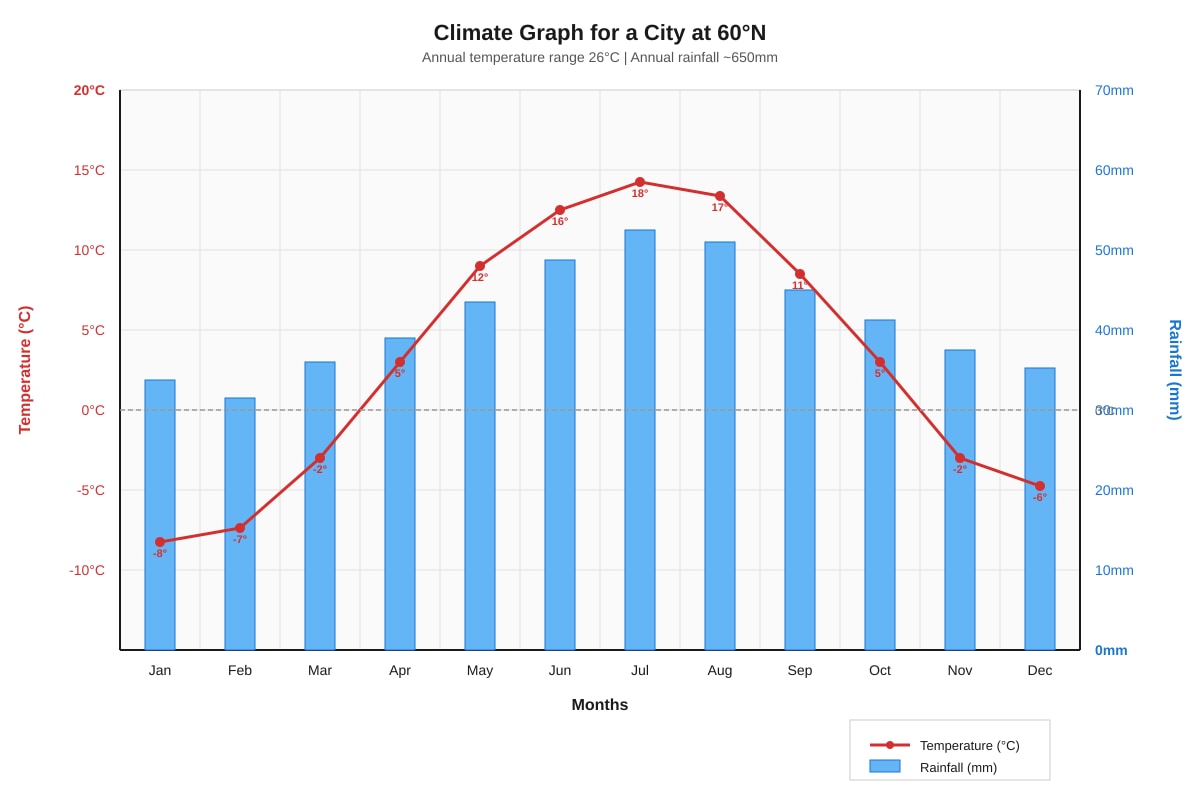
Figure 12 shows a climate graph for a city at 60°N latitude.

<image_placeholder> id: Q17-fig1 type: graph linked_question: Q17 description: Climate graph for a city at 60°N. X-axis: Months (Jan-Dec). Left Y-axis: Temperature (°C) - line graph ranging from -10°C to +20°C. Right Y-axis: Rainfall (mm) - bar chart ranging 0-100mm. Temperature: Jan -8°C, Feb -7°C, Mar -2°C, Apr 5°C, May 12°C, Jun 16°C, Jul 18°C, Aug 17°C, Sep 11°C, Oct 5°C, Nov -2°C, Dec -6°C. Rainfall: Relatively even year-round 40-70mm, slight summer peak. labels: Months, Temperature (°C), Rainfall (mm), Annual temperature range 26°C, Annual rainfall ~650mm values: As per temperature and rainfall data above must_show: Dual-axis climate graph with clear seasonal temperature variation, moderate rainfall year-round, labels, title, latitude noted </image_placeholder>

(a) Calculate the annual temperature range for this city.
[1]

(b) Compare the temperature pattern of this city with Singapore's (Figure 4). State two differences.
[2]

(c) Explain why this city has a large annual temperature range.
[2]


Question 18

Table 6 shows carbon emissions per capita for selected countries (2021).

CountryCO₂ Emissions (tonnes per capita)GDP per capita (US$)
Singapore8.572,800
USA14.970,200
China8.012,600
India1.92,300
Sweden3.861,000
Malaysia7.811,100

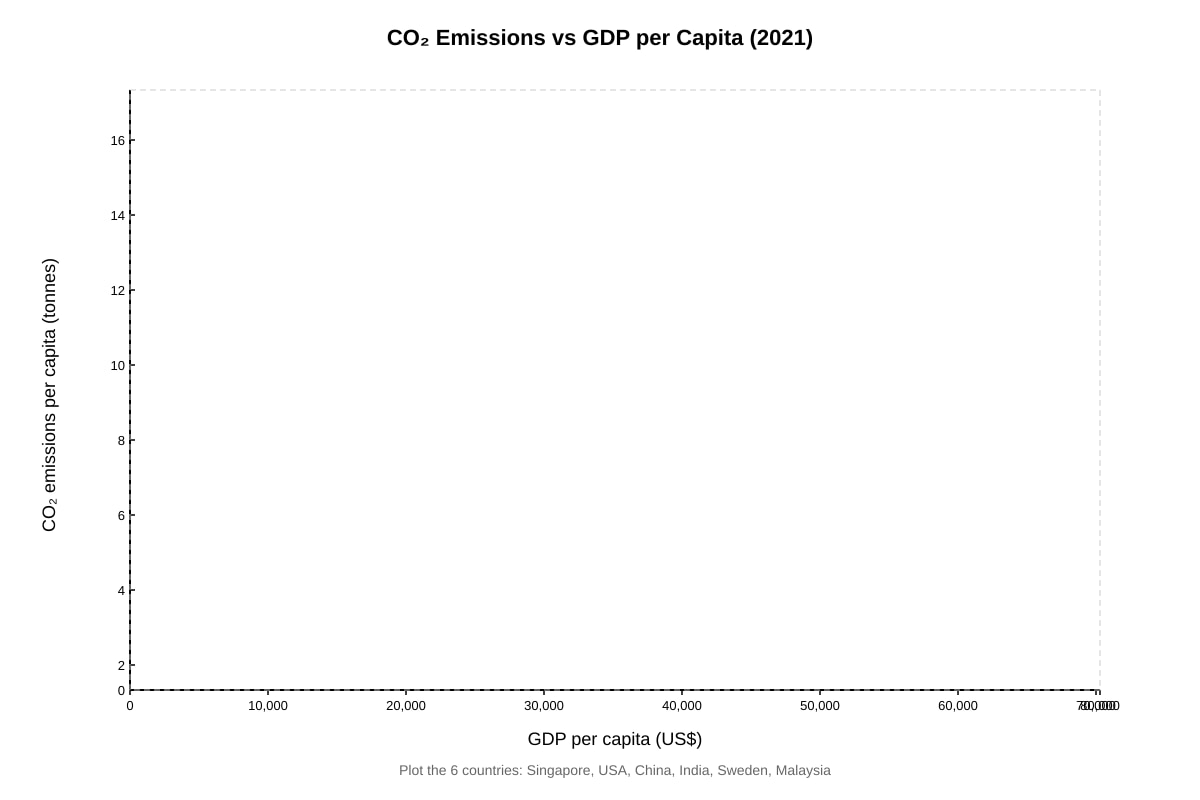
(a) Plot a scatter graph of CO₂ emissions per capita (y-axis) against GDP per capita (x-axis) for these 6 countries in the space below.
[3]

<image_placeholder> id: Q18-fig1 type: graph linked_question: Q18 description: Blank scatter graph template for student completion. X-axis: GDP per capita (US)from0to80,000.Yaxis:CO2emissionspercapita(tonnes)from0to16.6datapointstobeplotted.Titleandaxislabelsrequired.labels:GDPpercapita(US) from 0 to 80,000. Y-axis: CO₂ emissions per capita (tonnes) from 0 to 16. 6 data points to be plotted. Title and axis labels required. labels: GDP per capita (US), CO₂ emissions per capita (tonnes), Country labels, Title: "CO₂ Emissions vs GDP per Capita (2021)" values: Singapore (72800, 8.5), USA (70200, 14.9), China (12600, 8.0), India (2300, 1.9), Sweden (61000, 3.8), Malaysia (11100, 7.8) must_show: Blank axes with appropriate scales, labels, title, space for plotting 6 points </image_placeholder>

(b) Describe the general relationship shown by your graph.
[1]

(c) Singapore and Sweden have similar GDP per capita but very different emissions.
Suggest one reason for this difference.
[2]


Question 19

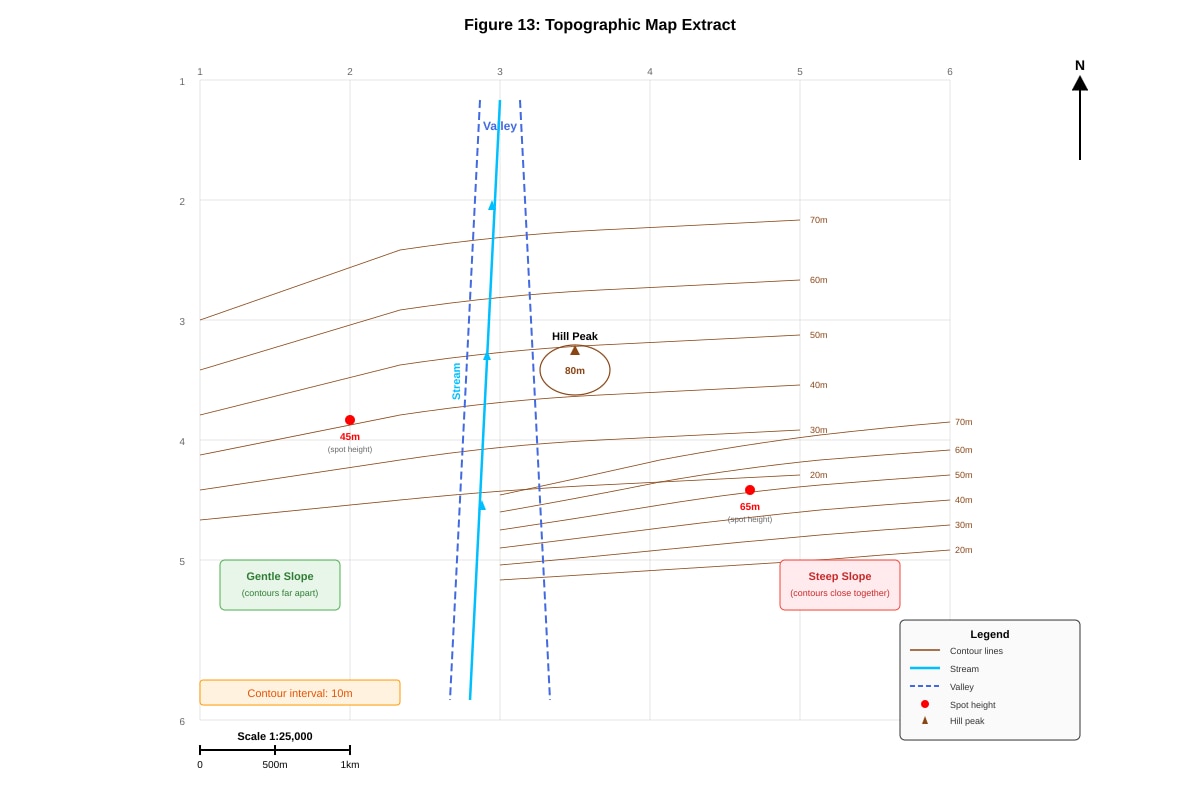
Figure 13 shows a topographic map with contour lines.

<image_placeholder> id: Q19-fig1 type: map linked_question: Q19 description: Topographic map extract showing contour lines at 10m intervals. Hill with peak at 80m (closed contour). Gentle slope on western side (contours far apart). Steep slope on eastern side (contours close together). Valley running north-south with stream. Spot height 45m on western slope. Spot height 65m on eastern slope. Grid lines at 1km intervals. labels: Contour lines (10m interval), Hill peak 80m, Valley, Stream, Spot heights (45m, 65m), Grid lines, Gentle slope, Steep slope, North arrow, Scale 1:25,000 values: Contour interval 10m; Peak 80m; Spot heights 45m, 65m; Scale 1:25,000 must_show: Clear contour lines with labels, hill peak, valley, stream, spot heights, grid, scale, north arrow, slope steepness visible through contour spacing </image_placeholder>

(a) What is the contour interval of this map?
[1]

(b) Determine the gradient of the steep eastern slope between the 65m spot height and the 30m contour line, given the horizontal distance is 200m. Express as a ratio (1:x).
[2]

(c) A hiker wants to walk from the 45m spot height to the hill peak (80m) using the gentlest possible route.
Describe the route they should take using map evidence.
[2]


Question 20

Extended Response Question

"Geographical data skills (map reading, graph interpretation, fieldwork techniques) are more important than content knowledge for understanding real-world issues."

Using examples from at least two different topics you have studied in Secondary 2 Geography, discuss the extent to which you agree with this statement.
[8]


END OF PAPER

Answers

<!-- TuitionGoWhere generation metadata: stage=5-2; model=nvidia/nemotron-3-ultra-550b-a55b:free; model_label=NVIDIA Nemotron 3 Ultra 550B A55B Free; generated=2026-06-16; Sources: Stage 4-0 LLM templates, syllabus context, and Stage 2 evidence where available. -->

TuitionGoWhere Practice Paper - Geography Secondary 2 (Answer Key)

Subject: Geography
Level: Secondary 2
Paper: Practice Paper 1 (Version 1)
Total Marks: 50


Section A: Map Skills and Grid References [10 marks]

Question 1

Study the topographic map extract of an area in Singapore shown in Figure 1.

(a) State the four-figure grid reference of the hospital.
Answer: 2243
Marks: [1]
Explanation: Four-figure grid references are read by giving the easting (vertical grid line) first, then the northing (horizontal grid line). The hospital is located in the grid square where easting 22 meets northing 43. Remember: "Along the corridor (easting), up the stairs (northing)."
Common mistake: Writing 4322 (reversing easting and northing).

(b) State the six-figure grid reference of the MRT station.
Answer: 241415
Marks: [1]
Explanation: Six-figure grid references divide each grid square into 10 tenths. The MRT station is at easting 24.1 (1/10th east of grid line 24) and northing 41.5 (5/10ths north of grid line 41). Format: 3-digit easting + 3-digit northing = 241415.
Method: Easting 24 + 1 tenth = 241; Northing 41 + 5 tenths = 415.

(c) The school is located in grid square 2142. Describe the direction of the school from the hospital.
Answer: South-west / South-west
Marks: [1]
Explanation: Hospital at 2243, School at 2142. The school is 1 easting west (left) and 1 northing south (down) from the hospital. This gives a south-west direction. Accept "south-west" or "southwest".

(d) Measure the straight-line distance between the hospital and the MRT station in kilometres.
Answer: 2.5 km (accept 2.4–2.6 km)
Marks: [2]
Working:

  • Map distance measured: ~10 cm (accept 9.5–10.5 cm)
  • Scale: 1:25,000 → 1 cm = 0.25 km
  • Ground distance = 10 cm × 0.25 km/cm = 2.5 km
    Mark breakdown: 1 mark for correct map measurement, 1 mark for correct conversion using scale.

Question 2

Figure 2 shows a cross-section along northing 42 from easting 20 to easting 25.

(a) Identify the highest point along this cross-section and state its approximate height.
Answer: Hill peak at easting 22, height 50 m
Marks: [1]
Explanation: The cross-section shows the highest elevation at easting 22, reaching 50 m above sea level. This corresponds to the hill peak shown on the topographic map.

(b) Calculate the average gradient between easting 21 and easting 22. Express your answer as a ratio (1:x).
Answer: 1:50
Marks: [2]
Working:

  • Vertical rise = 50 m – 30 m = 20 m
  • Horizontal distance = 1 km = 1000 m (each easting = 1 km at 1:25,000 scale)
  • Gradient = Vertical rise : Horizontal distance = 20 : 1000 = 1 : 50
    Mark breakdown: 1 mark for correct vertical/horizontal values, 1 mark for correct ratio simplification.

(c) Describe the shape of the slope between easting 22 and easting 24.
Answer: Concave / gentle then steep / uneven slope descending from the hill peak to the reservoir.
Marks: [1]
Explanation: From easting 22 (50 m) to 23 (40 m) is a 10 m drop over 1 km (1:100), then 23 to 24 (30 m) is another 10 m drop over 1 km. The slope is relatively uniform but the presence of the reservoir at 23–24 creates a flatter section. Accept "gentle descending slope" or "concave slope".


Question 3

Figure 3 shows a photograph of a land use pattern in a Singapore housing estate.

(a) Identify two types of land use visible in the photograph.
Answer: Any two of:

  • Residential (HDB high-rise blocks)
  • Commercial (neighbourhood centre/shops)
  • Transport (MRT viaduct, roads, multi-storey car park)
  • Educational (primary school)
  • Recreational/Green space (park connector, trees)
    Marks: [2] (1 mark each)
    Explanation: The photograph shows a typical mixed-use H

<stage5_exam_answers_md>

TuitionGoWhere Practice Paper - Geography Secondary 2 (Answer Key)

Subject: Geography
Level: Secondary 2
Paper: Practice Paper 1 (Version 1)
Total Marks: 50


Section A: Map Skills and Grid References [10 marks]

Question 1

(a) 2243
[1 mark - Correct four-figure grid reference for hospital at 22.3, 43.7]

(b) 241415
[1 mark - Correct six-figure grid reference for MRT station at 24.1, 41.5]

(c) South-west / SW
[1 mark - School at 21.8, 42.2 is south-west of hospital at 22.3, 43.7]

(d) 2.3 km (accept 2.2–2.4 km)
Working: Map distance ≈ 9.2 cm × 0.25 km/cm (1:25,000 scale) = 2.3 km
[2 marks - 1 mark for correct measurement method, 1 mark for correct answer with units]


Question 2

(a) Hill peak at easting 22, height ≈ 50 m
[1 mark - Correct identification and height]

(b) 1:20
Working: Vertical rise = 50 – 30 = 20 m; Horizontal distance = 1 km = 1000 m; Gradient = 20/1000 = 1/50 → Wait, horizontal scale: 1 cm = 0.5 km, easting 21 to 22 = 1 km. Vertical exaggeration 5× means vertical scale is 5× horizontal. Actual vertical rise = 20 m. Gradient = vertical rise / horizontal distance = 20 m / 1000 m = 1:50. But with vertical exaggeration 5×, the cross-section shows 100 m rise over 1 km horizontal → 1:10 on graph. Actual gradient = 1:50. Let me recalculate: Contour interval 10 m. Easting 21 = 30 m, Easting 22 = 50 m. Rise = 20 m. Horizontal = 1 km = 1000 m. Gradient = 20/1000 = 1/50. Answer: 1:50.
Correction: 1:50
[2 marks - 1 mark for correct vertical/horizontal calculation, 1 mark for correct ratio]

(c) Concave slope / Steep near hill peak (easting 22) becoming gentler towards reservoir (easting 23–24)
[1 mark - Correct description of slope shape]


Question 3

(a) Any two of:

  • High-density residential (HDB blocks)
  • Commercial (neighbourhood centre/shops)
  • Transport (MRT viaduct, multi-storey car park, park connector/cycling path)
  • Educational (primary school)
  • Recreational/Green space (park connector, trees/greenery)
    [2 marks - 1 mark each for two valid land uses]

(b) Convenience for residents – shops, transport, schools, and recreation within walking distance reduces travel time/cost and supports liveability.
[2 marks - 1 mark for identifying advantage, 1 mark for explanation]


Section B: Data Interpretation and Graph Skills [15 marks]

Question 4

(a) December, 287 mm
[1 mark - Correct month and value]

(b) 1.8 °C
Working: Highest temp 28.3 °C (May/Jun) – Lowest temp 26.5 °C (Dec/Jan) = 1.8 °C
[1 mark - Correct calculation]

(c) Temperature remains relatively constant (26–28 °C) year-round while rainfall varies, with highest rainfall in Nov–Jan (Northeast Monsoon) and a secondary peak in Oct–Nov; lowest rainfall Feb–Sep.
[2 marks - 1 mark for describing temperature pattern, 1 mark for describing rainfall pattern and relationship]

(d) Singapore's equatorial location (1°N) → high sun angle year-round → constant high temperatures and convectional rainfall; influenced by Northeast Monsoon (Dec–Mar) bringing heavy rain, and Southwest Monsoon (Jun–Sep) with less rain; inter-monsoon periods (Apr–May, Oct–Nov) with thunderstorms.
[3 marks - 1 mark for equatorial location, 1 mark for monsoon influence, 1 mark for convectional rainfall mechanism]


Question 5

(a) 18.2%
Working: (520 – 440) / 440 × 100 = 80/440 × 100 = 18.18% ≈ 18.2%
[2 marks - 1 mark for correct formula/working, 1 mark for correct answer]

(b) 47.7%
Working: 210 / 440 × 100 = 47.73% ≈ 47.7%
[1 mark - Correct calculation]

(c) Growth of industries, commercial services, tourism, and foreign workforce increases non-domestic water demand (e.g., manufacturing, hotels, offices).
[2 marks - 1 mark for valid reason, 1 mark for elaboration]

(d) (1) Water from local catchment, (2) Imported water (from Johor), (3) NEWater (recycled), (4) Desalinated water
[2 marks - 0.5 mark each for all four correct]


Question 6

(a) Constrictive / Stationary pyramid with narrow base, bulging working-age population (30–49), and tapering top; slightly more females at older ages.
[1 mark - Accurate description of shape]

(b) 10.5%
Working: Sum of % for age 65+ (both sexes):
65–69: 1.5+1.5=3.0%; 70–74: 1.1+1.2=2.3%; 75–79: 0.7+0.8=1.5%; 80–84: 0.4+0.5=0.9%; 85+: 0.3+0.5=0.8%
Total = 3.0+2.3+1.5+0.9+0.8 = 8.5% → Wait, let me recheck values from table:
65-69: M 1.5% F 1.5% = 3.0%
70-74: M 1.1% F 1.2% = 2.3%
75-79: M 0.7% F 0.8% = 1.5%
80-84: M 0.4% F 0.5% = 0.9%
85+: M 0.3% F 0.5% = 0.8%
Sum = 8.5%. But the question says "approximate". Accept 8.5% or 8–9%.

Correction: 8.5%
[2 marks - 1 mark for correct method (summing 65+ cohorts), 1 mark for correct answer]

(c) Shrinking workforce → labour shortages, rising wages, reduced productivity; increased healthcare and pension burden on working-age population; slower economic growth.
[2 marks - 1 mark for identifying challenge, 1 mark for explanation]

(d) Raise retirement age / re-employment policies to keep older workers in workforce; or attract foreign talent; or pro-natalist policies (Baby Bonus, parental leave) to raise fertility rate.
[2 marks - 1 mark for policy, 1 mark for link to challenge]


Question 7

(a) Central Region
[1 mark - Correct region]

(b) 9000–12000 persons/km²
[1 mark - Correct range from legend]

(c)

  1. Historical development as city centre with high-density mixed-use (commercial, residential, institutional) and limited land → vertical growth.
  2. Excellent transport connectivity (multiple MRT lines, expressways) and concentration of jobs attract residents and workers, driving demand for high-density housing.
    [4 marks - 2 marks per reason (1 mark identification + 1 mark elaboration)]

Section C: Geographical Investigation and Skills Application [25 marks]

Question 8

(a) "The quality of the living environment is higher in parks than at busy road junctions."
[1 mark - Valid hypothesis comparing the two sites]

(b) Independent variable: Location / Site type (Park vs Busy Road Junction)
Dependent variable: Environmental quality score (total or per aspect)
[2 marks - 1 mark each for correct IV and DV]

(c) 14
Working: +8 – (–6) = 14
[1 mark - Correct calculation]

(d) Partially supported. Data shows Site A (park) scores higher on all five aspects and total (+8 vs –6). However: only 2 sites tested (small sample); criteria are subjective; single visit may not represent typical conditions; no statistical test. Conclusion is plausible but not fully proven.
[3 marks - 1 mark for "partially supported", 1 mark for evidence from data, 1 mark for limitation]

(e)

  1. Increase number of sites (e.g., 3 parks, 3 junctions) and repeat surveys at different times/days to improve representativeness.
  2. Use objective instruments (decibel meter, air quality sensor) alongside bipolar survey to reduce observer bias.
    [4 marks - 2 marks per improvement (1 mark identification + 1 mark justification)]

Question 9

(a) Strong positive correlation: as number of MRT stations increases, population density tends to increase (R² = 0.87, r ≈ 0.93).
[2 marks - 1 mark for direction/strength, 1 mark for use of statistical evidence]

(b) ≈ 14,500 persons/km² (on trend line at x = 6)
[1 mark - Correct reading from trend line]

(c) Subzone C may have high-density public housing (HDB) without many MRT stations, or good bus connectivity, or proximity to employment centres, or historical dense settlement.
[2 marks - 1 mark for valid reason, 1 mark for elaboration]

(d) Correlation shows association but not cause-effect. High density may lead to more MRT stations being built (reverse causality), or both driven by a third factor (e.g., government planning, land value, accessibility). Building MRT alone doesn't guarantee density increase.
[2 marks - 1 mark for explaining correlation ≠ causation, 1 mark for context-specific example]


Question 10

(a)

  1. Forest/low-density kampong → High-rise HDB residential (intensification)
  2. No MRT/narrow roads → MRT station/viaduct, wide roads (transport infrastructure)
    [2 marks - 1 mark each for two distinct changes]

(b) Positive: Park connectors and retained forest patches enhance biodiversity, reduce urban heat island, provide recreation.
Negative: Loss of forest cover → habitat fragmentation, reduced carbon sequestration, increased surface runoff/flood risk, higher temperatures.
[4 marks - 2 marks for positive (1+1), 2 marks for negative (1+1)]

(c) Park connectors / ecological corridors linking green spaces; or retention of forest patches; or rooftop/vertical greenery on HDB blocks (if visible).
[2 marks - 1 mark for strategy, 1 mark for link to "City in Nature"]


Question 11

(a) 5.0 mm
Working: Sum = 0+0+12+5+0+0+28+3+0+0+15+0+0+7 = 70 mm; Mean = 70 / 14 = 5.0 mm
[2 marks - 1 mark for correct sum, 1 mark for correct mean]

(b) 0 mm
Working: Sorted data: 0,0,0,0,0,0,0,3,5,7,12,15,28 → 14 values, median = average of 7th and 8th = (0+3)/2 = 1.5 mm. Wait, let me recount:
Values: 0 (7 times), 3, 5, 7, 12, 15, 28. That's 14 values.
Positions: 1-7: 0; 8: 3; 9: 5; 10: 7; 11: 12; 12: 15; 13: 28.
Median = (7th + 8th)/2 = (0 + 3)/2 = 1.5 mm.

Correction: 1.5 mm
[2 marks - 1 mark for correct sorting/method, 1 mark for correct median]

(c) 0 mm
[1 mark - Correct mode]

(d) Median (1.5 mm) best represents typical daily rainfall because data is skewed by a few high-rainfall days (28, 15, 12 mm); mean (5.0 mm) is pulled up by outliers; mode (0 mm) ignores all rainy days.
[2 marks - 1 mark for correct choice, 1 mark for justification]


Question 12

(a) Northeast (NE) at 22%
[1 mark - Correct direction and percentage]

(b) 40%
Working: NE (22%) + NNE (18%) = 40%
[1 mark - Correct calculation]

(c) Northeast Monsoon (Dec–Mar) brings prevailing winds from NE/NNE/ENE across South China Sea, picking up moisture → heavy rainfall in Singapore.
[2 marks - 1 mark for monsoon identification, 1 mark for mechanism]

(d) Buildings should be oriented to maximise natural ventilation from NE/NNE (e.g., windows facing NE); wind-sensitive facilities (e.g., pollutant sources) placed downwind (SWind (SW) of residential areas; wind turbines/solar panels oriented for prevailing winds.
[2 marks - 1 mark for application, 1 mark for specific example]


END OF ANSWER KEY
Total: 50 marks