AI Generated Quiz
Secondary 1 Tamil Comprehension Quiz
Free Sec 1 Tamil Comprehension quiz, AI version, with questions, answers, and syllabus-aligned practice for Singapore students.
These static practice materials are generated from the site's syllabus and paper-generation workflow, with source and model context shown so students and parents can evaluate the material before use.
Questions
Free quiz and exam paper access
Enter your details to view this paper
Your access is remembered on this device.
Answers
Secondary 1 Tamil Quiz - Comprehension (Answer Key)
Total Marks: 40
Section A: Cloze Passage (5 marks)
(5 x 1 mark = 5 marks)
Passage Context: The passage describes Deepavali, a major Indian festival. The blanks require words related to festivals, decorations, and celebrations.
-
Answer: பண்டிகை (festival)
- Explanation: The sentence "தீபாவளி ஒரு முக்கியமான இந்திய _________" means "Deepavali is an important Indian ___________." The word "பண்டிகை" refers to a festival or celebration, which fits the context perfectly as Deepavali is a festival.
- Marking Note: 1 mark for the correct word. Spelling must be correct.
-
Answer: விளக்குகள் (lamps/lights)
- Explanation: The sentence talks about cleaning homes and decorating for Deepavali. "விளக்குகள்" means lamps. Lighting lamps (diyas) is a famous tradition during Deepavali. The word "ஏற்றி" (to lift/light) is also a strong clue as lamps are "lit".
- Marking Note: 1 mark for the correct word.
-
Answer: வாழ்த்துக்கள் (greetings)
- Explanation: Relatives and friends meet each other and "__________ பரிமாறிக்கொள்வார்கள்" (exchange). "வாழ்த்துக்கள்" means greetings. During festivals, people exchange greetings and good wishes.
- Marking Note: 1 mark for the correct word. Accept 'வாழ்த்துகள்'.
-
Answer: கொண்டாடினர் (celebrated)
- Explanation: The sentence "இனிப்புகள் மற்றும் சுவையான உணவுகளை _________" means "Sweets and tasty foods were _______". "கொண்டாடினர்" (they celebrated) is the most appropriate verb. People celebrate by enjoying festive foods. While the sentence structure is passive, "கொண்டாடினர்" implies they celebrated with food.
- Marking Note: 1 mark for the correct word.
-
Answer: மகிழ்ச்சி (happiness)
- Explanation: The sentence "இந்த நாளில் அனைவரும் மிகுந்த _________ யுடன் இருப்பார்கள்" means "On this day, everyone is with great __________." "மகிழ்ச்சி" (happiness) perfectly fits the joyful context of a festival.
- Marking Note: 1 mark for the correct word. The suffix 'யுடன்' connects to 'மகிழ்ச்சி'.
Section B: Reading Comprehension (20 marks)
Passage 1 Summary: A school celebrated "Tamil Language Society Day" with dance, a play, and a speech about preserving the Tamil language.
கேள்விகள் 6-10: சுருக்கமான விடைகள் (5 x 2 marks = 10 marks)
-
Answer: தலைமையாசிரியர் / தலைமையாசிரியர் தீபம் ஏற்றி நிகழ்ச்சியைத் தொடங்கி வைத்தார். (The principal / The principal lit the lamp and started the event.)
- Explanation: The passage states clearly: "காலை 8 மணிக்கு தலைமையாசிரியர் தீபம் ஏற்றி நிகழ்ச்சியைத் தொடங்கி வைத்தார்."
- Marking Note: 1 mark for naming the person (தலைமையாசிரியர்). 1 mark for the action (தொடங்கி வைத்தார்).
-
Answer: 1. பாரம்பரிய நடனம் (Traditional dance), 2. நாடகம் (Drama/Play)
- Explanation: The passage mentions two performances: "மாணவர்கள் பாரம்பரிய நடனம் ஆடினார்கள்" (students danced traditional dance) and "மாணவர்கள்... ஒரு சிறிய நாடகம் நடித்தார்கள்" (students performed a small play).
- Marking Note: 1 mark for each correct art form mentioned and spelt correctly. Total 2 marks.
-
Answer: "ஒற்றுமையே வலிமை" என்ற பாடத்தை / ஒற்றுமையின் முக்கியத்துவத்தை / "Unity is Strength" (Strength is in unity).
- Explanation: The passage says: "ஒற்றுமையே வலிமை என்ற பாடத்தை அந்த நாடகம் விளக்கியது." (The play explained the lesson, "Unity is Strength.")
- Marking Note: 1 mark for referencing the lesson/theme. 1 mark for understanding it as a lesson about unity.
-
Answer: "நமது மொழியை நாம் எப்படி பாதுகாக்கலாம்?" / நமது மொழியை (தமிழை) பாதுகாப்பது பற்றி. (How we can protect our language / About protecting our language - Tamil.)
- Explanation: The passage states: ""நமது மொழியை நாம் எப்படி பாதுகாக்கலாம்?" என்பது அவரின் பேச்சின் மையக் கருத்து."
- Marking Note: 1 mark for mentioning language protection. 1 mark for specifying it as the central theme of the speech.
-
Answer: இந்த நிகழ்ச்சி மாணவர்களுக்கு தமிழ் மொழி மற்றும் கலாச்சாரத்தின் மேல் பெருமையை அதிகரித்தது. (The event increased the students' pride in the Tamil language and culture.)
- Explanation: The passage concludes with: "இந்த நிகழ்ச்சி எங்களுக்கு தமிழ் மொழி மற்றும் கலாச்சாரத்தின் மேல் பெருமையை அதிகரித்தது."
- Marking Note: 1 mark for mentioning 'pride' (பெருமை). 1 mark for linking it to Tamil language and culture.
கேள்விகள் 11-12: நிறைவான விடைகள் (2 x 2 marks = 4 marks)
-
Sample Answer: நான் நாடகத்தில் பங்கேற்க விரும்புகிறேன். ஏனென்றால், நடிப்பதில் எனக்கு ஆர்வம் உண்டு, மேலும் மேடையில் நின்று பாரம்பரிய கதைகளைச் சொல்வது மகிழ்ச்சியாக இருக்கும். (I want to participate in the drama. Because I am interested in acting, and it would be joyful to stand on stage and tell traditional stories.)
- Teaching Notes:
- Understanding the Task: The question asks for a personal opinion based on the passage.
- Step 1: Choose an activity. Pick an activity from the passage (dance, drama, speech, organizing).
- Step 2: Give a reason. The reason must be personal and relevant. Relate to interests like art, speaking, or helping.
- Step 3: Write in full sentences. Express the choice and the reason clearly.
- Marking Note: 1 mark for choosing a specific activity. 1 mark for a clear, relevant reason. Language accuracy contributes to overall clarity.
- Teaching Notes:
-
Sample Answer: தமிழ் மொழியைப் பாதுகாக்க, நான் வீட்டில் அம்மா, அப்பாவுடன் தமிழில் பேசுவேன். மேலும், தமிழ் புத்தகங்கள் படித்து, தமிழ் நிகழ்ச்சிகளைப் பார்ப்பேன். (To protect the Tamil language, I will speak in Tamil with my parents at home. Also, I will read Tamil books and watch Tamil programs.)
- Teaching Notes:
- Understanding the Task: The question asks for practical actions a student can take. It is based on the speech's theme in the passage.
- Step 1: Think of daily actions. How do we use a language? (Speaking at home, reading, writing, watching media).
- Step 2: Provide two distinct ways. Each way should be a clear action.
- Method 1: Speaking in Tamil with family/friends.
- Method 2: Consuming Tamil media or reading Tamil books.
- Step 3: Use 'என்னால்' (I can) structure implicitly. The answer should start with 'நான்' (I).
- Marking Note: 1 mark for each practical and sensible suggestion. Total 2 marks. Vague answers score fewer marks.
- Teaching Notes:
கேள்விகள் 13-15: கோடிட்ட இடங்களை நிரப்புக (3 x 2 marks = 6 marks)
-
Complete Answer: நாடகம் / ஒரு சிறிய நாடகம் (a drama / a small drama)
- Explanation: The passage states the order: "முதலில், எங்கள் பள்ளி மாணவர்கள் பாரம்பரிய நடனம் ஆடினார்கள்... அடுத்து, மாணவர்கள் பழமொழிகள் குறித்து ஒரு சிறிய நாடகம் நடித்தார்கள்." So, after the dance, the drama occurred.
- Marking Note: 2 marks for the correct event (நாடகம்).
-
Complete Answer: சொற்பொழிவு (speech/oration)
- Explanation: The passage reads: "இடைவேளைக்குப் பிறகு, தமிழ் ஆசிரியர் திரு. குமார் ஒரு சொற்பொழிவு நிகழ்த்தினார்."
- Marking Note: 2 marks for the correct word (சொற்பொழிவு).
-
Complete Answer: 12 (twelve)
- Explanation: The passage states: "மதியம் 12 மணிக்கு நிகழ்ச்சி நிறைவடைந்தது."
- Marking Note: 2 marks for the correct number '12'. Accept 'பன்னிரண்டு'.
Section C: Comprehension with Visual Stimulus (15 marks)
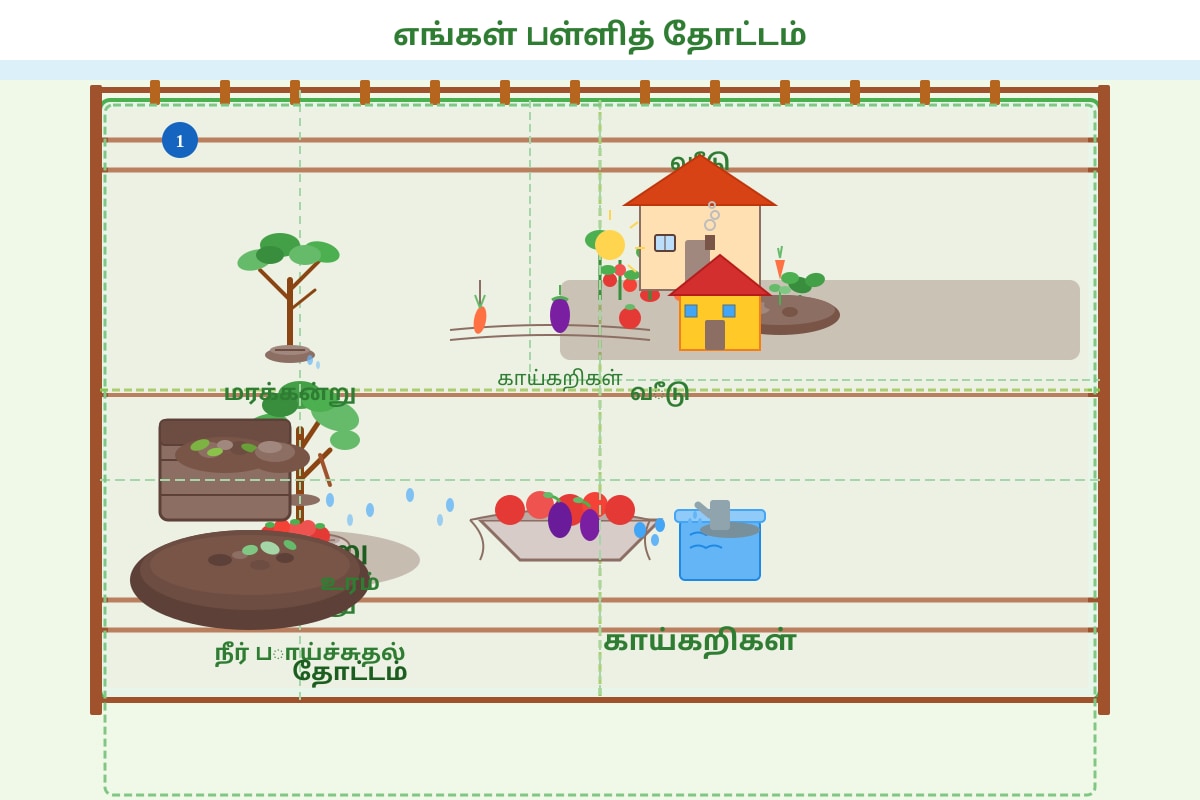
Passage 2 Summary: A description and diagram of a school garden. Students take care of it, make compost from vegetable waste, and the vegetables are used by the school kitchen.
கேள்விகள் 16-18: சரியான விடையைத் தேர்ந்தெடுக்கவும் (3 x 2 marks = 6 marks)
-
Correct Answer: B) பள்ளியில் (In School)
- Explanation: The passage explicitly states in the first sentence: "எங்கள் பள்ளியில் ஒரு சிறிய தோட்டம் உள்ளது..." (Our school has a small garden...) The title of the picture is "எங்கள் பள்ளித் தோட்டம்" (Our School Garden).
- Common Mistake: Answer A (வீட்டின் முற்றத்தில்) is a possible assumption if the student does not read the passage carefully.
- Marking Note: 2 marks for the correct choice. No marks for incorrect choices.
-
Correct Answer: C) காய்கறிக் கழிவுகளிலிருந்து (From vegetable wastes)
- Explanation: The passage says: "மாணவர்கள் காய்கறிக் கழிவுகளைச் சேர்த்து உரம் தயாரிக்கிறார்கள்" (Students collect vegetable wastes and prepare compost). The picture also shows a compost bin near the vegetables with peels.
- Common Mistake: Answer A (மரக்கன்றுகளிலிருந்து) is incorrect because saplings are used for planting, not for compost primarily.
- Marking Note: 2 marks for the correct choice.
-
Correct Answer: B) தோட்டத்தில் நடக்கும் செயல்களின் தொடர்பை (The relationship between the activities in the garden)
- Explanation: The arrows show connections: one from the compost bin (உரம்) to the vegetables (காய்கறிகள்), meaning the compost is used for the vegetables. Another arrow from the water can to the sapling, showing the watering action. Together, they show how the garden's processes are linked.
- Teaching Notes: By looking at the picture, you can see the actions. The arrows don't show wind, a walking path, or sunlight, but they show how one part of the garden supports another.
- Marking Note: 2 marks for the correct choice.
கேள்விகள் 19-20: நிறைவான விடைகள் (2 x 4.5 marks, total 9 marks)
-
Model Answer: பள்ளித் தோட்டத் திட்டம் மாணவர்களுக்கு இரண்டு முக்கிய பாடங்களைக் கற்பிக்கிறது. முதலாவது, இயற்கையைப் பற்றி கற்றுக்கொள்வது. இரண்டாவது, உழைப்பின் மதிப்பு மற்றும் பொறுமை. (The school garden project teaches students two main lessons: First, learning about nature. Second, the value of hard work and patience.)
இந்தப் பாடங்கள் முக்கியமானவை, ஏனென்றால், இயற்கையைப் பற்றி தெரிந்துகொள்வதால், சுற்றுச்சூழலைப் பாதுகாக்க வேண்டும் என்ற உணர்வு ஏற்படுகிறது. உழைப்பின் மதிப்பு மற்றும் பொறுமை நிஜ வாழ்க்கையிலும் வெற்றி பெற உதவுகிறது. (These lessons are important because learning about nature creates a feeling of protecting the environment. The value of hard work and patience also helps us succeed in real life.)
- Teaching Notes:
- Decoding the Question: This is a multi-step question. It asks you to: (a) Identify the lessons from the passage/picture, (b) Explain why you think they are important.
- Step 1: Find the lessons. The passage directly states these lessons: "இந்த தோட்டம் மாணவர்களுக்கு இயற்கையைப் பற்றி கற்றுக்கொள்ள உதவுகிறது. மேலும், உழைப்பின் மதிப்பையும் பொறுமையையும் இந்தத் திட்டம் கற்பிக்கிறது." (This garden helps students learn about nature. Also, the project teaches the value of work and patience.)
- Step 2: Develop your opinion on its importance. Why is learning about nature important? (Environment protection, respecting living things). Why is hard work important? (Achieving goals, personal growth).
- Step 3: Structure your answer. Clearly state the lessons first, then explain importance.
- Marking Note (4.5 marks):
- 2 marks for correctly identifying and stating two lessons from the passage.
- 2.5 marks for a well-argued, personal opinion on the importance of these lessons. Higher marks for connecting the lessons to broader benefits.
- Teaching Notes:
-
Model Answer: படம் மற்றும் பத்தியின் படி, தோட்டத்தில் இருந்து கிடைக்கும் காய்கறிகளை பள்ளியின் சமையலறைக்குக் கொடுக்கிறார்கள் (they give the vegetables to the school kitchen).
இந்த முறை சுற்றுச்சூழலுக்கு இரண்டு வழிகளில் உதவுகிறது. ஒன்று, கடையில் இருந்து வாங்கும் காய்கறிகளின் எண்ணிக்கையை குறைப்பதால், பிளாஸ்டிக் பேக்கேஜிங் குறைகிறது. இரண்டு, தோட்ட கழிவுகள் மற்றும் காய்கறிக் கழிவுகளை உரமாக மாற்றுவதால், குப்பைகள் குறைந்து மண் வளம் அதிகரிக்கிறது. (This method helps the environment in two ways. One, by reducing the number of vegetables bought from stores, plastic packaging is reduced. Two, by converting garden waste and vegetable waste into compost, waste is reduced and soil fertility increases.)
- Teaching Notes:
- Decoding the Question: This question has two clear parts based on the text and picture.
- Part 1: Location of Vegetable Use. The passage clearly states: "தோட்டத்தில் இருந்து கிடைக்கும் காய்கறிகளை பள்ளியின் சமையலறைக்குக் கொடுக்கிறோம்." (We give the vegetables from the garden to the school kitchen.)
- Part 2: Environmental Benefits. Think about how this system is 'eco-friendly'.
- Reduces Transport/Packaging: Directly using from the garden avoids the need for buying from the market, which involves plastic packaging and transport pollution.
- Reduces Waste: The garden has a compost bin (see picture). Using vegetable peels to make compost is a cycle of reusing waste to create something useful, preventing it from going to a landfill.
- Structure your answer: Answer each part of the question in order.
- Marking Note (4.5 marks):
- 1.5 marks for correctly identifying the use of vegetables (school kitchen).
- 3 marks for explaining two clear environmental benefits. 1.5 marks per well-explained benefit.
- Teaching Notes:
- விடைக்குறிப்புகள் முடிவு -