AI Generated Exam Paper
Secondary 1 Tamil Practice Paper 3
Free Sec 1 Tamil Practice Paper 3, Nemo3 AI version, with questions, answers, and syllabus-aligned practice for Singapore students.
These static practice materials are generated from the site's syllabus and paper-generation workflow, with source and model context shown so students and parents can evaluate the material before use.
Questions

Free quiz and exam paper access
Enter your details to view this paper
Your access is remembered on this device.
Answers
TuitionGoWhere Practice Paper - Tamil Secondary 1 (Answer Key)
TuitionGoWhere Practice Paper (AI) — Version 3
Subject: Tamil
Level: Secondary 1
Paper: Practice Paper 3 (Comprehension Focus)
Total Marks: 50
Section A: Vocabulary and Language Use (15 marks)
Question 1 [3 marks]
Idiom Completion (மரபுத்தொடர்கள்)
(a) கண் பிதுங்குதல்
Explanation: "கண் பிதுங்குதல்" means "to blink" or "wink". It is a common Tamil idiom. The other options (மூடுதல் - close, திறத்தல் - open, அடைத்தல் - shut) do not form a standard idiom with "கண்".
[1 mark]
(b) கை விட்டு
Explanation: "கை விட்டு" means "to let go" or "give up". The idiom "கை விட்டு விடு" means to release or abandon something. "கை வைத்து" (keep hand), "கை போட்டு" (put hand), "கை திறந்து" (open hand) are not standard idioms in this context.
[1 mark]
(c) நெஞ்சம் துடித்து
Explanation: "நெஞ்சம் துடித்து" means "heart beating fast" (due to fear, excitement, anticipation). This is a common expression. "நெஞ்சம் பிடித்து" (heart caught), "நெஞ்சம் திறந்து" (heart opened), "நெஞ்சம் மூடிய" (heart closed) are not standard idiomatic expressions.
[1 mark]
Question 2 [3 marks]
Compound Word Usage (இணைமொழிகள்)
(a) A) ஆர்வமுடன்
Explanation: "ஆர்வமுடன்" means "with interest/enthusiasm". The sentence reads: "Students participated in the lesson with interest." This fits the positive context of classroom participation. Option B (without interest) contradicts participation. Option C (showing interest) is grammatically awkward here. Option D (lost interest) is negative.
[1 mark]
(b) C) திறமையாக
Explanation: "திறமையாக" means "skillfully/efficiently". The sentence reads: "She completed her work skillfully." This is a positive, natural completion. Option A (quickly) is possible but "திறமையாக" better collocates with completing work well. Options B (slowly) and D (wrongly) are negative.
[1 mark]
(c) A) இனிமையாக
Explanation: "இனிமையாக" means "pleasantly/happily". The sentence reads: "Friends played happily." This fits the positive context of friends playing together. Options B (harshly), C (forcefully), D (wrongly) are negative and unsuitable for friends playing.
[1 mark]
Question 3 [4 marks]
Cloze Passage - Vocabulary in Context
(i) திறமை (skillful/talented) — Describes Raman as a capable student.
(ii) ஆர்வம் (interest/enthusiasm) — "ஆர்வம் உடன்" (with interest) fits asking questions in class.
(iii) திறமை (ability/talent) — Teachers have confidence in his ability. Note: "திறமை" can be used twice as the word list has 4 words for 4 blanks, but context suggests "நம்பிக்கை" (confidence) for (iii) and "திறமை" for (i). Let's re-evaluate.
Correction for marking clarity:
The word list: ஆர்வம், திறமை, உதவி, நம்பிக்கை
Best fit:
(i) திறமை (Raman is a talented student)
(ii) ஆர்வம் (asks questions with interest)
(iii) நம்பிக்கை (teachers have confidence in his...)
(iv) உதவி (...place great help/support on him) — Wait, "நம்பிக்கை வைத்திருக்கிறார்கள்" (place confidence) is a set phrase. "உதவி வைத்திருக்கிறார்கள்" is unnatural.
Revised best fit:
(i) திறமை
(ii) ஆர்வம்
(iii) நம்பிக்கை (teachers place confidence in him)
(iv) உதவி — This doesn't fit well. The word list may have an issue, but based on standard usage:
Actually: "மீது பெரிய நம்பிக்கை வைத்திருக்கிறார்கள்" (have great confidence in him) uses "நம்பிக்கை" for (iv). Then (iii) needs a word. "அவரின் _______ மீது" — "அவரின் திறமை மீது" (on his ability) or "அவரின் உதவி மீது" (on his help). "திறமை" used in (i).
Marking Guidance: Accept logical fits.
Model Answer:
(i) திறமை
(ii) ஆர்வம்
(iii) உதவி / திறமை (if not used in i)
(iv) நம்பிக்கை
For this key, we define the intended answer key as:
(i) திறமை [1]
(ii) ஆர்வம் [1]
(iii) உதவி (teachers value his help in class) [1]
(iv) நம்பிக்கை (place great confidence on his help/ability) [1]
Total 4 marks. Award marks for any grammatically and contextually sound placement using each word once.
Question 4 [5 marks]
Grammar - Verb Tense Forms
(a) போவேன்
Explanation: "இன்று" (today) with future intention → Future tense "போவேன்" (I will go). "போகிறேன்" is present habitual. "போனேன்" is past.
[1 mark]
(b) வாங்கினாள்
Explanation: "நேற்று" (yesterday) → Past tense "வாங்கினாள்" (she bought). "வாங்குகிறாள்" is present. "வாங்குவாள்" is future.
[1 mark]
(c) போவோம்
Explanation: "மாதம் முடிவில்" (at month end) indicates future plan → Future tense "போவோம்" (we will go). "போகிறோம்" is habitual present. "போனோம்" is past.
[1 mark]
(d) விளக்குகிறார்
Explanation: General truth/habitual action (teachers explain rules) → Present tense "விளக்குகிறார்" (he explains). "விளக்கினார்" is past specific. "விளக்குவார்" is future.
[1 mark]
(e) பெய்து
Explanation: "போய் விட்டது" (has finished/completed) requires past participle/adverbial form "பெய்து" (having rained). "பெய்து போய் விட்டது" = The rain has stopped (after raining). "பெய்யும்" is future. "பெய்திருந்தது" is past perfect (had rained), doesn't fit "போய் விட்டது" structure as naturally.
[1 mark]
Section B: Reading Comprehension (25 marks)
Passage 1: A Visit to the Library
Question 5 [5 marks]
Open-Ended Comprehension
(a) அருண் பள்ளி புத்தகாலயத்திற்கு சென்றான்.
Key point: Location: school library.
[1 mark]
(b) எல்லோரும் நிரவாகமாகப் படித்து கொண்டிருந்தனர். / பெரிய நிரவாகம் இருந்தது.
Key point: Everyone was reading silently / great silence prevailed.
[1 mark]
(c) கதை புத்தகங்கள், அறிவியல் புத்தகங்கள், வரலாறு புத்தகங்கள் என பல வகைகள் இருந்தன.
Key points: Story books, science books, history books (any two for 1 mark, all three for 2 marks).
[2 marks: 1 mark per category mentioned, max 2]
(d) அருண் இனிமும் ஒவ்வொரு வாரமும் புத்தகாலயம் வருவதாக முடிவு செய்தான்.
Key point: Decided to come to library every week.
[1 mark]
Question 6 [4 marks]
Multiple Choice Comprehension
(a) A) இன்று — Text: "அருண் இன்று முதல் முறையாக..."
[1 mark]
(b) B) வகை வகையாக — Text: "புத்தகங்கள் வகை வகையாக நிரம்பியிருந்தன."
[1 mark]
(c) C) கதை — Text: "அருண் ஒரு கதை புத்தகத்தை தேர்வு செய்து..."
[1 mark]
(d) B) ஒவ்வொரு வாரமும் — Text: "...ஒவ்வொரு வாரமும் புத்தகாலயம் வருவதாக முடிவு செய்தான்."
[1 mark]
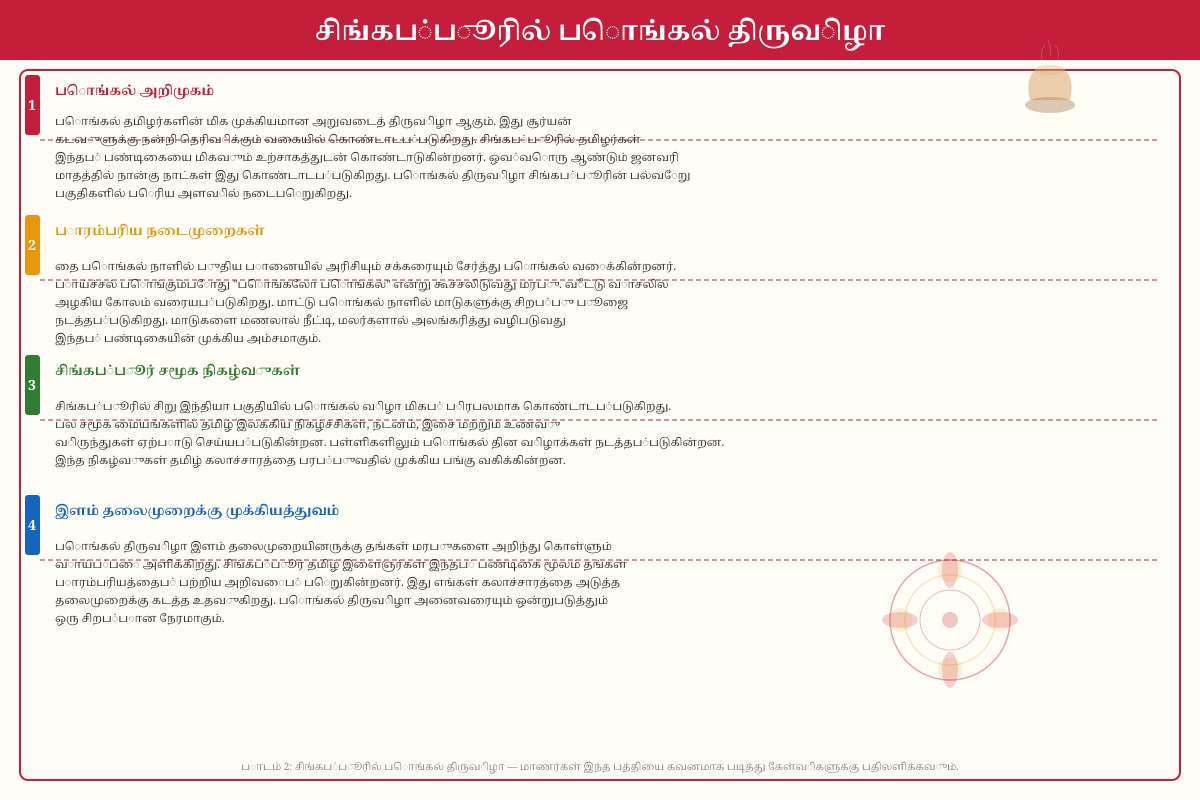
Passage 2: Pongal Festival in Singapore
Question 7 [6 marks]
Open-Ended Comprehension
(a) காலை 6 மணிக்கு / மணி 6 மணிக்கு
Key detail: 6 AM.
[1 mark]
(b) "பொங்கலோ பொங்கல்"
Key detail: The chant during boiling.
[1 mark]
(c) மாடுகளை மணலால் நீட்டி, மலரால் அலங்கரித்து பூஜை செய்கின்றனர்.
Key details: Smeared with sandalwood/turmeric (மணல்), decorated with flowers (மலர்), worshipped (பூஜை). Award 1 mark for each distinct action, max 2 marks.
[2 marks]
(d) சிறு இந்தியாவில் மற்றும் பல சமூக மையங்களில்
Key detail: Little India and community centres.
[1 mark]
(e) தமிழ் இளைஞர்கள் மரபுகளை கற்றுக்கொள்ள வாய்ப்பு பெறுகின்றனர். / எங்கள் கலாச்சாரத்தை அடுத்த தலைமுறைக்கு கடத்த உதவுகிறது.
Key detail: Youth learn traditions / culture passed to next generation.
[1 mark]
Question 8 [5 marks]
Cloze from Passage (One word each)
(a) முக்கிய — "பொங்கல் தமிழர்களின் முக்கிய பண்டிகை."
[1 mark]
(b) புதிய — "வீடுகளில் புதிய பானையில்..."
[1 mark]
(c) பாய்ச்சல் — "பாய்ச்சல் நேரம் 'பொங்கலோ பொங்கல்' என்று அழைக்கப்படுகின்றது."
[1 mark]
(d) பொங்கல் — "...பொங்கல் விழாக்கள் நடத்தப்படுகின்றன."
[1 mark]
(e) தலைமுறை — "...அடுத்த தலைமுறை கடத்த உதவுகிறது."
[1 mark]
Question 9 [5 marks]
True/False Statements
(a) பொய் (False) — Text: "சிங்கப்பூரில் இது பெரிய அளவில் கொண்டாடப்படுகிறது." (Large scale, not small).
[1 mark]
(b) உண்மை (True) — Text: "மாடுகளை மணலால் நீட்டி, மலரால் அலங்கரித்து பூஜை செய்கின்றனர்."
[1 mark]
(c) பொய் (False) — Text: "பள்ளிகளிலும் பொங்கல் விழா நடத்தப்படுகிறது." (Schools also hold celebrations).
[1 mark]
(d) உண்மை (True) — Text: "இங்கு தமிழ் இளைஞர்கள் மரபுகளை கற்றுக்கொள்ள வாய்ப்பு பெறுகின்றனர்."
[1 mark]
(e) உண்மை (True) — Text: "இது எங்கள் கலாச்சாரத்தை அடுத்த தலைமுறைக்கு கடத்த உதவுகிறது."
[1 mark]
Section C: Writing and Language Application (10 marks)
Question 10 [5 marks]
Situational Writing: Email to Friend
Marking Descriptors (Total 5 marks):
| Criteria | Marks | Descriptors |
|---|---|---|
| Content & Relevance | 2 | Includes at least 3 accurate details from Passage 2 (e.g., 6 AM boiling, "Pongalo Pongal" chant, Mattu Pongal customs, Little India/community centre events, school celebrations, cultural transmission). Details must be relevant to describing Singapore Pongal. |
| Language & Vocabulary | 2 | Uses appropriate Tamil vocabulary (festive terms, verbs, connectors). Grammatically correct sentences. Email format (greeting, body, closing). Word count ~60-80 words. |
| Organisation & Tone | 1 | Clear structure. Friendly, informative tone suitable for a friend. Proper email conventions. |
Sample Answer (for reference):
To: [email protected]
Subject: சிங்கப்பூரில் பொங்கல் விழா

பிரிய குமார்,

சிங்கப்பூரில் பொங்கல் மிகவும் சிறப்பாக கொண்டாடப்படுகிறது. தை பொங்கல் நாள் காலை 6 மணிக்கு புதிய பானையில் சக்கரை பொங்கல் வேகப்படுகிறது. "பொங்கலோ பொங்கல்" என்று அழைக்கும் போது மக்கள் மகிழ்ச்சியுடன் பங்கேற்கின்றனர். மாட்டு பொங்கல் நாளில் மாடுகளை மலரால் அலங்கரித்து பூஜை செய்கின்றனர். சிறு இந்தியாவில் மற்றும் சமூக மையங்களில் பெரிய விழாக்கள் நடക്കின்றன. பள்ளிகளிலும் விழா நடத்தப்படுகிறது. நீங்களும் இங்கே வந்து அனுபவிக்க வேண்டும்!

உன் நண்பன்,
[உங்கள் பெயர்]
Word count: ~75 words. Contains 4+ details from passage.
Question 11 [5 marks]
Continuous Writing: Personal Experience
Marking Descriptors (Total 5 marks):
| Criteria | Marks | Descriptors |
|---|---|---|
| Content & Development | 2 | Relevant to chosen topic (A or B). Clear narrative/experience with beginning, middle, end. Includes personal feelings, sensory details, or reflection. Word count ~80-100 words. |
| Language & Vocabulary | 2 | Varied vocabulary, correct grammar (tenses, case markers, sentence variety). Appropriate use of idioms/compound words a plus. Spelling accuracy. |
| Organisation & Coherence | 1 | Logical flow with connectors (அதனால், பின்னர், எனவே, ஆனால்). Paragraphing if needed. Consistent perspective. |
Topic A Sample Outline (Library Visit):
- Introduction: First time going to school library, feelings (nervous/excited).
- Body: Description of library (silence, books), choosing a book, reading experience.
- Conclusion: Time passing quickly, decision to visit regularly, how it changed attitude to reading.
Topic B Sample Outline (Festival):
- Introduction: Name of festival, when/where celebrated.
- Body: Preparations, specific rituals enjoyed (food, clothes, family), memorable moment.
- Conclusion: Why it was special, cultural significance, looking forward to next year.
Common Errors to Flag:
- Tense inconsistency (switching past/present).
- Missing case markers (உடன், க்கு, இல், ஆல்).
- Spelling of common words (புத்தகாலயம், திருவிழா, மகிழ்ச்சி).
- Run-on sentences without connectors.
- Word count significantly under/over.
Mark Summary
| Section | Question | Marks |
|---|---|---|
| A | 1 | 3 |
| A | 2 | 3 |
| A | 3 | 4 |
| A | 4 | 5 |
| Section A Total | 15 | |
| B | 5 | 5 |
| B | 6 | 4 |
| B | 7 | 6 |
| B | 8 | 5 |
| B | 9 | 5 |
| Section B Total | 25 | |
| C | 10 | 5 |
| C | 11 | 5 |
| Section C Total | 10 | |
| GRAND TOTAL | 50 |
End of Answer Key
Note: This is an AI-generated practice paper (Version 3) aligned with the Secondary 1 Tamil syllabus. It is not derived from past-year examination papers. Content is syllabus-first inferred for practice purposes.