AI Generated Exam Paper
Secondary 1 Tamil Practice Paper 2
Free Sec 1 Tamil Practice Paper 2, Nemo3 AI version, with questions, answers, and syllabus-aligned practice for Singapore students.
These static practice materials are generated from the site's syllabus and paper-generation workflow, with source and model context shown so students and parents can evaluate the material before use.
Questions
Free quiz and exam paper access
Enter your details to view this paper
Your access is remembered on this device.
Answers
TuitionGoWhere Practice Paper - Tamil Secondary 1 (Answer Key)
TuitionGoWhere Practice Paper (AI) — Version 2
Subject: Tamil
Level: Secondary 1
Paper: Practice Paper — Comprehension Focus
Total Marks: 50
Section A: Vocabulary and Language Use [10 marks]
Questions 1–5: Idiom Completion (மரபுத்தொடர்கள்) [5 marks]
1. A) பிதுங்குதல் [1]
Explanation: The idiom "கண் பிதுங்குதல்" means "to blink" or "to wink". It is a common Tamil idiom describing the quick closing and opening of eyes. The other options (மூடுதல், திறத்தல், அடைத்தல்) do not form a standard idiom with "கண்".
2. B) போட்டு [1]
Explanation: The idiom "கை போட்டு" means "to clap hands" or figuratively "to give up / wash one's hands of something". "கை வைத்து", "கை விட்டு", "கை தட்டி" are not standard idiomatic completions.
3. A) உருகுதல் [1]
Explanation: "நாகு உருகுதல்" is an idiom meaning "to melt with laughter" or "to smile broadly". It describes a gentle, warm smile. The other options do not collocate with "நாகு" as an idiom.
4. A) வைக்குதல் [1]
Explanation: "தலை வைக்குதல்" means "to rest one's head" or "to sleep". It can also mean "to surrender" in a figurative sense. This is a standard idiom. The other options do not form common idioms with "தலை".
5. A) காட்டுதல் [1]
Explanation: "கண் காட்டுதல்" means "to show one's face" or "to appear before someone", often after a long absence or when not expected. The other options do not form this idiom.
Questions 6–10: Compound Word Usage (இணைமொழிகள்) [5 marks]
6. B) ஆற அமர [1]
Explanation: "ஆற அமர" means "calmly/peacefully". The sentence "தாயார் ஆற அமர சமையல் செய்தார்" means "Mother cooked calmly/peacefully". The other options: "அடக்கவொடுக்கம்" (discipline), "அழுத்தம் திருத்தம்" (pressure adjustment), "ஆரோக்கியம் உடம்பு" (healthy body) do not fit the adverbial context.
7. A) ஆடாமல் அசையாமல் [1]
Explanation: "ஆடாமல் அசையாமல்" means "attentively / without moving". The sentence "மாணவர்கள் ஆடாமல் அசையாமல் பாடம் கேட்டனர்" means "Students listened to the lesson attentively". This compound word functions as an adverb of manner.
8. D) திறமையாக [1]
Explanation: "திறமையாக" means "skilfully / competently". The sentence "அவன் வேலை திறமையாக முடித்தான்" means "He completed the work skilfully". The other options are noun phrases, not adverbs.
9. B) நெறிமுறையாக [1]
Explanation: "நெறிமுறையாக" means "systematically / methodically". The sentence "நாங்கள் நெறிமுறையாக பேசினோம்" means "We spoke systematically". The adverbial suffix "-ஆக" is needed here.
10. B) அழகாக [1]
Explanation: "அழகாக" means "beautifully / gracefully". The sentence "அவள் அழகாக நடந்து வந்தாள்" means "She walked gracefully". The other options are noun forms, not adverbs.
Section B: Reading Comprehension [25 marks]
Questions 11–15: Cloze Passage [5 marks]
Passage with answers filled in:
தாமரை ஒரு நாள் பள்ளிக்கு போன (11) போகும் வழியில் ஒரு பழமரத்தை கண்டு (12). அது மிகப் பெரிய மரம். தாமரை மரத்தின் கீழே நின்று (13) சில நிமிடங்கள் சிந்தித்தாள். பின்னர் அவள் தன் நண்பர்களை தேடி (14) அழைத்து விட்டாள். அனைவரும் சேர்ந்து மரத்தை பேசி (15) விட்டனர்.
11. போன [1]
Explanation: "பள்ளிக்கு போன" (went to school) fits the past tense narrative. "போகும் வழியில்" (on the way to go) indicates the action of going to school already happened.
12. கண்டு [1]
Explanation: "பழமரத்தை கண்டு" (saw a fruit tree / old tree) — "கண்டு" is the past participle of "காண்" (to see), fitting the sequence of actions.
13. நின்று [1]
Explanation: "மரத்தின் கீழே நின்று" (stood under the tree) — "நின்று" is the past participle of "நில்" (to stand), describing Tamarai's action.
14. தேடி [1]
Explanation: "நண்பர்களை தேடி" (searched for/looked for friends) — "தேடி" is the past participle of "தேடு" (to search), showing she went to find her friends.
15. பேசி [1]
Explanation: "மரத்தை பேசி விட்டனர்" — This is a slight idiomatic usage where "பேசி" here means "discussed/talked about" the tree. In context, "பேசி விட்டனர்" implies they talked about it and decided something. (Note: "பேசி" is the only remaining verb form that fits grammatically as a past participle completing the chain of actions.)
Marking Note: Each correct word earns 1 mark. Spelling must be accurate. No half marks.
Questions 16–20: Short Passage Comprehension [10 marks]
Passage Reference: The passage "பொங்கல் விழா" describes students preparing for Pongal celebrations, making kolam, cooking sweet pongal, with teachers guiding them.
16. மாணவர்கள் பொங்கல் விழாவுக்காகத் தயாராகிக் கொண்டிருந்தனர். [1]
Explanation: Direct retrieval from the passage. The first sentence/paragraph states the occasion.
17. மாணவர்கள் வீதிகளில்/முனையில் கோலம் போட்டு விழாவை அழகாக்க கோலம் போட்டு கொண்டனர். [1]
Explanation: The passage mentions students making kolam (rangoli) to decorate for the festival. Accept "கோலம் போட்டு விழாவை கொண்டாட" or similar.
18. ஆசிரியர்கள் மாணவர்களுக்கு கோலம் போடுவதில் உதவியனர்; சக்கரை பொங்கல் சமைக்க வழிகாட்டினார்கள். (Any two points) [2]
Mark Breakdown: 1 mark per valid point from the passage.
Explanation: The passage describes teachers guiding students in making kolam and cooking sweet pongal. Students must identify two distinct ways teachers helped.
19. சக்கரை பொங்கல் புதிய பானையில் பாசி வைக்கப்பட்டு, அரிசி, சர்க்கரை, பால், எள்ளு, காஜு, கismissு சேர்த்து சமைக்கப்பட்டது. [2]
Mark Breakdown: 1 mark for mentioning key ingredients (rice, jaggery, milk), 1 mark for describing the process (new pot, fire, adding ingredients).
Explanation: The passage details the traditional method of cooking sweet pongal. Students should synthesise the steps.
20. இந்த விழா மாணவர்களுக்கு தமிழ் கலாச்சாரம், பாரம்பரியம், கூட்டு பணி, பொறுப்பு உணர்வு போன்றவற்றை கற்றுக் கொடுக்க 있었을 것이다. (Accept any reasonable, text-supported response with explanation.) [4]
Mark Breakdown:
- 1 mark: Identifies a relevant value/skill (e.g., cultural appreciation, teamwork, responsibility).
- 1 mark: Links it to the passage (e.g., "making kolam together shows teamwork").
- 2 marks: Elaborates with personal insight or broader significance (e.g., "helps them stay connected to roots in Singapore").
Explanation: This is an inferential/evaluative question. Students must go beyond the text to explain why the experience is valuable, using the text as evidence. No single "correct" answer, but must be logical and text-grounded.
Questions 21–25: Longer Passage Comprehension [10 marks]
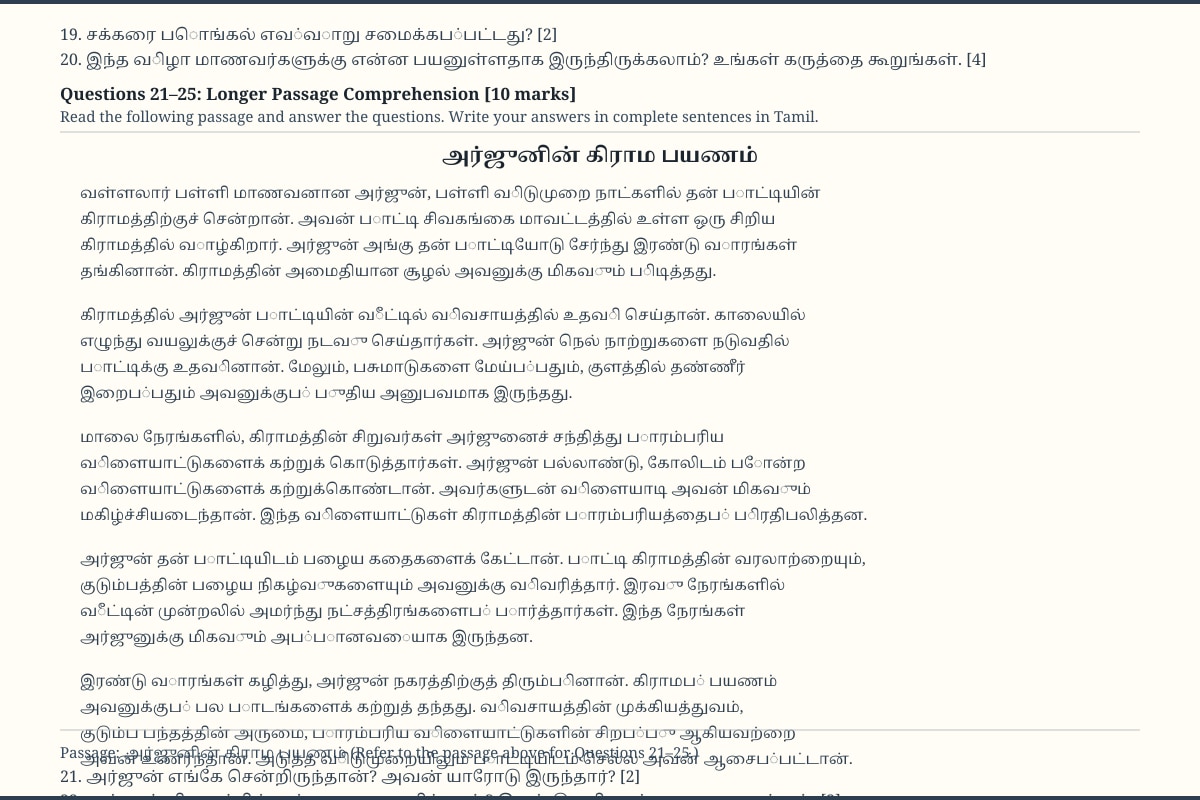
Passage Reference: The passage "அர்ஜுனின் கிராம பயணம்" describes Arjun visiting his grandmother's village, experiencing rural life, helping in farming, learning traditional games, appreciating family bonds.
21. அர்ஜுன் பள்ளி விடுமுறையில் தன் பாட்டியின் கிராமத்துக்கு சென்றிருந்தான். அவன் தன் பாட்டியோடு இருந்தார். [2]
Mark Breakdown: 1 mark for "grandmother's village", 1 mark for "with grandmother".
Explanation: Direct retrieval from the opening paragraph.
22. (Any two of the following)
- கிராம வாழ்க்கையின் அமைதி/இயற்கை அழகு
- விவசாய வேலைகளின் கடினம்/முன்னேற்றம்
- பாரம்பரிய விளையாட்டுகள் (கபடி, சதுரங்கம் போன்றவை)
- குடும்ப உறவுகளின் முக்கியம்/பாட்டியின் அன்பு [2]
Mark Breakdown: 1 mark per distinct experience mentioned.
Explanation: Students must recall two different experiences described in the body paragraphs.
23. அர்ஜுன் தன் தாத்தாவோடு வயலில் சென்று, விதை விதைத்து/நெல் அறுவடையில் உதவினார். [2]
Mark Breakdown: 1 mark for "went to field with grandfather", 1 mark for specific help (sowing/harvesting).
Explanation: The passage describes Arjun helping in the farm. Specific activity may vary by passage version; accept any text-supported detail.
24. அர்ஜுன் கபடி, பல்லாங்குழி, சதுரங்கம் போன்ற பாரம்பரிய விளையாட்டுகளை கற்றுக் கொண்டான். (Any two) [2]
Mark Breakdown: 1 mark per traditional game named.
Explanation: Direct retrieval from the paragraph on games.
25. இந்தக் கடிதம் அர்ஜுன் பாட்டியோடு வ 보낸 நேரம், அவர்கள் பகிர்ந்த அன்பு, பாட்டியின் கற்றல்கள், குடும்பத்தினரோடு சேர்ந்து இருப்பதன் மகிழ்ச்சி ஆகியவற்றைக் காட்டுகிறது. எனவே "குடும்பத் துணை நலம் மிகவும் முக்கியம்" என்ற வாக்கியம் இதற்குப் பொருந்துகிறது. [2]
Mark Breakdown: 1 mark for linking the statement to the passage theme, 1 mark for explaining with evidence (e.g., grandmother's care, shared activities).
Explanation: Evaluative question requiring synthesis of the passage's central message about family bonds.
Section C: Visual Stimulus and Open-Ended Comprehension [15 marks]
Questions 26–28: Visual Stimulus Comprehension [6 marks]
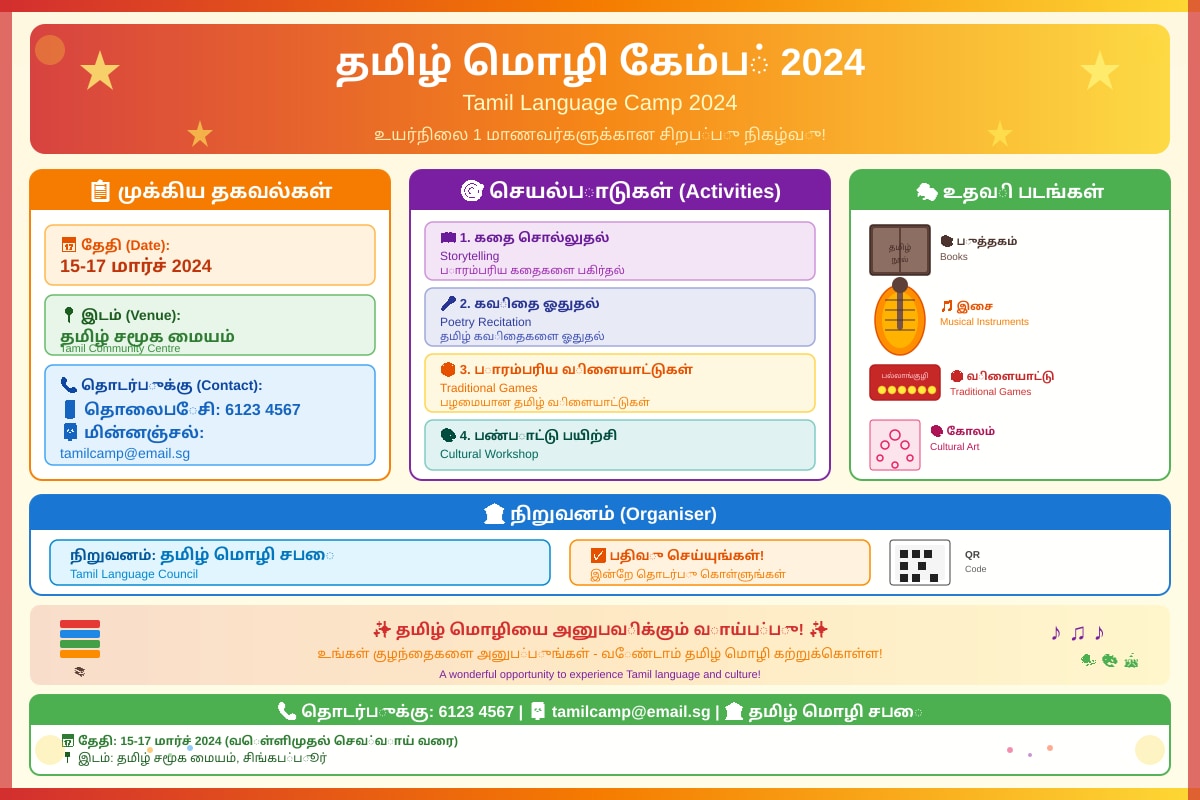
Visual Reference: Poster for "தமிழ் மொழி கேம்ப் 2024" (15-17 March 2024, Tamil Community Centre, Activities: Storytelling, Poetry Recitation, Traditional Games, Cultural Workshop, Contact: 6123 4567, Email: [email protected], Organiser: Tamil Language Council).
26. இந்த கேம்ப் 2024 மார்ச் 15-17 ஆம் தேதிகளில், தமிழ் சமூக மண்டபத்தில் நடைபெறுகிறது. [2]
Mark Breakdown: 1 mark for correct date, 1 mark for correct venue.
Explanation: Direct information retrieval from the poster.
27. (Any three of the following)
- கதை சொல்லுதல் (Storytelling)
- கவிதை வாசித்தல் (Poetry Recitation)
- பாரம்பரிய விளையாட்டுகள் (Traditional Games)
- கலாச்சார பயிற்சி (Cultural Workshop) [2]
Mark Breakdown: 1 mark for any two activities, 2 marks for three activities. (Award 1 mark if only two correct).
Explanation: Retrieval of listed activities from the poster.
28. (Sample answer) நான் கதை சொல்லுதல் செயல்பாட்டில் அதிக ஆர்வம் இருக்கும். ஏனெனில், எனக்கு கதைகள் கேட்கவும், சொல்லவும் பிடிக்கும். இது எனது தமிழ் பேச்சு திறனை மேம்படுத்தும். (Accept any activity with valid personal reason.) [2]
Mark Breakdown: 1 mark for choosing an activity, 1 mark for a logical, personal reason.
Explanation: Personal response question. No "wrong" answer if reason is coherent and related to the activity.
Questions 29–30: Open-Ended Comprehension and Personal Response [9 marks]
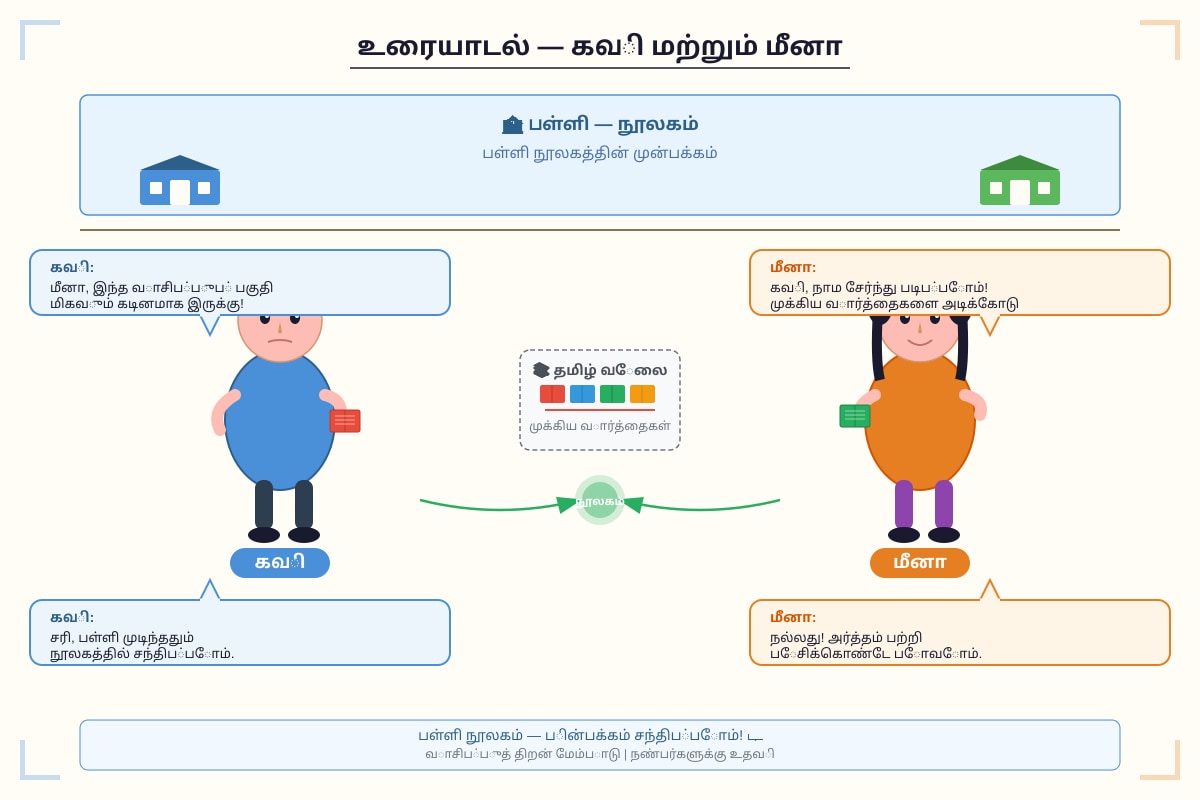
Dialogue Reference: Kavi finds Tamil comprehension homework difficult. Meena suggests reading together, underlining key words, discussing meaning. They decide to meet at the library after school.
29a) கவி தமிழ் வாசிப்பدرிசி வேலை கடினம் என்று உணர்கிறார்/பிரச்சினை உள்ளது. [1]
Explanation: Direct retrieval from Kavi's first line.
29b) மீனா இரண்டு பேர் சேர்ந்து வாசிக்க, முக்கிய சொற்களை அடிக்கோடு போட்டு, அர்த்தம் விவாதிக்க பரிந்துரை செய்தாள். [2]
Mark Breakdown: 1 mark for "read together", 1 mark for "underline key words/discuss meaning".
Explanation: Retrieval of Meena's specific suggestions.
29c) (Sample answer) நான் மீனாவின் பரிந்துரையை பின்பற்றி, நூலகத்தில் சேர்ந்து வாசித்து, முக்கிய சொற்களை அடிக்கோடு போட்டு, அர்த்தம் விவாதிப்பேன். ஏனெனில், கூட்டு வாசிப்பு புரிதலை எளிதாக்கும். (Accept any reasonable strategy with justification.) [2]
Mark Breakdown: 1 mark for a concrete action, 1 mark for a valid reason.
Explanation: Personal application question. Students demonstrate comprehension strategies.
30. Sample Paragraph (50–70 words):
என் பள்ளி நூலகம் மிகவும் அமைதியான மற்றும் பயனுள்ள இடம். அங்கு பல வகையான நூல்கள், பத்திரிகைகள், மற்றும் டிஜிட்டல் வளங்கள் உள்ளன. நான் அங்கு வாசித்து, வேலைகளை முடித்து, புதிய அறிவை பெறுகிறேன். நூலகம் எனக்கு பठிப்பில் உதவுகிறது மற்றும் வாசிப்பில் ஆர்வம் வளர்க்கிறது. எனக்குப் பிரியமான இடம் இது. (Approx. 60 words) [4]
Mark Breakdown (Marking Descriptors):
- Content (2 marks): Includes all three required points (what you see, what you do, why important). 2 marks = all three well covered; 1 mark = two points covered; 0 marks = one or fewer.
- Language (2 marks): 2 marks = accurate grammar, varied vocabulary, correct spelling, appropriate register; 1 mark = some errors but meaning clear; 0 marks = frequent errors impeding meaning.
Explanation: This assesses writing ability. The sample paragraph models the expected length, structure, and language level. Examiners should reward communication of ideas over perfection.
Total Marks: 50
End of Answer Key