AI Generated Quiz

Secondary 1 Science Life Sciences Quiz

Free AI-Generated NVIDIA Nemotron 3 Ultra 550B A55B Free Secondary 1 Science Life Sciences quiz with questions and answers for Singapore students. This page is rendered as a direct URL so the questions and answers can be discovered without pressing in-page buttons.

These static practice materials are generated from the site's syllabus and paper-generation workflow, with source and model context shown so students and parents can evaluate the material before use.

Secondary 1 Science AI Generated Generated by NVIDIA Nemotron 3 Ultra 550B A55B Free Updated 2026-06-07

Questions

<!-- TuitionGoWhere generation metadata: stage=5-1; model=nvidia/nemotron-3-ultra-550b-a55b:free; model_label=NVIDIA Nemotron 3 Ultra 550B A55B Free; generated=2026-06-06; Sources: Stage 4-0 LLM templates, syllabus context, and Stage 2 evidence where available. -->

Secondary 1 Science Quiz - Life Sciences

Name: ___________________________
Class: ___________________________
Date: ___________________________
Score: ________ / 40

Duration: 45 minutes
Total Marks: 40

Instructions:

  1. Answer all questions.
  2. Write your answers in the spaces provided.
  3. For multiple-choice questions, circle the correct option (A, B, C, or D).
  4. For structured questions, show your working and reasoning clearly.
  5. The number of marks is given in brackets [ ] at the end of each question or part question.

Section A: Multiple Choice Questions (10 marks)

Answer all questions. Each question carries 1 mark.

1. Which of the following is a characteristic of all living organisms?
A. Ability to move from place to place
B. Ability to make their own food
C. Ability to respond to stimuli
D. Ability to breathe using lungs

[1]

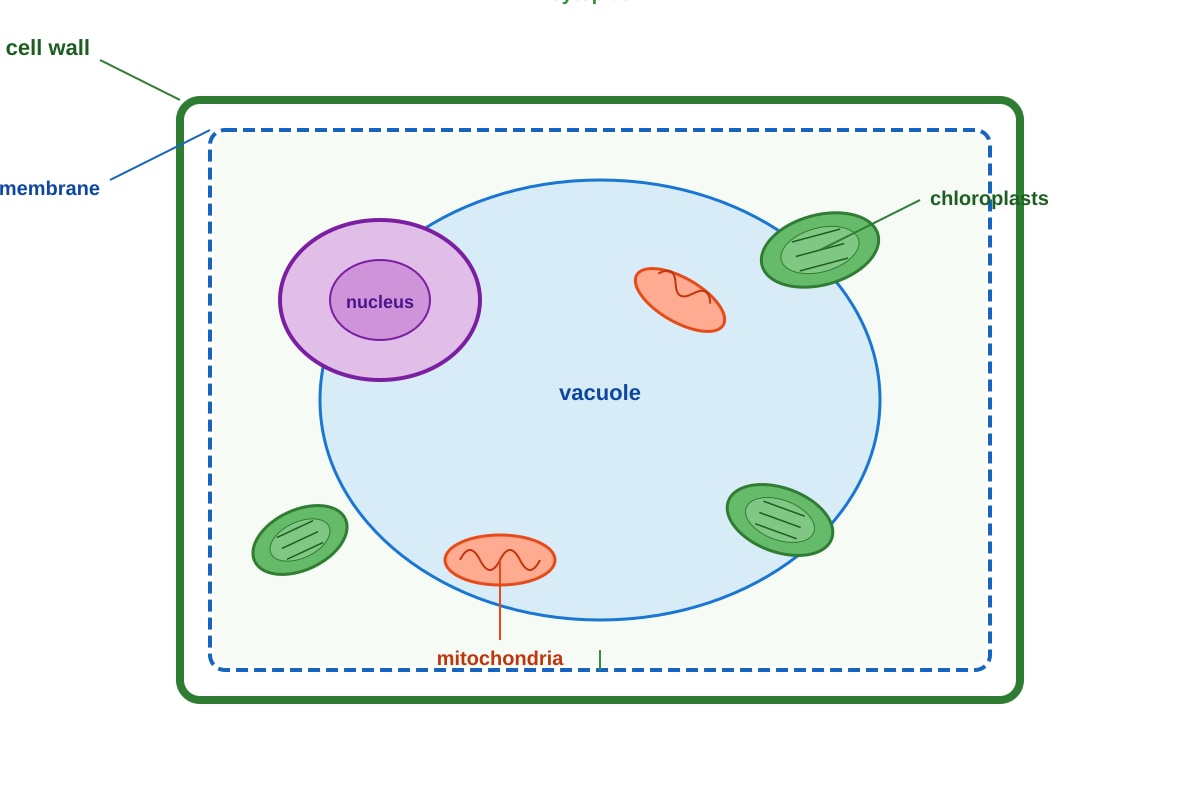
2. The diagram below shows a plant cell.
<image_placeholder> id: Q2-fig1 type: diagram linked_question: Q2 description: A labelled diagram of a typical plant cell showing cell wall, cell membrane, cytoplasm, nucleus, chloroplasts, and large central vacuole. labels: cell wall, cell membrane, cytoplasm, nucleus, chloroplasts, large central vacuole values: None must_show: All organelles clearly labelled; cell wall distinct from cell membrane; large central vacuole prominent </image_placeholder>

Which structure is responsible for controlling the movement of substances in and out of the cell?
A. Cell wall
B. Cell membrane
C. Cytoplasm
D. Nucleus

[1]

3. Which of the following processes occurs in the chloroplasts of plant cells?
A. Respiration
B. Photosynthesis
C. Protein synthesis
D. Digestion

[1]

4. A student observed a cell under a microscope and noted the following: presence of a cell wall, chloroplasts, and a large central vacuole. The cell is most likely a:
A. Animal cell
B. Plant cell
C. Bacterial cell
D. Fungal cell

[1]

5. Which part of the digestive system is mainly responsible for the absorption of water?
A. Stomach
B. Small intestine
C. Large intestine
D. Oesophagus

[1]

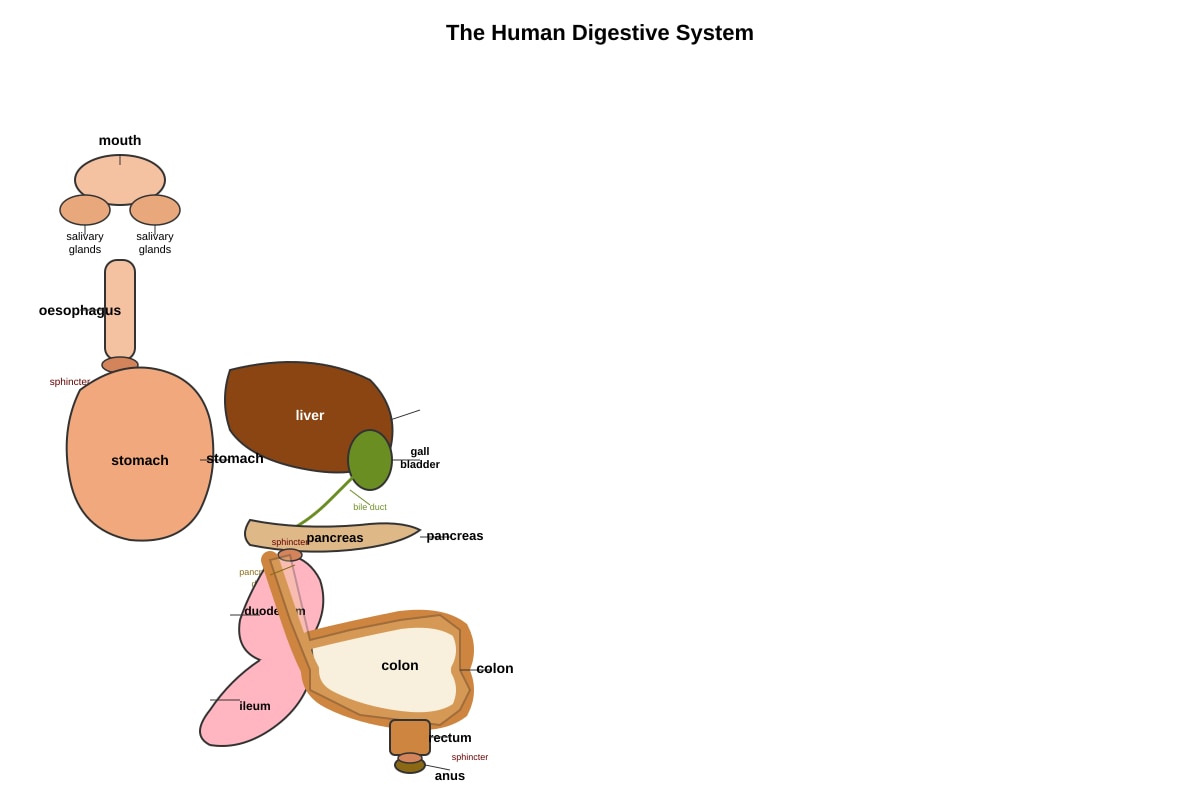
6. The diagram below shows the human digestive system.
<image_placeholder> id: Q6-fig1 type: diagram linked_question: Q6 description: A labelled diagram of the human digestive system showing mouth, oesophagus, stomach, small intestine, large intestine, liver, pancreas, and anus. labels: mouth, oesophagus, stomach, small intestine, large intestine, liver, pancreas, anus values: None must_show: All organs clearly labelled; relative positions and connections accurate </image_placeholder>

In which labelled part does most chemical digestion and absorption of nutrients take place?
A. Stomach
B. Small intestine
C. Large intestine
D. Liver

[1]

7. Which of the following enzymes breaks down proteins into amino acids?
A. Amylase
B. Lipase
C. Protease
D. Maltase

[1]

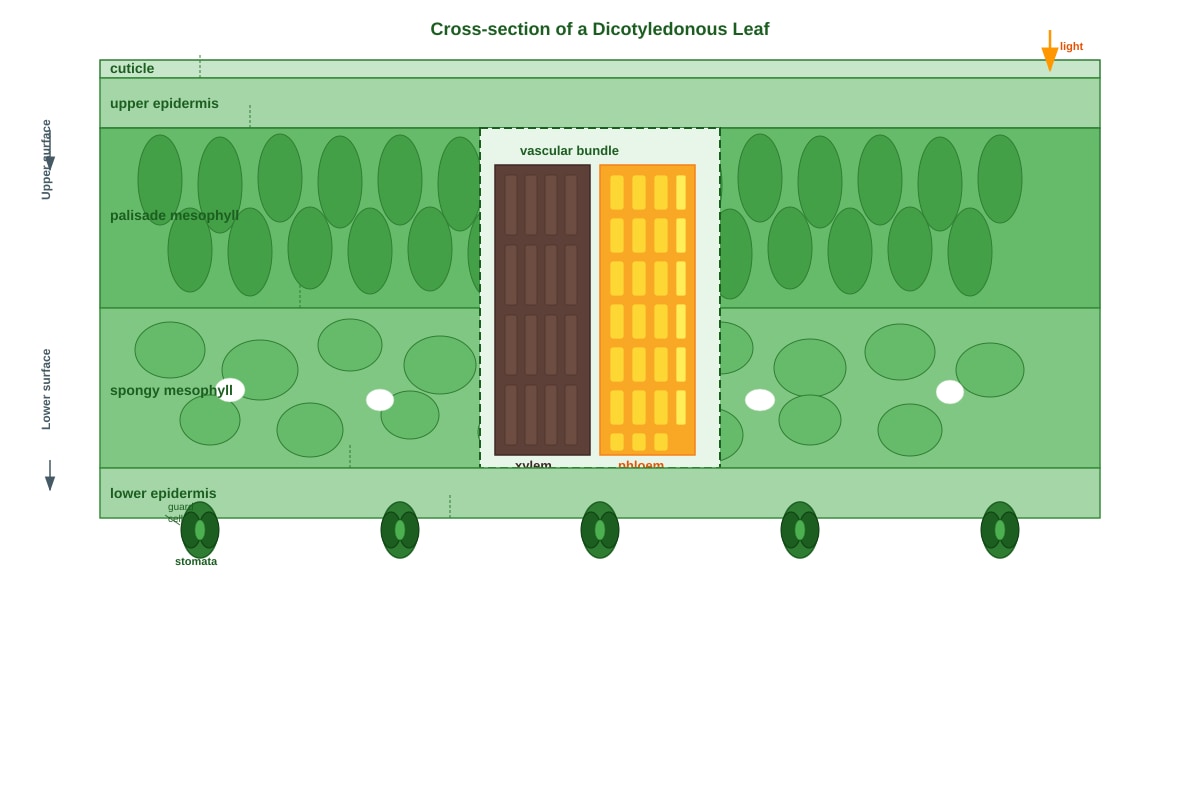
8. The diagram below shows a cross-section of a leaf.
<image_placeholder> id: Q8-fig1 type: diagram linked_question: Q8 description: A cross-section of a dicotyledonous leaf showing upper epidermis, palisade mesophyll, spongy mesophyll, lower epidermis with stomata, vascular bundles (xylem and phloem), and cuticle. labels: upper epidermis, palisade mesophyll, spongy mesophyll, lower epidermis, stomata, xylem, phloem, cuticle values: None must_show: Distinct palisade and spongy mesophyll layers; stomata on lower epidermis; vascular bundle with xylem and phloem </image_placeholder>

Which layer contains the most chloroplasts and is the main site of photosynthesis?
A. Upper epidermis
B. Palisade mesophyll
C. Spongy mesophyll
D. Lower epidermis

[1]

9. Which of the following is the word equation for photosynthesis?
A. Carbon dioxide + Water → Glucose + Oxygen
B. Glucose + Oxygen → Carbon dioxide + Water
C. Carbon dioxide + Oxygen → Glucose + Water
D. Glucose + Water → Carbon dioxide + Oxygen

[1]

10. A student sets up an experiment to investigate the conditions needed for photosynthesis. Which of the following is the control set-up?
A. A plant in a dark cupboard with water
B. A plant in sunlight with water but no carbon dioxide
C. A plant in sunlight with water and carbon dioxide
D. A plant in sunlight with carbon dioxide but no water

[1]


Section B: Structured Questions (18 marks)

Answer all questions. Write your answers in the spaces provided.

11. The diagram below shows an animal cell and a plant cell.
<image_placeholder> id: Q11-fig1 type: diagram linked_question: Q11 description: Two side-by-side diagrams: (a) a typical animal cell showing cell membrane, cytoplasm, nucleus, mitochondria, and small vacuoles; (b) a typical plant cell showing cell wall, cell membrane, cytoplasm, nucleus, chloroplasts, and large central vacuole. labels: cell membrane, cytoplasm, nucleus, mitochondria, small vacuoles (animal); cell wall, cell membrane, cytoplasm, nucleus, chloroplasts, large central vacuole (plant) values: None must_show: Clear differences between animal and plant cells; organelles correctly placed and labelled </image_placeholder>

(a) State two structures present in the plant cell but absent in the animal cell.


[2]

(b) State the function of the nucleus in a cell.


[1]

(c) Explain why the cell wall is important for plant cells but not for animal cells.


[2]

12. A student carried out an experiment to test for the presence of starch in a leaf. The steps are as follows:

  1. Boil the leaf in water for 2 minutes.
  2. Boil the leaf in ethanol until it becomes colourless.
  3. Dip the leaf in hot water to soften it.
  4. Add iodine solution to the leaf.

(a) Explain the purpose of step 1 (boiling in water).


[1]

(b) Explain the purpose of step 2 (boiling in ethanol).


[1]

(c) What colour change would be observed if starch is present?


[1]

(d) Why is it necessary to dip the leaf in hot water (step 3) before adding iodine solution?


[1]

13. The diagram below shows the human respiratory system.
<image_placeholder> id: Q13-fig1 type: diagram linked_question: Q13 description: A labelled diagram of the human respiratory system showing nasal cavity, trachea, bronchi, bronchioles, alveoli, diaphragm, and ribs. labels: nasal cavity, trachea, bronchi, bronchioles, alveoli, diaphragm, ribs values: None must_show: Branching of trachea into bronchi and bronchioles; alveoli at the ends of bronchioles; diaphragm below lungs </image_placeholder>

(a) Name the structure where gaseous exchange takes place.


[1]

(b) State two features of this structure that make it efficient for gaseous exchange.


[2]

(c) Describe what happens to the diaphragm and ribs during inhalation.


[2]

14. The table below shows the results of food tests carried out on four different food samples (A, B, C, D).

Food SampleBenedict's Test (Reducing Sugar)Iodine Test (Starch)Biuret Test (Protein)Ethanol Emulsion Test (Fat)
ABrick-red precipitateBlue-blackVioletCloudy white emulsion
BBlue solution (no change)Blue-blackBlue solution (no change)Clear solution
CBrick-red precipitateBrown solution (no change)VioletCloudy white emulsion
DBlue solution (no change)Brown solution (no change)Blue solution (no change)Clear solution

(a) Which food sample contains starch but no reducing sugar, protein, or fat?


[1]

(b) Which food sample contains reducing sugar, protein, and fat but no starch?


[1]

(c) A student tests a piece of bread and observes a blue-black colour with iodine solution. What nutrient is present in bread?


[1]

(d) Explain why it is important to have a balanced diet containing carbohydrates, proteins, and fats.


[2]

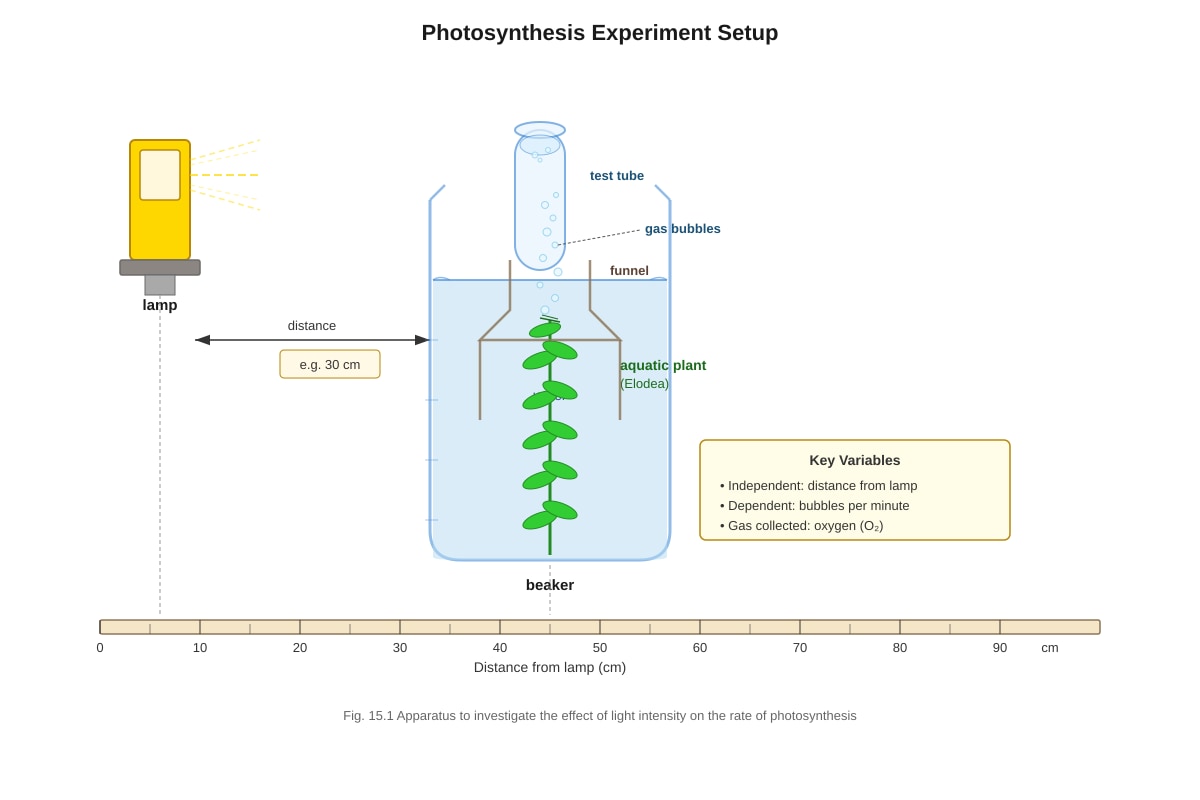
15. A student sets up an experiment to investigate the effect of light intensity on the rate of photosynthesis. The apparatus is shown below.
<image_placeholder> id: Q15-fig1 type: experimental_setup linked_question: Q15 description: A beaker of water with a submerged aquatic plant (e.g., Elodea), a lamp at varying distances, a test tube inverted over the plant to collect gas bubbles, and a ruler to measure distance. labels: beaker, water, aquatic plant, lamp, test tube, gas bubbles, ruler values: Distance of lamp from beaker: 10 cm, 20 cm, 30 cm, 40 cm, 50 cm must_show: Clear depiction of lamp distance variation; gas collection method; aquatic plant submerged </image_placeholder>

The student counts the number of bubbles produced per minute at different distances of the lamp from the beaker.

(a) State the independent variable in this experiment.


[1]

(b) State the dependent variable in this experiment.


[1]

(c) State one controlled variable that should be kept constant.


[1]

(d) The student observes that the number of bubbles decreases as the lamp is moved further away. Explain this observation.


[2]


Section C: Data-Based and Application Questions (12 marks)

Answer all questions. Write your answers in the spaces provided.

16. The graph below shows the rate of photosynthesis of a plant at different light intensities and carbon dioxide concentrations.
<image_placeholder> id: Q16-fig1 type: graph linked_question: Q16 description: A line graph with light intensity (arbitrary units) on the x-axis and rate of photosynthesis (arbitrary units) on the y-axis. Three curves: low CO₂ concentration (plateaus at low rate), medium CO₂ concentration (plateaus at medium rate), high CO₂ concentration (plateaus at high rate). All curves show increasing rate with light intensity until plateau. labels: x-axis: Light Intensity (arbitrary units), y-axis: Rate of Photosynthesis (arbitrary units); three curves labelled Low CO₂, Medium CO₂, High CO₂ values: Plateau rates: Low CO₂ = 10 units, Medium CO₂ = 20 units, High CO₂ = 30 units; light intensity at plateau: ~50 units for all must_show: Three distinct curves showing limiting factor concept; clear plateaus at different rates; axes labelled with units </image_placeholder>

(a) Describe the relationship between light intensity and rate of photosynthesis at low carbon dioxide concentration.


[2]

(b) At a light intensity of 50 units, what is the rate of photosynthesis at high carbon dioxide concentration?


[1]

(c) Explain why the rate of photosynthesis plateaus (levels off) at high light intensities.


[2]

17. The diagram below shows a villus in the small intestine.
<image_placeholder> id: Q17-fig1 type: diagram linked_question: Q17 description: A magnified view of a single villus showing epithelial cells with microvilli, a lacteal (lymphatic capillary) in the centre, and a blood capillary network surrounding the lacteal. labels: epithelial cells, microvilli, lacteal, blood capillary network values: None must_show: Finger-like projection; microvilli on epithelial cells; lacteal and blood capillaries clearly distinguished </image_placeholder>

(a) Name the structures labelled X (microvilli) and Y (lacteal).
X: ___________________________________________________________________________
Y: ___________________________________________________________________________

[2]

(b) Explain how the microvilli increase the efficiency of absorption.


[2]

(c) State the main nutrient absorbed into the lacteal.


[1]

18. A student investigated the effect of temperature on the activity of the enzyme amylase. The results are shown in the table below.

Temperature (°C)Time taken for starch to be completely digested (minutes)
1025
2012
306
403
508
60No digestion (starch remains)

(a) Plot a graph of time taken for starch digestion against temperature on the grid below.
<image_placeholder> id: Q18-fig1 type: graph linked_question: Q18 description: An empty grid with Temperature (°C) on x-axis (0 to 70, intervals of 10) and Time taken (minutes) on y-axis (0 to 30, intervals of 5). Points to be plotted: (10,25), (20,12), (30,6), (40,3), (50,8), (60, no point - indicate 'no digestion'). labels: x-axis: Temperature (°C), y-axis: Time taken for starch digestion (minutes) values: Points: (10,25), (20,12), (30,6), (40,3), (50,8); at 60°C indicate 'no digestion' must_show: Labelled axes with units and scales; plotted points; smooth curve through points; annotation at 60°C </image_placeholder>

[3]

(b) At which temperature does amylase work fastest?


[1]

(c) Explain why no digestion occurs at 60°C.


[2]

19. The diagram below shows a food web in a pond ecosystem.
<image_placeholder> id: Q19-fig1 type: diagram linked_question: Q19 description: A food web diagram showing: Phytoplankton (producer) → Water fleas, Tadpoles, Small fish (primary consumers) → Large fish, Kingfisher (secondary/tertiary consumers). Decomposers (bacteria) breaking down dead organisms at all levels. labels: Phytoplankton, Water fleas, Tadpoles, Small fish, Large fish, Kingfisher, Bacteria (decomposers) values: None must_show: Arrows showing energy flow from producer to consumers; decomposers connected to all levels; clear trophic levels </image_placeholder>

(a) Identify the producer in this food web.


[1]

(b) Construct a food chain with four organisms from this food web.


[1]

(c) If the population of water fleas decreases significantly, explain the likely effect on the population of small fish.


[2]

20. The diagram below shows a section through a human heart.
<image_placeholder> id: Q20-fig1 type: diagram linked_question: Q20 description: A cross-section of the human heart showing four chambers (right atrium, right ventricle, left atrium, left ventricle), major blood vessels (vena cava, pulmonary artery, pulmonary vein, aorta), and valves (tricuspid, bicuspid, semi-lunar). labels: right atrium, right ventricle, left atrium, left ventricle, vena cava, pulmonary artery, pulmonary vein, aorta, tricuspid valve, bicuspid valve, semi-lunar valves values: None must_show: Four chambers clearly separated; valves in correct positions; blood vessels connected to correct chambers; oxygenated/deoxygenated blood paths distinguishable </image_placeholder>

(a) Name the blood vessel that carries deoxygenated blood from the heart to the lungs.


[1]

(b) Explain why the wall of the left ventricle is thicker than the wall of the right ventricle.


[2]

(c) State the function of the valves in the heart.


[1]


End of Quiz

Answers

<!-- TuitionGoWhere generation metadata: stage=5-1; model=nvidia/nemotron-3-ultra-550b-a55b:free; model_label=NVIDIA Nemotron 3 Ultra 550B A55B Free; generated=2026-06-06; Sources: Stage 4-0 LLM templates, syllabus context, and Stage 2 evidence where available. -->

Secondary 1 Science Quiz - Life Sciences (Answer Key)

Total Marks: 40


Section A: Multiple Choice Questions (10 marks)

1. Answer: C
Explanation: All living organisms share certain characteristics: they respond to stimuli, reproduce, grow, respire, excrete, and require nutrition. Not all organisms move from place to place (plants are stationary), make their own food (only producers/autotrophs do), or breathe using lungs (many use gills, skin, or other structures).
Mark: [1]

2. Answer: B
Explanation: The cell membrane (plasma membrane) is a partially permeable membrane that controls the movement of substances in and out of the cell. The cell wall provides structural support but is fully permeable. The cytoplasm is the site of metabolic reactions. The nucleus controls cell activities and contains genetic material.
Mark: [1]

3. Answer: B
Explanation: Chloroplasts contain chlorophyll and are the site of photosynthesis in plant cells. Respiration occurs mainly in mitochondria. Protein synthesis occurs at ribosomes. Digestion occurs in lysosomes (in animal cells) or vacuoles.
Mark: [1]

4. Answer: B
Explanation: Plant cells have a cell wall (made of cellulose), chloroplasts (for photosynthesis), and a large central vacuole (for storage and turgor pressure). Animal cells lack these three structures. Bacterial cells have a cell wall but no chloroplasts or large central vacuole. Fungal cells have a cell wall (made of chitin) but no chloroplasts.
Mark: [1]

5. Answer: C
Explanation: The large intestine (colon) is mainly responsible for absorbing water and electrolytes from undigested food matter, forming faeces. The small intestine absorbs most nutrients. The stomach mainly digests proteins. The oesophagus transports food to the stomach.
Mark: [1]

6. Answer: B
Explanation: The small intestine (duodenum, jejunum, ileum) is the main site for chemical digestion (with enzymes from pancreas and bile from liver) and absorption of nutrients (via villi and microvilli). The stomach digests proteins. The large intestine absorbs water. The liver produces bile.
Mark: [1]

7. Answer: C
Explanation: Protease (e.g., pepsin, trypsin) breaks down proteins into amino acids. Amylase breaks down starch into maltose. Lipase breaks down fats into fatty acids and glycerol. Maltase breaks down maltose into glucose.
Mark: [1]

8. Answer: B
Explanation: The palisade mesophyll layer consists of tightly packed, column-shaped cells with many chloroplasts, making it the main site of photosynthesis. The upper epidermis is transparent and lacks chloroplasts. The spongy mesophyll has fewer chloroplasts and air spaces for gas exchange. The lower epidermis contains stomata for gas exchange.
Mark: [1]

9. Answer: A
Explanation: Photosynthesis: Carbon dioxide + Water → Glucose + Oxygen (in the presence of light and chlorophyll). Option B is the word equation for aerobic respiration. Options C and D are incorrect combinations.
Mark: [1]

10. Answer: C
Explanation: A control set-up has all the necessary conditions for the process (sunlight, water, carbon dioxide) to show that photosynthesis occurs normally. The other options each lack one essential factor (light, CO₂, or water) and are experimental set-ups to test the necessity of that factor.
Mark: [1]


Section B: Structured Questions (18 marks)

11. (a) Answer: Cell wall and chloroplasts (or large central vacuole)
Explanation: Plant cells have a cell wall (cellulose), chloroplasts (for photosynthesis), and a large central vacuole. Animal cells lack all three. Any two correct structures earn full marks.
Mark: [2] (1 mark each)

(b) Answer: The nucleus controls all cell activities and contains genetic material (DNA/chromosomes).
Explanation: The nucleus is the control centre of the cell. It contains DNA which carries genetic instructions for protein synthesis and cell division.
Mark: [1]

(c) Answer: The cell wall provides structural support and maintains the shape of plant cells. It prevents the cell from bursting when water enters by osmosis (turgor pressure). Animal cells do not have a cell wall; they rely on the cell membrane and cytoskeleton for shape, and they avoid bursting by living in isotonic environments or having contractile vacuoles.
Explanation: Plant cells need rigid support for upright growth and to withstand turgor pressure. The cell wall is freely permeable and made of cellulose. Animal cells are flexible and would burst if they had a rigid wall without mechanisms to regulate water.
Mark: [2] (1 mark for support/shape, 1 mark for preventing bursting/turgor pressure)

12. (a) Answer: To kill the cells, stop chemical reactions, and denature enzymes (so the leaf does not continue to photosynthesise or respire during the test).
Explanation: Boiling in water stops all metabolic activity instantly, preserving the starch distribution as it was at the moment of boiling.
Mark: [1]

(b) Answer: To remove chlorophyll (decolourise the leaf) so that the colour change with iodine can be seen clearly.
Explanation: Ethanol dissolves chlorophyll (green pigment). A colourless leaf allows the blue-black colour of the iodine-starch complex to be observed easily.
Mark: [1]

(c) Answer: Blue-black (or dark blue)
Explanation: Iodine solution (iodine in potassium iodide) reacts with starch to form a blue-black starch-iodine complex.
Mark: [1]

(d) Answer: To soften the leaf (which becomes brittle after boiling in ethanol) so that it can be spread flat for even application of iodine solution.
Explanation: Ethanol makes the leaf brittle and curled. Dipping in hot water rehydrates and flattens it for testing.
Mark: [1]

13. (a) Answer: Alveoli (or air sacs)
Explanation: Gaseous exchange (oxygen and carbon dioxide) occurs across the walls of the alveoli and surrounding capillaries.
Mark: [1]

(b) Answer:

  1. Large surface area (due to numerous alveoli and microvilli)
  2. Thin walls (one cell thick) for short diffusion distance
  3. Moist lining for gases to dissolve
  4. Rich blood supply (dense capillary network) to maintain concentration gradient
    (Any two correct features)
    Explanation: These features maximise the rate of diffusion of oxygen into blood and carbon dioxide out of blood (Fick's Law of Diffusion).
    Mark: [2] (1 mark each)

(c) Answer: During inhalation, the diaphragm contracts and flattens (moves downwards), and the external intercostal muscles contract, pulling the ribs upwards and outwards. This increases the volume of the thoracic cavity, decreasing the pressure inside the lungs below atmospheric pressure, so air rushes in.
Explanation: The diaphragm is the main muscle of breathing. Its contraction increases thoracic volume vertically; rib movement increases it laterally.
Mark: [2] (1 mark for diaphragm, 1 mark for ribs)

14. (a) Answer: Food Sample B
Explanation: Sample B shows blue-black with iodine (starch present) but negative results for Benedict's (blue), Biuret (blue), and ethanol emulsion (clear) tests.
Mark: [1]

(b) Answer: Food Sample C
Explanation: Sample C shows brick-red precipitate (Benedict's positive for reducing sugar), violet (Biuret positive for protein), cloudy white emulsion (ethanol emulsion positive for fat), but brown with iodine (starch absent).
Mark: [1]

(c) Answer: Starch
Explanation: Iodine solution turns blue-black in the presence of starch. Bread is made from flour, which is rich in starch.
Mark: [1]

(d) Answer: A balanced diet provides: carbohydrates for energy; proteins for growth, repair, and making enzymes/hormones; fats for energy storage, insulation, and making cell membranes. It also provides vitamins, minerals, fibre, and water for essential metabolic functions and health.
Explanation: Each macronutrient has distinct, non-interchangeable roles. Deficiency in any leads to specific health problems (e.g., kwashiorkor from protein deficiency).
Mark: [2] (1 mark for listing roles of each, 1 mark for explaining why balance is needed)

15. (a) Answer: Light intensity (or distance of lamp from beaker)
Explanation: The independent variable is the one deliberately changed by the experimenter. Here, the lamp distance is varied to change light intensity.
Mark: [1]

(b) Answer: Rate of photosynthesis (or number of bubbles produced per minute)
Explanation: The dependent variable is the one measured in response to changes in the independent variable. Bubble count per minute indicates photosynthesis rate.
Mark: [1]

(c) Answer: Temperature / carbon dioxide concentration / type of plant / volume of water / time of measurement (any one)
Explanation: Controlled variables are kept constant to ensure a fair test. If temperature or CO₂ changed, they would also affect photosynthesis rate, confounding results.
Mark: [1]

(d) Answer: As the lamp moves further away, light intensity decreases. Light is a raw material/energy source for photosynthesis. Lower light intensity means less light energy is absorbed by chlorophyll, so the rate of photosynthesis decreases, producing fewer oxygen bubbles.
Explanation: Light intensity is a limiting factor for photosynthesis. At low light intensities, rate is directly proportional to light intensity.
Mark: [2] (1 mark for light intensity decreases, 1 mark for linking to photosynthesis rate)


Section C: Data-Based and Application Questions (12 marks)

16. (a) Answer: At low carbon dioxide concentration, the rate of photosynthesis increases as light intensity increases, but it plateaus (levels off) at a low rate (10 units) even when light intensity continues to increase.
Explanation: Initially, light is the limiting factor. As light increases, rate increases. At the plateau, carbon dioxide becomes the limiting factor because its concentration is low, preventing further increase in rate regardless of light intensity.
Mark: [2] (1 mark for increase then plateau, 1 mark for low plateau rate)

(b) Answer: 30 units (arbitrary units)
Explanation: At light intensity of 50 units, the high CO₂ curve has reached its plateau at 30 units. Read the y-value of the high CO₂ curve at x = 50.
Mark: [1]

(c) Answer: The rate plateaus because another factor (carbon dioxide concentration or temperature) becomes limiting. Even with more light, the rate cannot increase because the plant has insufficient CO₂ (or the enzymes are working at maximum rate) to sustain a higher rate of photosynthesis.
Explanation: This demonstrates the Law of Limiting Factors: the rate of a process is limited by the factor in shortest supply. At high light, CO₂ or enzyme capacity becomes limiting.
Mark: [2] (1 mark for identifying another limiting factor, 1 mark for explanation)

17. (a) Answer: X: Microvilli; Y: Lacteal
Explanation: Microvilli are microscopic projections on the epithelial cells. The lacteal is the lymphatic capillary in the centre of the villus.
Mark: [2] (1 mark each)

(b) Answer: Microvilli greatly increase the surface area of the epithelial cells, providing a larger area for absorption of digested nutrients (like glucose and amino acids) into the blood capillaries by diffusion and active transport.
Explanation: Surface area is directly proportional to rate of absorption (Fick's Law). Microvilli form a "brush border" increasing surface area ~30-fold.
Mark: [2] (1 mark for increased surface area, 1 mark for linking to absorption efficiency)

(c) Answer: Fats (fatty acids and glycerol / lipids)
Explanation: The lacteal absorbs digested fats (as fatty acids and monoglycerides, reassembled into chylomicrons) into the lymphatic system. Water-soluble nutrients (glucose, amino acids) enter the blood capillaries directly.
Mark: [1]

18. (a) Answer: Graph plotted correctly with:

  • Axes labelled with units (Temperature/°C, Time/min)
  • Appropriate scales (x: 0-70°C, y: 0-30 min)
  • Points plotted accurately: (10,25), (20,12), (30,6), (40,3), (50,8)
  • Smooth curve through points (not joining dot-to-dot)
  • Annotation at 60°C: "No digestion / enzyme denatured"
    Explanation: Standard graphing skills: labelled axes, correct scales, accurate plotting, smooth curve for continuous data, annotation for anomalous/endpoint data.
    Mark: [3] (1 mark axes/labels, 1 mark plotting, 1 mark curve/annotation)

(b) Answer: 40°C
Explanation: The shortest time for complete digestion is 3 minutes at 40°C, indicating the fastest enzyme activity (optimum temperature).
Mark: [1]

(c) Answer: At 60°C, the enzyme amylase is denatured. The high temperature breaks the hydrogen bonds and other weak interactions maintaining the enzyme's specific three-dimensional shape (especially the active site). The substrate (starch) can no longer bind, so no catalysis occurs.
Explanation: Enzymes are proteins with specific 3D shapes. Denaturation is usually irreversible. The active site loses its complementary shape to the substrate.
Mark: [2] (1 mark for denaturation, 1 mark for active site/shape change explanation)

19. (a) Answer: Phytoplankton
Explanation: Producers (autotrophs) make their own food via photosynthesis. Phytoplankton are photosynthetic microorganisms at the base of the aquatic food web.
Mark: [1]

(b) Answer: Phytoplankton → Water fleas → Small fish → Large fish (or Phytoplankton → Tadpoles → Small fish → Kingfisher, etc.)
Explanation: A food chain shows a linear sequence of energy transfer. Arrows point from food to feeder (direction of energy flow). Must start with producer and have 4 organisms.
Mark: [1]

(c) Answer: Water fleas are a food source for small fish. If water flea population decreases, small fish have less food available. This would likely cause the small fish population to decrease due to starvation, reduced reproduction, or migration.
Explanation: This demonstrates interdependence in food webs. A change in one population affects others through trophic cascades.
Mark: [2] (1 mark for less food, 1 mark for population decrease effect)

20. (a) Answer: Pulmonary artery
Explanation: The pulmonary artery carries deoxygenated blood from the right ventricle to the lungs for oxygenation. It is the only artery that carries deoxygenated blood.
Mark: [1]

(b) Answer: The left ventricle pumps blood at high pressure to the entire body (systemic circulation), requiring a thick muscular wall to generate sufficient force. The right ventricle pumps blood only to the lungs (pulmonary circulation), a shorter distance with lower resistance, so it needs a thinner wall.
Explanation: Systemic circulation has much higher resistance than pulmonary circulation. Left ventricle wall is 2-3 times thicker than right ventricle wall.
Mark: [2] (1 mark for left ventricle pumps to body/high pressure, 1 mark for right ventricle pumps to lungs/low pressure)

(c) Answer: Valves prevent the backflow of blood, ensuring one-way flow through the heart.
Explanation: Atrioventricular valves (tricuspid, bicuspid) prevent backflow from ventricles to atria. Semilunar valves prevent backflow from arteries to ventricles. This maintains efficient circulation.
Mark: [1]


End of Answer Key