AI Generated Quiz
Secondary 1 Science Life Sciences Quiz
Free Sec 1 Science Life Sciences quiz, HY3 AI version, with questions, answers, and syllabus-aligned practice for Singapore students.
These static practice materials are generated from the site's syllabus and paper-generation workflow, with source and model context shown so students and parents can evaluate the material before use.
Questions
Free quiz and exam paper access
Enter your details to view this paper
Your access is remembered on this device.
Answers
Secondary 1 Science Quiz - Life Sciences (Answer Key)
Total Marks: 40
Level: Secondary 1
Topic: Life Sciences
Note: Content generated from LLM-inferred templates (Stage 4/5). Not claimed as past-year exam derived.
Section A: Multiple-Choice
1. B [1]
Teaching note: All living things share characteristics including reproduction, growth, response to stimuli, and nutrition. Flying, being green, or living on land are not universal.
2. C [1]
Teaching note: Animal cells have nucleus and membrane but no cell wall. Plant cells have cell walls; bacteria lack a true nucleus; fungi have cell walls.
3. B [1]
Teaching note: Mitochondria are the "powerhouses" where respiration releases energy from food as ATP.
4. B [1]
Teaching note: The cell membrane is selectively permeable, controlling substance movement.
5. B [1]
Teaching note: Amoeba is unicellular. Humans, roses, earthworms are multicellular.
Section B: Short Answer
6. [2] Plant cells have a cell wall and chloroplasts; animal cells do not. (Any one correct difference, 2 marks if clearly stated; 1 mark if partial.)
Teaching note: Key differences: cell wall (plant only), chloroplasts (plant only), large vacuole (plant usually).
7. [2] An organism is a living thing that can carry out life processes such as nutrition, respiration, and reproduction.
Marking: 1 mark for "living thing", 1 mark for mention of life processes.
8. [2]
Total magnification = 10 × 20 = 200×.
Actual length = image size ÷ magnification = 3.0 mm ÷ 200 = 0.015 mm.
Convert: 0.015 mm × 1000 = 15 μm.
Answer: 15 μm.
Teaching note: Formula: actual = image / total mag. 1 mm = 1000 μm.
9. [2] Cell wall and chloroplast (or large central vacuole). 1 mark each.
10. [2] The nucleus controls cell activities and contains genetic material (DNA). 1 mark each point.
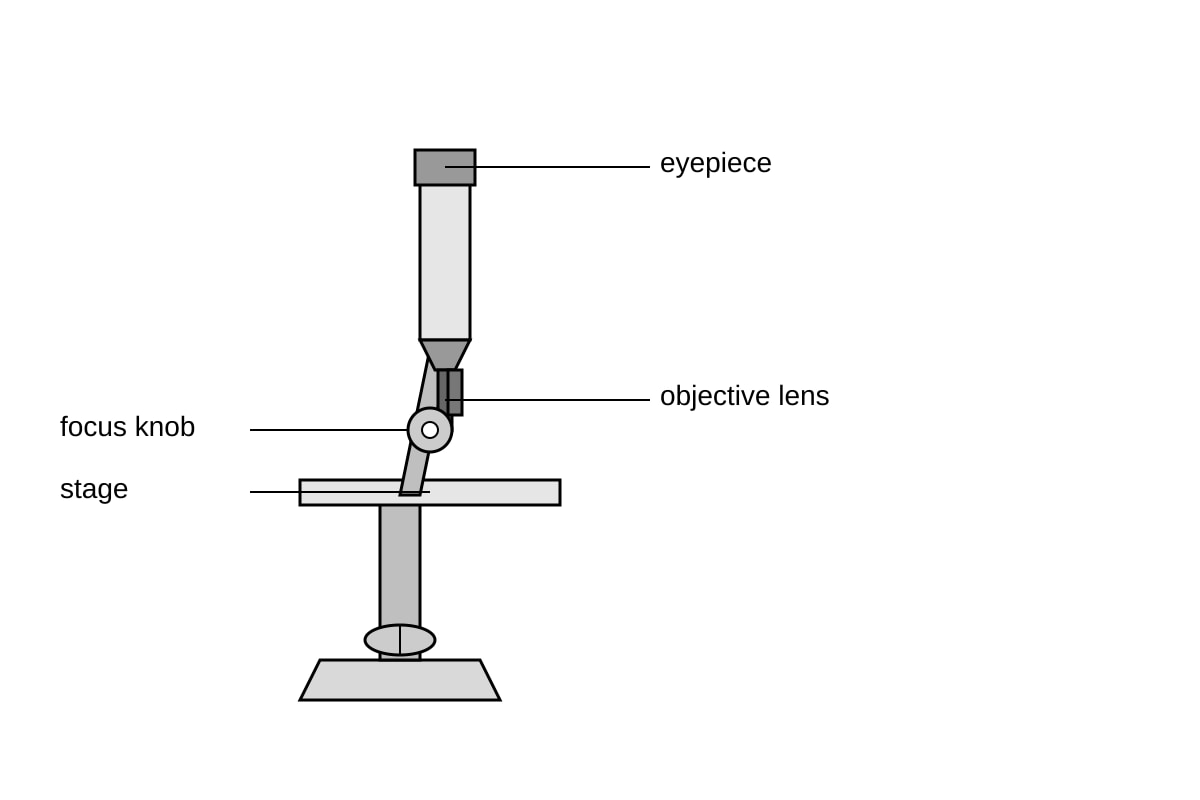
11. [2] Eyepiece = top labelled part; Objective lens = near stage. 1 mark each.
12. [2] Living: e.g., dog, plant. Non-living: e.g., rock, book. 1 mark each.
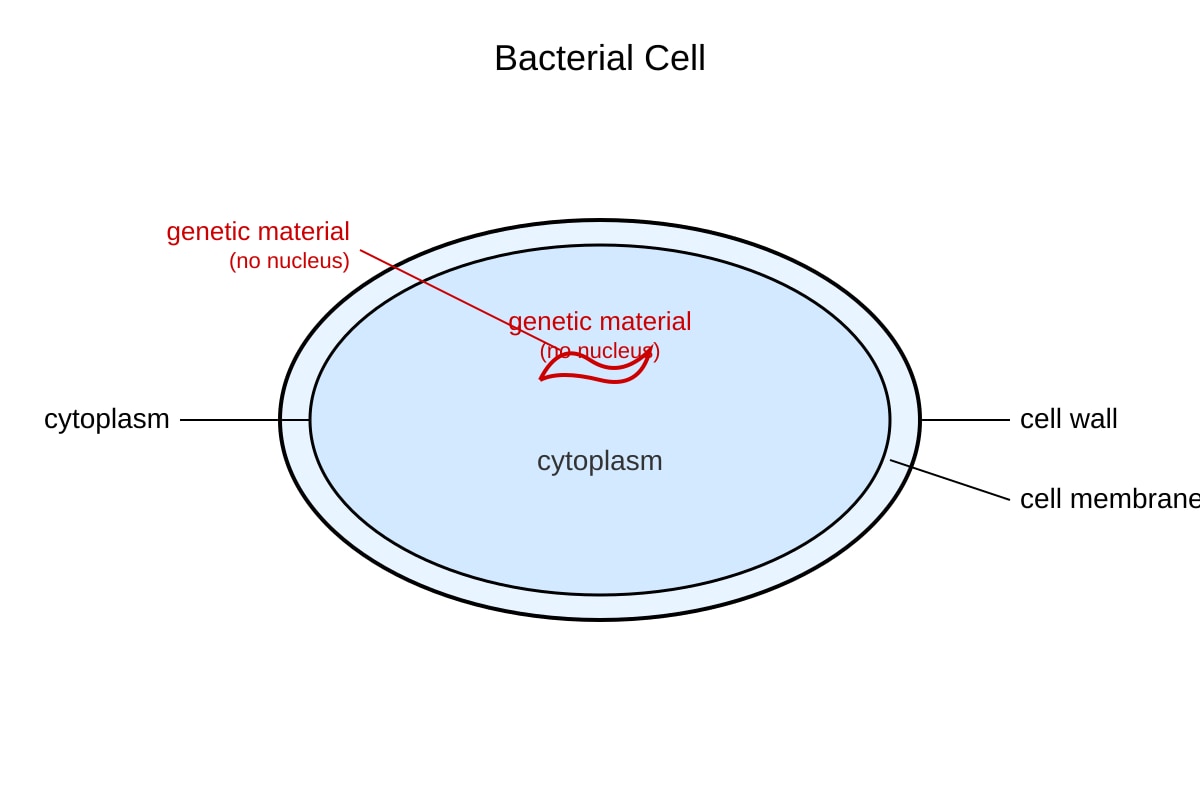
13. [2] Bacteria are alive because they carry out life processes (e.g., reproduction, respiration, response). 1 mark for unicellular, 1 mark for life processes.
Section C: Structured Response
14. [3]
(a) Total magnification = 15 × 40 = 600×. [1]
(b) Actual size = 6.0 mm ÷ 600 = 0.01 mm = 10 μm. [2: 1 for calc, 1 for unit]
Teaching note: Always convert mm to μm (×1000).
15. [3]
- Contains chloroplasts for photosynthesis (1)
- Large surface area / positioned to absorb light (1)
- Thin shape for gas exchange (1)
(Any two well explained = 3 marks; 1.5 each if partial)
16. [3]
(a) Cell X = plant cell, Cell Y = animal cell. [2]
(b) Cell X has wall and chloroplasts, Y does not. [1]
17. [3]
- Allows viewing of tiny cells invisible to naked eye (1)
- Enables study of cell structure (1)
- Helps in identification of microorganisms (1)
18. [3]
(a) Water keeps cells moist and flat for viewing. [1]
(b) Gentle placement avoids air bubbles and protects slide. [2: 1 for no bubbles, 1 for no damage]
19. [3]
(a) Bacterial cell has no nucleus / has free genetic material. [1]
(b) It is made of one cell that performs all life functions. [2]
20. [4]
Steps:
- Place slide on stage and clip. (1)
- Select low power objective and focus using coarse knob. (1)
- Adjust to fine focus and observe. (1)
- Switch to higher power if needed. (1)
(Any 3+ clear steps = 4 marks)