AI Generated Quiz
Secondary 1 Science Life Sciences Quiz
Free Sec 1 Science Life Sciences quiz, Claude AI version, with questions, answers, and syllabus-aligned practice for Singapore students.
These static practice materials are generated from the site's syllabus and paper-generation workflow, with source and model context shown so students and parents can evaluate the material before use.
Questions
Free quiz and exam paper access
Enter your details to view this paper
Your access is remembered on this device.
Answers
Secondary 1 Science Quiz - Life Sciences (Answer Key)
Total Marks: 40
Section A: Cell Structure and Function (Questions 1-8)
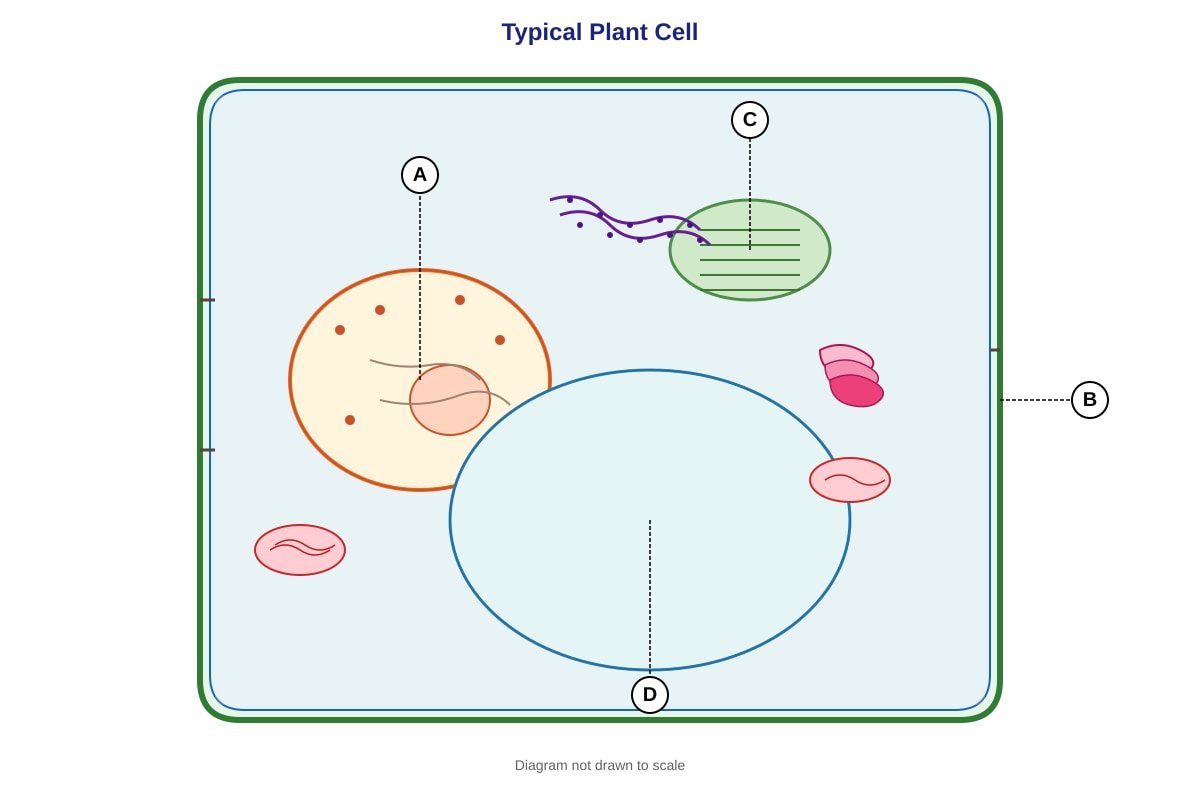
1. (a) Nucleus [1] (b) Provides structural support/protection/shape to the cell [1] (c) Chloroplasts contain chlorophyll which is needed for photosynthesis [1]. Animal cells do not carry out photosynthesis/get energy from food instead [1]
Marking notes: Accept "green pigment" for chlorophyll. Accept any valid explanation for why animals don't need chloroplasts.
2. Working: Total magnification = 10 × 40 = 400× [1] Actual length = 2.0 mm ÷ 400 = 0.005 mm = 5 μm [1]
Marking notes: Award 1 mark for correct magnification calculation, 1 mark for correct final answer with units. Accept 5.0 μm.
3. Any two from:
- Plant cells have cell walls, animal cells do not
- Plant cells have chloroplasts, animal cells do not
- Plant cells have large vacuoles, animal cells have small/no vacuoles
- Plant cells have regular shape, animal cells have irregular shape [2]
Marking notes: 1 mark per correct difference. Must be stated as a comparison.
4. (a) Intestinal epithelial cell/Villus cell [1] (b) Has microvilli/finger-like projections [1] which increase surface area for absorption [1]
Marking notes: Accept "absorption cell" for part (a). Must link structure to function for full marks in part (b).
5.
| Structure | Plant cells | Animal cells | Both |
|---|---|---|---|
| Cell membrane | ✓ | ||
| Chloroplast | ✓ | ||
| Mitochondria | ✓ |
[3 marks - 1 mark per correct row]
6. Any three from:
- Peel a thin layer of onion skin
- Place on microscope slide
- Add a drop of water/iodine solution
- Lower cover slip carefully to avoid air bubbles
- Start with low power objective lens [3]
Marking notes: 1 mark per correct step. Accept logical sequence of slide preparation.
Section B: Classification and Diversity (Questions 7-12)
7. (a) Euglena [1] (b) It contains chloroplasts/chlorophyll for photosynthesis [1]
Marking notes: Accept "green organism" if Euglena not specifically named but correctly identified.
8. Cell → Tissue → Organ → Organ system → Organism [2]
Marking notes: 1 mark for "tissue", 1 mark for "organ system". Both must be correct.
9. (a) Organism B [1] (b) Organisms A and C [1] (c) Photosynthesis [1]
10. Classification: Plant [1] Reason 1: Has chloroplasts/can make own food [1] Reason 2: Has cell wall/reproduces using seeds [1]
Marking notes: Accept any two valid plant characteristics from the given information.
11. Prokaryotic cells do not have a nucleus/nuclear membrane, eukaryotic cells have a nucleus/nuclear membrane [1]
Marking notes: Must mention nucleus or nuclear membrane. Accept "genetic material not enclosed" for prokaryotes.
12. (a) Bacteria/E.coli/any named bacterium [1] (b) Any plant, animal, fungus, or protist [1]
Marking notes: Accept specific examples. Do not accept viruses as they are not cellular.
Section C: Life Processes and Systems (Questions 13-20)
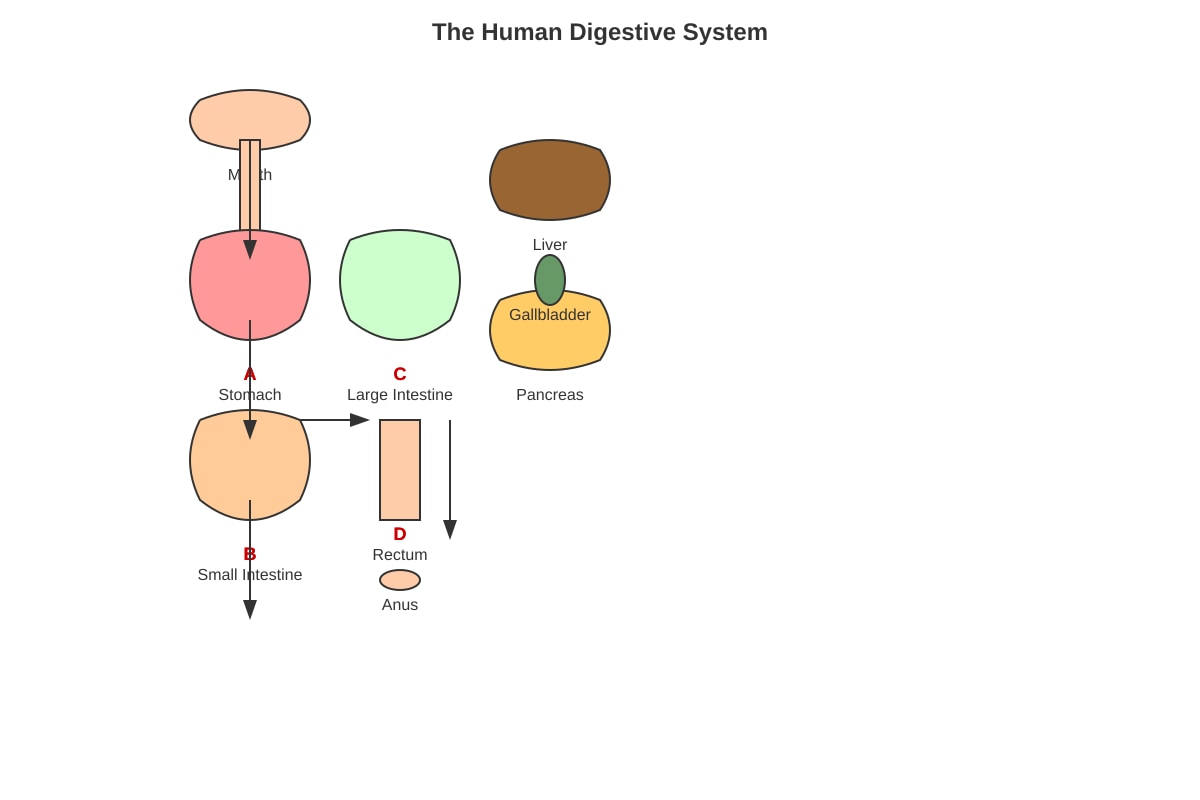
13. (a) Stomach [1] (b) Absorption of digested food/nutrients [1] (c) Folded surface increases surface area [1] for more efficient absorption [1]
Marking notes: Accept "digestion" for part (b) if small intestine function is correctly identified.
14. Carbon dioxide + Water → Glucose + Oxygen [2]
Marking notes: 1 mark for "water", 1 mark for "glucose". Accept chemical formulae.
15. (a) If light intensity increases, then the rate of photosynthesis will increase [1] (b) Light intensity/distance of light from plant [1] (c) Count number of oxygen bubbles produced per minute/measure volume of oxygen produced [1]
Marking notes: Accept any testable hypothesis in correct format. Accept any valid method for measuring photosynthesis rate.
16. (a) Grass [1] (b) Decomposer bacteria break down dead organisms/waste products [1] and return nutrients to the soil/ecosystem [1]
Marking notes: Must explain both the breaking down process and nutrient recycling for full marks.
17. Any three from:
- Food/nutrients
- Water
- Space/territory
- Light (for plants)
- Mates
- Shelter [3]
Marking notes: 1 mark per valid factor. Accept specific examples.
18. (a) During exercise, muscles need more energy/oxygen [1], so breathing rate increases to supply more oxygen/remove more carbon dioxide [1] (b) Heart rate increases [1]
Marking notes: Must link increased demand to increased breathing rate for full marks in part (a).
19. (a) Microorganisms/bacteria/protozoa/unicellular organisms [1] (b) Any two from: nutrition/feeding, respiration, excretion, growth, reproduction, movement, response to stimuli [2]
Marking notes: Accept specific examples of microorganisms. 1 mark per correct life process.
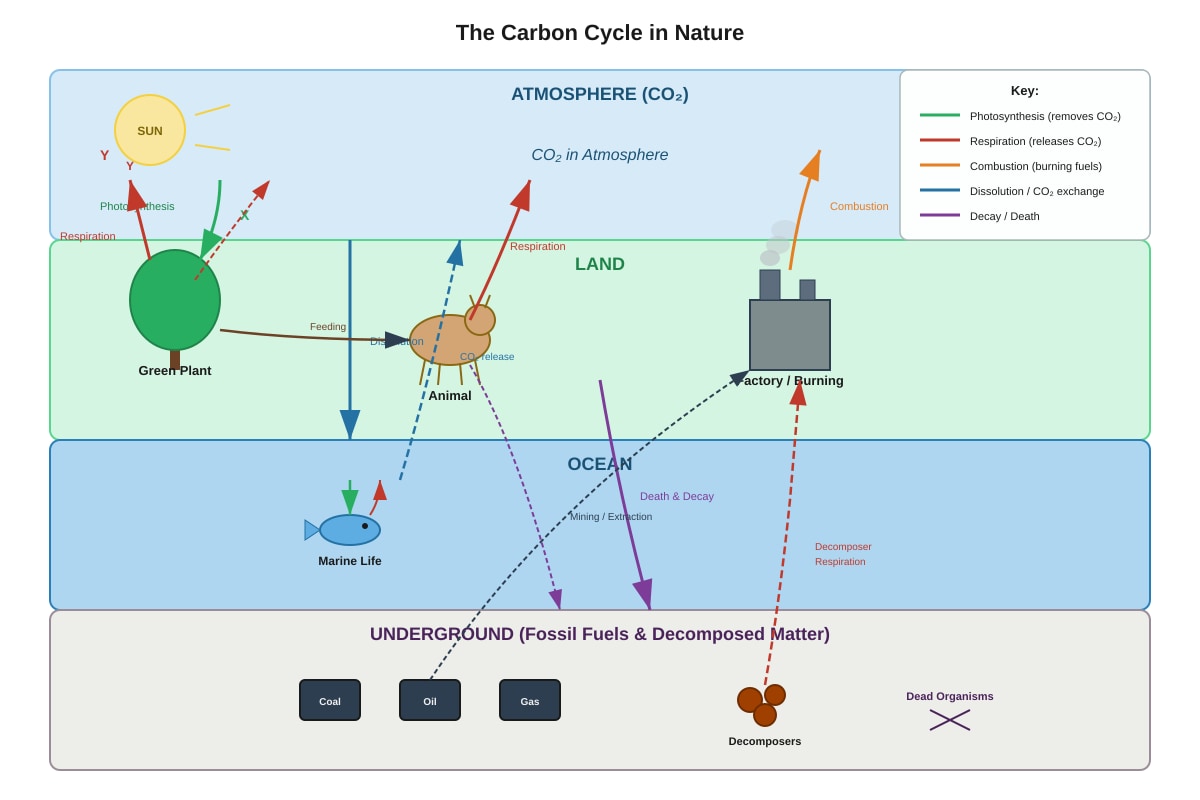
20. (a) Photosynthesis [1] (b) Respiration/combustion/burning [1] (c) Carbon cycle maintains balance of carbon dioxide in atmosphere [1] which is essential for photosynthesis and climate regulation [1]
Marking notes: Accept "cellular respiration" or "breathing" for part (b). Accept any valid explanation of importance for part (c).
Common Marking Guidelines:
- Spelling errors acceptable if meaning is clear
- Award marks for correct scientific understanding even if wording differs
- Partial marks available for incomplete but correct responses
- Diagrams must be clearly labeled where required
- Units must be included in calculations for full marks