From Real Exams Quiz
Secondary 1 Science Life Sciences Quiz
Free Sec 1 Science Life Sciences quiz, Nemo3 Exam version, with questions, answers, and syllabus-aligned practice for Singapore students.
These static practice materials are generated from the site's syllabus and paper-generation workflow, with source and model context shown so students and parents can evaluate the material before use.
Questions
Free quiz and exam paper access
Enter your details to view this paper
Your access is remembered on this device.
Answers
Secondary 1 Science Quiz - Life Sciences (Answer Key)
Total Marks: 40
Section A: Multiple Choice Questions (10 marks)
1. C – They respond to changes in their environment.
Explanation: Response to stimuli (irritability) is one of the seven characteristics of life (MRS GREN: Movement, Respiration, Sensitivity, Growth, Reproduction, Excretion, Nutrition). Not all organisms move from place to place (plants), photosynthesise (animals, fungi), or have a nervous system (plants, microorganisms).
[1]
2. C – Cell wall.
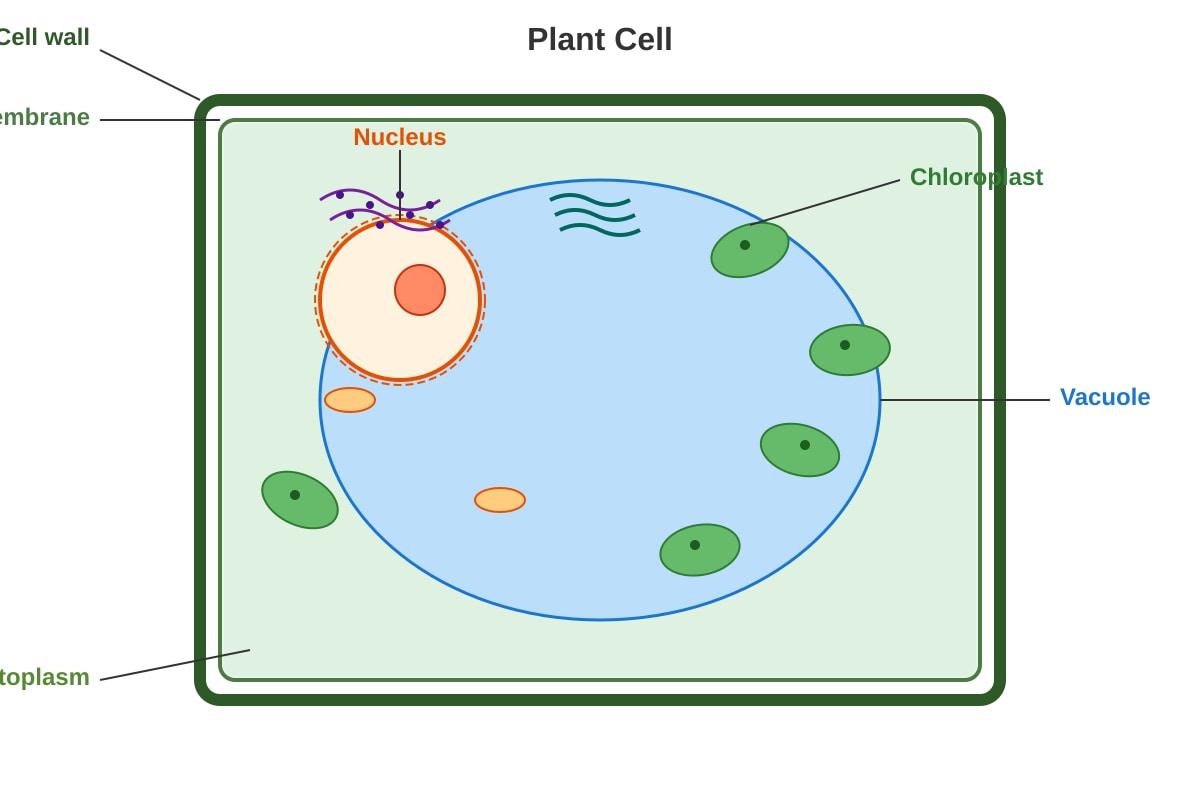
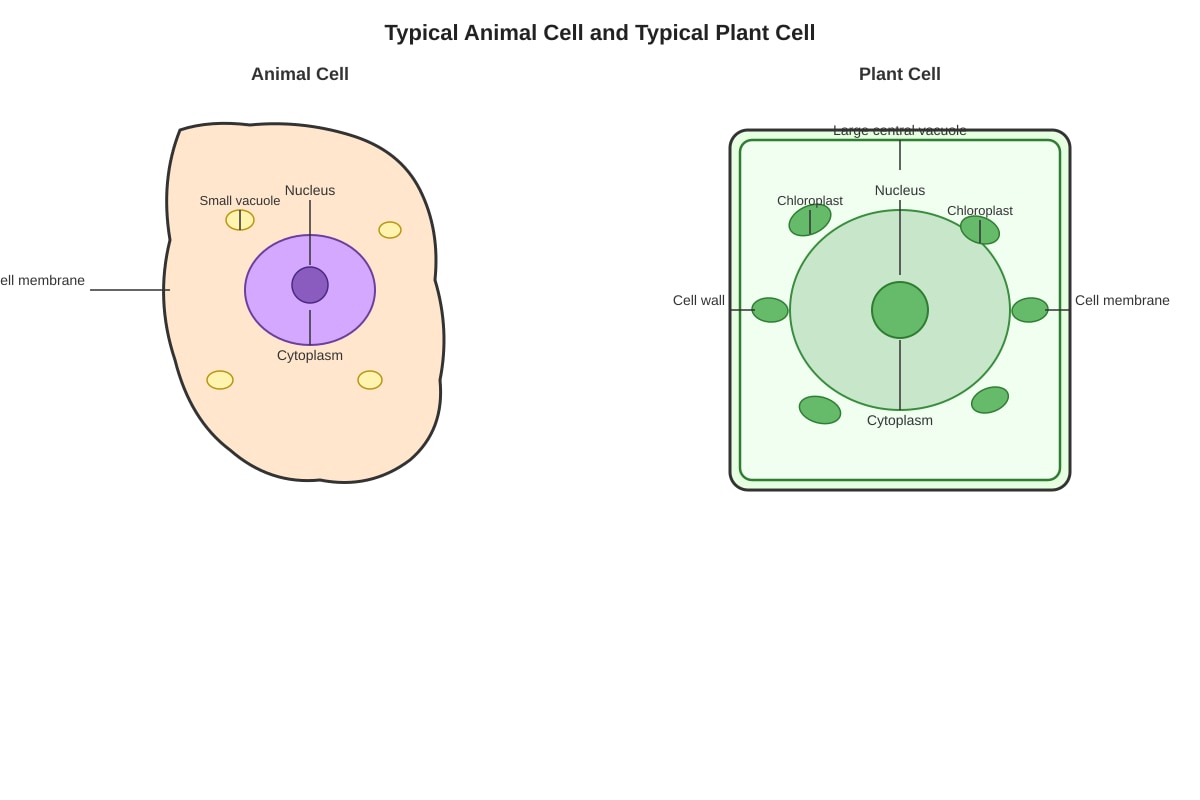
Explanation: Plant cells have a rigid cell wall made of cellulose; animal cells only have a flexible cell membrane. Both have cytoplasm, nucleus, and cell membrane.
[1]
3. B – Onion epidermal cell.
Explanation: Onion epidermal cells are plant cells with cellulose cell walls, chloroplasts (though fewer in non-photosynthetic tissue), and a large central vacuole. Cheek cells are animal cells (no cell wall, no chloroplasts, small vacuoles). Red blood cells lack a nucleus. Root hair cells have cell walls and large vacuoles but typically lack chloroplasts (they are underground).
[1]
4. B – Palisade mesophyll.
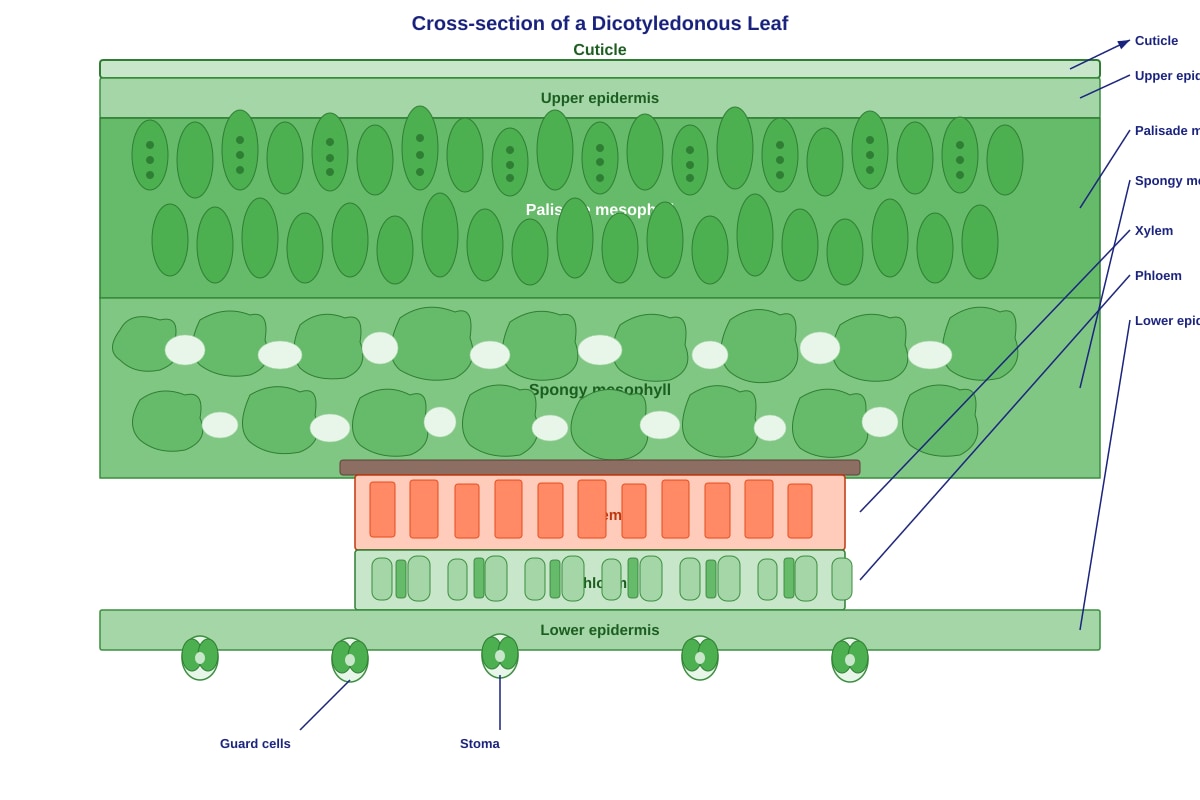
Explanation: The palisade mesophyll contains tightly packed, columnar cells with many chloroplasts, making it the primary site of photosynthesis. The upper epidermis is transparent and lacks chloroplasts. The spongy mesophyll has fewer chloroplasts and functions mainly in gas exchange. The lower epidermis contains stomata for gas exchange.
[1]
5. A – Cell → Tissue → Organ → Organ system → Organism.
Explanation: This is the correct hierarchical organisation: cells of the same type form tissues; different tissues form organs; organs working together form organ systems; organ systems make up an organism.
[1]
6. B – Stomach.
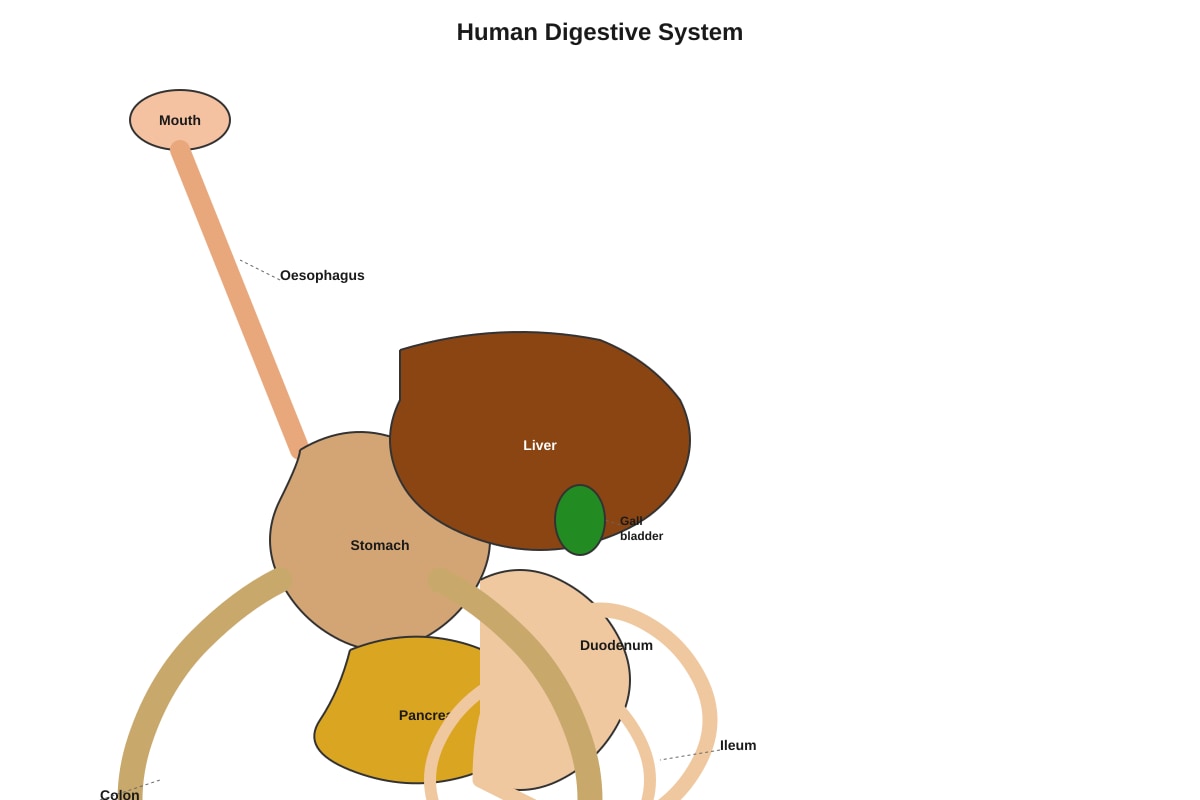
Explanation: Chemical digestion of proteins begins in the stomach where pepsin (activated from pepsinogen by HCl) breaks proteins into polypeptides. In the mouth, only starch digestion begins (salivary amylase). In the duodenum, trypsin continues protein digestion. The ileum is mainly for absorption.
[1]
7. B – To emulsify fats into smaller droplets.
Explanation: Bile salts emulsify large fat globules into smaller droplets, increasing the surface area for lipase action. Bile does not chemically digest fats (that is lipase's role), nor does it primarily neutralise acid (pancreatic juice does that) or absorb water (large intestine).
[1]
8. C – Microvilli on the epithelial cells.
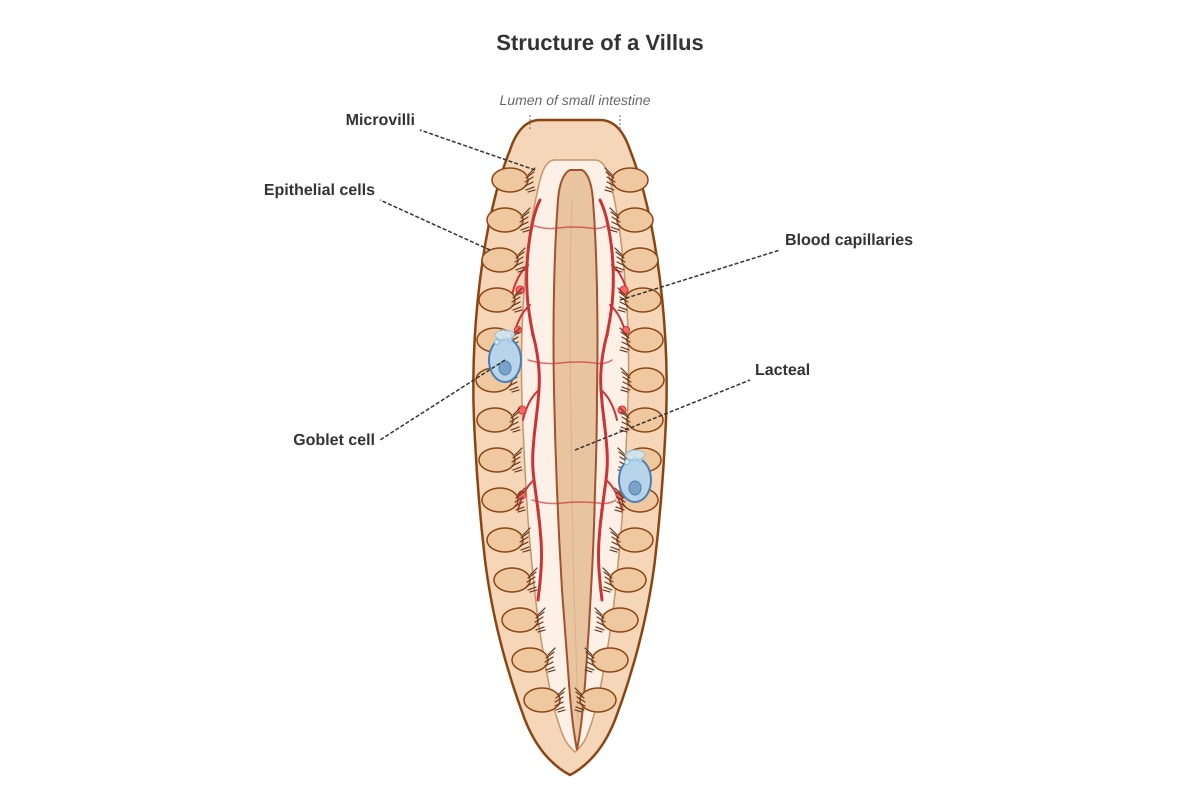
Explanation: Microvilli (brush border) dramatically increase the surface area of each epithelial cell for absorption. The lacteal absorbs fats, thin epithelium reduces diffusion distance, and good blood supply maintains concentration gradients – but microvilli directly multiply surface area.
[1]
9. C – Reducing sugar is present.
Explanation: Benedict's test: blue → green → yellow → orange → brick-red precipitate indicates reducing sugars (e.g., glucose, fructose, maltose). Starch gives blue-black with iodine. Protein gives violet with Biuret. Fat gives cloudy white emulsion with ethanol test.
[1]
10. D – Ethanol emulsion test.
Explanation: The ethanol emulsion test for fats: dissolve sample in ethanol, add water, cloudy white emulsion indicates fat. Benedict's uses Benedict's reagent and heat. Iodine test uses iodine solution. Biuret test uses sodium hydroxide and copper(II) sulfate.
[1]
Section B: Structured Questions (18 marks)
11. (a) Cell wall and chloroplasts (or large central vacuole).
Marking: 1 mark each for any two correct structures. Accept: cell wall, chloroplasts, large central vacuole.
[2]
(b) Controls the movement of substances in and out of the cell / Partially permeable barrier.
Explanation: The cell membrane is selectively permeable, regulating entry of nutrients and exit of waste.
[1]
(c) Plant cells need a rigid cell wall for structural support and to prevent bursting when water enters by osmosis (turgidity). Animal cells lack a cell wall because they need flexibility for movement and would burst without a contractile vacuole or osmoregulation mechanisms.
Marking: 1 mark for support/shape/maintain turgidity; 1 mark for preventing bursting/osmotic protection.
[2]
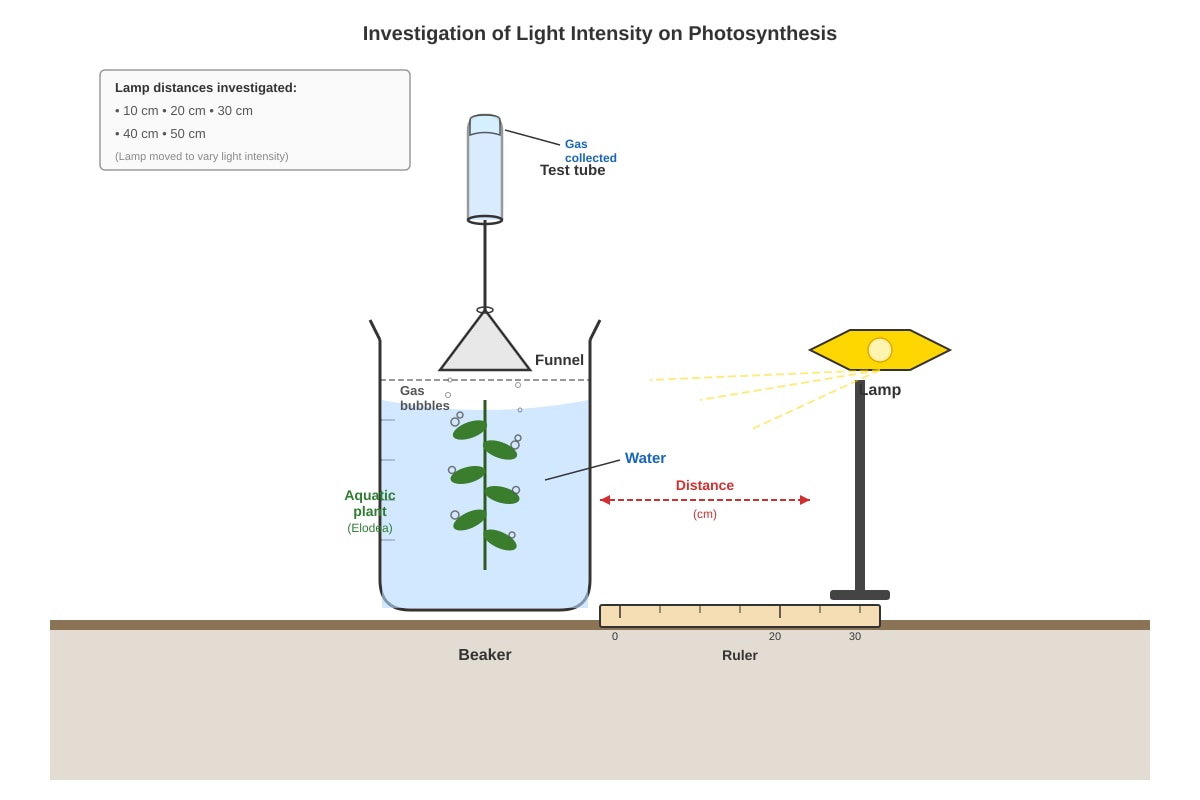
12. (a) Distance of lamp from beaker (or light intensity).
Explanation: The independent variable is the one deliberately changed by the experimenter.
[1]
(b) Number of bubbles per minute (or rate of photosynthesis).
Explanation: The dependent variable is the one measured/observed in response to the independent variable.
[1]
(c) Temperature / Carbon dioxide concentration / Type/size of plant / Volume of water / Time of counting.
Explanation: Any one controlled variable that could affect photosynthesis rate.
[1]
(d) As the distance of the lamp increases, the rate of photosynthesis decreases (or light intensity decreases, so rate decreases).
Explanation: Inverse relationship shown by data: 10 cm → 48 bubbles/min; 50 cm → 2 bubbles/min.
[1]
(e) Oxygen.
Explanation: Photosynthesis produces oxygen; the glowing splint test (relighting) confirms oxygen.
[1]
(f) Light intensity decreases with distance. Light energy is needed for the light-dependent stage of photosynthesis. Less light means less ATP and NADPH produced, so the Calvin cycle slows down, reducing the overall rate of photosynthesis.
Marking: 1 mark for light intensity decreases; 1 mark for linking to reduced energy for photosynthesis/light-dependent reactions.
[2]
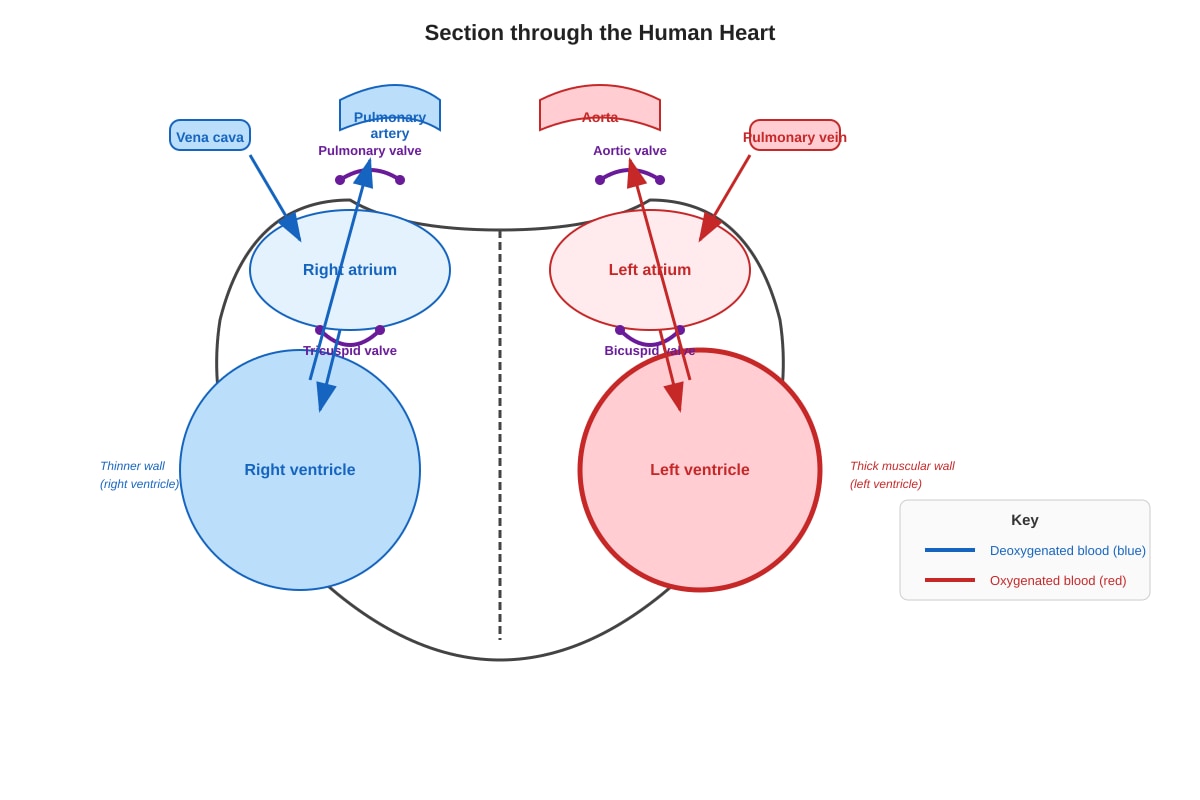
13. (a) Labels on diagram: Aorta (largest artery leaving left ventricle, arching over heart); Pulmonary artery (leaving right ventricle, splitting to lungs).
Marking: 1 mark each for correct label and position.
[2]
(b) The left ventricle pumps blood at high pressure to the whole body (systemic circulation), requiring a thick muscular wall to generate this pressure. The right ventricle pumps blood only to the nearby lungs (pulmonary circulation) at lower pressure, so its wall is thinner.
Marking: 1 mark for left ventricle pumps to whole body/high pressure; 1 mark for right ventricle pumps to lungs/low pressure.
[2]
(c) Bicuspid valve (or mitral valve).
Explanation: Located between left atrium and left ventricle; prevents backflow during ventricular systole. Tricuspid is on right side.
[1]
14. (a) Food sample C (2000 kJ per 100 g).
Explanation: Compare energy column: A = 1400, B = 1000, C = 2000 kJ.
[1]
(b) Food sample B (20 g protein per 100 g).
Explanation: Compare protein column: A = 8 g, B = 20 g, C = 5 g.
[1]
(c) Obesity / Cardiovascular disease / High blood cholesterol / Type 2 diabetes (any one).
Explanation: Excess fat intake leads to weight gain and associated metabolic disorders.
[1]
(d) Water in 100 g of A = 16 g
Water in 250 g of A = 16 g × (250/100) = 16 × 2.5 = 40 g
Marking: 1 mark for correct proportion (16 g per 100 g); 1 mark for correct calculation and answer with unit (40 g).
[2]
Section C: Longer Structured Questions (12 marks)
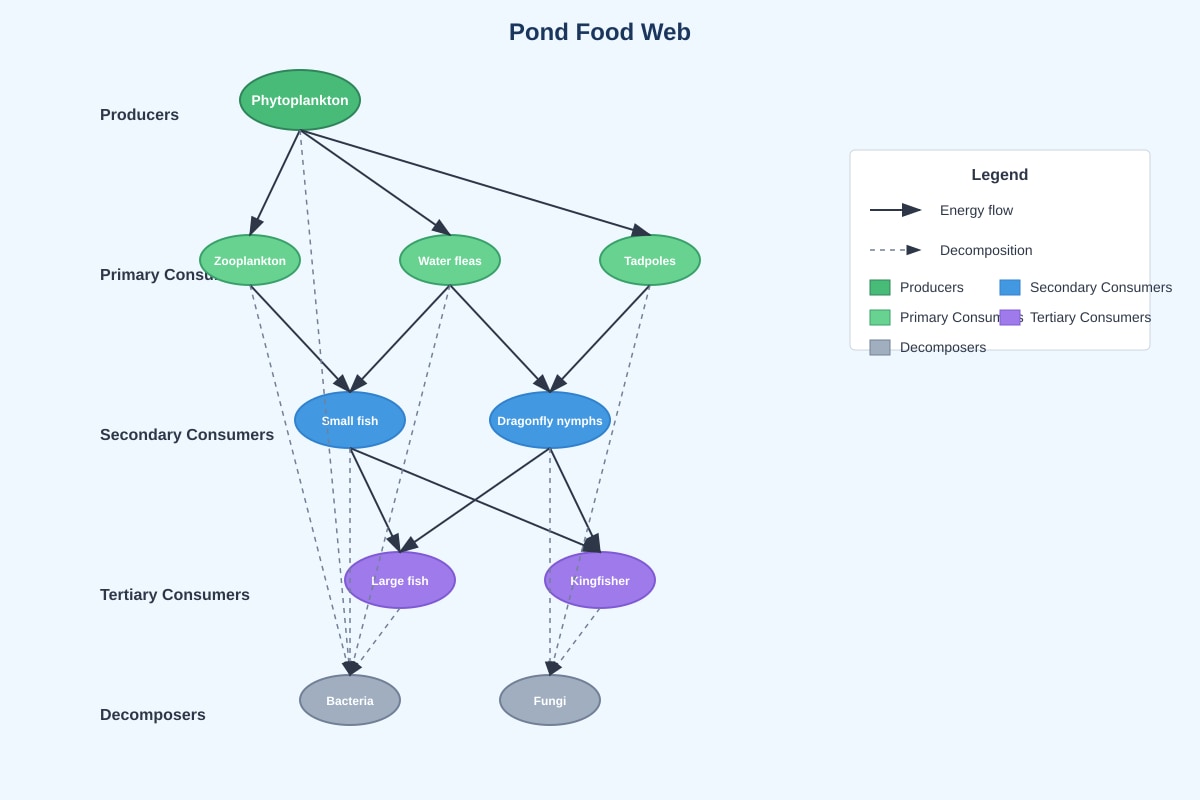
15. (a) An organism that makes its own food (organic substances) from simple inorganic substances (carbon dioxide and water) using light energy (photosynthesis) or chemical energy (chemosynthesis).
Explanation: Producers are autotrophs; they form the base of food chains.
[1]
(b) Phytoplankton → Zooplankton → Small fish → Large fish (or Phytoplankton → Water fleas → Small fish → Kingfisher, etc.).
Marking: 1 mark for correct chain with 4 levels starting with phytoplankton and showing correct energy flow (arrows or "eaten by").
[1]
(c) Zooplankton are a food source for small fish. If zooplankton decrease, small fish have less food, leading to increased competition, starvation, and a decrease in the small fish population.
Marking: 1 mark for less food/food shortage; 1 mark for population decrease/starvation/competition.
[2]
(d) Decomposers break down dead organisms and waste materials, releasing inorganic nutrients (mineral salts) back into the environment for reuse by producers.
Explanation: Nutrient cycling; without decomposers, nutrients would be locked in dead matter.
[1]
(e) Energy is lost at each trophic level through: (1) Respiration (heat loss), (2) Excretion (faeces, urine), (3) Uneaten parts (bones, fur), (4) Inefficient digestion/absorption. Only ~10% is incorporated into consumer biomass.
Marking: 1 mark for any two valid reasons (respiration/heat, waste, uneaten, incomplete digestion); 1 mark for explaining that energy is not transferred to next level.
[2]
16. (a) Rate at 20°C = 1 / 180 = 0.005555... ≈ 0.0056 s⁻¹ (to 4 decimal places: 0.0056).
Marking: 1 mark for correct calculation and rounding.
[1]
(b) 37°C (rate = 0.0222 s⁻¹, highest value).
Explanation: Optimum temperature for human amylase.
[1]
(c) At 55°C, the high temperature causes the amylase enzyme to denature. The active site loses its specific shape, so starch can no longer bind effectively. The enzyme loses its catalytic function, and the reaction slows down.
Marking: 1 mark for denaturation/loss of shape; 1 mark for active site no longer fits substrate/reaction slows.
[2]
(d) The conclusion is partially correct but incomplete. While 37°C is the optimum temperature for human amylase (matching body temperature), the student only tested five temperatures. The true optimum could be between 37°C and 45°C (e.g., 40°C). More data points around 37°C are needed to confirm it is the exact optimum.
Marking: 1 mark for acknowledging 37°C is body temperature/optimum; 1 mark for identifying limitation (insufficient data points, true optimum could be between tested values).
[2]
(e) Repeat the experiment at each temperature and calculate the average time/rate / Use more replicates.
Explanation: Reliability is improved by repetition and averaging to reduce random errors.
[1]
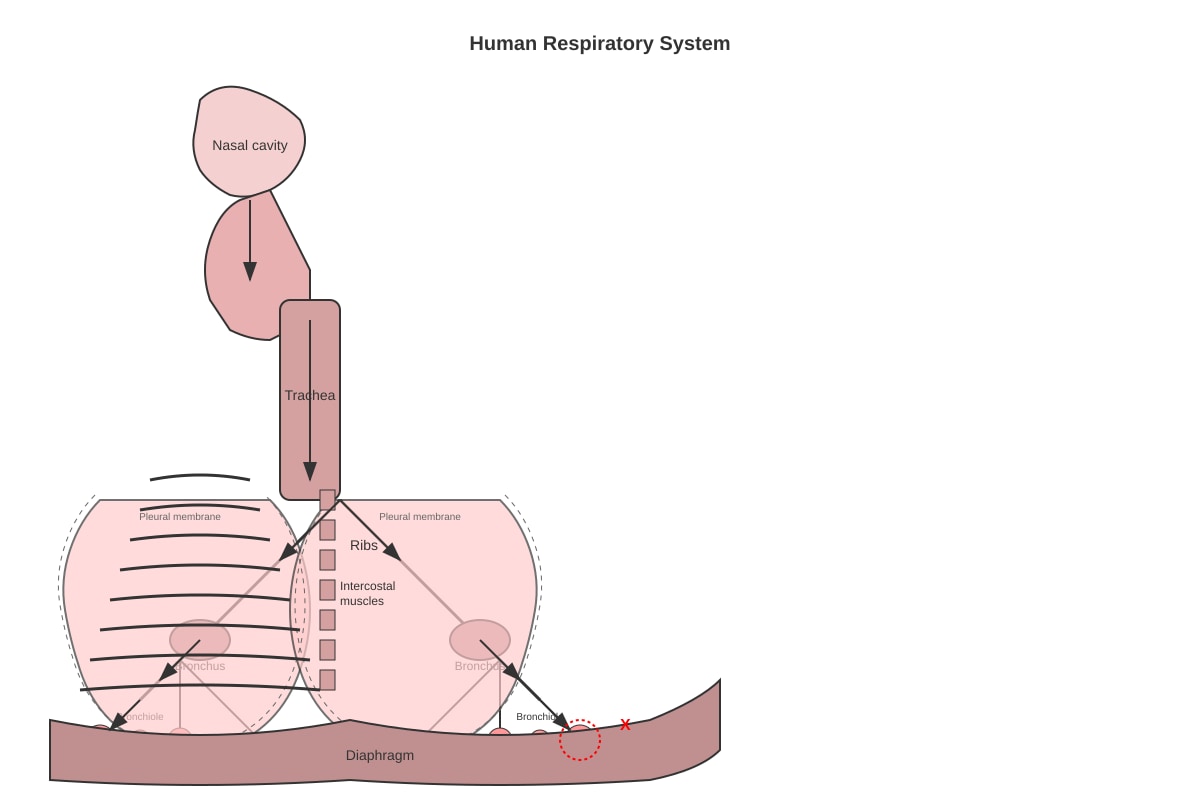
17. (a) Alveoli (or alveolus / air sacs).
Explanation: Site of gaseous exchange between air and blood.
[1]
(b) Three adaptations:
- Large surface area (millions of alveoli, ~70–100 m² total).
- Thin walls (one cell thick / ~0.5 µm) for short diffusion distance.
- Good blood supply (dense capillary network) to maintain steep concentration gradient.
- Moist lining for gases to dissolve.
- Ventilation (breathing) maintains fresh air supply.
Marking: 1 mark each for any three distinct adaptations.
[3]
(c) During inhalation:
- Diaphragm contracts and flattens (moves downwards).
- External intercostal muscles contract, pulling ribs up and out.
- This increases thoracic volume, decreasing pressure, so air flows in.
Marking: 1 mark for diaphragm contracts/flattens; 1 mark for ribs move up and out (or intercostal muscles contract).
[2]
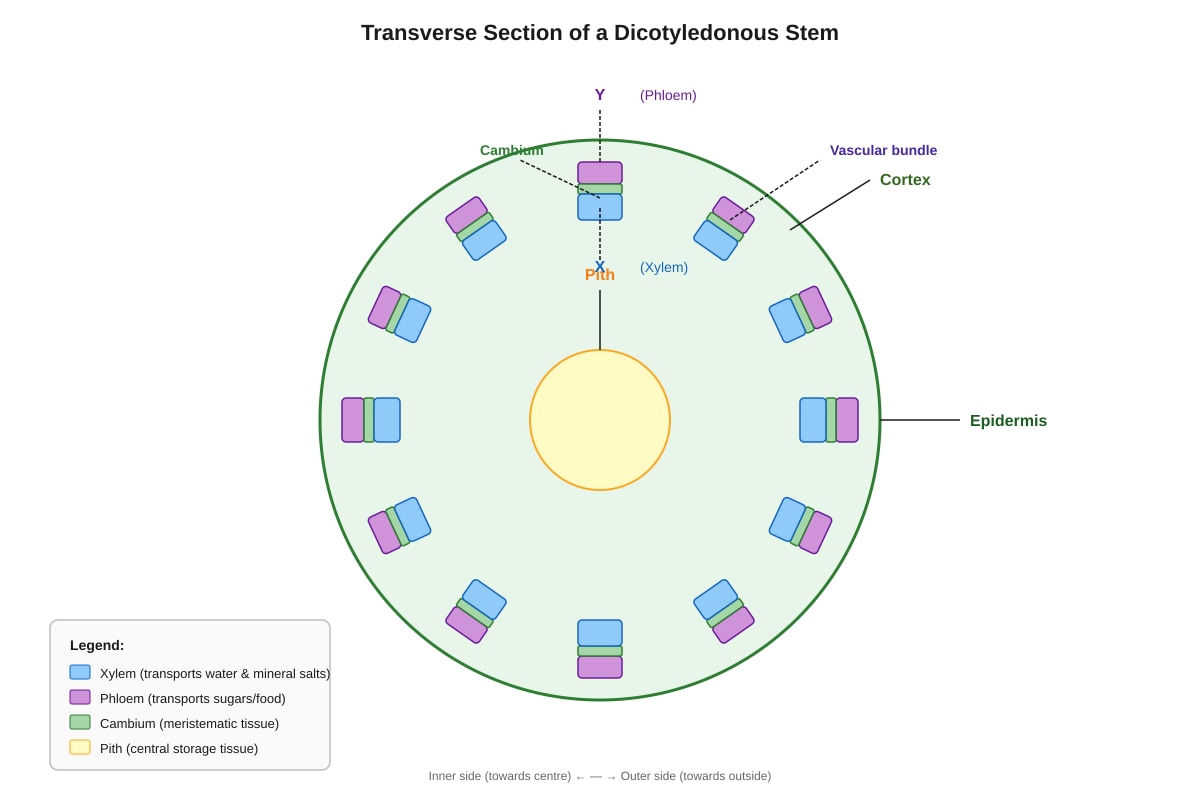
18. (a) Xylem.
Explanation: Transports water and mineral salts upward from roots; dead, lignified cells.
[1]
(b) Phloem.
Explanation: Transports sugars (sucrose) from source (leaves) to sinks (roots, fruits, growing tips); living cells.
[1]
(c) Xylem vessels are dead, hollow, lignified tubes with no cross-walls; phloem sieve tubes are living cells with sieve plates and companion cells. (Or: Xylem has thick lignified walls; phloem has thin walls. Or: Xylem transports water/minerals; phloem transports sugars.)
Marking: 1 mark for any valid structural difference.
[1]
(d) Removing the bark removes the phloem. Sugars produced in the leaves cannot be transported down past the ring to the roots. The roots starve and die first. The upper part (above the ring) still receives water via xylem (which is inside the wood, not removed) but eventually dies because roots can no longer supply water and minerals.
Marking: 1 mark for phloem removed/sugar transport blocked; 1 mark for roots starve/die first, then upper part dies.
[2]
19. (a) To investigate the conditions necessary for seed germination (water, oxygen, suitable temperature).
[1]
(b) Set-up A (has all conditions; used as comparison).
Explanation: Control has all favourable conditions; other set-ups vary one condition each.
[1]
(c) Boiled water removes dissolved oxygen; the oil layer prevents atmospheric oxygen from dissolving. Seeds need oxygen for aerobic respiration to release energy for germination.
Marking: 1 mark for no oxygen available / boiled water + oil layer prevents oxygen; 1 mark for oxygen needed for respiration/energy.
[1]
(d) The cotyledon stores food (starch, proteins, fats) which is broken down and used by the embryo for growth until the seedling can photosynthesise.
Explanation: In some seeds (e.g., bean), cotyledons are storage organs; in others (e.g., maize), endosperm stores food and cotyledon absorbs it.
[1]
(e) Initially, the seedling uses stored food in the cotyledons for respiration and growth, releasing CO₂ and H₂O, so dry mass decreases. Once leaves emerge and photosynthesis begins, the seedling produces its own food, and dry mass increases as new biomass is added.
Marking: 1 mark for initial decrease due to respiration/using stored food; 1 mark for later increase due to photosynthesis/new growth.
[2]
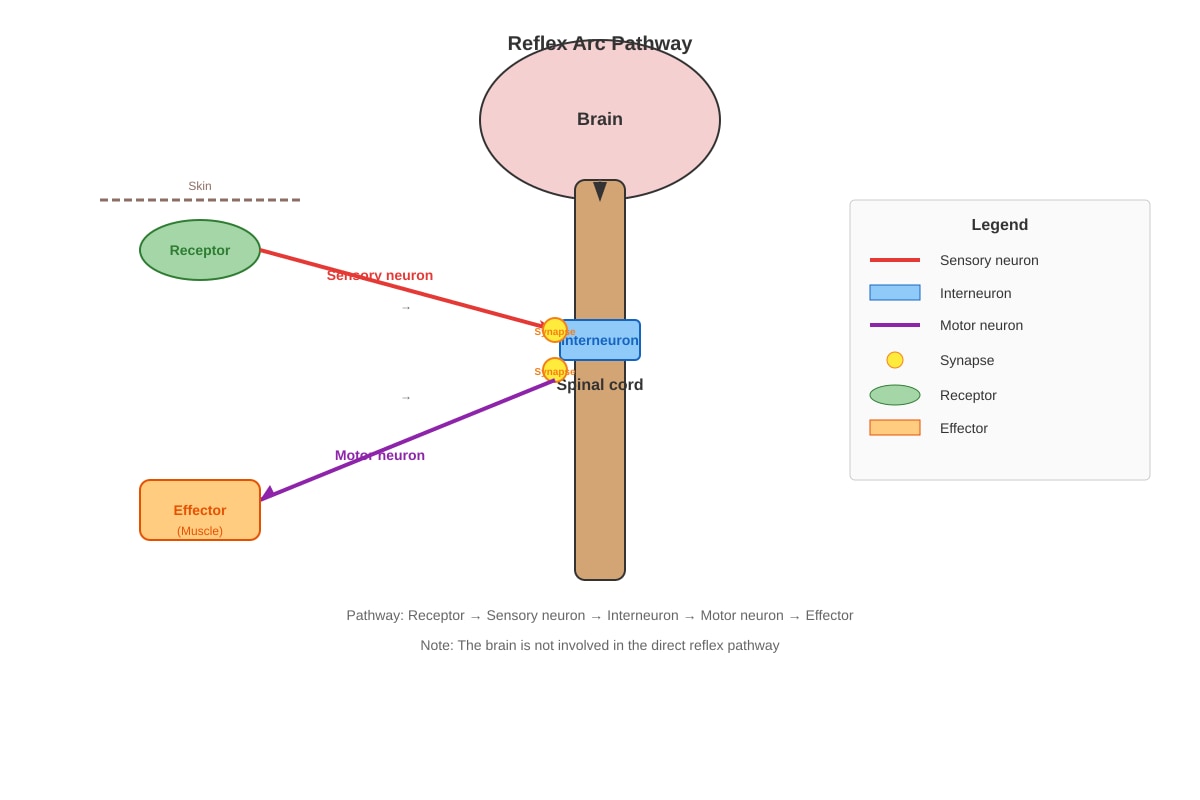
20. (a) Sensory neuron (or sensory neurone).
Explanation: Carries impulses from receptors to CNS.
[1]
(b) From the presynaptic neuron (sensory/interneuron) to the postsynaptic neuron (interneuron/motor neuron) / Across the synaptic cleft in one direction only.
Explanation: Neurotransmit
<stage3_quiz_answers_md>
Secondary 1 Science Quiz - Life Sciences (Answer Key)
Total Marks: 40
Section A: Multiple Choice Questions (10 marks)
| Question | Answer | Explanation |
|---|---|---|
| 1 | C | All living organisms respond to changes in their environment (sensitivity). Not all move (plants), photosynthesise (animals), or have a nervous system (plants, microorganisms). |
| 2 | C | Cell wall is present in plant cells but absent in animal cells. Cell membrane, cytoplasm, and nucleus are found in both. |
| 3 | B | Onion epidermal cells are plant cells with cellulose cell walls, chloroplasts (though often not visible in epidermal layers, they are typical plant cell features), and a large permanent vacuole. Cheek cells are animal cells; red blood cells lack nucleus and organelles; root hair cells lack chloroplasts. |
| 4 | B | Palisade mesophyll cells are packed with chloroplasts and are the main site of photosynthesis. |
| 5 | A | Correct hierarchy: Cell → Tissue → Organ → Organ system → Organism. |
| 6 | B | Chemical digestion of proteins begins in the stomach with pepsin (activated from pepsinogen by HCl). |
| 7 | B | Bile emulsifies fats (breaks large fat globules into smaller droplets), increasing surface area for lipase action. It does not chemically digest fats. |
| 8 | C | Microvilli (brush border) on epithelial cells vastly increase the surface area for absorption. |
| 9 | C | Benedict's test: blue → green/yellow/orange/brick-red indicates reducing sugars (e.g., glucose, maltose). |
| 10 | D | Ethanol emulsion test for fats uses ethanol and water. Benedict's uses Benedict's reagent; Iodine test uses iodine solution; Biuret test uses sodium hydroxide and copper(II) sulfate. |
Section B: Structured Questions (18 marks)
Question 11 [5 marks]
(a) Any two of:
- Cell wall
- Chloroplasts
- Large central vacuole (permanent vacuole)
[2 marks; 1 mark each]
(b) The cell membrane controls the movement of substances in and out of the cell / is selectively permeable.
[1 mark]
(c) Plant cells have a cell wall made of cellulose to provide structural support, maintain cell shape, and prevent bursting when water enters by osmosis (turgidity). Animal cells lack a cell wall; they rely on cytoskeleton for shape and would burst if they take in too much water.
[2 marks; 1 mark for support/shape, 1 mark for preventing bursting/osmotic protection]
Question 12 [7 marks]
(a) Distance of lamp from beaker (light intensity)
[1 mark]
(b) Number of bubbles released per minute (rate of photosynthesis)
[1 mark]
(c) Any one valid constant variable:
- Temperature of water
- Carbon dioxide concentration (e.g., same amount of NaHCO₃)
- Same plant (species, size, number of leaves)
- Time allowed for equilibration
- Wavelength/colour of light
[1 mark]
(d) As the distance of the lamp increases, the rate of photosynthesis decreases (non-linearly).
[1 mark]
(e) Oxygen
[1 mark]
(f) As the lamp moves further away, light intensity decreases. Light energy is required for the light-dependent stage of photosynthesis. Lower light intensity means less ATP and NADPH are produced, limiting the Calvin cycle and thus reducing the overall rate of photosynthesis.
[2 marks; 1 mark for light intensity decrease, 1 mark for linking to light-dependent reaction/energy for photosynthesis]
Question 13 [5 marks]
(a) Labels on diagram:
- Aorta: Large artery leaving the left ventricle (curving upwards/backwards).
- Pulmonary artery: Artery leaving the right ventricle (going to lungs).
[2 marks; 1 mark each correct label]
(b) The left ventricle pumps blood at high pressure to the whole body (systemic circulation), requiring a thick muscular wall to generate this force. The right ventricle pumps blood only to the lungs (pulmonary circulation) at lower pressure, so its wall is thinner.
[2 marks; 1 mark for high pressure/whole body, 1 mark for comparison with right ventricle/low pressure to lungs]
(c) Bicuspid valve (mitral valve)
[1 mark]
Question 14 [5 marks]
(a) Food sample C (2000 kJ per 100 g)
[1 mark]
(b) Food sample B (20 g protein per 100 g, highest among the three)
[1 mark]
(c) Any one valid health risk:
- Obesity / weight gain
- Cardiovascular disease / heart disease / atherosclerosis
- High blood cholesterol
- Type 2 diabetes
- Hypertension
[1 mark]
(d) Water in 100 g of A = 16 g
Water in 250 g of A = (16 g / 100 g) × 250 g = 40 g
[2 marks; 1 mark for correct method (proportion), 1 mark for correct answer with unit]
Section C: Longer Structured Questions (12 marks)
Question 15 [7 marks]
(a) A producer is an organism that makes its own food (usually through photosynthesis) using light energy, carbon dioxide, and water. It forms the base of the food chain/web.
[1 mark]
(b) Example: Phytoplankton → Zooplankton → Small fish → Large fish
(or Phytoplankton → Water fleas → Small fish → Kingfisher, etc.)
[1 mark; must have 4 distinct trophic levels with correct arrows]
(c) Zooplankton are a food source for small fish. If zooplankton population decreases, small fish have less food available, leading to starvation, increased competition, and a decrease in the small fish population.
[2 marks; 1 mark for less food, 1 mark for population decrease/consequence]
(d) Decomposers (bacteria and fungi) break down dead organisms and waste materials, releasing inorganic nutrients (e.g., nitrates, phosphates) back into the environment for recycling by producers.
[1 mark]
(e) Energy transfer is not 100% efficient because:
- Not all organisms at a lower trophic level are eaten (some die uneaten).
- Not all eaten material is digested and absorbed (some is egested as faeces).
- Absorbed energy is used for respiration (released as heat) and metabolic processes, not stored as biomass.
- Only energy incorporated into biomass (growth) is available to the next trophic level.
[2 marks; any two distinct reasons, 1 mark each]
Question 16 [5 marks]
(a) Rate at 20°C = 1 / 180 = 0.0056 s⁻¹ (to 4 decimal places)
[1 mark]
(b) 37°C (shortest time / highest rate: 0.0222 s⁻¹)
[1 mark]
(c) At 37°C, the enzyme amylase has its optimal temperature. The kinetic energy of molecules is ideal for maximum effective collisions between enzyme and substrate. At 55°C, the enzyme is denatured – the high temperature breaks bonds maintaining the tertiary structure, the active site loses its specific shape, and the substrate (starch) can no longer bind, so the reaction slows drastically.
[3 marks; 1 mark for optimal temperature/kinetic energy at 37°C, 1 mark for denaturation at 55°C, 1 mark for active site shape change preventing substrate binding]
End of Answer Key