From Real Exams Quiz
Secondary 1 Science Life Sciences Quiz
Free Sec 1 Science Life Sciences quiz, HY3 Exam version, with questions, answers, and syllabus-aligned practice for Singapore students.
These static practice materials are generated from the site's syllabus and paper-generation workflow, with source and model context shown so students and parents can evaluate the material before use.
Questions
Free quiz and exam paper access
Enter your details to view this paper
Your access is remembered on this device.
Answers
Secondary 1 Science Quiz - Life Sciences (Answer Key)
Total Marks: 40
Topic: Life Sciences
Section A
1. Answer: Cell (2 marks)
Teaching note: The cell is the smallest unit that can carry out life processes. All living things are made of cells.
2. Answer: Controls what enters and leaves the cell (2 marks)
Teaching note: The cell membrane is selectively permeable; it allows useful substances in and waste out.
3. Answer: Mitochondrion (mitochondria) (2 marks)
Teaching note: Mitochondria are where respiration occurs, releasing energy from food.
4. Answer: Carbon dioxide / CO₂ (2 marks)
Teaching note: Plants use CO₂ and water with light energy to make glucose in photosynthesis.
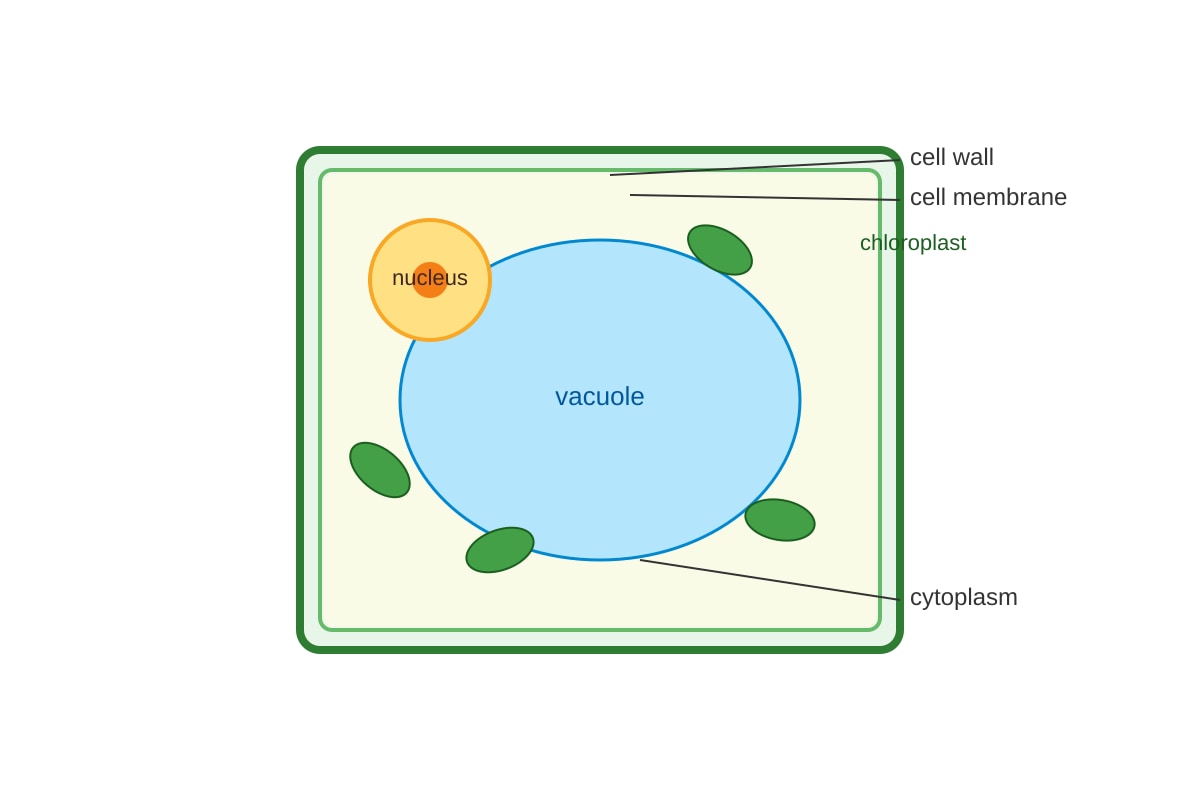
5. Answer: Plant cells have cell wall and chloroplasts; animal cells do not (2 marks)
Teaching note: Any valid difference (e.g., plant has large vacuole) accepted.
Section B
6. Answer: To control cell activities / store genetic material (2 marks)
Teaching note: The nucleus contains DNA which directs all cell functions.
7. Answer: (a) Cell wall (b) Chloroplast (or large vacuole) (1+1 marks)
Teaching note: These are unique to plant cells among the common structures taught.
8. Answer: (a) Place slide on stage and clip (b) Look from side, lower lens, then focus with coarse knob (1+1 marks)
Teaching note: Safe microscope use prevents damage to slide and lens.
9. Answer: Light energy → Chemical energy (in glucose) (2 marks)
Teaching note: Photosynthesis converts light to stored chemical energy.
10. Answer: To release energy for life processes (2 marks)
Teaching note: Respiration provides ATP for movement, growth, etc.
Section C
11. Answer: Chloroplast labelled on green ovals; vacuole on large central space (2 marks)
Visual check: Diagram must show labels pointing correctly.
12. Answer:
Total magnification = 10 × 40 = 400×
Actual length = 20 mm ÷ 400 = 0.05 mm (2 marks)
Teaching note: Magnification formula: image size ÷ total mag = actual size.
13. Answer: Acidic: A (pH 3), Neutral: B (pH 7), Alkaline: C (pH 11) (3 marks)
Teaching note: pH <7 acid, =7 neutral, >7 alkali.
14. Answer: Water moves out by osmosis to salty surroundings, cell loses water and shrinks (2 marks)
Teaching note: Osmosis is water moving from low to high solute concentration.
15. Answer: Allow gas exchange (CO₂ in, O₂ out) (1 mark)
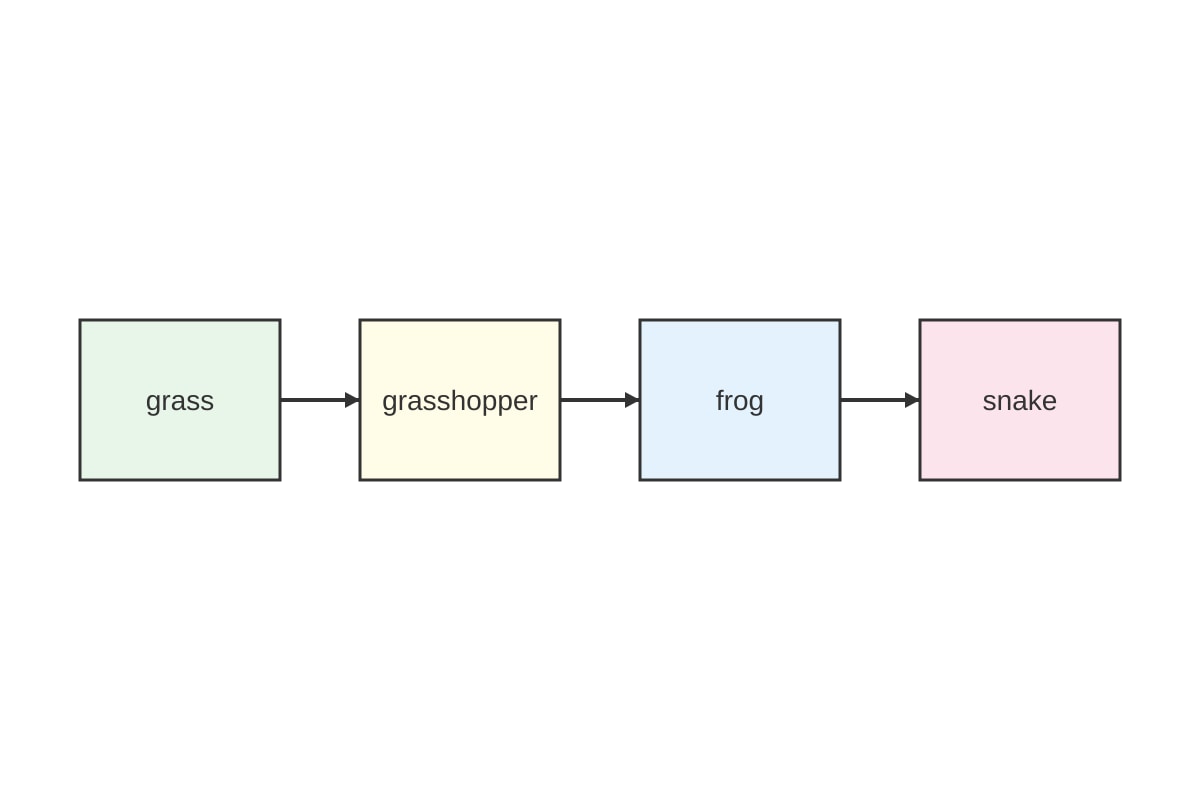
16. Answer: Grass (1 mark)
17. Answer: Grasshopper (1 mark)
18. Answer: Used in making yoghurt / decompose waste / nitrogen fixation (2 marks)
Teaching note: Any correct useful role accepted.
19. Answer: (a) Carry by base (b) Use cover slip / low power first (1+1 marks)
20. Answer: No. Animal cells do not have cell walls. Only plant, fungal, bacterial cells do. (2 marks)
Teaching note: Common mistake: thinking all cells same as plant cells.