From Real Exams Quiz
Secondary 1 Science Chemistry Materials Quiz
Free Sec 1 Science Chemistry Materials quiz, HY3 Exam version, with questions, answers, and syllabus-aligned practice for Singapore students.
These static practice materials are generated from the site's syllabus and paper-generation workflow, with source and model context shown so students and parents can evaluate the material before use.
Questions
Free quiz and exam paper access
Enter your details to view this paper
Your access is remembered on this device.
Answers
Secondary 1 Science Quiz - Chemistry Materials (Answer Key)
Total Marks: 40
Topic: Chemistry Materials
Section A Answers (Q1–5)
Q1 [2 marks]
Answer: Good electrical conductivity (or: it is a good conductor of electricity).
Teaching note: Metals have delocalised electrons that carry current; this makes them suitable for wires.
Marking: 2 marks for correct property; 1 mark if vague (e.g., "conducts" without specifying electricity).
Q2 [2 marks]
Answer: Evaporation (or distillation if context implies pure water collection).
Teaching note: Seawater is salt + water. Heating evaporates water; salt remains.
Marking: 2 marks for evaporation; accept "crystallisation" only if salt is target.
Q3 [2 marks]
Answer: Polyethylene / PVC / nylon / polyester (any one synthetic polymer).
Teaching note: Synthetic polymers are human-made from monomers.
Marking: 2 marks for valid example.
Q4 [2 marks]
Answer: Mixture.
Teaching note: Stainless steel = iron + chromium + nickel; not chemically bonded as one compound.
Marking: 2 marks correct; common mistake: "compound".
Q5 [2 marks]
Answer: Polystyrene foam / wood / wool / air (any good thermal insulator).
Teaching note: Insulators slow heat transfer.
Marking: 2 marks for valid insulator.
Section B Answers (Q6–15)
Q6 [2 marks]
(a) [1] Use a magnet.
(b) [1] Iron is magnetic, sand is not, so magnet attracts iron only.
Teaching: Magnetic separation uses property of magnetism.
Q7 [2 marks]
Answers: Wear gloves; use in fume hood; avoid skin contact; wear goggles. (any 2)
Teaching: Corrosive = burns; toxic = harmful if inhaled/ingested.
Marking: 1 mark each correct precaution.
Q8 [2 marks]
(a) [1] Physical change
(b) [1] Chemical change
Teaching: Melting reverses by freezing; burning forms new substances (ash, CO₂).
Q9 [2 marks]
Answer: Polystyrene foam; it is a poor conductor (insulator) so reduces heat loss.
Teaching: Copper conducts heat away; foam traps air.
Marking: 1 mark material, 1 mark reason.
Q10 [2 marks]
(a) [1] Natural
(b) [1] Synthetic
Teaching: Cotton from plant; nylon made in factory.
Q11 [2 marks]
(a) [1] Chalk powder (residue)
(b) [1] Water (filtrate)
Teaching: Filtration separates insoluble solid from liquid.
Q12 [2 marks]
Answers: Saves raw materials; reduces energy use; less landfill. (any 2)
Marking: 1 mark each.
Q13 [2 marks]
Answer: Element = one type atom (e.g., oxygen O₂); Compound = two+ elements chemically joined (e.g., water H₂O).
Teaching: Elements in periodic table; compounds have fixed ratio.
Q14 [2 marks]
[1] Can be drawn into wires.
[1] Example: copper / aluminium.
Teaching: Ductility is metal property from layers sliding.
Q15 [2 marks]
(a) [1] Corrosive
(b) [1] Flammable
Teaching: Hazard symbols standard in lab.
Section C Answers (Q16–20)
Q16 [2 marks]
(a) [1] Oak wood and ice (both < 1.0).
(b) [1] They have density lower than water, so float.
Teaching: Float if object density < fluid density.
Q17 [2 marks]
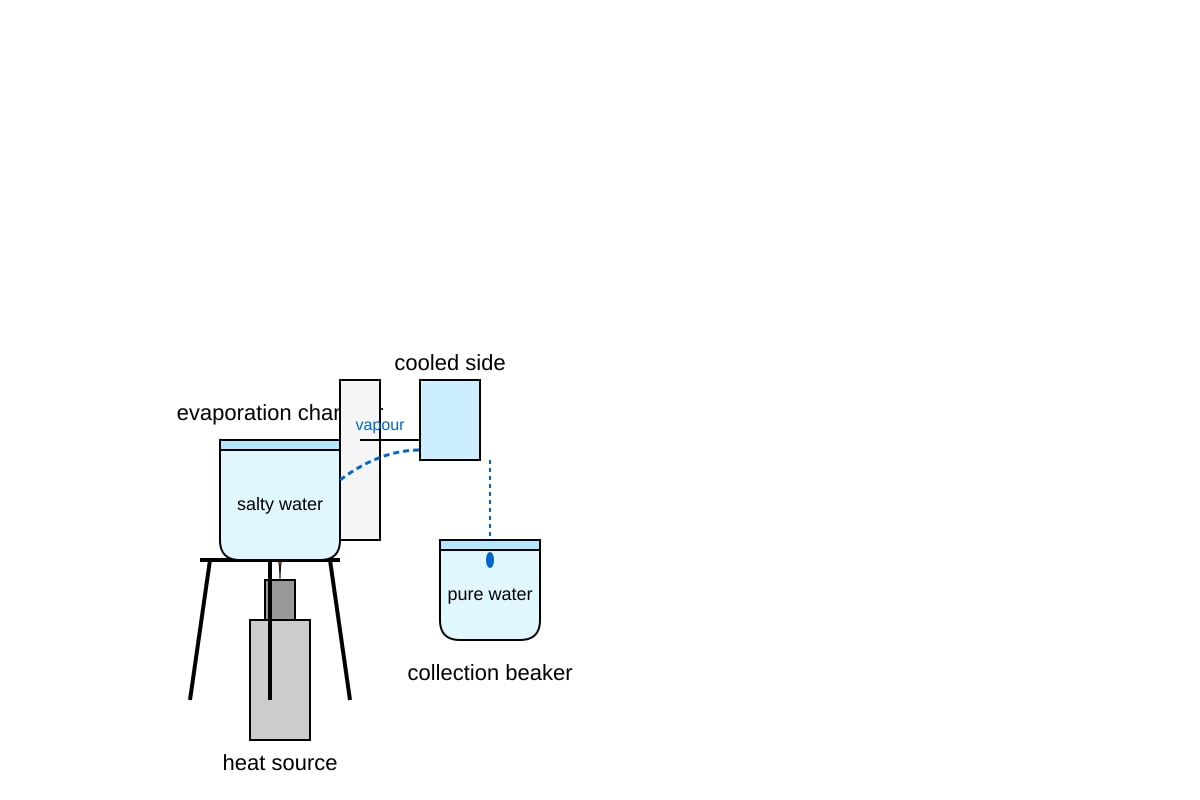
(a) [1] Distillation (or evaporation + condensation).
(b) [1] Pure water.
Teaching: Setup shows heating and cooling; salt left behind.
Q18 [2 marks]
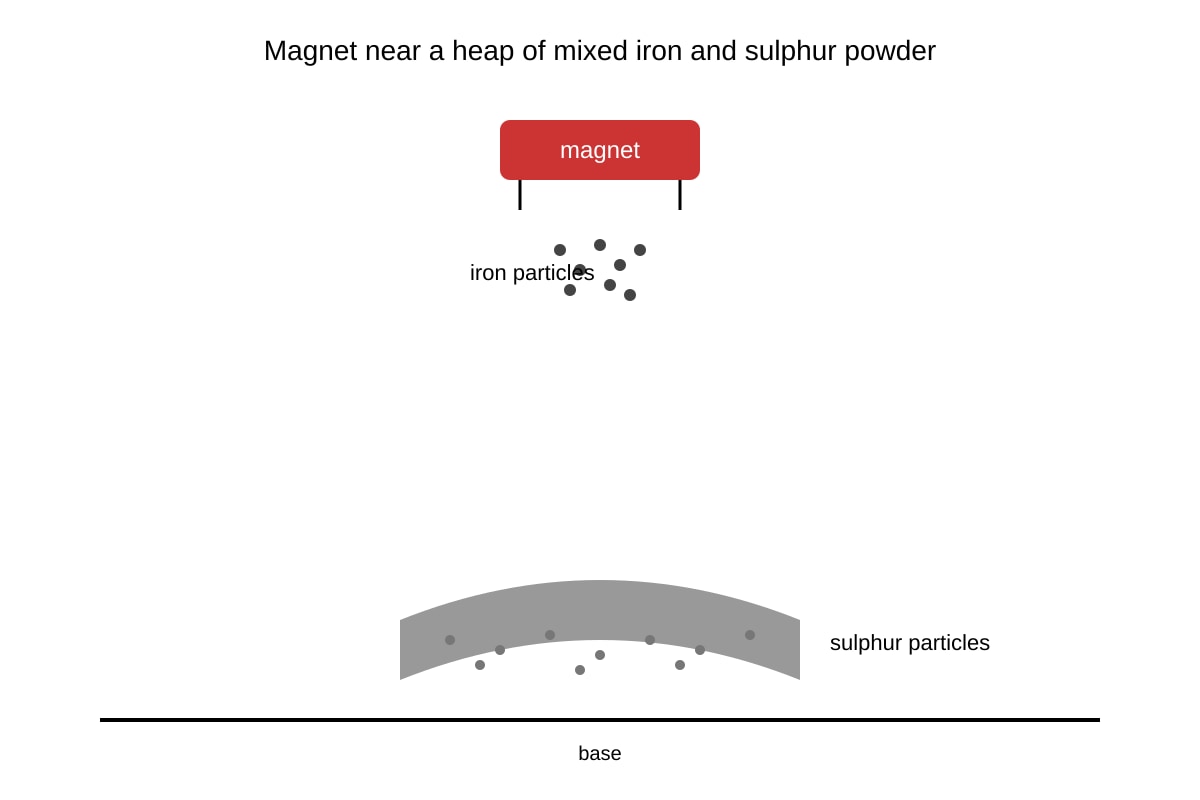
Answer: Move magnet over mixture; iron sticks to magnet, sulphur left.
Teaching: Based on diagram, magnetic attraction separates.
Marking: 1 method, 1 outcome.
Q19 [2 marks]
(a) [1] Q (red litmus stays red, blue turns red = acid)
(b) [1] R (blue stays blue, red turns blue = alkali)
Teaching: Acid turns blue litmus red; alkali turns red litmus blue.
Q20 [2 marks]
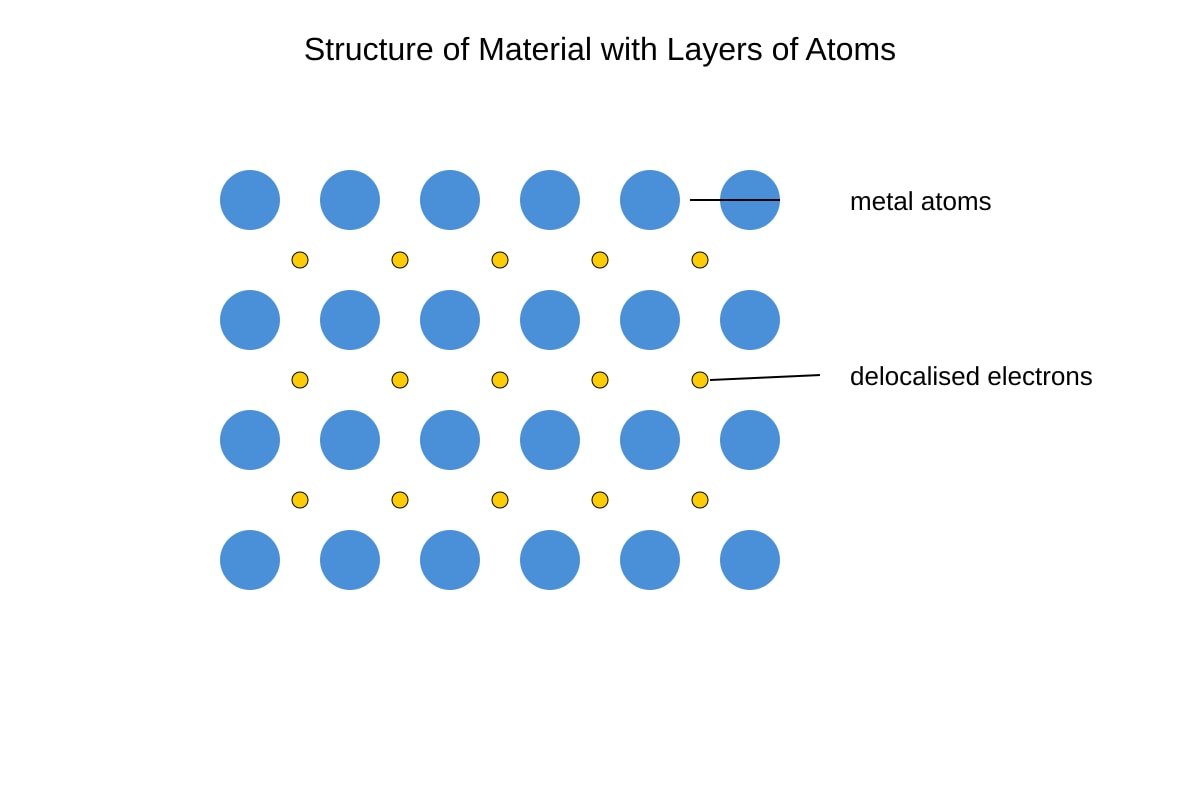
Answer: Good conductor of electricity (due to delocalised electrons) OR malleable.
Teaching: Diagram shows free electrons between layers.
Marking: 1 property, 1 link to diagram.